Friday☕️

Trending:
- On January 15, 2026, the U.S. Coast Guard and U.S. Southern Command (SOUTHCOM) announced that a tactical boarding team successfully seized the Motor Tanker Veronica, a sanctioned oil tanker, in the Caribbean Sea. The operation involved boarding the vessel and taking control without reported resistance or injuries. The Coast Guard emphasized that the seizure was conducted using its unique maritime law enforcement authorities, with close coordination involving the Departments of War, Justice, and State, ensuring compliance with U.S. and international law.
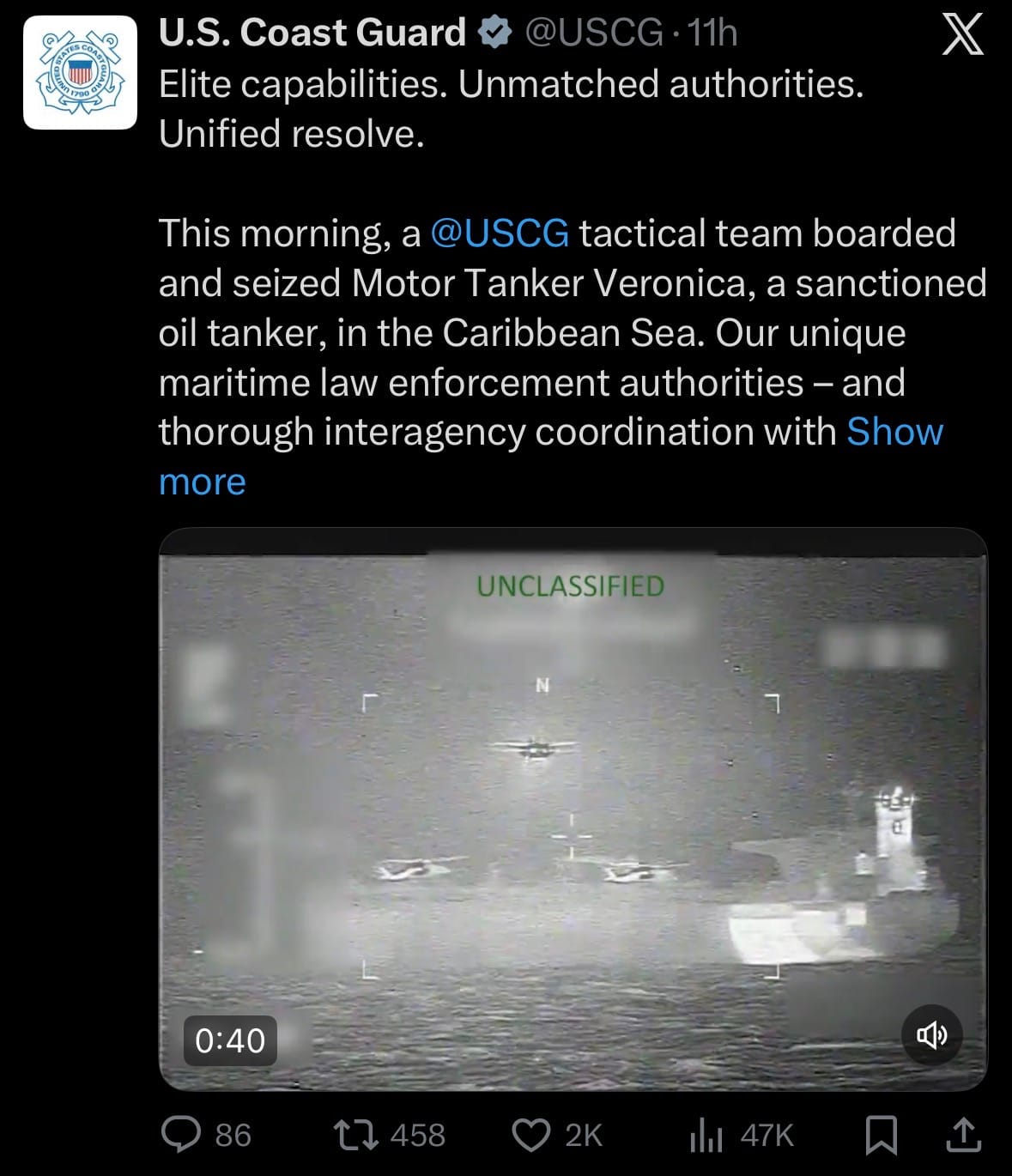
- The announcement highlighted the Coast Guard's role in interdicting "ghost fleet" or "dark fleet" tankers—older vessels with opaque ownership often used to evade sanctions on oil from Iran, Venezuela, and other targeted nations. U.S. Sailors and Marines provided support during the operation.
Economics & Markets:
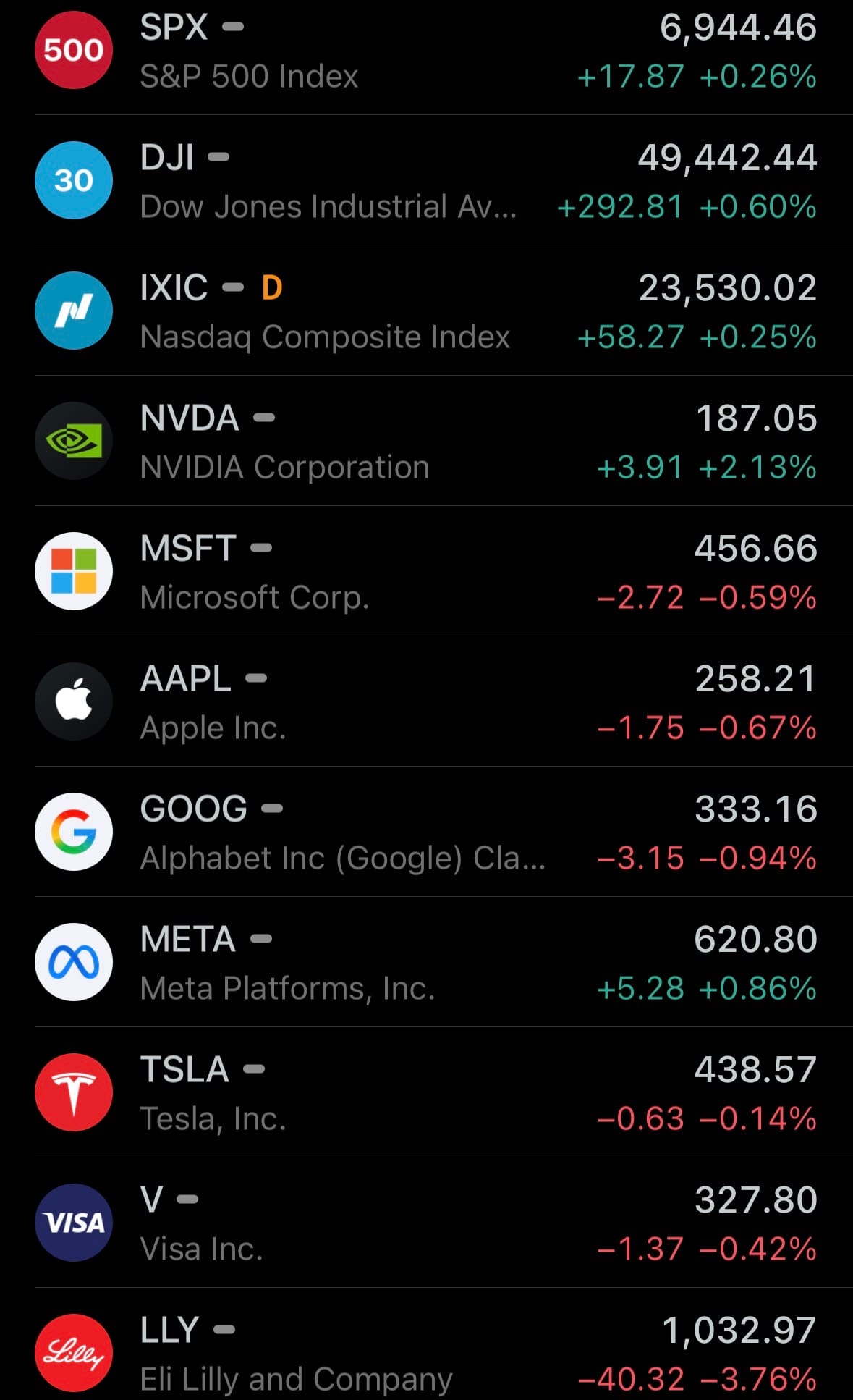
- Yesterday’s U.S. stock market:
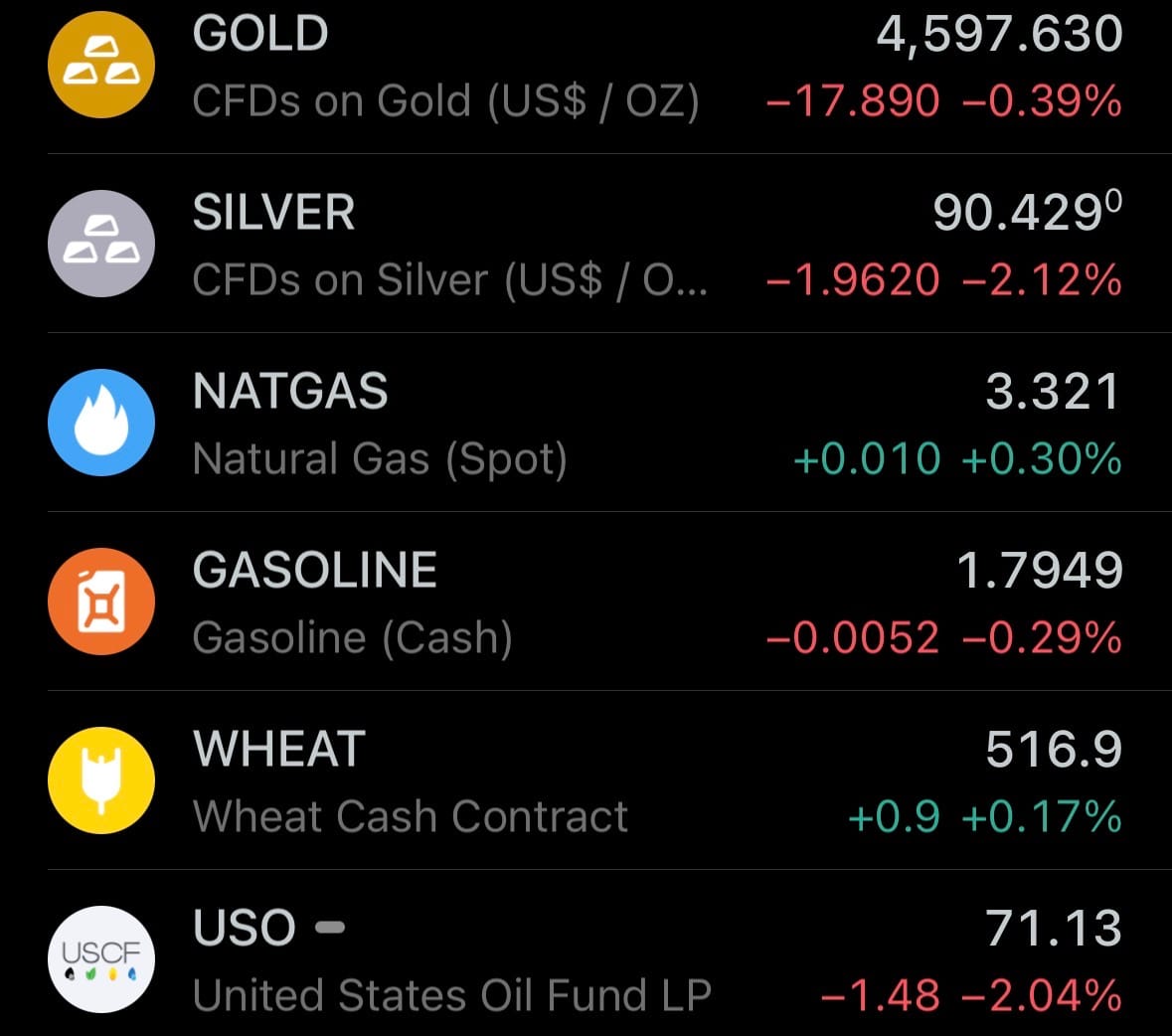
- Yesterday’s commodity market:
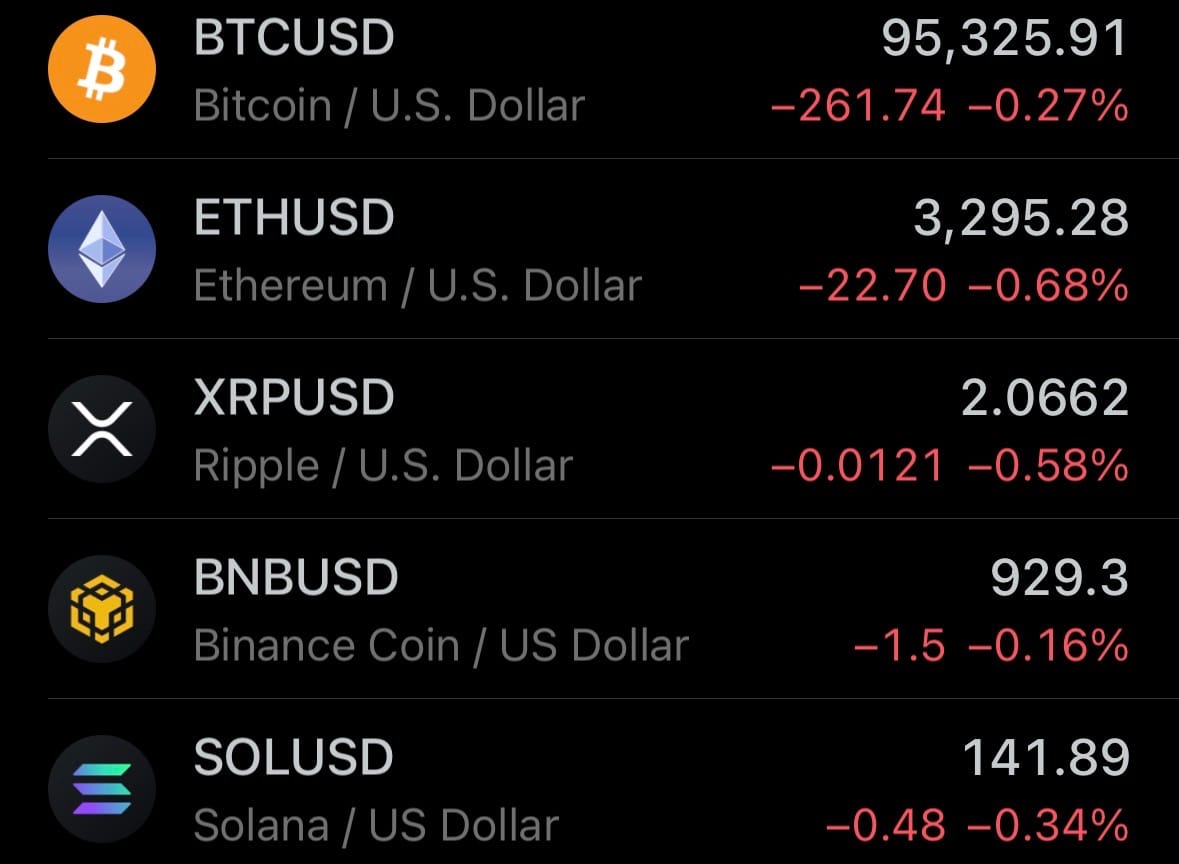
- Yesterday’s crypto market:
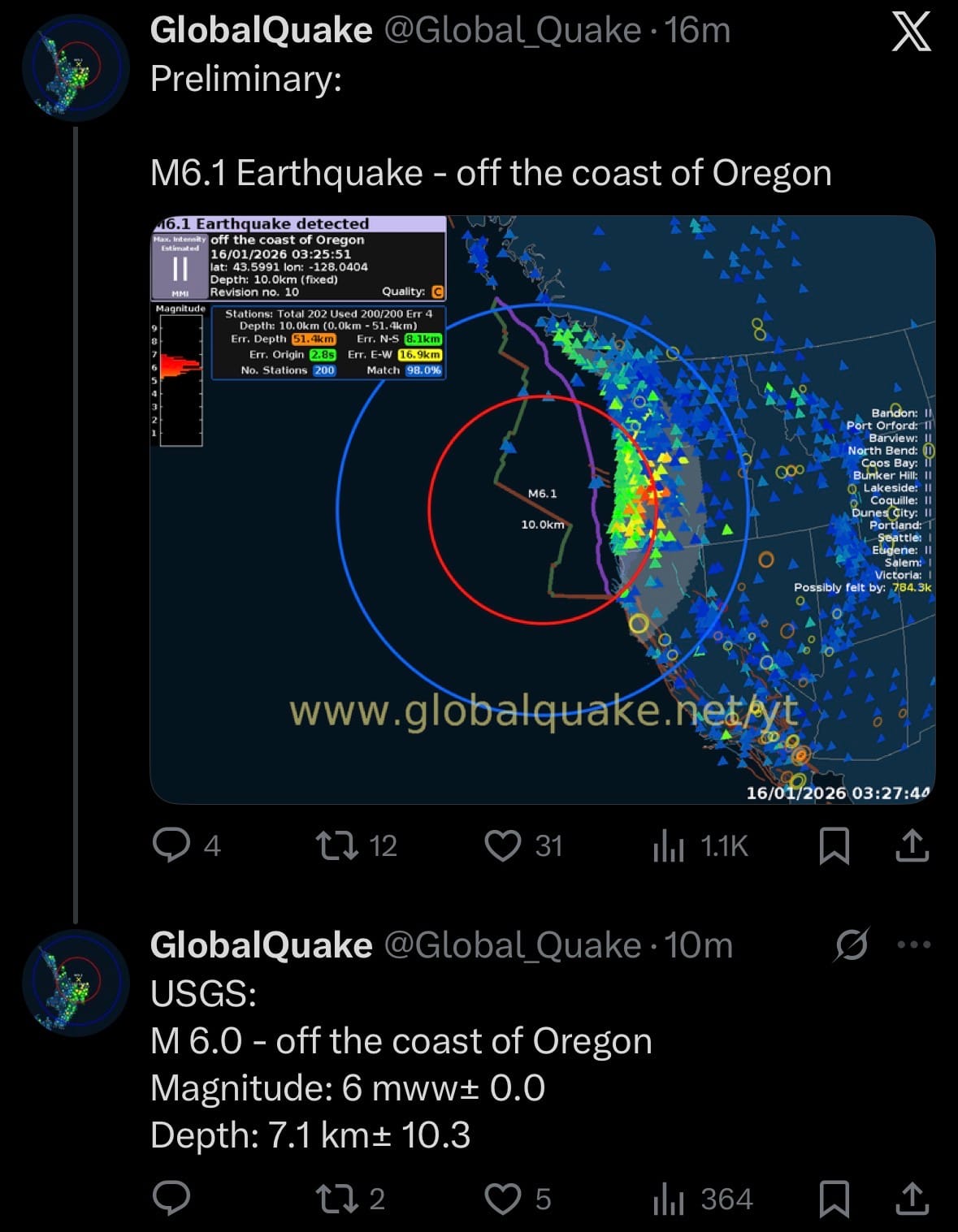
Environment & Weather:
Cyber:
Space:
- On January 15, 2026, SpaceX confirmed the successful splashdown of the Crew Dragon spacecraft in the Gulf of America off the coast of Florida, concluding the Crew-9 mission. The capsule carried NASA astronauts Nick Hague (@AstroIronMike), Suni Williams (@Astro_Suni), Butch Wilmore (@Astro_Butch), and Roscosmos cosmonaut Aleksandr Gorbunov back to Earth after an extended stay on the International Space Station.
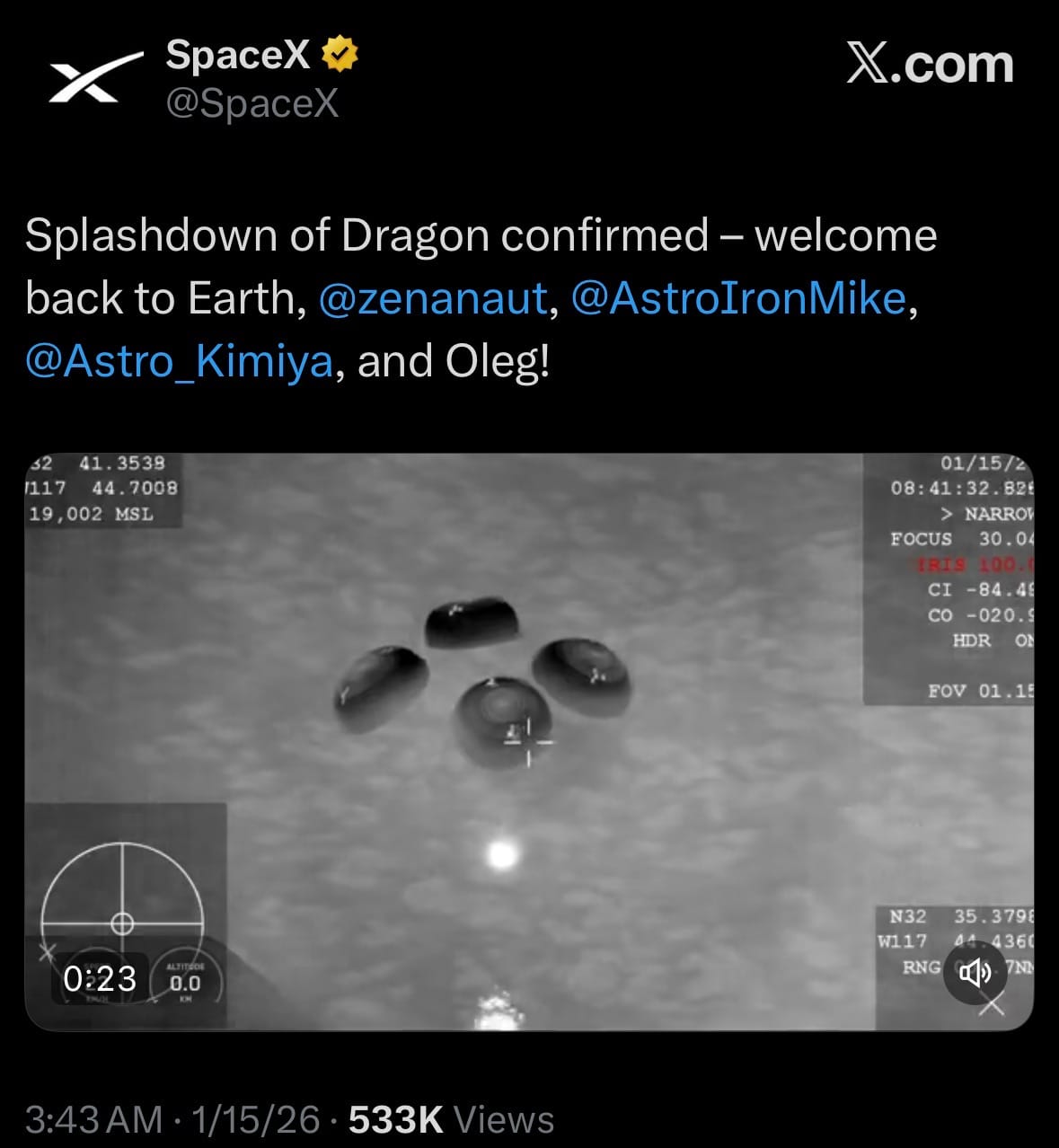
- The spacecraft undocked from the ISS earlier in the day and performed a deorbit burn, re-entering the atmosphere and parachuting into the water. Recovery teams from SpaceX and NASA quickly secured the capsule, and all four crew members were reported in good health after exiting the vehicle. This marked the safe return of the final four members of Crew-9, closing out a mission that included scientific research, technology demonstrations, and maintenance activities aboard the station.
Chinese-Algerian Launch:
- On January 15, 2026, China successfully launched the AlSat-3A remote sensing satellite for Algeria using a Long March-2C rocket from Launch Site 94 (SLS-2) at the Jiuquan Satellite Launch Center in northwest China. The rocket lifted off at 12:01 p.m. Beijing time (04:01 UTC), placing the satellite into its predetermined sun-synchronous orbit. The mission, confirmed by Chinese state media and the China Great Wall Industry Corporation (CGWIC), proceeded without anomalies and marked the 626th flight of the Long March family.
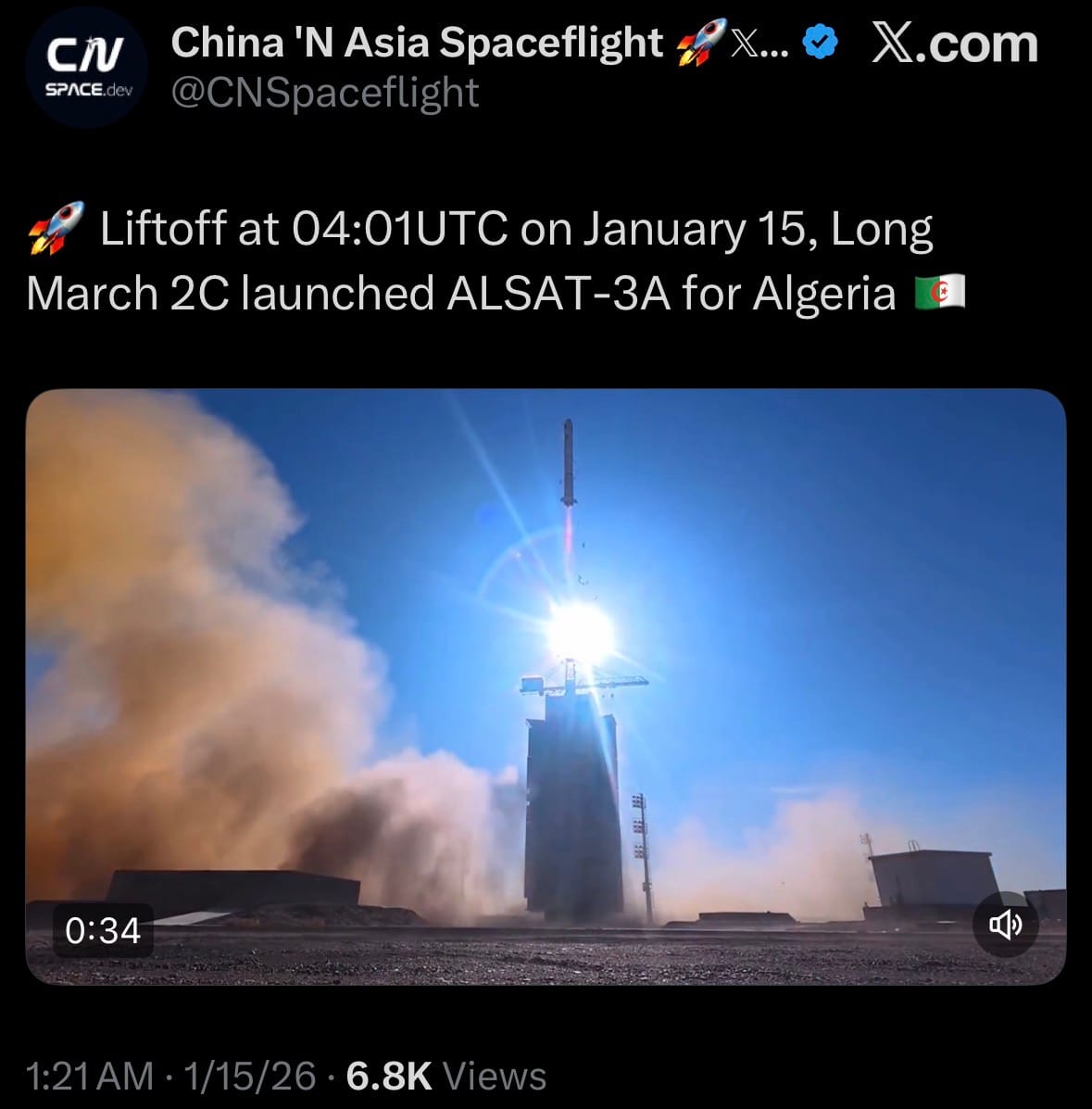
- AlSat-3A, developed by the China Academy of Space Technology (CAST) under a 2023 contract with the Algerian Space Agency (ASAL), is an optical Earth observation satellite designed to provide high-resolution imagery for applications such as land-use planning, disaster prevention and mitigation, resource monitoring, and national security needs. It is Algeria's sixth Earth observation satellite and the first of two under the current Algeria-China cooperation agreement (with AlSat-3B planned next).
Science & Technology:
- On January 15, 2026, OpenAI announced Open Responses, a new open-source project designed to make it easier for developers to use different AI language models—such as ChatGPT, Claude, Gemini, or open-source options—without being tied to a single company. The initiative creates a common set of rules, schemas, client libraries, and tools that allow code written for one AI provider to work seamlessly with others. Developers can send messages, call tools, stream answers in real time, handle images or other inputs, and build "agentic" workflows (where the AI reasons step-by-step and uses tools repeatedly), all in a consistent way across multiple providers. This eliminates the need to rewrite code every time a developer switches models.
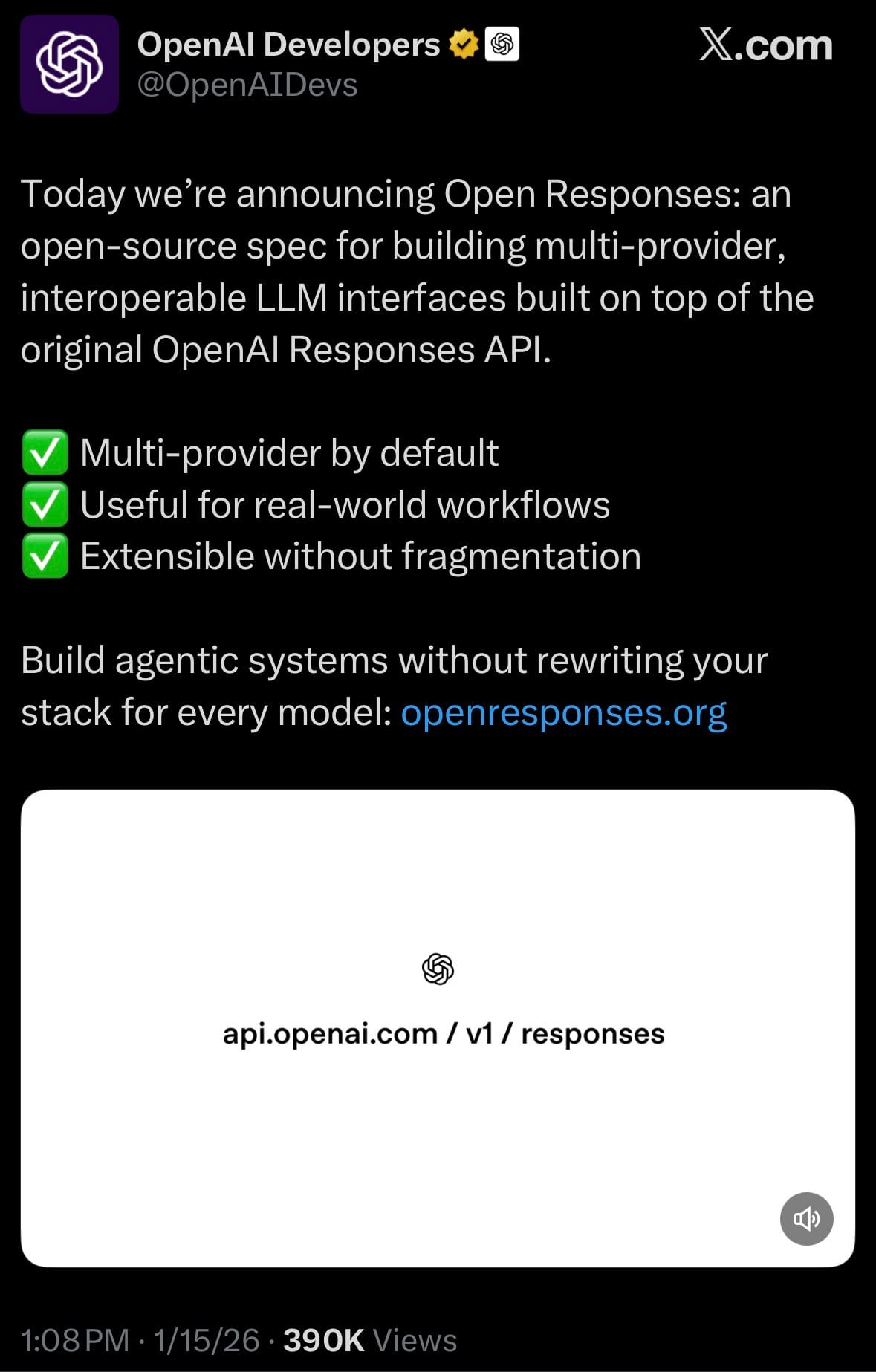
- Key advantages include multi-provider compatibility by default (avoiding vendor lock-in), strong support for real-world tasks that require multiple steps or tool use, and the ability to add provider-specific features without breaking the shared standard. OpenAI is providing full documentation, reference implementations, and example code while inviting the developer community to contribute to improving schemas, streaming behavior, tests, and tooling. The goal is to reduce fragmentation across the AI industry and simplify the creation of portable, flexible applications that can leverage the best model for any given job.
Statistic:
- Largest assets on Earth by market capitalization:
- Gold – $31.979T
- Silver – $5.076T
- 🇺🇸 NVIDIA – $4.554T
- 🇺🇸 Alphabet (Google) – $4.021T
- 🇺🇸 Apple – $3.815T
- 🇺🇸 Microsoft – $3.394T
- 🇺🇸 Amazon – $2.546T
- Bitcoin – $1.905T
- 🇹🇼 TSMC – $1.771T
- 🇺🇸 Broadcom – $1.626T
- 🇸🇦 Saudi Aramco – $1.599T
- 🇺🇸 Meta Platforms – $1.564T
- 🇺🇸 Tesla – $1.458T
- 🇺🇸 Berkshire Hathaway – $1.062T
- 🇺🇸 Walmart – $950.36B
- 🇺🇸 Eli Lilly – $926.01B
- 🇺🇸 JPMorgan Chase – $841.88B
- 🇺🇸 Vanguard S&P 500 ETF (VOO) – $834.43B
- 🇺🇸 iShares Core S&P 500 ETF (IVV) – $773.16B
- 🇨🇳 Tencent – $723.02B
- 🇺🇸 SPDR S&P 500 ETF (SPY) – $712.78B
- 🇰🇷 Samsung – $676.10B
- 🇺🇸 Visa – $632.52B
- Platinum – $584.10B
- 🇺🇸 Vanguard Total Stock Market ETF (VTI) – $577.03B
- 🇺🇸 Exxon Mobil – $550.51B
- 🇺🇸 Oracle – $545.46B
History:
- The U.S. Coast Guard traces its origins to the earliest days of the American republic, born not as a traditional military force but as a guardian of commerce, law, and order at sea. In 1790, at the urging of Alexander Hamilton, Congress created the Revenue-Marine (later the Revenue Cutter Service) to enforce customs laws and collect tariffs—the primary source of federal revenue at the time. These early cutters were often the only federal presence along America’s vast coastline, tasked with stopping smuggling, enforcing maritime law, protecting shipping, suppressing piracy, and enforcing embargoes. Over the 19th century, their responsibilities expanded steadily, reflecting the nation’s growing dependence on maritime trade and security. In parallel, a distinct lifesaving tradition developed along dangerous coastlines, culminating in the formal establishment of the U.S. Life-Saving Service in 1878, dedicated to rescuing shipwrecked sailors and passengers. In 1915, Congress merged these two traditions—law enforcement and lifesaving—into the modern United States Coast Guard, creating a unique institution with both civilian authority and military status. Unlike any other U.S. armed service, the Coast Guard was placed under civilian control in peacetime, reflecting its dual role as regulator and defender. During World War I and World War II, the Coast Guard operated under the Navy, escorting convoys, hunting submarines, securing ports, and supporting amphibious operations, while continuing its humanitarian missions at home—cementing its credibility as both a warfighting and public service force.
- In the modern era, the Coast Guard evolved into a continuous, multi-mission instrument operating at the intersection of homeland security, maritime safety, environmental protection, and national defense. It enforced Prohibition during the 1920s, played a critical role in anti-submarine warfare and coastal defense during World War II, and expanded its regulatory reach in the postwar decades as maritime traffic, offshore energy development, and environmental risks grew. In 1967, the Coast Guard was placed under the newly created Department of Transportation, emphasizing its role in safety, navigation, and commerce, before moving to the Department of Homeland Security in 2003 after the September 11 attacks—formalizing its frontline role in border security, counterterrorism, and port protection. Today, the U.S. Coast Guard operates globally, conducting search and rescue, drug and migrant interdiction, illegal fishing enforcement, icebreaking, environmental response, ship and port security, and maritime domain awareness, while remaining fully capable of integrating with the U.S. Navy during conflict. Its cutters patrol everything from Arctic ice to the Indo-Pacific, and its unique legal authorities allow it to act decisively where military operations, law enforcement, and diplomacy overlap. More than any other service, the Coast Guard represents persistent maritime control—not focused on decisive battles, but on daily enforcement of law, protection of life, and security of commerce—quietly maintaining order across the world’s oceans every single day.
Image of the day:

Thanks for reading! Earth is complicated, we make it simple.
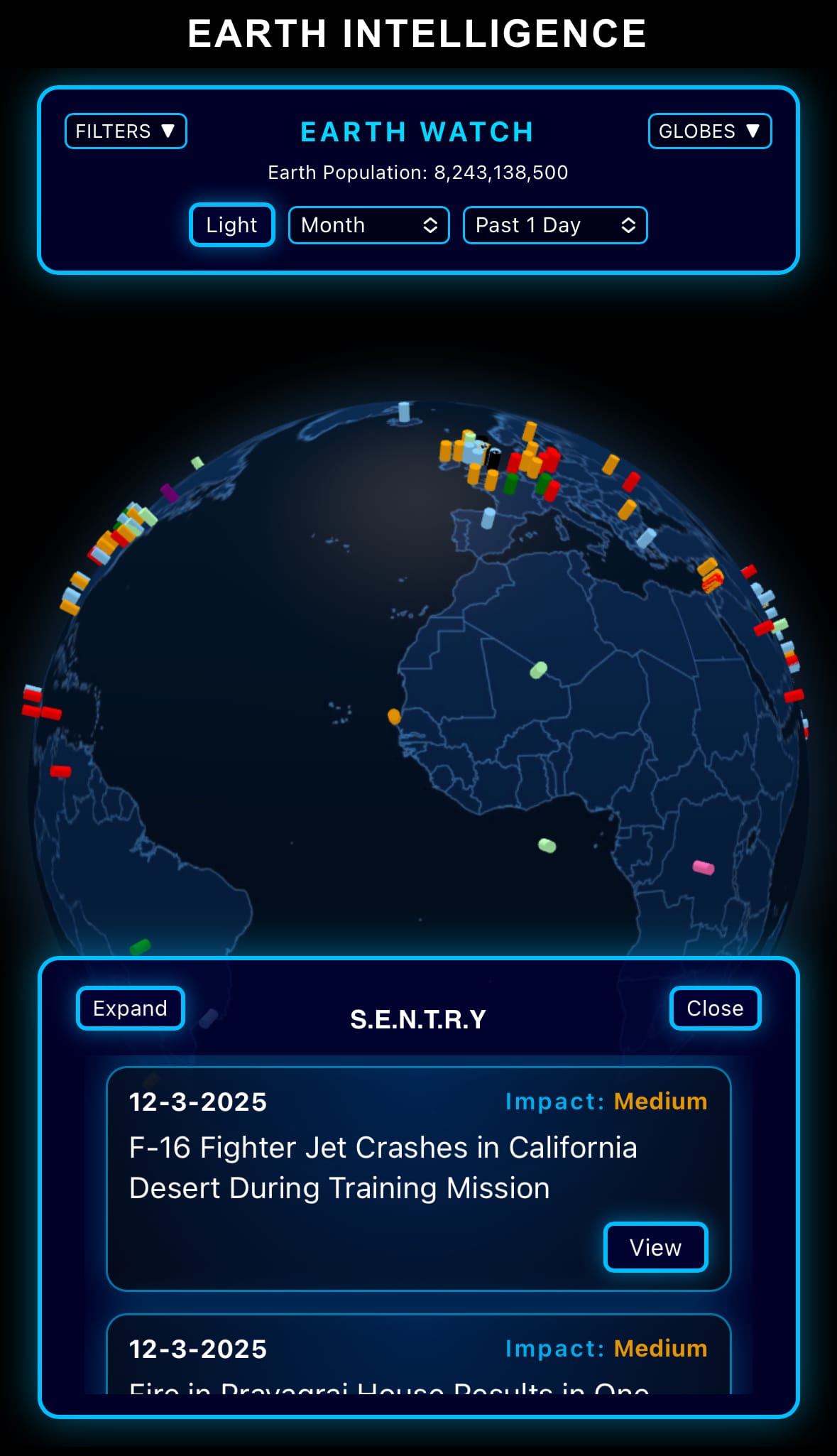
- Click below if you’d like to view our free EARTH WATCH globe:
- Download our mobile app:



Click below to view our previous newsletters:
Support/Suggestions Email:
earthintelligence@earthintel.news