Friday☕️


Trending:
- On January 22, 2026, Tesla launched unsupervised Robotaxi rides in Austin, Texas, allowing passengers to hail and ride in a Tesla Model Y with no human safety driver or monitor in the vehicle. The service is now publicly available through the Tesla app in Austin, with early user-shared videos showing empty front seats during rides. The rollout begins with a small number of fully unsupervised vehicles operating alongside the existing fleet that still includes safety-monitored cars, with plans to gradually increase the proportion of driverless rides.
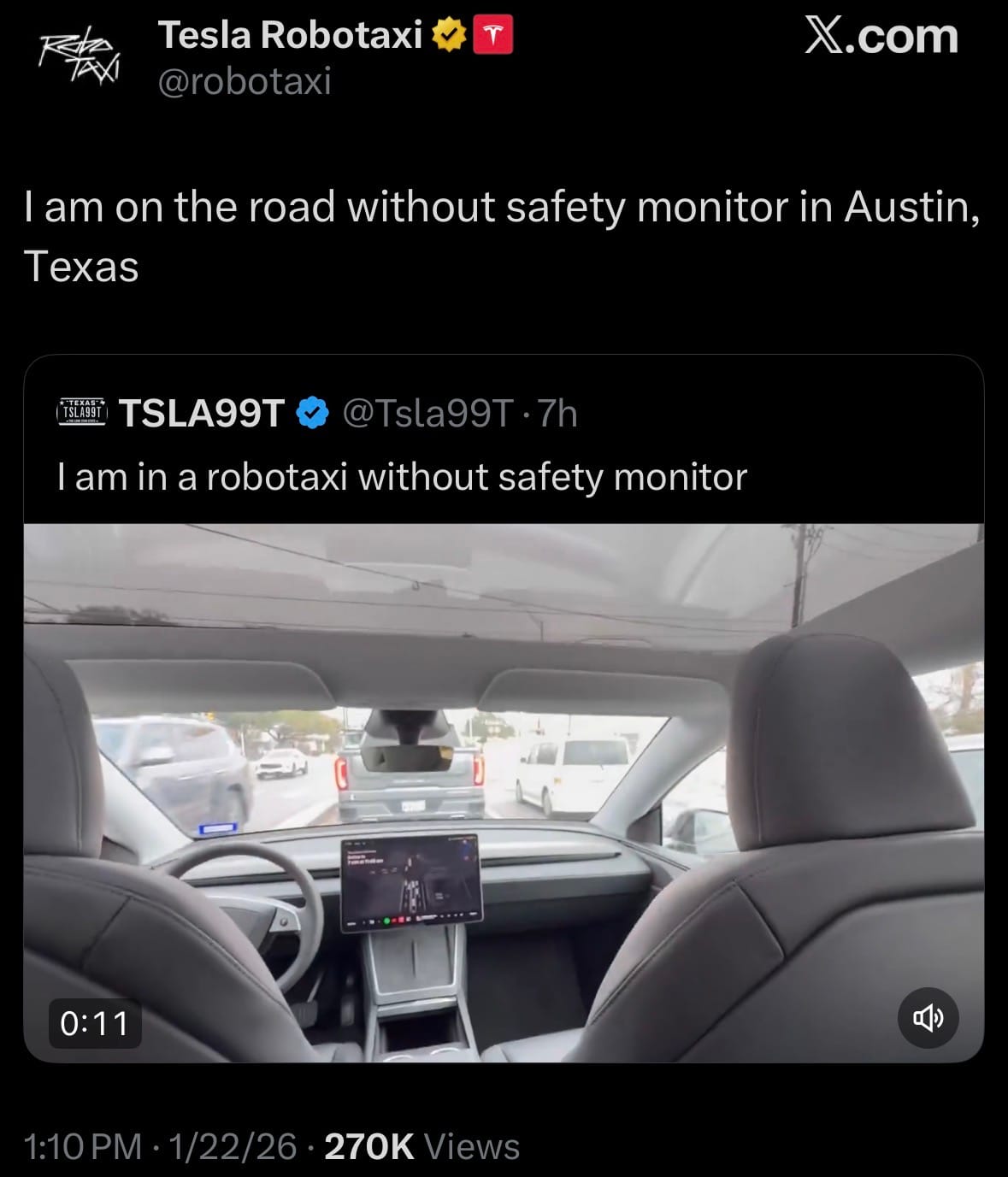
- This follows the initial supervised Robotaxi launch in Austin in June 2025 and testing without front-seat monitors in December 2025. The service relies on Tesla’s vision-only Full Self-Driving (FSD) software. CEO Elon Musk announced the milestone and stated at the World Economic Forum in Davos that Tesla targets a widespread unsupervised Robotaxi network across the U.S. by the end of 2026. Tesla’s website now advertises the autonomous rides in Austin. No serious incidents were reported in the opening phase, though some observers noted occasional trailing safety vehicles, and further expansion will require additional regulatory approvals and operational scaling.
Economics & Markets:
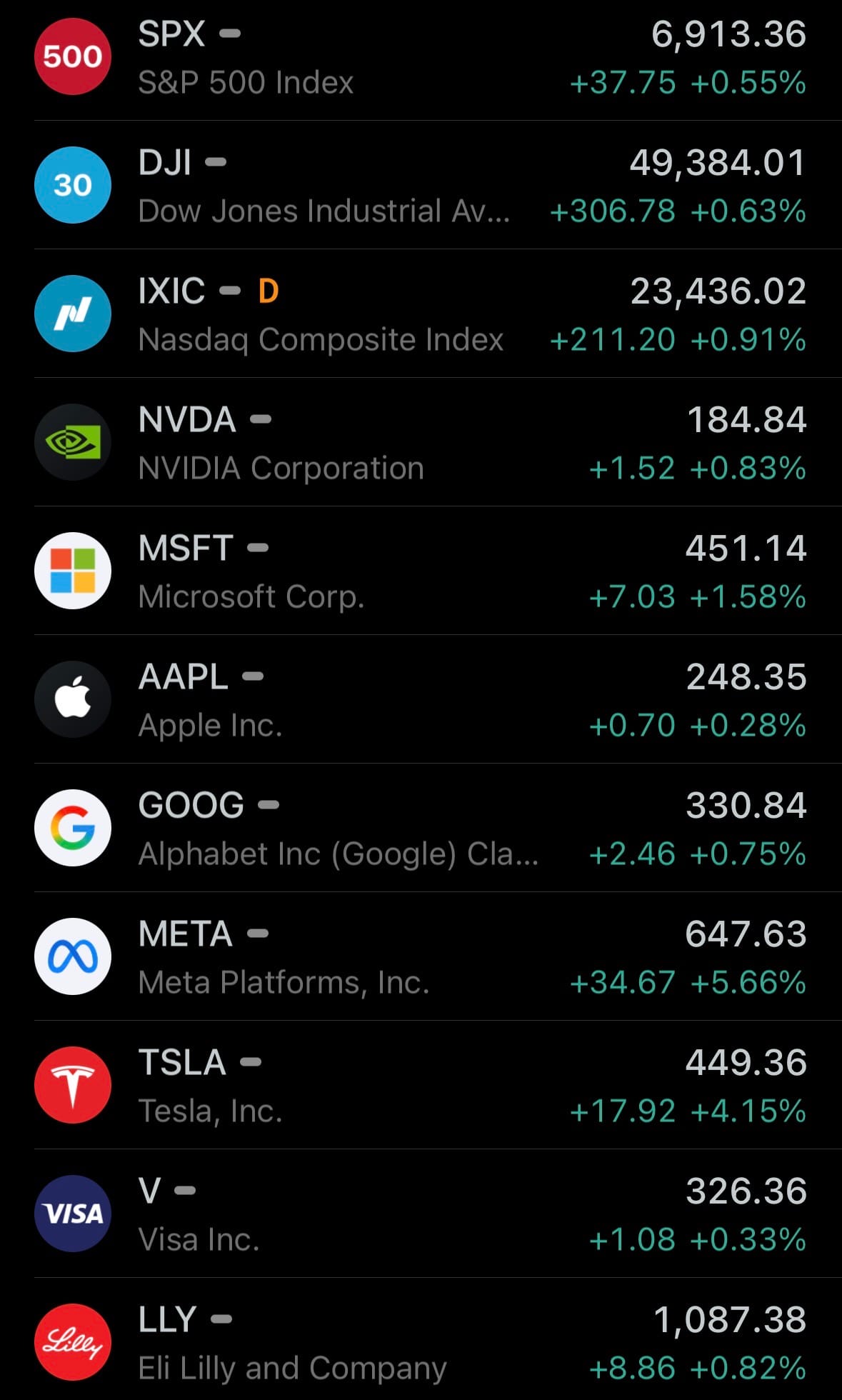
- Yesterday’s U.S. stock market:
- Yesterday’s commodity market:

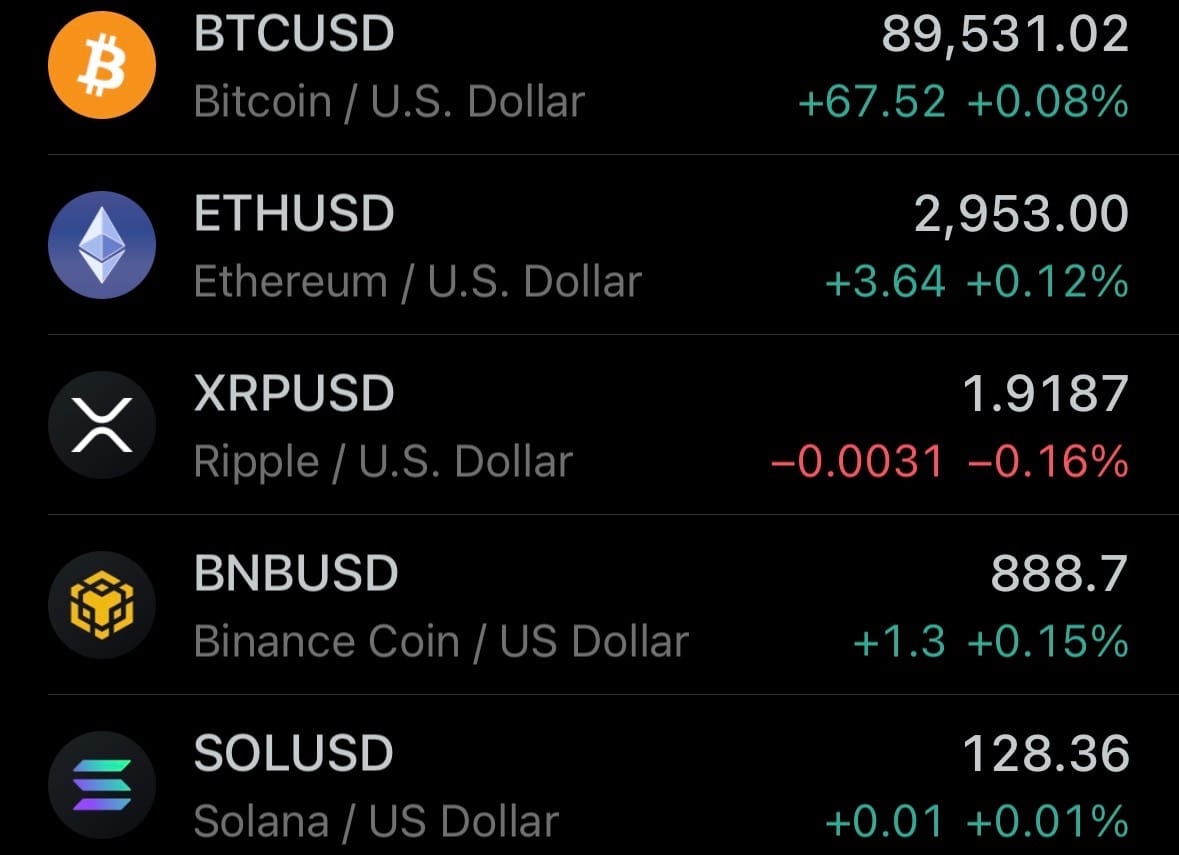
- Yesterday’s crypto market:
Geopolitics & Military Activity:
- On January 22, 2026, French President Emmanuel Macron announced that the French Navy had boarded a Russia-linked oil tanker on the high seas in the Mediterranean Sea. The vessel, which had departed from a Russian port and is subject to international sanctions, was suspected of belonging to Russia's "shadow fleet"—a network of ships often operating under false flags, changing identifiers, or using deceptive practices to evade restrictions on Russian oil exports.
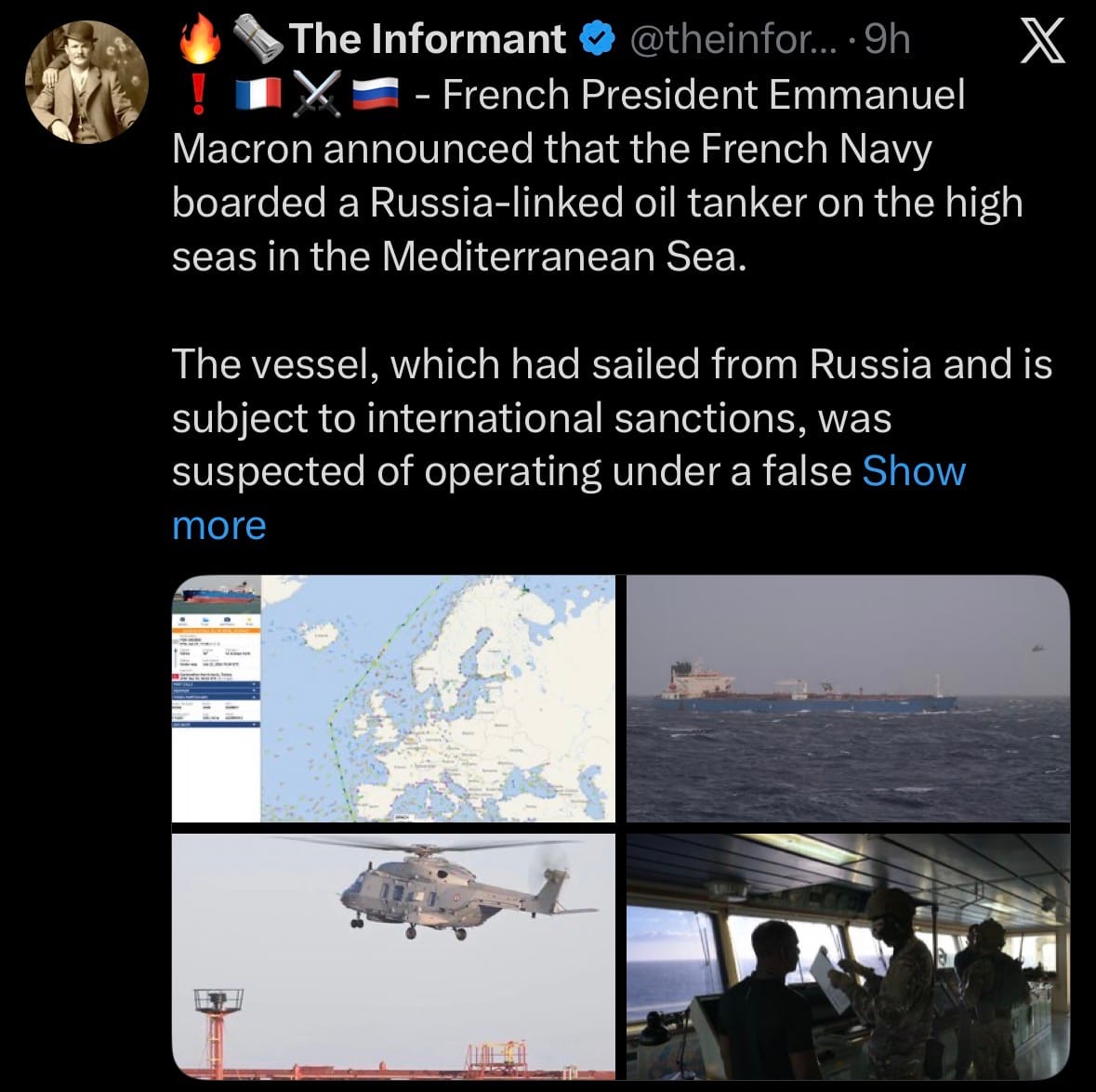
- The boarding operation was supported by intelligence from allied nations, including the United Kingdom, and was carried out in full compliance with the United Nations Convention on the Law of the Sea. A judicial investigation has been opened in France, and the tanker—reportedly named the Grinch—is being escorted to a French port for detailed inspection and verification of its cargo, ownership, and compliance status. Macron stated that enforcing sanctions against the shadow fleet is essential, as its activities generate revenue that supports Russia's war of aggression against Ukraine. No resistance or incidents were reported during the boarding, and the action aligns with broader Western efforts to tighten enforcement on sanctioned Russian energy trade.
UK Fighter Jet Deployment:
- On January 22, 2026, the UK Ministry of Defence announced that Royal Air Force (RAF) Typhoon jets from the joint UK-Qatar No. 12 Squadron have deployed to Qatar in a defensive capacity. The deployment, made at the request of the Qatari government and under the UK-Qatar Defence Assurance Agreement, supports regional stability amid heightened tensions in the Gulf area.
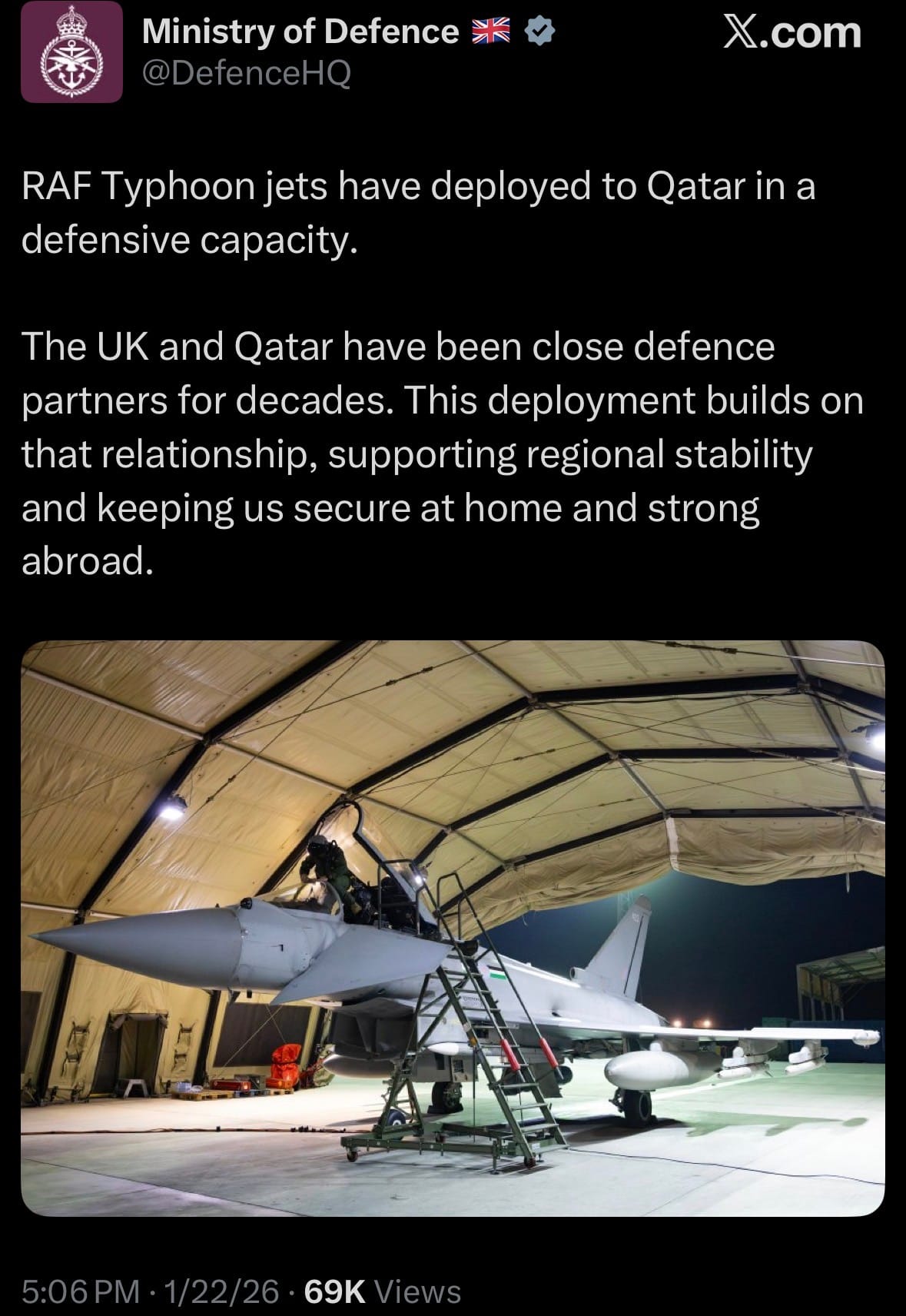
- No. 12 Squadron, the RAF's only joint squadron with another nation (operating Typhoons shared between UK and Qatar Emiri Air Force personnel), relocated the aircraft—likely from RAF Akrotiri in Cyprus—to Al Udeid Air Base in Qatar. The UK described the move as building on decades of close defence partnership with Qatar, aimed at reinforcing mutual security interests and maintaining regional stability. No specific duration, number of jets, or linked operations were detailed in the announcement, and no incidents or escalations were reported in connection with the deployment.
Space:
- On January 22, 2026, Rocket Lab successfully launched its first Electron rocket mission of the year, named "The Cosmos Will See You Now," from Launch Complex 1 at Mahia Peninsula, New Zealand, at 5:52 a.m. EST (10:52 UTC / 11:52 p.m. local time). The mission deployed two satellites into a circular polar orbit at approximately 1,050 km altitude about 69 minutes after liftoff, marking the first satellites in Open Cosmos' planned low-Earth orbit (LEO) telecom constellation.
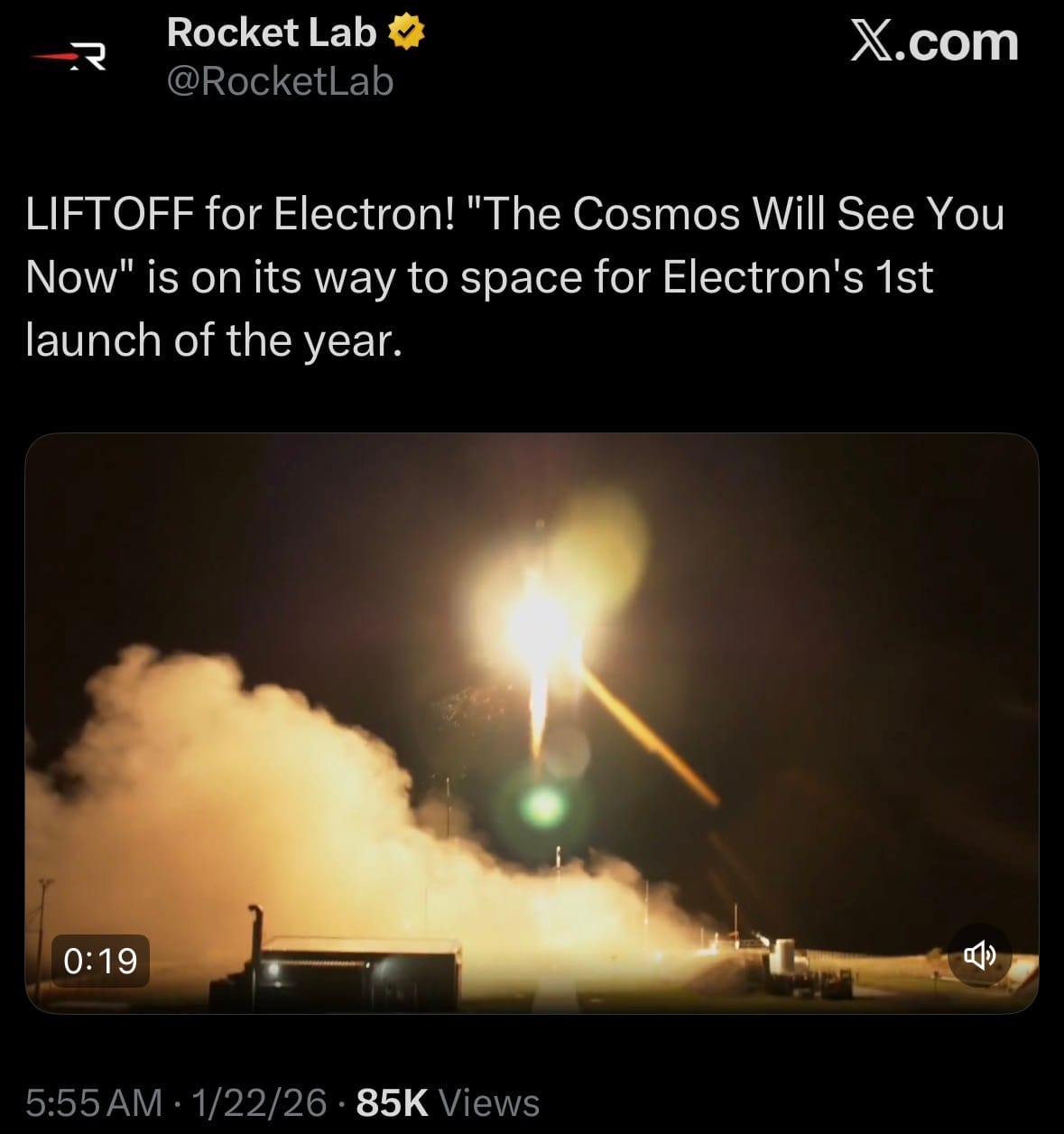
- Open Cosmos, a UK-based satellite manufacturer and operator (with teams in Spain, Portugal, and Greece), described this as the initial activation phase of a sovereign broadband network using high-priority Ka-band spectrum awarded by Liechtenstein (previously linked to Rivada Space Networks). The satellites aim to provide scalable, resilient connectivity services for Europe and beyond. This launch follows the spectrum award just one week earlier and positions Open Cosmos to meet ITU deployment milestones (e.g., 2026/2028 deadlines). Rocket Lab confirmed full mission success with 100% payload deployment, its 80th Electron flight overall. No issues were reported, and the company highlighted the benefits of dedicated smallsat launches for precise constellation insertion.
Blue Origin Launch:
- On January 22, 2026, Blue Origin successfully launched and completed New Shepard Mission NS-38, the company's 38th New Shepard flight overall and the first of 2026. The suborbital mission lifted off from Launch Site One in West Texas at 10:25 a.m. CST (16:25 UTC), after a brief delay due to unauthorized personnel on the range. The reusable booster performed a powered vertical landing, and the crew capsule (named RSS First Step) reached an apogee of about 106–107 km (crossing the Kármán line), providing several minutes of weightlessness before parachuting back to Earth safely about 10 minutes later.
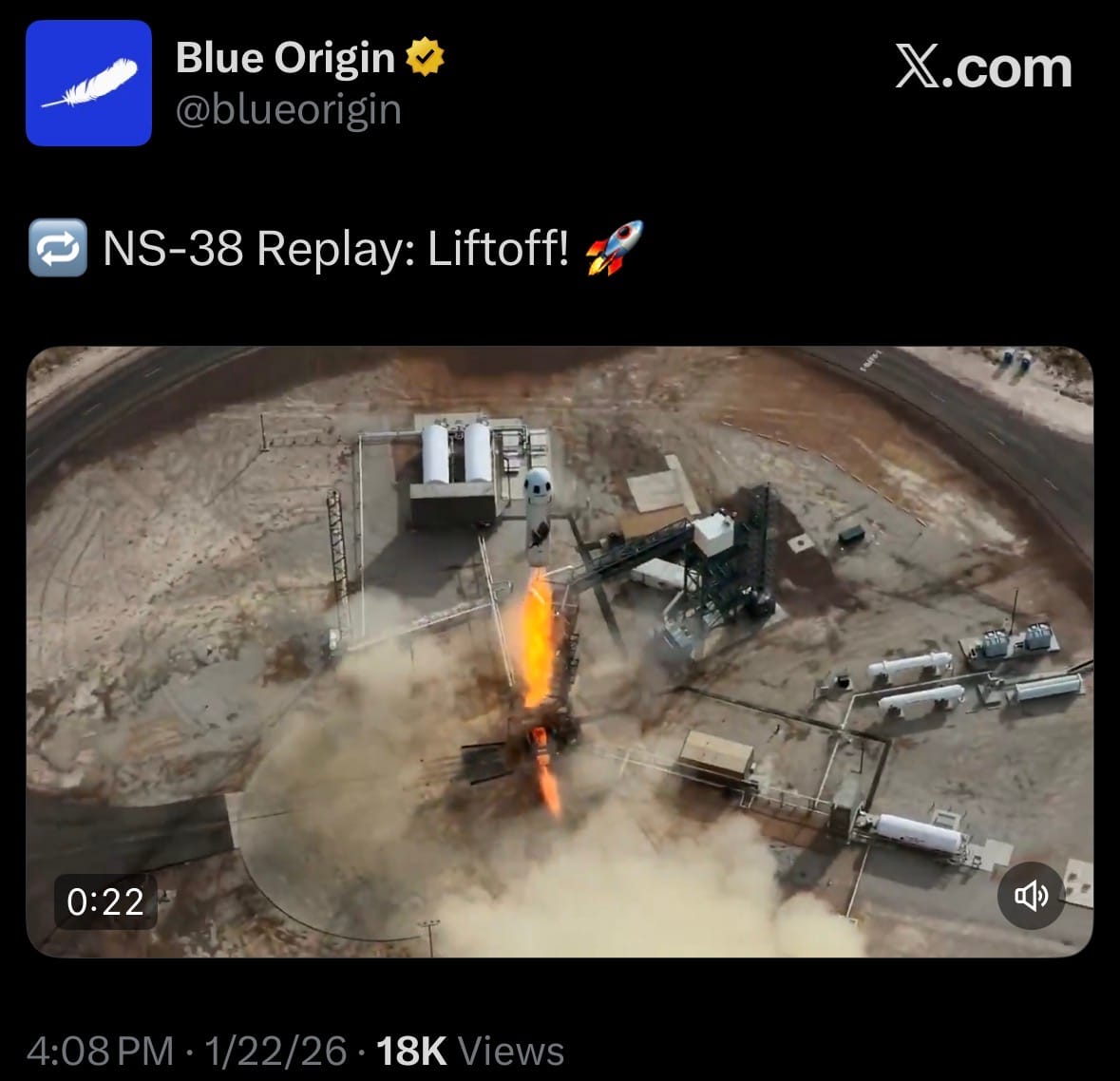
- The six-person crew included five paying passengers—Tim Drexler (pilot and former CEO), Dr. Linda Edwards (retired obstetrician/gynecologist), Alain Fernandez (real estate developer), Alberto Gutiérrez (entrepreneur), and Jim Hendren (retired U.S. Air Force colonel)—plus Blue Origin employee Laura Stiles (director of New Shepard launch operations), who replaced another passenger due to illness shortly before launch. This marked Blue Origin's 17th crewed flight. No issues were reported during the mission, which aligns with the company's ongoing program of commercial space tourism using the fully reusable New Shepard system.
Statistic:
- Largest assets on Earth by market capitalization:
- Gold – $34.521T
- Silver – $5.465T
- 🇺🇸 NVIDIA – $4.500T
- 🇺🇸 Alphabet (Google) – $3.993T
- 🇺🇸 Apple – $3.669T
- 🇺🇸 Microsoft – $3.353T
- 🇺🇸 Amazon – $2.505T
- Bitcoin – $1.788T
- 🇹🇼 TSMC – $1.697T
- 🇸🇦 Saudi Aramco – $1.627T
- 🇺🇸 Meta Platforms – $1.632T
- 🇺🇸 Broadcom – $1.543T
- 🇺🇸 Tesla – $1.494T
- 🇺🇸 Berkshire Hathaway – $1.045T
- 🇺🇸 Eli Lilly – $974.78B
- 🇺🇸 Walmart – $939.44B
- 🇺🇸 Vanguard S&P 500 ETF (VOO) – $847.85B
- 🇺🇸 JPMorgan Chase – $826.56B
- 🇺🇸 iShares Core S&P 500 ETF (IVV) – $762.74B
- 🇺🇸 SPDR S&P 500 ETF (SPY) – $715.21B
- 🇰🇷 Samsung – $708.22B
- 🇨🇳 Tencent – $689.30B
- Platinum – $666.25B
- 🇺🇸 Visa – $629.84B
- 🇺🇸 Vanguard Total Stock Market ETF (VTI) – $580.46B
History:
- Global logistics starts as muscle and math: move stuff farther, cheaper, more reliably than the next empire. The earliest supply chains were river-and-road systems—Egypt moving stone and grain on the Nile by 2500 BC, Rome running a state logistics machine across the Mediterranean by 200 BC–200 AD, and later maritime trade networks tying together the Indian Ocean, the Red Sea, and Southeast Asia. For most of history, shipping was “break-bulk”: cargo was packed in barrels, sacks, crates, and bundles, then manhandled on and off ships piece by piece. Ports were slow, theft-prone, weather-sensitive, and labor-intensive; ships spent more time parked than sailing. The industrial revolution scaled everything: steamships in the 1800s, rail networks, and telegraph coordination made global trade faster, but cargo handling remained the bottleneck. World wars accelerated the science of logistics—standardized pallets, forklifts, warehouses, and military supply doctrines turned “moving stuff” into a strategic weapon. By the mid-20th century, the world had fast ships and railways, but ports were still the choke point: loading a ship could take days, sometimes weeks, with armies of dockworkers moving mixed cargo by hand.
- The container solved that bottleneck with one brutally simple idea: don’t move the cargo—move the box the cargo lives in, seamlessly, across ship, rail, and truck. The person most credited with making containerization real at scale is Malcom McLean, a U.S. trucking entrepreneur who looked at port chaos and saw wasted time. In 1956, his company launched the Ideal X, widely recognized as the first major container ship voyage, carrying truck trailers/containers from Newark to Houston—a proof that standardized units could slash loading time and cost while reducing pilferage and damage. The concept existed earlier in fragments (rail “containers” and military transport modules), but McLean made it an end-to-end commercial system: ships designed for boxes, ports redesigned for cranes, and business models built around intermodal flow. Containerization didn’t take over instantly because it required coordinated reinvention of the entire planet’s trade hardware: ports needed massive gantry cranes and container yards; rail needed flatcars; trucking needed chassis; labor practices needed rewriting; insurers, customs, and regulators needed new paperwork regimes; and shippers needed trust that the new system was reliable. The turning point was standardization. Through the 1960s, container sizes and fittings converged, and by the late 1960s–1970s, ISO standards and the rise of the TEU (twenty-foot equivalent unit) turned the container into a universal interface—like a USB port for world trade. Once the interface stabilized, scale exploded: shipping lines invested in purpose-built container vessels; ports competed to become container hubs; and supply chains reorganized around predictable, high-volume flows rather than slow, bespoke handling.
- Modern global logistics is the container’s empire: a planet-spanning choreography of ships, ports, rail corridors, trucking fleets, warehouses, and software, all optimized around time and reliability. The container didn’t just make shipping cheaper—it rewired manufacturing strategy. It enabled the rise of “just-in-time” production, globalized sourcing, and the geographic separation of design, assembly, and distribution. Ports became industrial supernodes—Rotterdam, Singapore, Hong Kong/Shenzhen, Shanghai, Los Angeles/Long Beach—while shipping lines consolidated into massive networks with alliances, hub-and-spoke routing, and megaships that carry tens of thousands of containers at once. Logistics firms evolved into global nervous systems: integrated freight forwarders, customs brokers, and carriers coordinating ocean, air, rail, and last-mile delivery. The 2000s added a second revolution: digitization—real-time tracking, predictive routing, automated terminals, robotics in warehouses, advanced forecasting, and increasingly AI-driven optimization. Today’s advanced logistics isn’t just steel boxes; it’s visibility and control: sensors, GPS timing, ship tracking, port scheduling, warehouse automation, and integrated planning platforms that try to compress uncertainty out of the chain. And the modern era has also exposed the system’s strategic fragility: chokepoints (canals, straits, key ports), labor shocks, cyber risk, sanctions, and the reality that one grounded ship, one war, or one disruption can ripple through inventories worldwide. Containerization created the modern global economy’s circulatory system—fast, standardized, and insanely efficient—while also making it clear that whoever can secure, monitor, and adapt that system controls a quiet form of world power.
Image of the day:

Thanks for reading! Earth is complicated, we make it simple.
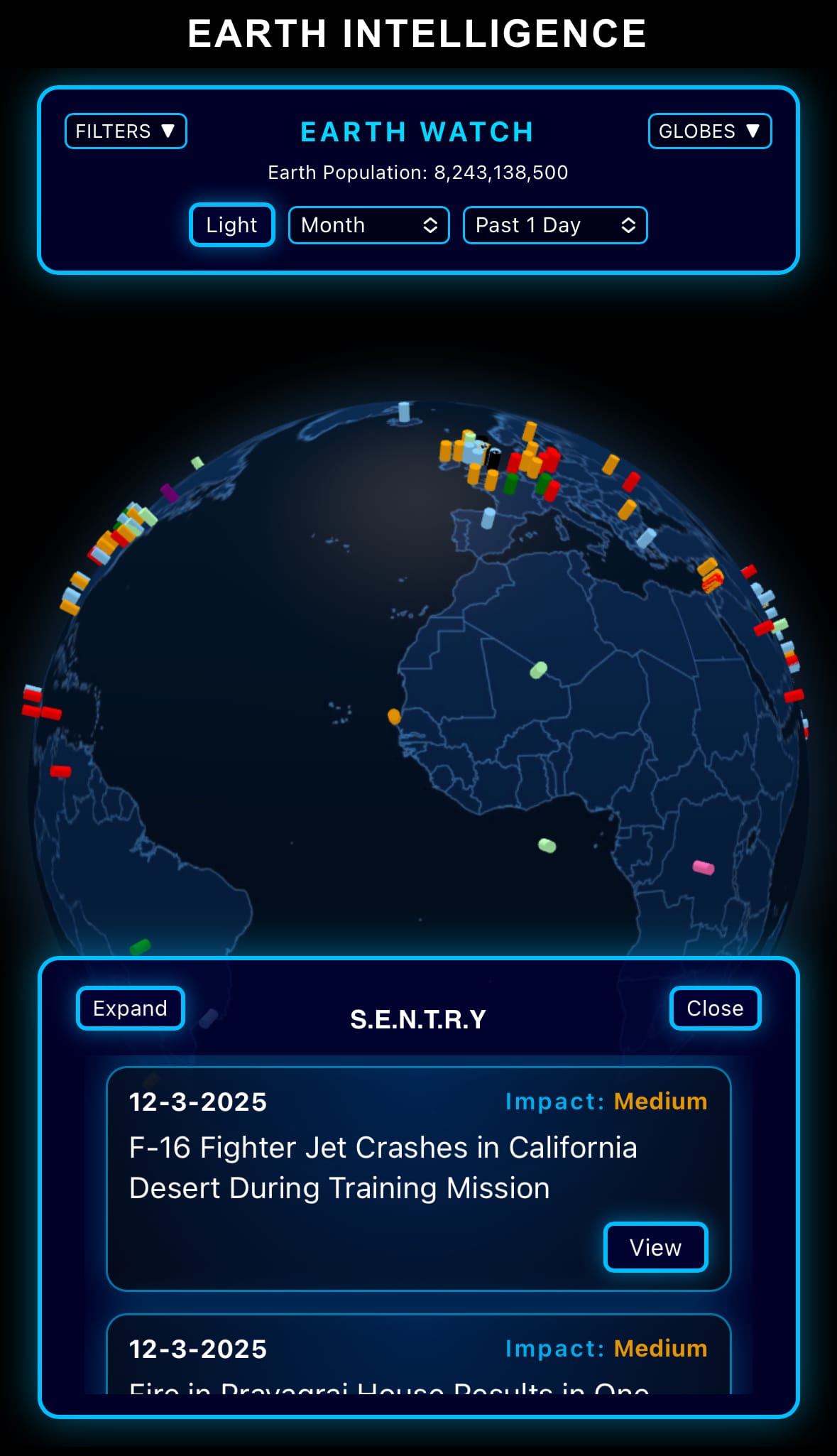
- Click below if you’d like to view our free EARTH WATCH globe:
- Download our mobile app:



Click below to view our previous newsletters:

Support/Suggestions Email:
earthintelligence@earthintel.news