Friday☕️

Trending:
- On January 29, 2026, around 600–700 firefighters from the Nord department (SDIS 59) protested in Lille, France, against severe staffing shortages, insufficient resources, poor working conditions, and low pay. They blocked the city's ring road (périphérique) and parts of the RN356, causing major traffic disruptions, before marching to the SDIS headquarters, where they lit flares and a large bonfire.
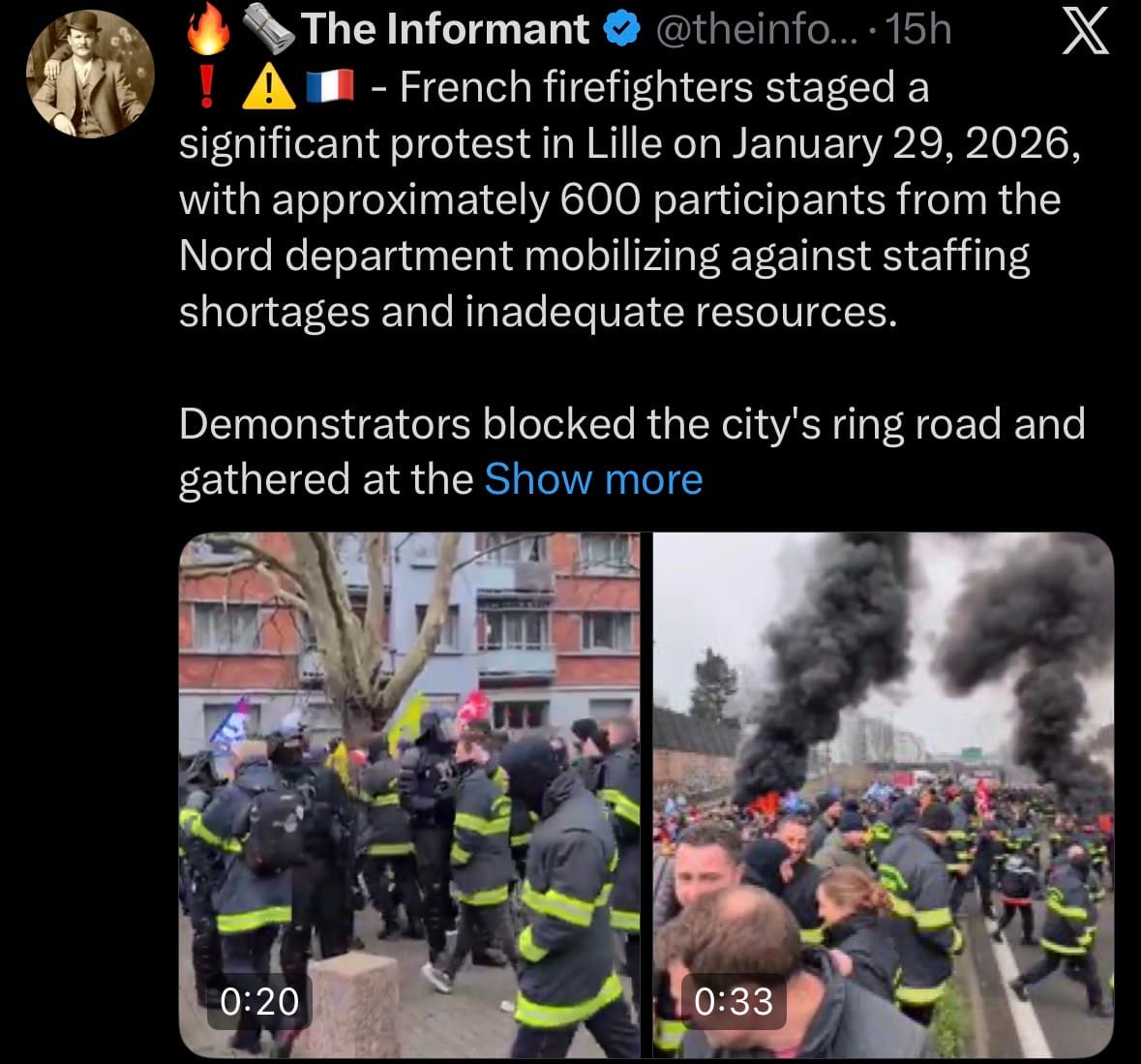
- The demonstrators demanded the filling of 162 vacant positions to handle rising emergency calls and a €7 million budget deficit. Tensions escalated as some tried to enter the SDIS building, leading to clashes with riot police, who used tear gas; firefighters responded with fire extinguishers and pushback. After hours of mobilization, unions secured a promise of 50 new hires (30 immediate, 20 in June) and other concessions, leading them to end the blockade by early afternoon.
Economics & Markets:
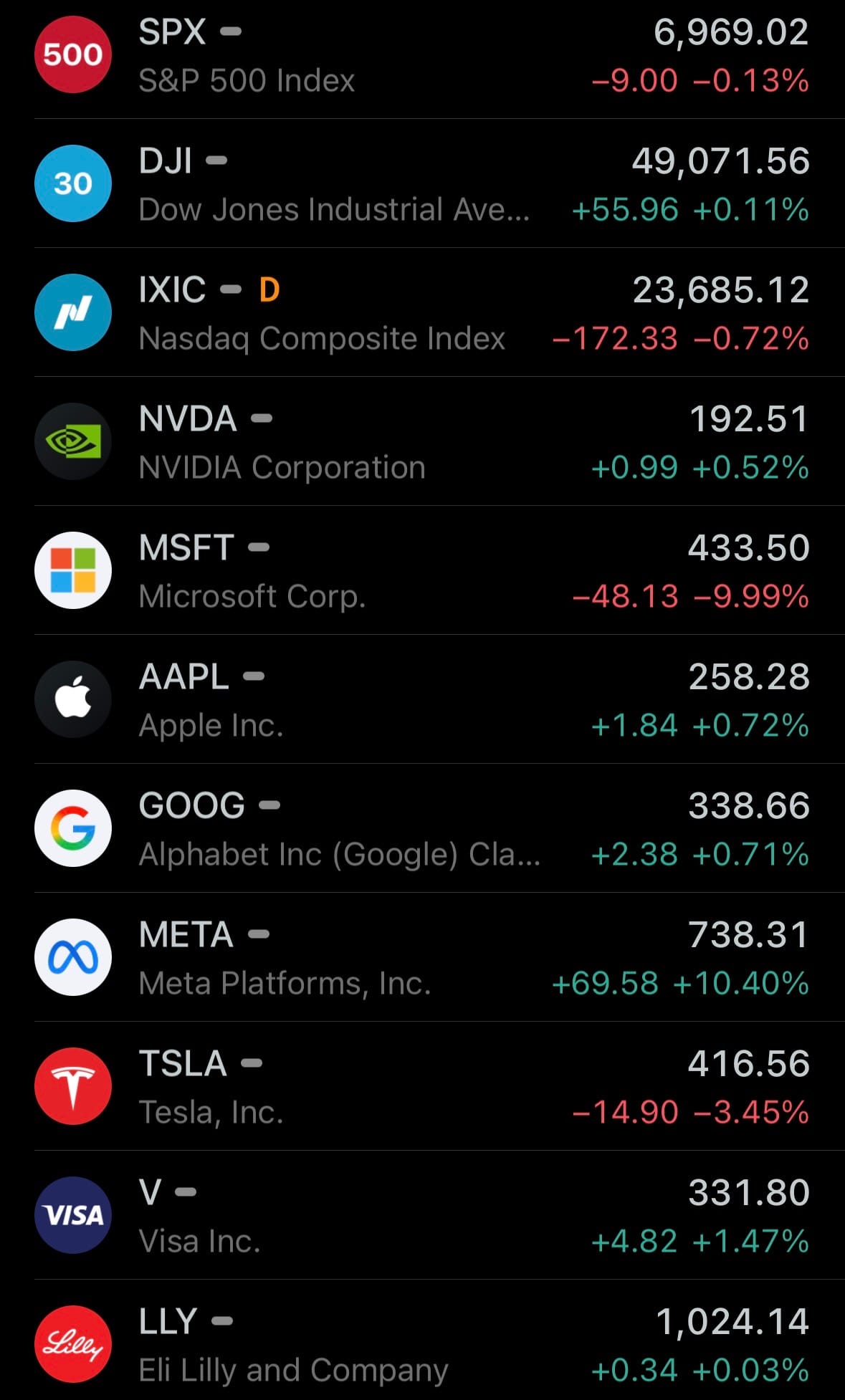
- Yesterday’s U.S. stock market:
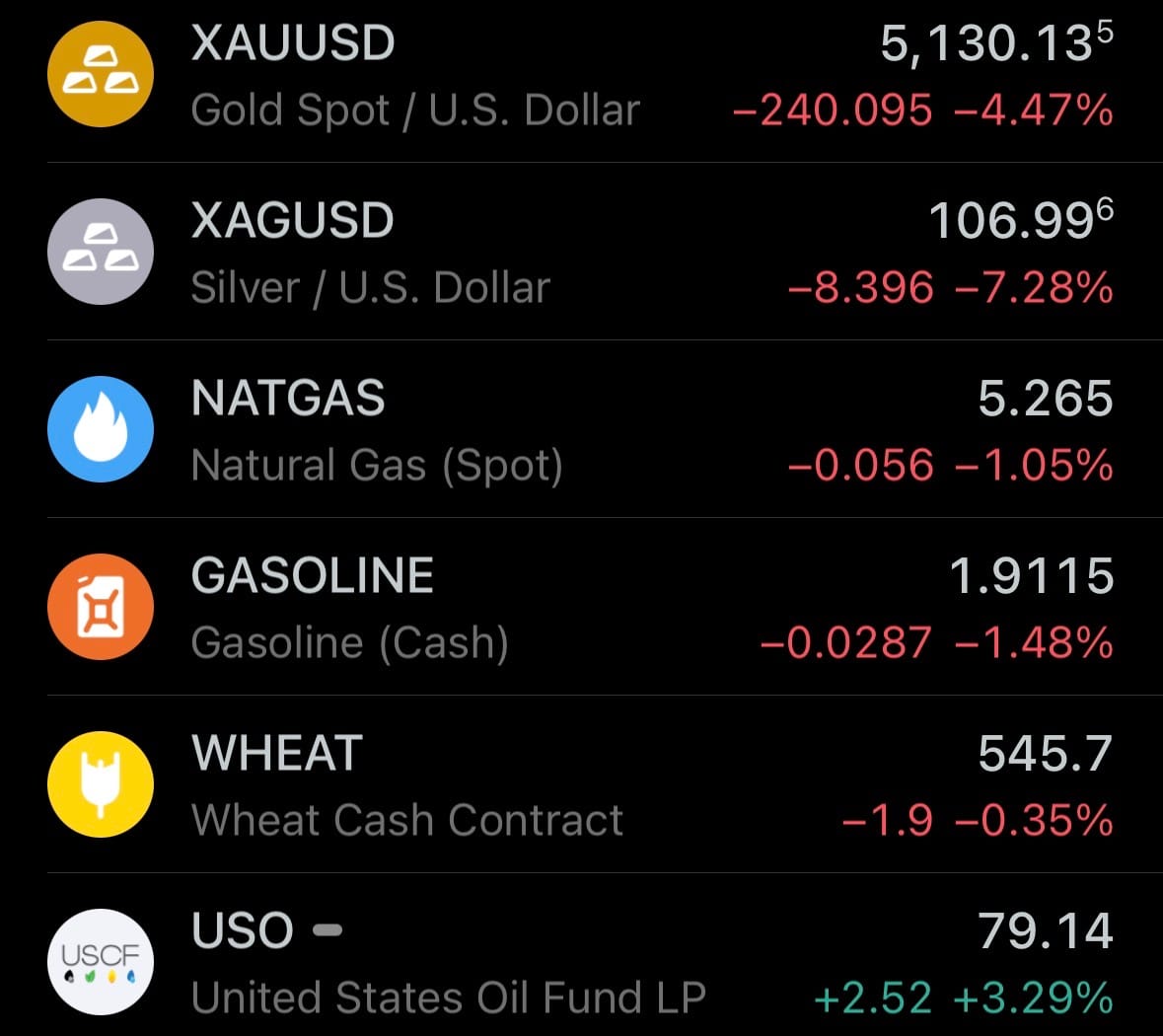
- Today’s commodity market:
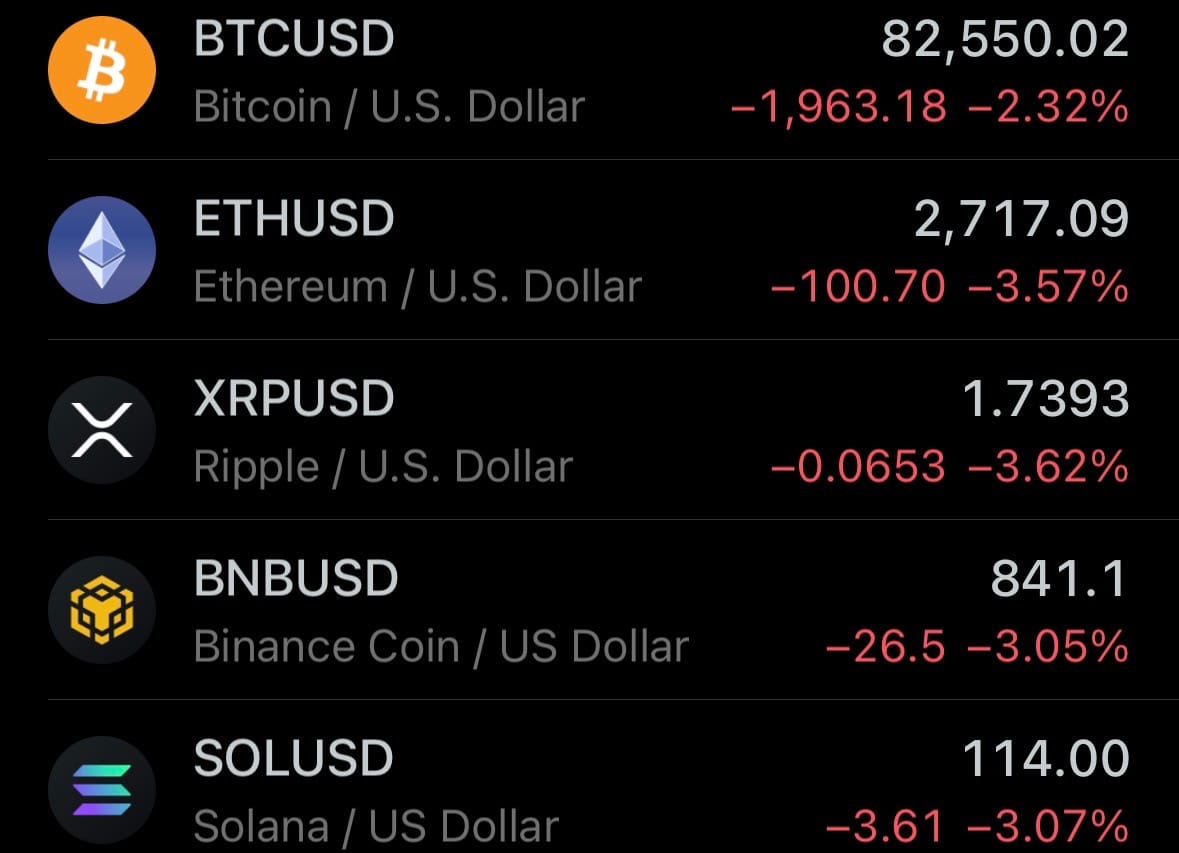
- Today’s crypto market:
Geopolitics & Military Activity:
- On January 30, 2026, Ukrainian sources reported a sharp rise in Russian combat deaths due to intensified Ukrainian drone strikes along the front lines. Drones are now estimated to cause 70–80% of casualties on both sides in active areas. Ukraine’s General Staff claimed 1,310 Russian personnel were eliminated in the past 24 hours, reflecting continued high daily losses amid slow Russian territorial advances. Cumulative casualty estimates since February 24, 2022 remain highly uncertain and differ widely by source.
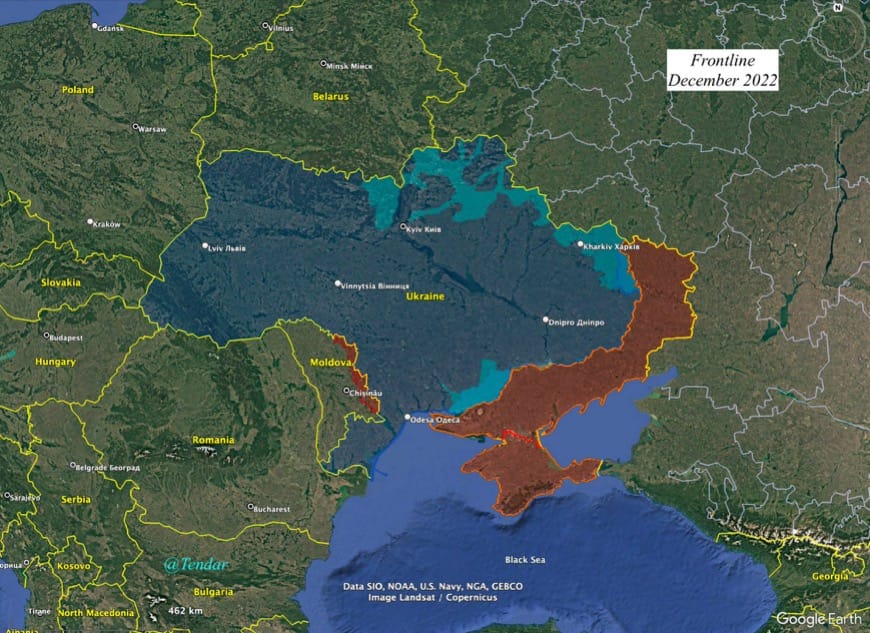
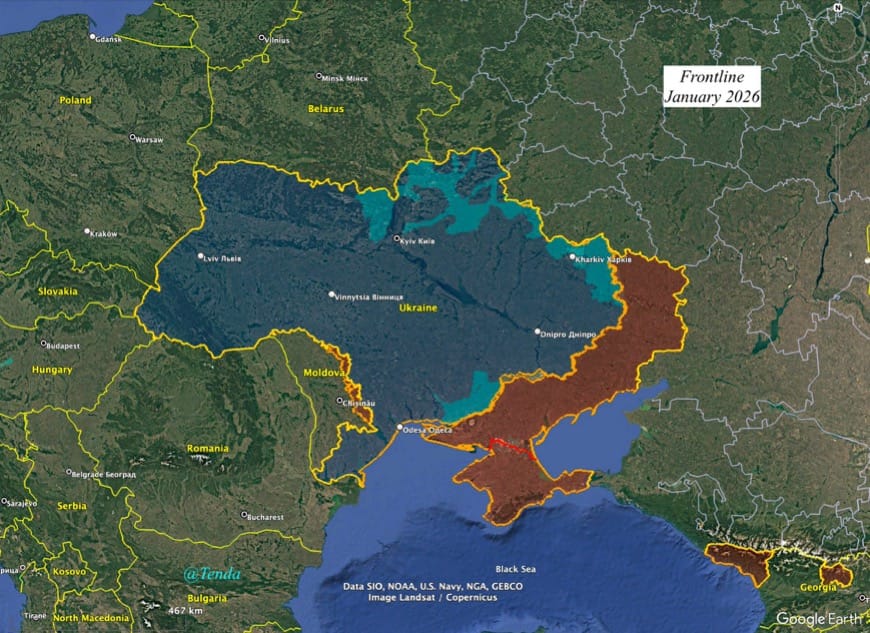
- Ukraine’s General Staff reports about 1,238,710 total Russian losses (killed, wounded, missing, captured) as of January 30, 2026. Independent Western estimates (e.g., CSIS January 2026) put Russian casualties at roughly 1.2 million (including 275,000–325,000 killed) through late 2025, with combined Russian and Ukrainian military casualties possibly nearing or exceeding 2 million by spring 2026 if the pace continues. Ukrainian losses lack full official disclosure but are estimated by Western intelligence and open-source analysis at 400,000–800,000 (killed and wounded). Exact figures are known only to the respective governments; both sides tightly control data, release selective numbers for propaganda or morale, and independent verification is nearly impossible due to restricted access, the fog of war, and lack of transparency.
Space:
- On January 28, 2026, SpaceX launched Stargaze, a free tool to make space safer by tracking satellites and warning about possible collisions. It uses data from SpaceX’s Starlink network and other sources to give very accurate predictions of when satellites or debris might come too close.
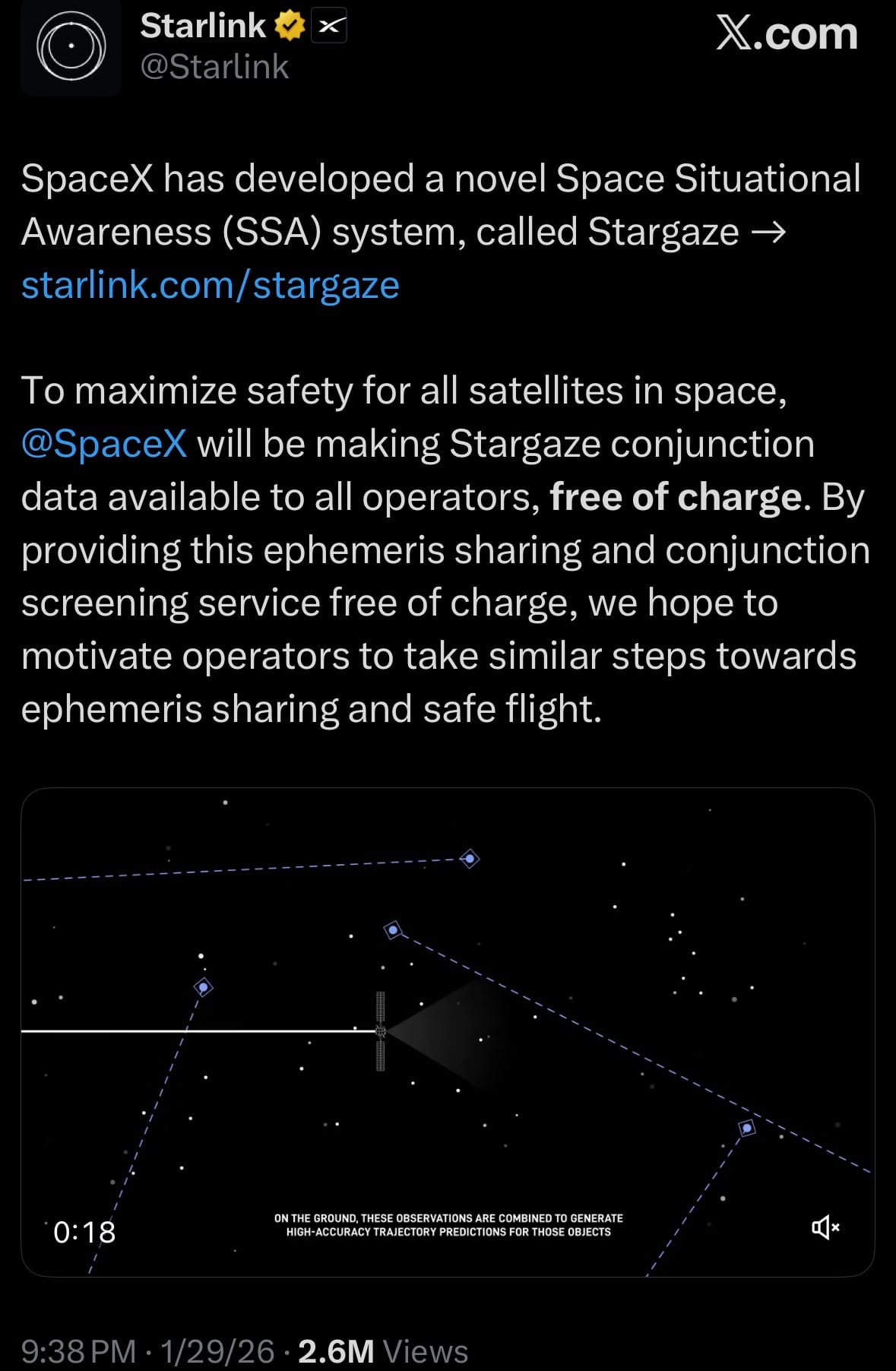
- SpaceX is sharing all this collision-warning data (called conjunction data and precise orbit positions) with every satellite operator in the world at no cost—no fees. The goal is to help everyone avoid crashes in the crowded low-Earth orbit and encourage other companies to share their tracking data too. SpaceX already does thousands of collision-avoidance moves every year, this allows them to set standards for all operators.
Statistic:
- Largest assets on Earth by market capitalization:
- Gold – $37.996T
- Silver – $6.603T
- 🇺🇸 NVIDIA – $4.687T
- 🇺🇸 Alphabet (Google) – $4.088T
- 🇺🇸 Apple – $3.816T
- 🇺🇸 Microsoft – $3.222T
- 🇺🇸 Amazon – $2.584T
- 🇺🇸 Meta Platforms – $1.860T
- 🇹🇼 TSMC – $1.761T
- Bitcoin – $1.689T
- 🇸🇦 Saudi Aramco – $1.663T
- 🇺🇸 Broadcom – $1.568T
- 🇺🇸 Tesla – $1.385T
- 🇺🇸 Berkshire Hathaway – $1.028T
- 🇺🇸 Walmart – $936.09B
- 🇺🇸 Eli Lilly – $918.09B
- 🇺🇸 Vanguard S&P 500 ETF – $854.14B
- 🇺🇸 JPMorgan Chase – $834.15B
- 🇺🇸 iShares Core S&P 500 ETF – $763.83B
- 🇰🇷 Samsung – $751.51B
- 🇨🇳 Tencent – $715.74B
- 🇺🇸 SPDR S&P 500 ETF – $710.16B
- Platinum – $660.50B
- 🇺🇸 Visa – $640.33B
- 🇺🇸 Exxon Mobil – $599.02B
History:
- The history of timekeeping begins as an attempt to impose order on nature and ends as an attempt to control civilization itself. Early societies measured time by the sky: sundials, water clocks, and star movements governed agriculture, religion, and labor as early as 3000 BC in Egypt and Mesopotamia. These systems were local and approximate—good enough to tell when to plant crops or hold rituals, but useless for coordination beyond a city or region. Mechanical clocks in medieval Europe (13th–14th centuries) introduced continuous, standardized timekeeping, enabling towns to synchronize markets, workdays, and governance. But time was still fragmented—each city kept its own local time. The first true crisis of time synchronization emerged with navigation. Determining longitude at sea required knowing the exact time difference between a ship’s location and a reference point on Earth. This problem crippled empires until John Harrison’s marine chronometer (1730s–1760s) made precise, portable timekeeping possible, revolutionizing global navigation, trade, and naval power. For the first time, accurate time became a strategic asset—whoever could measure it could move safely and dominate oceans.
- The industrial age transformed time from a local convenience into a national and then global control system. Railroads in the 19th century made local time untenable—trains couldn’t operate safely if every town ran on its own clock. This forced the creation of standard time zones, formally adopted in 1884, synchronizing entire continents. Telegraph networks allowed time signals to be distributed instantly, binding nations together temporally. As electricity grids, telecommunication systems, and financial markets expanded in the 20th century, synchronization became mission-critical. Mechanical clocks gave way to quartz oscillators, then to atomic clocks in the 1950s, which measure time using the vibration of atoms with extraordinary precision. Atomic time made it possible to synchronize radar systems, coordinate military operations, and run high-speed communications networks. During the Cold War, precise timing underpinned missile warning systems, nuclear command-and-control, encrypted communications, and early satellite navigation. Time was no longer just about coordination—it was about deterrence, survivability, and strategic stability.
- Today, civilization runs on nanosecond-level synchronization, and timing infrastructure has become one of the most critical—and least visible—foundations of modern power. Global Navigation Satellite Systems (GNSS) like GPS distribute precise time signals worldwide, enabling navigation, aircraft coordination, shipping logistics, power grid phase alignment, cellular networks, financial trading, and missile guidance. High-frequency trading systems depend on microsecond advantages; power grids rely on synchronized timing to prevent cascading failures; military systems require precise time to fuse sensors, guide weapons, and coordinate forces across domains. This creates a profound asymmetry: societies that depend on satellite-distributed time are extraordinarily efficient—but also vulnerable. Jamming, spoofing, cyber interference, or physical attacks on timing infrastructure can disrupt navigation, communications, finance, and defense simultaneously. As a result, nations now treat time as a strategic domain, investing in resilient atomic clocks, alternative timing distribution, and protected space assets. Control of timing is no longer symbolic—it is structural. Whoever controls time synchronization controls how systems move, communicate, transact, and fight. In the modern world, time is not just measured; it is enforced—and that makes it one of the quietest and most absolute forms of power ever created.
Image of the day:

Thanks for reading! Earth is complicated, we make it simple.
- Click below if you’d like to view our free EARTH WATCH globe:
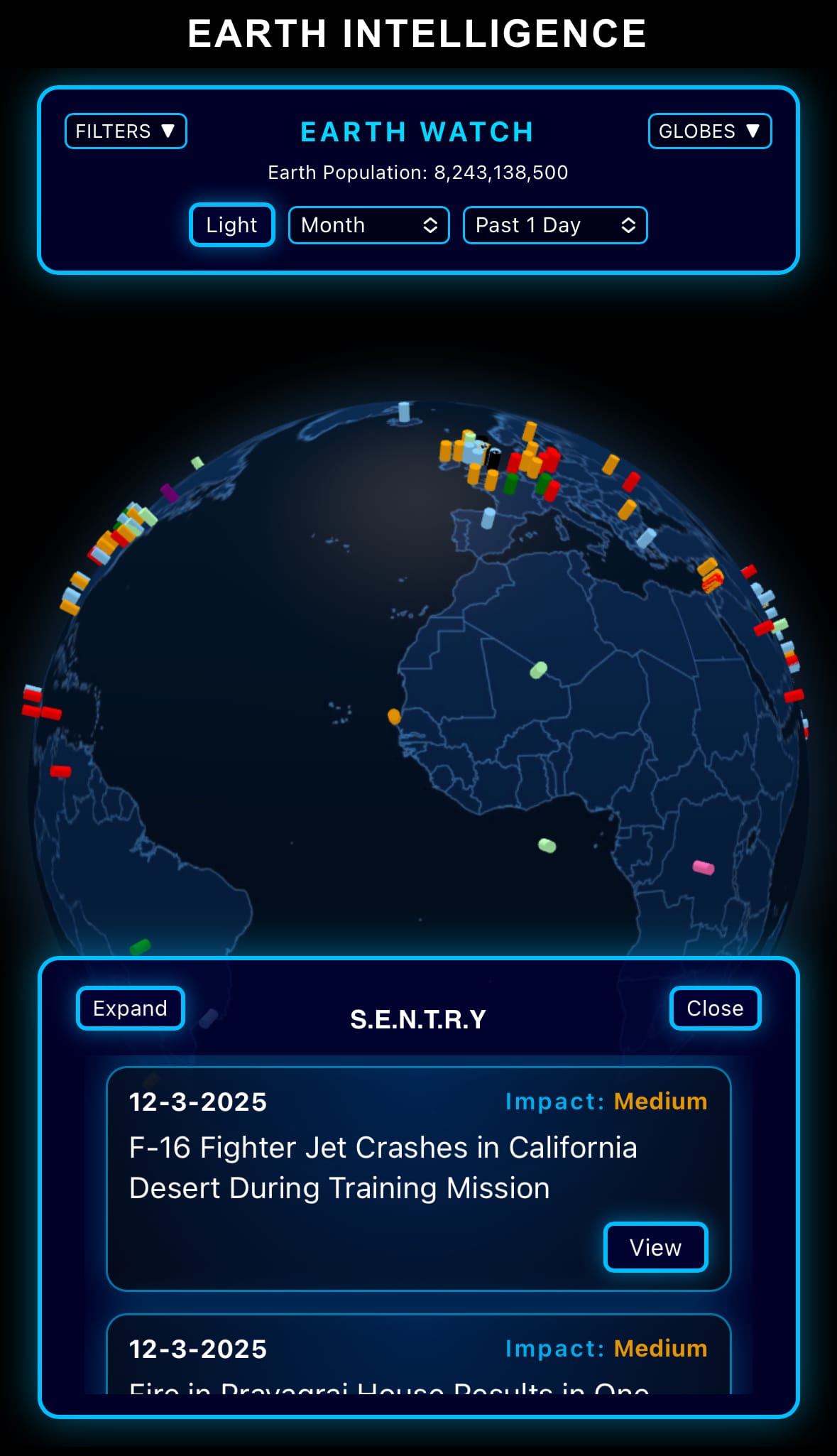
- Download our mobile app:



Click below to view our previous newsletters:

Support/Suggestions Email:
earthintelligence@earthintel.news