Friday☕️


Trending:
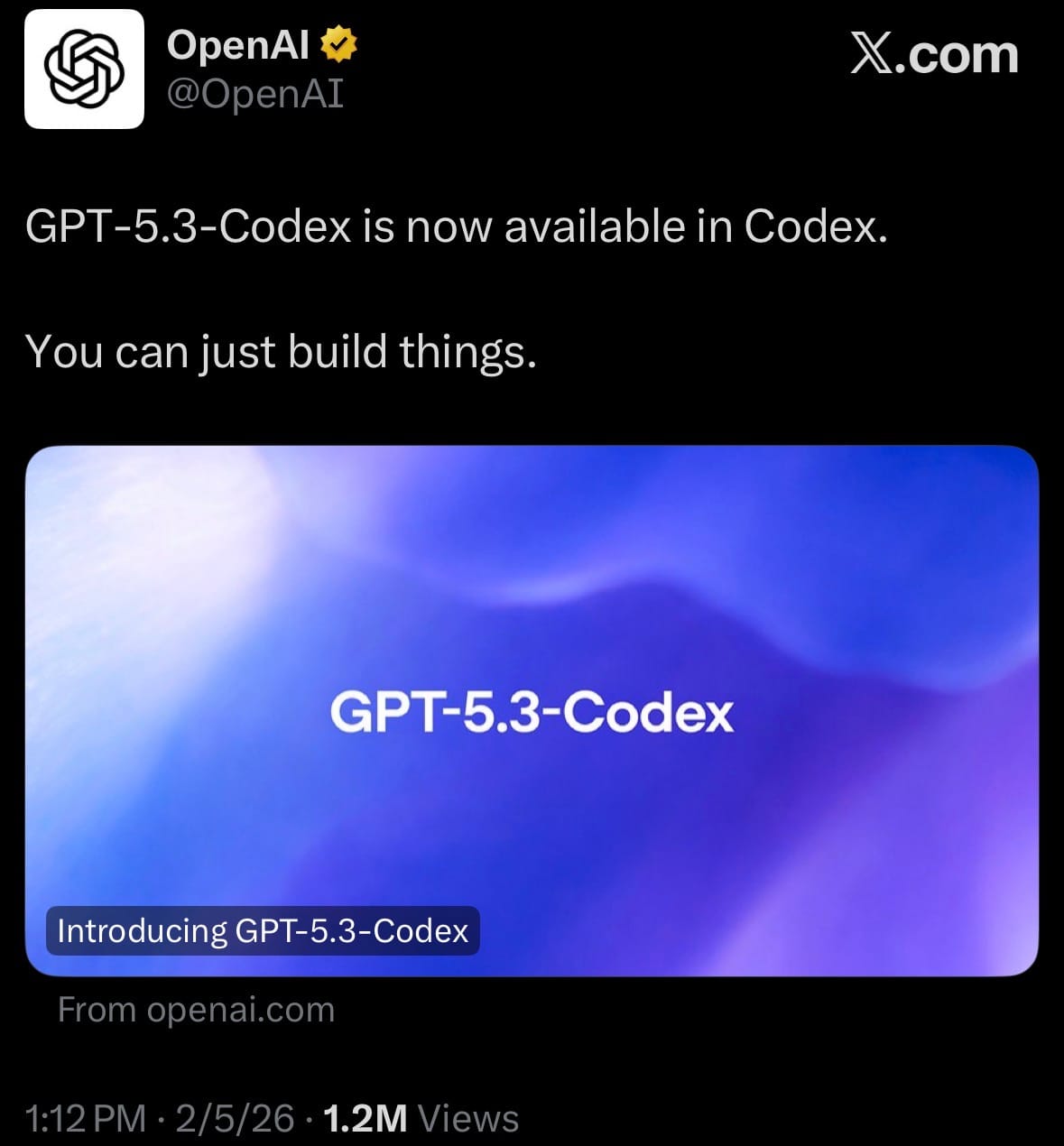
- On February 5, 2026, OpenAI released GPT-5.3-Codex, an improved coding model that combines strong programming skills with better reasoning and knowledge in one version. It runs about 25% faster, making it much better for long tasks like research, complex coding, debugging, and building full apps or games over days. Users can guide it during work without losing track. OpenAI said earlier versions even helped their own team fix bugs and manage projects. It’s available now for paid ChatGPT users on the Codex app, command line, IDE tools, and web, with API access coming soon.
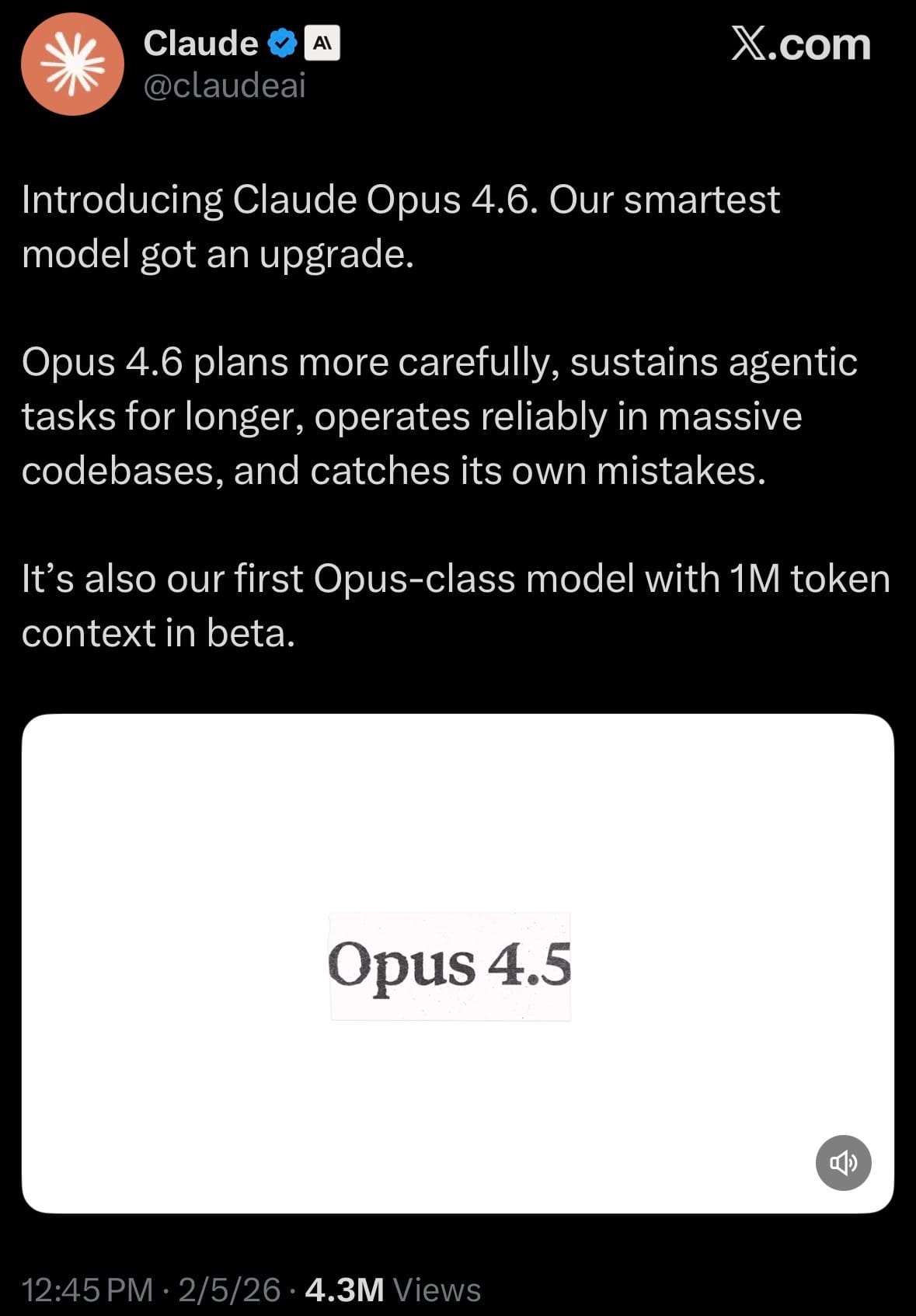
- Also on February 5, 2026, Anthropic released Claude Opus 4.6, an upgraded version of their best model with stronger coding, better handling of long tasks, and more reliable performance. It manages big codebases more accurately, does improved code reviews and debugging, and includes a 1-million-token context window in beta (so it can handle huge documents or projects). It leads several public benchmarks for coding, reasoning, finance/legal knowledge, and online research, beating GPT-5.2 and its previous version. Pricing stays the same ($5 per million input tokens, $25 per million output tokens). It’s available today on claude.ai, the Claude API, and cloud platforms like Amazon Bedrock, Google Vertex AI, and Microsoft Foundry.
Economics & Markets:
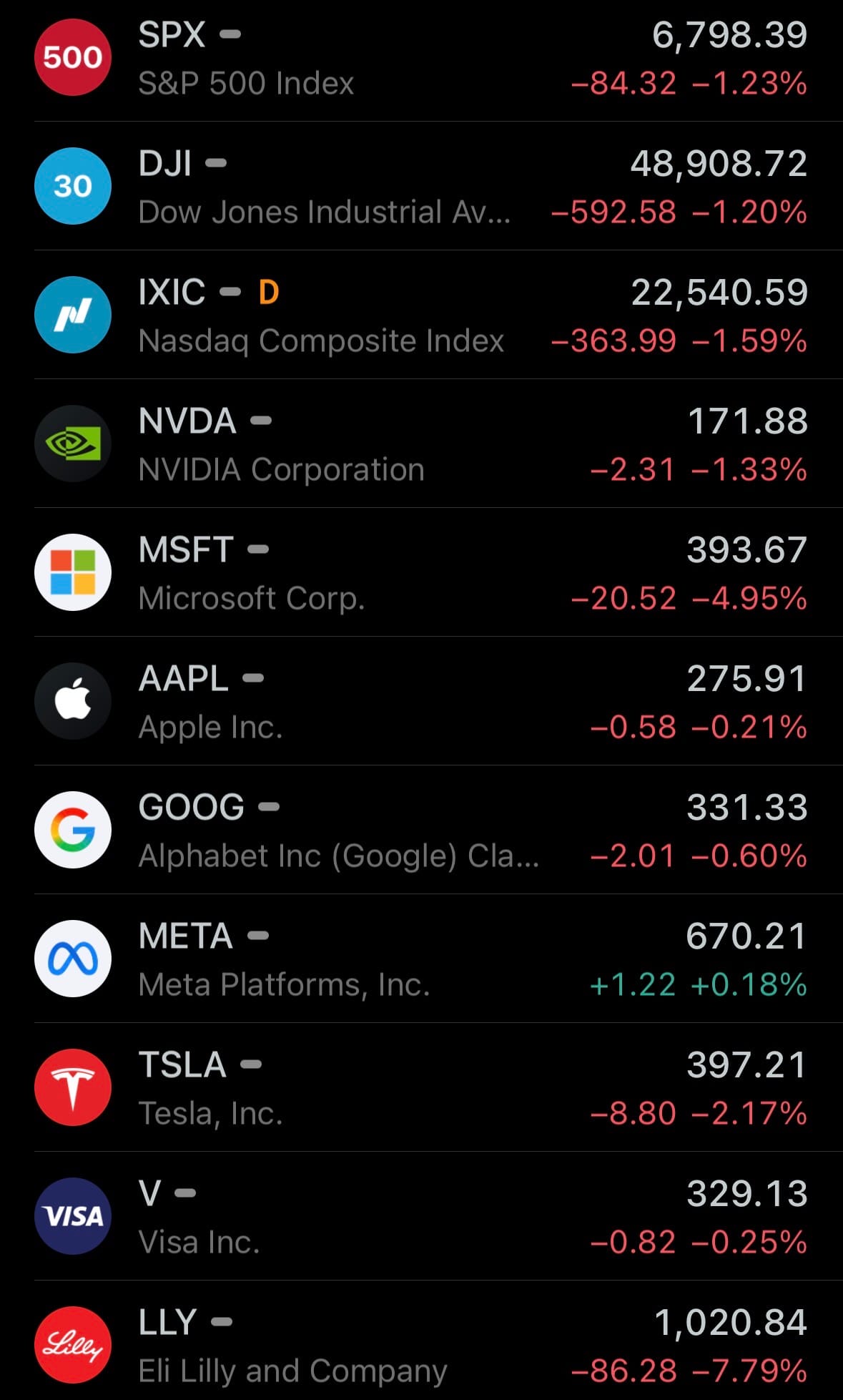
- Yesterday’s U.S. stock market:
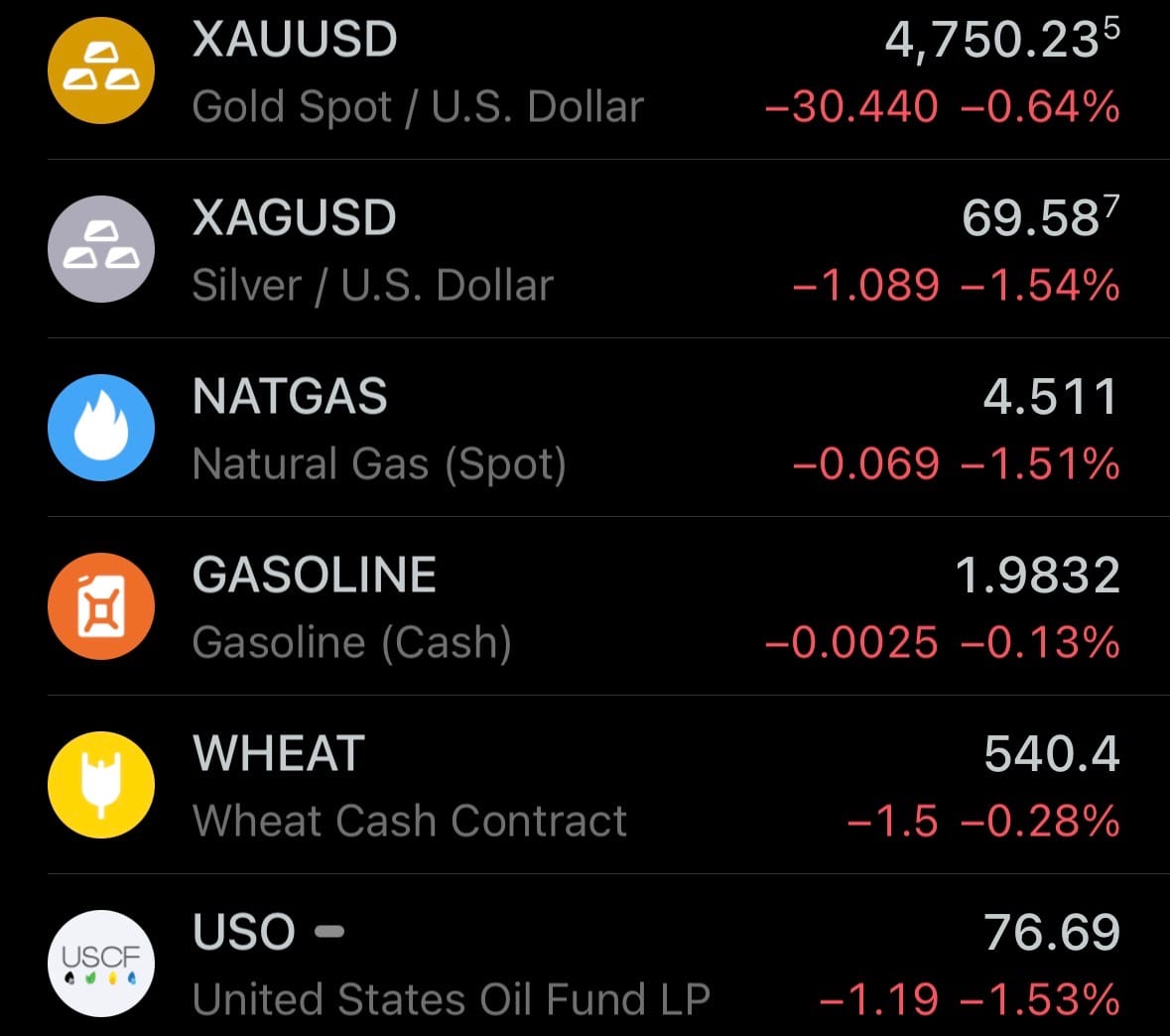
- Yesterday’s commodity market:
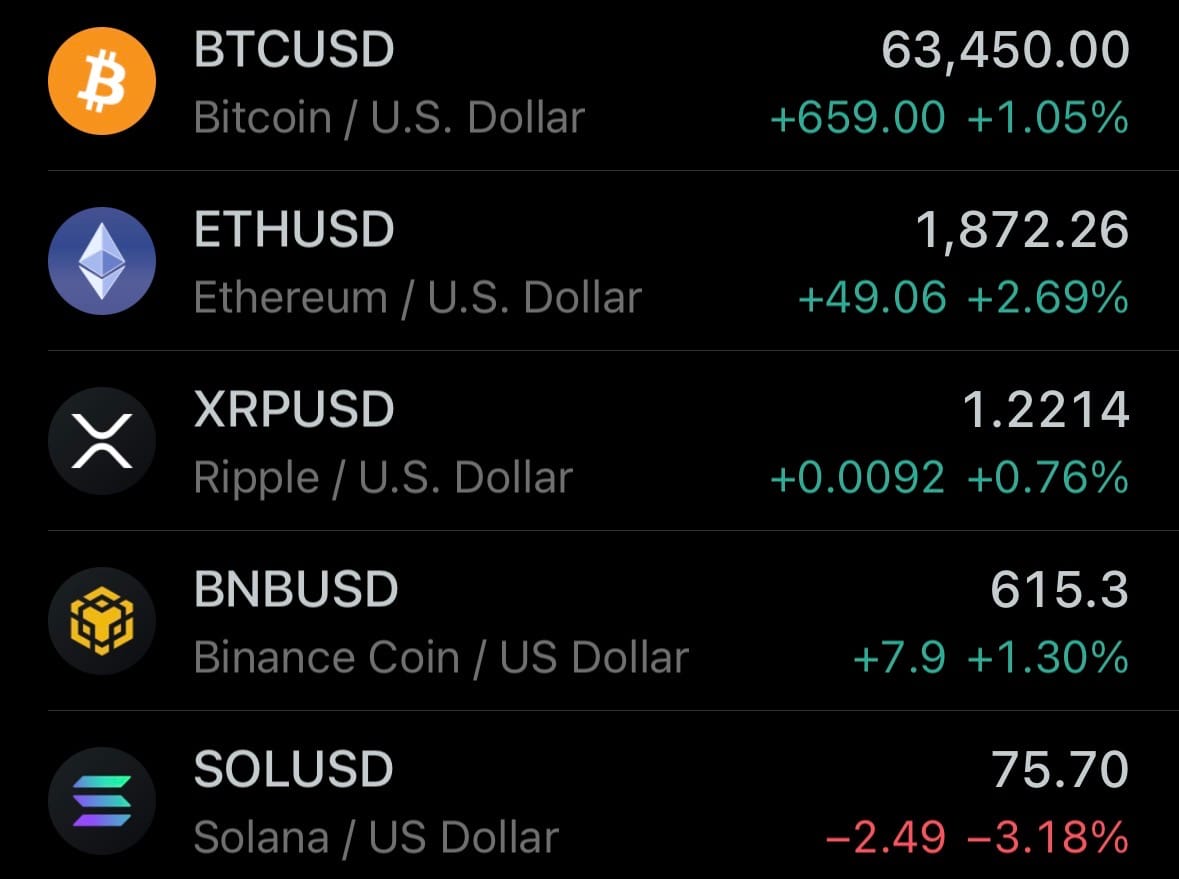
- Yesterday’s crypto market:
Geopolitics & Military Activity:
- On February 5, 2026, the Israel Defense Forces (IDF) carried out airstrikes on several Hezbollah sites in Lebanon, targeting underground tunnel shafts that Israel said were being used to store weapons. Secondary explosions were observed after the strikes, indicating the presence of munitions in the targeted areas. The IDF stated that Hezbollah had been conducting terrorist activity at these sites over recent months, which they said violated the November 2024 ceasefire agreement.
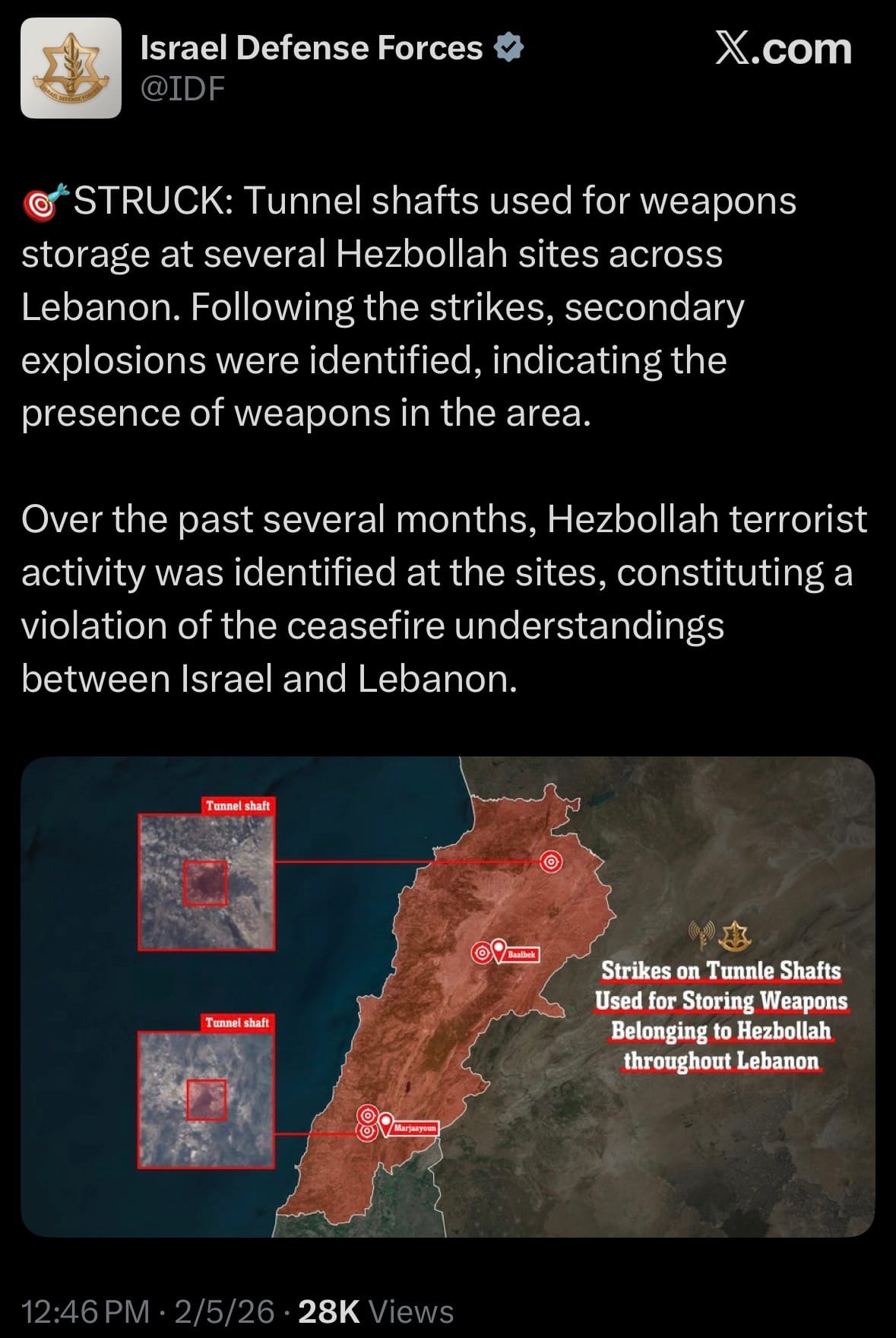
- Israel described the strikes as precise actions to prevent Hezbollah from rearming and rebuilding military infrastructure in breach of the truce. Hezbollah and Lebanese sources accused Israel of violating the ceasefire by carrying out unprovoked attacks, claiming no active attacks were occurring from their side and that the strikes were unjustified. Both sides continue to accuse each other of ceasefire violations: Israel points to Hezbollah’s alleged weapons buildup and hidden military activity as ongoing threats, while Hezbollah and Lebanon say Israel’s repeated strikes on non-active targets represent aggression and breach the agreement.

Science & Technology:
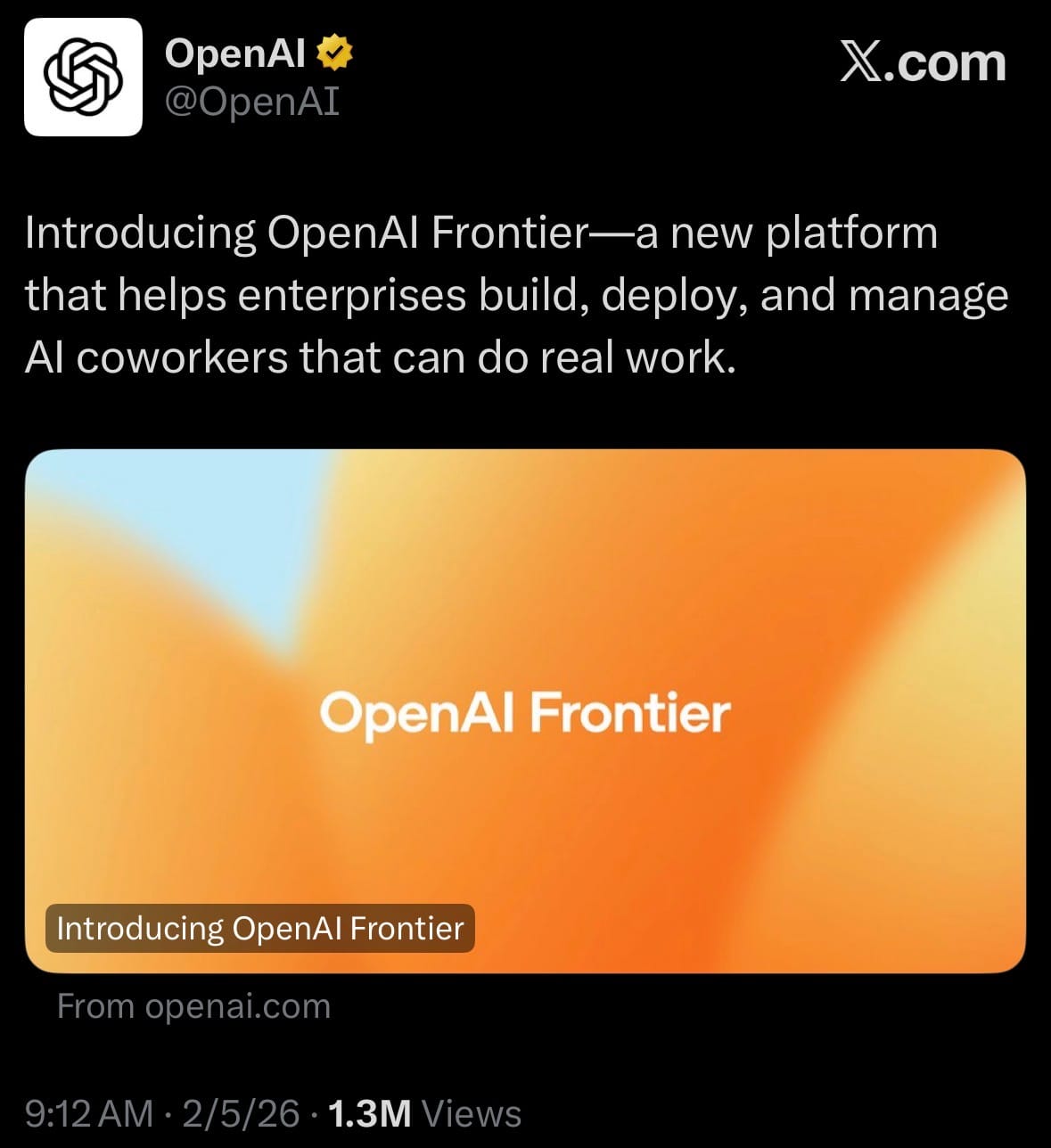
- On February 5, 2026, OpenAI launched OpenAI Frontier, a new platform made for big companies to create, run, and manage AI “coworkers.” These are smart AI agents that act like virtual employees and do real work tasks all day long. In simple terms, businesses can build custom AI helpers that connect securely to their own tools, files, databases, and apps. The AI can then handle things like reading and analyzing data, writing reports, answering customer emails, scheduling meetings, processing invoices, running code, or managing projects—working on its own or together with human teams 24/7.
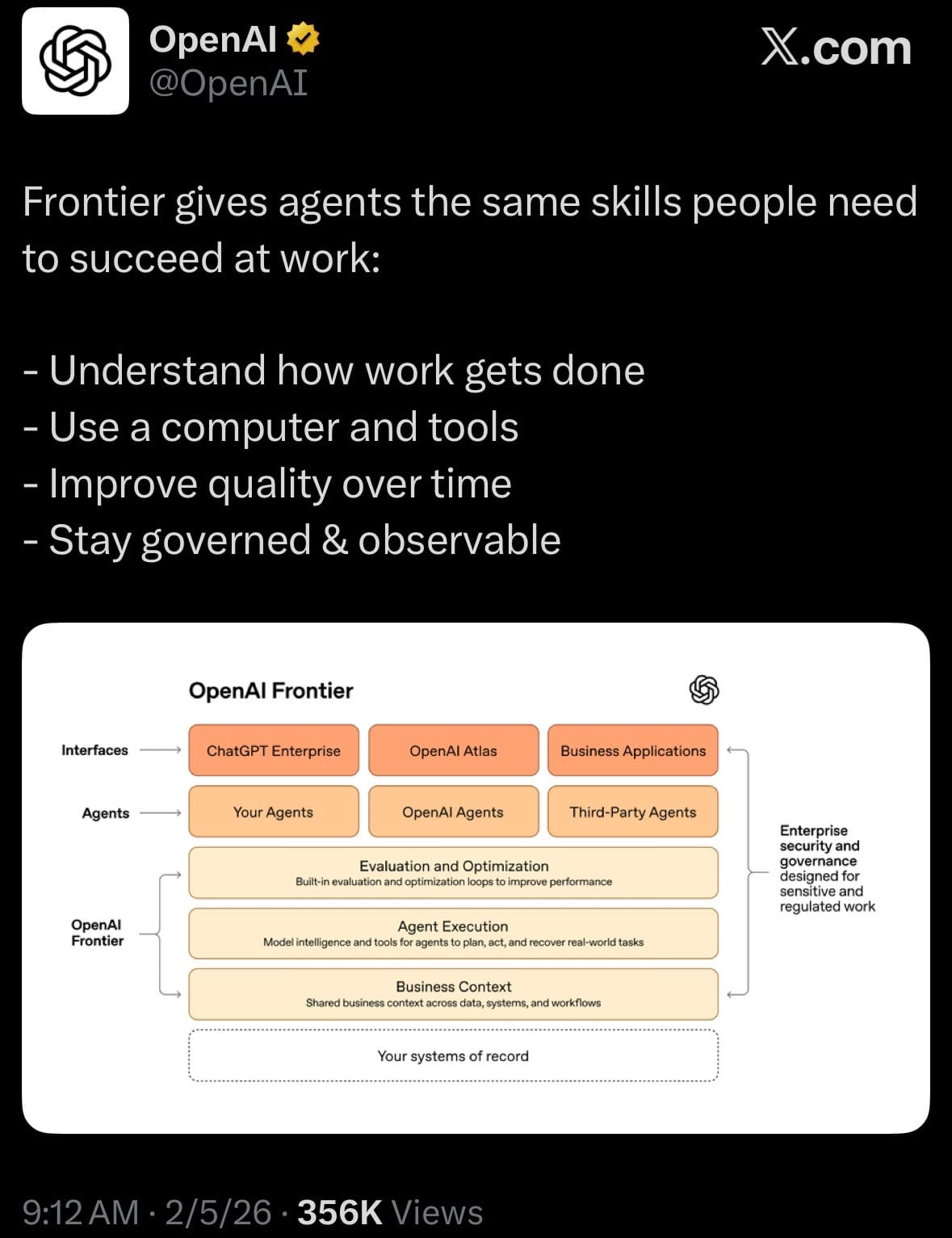
- It follows the company’s rules and security settings, comes with strong protection (like SOC 2 and GDPR compliance), and lets managers watch, check, and update the agents anytime. This is different from regular chat—it’s built for actual business workflows to take over or help with repetitive jobs. The platform is currently in limited preview for selected big companies, with wider access planned later in 2026.
Space:
- On February 5, 2026, Russia launched a Soyuz 2.1b/Fregat-M rocket from Plesetsk Cosmodrome carrying a classified payload designated as Cosmos (Unknown Payload) for the Russian Space Forces (VKS RF). The launch occurred at approximately 18:59 UTC (1:59 p.m. EST), placing the satellite(s) into orbit on a northerly trajectory typical for military missions from Plesetsk.
- The payload details remain undisclosed, as is standard for Russian military "Cosmos" series launches, which often involve reconnaissance, communications, electronic intelligence, navigation, or early-warning satellites. No official statement from Roscosmos or the Ministry of Defense specified the mission type or orbit parameters at the time of launch. The mission was the first Soyuz 2.1b flight of 2026 and marked the 100th overall mission for that variant.
Statistic:
- Largest public tech companies on Earth by market capitalization:
- 🇺🇸 NVIDIA: $4.184T
- 🇺🇸 Apple: $4.055T
- 🇺🇸 Alphabet (Google): $3.999T
- 🇺🇸 Microsoft: $2.925T
- 🇺🇸 Amazon: $2.380T
- 🇹🇼 TSMC: $1.715T
- 🇺🇸 Meta Platforms: $1.695T
- 🇺🇸 Tesla: $1.490T
- 🇺🇸 Broadcom: $1.472T
- 🇰🇷 Samsung: $689.65B
- 🇨🇳 Tencent: $628.41B
- 🇳🇱 ASML: $524.06B
- 🇺🇸 Micron Technology: $430.94B
- 🇺🇸 Oracle: $392.25B
- 🇨🇳 Alibaba: $376.62B
- 🇰🇷 SK Hynix: $372.98B
- 🇺🇸 Netflix: $343.04B
- 🇺🇸 Cisco: $325.41B
- 🇺🇸 AMD: $313.39B
- 🇺🇸 Palantir: $309.87B
- 🇺🇸 IBM: $270.97B
- 🇺🇸 Lam Research: $267.92B
- 🇺🇸 Applied Materials: $241.28B
- 🇺🇸 Intel: $240.96B
- 🇩🇪 SAP: $230.33B
History:
- Quantum computing begins as a physics idea long before it becomes a machine. In the early 1900s, quantum mechanics revealed that nature doesn’t run like classical gears—it runs on probabilities, wavefunctions, and strange rules at microscopic scales. By the 1980s, thinkers like Richard Feynman recognized a deep implication: if the universe is quantum, then simulating it efficiently may require a quantum machine. Classical computers struggle to model quantum systems because the complexity explodes exponentially. In 1994, Peter Shor published a breakthrough algorithm showing that a sufficiently powerful quantum computer could factor large numbers dramatically faster than classical machines—immediately shaking the foundations of modern encryption. A few years later, Grover’s algorithm showed quantum systems could speed up certain search problems. These discoveries turned quantum computing from theoretical curiosity into strategic technology. The core concept is simple but alien: instead of bits being 0 or 1, quantum computers use qubits, which can exist in superpositions of states and become entangled, allowing certain computations to be performed in fundamentally different ways. Quantum computers are not “faster computers” in general—they are specialized machines that can outperform classical systems on certain classes of problems, especially those involving complex quantum behavior, optimization, and cryptography.
- Modern quantum computing, however, is still in its early industrial era—more like the vacuum-tube days of classical computing than the smartphone era. Building stable qubits is brutally hard. Quantum states are fragile, collapsing under noise, heat, vibration, or electromagnetic interference, which is why most quantum processors operate near absolute zero. Today’s machines are “NISQ” systems—Noisy Intermediate-Scale Quantum devices—capable of impressive experiments but not yet the large, error-corrected systems required for transformative applications. That’s why quantum computing isn’t widespread: it’s not something you plug into the internet like a cloud server. It requires extreme physical conditions, complex error correction, and specialized programming. Most current use is experimental or background research: chemistry simulations, materials science, optimization prototypes, and cryptographic analysis. The “quantum-internet link” problem is real—quantum systems don’t scale like classical networks, and transmitting quantum states requires entirely new infrastructure like quantum repeaters and entanglement distribution. So for now, quantum computing lives mostly in isolated labs and controlled environments rather than as a global platform.
- Strategically, quantum computing is already a geopolitical race. The United States, China, and other major powers invest heavily because the implications touch national security: codebreaking, secure communications, advanced sensing, and optimization of military logistics and targeting. It’s reasonable to assume that defense and intelligence agencies are exploring classified quantum capabilities, especially in areas like cryptanalysis, signals processing, and quantum sensing—but the public reality remains that no nation has demonstrated large-scale, fault-tolerant quantum computers capable of breaking modern encryption today. The real revolution comes if and when quantum systems mature into stable, networkable infrastructure. At that point, encryption standards could be rewritten, optimization could leap forward, drug and materials discovery could accelerate, and entirely new computational paradigms could emerge. Quantum computing is not yet the new internet—it is more like the early reactor age: immense potential, enormous engineering barriers, and world-changing consequences once it becomes reliable, scalable, and connected. When that bridge is finally built, computation will stop being purely digital and become something deeper: physics itself, harnessed as a processor.
Image of the day:

Thanks for reading! Earth is complicated, we make it simple.
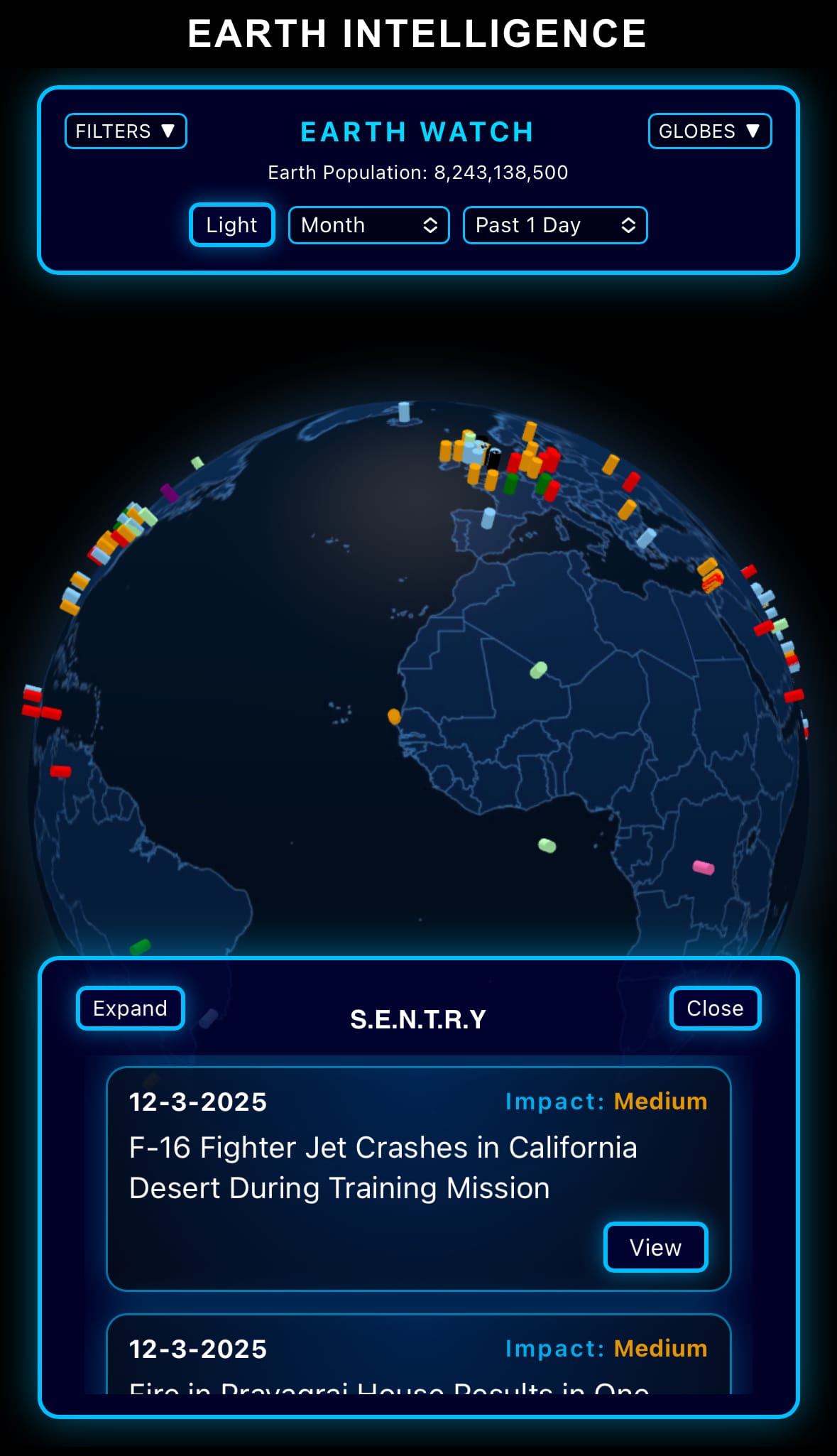
- Click below if you’d like to view our free EARTH WATCH globe:
- Download our mobile app:



Click below to view our previous newsletters:

Support/Suggestions Email:
earthintelligence@earthintel.news