Terror Attack, Continued Middle East Tensions & Chinese Space Launches

Trending:
- On March 12, 2026, two suspected terrorist attacks occurred in the United States, killing one person and injuring four others. In West Bloomfield, Michigan, a Lebanese man drove an explosives-laden truck into Temple Israel synagogue; security shot and killed him, injuring one guard. In Norfolk, Virginia, Mohamed Bailor Jalloh—a naturalized U.S. citizen from Sierra Leone and former Army National Guard member previously convicted for supporting ISIS—shot up an ROTC classroom at Old Dominion University, killing one and wounding two before students killed him.

- Both incidents are under investigation as potential terrorism linked to the Middle East conflict. The Michigan attacker had posted about family killed in an Israeli strike in Lebanon, while Jalloh had a known radicalization history and was released from prison in 2024. No direct link between the attacks has been confirmed, but they have fueled intense debate over immigration vetting, domestic terrorism, and national security.
Economics & Markets:
- Yesterday’s U.S. stock market:

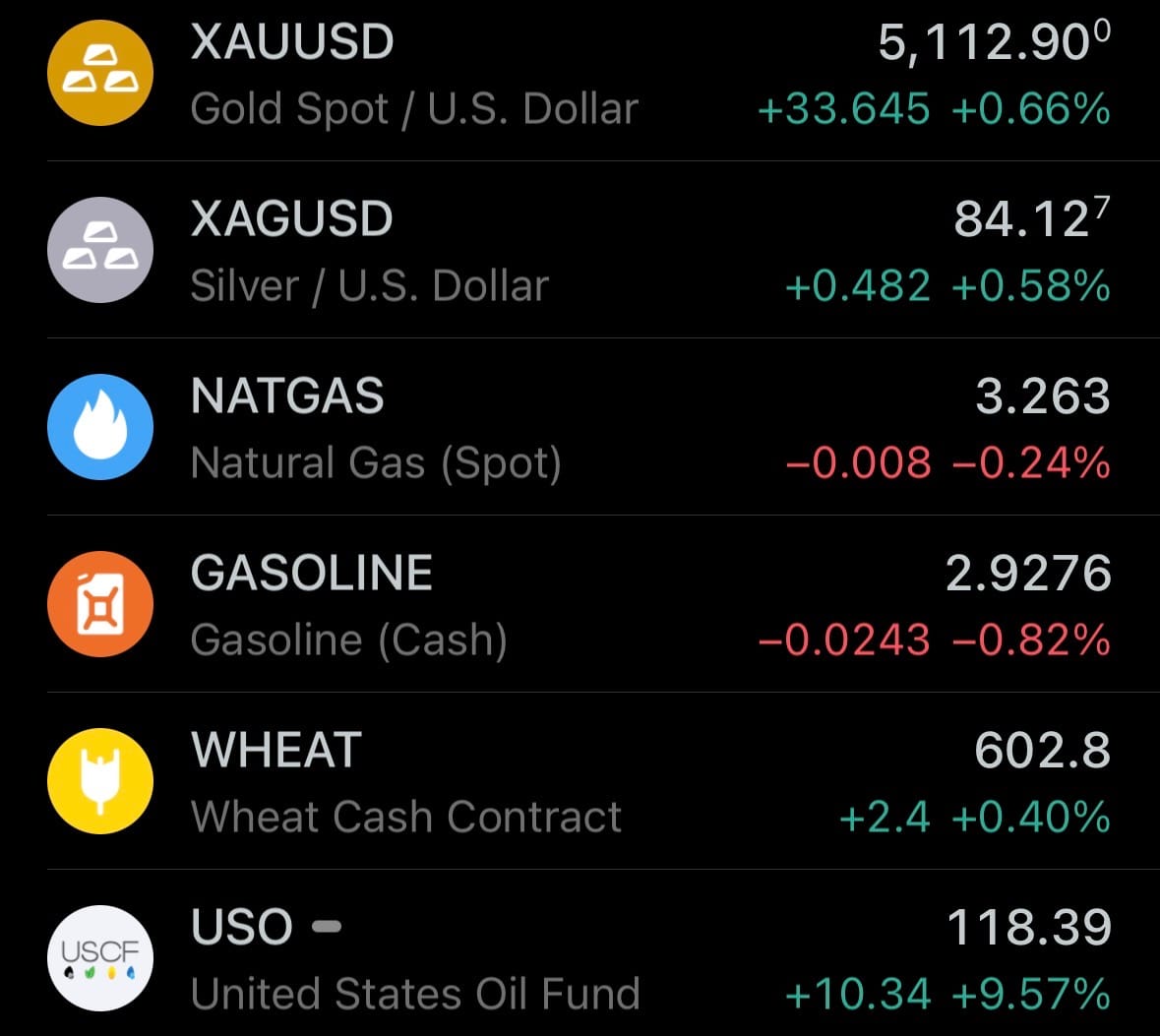
- Yesterday’s commodity market:
- Yesterday’s crypto market:

Geopolitics & Military Activity:
- As of March 12, 2026, multiple suicide drones (also described as kamikaze or one-way attack drones) struck a joint Peshmerga-French military base in the Makhmour area of Erbil province, Iraqi Kurdistan, late Thursday evening. At least six French soldiers were wounded in the attack, with injuries reported as light to moderate; no Peshmerga personnel were harmed, and the soldiers received immediate medical attention while base operations continued.

- Erbil Governor Omed Koshnaw and the French military confirmed the incident, which targeted the base where French forces provide counter-terrorism training alongside Kurdish Peshmerga. The attack fits into the broader pattern of escalating regional tensions and proxy strikes amid the ongoing U.S.-Israel-Iran war, with some sources attributing it to Iranian or Iran-linked forces in retaliation for Western involvement.
IDF Strikes:
- As of March 12, 2026, the Israel Defense Forces (IDF) announced that an overnight Israeli Air Force strike in Lebanon eliminated Ali Muslim Tabaja, the senior commander of Iran's Imam Hossein Division (also known as Imam Hussein Division), along with several other senior operatives from the unit. Tabaja, who had previously served as deputy commander, took over leadership after his predecessor, Dhu al-Fiqar, was killed in an earlier Israeli operation.
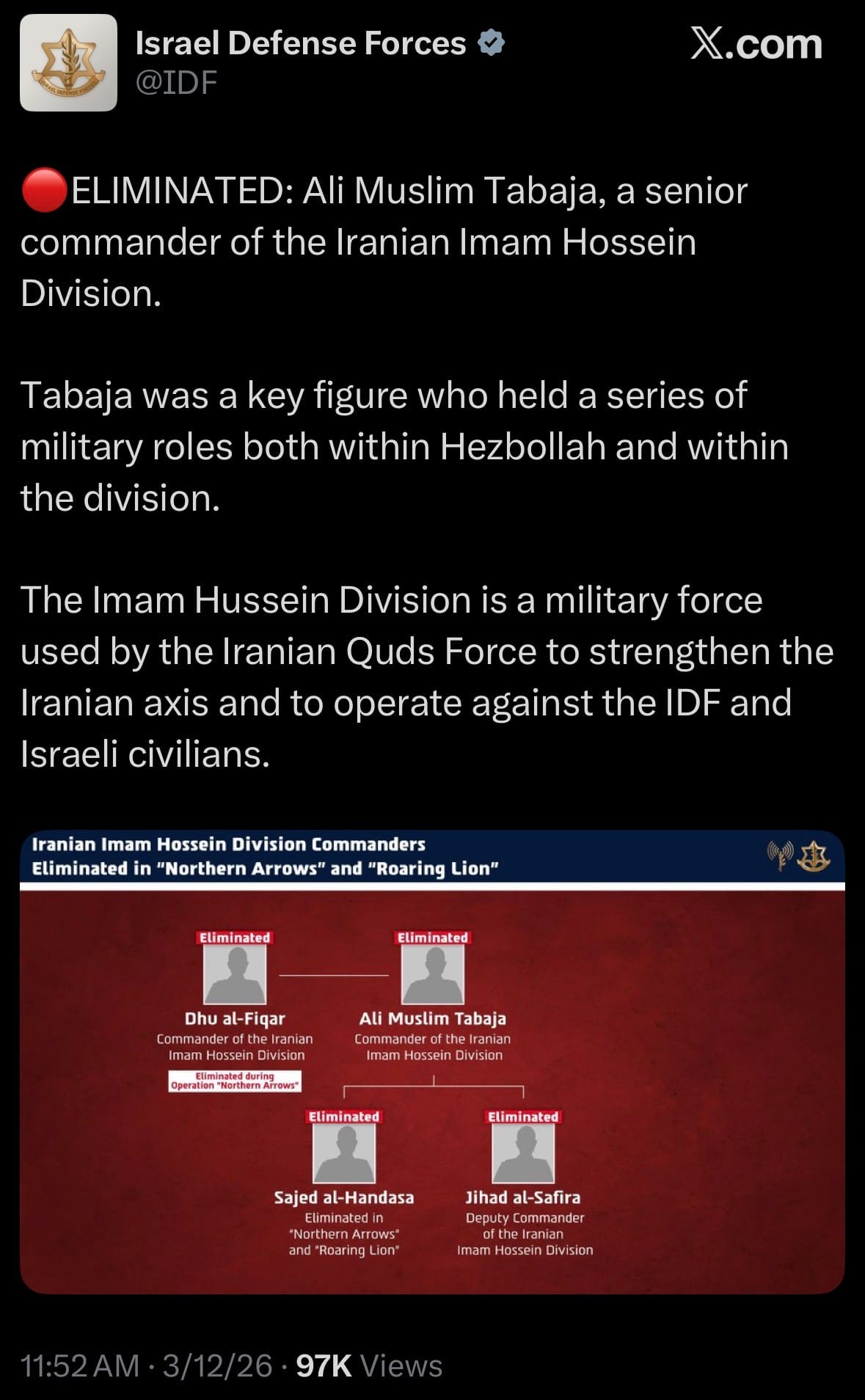
- The Imam Hossein Division is an IRGC Quds Force-backed military unit that operates in coordination with Hezbollah to strengthen Iran's regional axis, including launching UAVs, missiles, and other attacks against the IDF and Israeli civilians. The strike is part of ongoing Israeli operations targeting Iranian-linked commanders and infrastructure in Lebanon amid the broader escalating conflict in the region.
Space:
- As of March 13, 2026, China successfully launched SatNet LEO Group 20 (also known as Guowang/Satellite Internet LEO Group 20) using a Long March 8A rocket from Commercial LC-1 at the Wenchang Satellite Launch Center in Hainan Province.
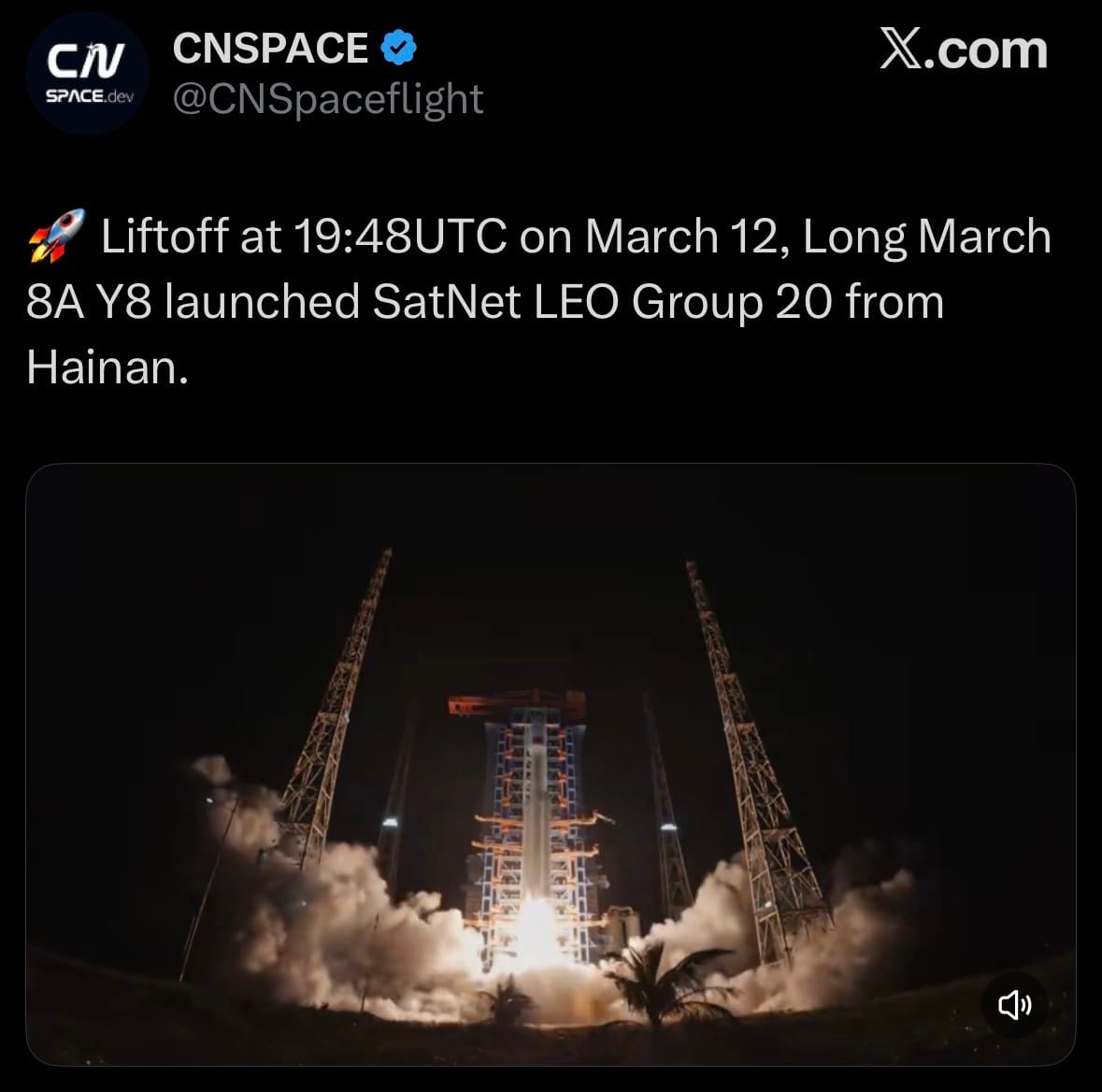
- Liftoff occurred on March 12, 2026, at 7:48 PM UTC, deploying a batch of 9 low Earth orbit communication satellites for China's state-owned GuoWang (SatNet) broadband megaconstellation operated by China Satellite Network Group. The satellites entered their preset orbit successfully, adding to the ongoing rapid deployment of the constellation, which aims for nearly 13,000 satellites to provide global high-speed internet services.
Second Launch:
- As of March 13, 2026, China successfully launched the Shiyan-30 03 and Shiyan-30 04 (试验三十号卫星03、04) satellites aboard a Long March-2D rocket from the Xichang Satellite Launch Center in Sichuan province.
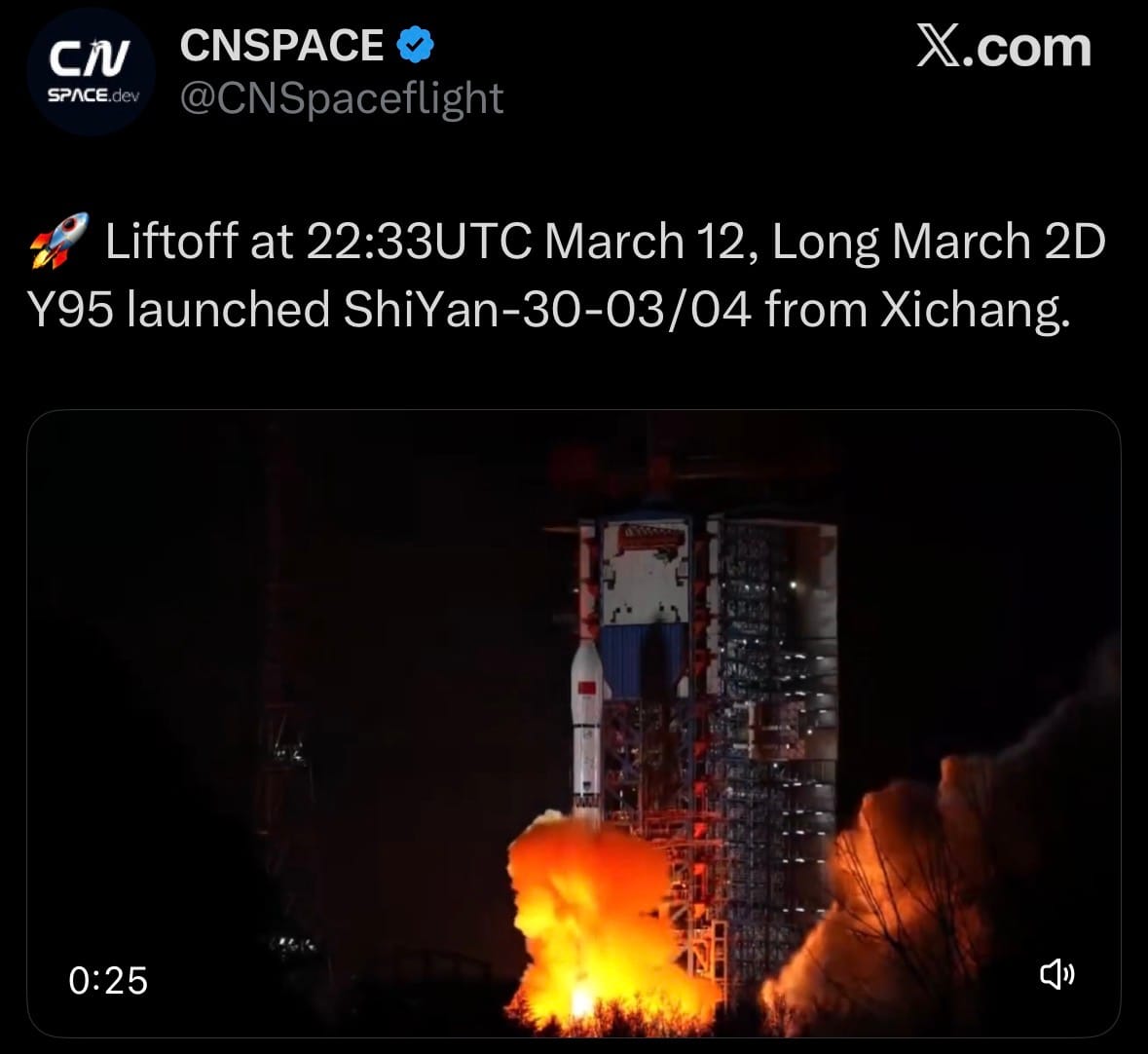
- Liftoff occurred at 6:33 a.m. Beijing Time (22:33 UTC on March 12, 2026), and the satellites entered their preset orbit successfully. The pair, developed by the Shanghai Academy of Spaceflight Technology, are experimental test satellites primarily used for verifying Earth observation technologies.
Statistic:
- Largest assets on Earth by market capitalization:
- Gold: $35.532T
- Silver: $4.773T
- 🇺🇸 NVIDIA: $4.451T
- 🇺🇸 Apple: $3.759T
- 🇺🇸 Alphabet (Google): $3.667T
- 🇺🇸 Microsoft: $2.986T
- 🇺🇸 Amazon: $2.249T
- 🇹🇼 TSMC: $1.746T
- 🇸🇦 Saudi Aramco: $1.731T
- 🇺🇸 Meta Platforms: $1.614T
- 🇺🇸 Broadcom: $1.592T
- 🇺🇸 Tesla: $1.482T
- Bitcoin: $1.430T
- 🇺🇸 Berkshire Hathaway: $1.061T
- 🇺🇸 Walmart: $999.23B
- 🇺🇸 Eli Lilly: $874.65B
- 🇺🇸 Vanguard S&P 500 ETF: $846.50B
- 🇰🇷 Samsung: $811.96B
- 🇺🇸 JPMorgan Chase: $762.96B
- 🇺🇸 iShares Core S&P 500 ETF: $721.22B
- 🇺🇸 SPDR S&P 500 ETF: $661.58B
- 🇺🇸 Exxon Mobil: $639.72B
- 🇨🇳 Tencent: $624.80B
- 🇺🇸 Visa: $590.94B
- 🇺🇸 Johnson & Johnson: $583.29B
History:
- The history of nuclear power begins with the discovery that atoms contain enormous energy. In 1896, French physicist Henri Becquerel discovered radioactivity, followed by major research from Marie and Pierre Curie in the early 1900s studying radioactive elements. The critical breakthrough came in 1938, when German scientists Otto Hahn and Fritz Strassmann discovered nuclear fission, the process in which heavy atoms such as uranium split and release large amounts of energy. Physicists Lise Meitner and Otto Frisch explained the physics behind the reaction and showed that a chain reaction could occur. During World War II, this discovery led to the Manhattan Project (1942–1945) in the United States, which built the first nuclear weapons but also demonstrated controlled nuclear energy. On December 2, 1942, Enrico Fermi achieved the first controlled nuclear chain reaction at Chicago Pile-1, the world’s first nuclear reactor. After the war, scientists began applying nuclear technology to electricity production. The first nuclear power plant connected to a grid opened in Obninsk, Soviet Union in 1954, followed by the Shippingport Atomic Power Station in the United States in 1957. During the 1950s through the 1970s, many countries built nuclear reactors as a reliable large-scale energy source capable of producing massive electricity from small amounts of fuel.
- Today nuclear power remains one of the most powerful energy systems in the world. Around 440 nuclear reactors operate globally across roughly 30 countries, producing about 10% of global electricity. The United States has the largest fleet, with over 90 operating reactors, while France generates the largest share of its electricity from nuclear power, relying on it for most of its grid. China is currently building the most new reactors, expanding its nuclear fleet rapidly as it increases energy capacity. Other major nuclear power nations include Russia, South Korea, Canada, Japan, and the United Kingdom. Russia’s state company Rosatom is also one of the largest exporters of nuclear reactor technology worldwide. Modern reactors typically use pressurized water reactor (PWR) or boiling water reactor (BWR) designs, producing heat from controlled uranium fission to generate steam and spin electricity-producing turbines. Nuclear reactors also power military vessels such as submarines and aircraft carriers, allowing them to operate for years without refueling. At the same time, research continues on next-generation nuclear technologies, including Generation III+ reactors and small modular reactors (SMRs) designed to improve safety, efficiency, and cost. From the first chain reaction in 1942 to today’s global nuclear power infrastructure, nuclear energy remains a major pillar of electricity generation, national security, and future low-carbon energy development.
Image of the day:

Thanks for reading! Earth is complicated, we make it simple.
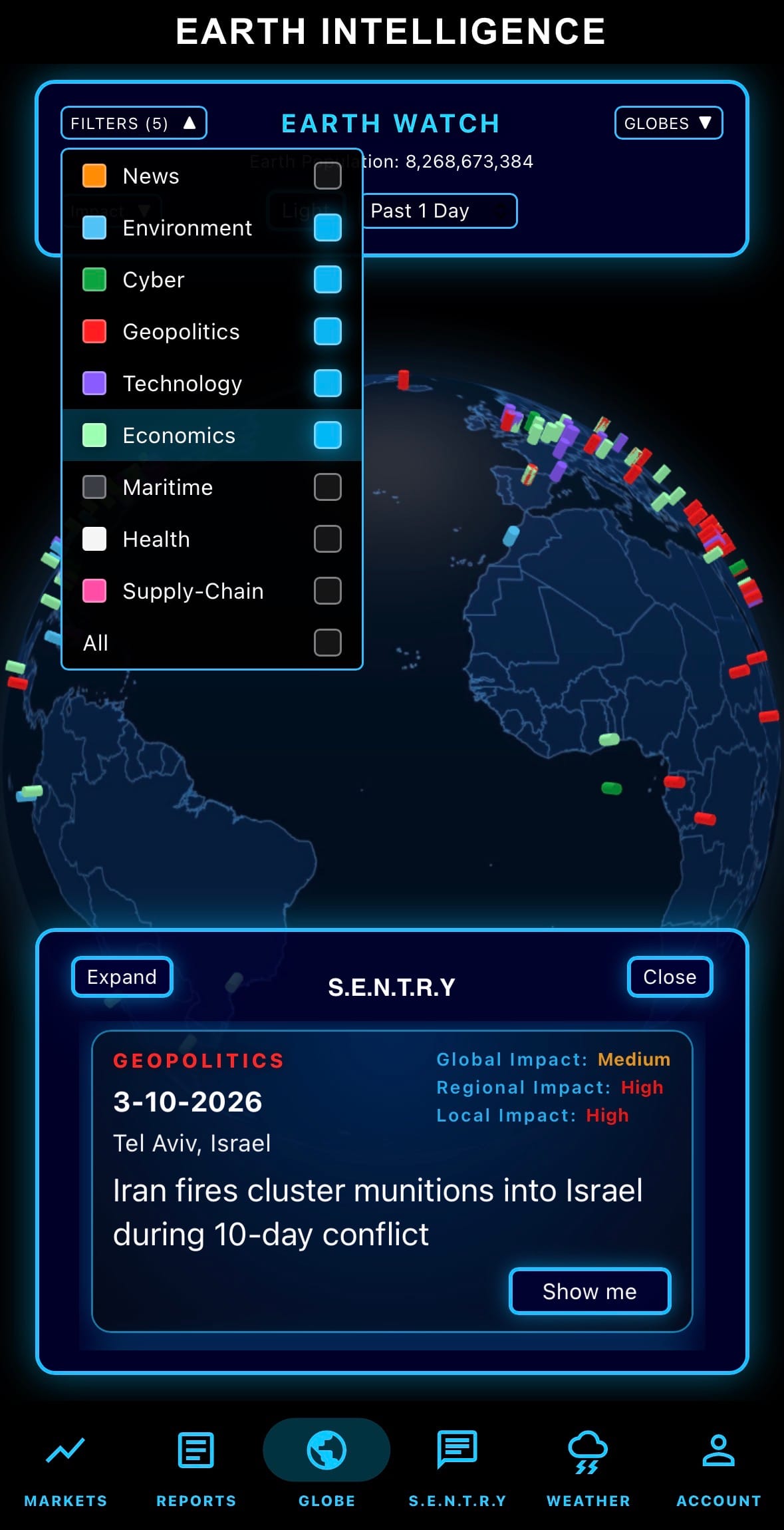
- Click below if you’d like to view our free EARTH WATCH globe:
- Download our mobile app:



Click below to view our previous newsletters:
Support/Suggestions Email:
support@earthintel.io