Friday☕️


Trending:
- On April 9, 2026, a major data breach was reported at China’s National Supercomputing Center (NSCC), where hackers claim to have stolen over 10 petabytes of highly sensitive data — the largest known breach in Chinese history. The stolen information includes research on aerospace engineering, bioinformatics, fusion simulations, military technology, and classified studies of experimental Chinese weapons tested against U.S. systems (including damage simulations against HIMARS, aircraft carriers, and armored targets).
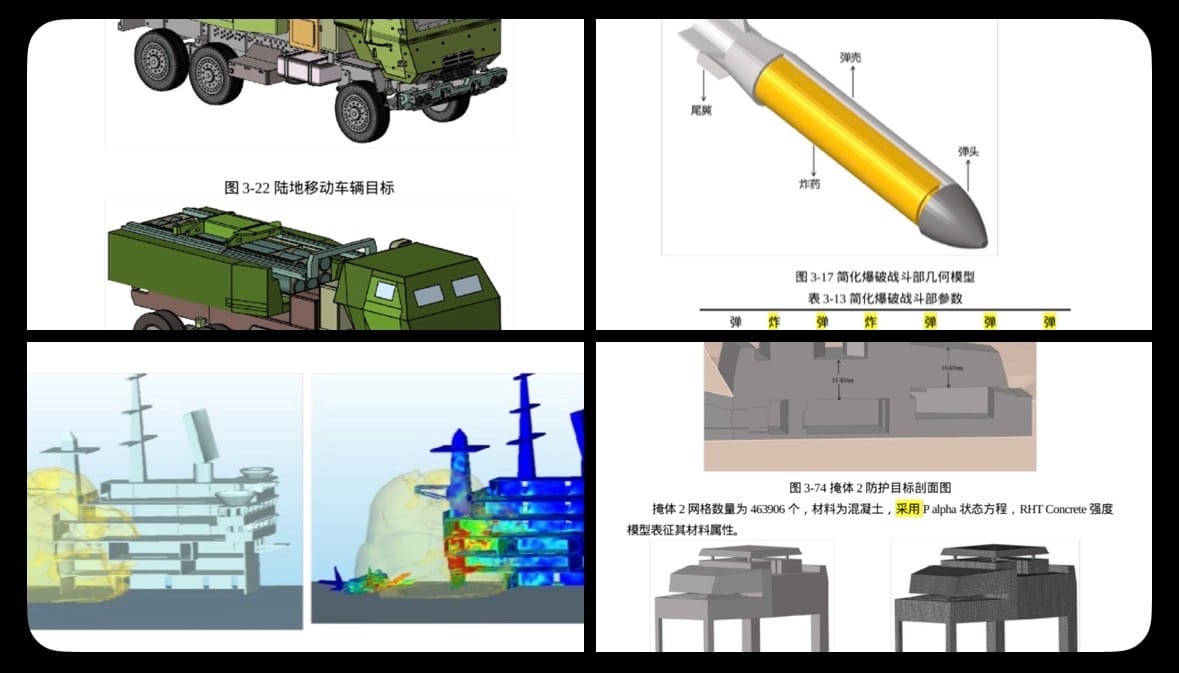
- The data, some labeled “secret” and classified for 10 years, is reportedly being offered for sale online. According to the alleged attackers, they gained access through a compromised VPN domain and spent around six months quietly exfiltrating the massive dataset. The NSCC serves over 6,000 institutions, including key defense and scientific agencies.
Economics & Markets:



Geopolitics & Military Activity:
- On April 9, 2026, the East-West Petroline pipeline in Saudi Arabia was attacked despite the recent ceasefire agreement between the U.S., Israel, and Iran. The pipeline, which carries crude oil from the Eastern Province to the Red Sea port of Yanbu, was hit late Thursday.

- Iran continues to keep the Strait of Hormuz closed, intercepting and turning away vessels, including a Botswana-flagged LPG tanker. Iranian officials stated that negotiations remain suspended as long as Israel continues its attacks in Lebanon and the U.S. fails to enforce a full ceasefire.
Cyber:
Science & Technology:
- On April 9, 2026, Claude Computer now integrates with Plaid, allowing it to securely connect to your bank accounts, credit cards, and loans.

- This new capability enables Claude to track your spending in detail, help build custom budgets, visualize your net worth, and analyze your investment portfolio all in one place.
Lockheed Martin Missile Contract:
- On April 9, 2026, Lockheed Martin was awarded a $4.76 billion firm-fixed-price contract by the U.S. Department of Defense for the production of PAC-3 Missile Segment Enhancement (MSE) missiles.

- The contract covers the manufacture of the advanced air and missile defense interceptors, along with all related services, equipment, technical support, and production efforts. This is one of the largest recent contracts for the PAC-3 system as the U.S. military continues to replenish and expand its missile stockpiles amid ongoing global tensions.

Statistic:
- Largest public tech companies on Earth by market capitalization:
- 🇺🇸 NVIDIA: $4.469T
- 🇺🇸 Apple: $3.828T
- 🇺🇸 Alphabet (Google): $3.827T
- 🇺🇸 Microsoft: $2.772T
- 🇺🇸 Amazon: $2.512T
- 🇹🇼 TSMC: $1.895T
- 🇺🇸 Broadcom: $1.682T
- 🇺🇸 Meta Platforms: $1.589T
- 🇺🇸 Tesla: $1.296T
- 🇰🇷 Samsung: $936.30B
- 🇨🇳 Tencent: $587.85B
- 🇳🇱 ASML: $568.82B
- 🇰🇷 SK Hynix: $496.17B
- 🇺🇸 Micron Technology: $475.35B
- 🇺🇸 Netflix: $432.88B
- 🇺🇸 Oracle: $396.49B
- 🇺🇸 AMD: $385.82B
- 🇺🇸 Cisco: $328.61B
- 🇺🇸 Lam Research: $325.01B
- 🇺🇸 Applied Materials: $315.70B
- 🇺🇸 Palantir: $312.08B
- 🇺🇸 Intel: $309.89B
- 🇨🇳 Alibaba: $305.37B
- 🇺🇸 KLA: $226.94B
- 🇺🇸 IBM: $222.57B
History:
- Faraday technology started in 1836 when Michael Faraday discovered that a conductive enclosure can block external electric fields by redistributing energy across its surface instead of letting it pass through. In simple terms, it creates a protective shell that keeps electromagnetic signals either inside or outside. As electricity and communication systems grew in the late 1800s and early 1900s, this principle became essential for stabilizing equipment and preventing interference. By World War II (1939–1945), militaries were heavily using shielding to protect radar and radio systems from disruption and detection. This expanded significantly during the Cold War, where the U.S. and its allies developed TEMPEST standards—highly secure facilities and devices designed to prevent electromagnetic leaks that could be intercepted and used for espionage. These were not just simple cages, but entire buildings engineered to block signal escape, protecting classified communications from being picked up remotely. At the same time, corporations began using shielding in early computing and telecommunications systems to maintain clean signals and avoid cross-interference as electronics became more complex.
- From the 2000s to 2026, Faraday and EMF shielding has moved from niche military use into something that touches nearly every layer of modern life. In corporations, it’s built into data centers, server infrastructure, and high-speed systems where even tiny interference can disrupt operations or corrupt data. On the public side, it shows up in everyday products like RFID-blocking wallets, signal-blocking phone pouches, and car key protection cases that stop wireless relay attacks. Militaries and intelligence agencies now treat electromagnetic protection as a core battlefield layer, using advanced shielding in command centers, vehicles, and portable systems to defend against electronic warfare, EMP attacks, jamming, and signal interception. What’s evolving now is that these systems are no longer just passive barriers—they’re part of larger electromagnetic control strategies that include filtering signals, managing frequencies, grounding systems, and monitoring the spectrum in real time. As the world becomes more saturated with wireless tech—5G, upcoming 6G, IoT devices, autonomous systems, and AI-driven infrastructure—the electromagnetic environment is getting more crowded and more vulnerable. The future of protection is shifting toward what can be called electromagnetic resilience, where controlling exposure to signals, preventing leaks, and hardening systems against disruption becomes just as critical as cybersecurity or physical security, making Faraday-based technology a foundational layer in protecting everything from personal data to national infrastructure.
Image of the day:

Thanks for reading! Earth is complicated, we make it simple.
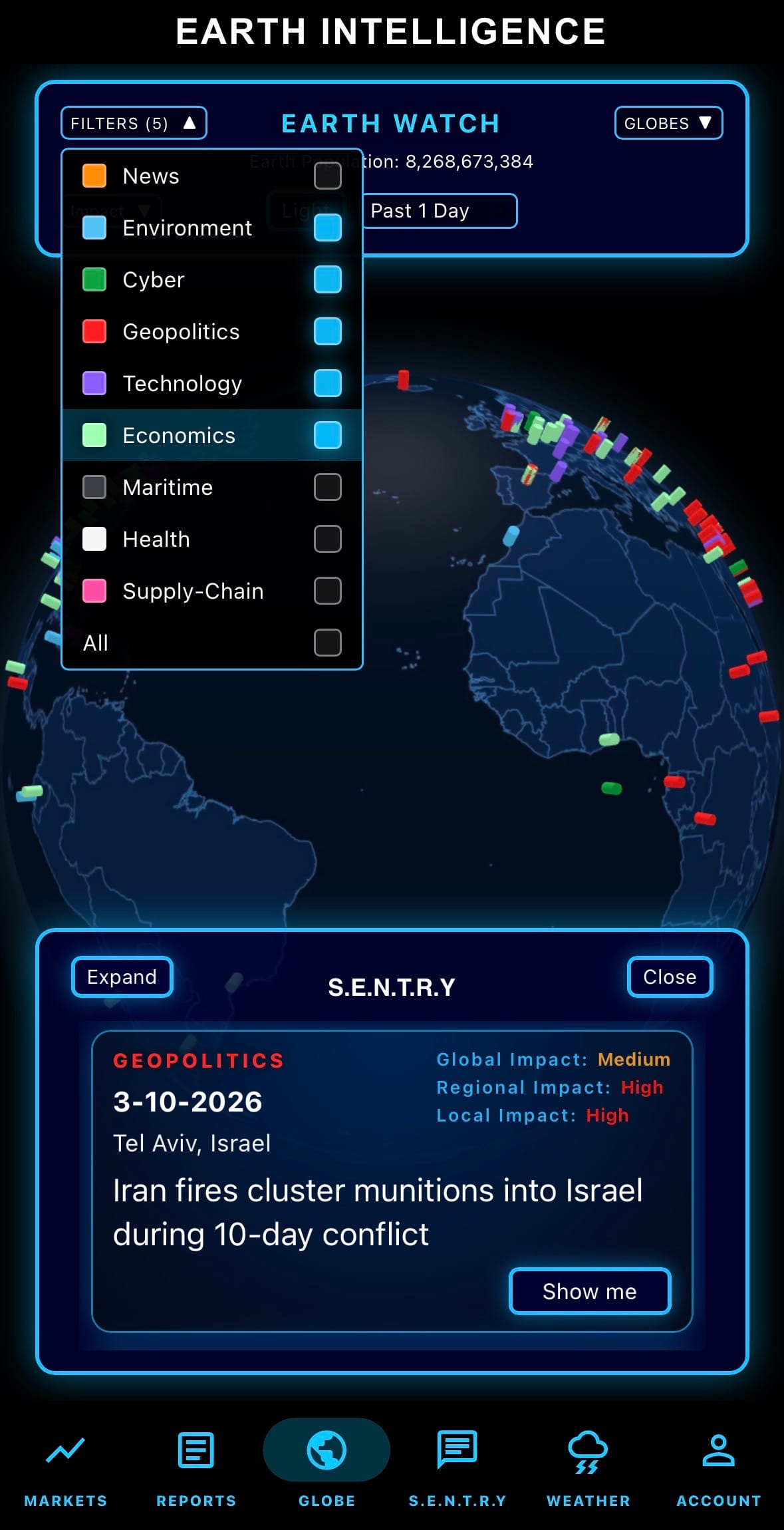
- Click below if you’d like to view our free EARTH WATCH globe:
- Download our mobile app:



Click below to view our previous newsletters:

Support/Suggestions Email:
support@earthintel.io