Monday☕️


Trending:
- On December 14, 2025, a mass shooting occurred at Bondi Beach in Sydney, Australia, during the "Chanukah by the Sea" Hanukkah celebration organized by Chabad of Bondi. Two gunmen—a father-and-son pair, Sajid Akram (50) and Naveed Akram (24)—opened fire on the crowd of about 1,000 attendees from a nearby footbridge, killing at least 15 people (aged 10 to 87, including children, Rabbi Eli Schlanger, and Holocaust survivor Alex Kleytman) and injuring around 40 others. One gunman was killed by police; the other was critically injured and hospitalized under guard, facing expected terrorism charges.

- Authorities recovered licensed firearms and neutralized improvised explosive devices, declaring the incident a terrorist attack targeting the Jewish community. The attack prompted international condemnation, with Australian Prime Minister Anthony Albanese calling it an act of antisemitic terrorism amid rising incidents in the country. A bystander, Ahmed al-Ahmed, was praised for disarming one assailant. Investigations continue into motives and any accomplices, with heightened global security for Jewish events. This marks Australia's deadliest mass shooting since 1996.
Economics & Markets:
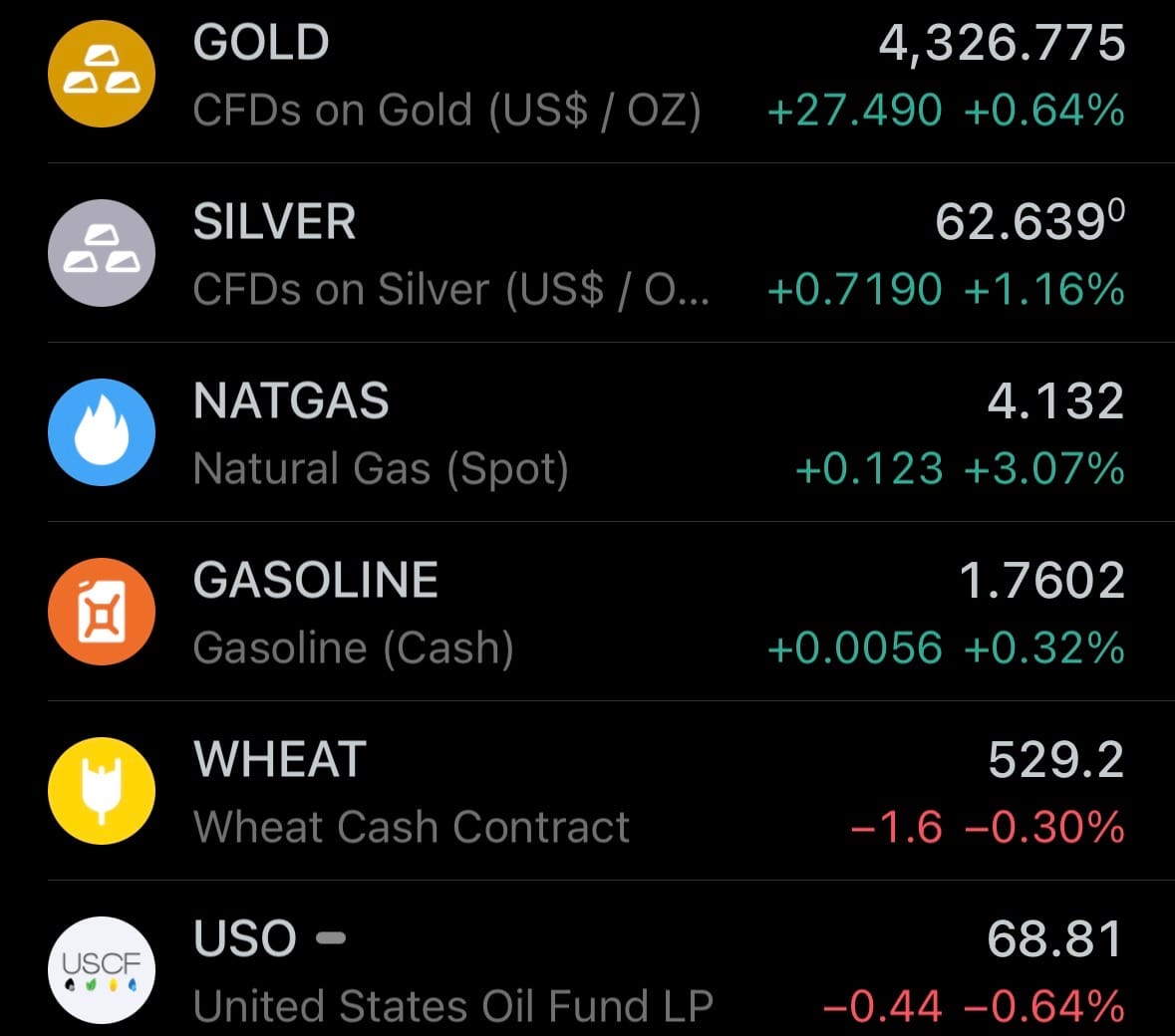
- Yesterday’s commodity market:
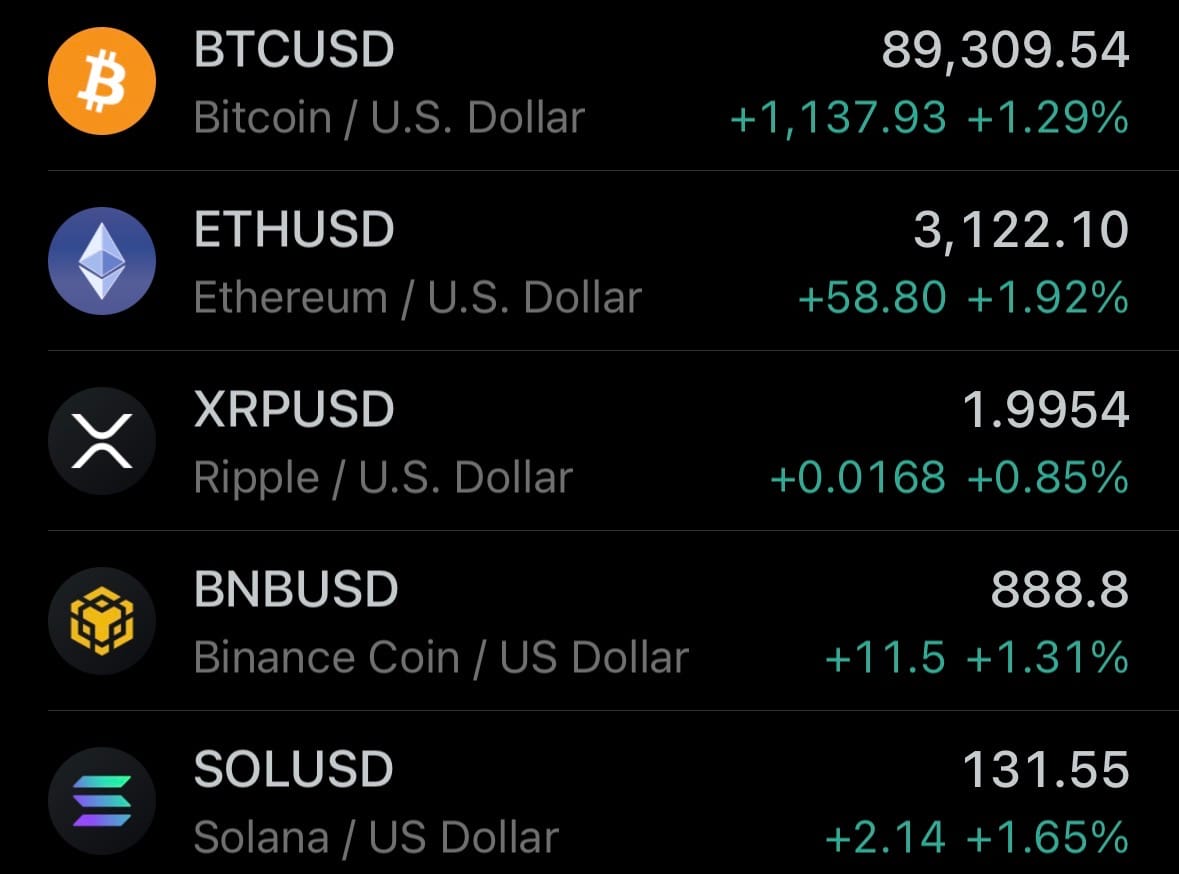
- Yesterday’s crypto market:
Geopolitics & Military Activity:
- On December 14, 2025, the Israel Defense Forces (IDF) conducted three separate drone strikes in southern Lebanon, targeting vehicles and individuals in Yater, between Safad al-Batikh and Barashit, and Jouaya (also spelled Jwaya). The IDF stated it eliminated three Hezbollah operatives involved in rebuilding the group's infrastructure and activities violating the November 2024 ceasefire, including senior operative Zakaria Yahya al-Hajj in Jouaya.

- Lebanese health authorities reported three deaths: one from a motorcycle strike in Yater (with another wounded), one from a car strike in the Safad al-Batikh/Barashit area, and a municipal council member in Jouaya. These strikes reflect ongoing tensions under the year-old ceasefire, with Israel accusing Hezbollah of rearming south of the Litani River and maintaining military presence at five border points, while Lebanon views the attacks as violations. No Hezbollah response was reported, and international monitors continue urging compliance amid near-daily incidents.
Space:
- On December 13, 2025, SpaceX launched the Starlink Group 15-12 mission using a Falcon 9 rocket from Space Launch Complex 4E at Vandenberg Space Force Base in California. Liftoff occurred at 9:49 p.m. PST (05:49 UTC on December 14). The rocket followed a southeasterly path over the Pacific Ocean, and the first stage (booster B1093 on its 12th flight) separated and landed on the droneship Of Course I Still Love You about eight minutes later. This was SpaceX's 162nd Falcon 9 launch of 2025.
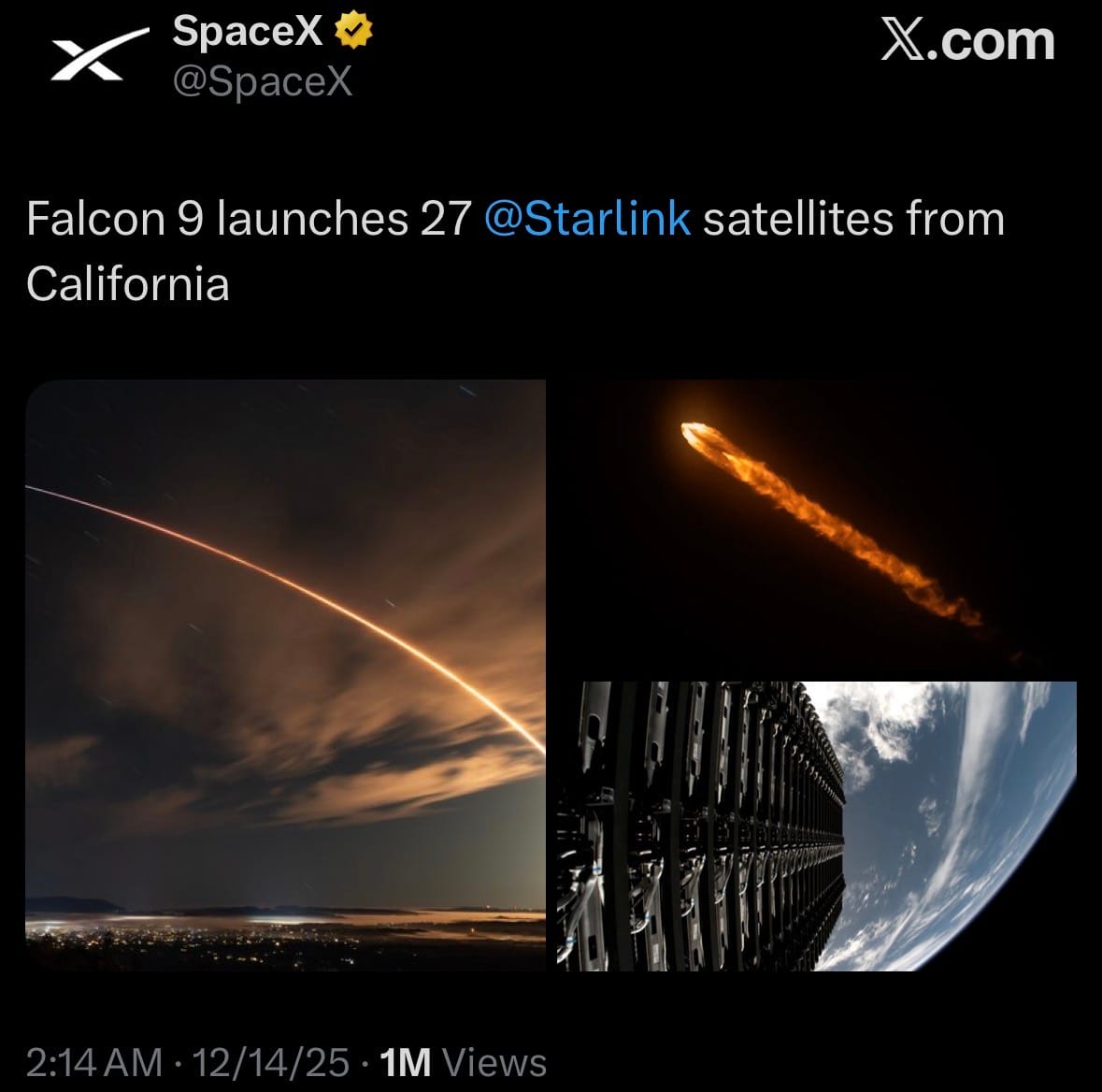
- The mission successfully deployed 27 V2 Mini Starlink satellites into low Earth orbit at around 530 km altitude. The satellites will move to their operational positions to expand global broadband internet coverage, focusing on high-latitude and polar regions. Deployment was confirmed about one hour after launch, with no issues reported and good weather conditions. The launch maintained SpaceX's high operational tempo, with the constellation exceeding 10,500 satellites in orbit.
Rocket Lab Launch:
- On December 14, 2025, Rocket Lab successfully launched Japan's RAISE-4 satellite aboard an Electron rocket from Launch Complex 1 on the Mahia Peninsula in New Zealand. Liftoff occurred at 03:09 UTC (4:09 p.m. local time), with the three-stage vehicle performing nominally through ascent and deploying the payload into a 540-kilometer sun-synchronous orbit about 55 minutes later. This marked Rocket Lab's 19th launch of 2025 and its first dedicated mission for the Japan Aerospace Exploration Agency (JAXA).
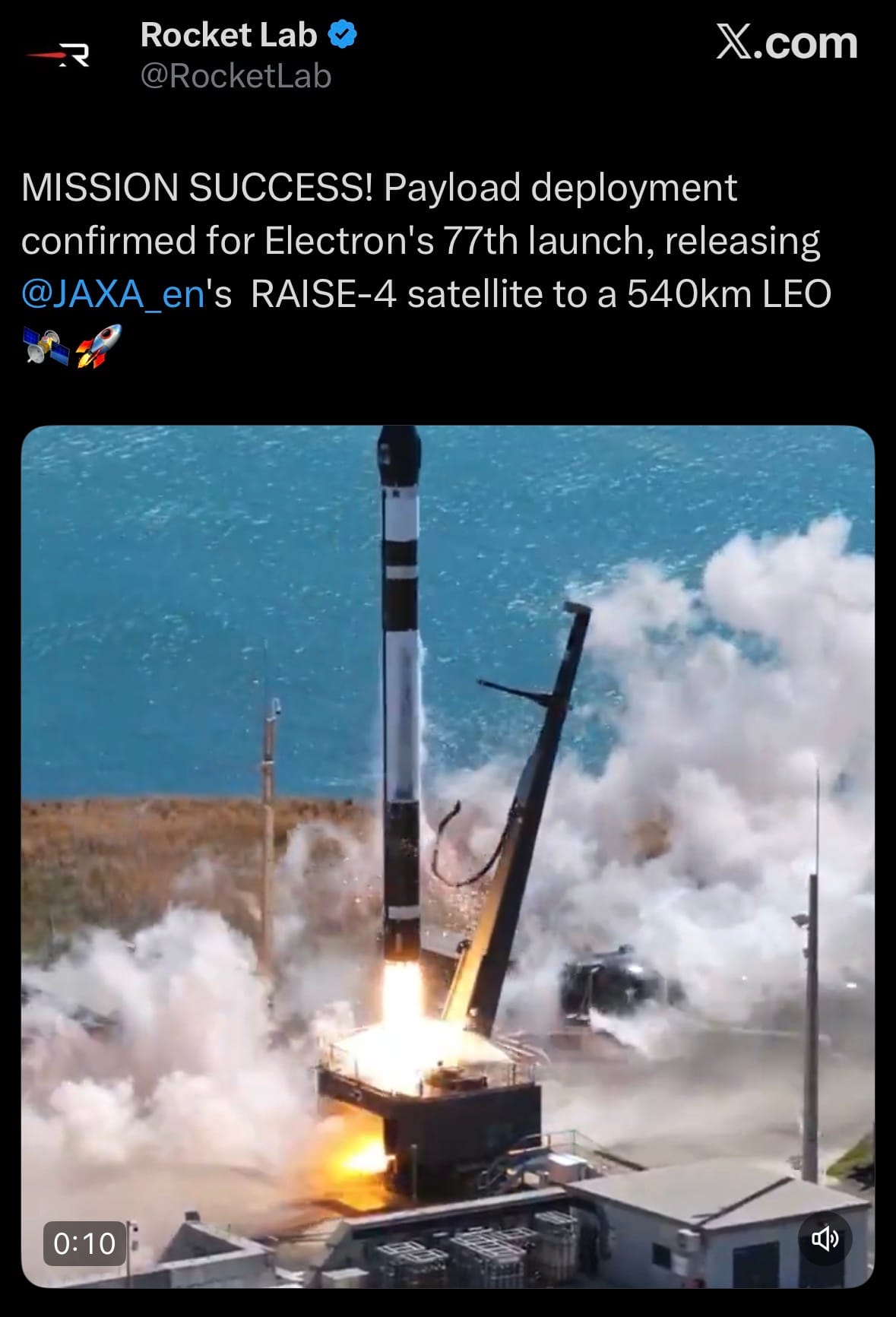
- RAISE-4 (RApid Innovative payload demonstration Satellite-4) is a 110-kilogram technology demonstration satellite carrying eight experimental components selected through public solicitation, including re-flights of six payloads and four CubeSats originally planned for the failed RAISE-3 mission in 2022. The satellite will conduct on-orbit tests requested by proposers from Japanese companies, universities, and institutions, providing data on innovative technologies. Originally intended for Japan's Epsilon-S rocket, the mission switched to Electron due to ongoing issues with the Epsilon-S second-stage motor; the eight planned hitchhiking CubeSats will fly on a separate Electron in early 2026.
Statistic:
- Largest assets on Earth by market capitalization:
- Gold: $30.289T
- 🇺🇸 NVIDIA: $4.261T
- 🇺🇸 Apple: $4.129T
- 🇺🇸 Alphabet (Google): $3.748T
- 🇺🇸 Microsoft: $3.556T
- Silver: $3.540T
- 🇺🇸 Amazon: $2.418T
- Bitcoin: $1.790T
- 🇺🇸 Broadcom: $1.699T
- 🇺🇸 Meta Platforms: $1.623T
- 🇹🇼 TSMC: $1.514T
- 🇺🇸 Tesla: $1.526T
- 🇸🇦 Saudi Aramco: $1.539T
- 🇺🇸 Berkshire Hathaway: $1.077T
- 🇺🇸 Walmart: $930.43B
- 🇺🇸 Eli Lilly: $921.11B
- 🇺🇸 JPMorgan Chase: $875.85B
- 🇺🇸 Vanguard S&P 500 ETF: $821.65B
- 🇨🇳 Tencent: $715.48B
- 🇺🇸 SPDR S&P 500 ETF: $714.26B
- 🇺🇸 iShares Core S&P 500 ETF: $680.71B
- 🇺🇸 Visa: $671.27B
- 🇺🇸 Oracle: $545.80B
- 🇺🇸 Mastercard: $517.03B
- 🇺🇸 Johnson & Johnson: $509.75B
History:
- In the 1970s, “personal computing” was born from microprocessors and hobbyist builders, then quickly became a consumer product. Intel’s 4004 (1971) and 8080 (1974) helped trigger early kit machines like the Altair 8800 (1975), which inspired a software ecosystem (including Microsoft’s earliest BASIC). The late 1970s then produced the first mainstream PCs: Apple’s Apple II (1977) became a breakout success in homes and schools, Commodore’s PET (1977) and Radio Shack’s TRS-80 (1977) brought computing into retail stores, and the first killer business app—VisiCalc (1979)—proved a desktop machine could be a serious financial tool. In the 1980s, the market split into two defining lanes. IBM’s IBM PC (1981) and its open-ish architecture spawned a massive “PC compatible” world led by companies like Compaq and Dell, with Microsoft’s MS-DOS and later Windows becoming the dominant software layer and Intel’s x86 chips becoming the default hardware core. Apple pushed the opposite philosophy with the Macintosh (1984), making the GUI and mouse mainstream and later owning desktop publishing through products like the LaserWriter and software tools that turned Macs into creative-industry standards. This same decade also saw portable computing begin: early “luggables” and laptops from companies like Toshiba, Compaq, and IBM gradually made computing mobile, though they were expensive and limited until hardware matured.
- In the 1990s, PCs became a household staple and the internet turned them into networked life tools. Microsoft’s Windows 3.1 (1992) and Windows 95 (1995) defined the mainstream user experience, while Intel, AMD, and a wide clone ecosystem drove constant performance growth. Laptops improved rapidly as LCDs, batteries, and miniaturized components advanced; IBM’s ThinkPad line became iconic in business, while Apple’s PowerBooks defined early premium mobile computing. The 2000s were the decade where laptops became the default for many people and “always online” became normal: Wi-Fi spread, broadband replaced dial-up, and Dell, HP, Lenovo (which acquired IBM’s PC division in 2005), and Apple scaled global laptop lines. Apple also rebuilt its platform with Mac OS X (2001) and then changed the trajectory of personal computing with the iPhone (2007), which took the computer’s core functions—communication, software, media, internet—and compressed them into a touch-first pocket device. The late 2000s and 2010s cemented this shift: Apple’s App Store (2008) and Google’s Android (2008) created the two dominant mobile platforms; Samsung and other manufacturers scaled Android globally; and the smartphone became the primary personal computer by unit volume. Meanwhile, laptops and desktops didn’t die—they specialized: Windows PCs remained the default for enterprise and gaming, Macs became a premium productivity and creative platform, and Chromebooks (from 2011 onward) became a major category in education and low-cost computing. Today the center of gravity is clear and practical: the iPhone and Android are the primary personal computing platforms for daily life (communications, navigation, identity, payments, media, apps), while laptops—Windows, Mac, and Chromebooks—remain the main machines for depth work (creation, coding, professional workflows). The “personal computer” didn’t vanish; it multiplied into an ecosystem where the phone is the always-on command node and the laptop is the portable workstation.
Image of the day:

Thanks for reading! Earth is complicated, we make it simple.
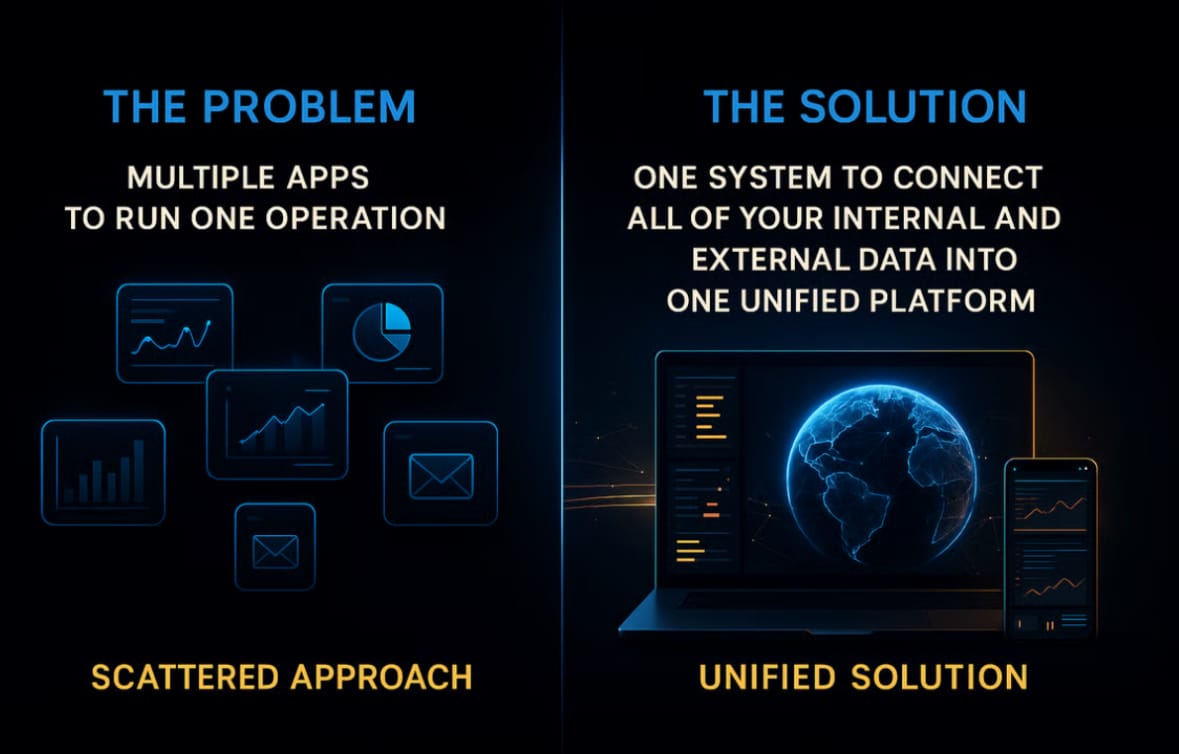

- Click below if you’d like to view our free EARTH WATCH globe:
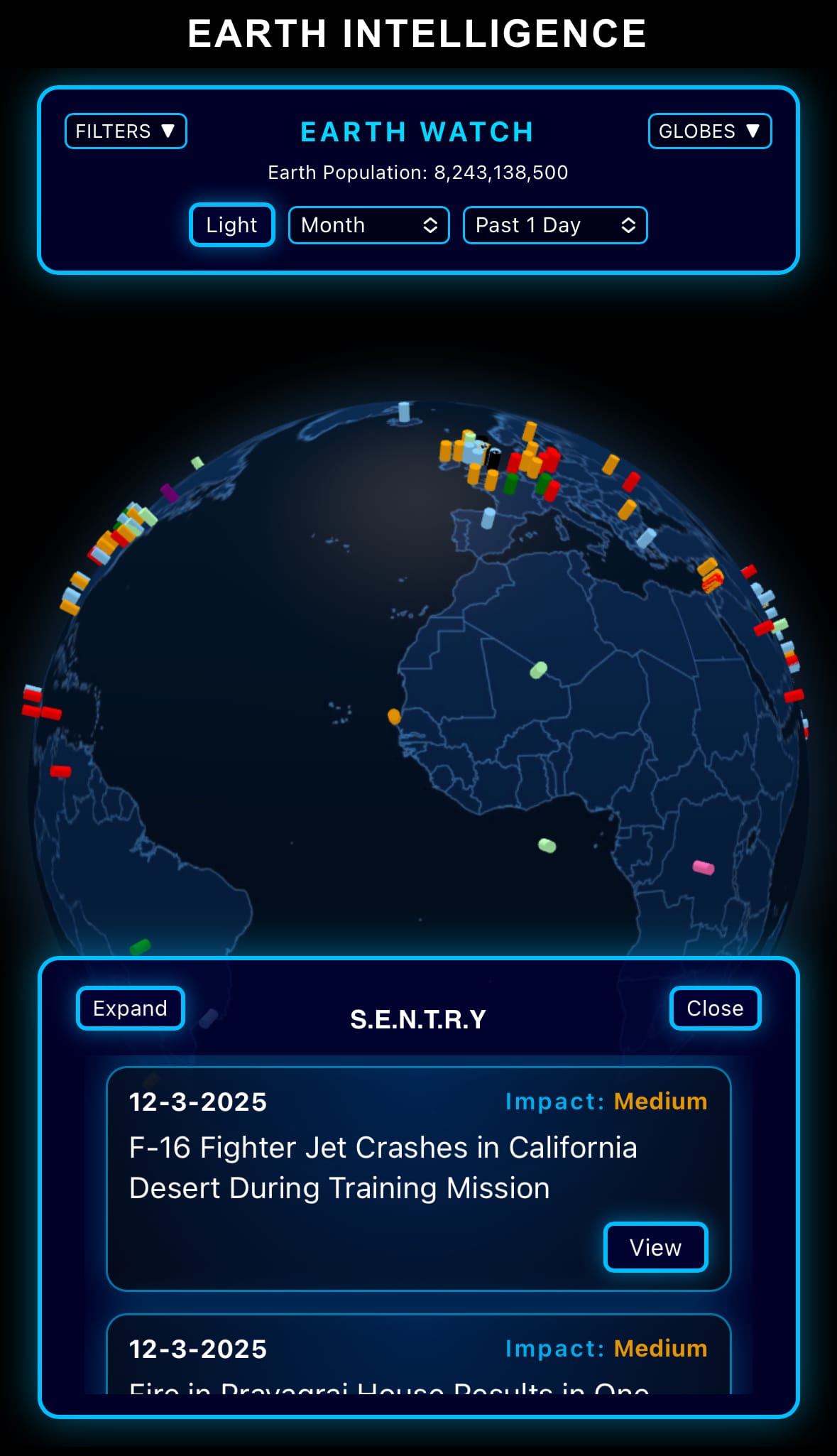
- Download our mobile app on the Apple App Store (Android coming soon):

Click below to view our previous newsletters:
Support/Suggestions Email:
earthintelligence@earthintel.news