Monday☕️


Economics & Markets:
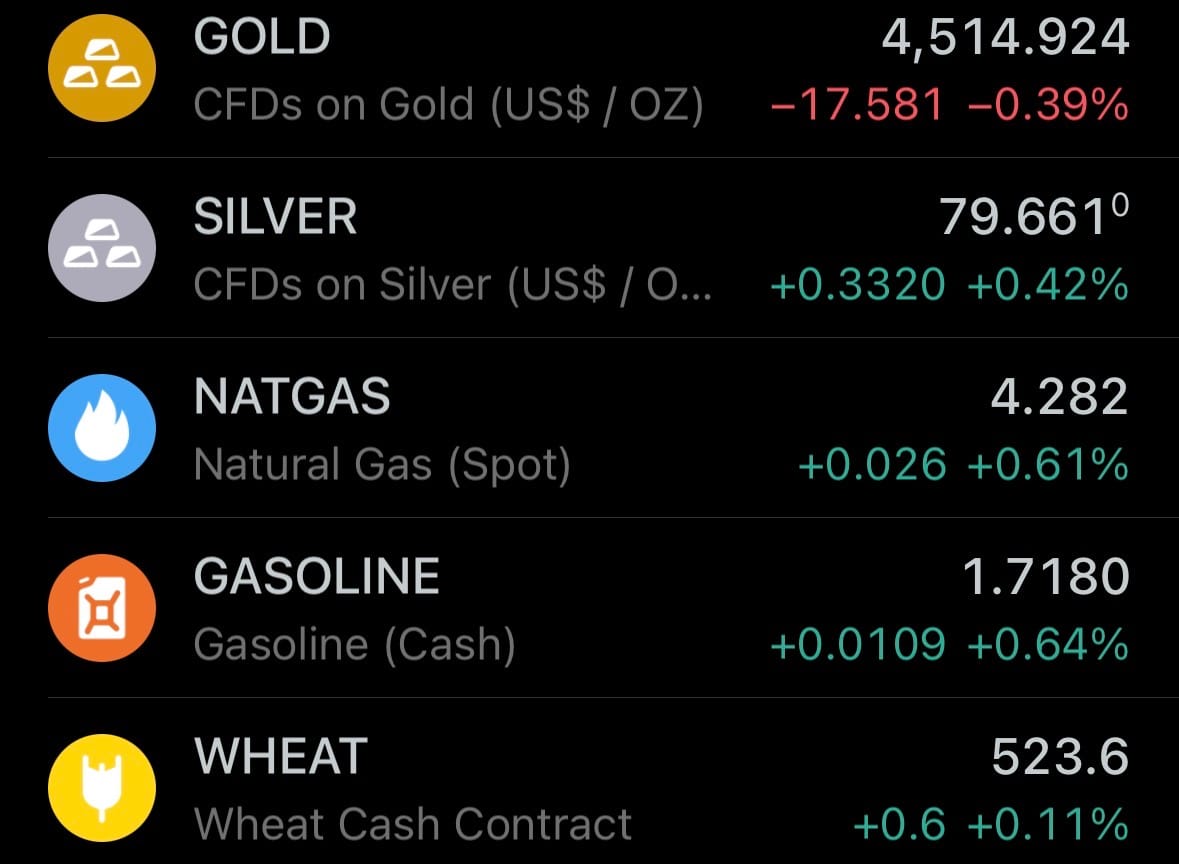
- Today’s commodity market:
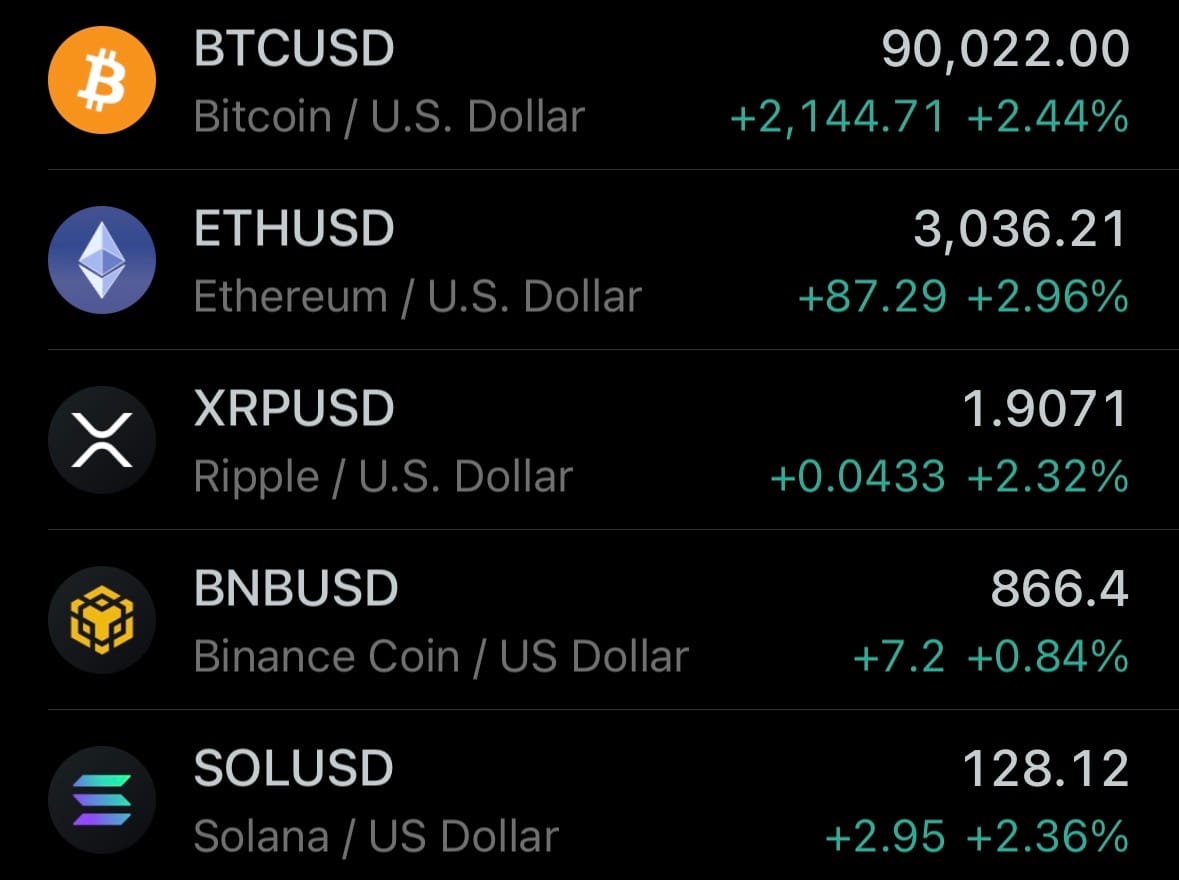
- Today’s crypto market:
Geopolitics & Military Activity:
- On December 29, 2025, the People's Liberation Army (PLA) Eastern Theater Command launched large-scale joint military exercises code-named Justice Mission 2025 in the Taiwan Strait and surrounding areas north, southwest, southeast, and east of Taiwan Island. Involving army, navy, air force, and rocket force units, the drills include sea-air combat readiness patrols, joint seizure of battlefield superiority, simulated blockades of key ports (such as Keelung and Kaohsiung), strikes on targets, and all-dimensional deterrence operations. Live-fire activities were scheduled in designated zones on December 30, with airspace and maritime restrictions imposed.
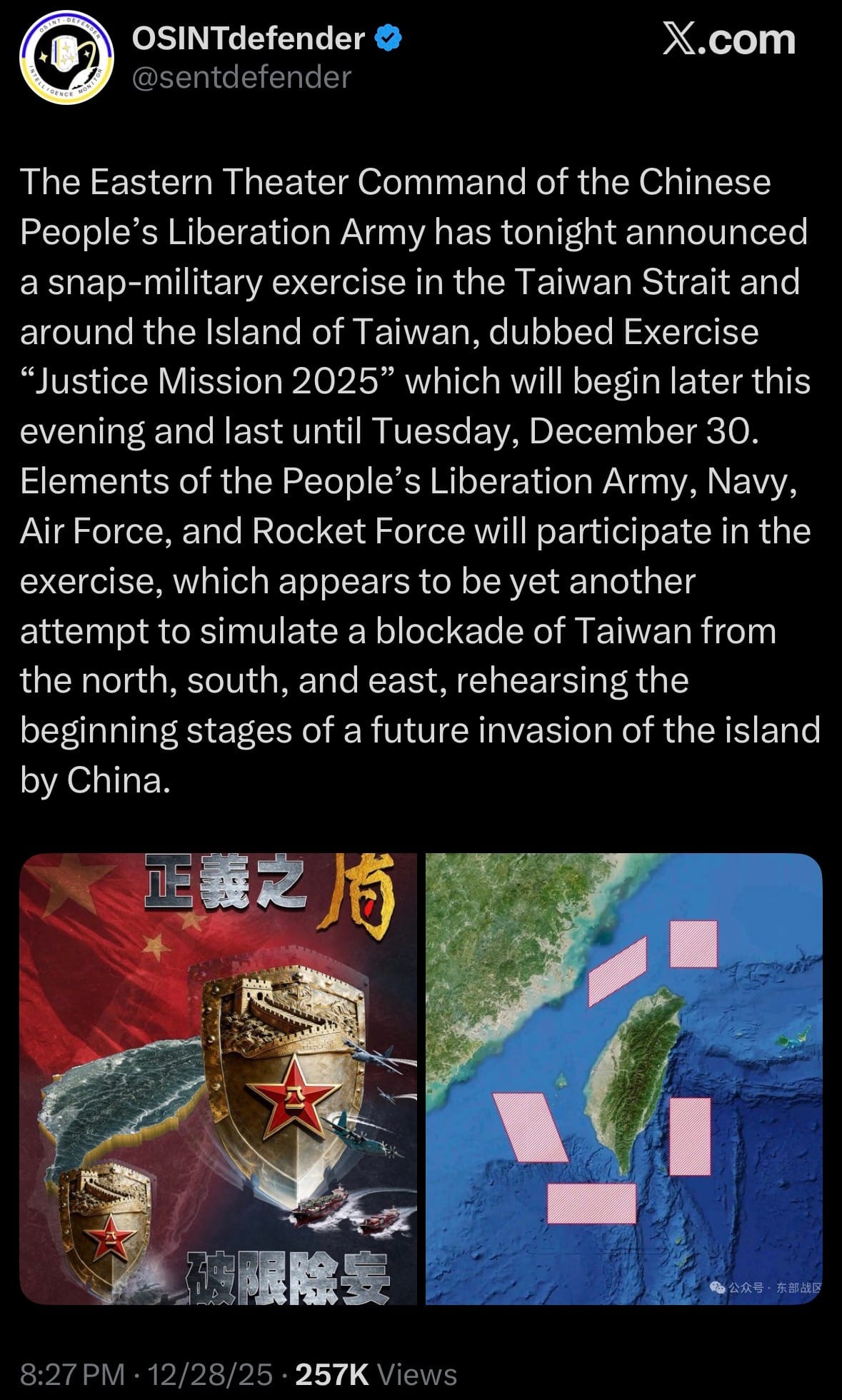
- The PLA described the exercises as a "stern warning" against "Taiwan independence" separatist forces and external interference, testing integrated combat capabilities. Taiwan's defense ministry and presidential office condemned the drills as undermining regional stability and challenging international order, mobilizing forces for monitoring and response exercises. Analysts note the inclusion of explicit deterrence against outside intervention as a new element, amid recent U.S. arms sales to Taiwan and heightened rhetoric involving Japan; no incidents were reported on the first day.
Science & Technology:
- On December 28, 2025, Israel's Ministry of Defense and Rafael Advanced Defense Systems officially delivered the first operational Iron Beam high-power laser air defense system to the Israel Defense Forces during a handover ceremony at Rafael's headquarters in northern Israel. Attended by Defense Minister Israel Katz, senior IDF officials, and Rafael leadership, the event marked the system's transition to active service within the Israeli Air Force. The 100-kW class laser, developed primarily by Rafael with contributions from Elbit Systems (laser source) and others, successfully intercepted rockets, mortars, and UAVs in extensive testing, including simulated combat scenarios.
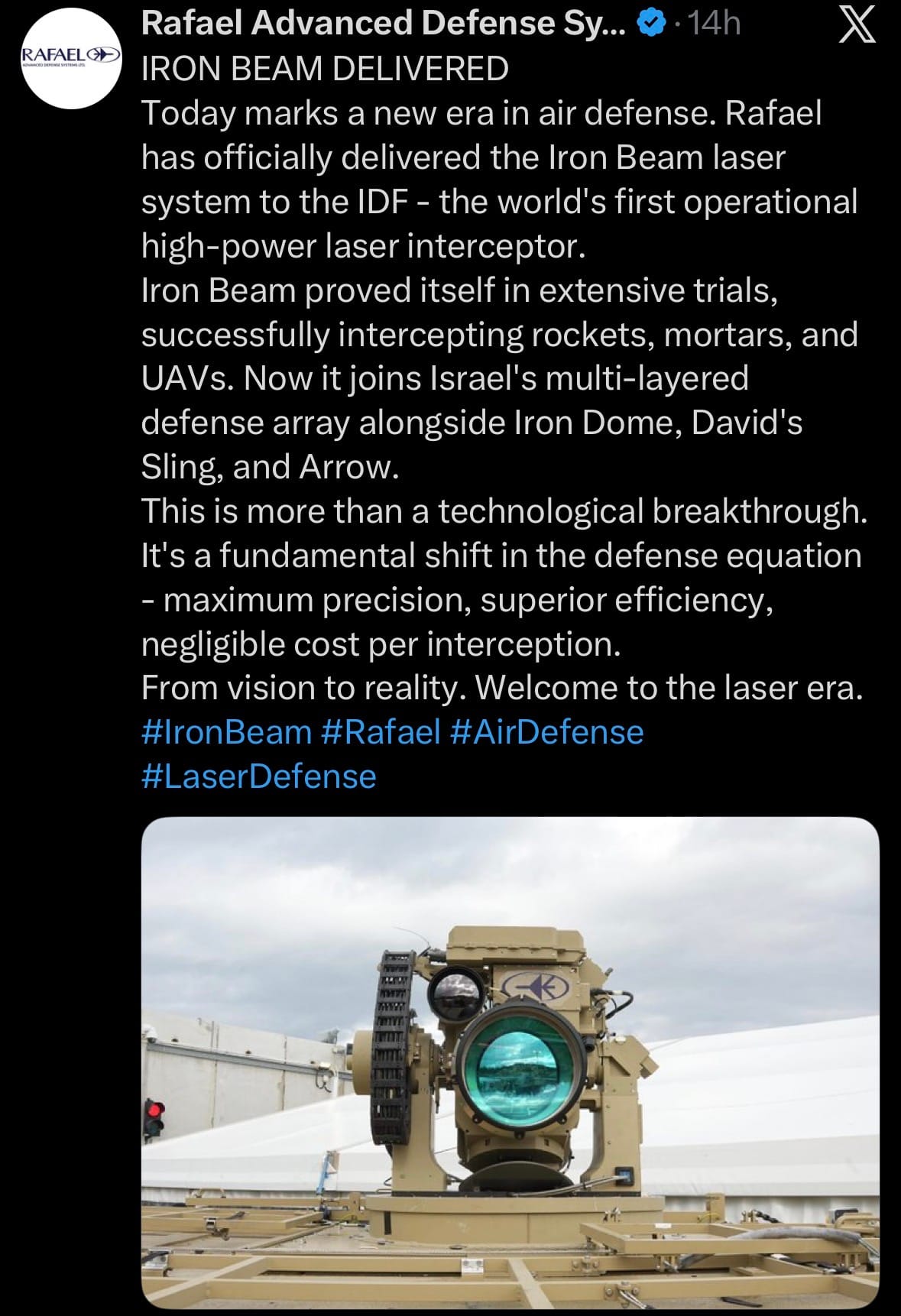
- Iron Beam complements Israel's multi-layered defense array—alongside Iron Dome, David's Sling, and Arrow—by providing precise, all-weather interception of short-range threats at negligible cost per shot (estimated at a few dollars versus tens of thousands for missile interceptors). Additional units are in production, with integration expected to enhance cost-effectiveness and capability against evolving threats; the system is named in memory of Capt. Eitan Oster, killed in combat in Lebanon.
Space:
- On December 28, 2025, Russia successfully launched a Soyuz-2.1b rocket with Fregat upper stage from Site 1S at the Vostochny Cosmodrome, deploying the primary payloads Aist-2T No. 1 and No. 2 along with approximately 50 secondary small satellites into sun-synchronous orbit. Liftoff occurred at 13:18 UTC (16:18 Moscow time), with Roscosmos confirming successful separation, orbital insertion, and initial telemetry from the Aist-2T pair. This marked Russia's final orbital launch of 2025.
- The Aist-2T satellites, developed by Progress Rocket Space Centre, are optical Earth observation spacecraft designed for high-resolution stereoscopic imaging (up to 1.2-1.9 meters in panchromatic mode, 32 km swath) to create 3D digital terrain models, supporting applications in mapping, disaster monitoring, resource management, and emergencies. The secondary payloads included scientific, educational, and technology demonstration satellites from Russia and international partners (such as Iran, Belarus, and Ecuador). The mission highlights Russia's focus on domestic constellation building and rideshare opportunities amid a year of moderate launch activity.
Statistic:
- Largest assets on Earth by market capitalization:
- Gold: $31.530T
- 🇺🇸 NVIDIA: $4.638T
- Silver: $4.462T
- 🇺🇸 Apple: $4.057T
- 🇺🇸 Alphabet (Google): $3.802T
- 🇺🇸 Microsoft: $3.625T
- 🇺🇸 Amazon: $2.485T
- Bitcoin: $1.798T
- 🇺🇸 Meta Platforms: $1.671T
- 🇺🇸 Broadcom: $1.669T
- 🇺🇸 Tesla: $1.580T
- 🇹🇼 TSMC: $1.570T
- 🇸🇦 Saudi Aramco: $1.516T
- 🇺🇸 Berkshire Hathaway: $1.074T
- 🇺🇸 Eli Lilly: $966.15B
- 🇺🇸 JPMorgan Chase: $901.67B
- 🇺🇸 Walmart: $890.88B
- 🇺🇸 Vanguard S&P 500 ETF: $832.09B
- 🇺🇸 iShares Core S&P 500 ETF: $768.69B
- 🇺🇸 SPDR S&P 500 ETF: $710.17B
- 🇨🇳 Tencent: $705.58B
- 🇺🇸 Visa: $685.11B
- Platinum: $613.60B
- 🇺🇸 Vanguard Total Stock Market Index Fund ETF Shares: $573.01B
- 🇺🇸 Oracle: $568.85B
History:
- Database architecture begins as an attempt to preserve memory beyond the human mind. The earliest “databases” were physical records: clay tablets in Sumer (c. 3000 BC) tracking grain and taxes, papyrus rolls in Egypt, and census ledgers in Rome and Han China. These systems established the core idea of databases long before computers existed: structured records, consistency, retrieval, and authority. In the industrial age, this logic moved into filing cabinets, punch cards, and tabulation machines. Herman Hollerith’s punch-card system (1890), built for the U.S. Census, was a pivotal breakthrough—it allowed data to be mechanically stored, sorted, and aggregated at scale, laying the foundation for IBM and modern data processing. By the 1950s–1960s, early computers stored data in flat files and hierarchical systems, where records were tightly bound to application logic. These early architectures were rigid, hard to scale, and difficult to modify, but they introduced core database concepts: persistence, indexing, and access control.
- The modern database era begins in 1970, when Edgar F. Codd published his relational model at IBM. This was a turning point. Instead of rigid file trees, data could be organized into tables (relations) with defined schemas and queried declaratively using logic rather than procedural code. This abstraction decoupled data from applications and made systems dramatically more flexible. In the late 1970s–1980s, Structured Query Language (SQL) emerged as the standard interface for relational databases, powering systems like Oracle (1979), IBM DB2 (1983), PostgreSQL (1986), MySQL (1995), and Microsoft SQL Server (1989). Relational databases dominated enterprise computing for decades because they enforced consistency, supported transactions (ACID properties), and mapped well to business records. But as the internet scaled in the 1990s–2000s, cracks appeared. Web-scale systems generated massive volumes of semi-structured and unstructured data—logs, messages, media, sensor streams—that didn’t fit neatly into tables. This pressure led to alternative architectures: key-value stores, document databases, columnar stores, and graph databases, each optimized for different access patterns. The term NoSQL gained traction in the late 2000s, reflecting systems like MongoDB, Cassandra, Redis, Dynamo, and HBase, which traded strict consistency for scalability, availability, and performance across distributed systems.
- Today’s database landscape is plural, layered, and domain-specific. Structured data still relies heavily on relational databases and SQL, but modern systems increasingly blend paradigms. Semi-structured formats like JSON and Parquet dominate APIs and analytics pipelines. Unstructured data—text, images, video, audio—is stored in object stores and processed through search engines, vector databases, and machine-learning pipelines. Columnar databases and data warehouses (Snowflake, BigQuery, Redshift) optimize analytical workloads across petabytes of data. Graph databases model relationships for social networks, fraud detection, and knowledge graphs. Time-series databases track metrics, sensors, and financial signals. More recently, vector databases have emerged to support AI and semantic search, storing embeddings rather than rows. Cloud-native architectures have further transformed databases into globally distributed, fault-tolerant services with automatic scaling and replication. The core idea, however, remains unchanged from ancient ledgers to modern cloud systems: databases exist to impose structure on memory, preserve truth over time, and allow humans and machines to ask questions of the past. What has changed is scope—databases are no longer just record-keepers; they are the nervous system of digital civilization, supporting everything from finance and logistics to intelligence, AI, and planetary-scale systems.
Image of the day:

Thanks for reading! Earth is complicated, we make it simple.
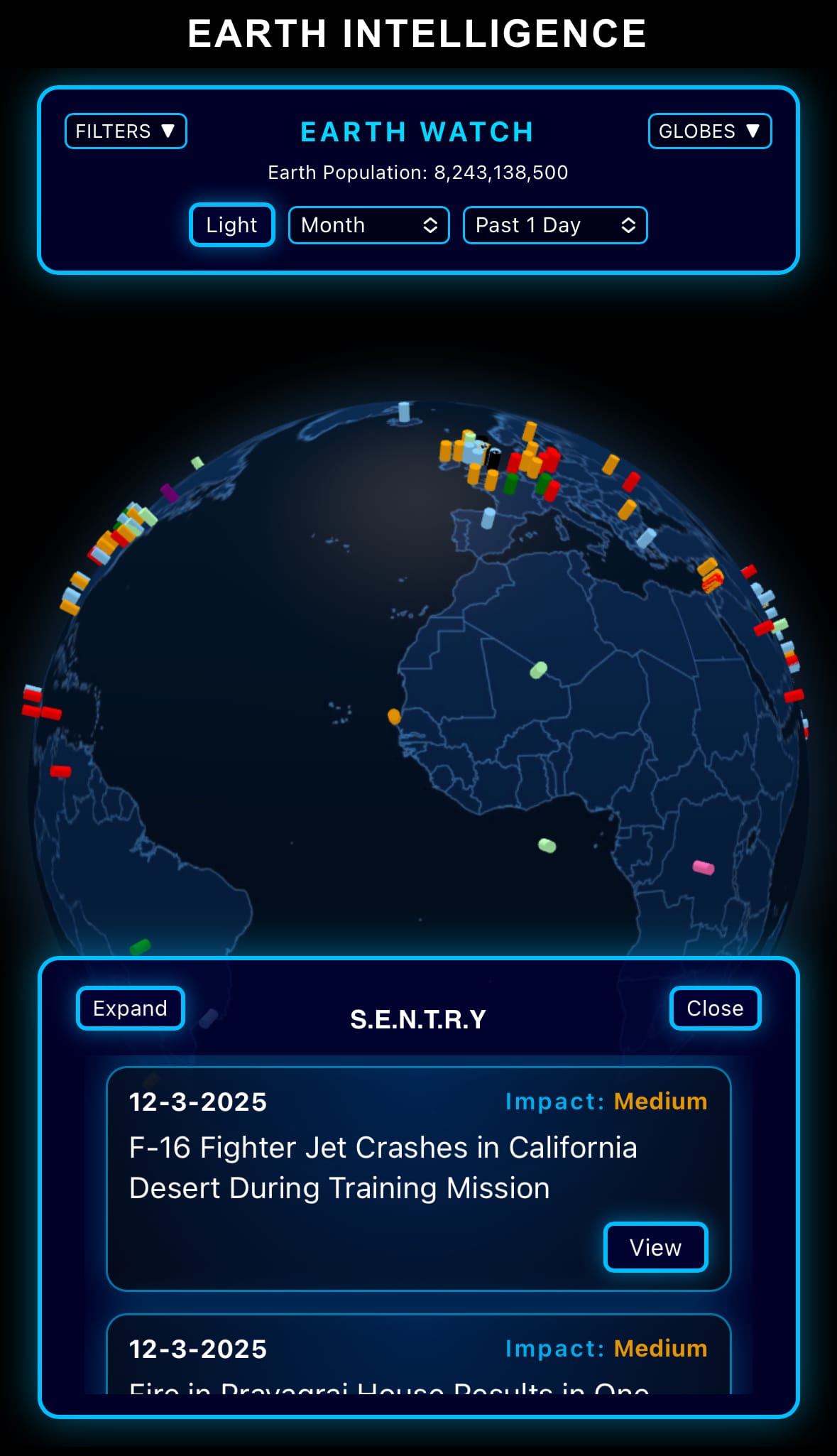
- Click below if you’d like to view our free EARTH WATCH globe:
- Download our mobile app:


Click below to view our previous newsletters:

Support/Suggestions Email:
earthintelligence@earthintel.news