Monday☕️


Trending:
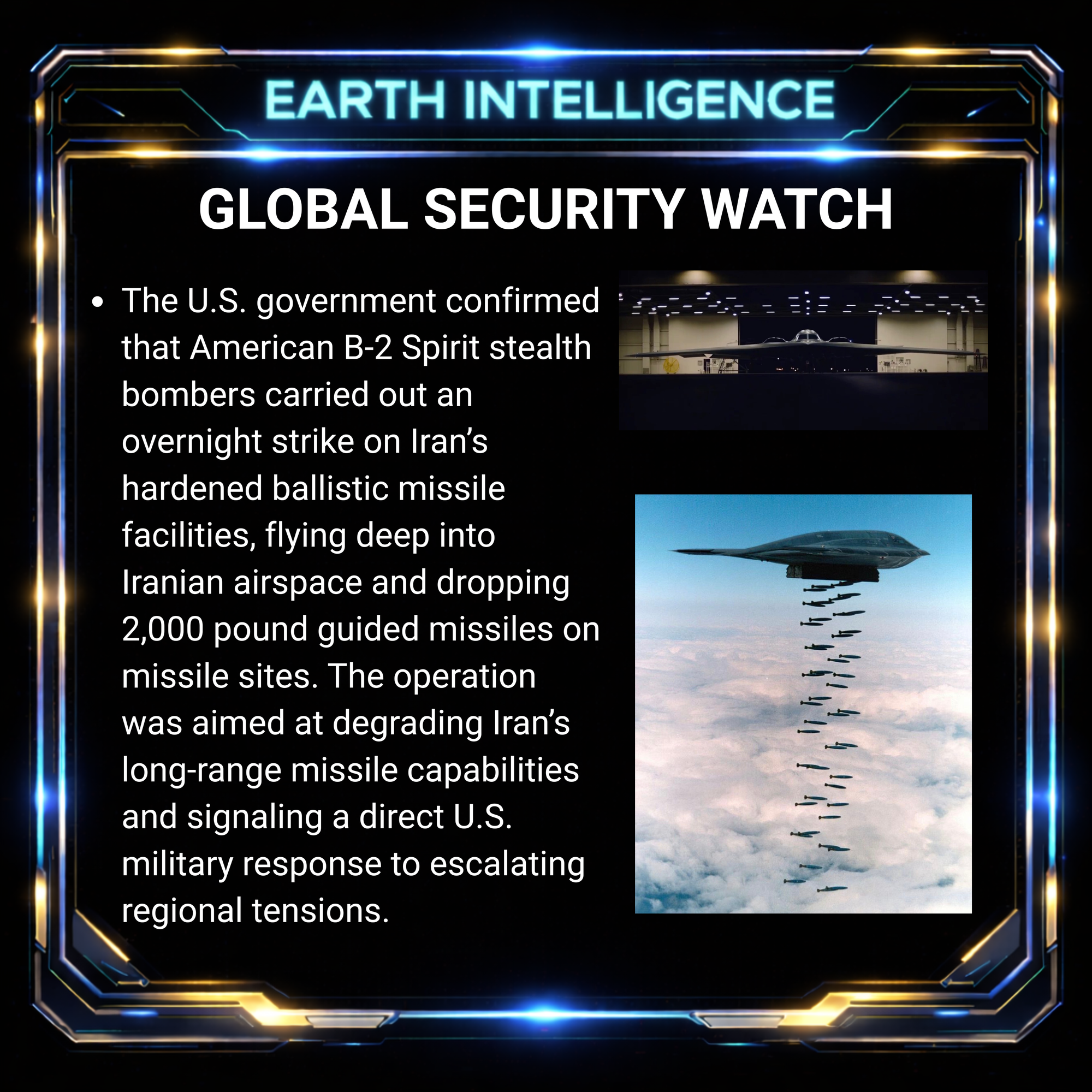
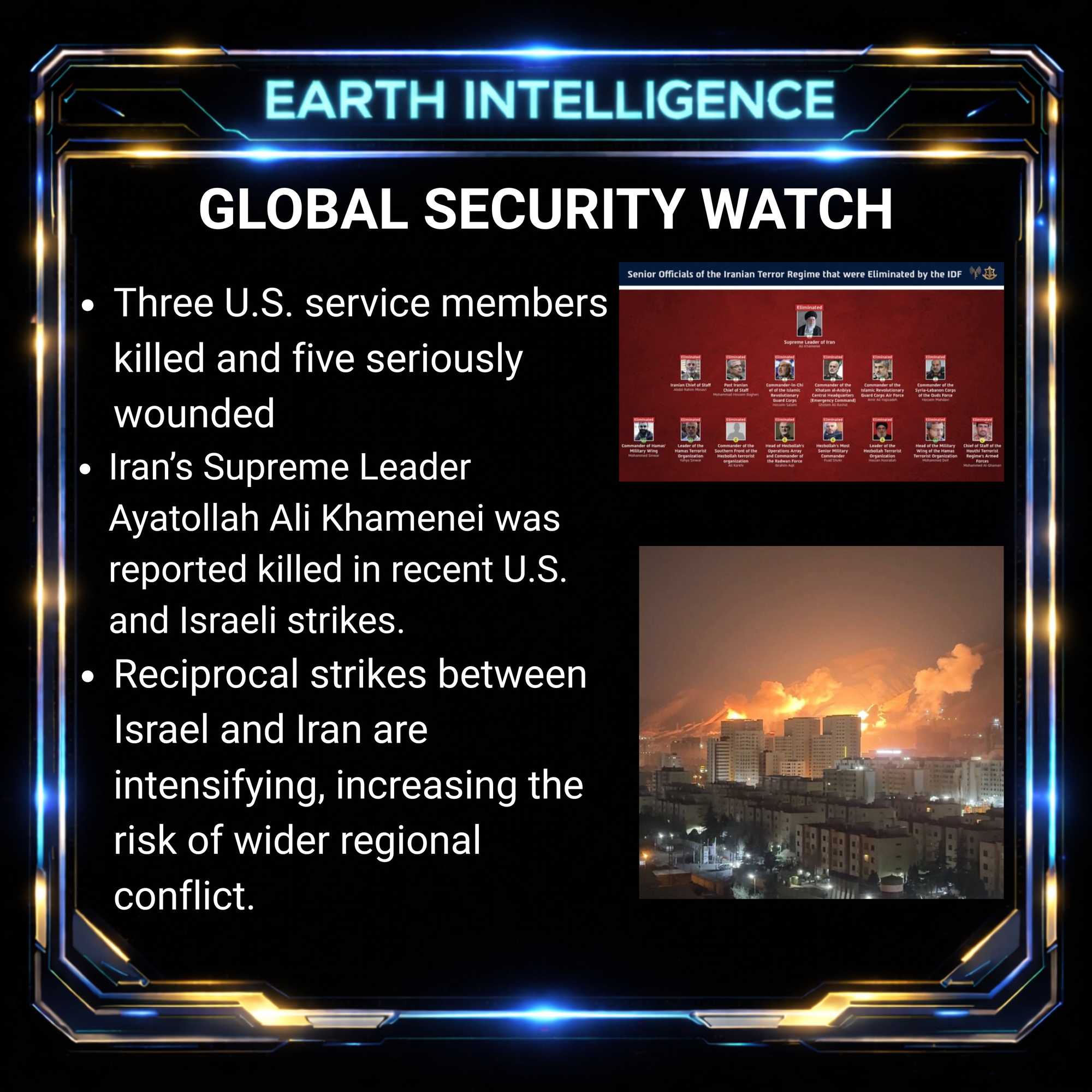
- As of March 2, 2026, Operation Epic Fury—a joint U.S.-Israel military campaign—continues with intense, reciprocal air and missile strikes against Iran now entering the third day. U.S. and Israeli forces have conducted widespread airstrikes on Iranian nuclear sites (Natanz, Fordow, Parchin), IRGC headquarters in Tehran, ballistic missile bases in Semnan and Isfahan, air defense systems, and naval facilities in Bandar Abbas, destroying key infrastructure and command centers.
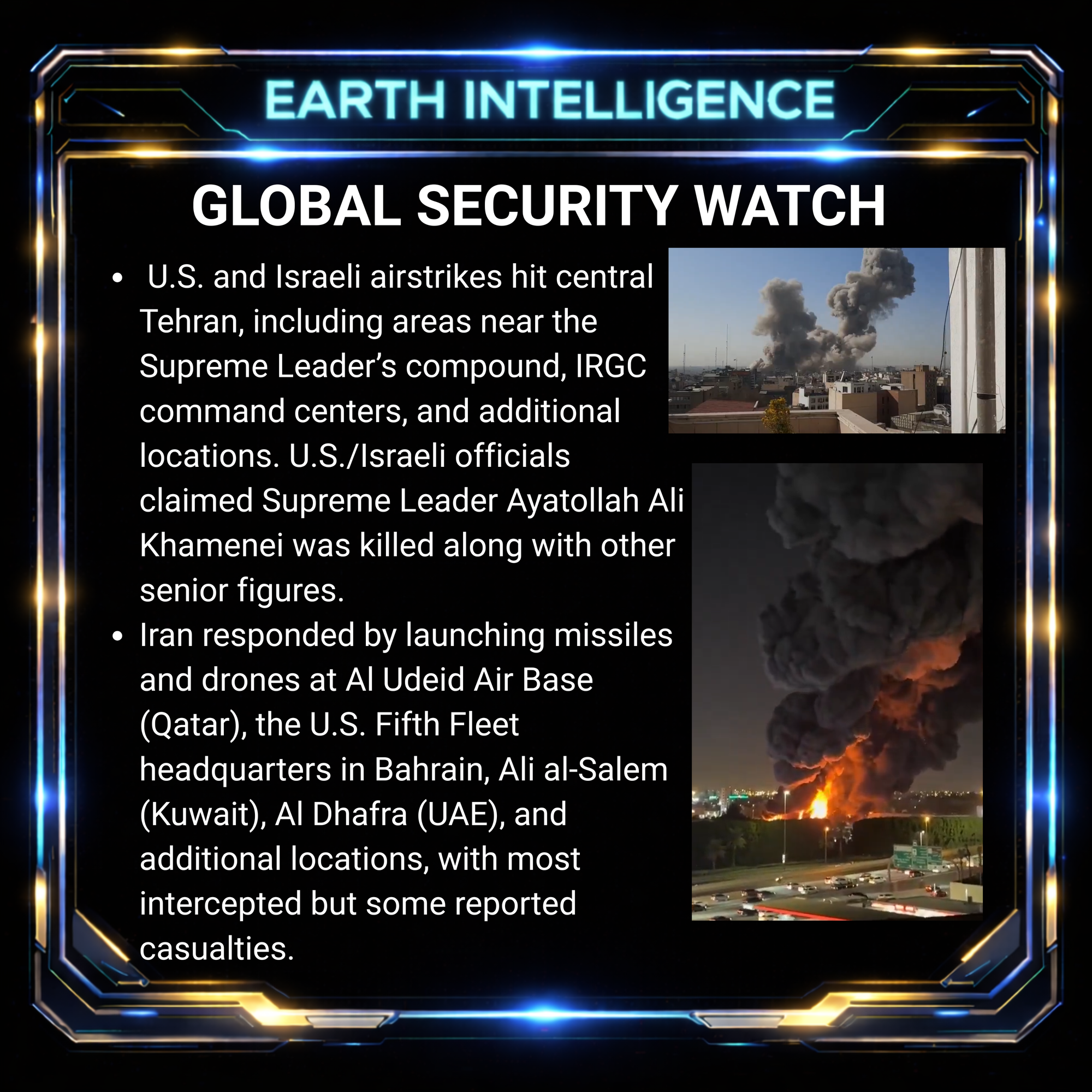
- Iran has retaliated with hundreds of missiles and drones targeting U.S. bases in Iraq and Jordan, Israeli airfields, and energy sites in Saudi Arabia, though many were intercepted by coalition defenses. Strikes remain ongoing and widespread, extending to Iranian proxy positions in Syria, Lebanon, and Yemen, with no de-escalation as both sides maintain high operational tempo and diplomatic channels stay closed.
Economics & Markets:
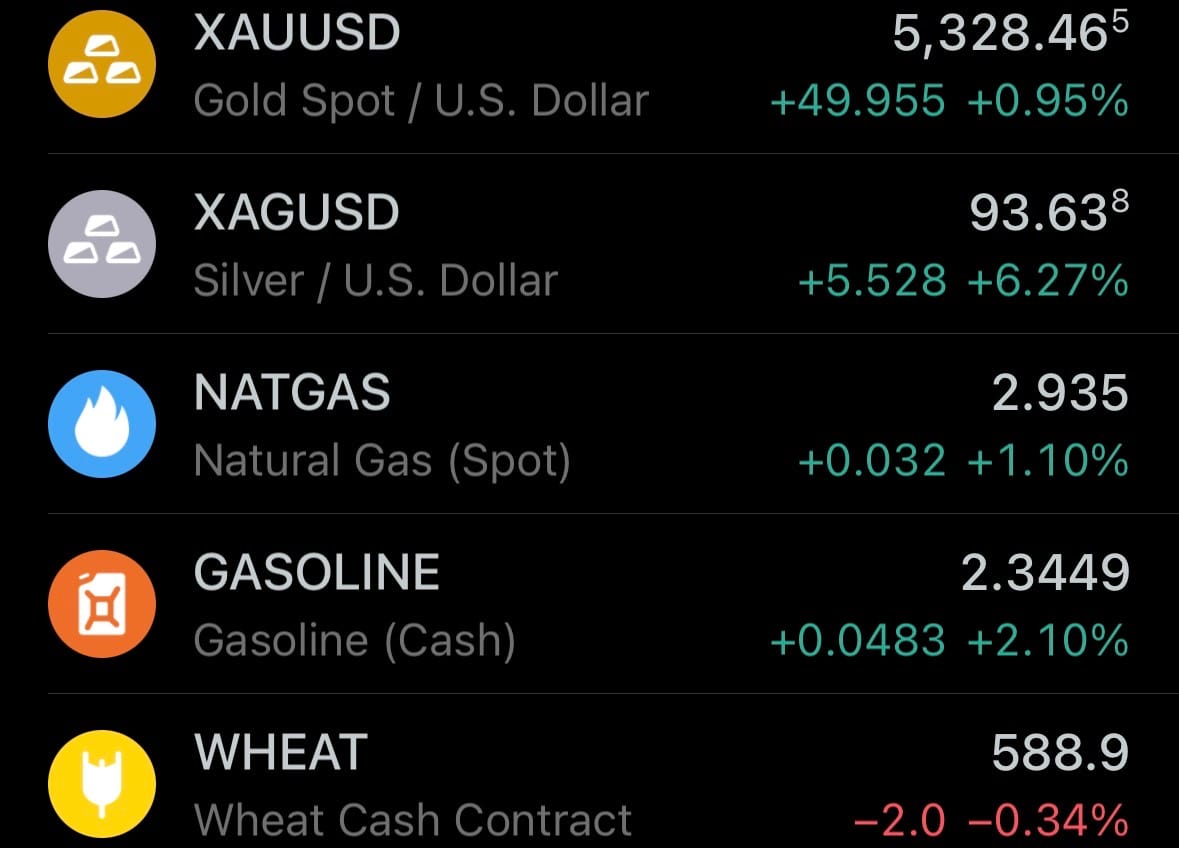
- Yesterday’s commodity market:
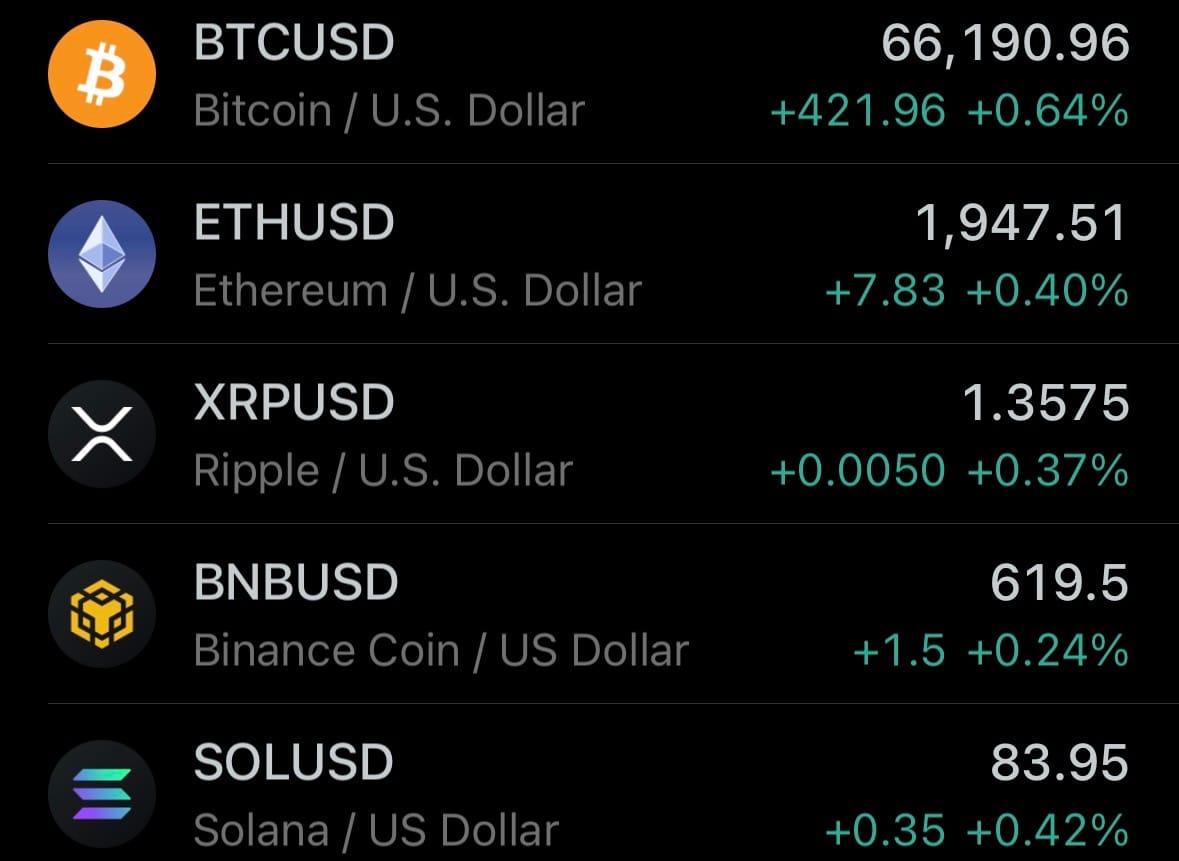
- Yesterday’s crypto market:
Geopolitics & Military Activity:
- On March 1, 2026, Belgian special forces, with support from French Navy NH90 helicopters, boarded and seized the oil tanker Ethera in the North Sea during an overnight operation dubbed "Blue Intruder." The vessel, flagged under Guinea but suspected of using a false flag and forged documents, is on the EU sanctions list as part of Russia's "shadow fleet" for transporting Russian crude oil in violation of Western restrictions related to the war in Ukraine.
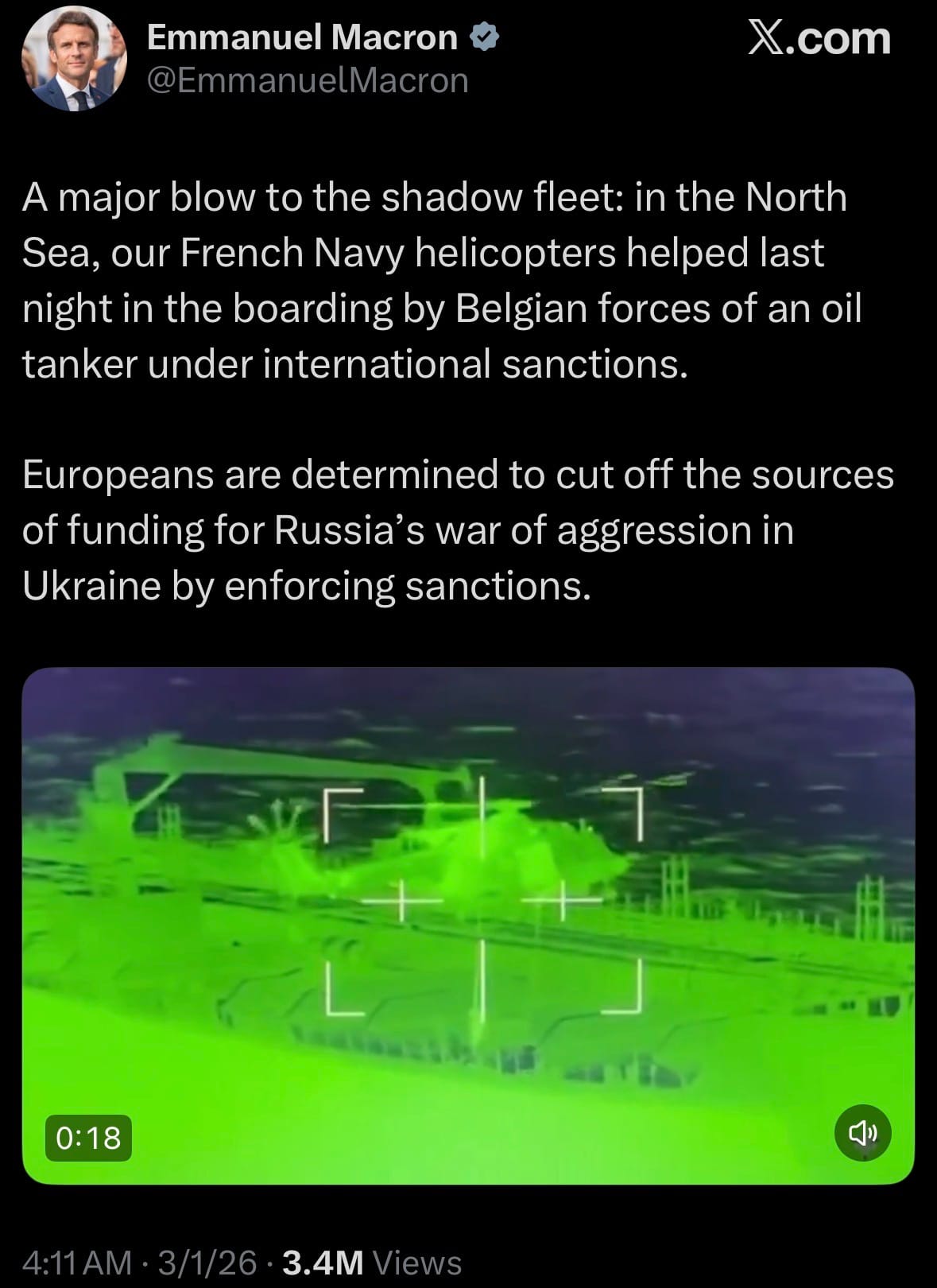
- The tanker was intercepted in the Belgian Exclusive Economic Zone, secured by Belgian troops rappelling from French helicopters, and escorted to the port of Zeebrugge for formal seizure and further investigation. French President Emmanuel Macron described the action as a "major blow to the shadow fleet," emphasizing Europe's determination to enforce sanctions and cut off funding sources for Russia's aggression in Ukraine through coordinated maritime interdictions. This marks Belgium's first direct seizure of a shadow fleet vessel and highlights increasing European efforts to disrupt illicit Russian oil exports at sea.
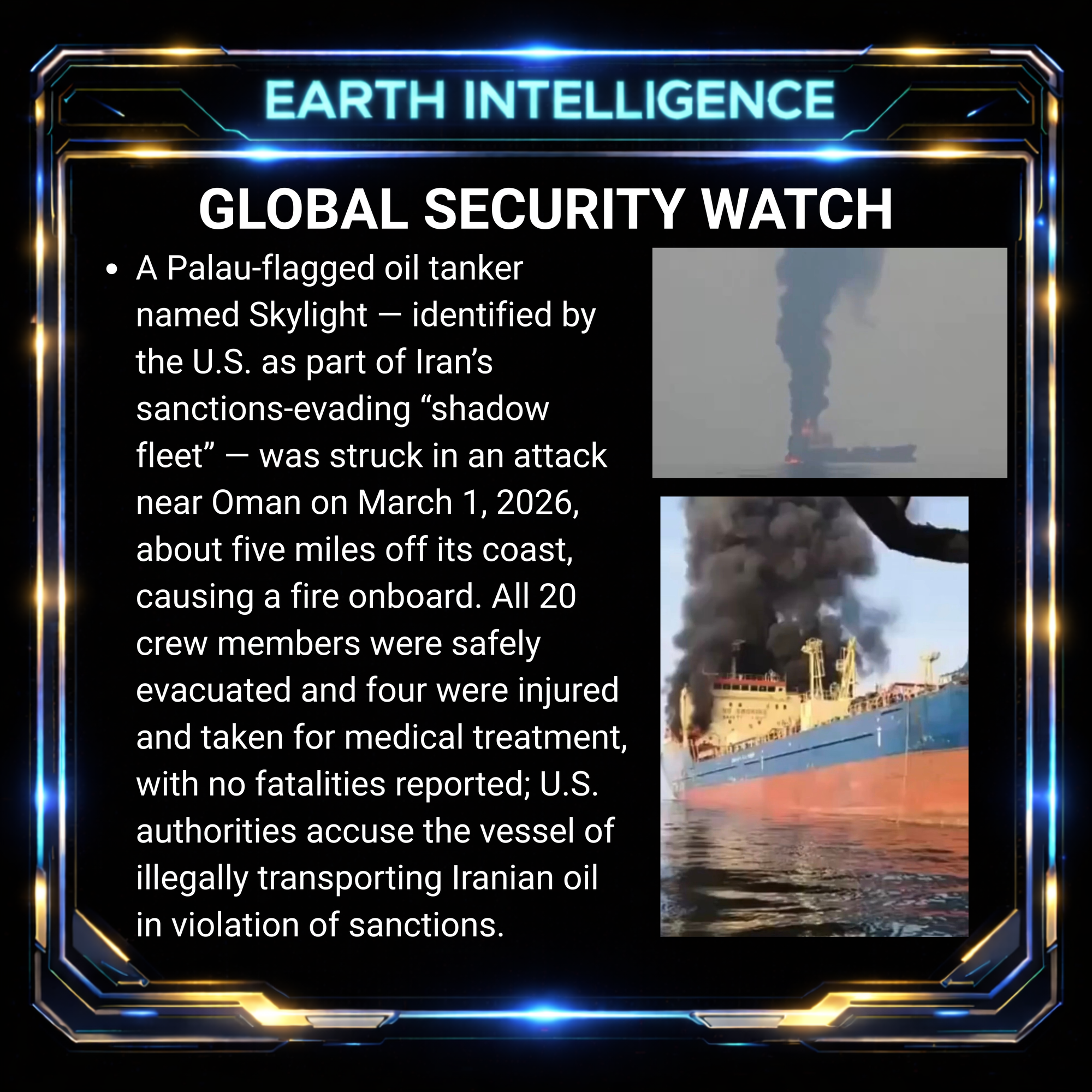
Environment & Weather:
- On March 1, 2026, heavy rainfall caused severe flooding in Espinosa, northern Minas Gerais state, Brazil, with the Rio São Domingos overflowing and inundating homes, streets, and central areas like Rua Getúlio Vargas. The city recorded about 97 mm of rain early Sunday, leading to a state of emergency declaration and roughly 550 families affected—around 60 homeless and 490 displaced—impacting approximately 3,500 people.

- Residents reported floodwaters entering homes and urgently requested help, while INMET issued a red alert for extreme rain risk through Monday evening, warning of river overflows, inundations, and possible landslides. No deaths were reported in Espinosa from this event, though civil defense teams are assessing damage and providing aid amid ongoing precipitation in the region.
Space:
- On March 1, 2026, SpaceX successfully launched the Starlink Group 17-23 mission using a Falcon 9 rocket from Space Launch Complex 4 East (SLC-4E) at Vandenberg Space Force Base in California at 2:10 a.m. PT (10:10 UTC). The rocket deployed 25 Starlink v2 Mini satellites into low-Earth orbit to expand the constellation's global broadband coverage.
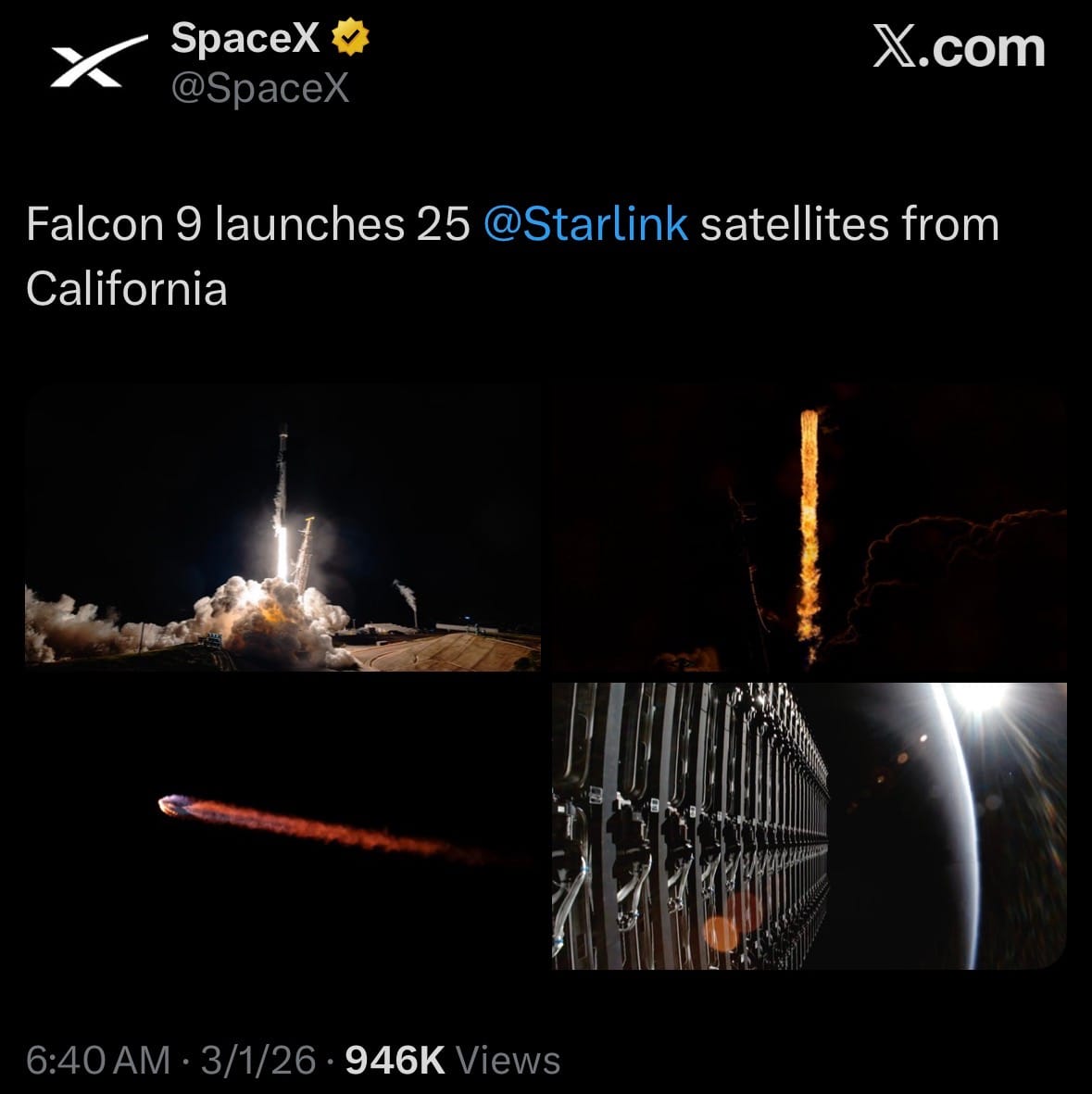
- The first-stage booster (B1082 on its 20th flight) landed successfully on the droneship "Of Course I Still Love You" in the Pacific Ocean, marking another milestone in SpaceX's reusable rocket program.
Second SpaceX Launch:
- On March 1, 2026, SpaceX successfully launched the Starlink Group 10-41 mission using a Falcon 9 rocket from Space Launch Complex 40 at Cape Canaveral Space Force Station in Florida. The rocket deployed 29 Starlink v2 Mini satellites into low-Earth orbit on a northeast trajectory at 53 degrees inclination, expanding the constellation's global broadband coverage.
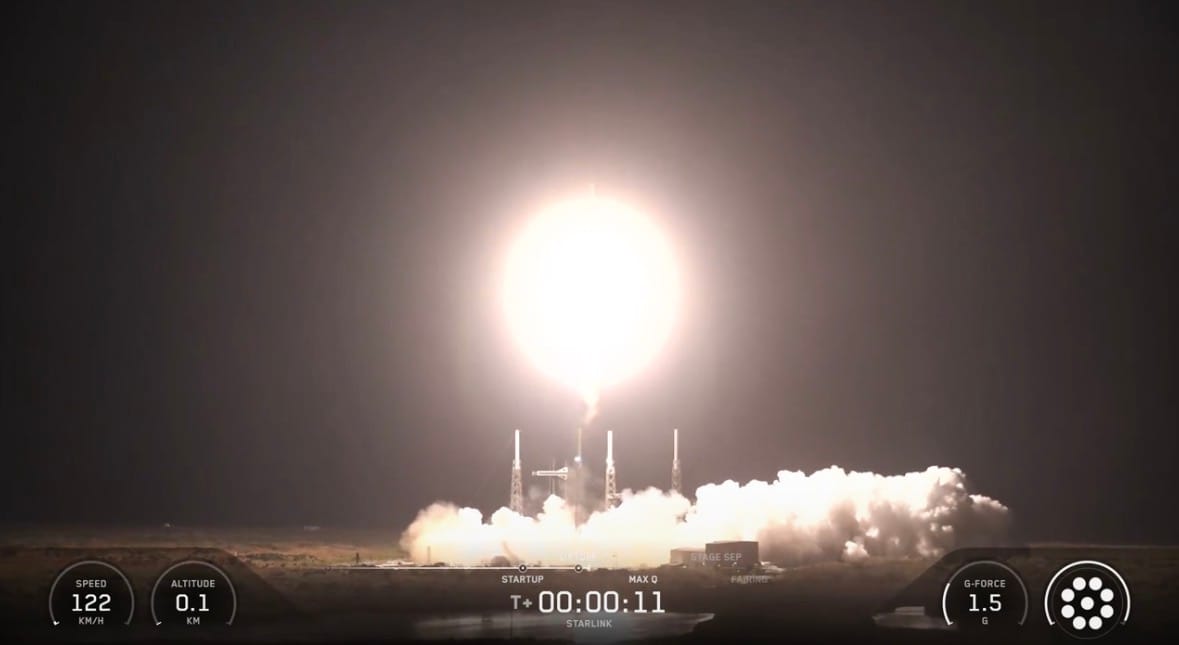
- The first-stage booster (B1078 on its 26th flight) landed successfully on the droneship "Just Read The Instructions" in the Atlantic Ocean. This mission marks SpaceX's 27th launch of 2026 and the 610th overall Falcon 9 flight, continuing the rapid pace of Starlink deployments from the East Coast.
Statistic:
- Largest assets on Earth by market capitalization:
- Gold: $37.126T
- Silver: $5.240T
- 🇺🇸 NVIDIA: $4.306T
- 🇺🇸 Apple: $3.882T
- 🇺🇸 Alphabet (Google): $3.767T
- 🇺🇸 Microsoft: $2.918T
- 🇺🇸 Amazon: $2.254T
- 🇹🇼 TSMC: $1.942T
- 🇸🇦 Saudi Aramco: $1.663T
- 🇺🇸 Meta Platforms: $1.639T
- 🇺🇸 Broadcom: $1.515T
- 🇺🇸 Tesla: $1.510T
- Bitcoin: $1.324T
- 🇺🇸 Berkshire Hathaway: $1.089T
- 🇺🇸 Walmart: $1.020T
- 🇰🇷 Samsung: $1.005T
- 🇺🇸 Eli Lilly: $992.40B
- 🇺🇸 Vanguard S&P 500 ETF: $855.12B
- 🇺🇸 JPMorgan Chase: $809.91B
- 🇺🇸 iShares Core S&P 500 ETF: $750.59B
- 🇺🇸 SPDR S&P 500 ETF: $694.99B
- 🇺🇸 Exxon Mobil: $635.43B
- 🇺🇸 Visa: $617.24B
- 🇺🇸 Johnson & Johnson: $598.69B
- 🇨🇳 Tencent: $591.79B
History:
- The history of cybersecurity and offensive cyber operations begins when computers stopped being isolated machines and became connected systems. In the 1960s and 1970s, mainframes were physically secured, and “security” largely meant controlling who could enter the room. Once ARPANET came online in 1969 and networking expanded through universities, defense labs, and eventually the public internet, vulnerabilities became systemic. The Morris Worm in 1988 demonstrated how a single exploit could cascade across networks, forcing governments to treat cybersecurity as a strategic issue. Through the 1990s, as the internet commercialized, cyber defense tools emerged: firewalls, intrusion detection systems, encryption standards like SSL, and public key infrastructure. Meanwhile, intelligence agencies quietly developed offensive capabilities, realizing that penetrating digital systems offered unprecedented intelligence access without deploying physical agents. By the early 2000s, cyber operations were no longer experimental—they were institutionalized.
- The 21st century formalized cyber as a domain of warfare. The United States established U.S. Cyber Command (USCYBERCOM) in 2009, later elevated to a unified combatant command, responsible for defending Department of Defense networks and conducting offensive cyber operations when authorized. The National Security Agency (NSA) remains one of the most powerful signals intelligence and cyber operations entities in the world, focusing on foreign intelligence collection, encryption research, and advanced exploitation capabilities. The Central Intelligence Agency (CIA) also maintains cyber capabilities for covert operations. China operates through the People’s Liberation Army Strategic Support Force and state-linked cyber units, focusing on espionage, intellectual property acquisition, and network penetration. The Ministry of State Security (MSS) plays a central role in intelligence-driven cyber operations. Russia utilizes entities associated with the GRU (military intelligence) and the FSB for cyber espionage, disruption campaigns, and influence operations. Israel maintains advanced cyber capabilities through Unit 8200 and other intelligence branches, widely regarded as technologically sophisticated. European nations such as the United Kingdom (through GCHQ and the National Cyber Force) and France have developed significant offensive and defensive programs as well.
- Private sector players are now inseparable from the cyber domain. Major cybersecurity firms such as Palo Alto Networks, CrowdStrike, Fortinet, and others provide large-scale defensive infrastructure for governments and corporations. Cloud providers—Microsoft, Amazon Web Services, Google Cloud—have become critical cyber defense actors because they operate vast portions of global digital infrastructure and actively monitor threat activity across networks. Offensive cyber has evolved from isolated exploits into complex campaigns involving zero-day vulnerabilities, supply chain compromise, ransomware ecosystems, and infrastructure mapping. Stuxnet (discovered in 2010) proved that cyber tools could produce physical effects, marking a new era of digital-kinetic convergence. Today, cyber operations are continuous and largely invisible—states probe one another’s infrastructure, map networks, and prepare access points in case of conflict escalation. The most powerful cyber players are those with deep intelligence integration, advanced cryptographic expertise, global sensor access, and the ability to fuse cyber with space, signals, and human intelligence. Cybersecurity has become the digital shield of modern civilization, while offensive cyber operations represent one of the most strategically significant tools of state power in the 21st century.
Image of the day:

Thanks for reading! Earth is complicated, we make it simple.
- Click below if you’d like to view our free EARTH WATCH globe:
- Download our mobile app:



Click below to view our previous newsletters:

Support/Suggestions Email:
earthintelligence@earthintel.news