Monday☕️


Trending:
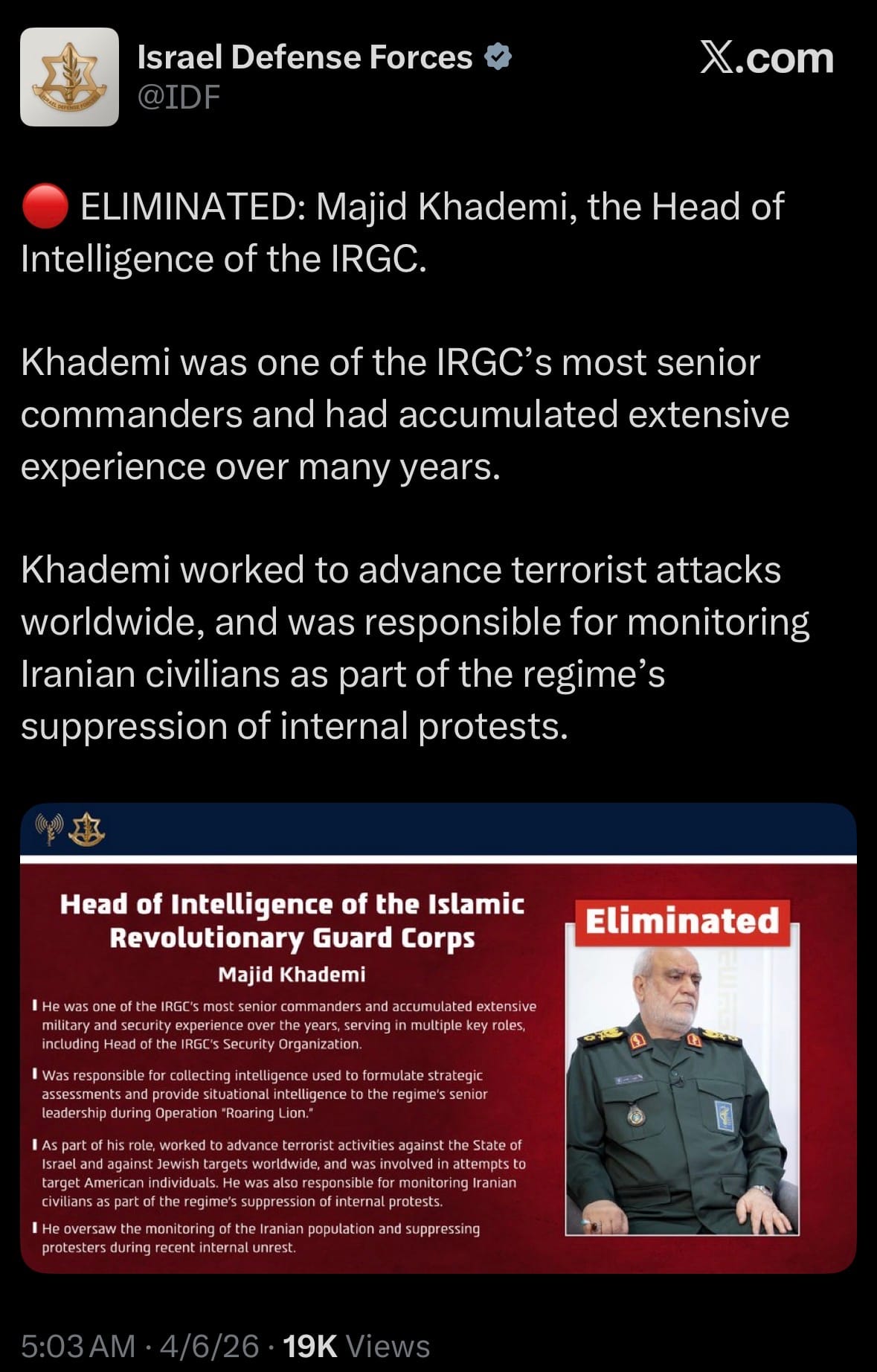
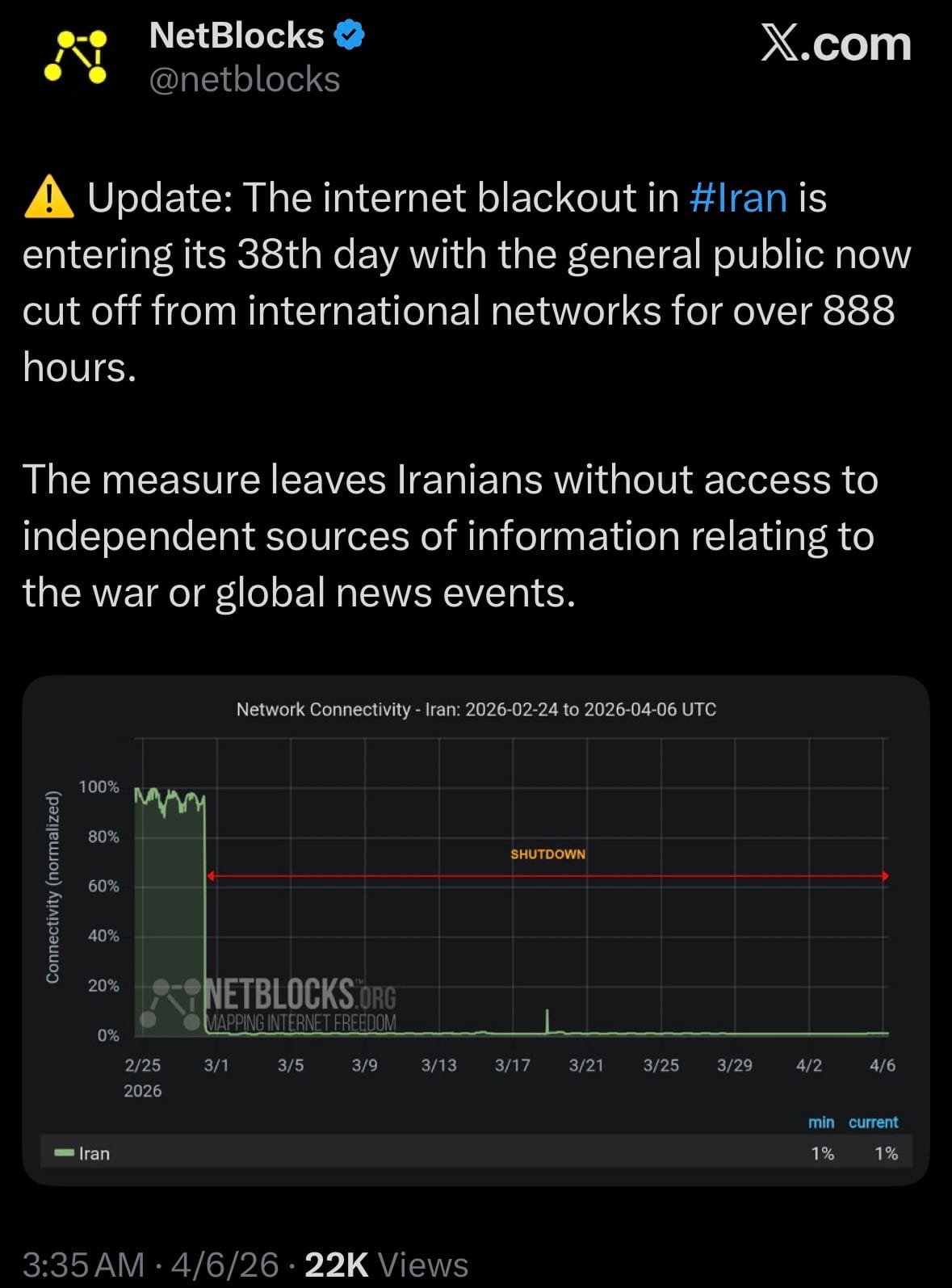
- As of April 6, 2026, the U.S.-Israel-Iran war has entered its 38th day with no ceasefire in sight. The Strait of Hormuz remains completely closed for the 33rd consecutive day, as Iran continues to reject all proposals to reopen it, maintaining its de facto blockade and selective checkpoint system near Larak Island.
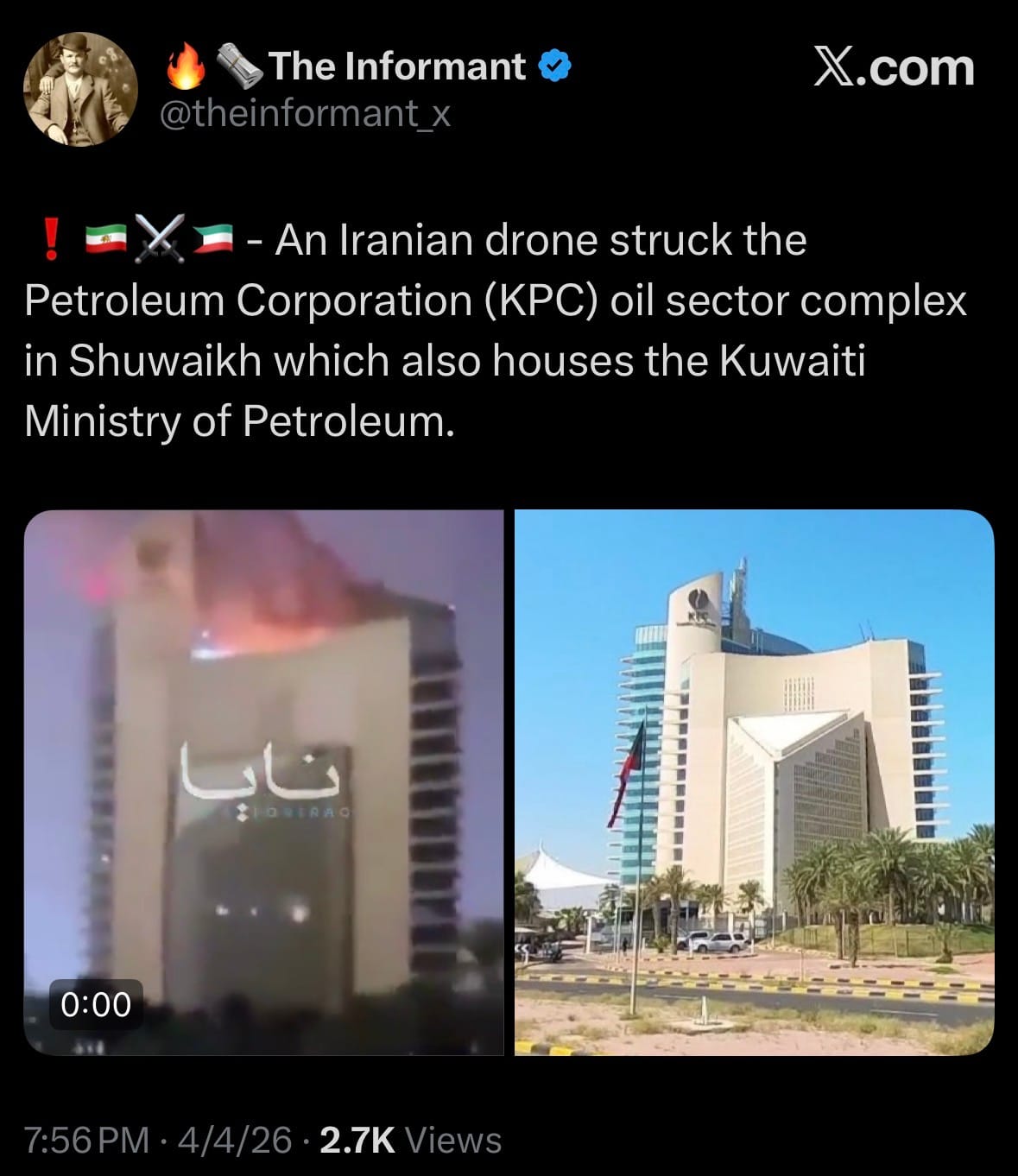
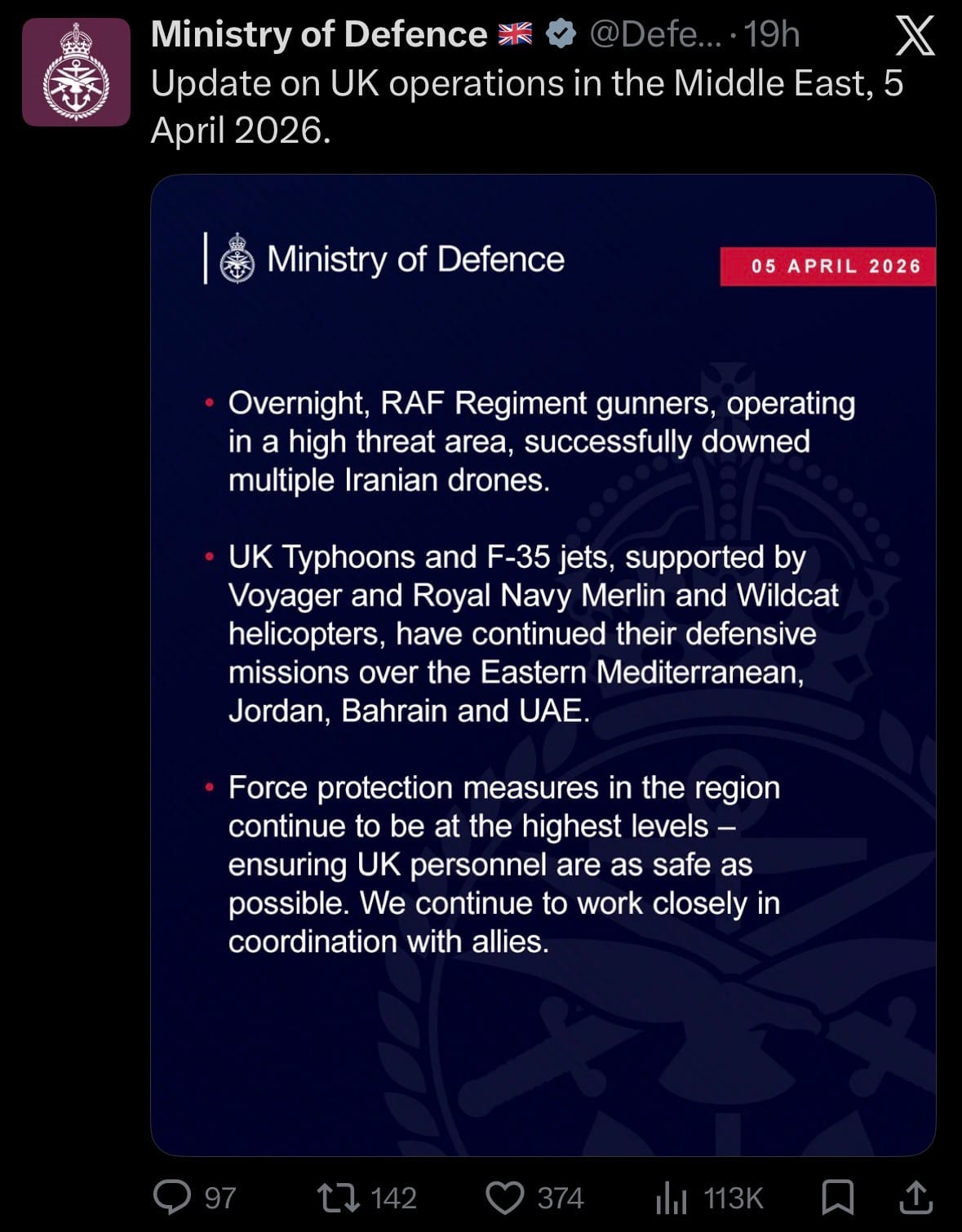
- In recent days, Iran has launched fresh missile and drone attacks on Israeli cities and Gulf energy infrastructure, while striking desalination plants in Saudi Arabia and the UAE, causing water shortages in several coastal cities. The U.S. and Israel have responded with intensified strikes on Iranian missile production sites, air defenses, and military bases, further degrading Iran’s capabilities. The conflict continues with high tension and no immediate end in view.
Economics & Markets:
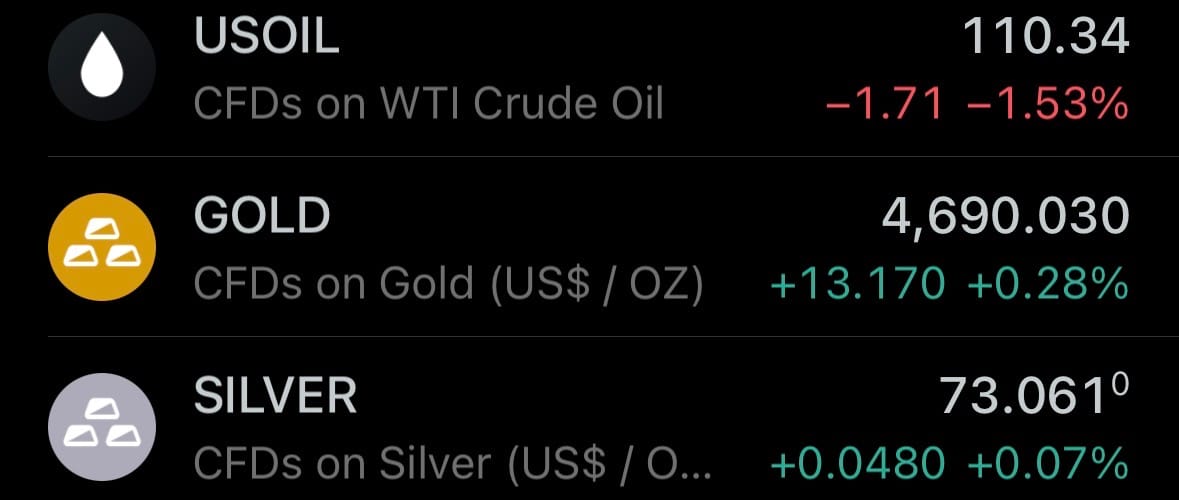
- As of April 6, 2026, Europe and Asia are suffering the biggest economic impact from the Iran war. Europe is facing sharply higher natural gas and electricity prices, fuel shortages, and surging fertilizer costs that threaten food production.
- Asia (especially India, South Korea, Japan, and Southeast Asia) is being hit hardest by disrupted oil and LNG supplies, causing factory slowdowns, flight cancellations, and fertilizer plant shutdowns. Fertilizer prices have jumped 30–50% worldwide due to the blocked Strait of Hormuz, hurting developing countries in South Asia and Africa the most with risks of lower crop yields and higher food prices.


Geopolitics & Military Activity:
- On April 4, 2026, U.S. forces successfully rescued two American service members after their F-15E Strike Eagle fighter jet was shot down over Iran on April 2 during a combat mission.
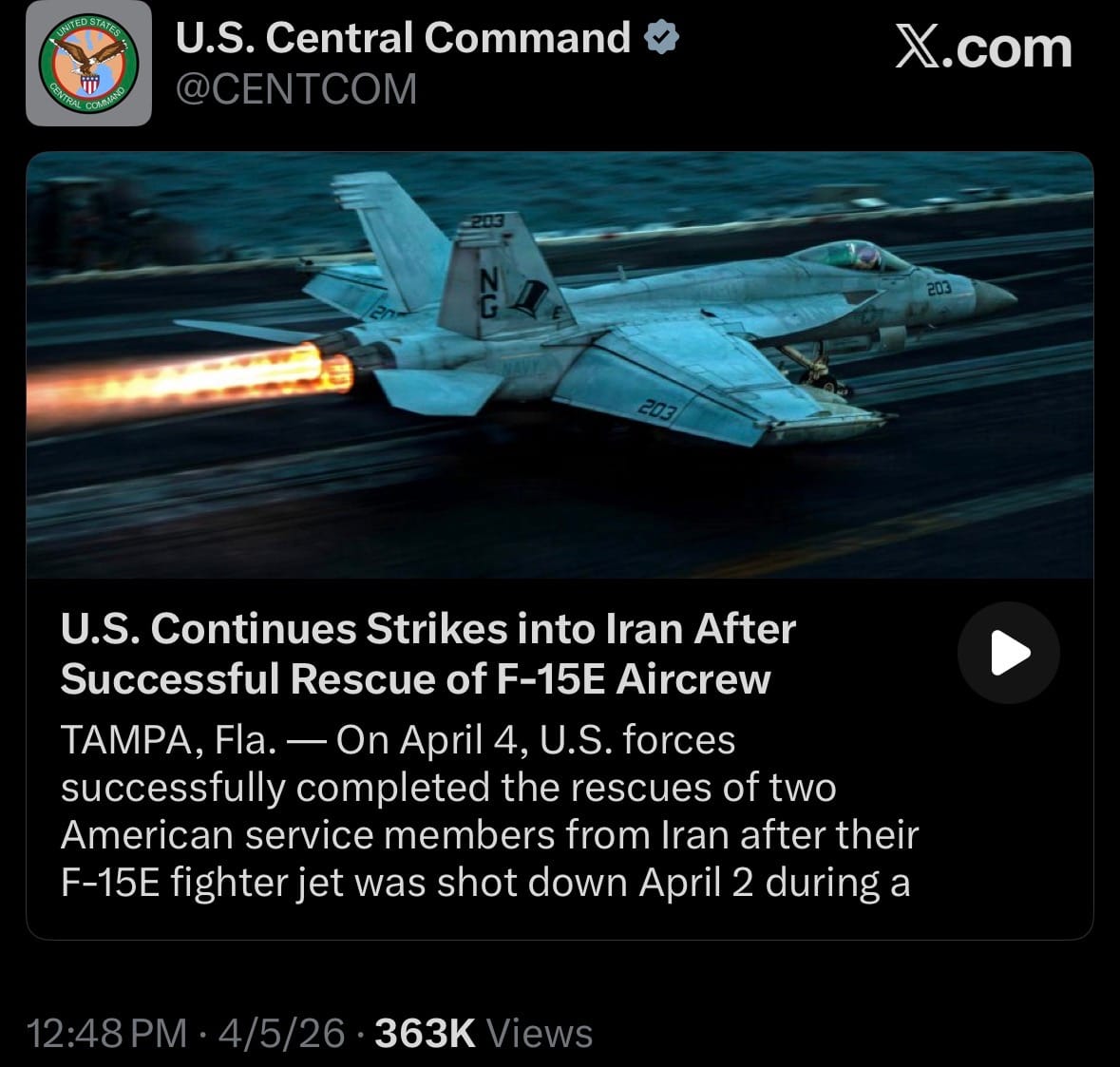
- The two airmen were recovered safely in separate search-and-rescue operations. U.S. strikes against Iranian military targets continue, with Central Command focusing on dismantling Iran’s ability to project power beyond its borders.
Environment & Weather:
Science & Technology:
- Today, NASA’s Artemis II mission is successfully underway, with the Orion spacecraft Integrity now more than two-thirds of the way to the Moon. The four-person crew — NASA astronauts Reid Wiseman (commander), Victor Glover (pilot), Christina Koch (mission specialist), and CSA astronaut Jeremy Hansen — is preparing for a close lunar flyby later today, passing roughly 4,000 miles above the lunar surface.
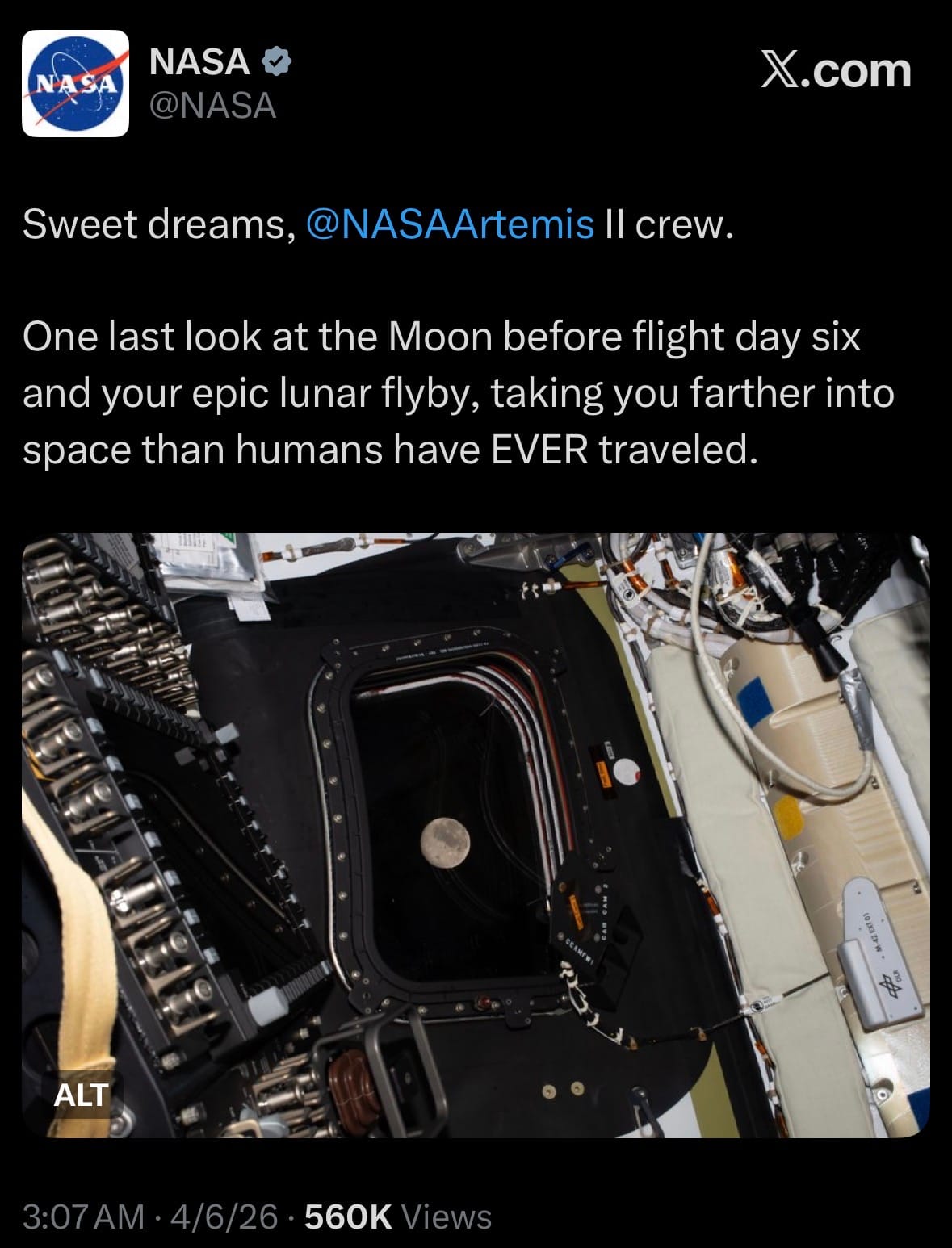
- The mission, the first crewed flight beyond low Earth orbit in over 50 years, is testing Orion’s life support systems, navigation, and deep-space performance ahead of future lunar landings. All systems are reported to be performing well.
Statistic:
- Largest public oil companies by market capitalization:
- 🇸🇦 Saudi Aramco: $1.770T
- 🇺🇸 Exxon Mobil: $669.55B
- 🇺🇸 Chevron: $397.81B
- 🇨🇳 PetroChina: $336.40B
- 🇬🇧 Shell: $260.96B
- 🇫🇷 TotalEnergies: $198.15B
- 🇨🇳 CNOOC: $169.81B
- 🇺🇸 ConocoPhillips: $159.53B
- 🇧🇷 Petrobras: $132.49B
- 🇬🇧 BP: $123.05B
- 🇨🇦 Enbridge: $118.18B
- 🇺🇸 Southern Company: $109.08B
- 🇳🇴 Equinor: $104.04B
- 🇨🇳 Sinopec: $102.97B
- 🇺🇸 Duke Energy: $102.89B
- 🇨🇦 Canadian Natural Resources: $99.38B
- 🇺🇸 Williams Companies: $88.04B
- 🇮🇹 ENI: $84.19B
- 🇺🇸 Enterprise Products: $81.21B
- 🇨🇦 Suncor Energy: $78.46B
- 🇺🇸 EOG Resources: $76.52B
- 🇺🇸 SLB (Schlumberger): $74.21B
- 🇺🇸 Kinder Morgan: $73.35B
- 🇺🇸 Valero Energy: $72.98B
- 🇦🇪 TAQA: $71.63B
History:
- Sonar began with a simple realization in 1826 when scientist Jean-Daniel Colladon proved that sound travels extremely well through water, much better than light. This mattered because underwater, you can’t rely on vision—so sound became the key to “seeing.” In the late 1800s, early devices called hydrophones were created to just listen to underwater noise, which is now known as passive sonar. The real breakthrough came after the Titanic sank in 1912, pushing scientists to find a way to detect objects underwater before impact. During World War I (1914–1918), Paul Langevin developed the first true active sonar by sending out sound waves and measuring how they bounced back, using piezoelectric materials to generate those signals. This idea was rapidly improved during World War II (1939–1945), where systems like ASDIC helped detect submarines by calculating distance based on how long it took sound to return. After that, during the Cold War, sonar became far more advanced, with large underwater listening networks like SOSUS in the 1950s and the introduction of digital processing in the 1960s and 70s, allowing operators to not just detect objects, but identify exactly what they were by their unique sound patterns.
- Today, sonar works as a highly advanced system that uses sound waves almost like radar uses radio waves, but adapted for water. There are two main types: active sonar, which sends out a sound pulse and listens for the echo, and passive sonar, which just listens for sounds already being made, like engines or movement. Modern sonar systems are built around the idea of resonance—how sound waves interact with objects and environments—so they can pick up incredibly detailed information like size, shape, distance, and even material type. They also adjust in real time based on ocean conditions like temperature and depth, which affect how sound travels. These systems are now used everywhere: militaries use them to track submarines, ships use them to avoid collisions and navigate safely, energy companies use them to map the seafloor and inspect pipelines, and scientists use them to study ocean life and terrain. Even autonomous underwater drones rely on sonar to move and “see” in dark, deep water. What started as basic sound experiments has evolved into a powerful sensing system that turns the ocean into something we can actively understand and monitor.
Image of the day:

Thanks for reading! Earth is complicated, we make it simple.
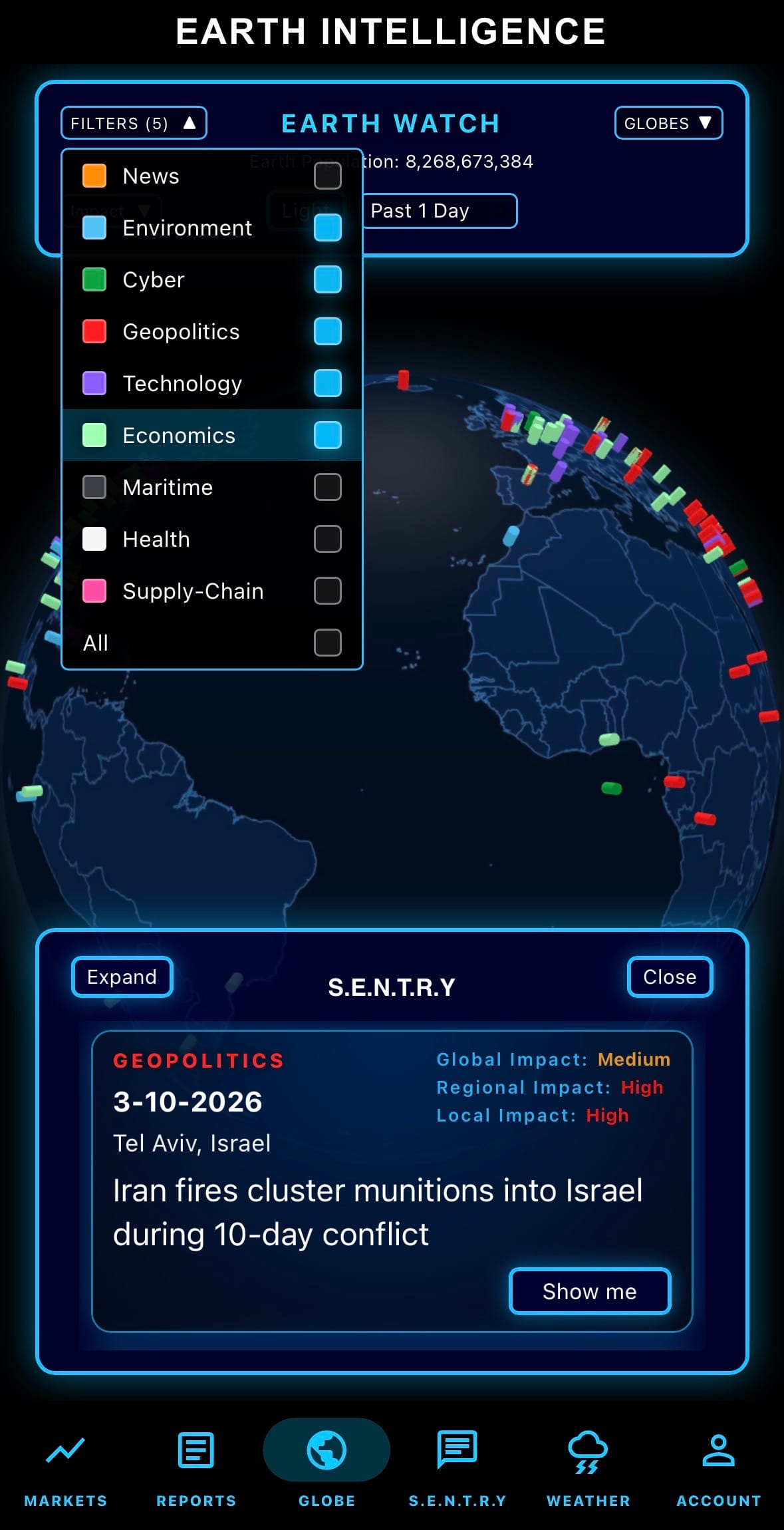
- Click below if you’d like to view our free EARTH WATCH globe:
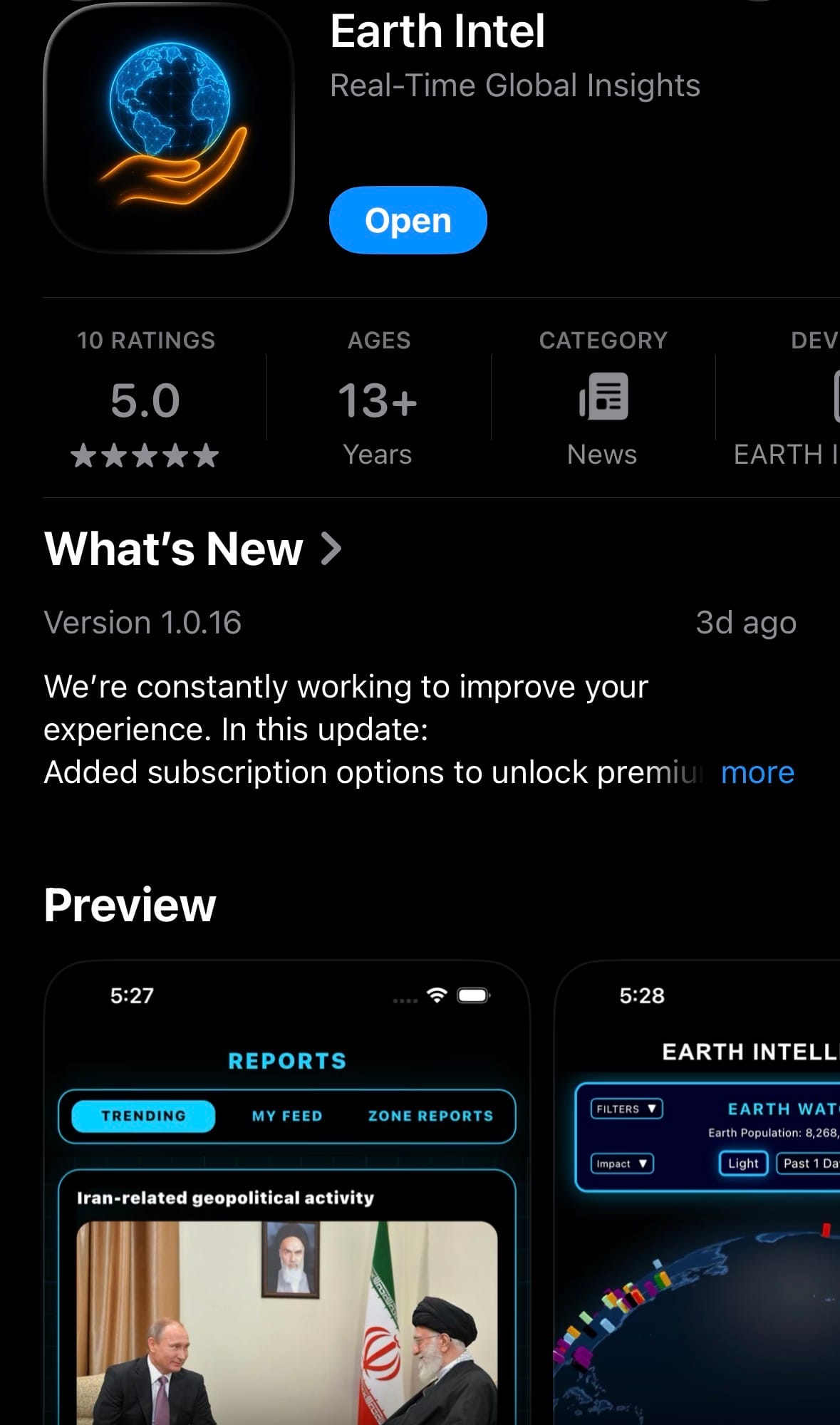
- Download our mobile app:



Click below to view our previous newsletters:

Support/Suggestions Email:
support@earthintel.io