Your daily briefing on the world, markets, science and technology.
Snapshot:
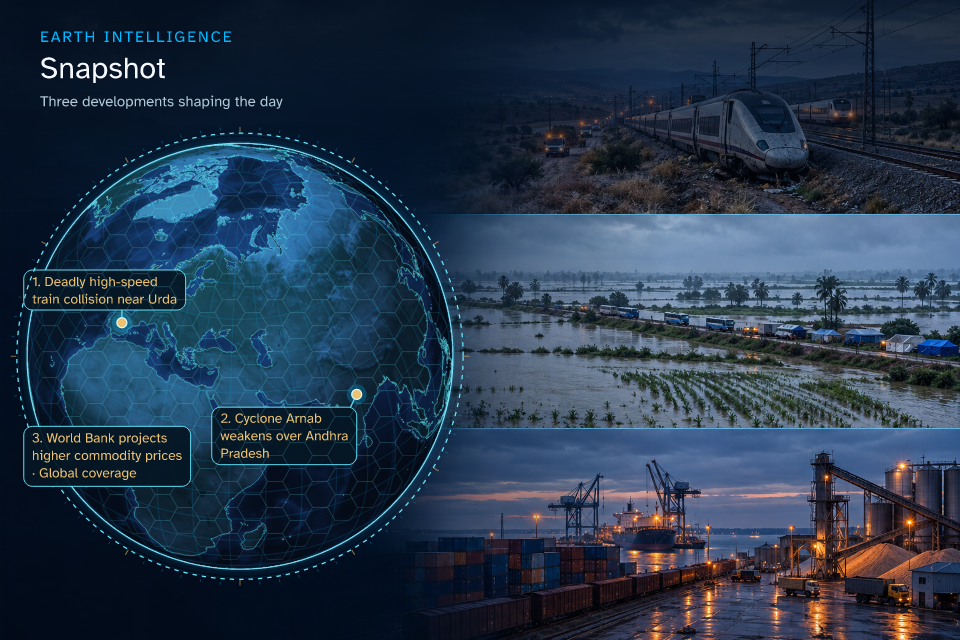
October 28, 2026 — A Renfe Madrid–Seville train hit an Iryo train near Urda, Spain, killing at least 68 people and stopping high-speed service to Andalusia.
October 28, 2026 — Cyclone Arnab weakened inland after landfall near Yanam, India, but flooding killed three people, flooded 200,000 acres, and forced 115,000 people into shelters.
October 28, 2026 — The World Bank projected global commodity prices will rise 23% in 2026, led by energy, potentially raising inflation and food costs amid conflict and weather risks.
Geopolitics & Military Activity:
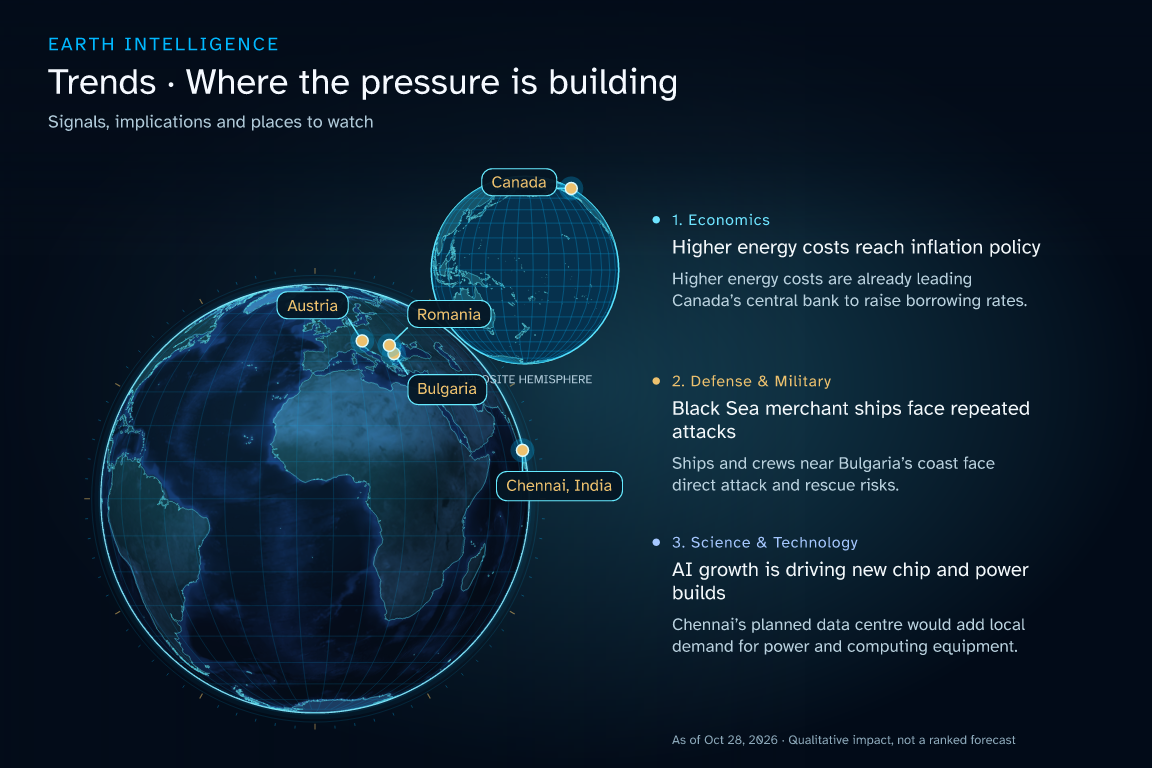
October 28, 2026 — Three sea drones struck the Liberian-flagged container ship Contship Jet off Shabla, Bulgaria, forcing its 18 sailors to abandon ship. Bulgarian rescue teams brought them ashore safely; the ship was still afloat, while responsibility and cargo damage remained unclear.
Economics & Markets:
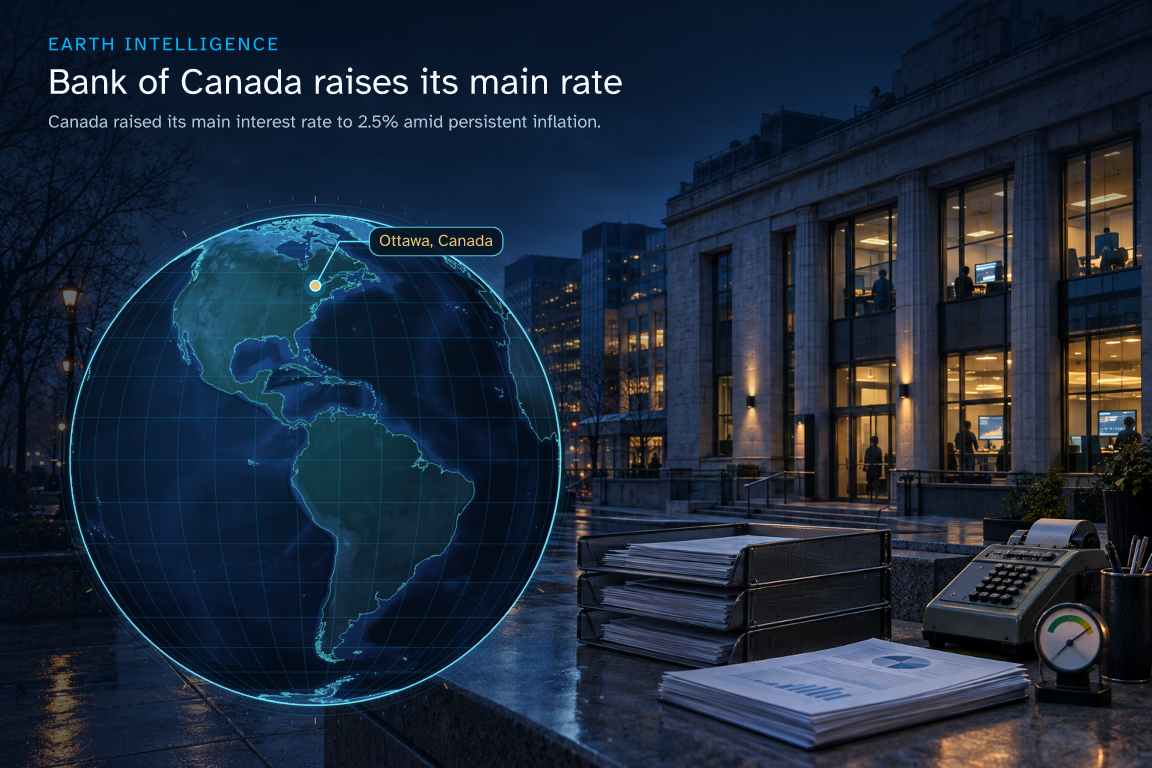
October 28, 2026 — The Bank of Canada raised its main interest rate by 0.25 percentage points to 2.5% in Ottawa, Canada. The move will raise some borrowing costs as the bank tries to stop high energy costs from spreading to other prices.
Asset
Price
As of (Eastern)
🇺🇸 NVIDIA
215.39 USD/share
Oct 28, 2026, 7:33 PM EDT
🇺🇸 Apple
343.85999 USD/share
Oct 28, 2026, 7:33 PM EDT
🇺🇸 Microsoft
530.83002 USD/share
Oct 28, 2026, 7:34 PM EDT
🇺🇸 Alphabet
322.35001 USD/share
Oct 28, 2026, 7:34 PM EDT
🇺🇸 Amazon
254.64999 USD/share
Oct 28, 2026, 7:34 PM EDT
🇹🇼 TSMC
439.67999 USD/share
Oct 28, 2026, 7:34 PM EDT
🇺🇸 Broadcom
351.97 USD/share
Oct 28, 2026, 7:35 PM EDT
🇸🇦 Saudi Aramco
26 SAR/share
Oct 28, 2026, 7:35 PM EDT
🇺🇸 Tesla
404.41 USD/share
Oct 28, 2026, 7:35 PM EDT
🇺🇸 Meta Platforms
612.48999 USD/share
Oct 28, 2026, 7:35 PM EDT
🌐 Gold
4052.33357 USD/troy ounce
Oct 28, 2026, 7:32 PM EDT
🌐 Silver
53.87287 USD/troy ounce
Oct 28, 2026, 7:32 PM EDT
🌐 Bitcoin
81300.29 USD/coin
Oct 28, 2026, 7:33 PM EDT
🌐 Ethereum
2359.71 USD/coin
Oct 28, 2026, 7:33 PM EDT
Business:
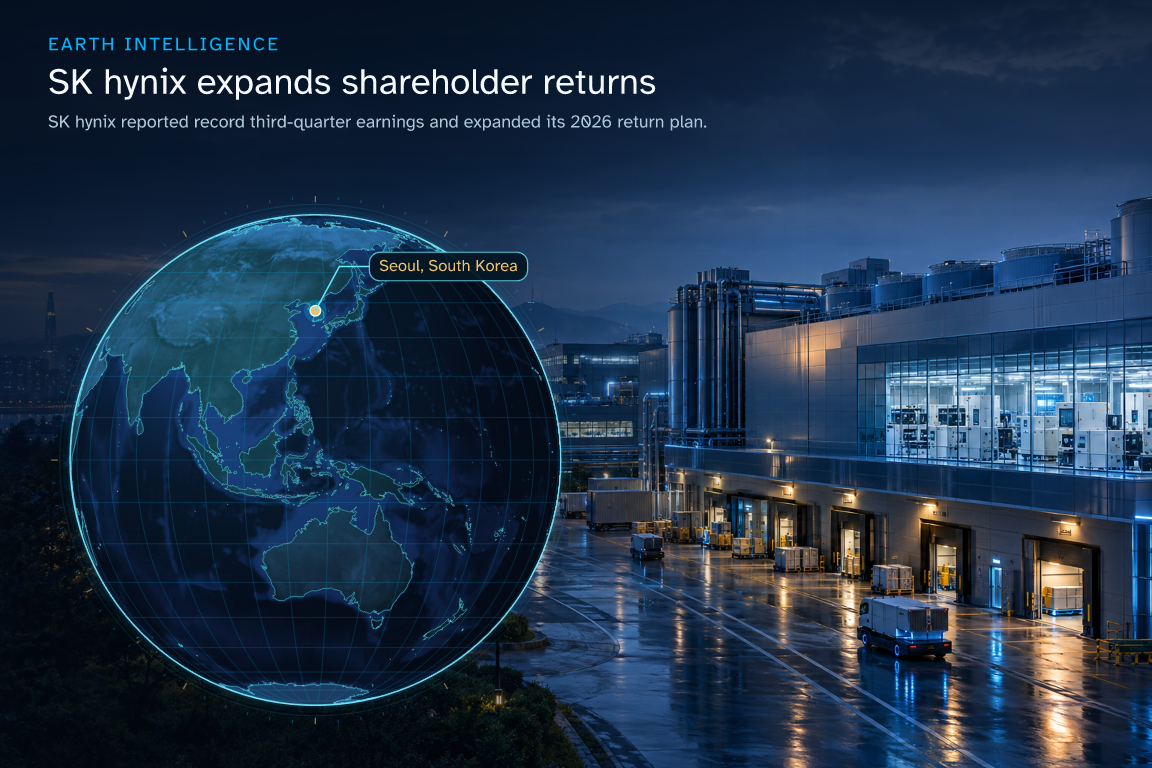
October 28, 2026 — SK hynix, a South Korean memory-chip maker, reported ₩83.3 trillion in third-quarter operating profit and set about ₩100 trillion in 2026 shareholder returns; contracts now cover over half of its 2027–28 output.
October 28, 2026 — Australia’s Federal Court ordered casino operator Star Entertainment to pay A$260 million for failures in controls against money laundering and terrorism financing, adding a major cost to a company already under regulatory supervision.
Politics & Society:
October 28, 2026 — Governor Kathy Hochul signed a New York, United States, law that bars AI chatbots from acting like companions for under-18s and requires age checks. Providers have six months to comply or face penalties.
October 28, 2026 — The Maharashtra government indefinitely postponed cooperative-society elections in 304 drought-hit talukas in India, saying officials are needed for relief work. The delay affects rural credit bodies and sugar mills; court-ordered and nomination-stage polls continue.
Environment & Weather:
October 27, 2026 — The U.S. Environmental Protection Agency, the federal pollution regulator, proposed looser oil-and-gas rules across the United States, including ending a program for responding to very large methane leaks. The proposal is not final; EPA projects lower compliance costs and more oil and gas production.
October 28, 2026 — Denver Water’s board approved 2027 rates in Denver, United States, lowering basic indoor-water prices but raising outdoor rates and the fixed monthly charge from January 1. The utility serves 1.5 million people; typical single-family bills will rise by $3.25 to $4.50 a month.
Cyber:
October 27, 2026 — The U.S. Justice Department and FBI seized Virtualine.net in Alexandria, United States, disrupting a hosting service accused of supporting phishing, fraud and abusive-image sites. Police in Germany, the Netherlands and the United Kingdom assisted; the action removes one domain, not necessarily all related infrastructure.
Science & Technology:
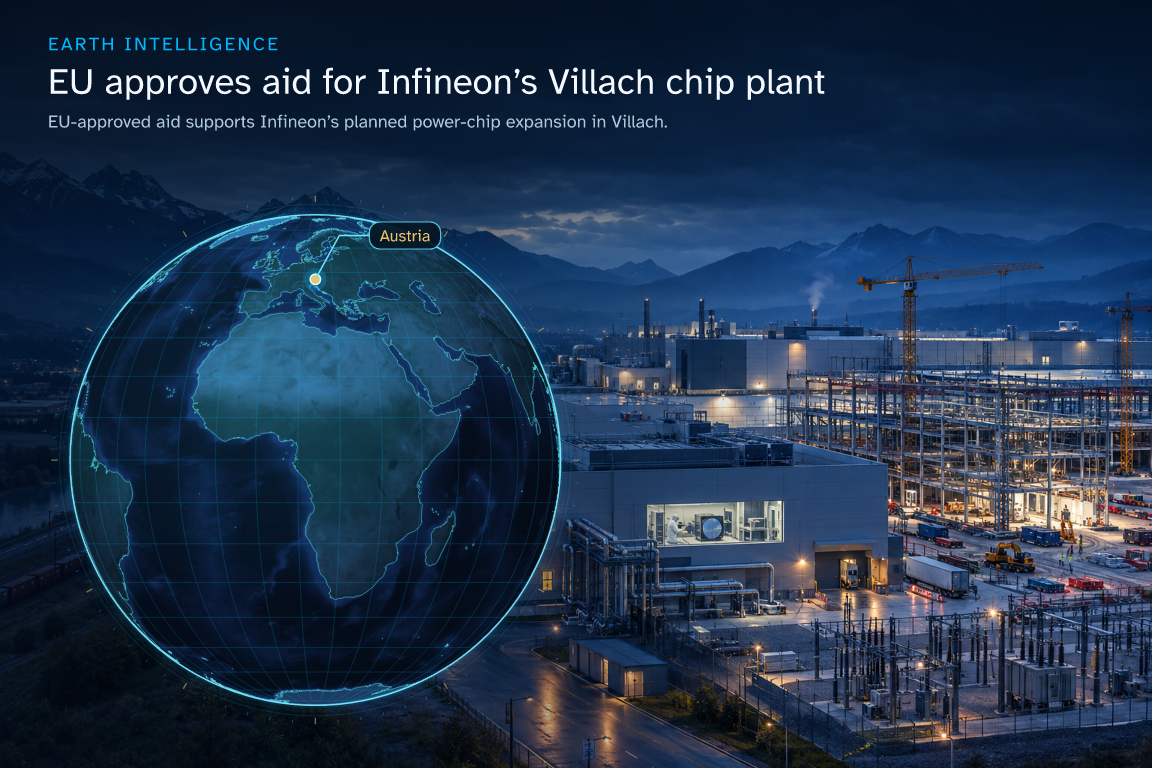
October 28, 2026 — The European Commission approved €319 million in Austrian aid for Infineon’s €1.1 billion Villach, Austria, upgrade, backing higher-volume energy-saving power chips from 2027 for data centres, electric vehicles and energy equipment.
October 28, 2026 — Vyoma.AI, Larsen & Toubro’s AI-cloud and data-centre business, started building a 52-megawatt data centre in Chennai, India, adding planned computing capacity for AI services to an existing 30-megawatt site.
Trends:
World Bank’s October commodity outlook says higher energy and food costs could keep inflation high; Canada’s rate rise shows a policy response. The Contship Jet attack off Bulgaria shows Black Sea crews face continuing danger, though all 18 were rescued. Infineon in Villach, Austria, and Vyoma.AI in Chennai, India, are starting long-term chip and data-centre capacity, not delivering it yet.
What to watch: Watch whether World Bank price forecasts and Canada’s rate rise lead to higher household and business costs. Watch the Contship Jet’s condition and whether Black Sea attacks continue. Watch whether Infineon and Vyoma.AI meet building schedules; both need years, power and demand before adding usable capacity.
Statistic of the Day:
New Zealand’s provisional estimated resident population was 5,357,300 persons on 30 June 2026.
Estimated resident population counts people who usually live in New Zealand at a given date. The figure is provisional, meaning Stats NZ may update it when more data become available.
History of Gallium nitride: from blue light to power chips:
Gallium nitride, or GaN, moved from a hard-to-make laboratory material into chips that produce blue light and control electricity efficiently. That progress depended on solving crystal-quality and electrical-conduction problems that held the material back for decades, before later uses in lighting, communications and power equipment.
1969: Herbert Maruska and James Tietjen grew single-crystal GaN layers on sapphire at RCA Laboratories in the United States. This gave researchers a workable thin film, but making material with the right electrical properties remained difficult.
1986: Isamu Akasaki and Hiroshi Amano in Japan added a thin aluminium nitride buffer layer before growing GaN. The layer made much better crystals on sapphire, clearing a major obstacle to efficient light-emitting diodes.
1989: Akasaki and Amano made p-type GaN, meaning a layer that carries positive electrical charge. LEDs need positive and negative layers; this breakthrough made a useful GaN light-emitting junction possible.
1993: Shuji Nakamura and Nichia in Japan announced a bright blue GaN LED. Better blue light completed the red-green-blue set needed for full-colour displays and enabled white LEDs when combined with a yellow coating.
1990s–today: GaN moved beyond lighting into fast power switches and radio-frequency devices. Its low energy losses can shrink chargers and power supplies; Infineon plans high-volume GaN production in Villach, Austria, for data centres, electric vehicles and energy equipment.
Image of the Day:
Thanks for reading! Earth is complicated, we make it simple.