Thursday☕️


Trending:
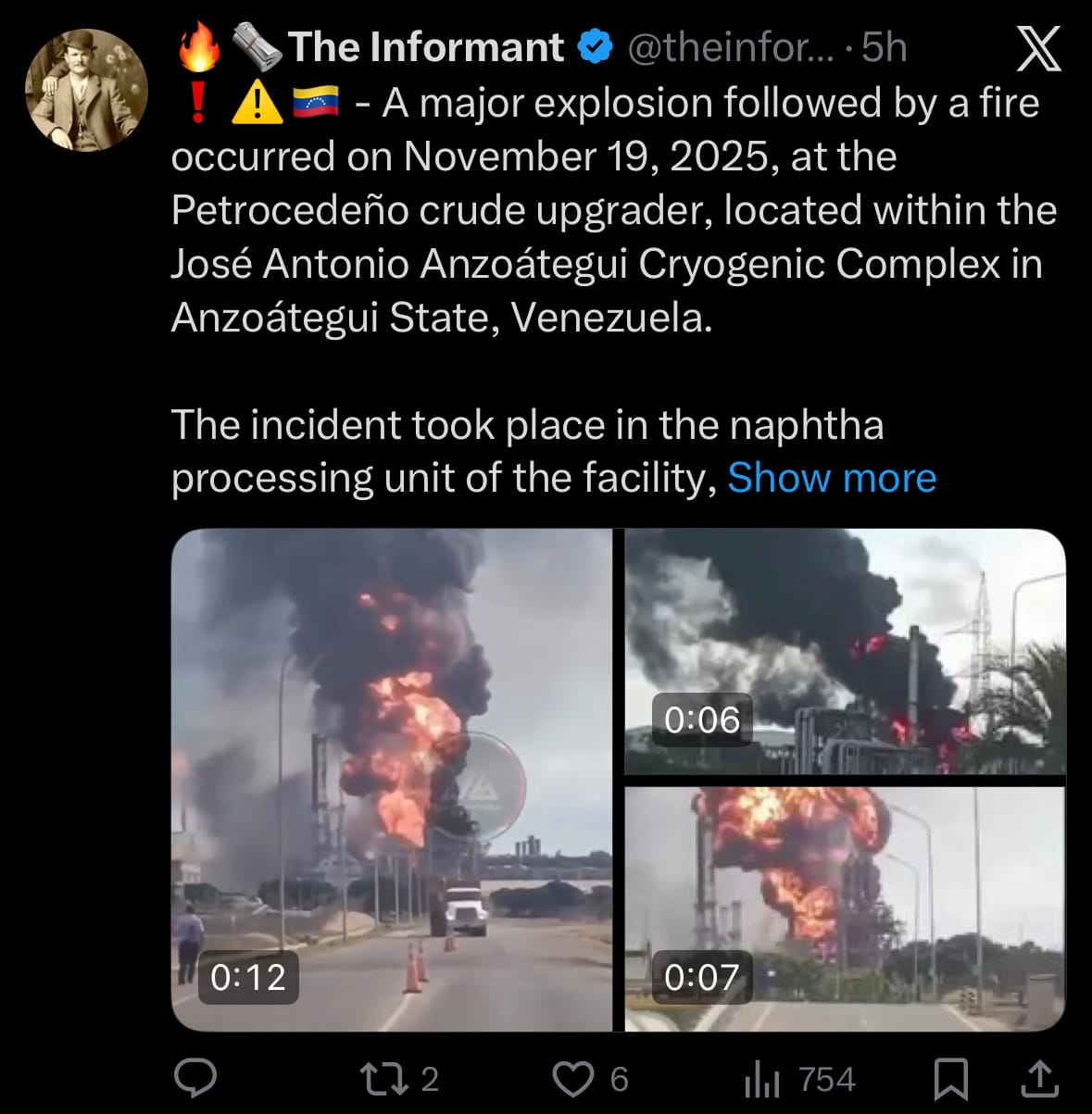
- On November 19, 2025, a massive explosion followed by a fire occurred at the Petrocedeno crude oil upgrader in Anzoátegui State, eastern Venezuela, a key facility operated by the state-owned Petróleos de Venezuela (PDVSA). The blast produced a large fireball and thick black smoke, disrupting operations at the plant, which processes heavy crude from the Orinoco Belt into exportable lighter oil. Local authorities reported no immediate casualties, though emergency teams were deployed to contain the fire, and investigations into the cause—potentially a technical failure or equipment malfunction—began promptly, with no official confirmation of sabotage at the time.
- Venezuela holds the world's largest proven oil reserves, estimated at over 300 billion barrels, primarily in the Orinoco heavy oil belt, with the industry fully nationalized under PDVSA since the 1970s to control production, refining, and exports for national revenue.
Economics & Markets:
- Yesterday’s U.S. stock market:

- Yesterday’s commodity market:

- Yesterday’s crypto market:

Geopolitics & Military Activity:
- On November 19, 2025, the Israel Defense Forces conducted a series of airstrikes targeting Hezbollah weapons depots and rocket storage facilities in southern Lebanon, including areas near villages like Nabatieh and Tyre. The military stated that these precision operations were based on intelligence indicating imminent threats, with strikes hitting five storage sites and eliminating at least two Hezbollah operatives in overnight actions. Lebanese officials reported no immediate civilian casualties from these specific strikes, though local media noted disruptions to nearby communities, with emergency services responding to fires and debris.
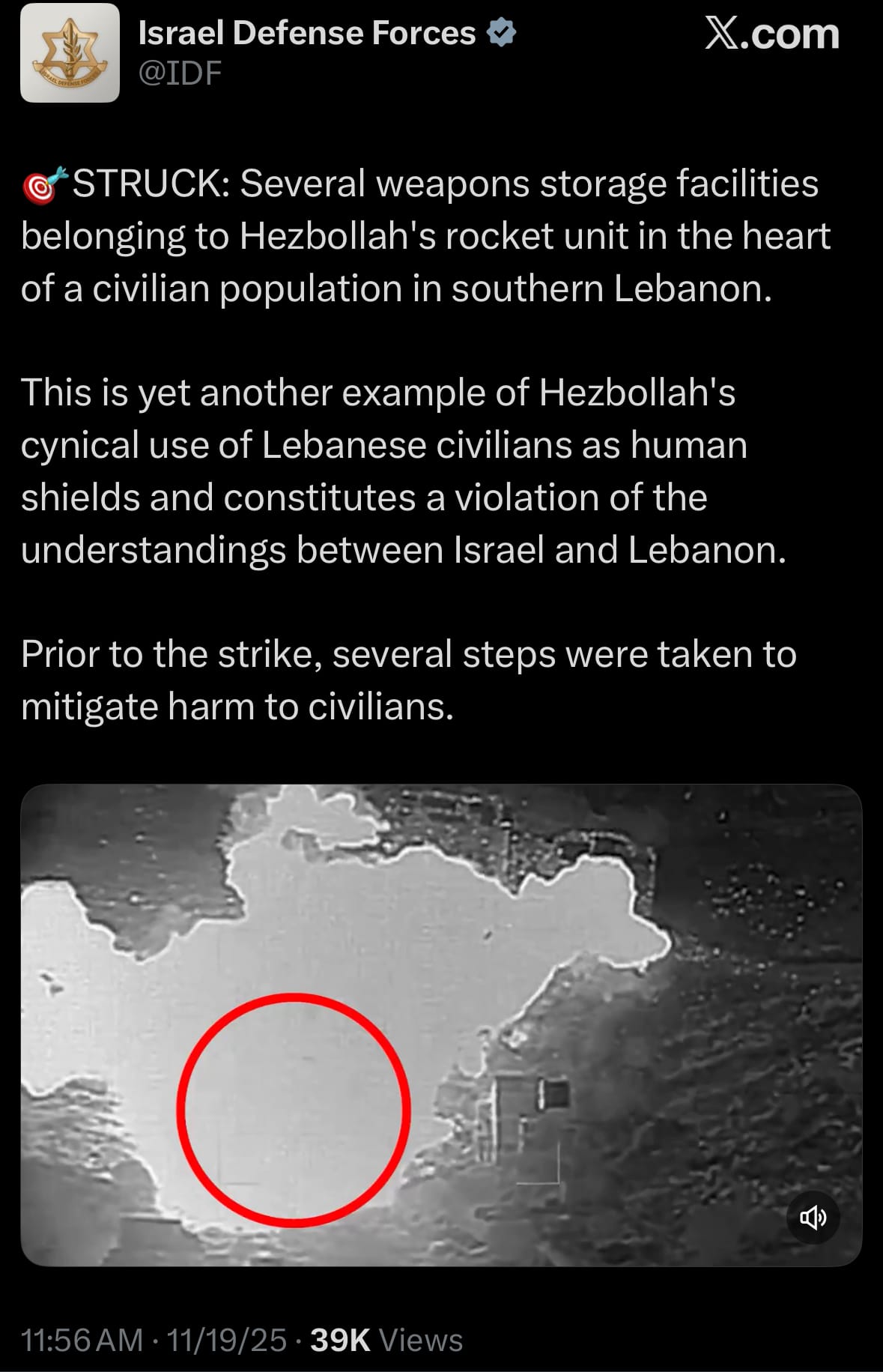
- These actions reflect ongoing efforts by Israel to degrade Hezbollah's military capabilities amid heightened border tensions, following a pattern of reciprocal exchanges since earlier escalations. Hezbollah has not issued an immediate response, but the strikes underscore persistent security concerns in the region, potentially complicating ceasefire negotiations. International observers have called for de-escalation to prevent broader conflict, while emphasizing the need for verified reporting in contested areas to assess impacts on civilian infrastructure.
Environment & Weather:
- On November 19, 2025, Mount Semeru, the highest volcano on Indonesia's Java island, erupted in the afternoon around 4:00 p.m. local time, producing a significant ash column reaching up to 5.6 kilometers high and triggering dangerous pyroclastic flows that raced down its slopes at high speeds. The eruption blanketed nearby villages with ash, prompting authorities to raise the volcano's alert level twice throughout the day, eventually to the highest status, and initiate evacuations of over 900 residents from high-risk areas.

- No immediate casualties were reported, but the event stranded about 170 climbers on the mountain, with rescue operations underway to facilitate their safe descent amid ongoing seismic activity and poor visibility. The eruption is part of Semeru's frequent activity as one of Indonesia's most active volcanoes, situated in a densely populated region prone to such events due to its location on the Pacific Ring of Fire. Indonesian officials, including the volcanology agency, have advised people to stay at least five kilometers from the crater and avoid river valleys susceptible to lava flows, while monitoring continues for potential further eruptions.

Science & Technology:
- On November 19, 2025, Lockheed Martin's Skunk Works division announced a breakthrough in human-machine teaming, demonstrating that an F-22 Raptor pilot successfully controlled an uncrewed MQ-20 Avenger drone during a flight test conducted on October 21 at the Nevada Test and Training Range. The pilot used a tablet-based pilot vehicle interface in the single-seat cockpit to command the drone's mission profile, showcasing seamless integration without requiring additional crew. This test, orchestrated by Skunk Works in collaboration with the U.S. Air Force and General Atomics, highlights advancements in autonomous systems for combat scenarios, allowing the F-22 to direct uncrewed assets in real-time for enhanced operational flexibility.
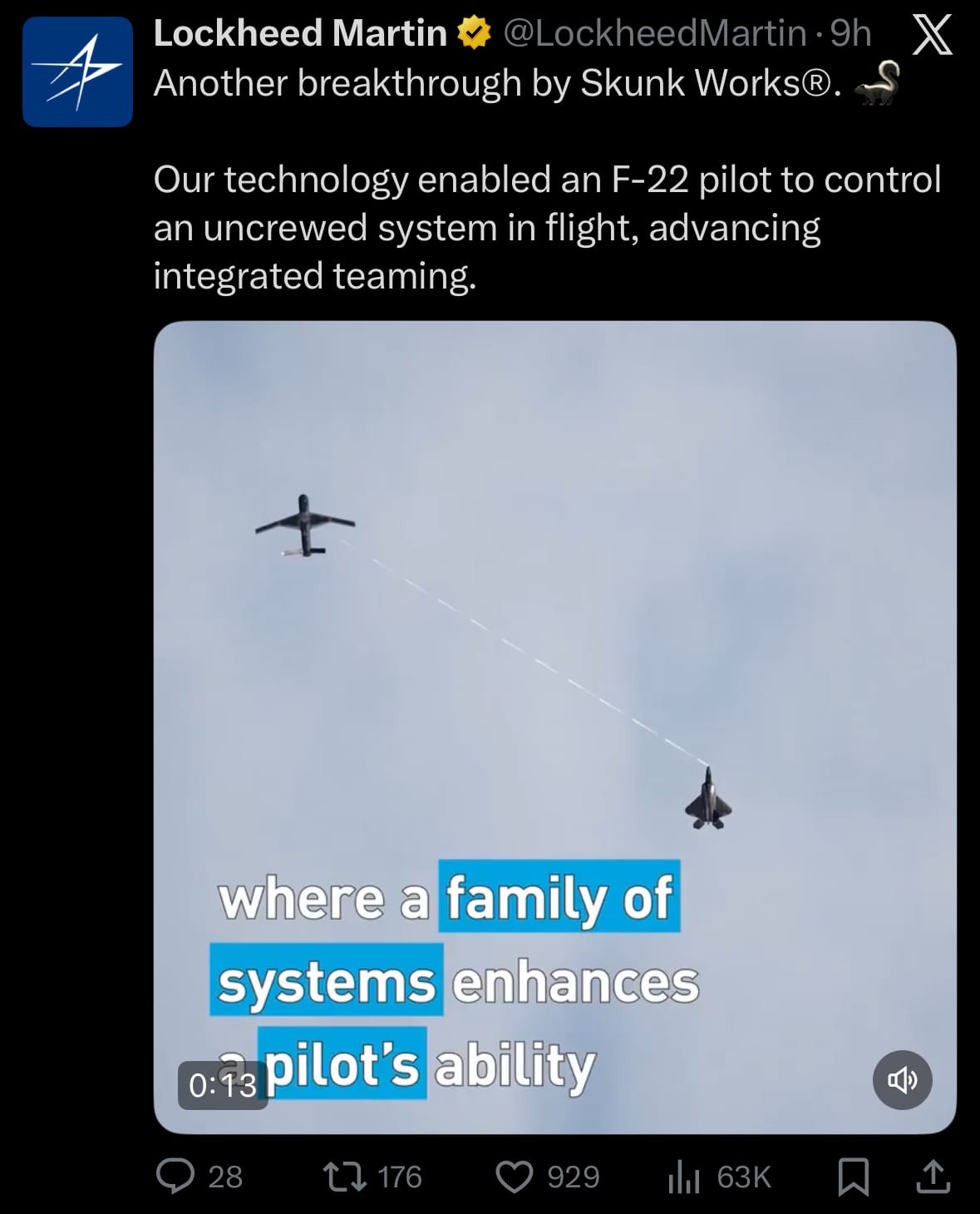
- This achievement aligns with broader developments in collaborative combat aircraft, where platforms like the F-35 have previously demonstrated control over drone swarms for tasks such as reconnaissance and electronic warfare, but the F-22—known primarily for its stealth and air superiority—had not been publicly shown to possess similar capabilities until now. The announcement reflects ongoing efforts to evolve legacy fighters into controllers for uncrewed systems, potentially extending the F-22's role in future air dominance amid evolving threats. While other programs, including drone swarm integrations with various aircraft, have advanced this concept, the F-22's integration emphasizes practical, in-flight teaming to boost mission effectiveness without major hardware overhauls.
Statistic:
- Largest public hotel companies on Earth by market capitalization:
- 🇺🇸 Marriott International: $77.14B
- 🇺🇸 Hilton Worldwide: $62.79B
- 🇺🇸 Las Vegas Sands: $43.96B
- 🇯🇵 Oriental Land: $31.73B
- 🇭🇰 Galaxy Entertainment: $22.38B
- 🇬🇧 InterContinental Hotels Group: $18.94B
- 🇺🇸 Hyatt Hotels: $14.32B
- 🇨🇳 Huazhu Hotels: $13.56B
- 🇺🇸 Wynn Resorts: $12.30B
- 🇫🇷 Accor: $12.24B
- 🇺🇸 Host Hotels & Resorts: $11.84B
- 🇮🇳 Indian Hotels Company: $11.57B
- 🇺🇸 MGM Resorts: $8.50B
- 🇲🇴 MGM China Holdings: $7.78B
- 🇸🇬 Genting Singapore: $6.93B
- 🇬🇧 Whitbread: $6.09B
- 🇺🇸 Ryman Hospitality Properties: $5.74B
- 🇺🇸 Wyndham Hotels & Resorts: $5.40B
- 🇨🇳 Atour Lifestyle: $5.15B
- 🇺🇸 Vail Resorts: $5.03B
- 🇲🇴 Wynn Macau: $4.41B
- 🇫🇷 Covivio Hotels: $4.39B
- 🇭🇰 Mandarin Oriental: $4.17B
- 🇺🇸 Choice Hotels International: $4.06B
- 🇹🇭 Minor International: $3.51B
- 🇺🇸 Melco Resorts & Entertainment: $3.41B
History:
- Hypersonic weapons began as sketches on chalkboards in the 1950s, when engineers first realized that pushing a vehicle beyond Mach 5 opened an entirely new regime of speed, heat, and maneuverability. The United States, the Soviet Union, and later China all experimented with boost-glide bodies, scramjet propulsion, ablative heat shields, and reentry vehicles that could skip across the atmosphere like stones on water. Early testbeds—America’s X-15, the Soviet BOR program, U.S. National Aero-Space Plane concepts, and China’s high-altitude glide experiments—built the scientific backbone long before the word “hypersonic” became a mainstream headline. The physics were brutal: at Mach 5–10, air behaves more like a dense, punishing fluid than a gas, and controlling a vehicle requires exotic materials and razor-sharp guidance algorithms. By the 2000s, all three major powers had moved from theory to operational prototypes. Russia developed the Avangard boost-glide system and the Kinzhal air-launched hypersonic weapon; China refined the DF-ZF glide vehicle and other still-opaque designs; and the United States advanced its own lines—the DARPA HTV programs, the ARRW, HAWC scramjet tests, and the army’s LRHW boost-glide weapon. The public narrative often paints Russia and China as the dominant leaders, simply because they advertise their systems loudly. But the U.S. runs its hypersonic work the same way it runs most strategic programs: deep funding, low noise, and very little public detail—making the actual balance far more equal than sensational headlines suggest.
- Modern hypersonic missiles are in a class of their own. Unlike subsonic cruise missiles, which rely on speed and terrain masking, or ballistic missiles, which follow predictable arcs once launched, hypersonic weapons fuse high speed with high maneuverability. A boost-glide vehicle can ride the edge of the atmosphere, dip lower to evade tracking, then jink laterally at thousands of miles per hour—forcing every existing missile-defense system to recalculate faster than it was designed for. Scramjet-powered cruise systems remain lower in the atmosphere but sprint through it at Mach 5+, weaving and adjusting midflight. Russia’s Avangard reportedly reaches intercontinental ranges with violent maneuver potential; China’s DF-ZF is built around unpredictable atmospheric skipping; and U.S. systems emphasize precision guidance, modular boosters, and advanced materials designed to survive temperature spikes hotter than reentry. None of these weapons make their owners invincible, and none guarantee dominance—but together they represent a new era of strategic competition where speed bends traditional deterrence logic. Hypersonic missiles don’t just outrun defenses; they rewrite what “response time” even means. And as each of the three major powers continues refining prototypes behind closed doors, the real capabilities—and the real balance of power—remain far less public than advocates or critics on any side care to admit.
Image of the day:

Thanks for reading! Earth is complicated, we make it simple.


- Click below if you’d like to view our free EARTH WATCH globe:
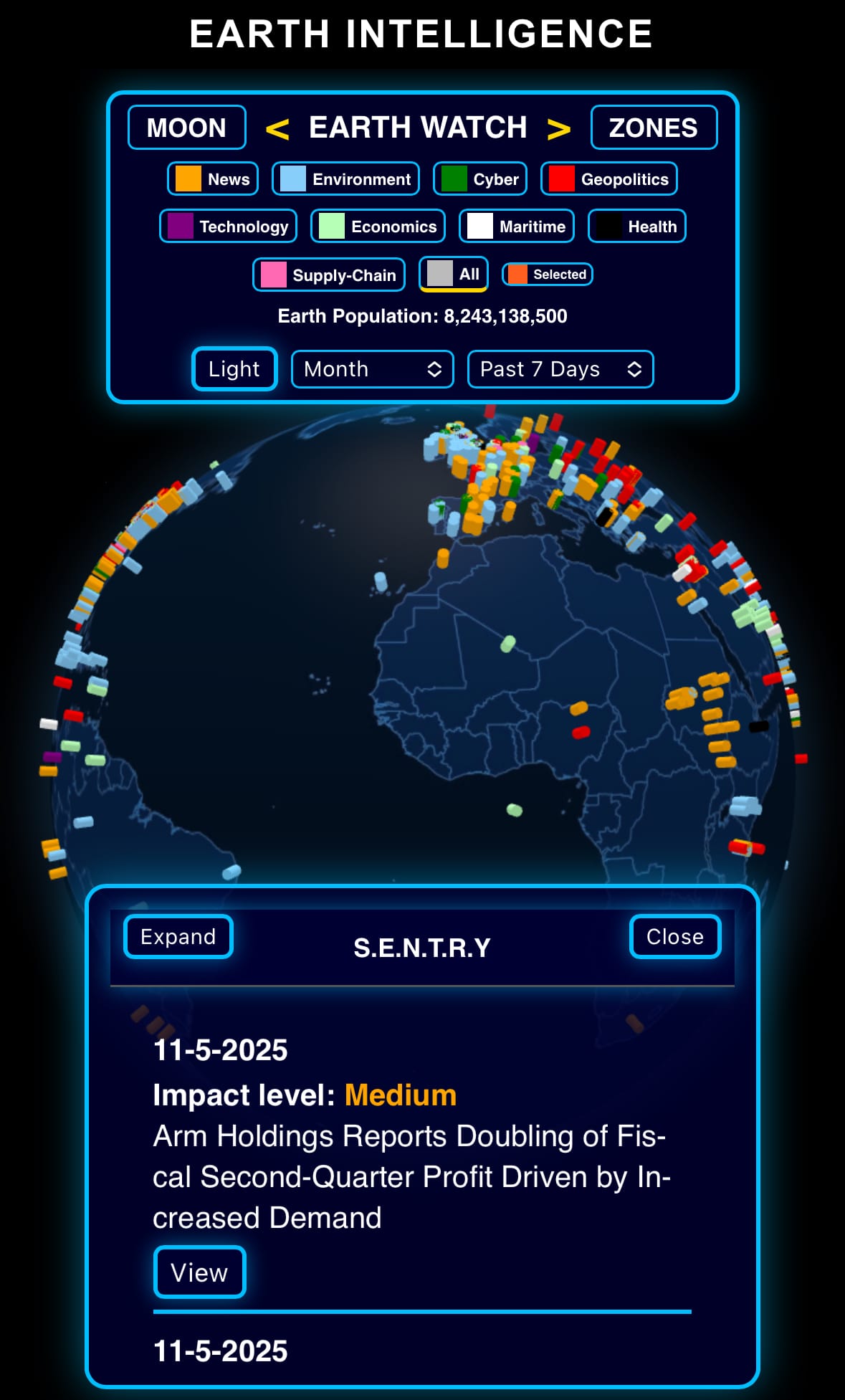
- Download our mobile app on the Apple App Store (Android coming soon):

Click below to view our previous newsletters:

Support/Suggestions Email:
earthintelligence@earthintel.news