Friday☕️


Trending:
- On January 1, 2026, protests against Iran's government entered their fifth day, occurring in more than 30 cities, including Tehran, Isfahan, Kuhdasht and Azna in Lorestan Province, Kavar in Fars Province, and Neyshabur. Protesters chanted slogans such as "Death to Khamenei," briefly controlled streets in parts of Kavar after clashing with security forces, damaged a police station in Azna, and in Neyshabur voiced support for the return of Reza Pahlavi, the exiled crown prince and son of the former Shah. Reports of clashes indicate several deaths (estimates range from 3 to 6 among protesters and security personnel in places like Lordegan, Kuhdasht, and Azna) and injuries, with security forces reportedly using live ammunition in some locations.
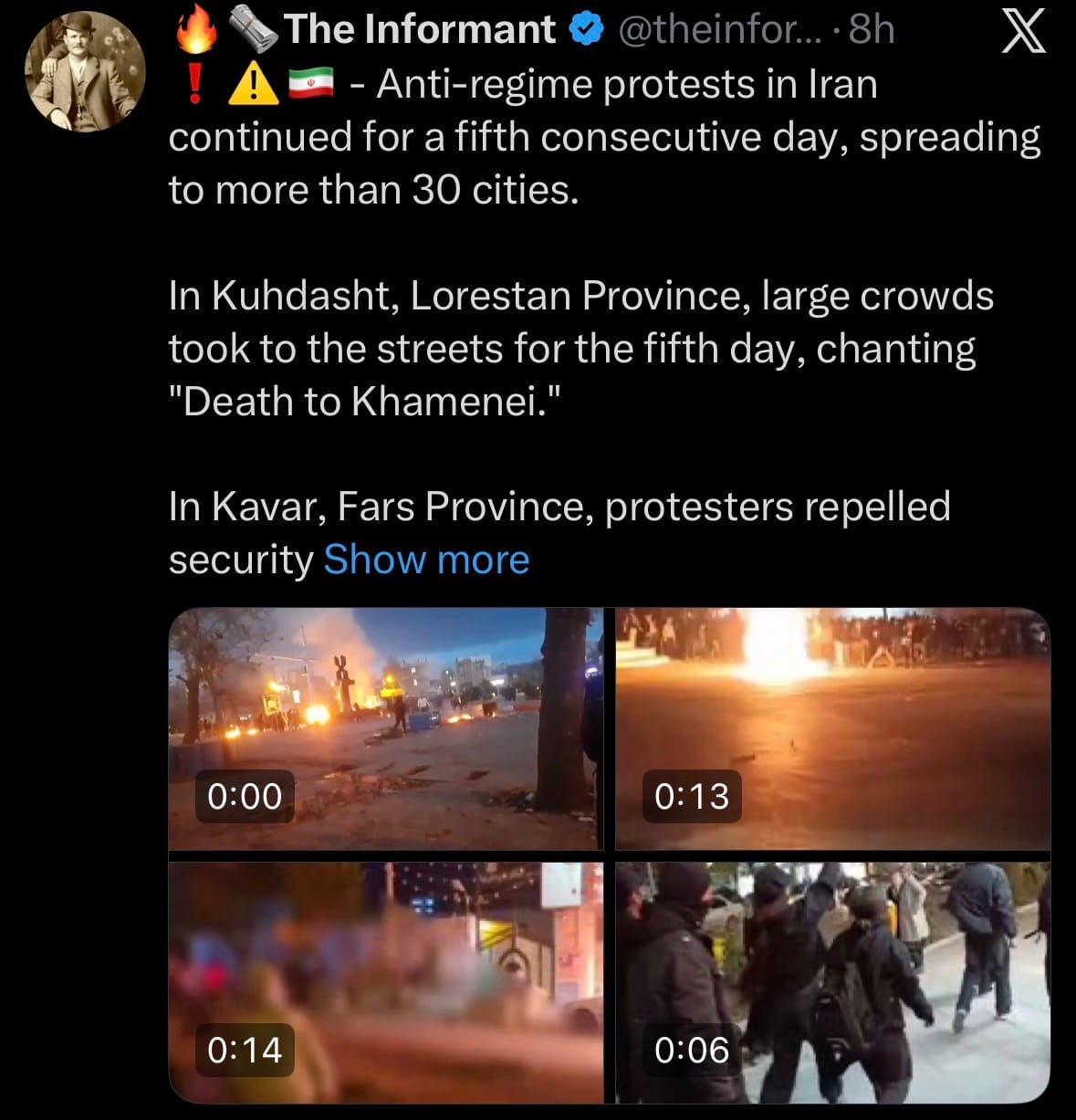
- The demonstrations began with merchant strikes over the Iranian rial's sharp depreciation and inflation above 40%, but quickly broadened into calls for political change. Prosecutor General Mohammad Movahedi-Azad stated that peaceful protests over economic issues are lawful but warned of firm action against violence or property damage. The government has increased security measures, including appointing hardliner Ahmad Vahidi to a senior IRGC position, while President Masoud Pezeshkian called for dialogue; protests continue regardless. This is the most widespread unrest in Iran since the 2022 nationwide demonstrations.
Economics & Markets:
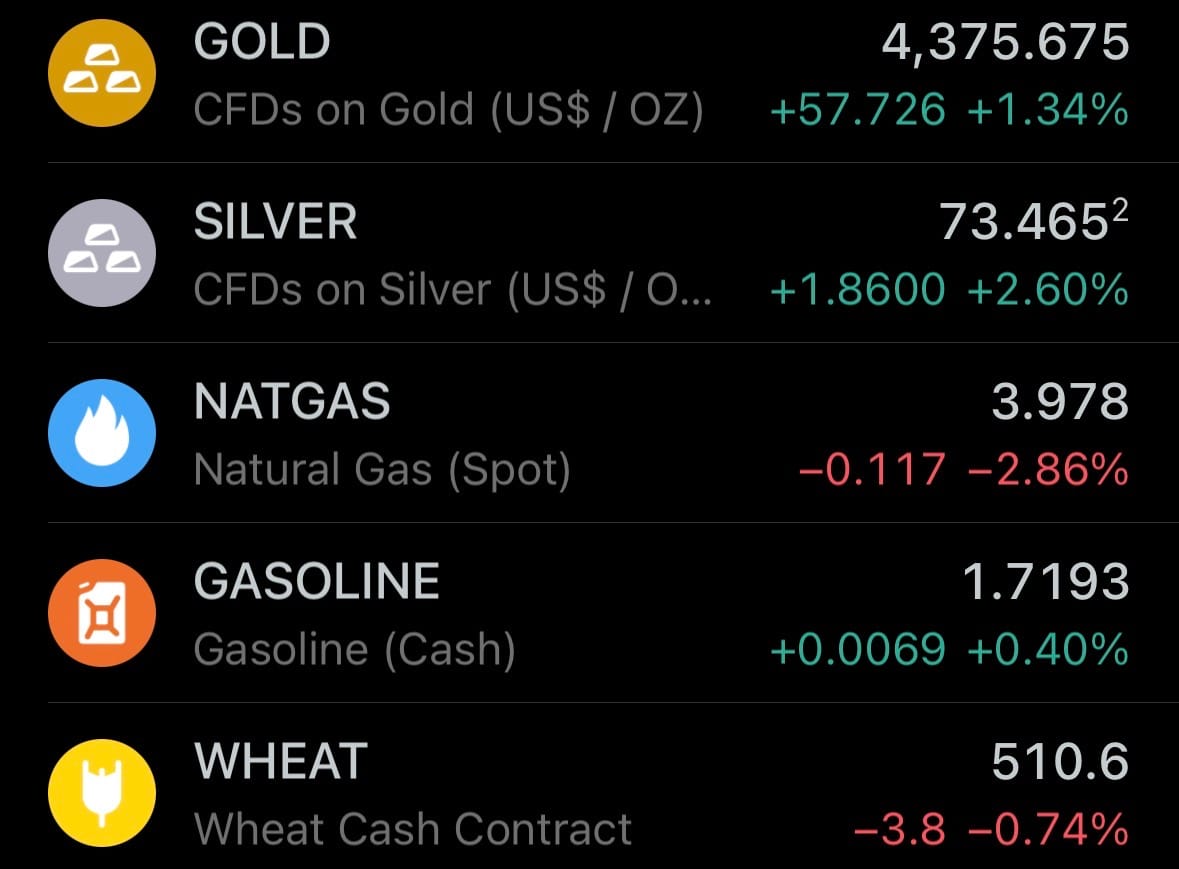
- Yesterday’s commodity market:
- Yesterday’s crypto market:

Geopolitics & Military Activity:
- On December 31, 2025, U.S. Joint Task Force Southern Spear carried out lethal kinetic strikes on two vessels in international waters of the Eastern Pacific. The strikes killed five individuals—three on the first vessel and two on the second—whom U.S. authorities described as narco-terrorists. Authorized by Secretary of Defense Pete Hegseth, the operations targeted boats that intelligence assessments indicated were operated by designated terrorist organizations, traveling along established narco-trafficking routes, and involved in drug smuggling activities.
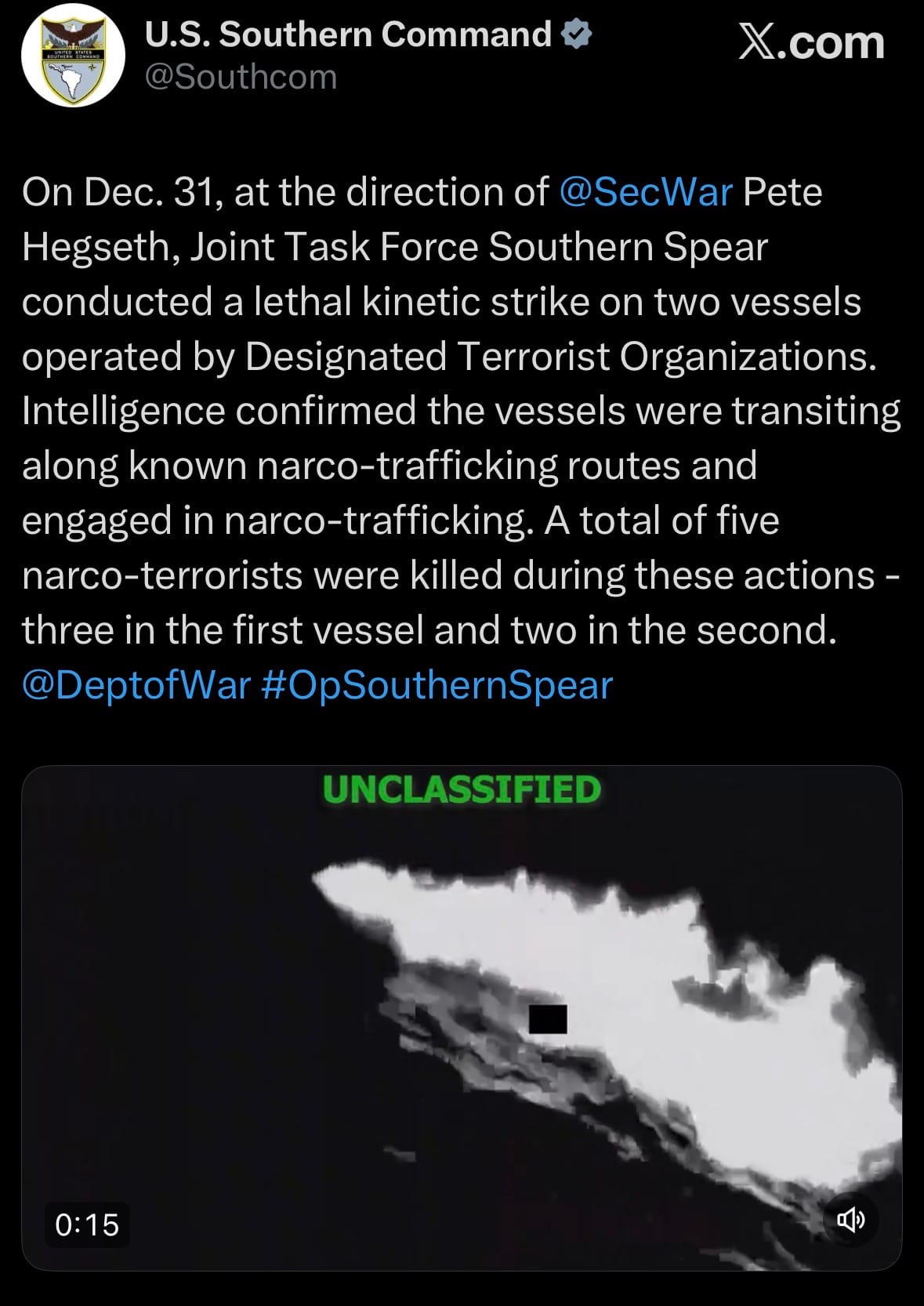
- These actions increased the reported death toll from Operation Southern Spear to at least 112 across more than 31 strikes on vessels since the operation began in September 2025. The strikes reflect the U.S. military's ongoing use of targeted force in international waters to disrupt drug trafficking networks in the Eastern Pacific and Caribbean regions.
Drone Down:
- On January 1, 2026, reports emerged of a U.S. Air Force MQ-9 Reaper unmanned aerial vehicle crashing near Maidan Shahr in central Afghanistan's Maidan Wardak Province (also spelled Wardak). Videos and photos circulating on social media showed wreckage consistent with an MQ-9, including distinctive tail and engine components, in a mountainous area west of Kabul, Afghanistan. The drone, valued at around $30 million, was reportedly on a routine mission, possibly operated remotely from a base like Al Udeid in Qatar.
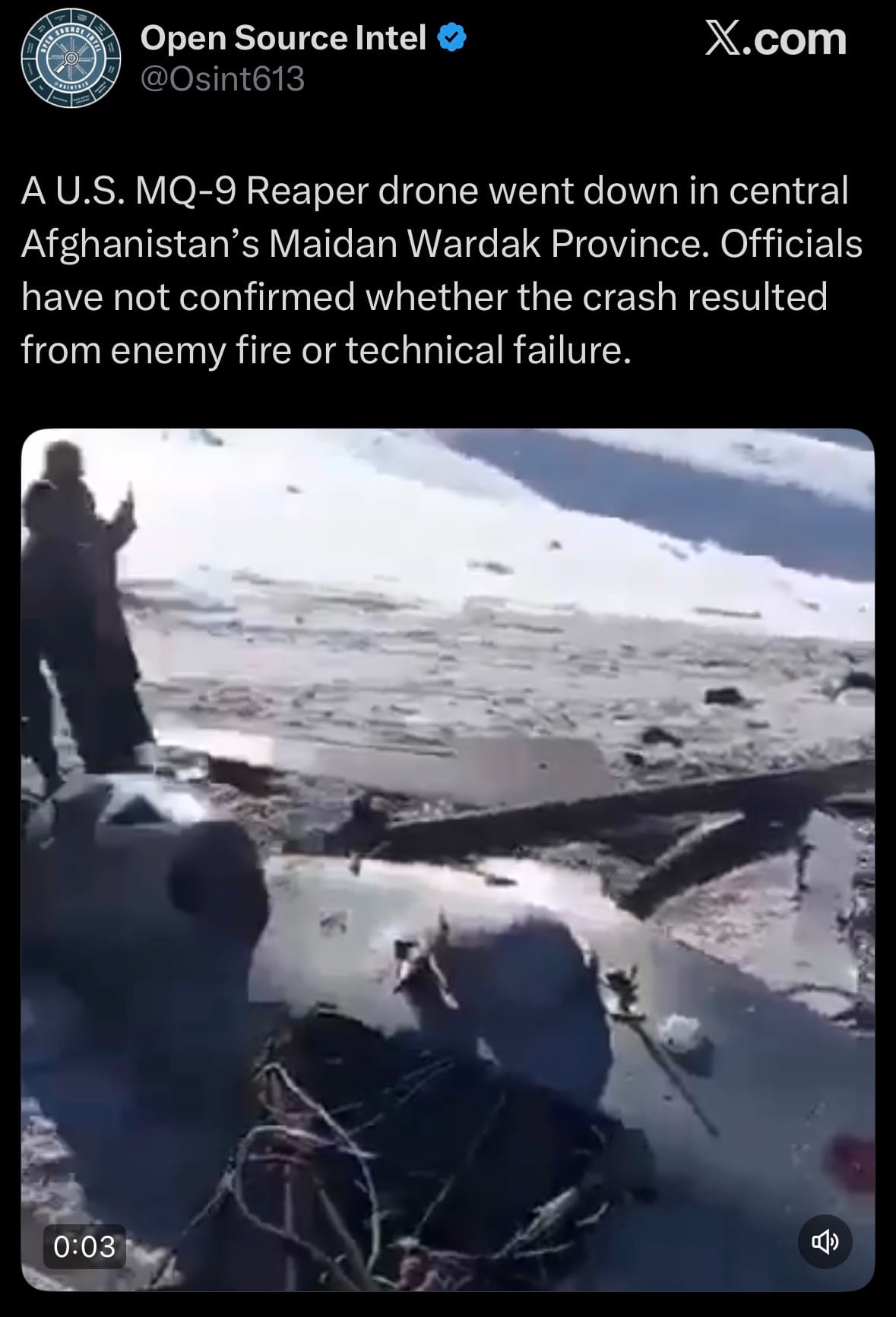
- Some Taliban-linked sources claimed the drone was shot down by air defenses, while others suggest mechanical issues; past Taliban claims of downing U.S. drones have often proven unfounded upon investigation.
Science & Technology:
- On January 1, Taiwan Semiconductor Manufacturing Company (TSMC) publicly announced that the U.S. Department of Commerce had granted it an annual export license for its Nanjing fabrication plant in China. The statement, issued to media outlets like Reuters, confirmed the license allows U.S. suppliers to ship export-controlled chipmaking equipment and items directly to the facility without requiring individual vendor approvals. TSMC emphasized that this ensures "uninterrupted fab operations and product deliveries," replacing a prior Validated End-User (VEU) exemption that expired on December 31, 2025.
- The announcement came amid ongoing U.S. export controls designed to restrict China's access to advanced semiconductor technology, while permitting continued support for mature-node production (such as 16nm and older processes at Nanjing, which accounted for about 2.4% of TSMC's 2024 revenue). Similar annual licenses were granted to South Korean firms Samsung and SK Hynix for their China operations.
Statistic:
- Largest assets on Earth by market capitalization:
- Gold: $30.317T
- 🇺🇸 NVIDIA: $4.540T
- Silver: $4.042T
- 🇺🇸 Apple: $4.034T
- 🇺🇸 Alphabet (Google): $3.788T
- 🇺🇸 Microsoft: $3.594T
- 🇺🇸 Amazon: $2.467T
- Bitcoin: $1.771T
- 🇺🇸 Meta Platforms: $1.663T
- 🇺🇸 Broadcom: $1.640T
- 🇹🇼 TSMC: $1.576T
- 🇸🇦 Saudi Aramco: $1.540T
- 🇺🇸 Tesla: $1.495T
- 🇺🇸 Berkshire Hathaway: $1.084T
- 🇺🇸 Eli Lilly: $963.40B
- 🇺🇸 Walmart: $888.25B
- 🇺🇸 JPMorgan Chase: $886.02B
- 🇺🇸 Vanguard S&P 500 ETF: $821.99B
- 🇺🇸 iShares Core S&P 500 ETF: $760.31B
- 🇺🇸 SPDR S&P 500 ETF: $707.78B
- 🇨🇳 Tencent: $691.76B
- 🇺🇸 Visa: $676.83B
- 🇺🇸 Vanguard Total Stock Market ETF: $565.59B
- 🇺🇸 Oracle: $560.00B
- 🇰🇷 Samsung: $555.69B
History:
- Sea mines are among the oldest and most cost-effective naval weapons ever devised, emerging from the basic idea of denying access to waterways rather than directly destroying fleets in battle. Early concepts appear as far back as the 14th–16th centuries, when defensive floating explosives and fire ships were used to block harbors. The first recognizable naval mines—then called “torpedoes”—were developed in the 18th century, with American inventor David Bushnell experimenting with underwater explosive devices during the American Revolutionary War (1775–1783). Practical deployment accelerated in the 19th century as chemistry, waterproofing, and electrical triggering improved. During the Crimean War (1853–1856), Russia employed electrically detonated mines to defend ports, marking the first large-scale operational use. By the American Civil War (1861–1865), “infernal machines” (contact mines) were deployed extensively in rivers and coastal waters, sinking or damaging dozens of ships and proving that mines could alter naval campaigns at low cost. As steel navies expanded in the late 1800s, sea mines became formalized weapons—anchored contact mines, controlled mines detonated from shore, and early influence mines designed to react to pressure or magnetic signatures.
- The 20th century turned sea mines into strategic weapons. In World War I, mines were laid on an industrial scale, most famously the North Sea Mine Barrage (1918), where the U.S. and Britain deployed over 70,000 mines to restrict German U-boats. World War II saw dramatic technological evolution: magnetic, acoustic, and pressure mines allowed weapons to detonate without direct contact, making them far harder to counter. Germany, Britain, Japan, and the United States all used mines to blockade ports, disrupt logistics, and channel enemy fleets into kill zones; Japan’s mining of Chinese waters and the U.S. aerial mining campaign against Japan in 1944–1945 severely crippled maritime supply lines. After 1945, sea mines became smarter and more selective. Cold War designs incorporated ship-counting logic, delayed arming, programmable triggers, and resistance to sweeping. Modern mines can be deployed by submarines, surface ships, aircraft, and even unmanned systems, remaining dormant for months while discriminating between targets. Today, major naval powers—including the United States, Russia, China, and Iran—maintain advanced mine inventories as part of anti-access/area-denial (A2/AD) strategies. Despite their simplicity compared to missiles or submarines, sea mines remain one of the most strategically disruptive naval tools: cheap to deploy, expensive to clear, and capable of shaping entire maritime theaters. From crude floating bombs to intelligent seabed weapons, sea mines continue to embody a core truth of naval warfare—control of the sea often begins with denial, not dominance.
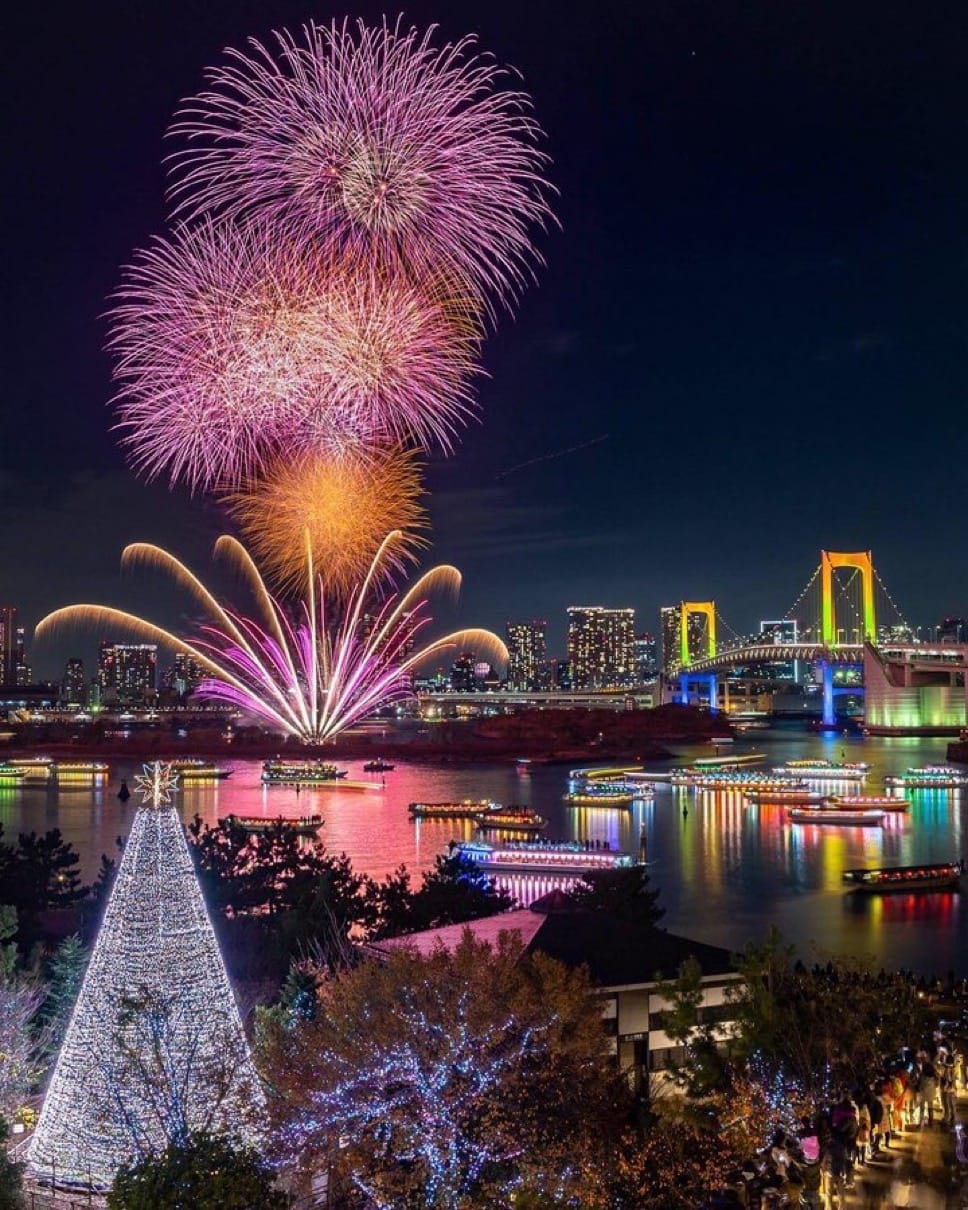
Image of the day:
Thanks for reading! Earth is complicated, we make it simple.
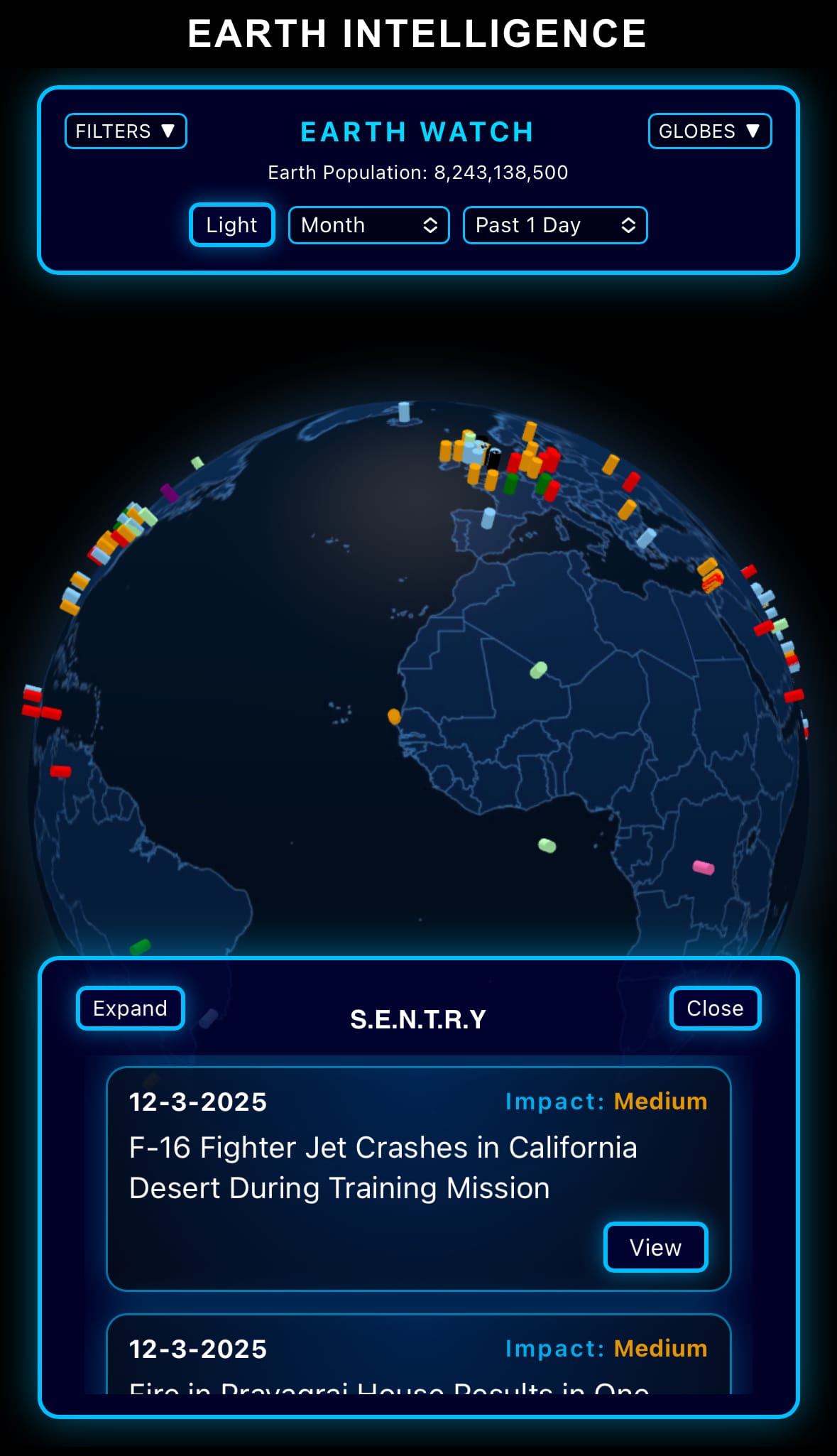
- Click below if you’d like to view our free EARTH WATCH globe:
- Download our mobile app:



Click below to view our previous newsletters:

Support/Suggestions Email:
earthintelligence@earthintel.news