Thursday☕️


Trending:
- On January 28, 2026, a joint operation by Rio de Janeiro's Civil and Military Police targeted suspected members of the Comando Vermelho (CV) faction in the Complexo da Penha and nearby areas, including Vila Kosmos (Ipase, Juramentinho, Trem communities) and the Morro da Fé and Sereno hills. The action aimed to execute five arrest warrants and seven search warrants against individuals accused of drug trafficking, illegal firearms possession, robberies, homicides, and specifically the kidnapping, torture, and murder of a young man in the Ipase area last year.
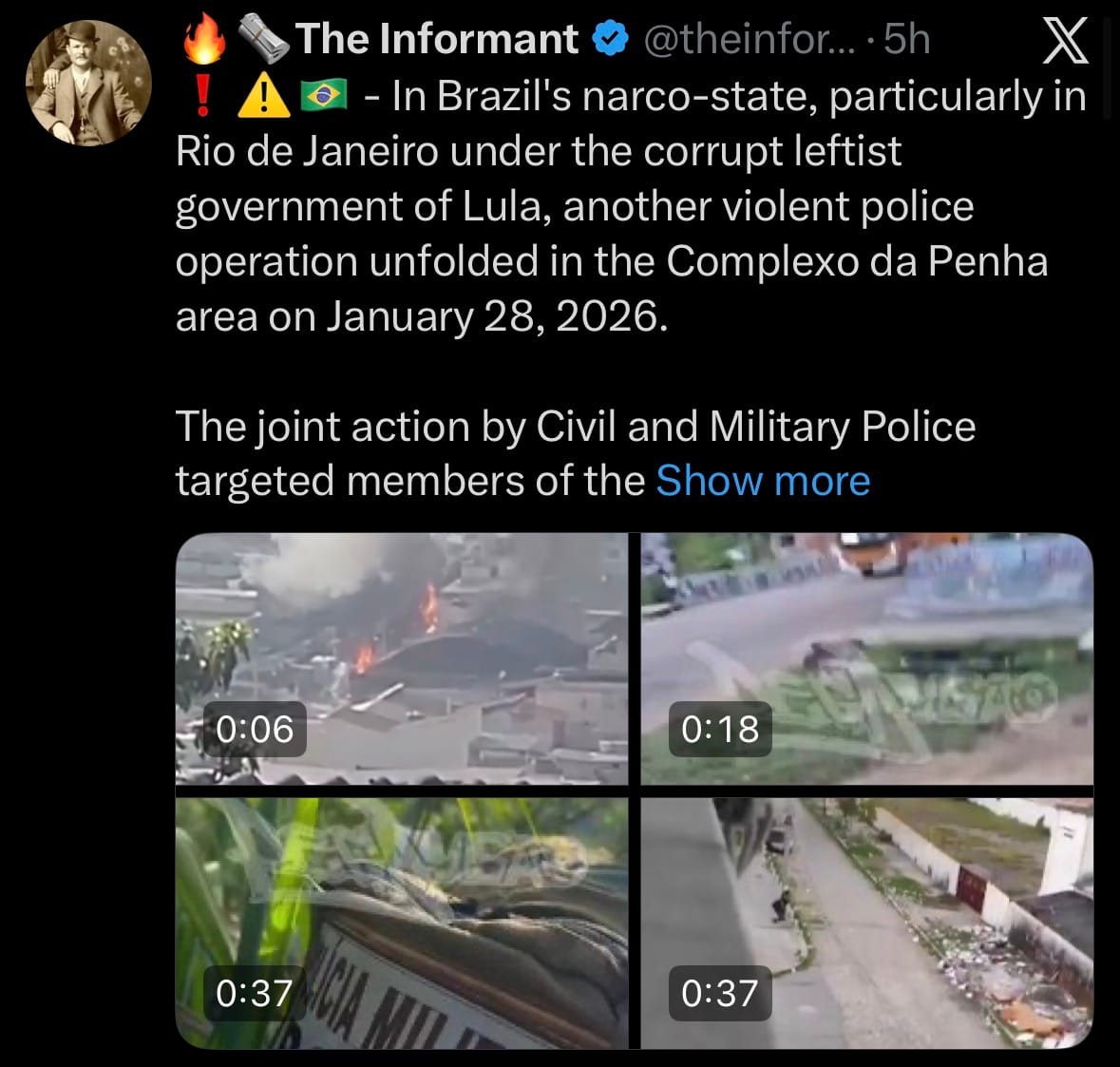
- Police advanced amid intense gunfire, with reports of barricades set ablaze by suspects to block routes and heavy resistance from armed individuals. BOPE special forces engaged in shootouts in forested zones between the complexes. At least two suspects were arrested during the operation, with no confirmed deaths or injuries reported in initial updates. Residents faced restricted movement, school closures in some spots, and ongoing fear amid the clashes.
Economics & Markets:
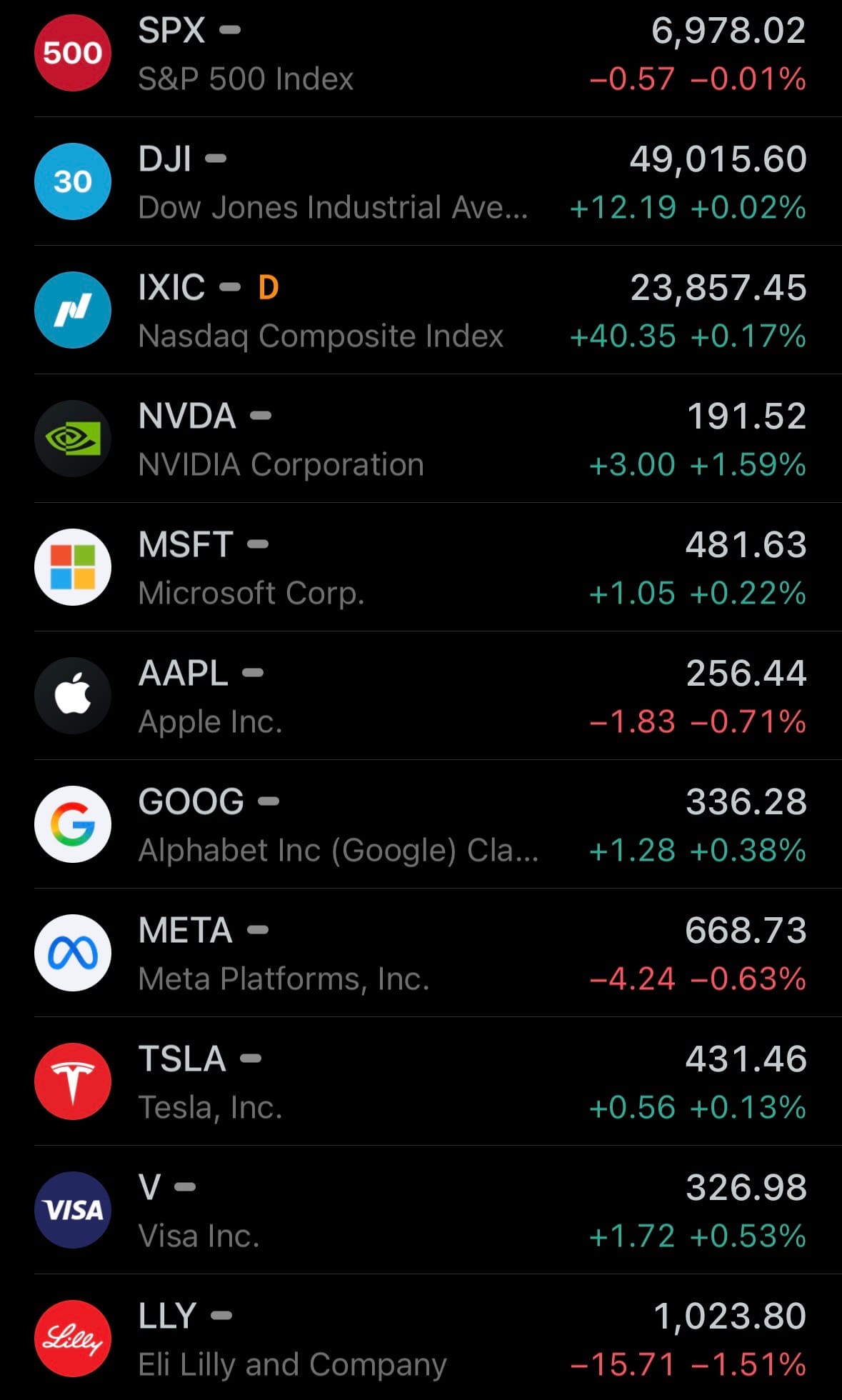
- Yesterday’s U.S. stock market:
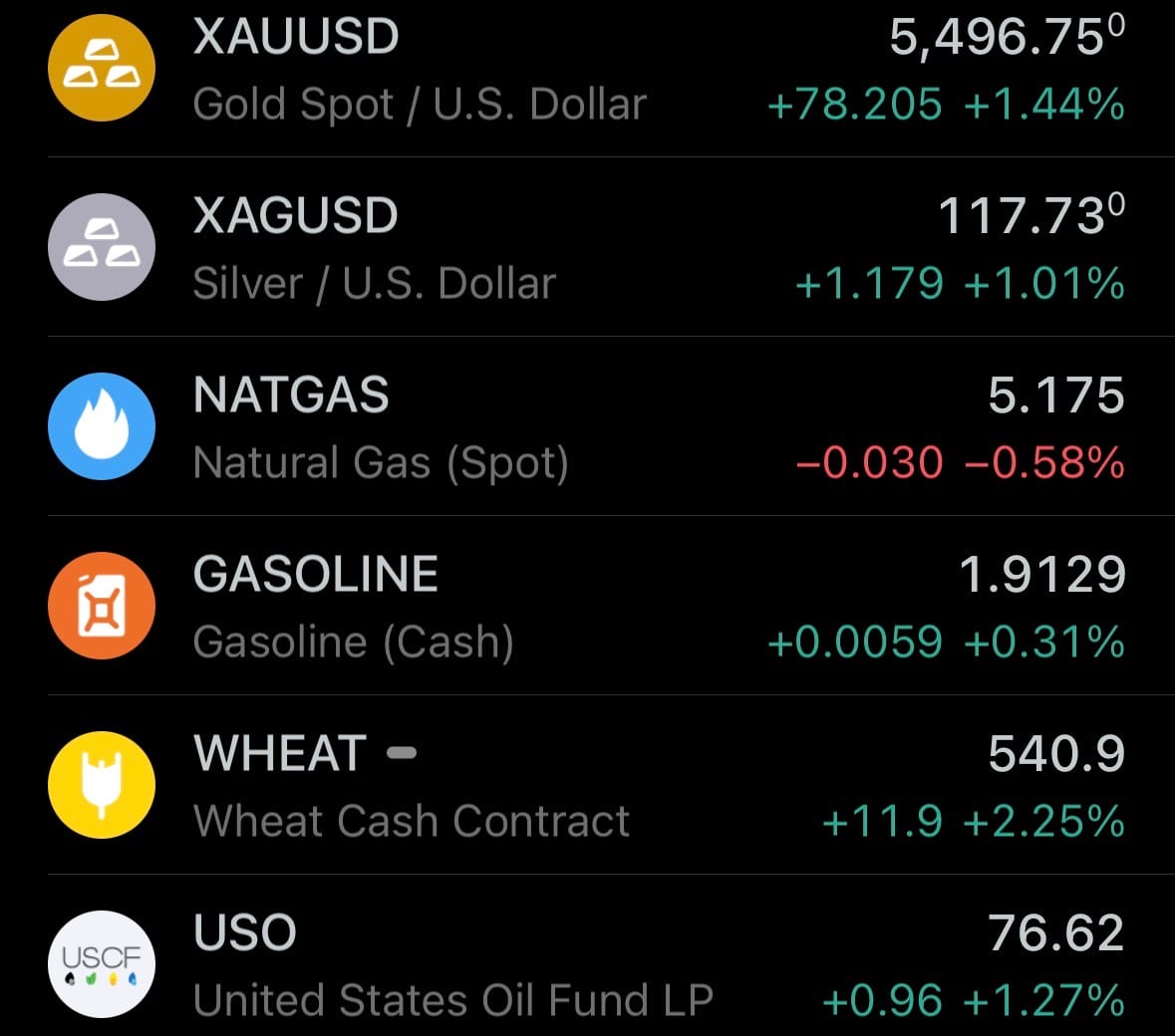
- Yesterday’s commodity market:
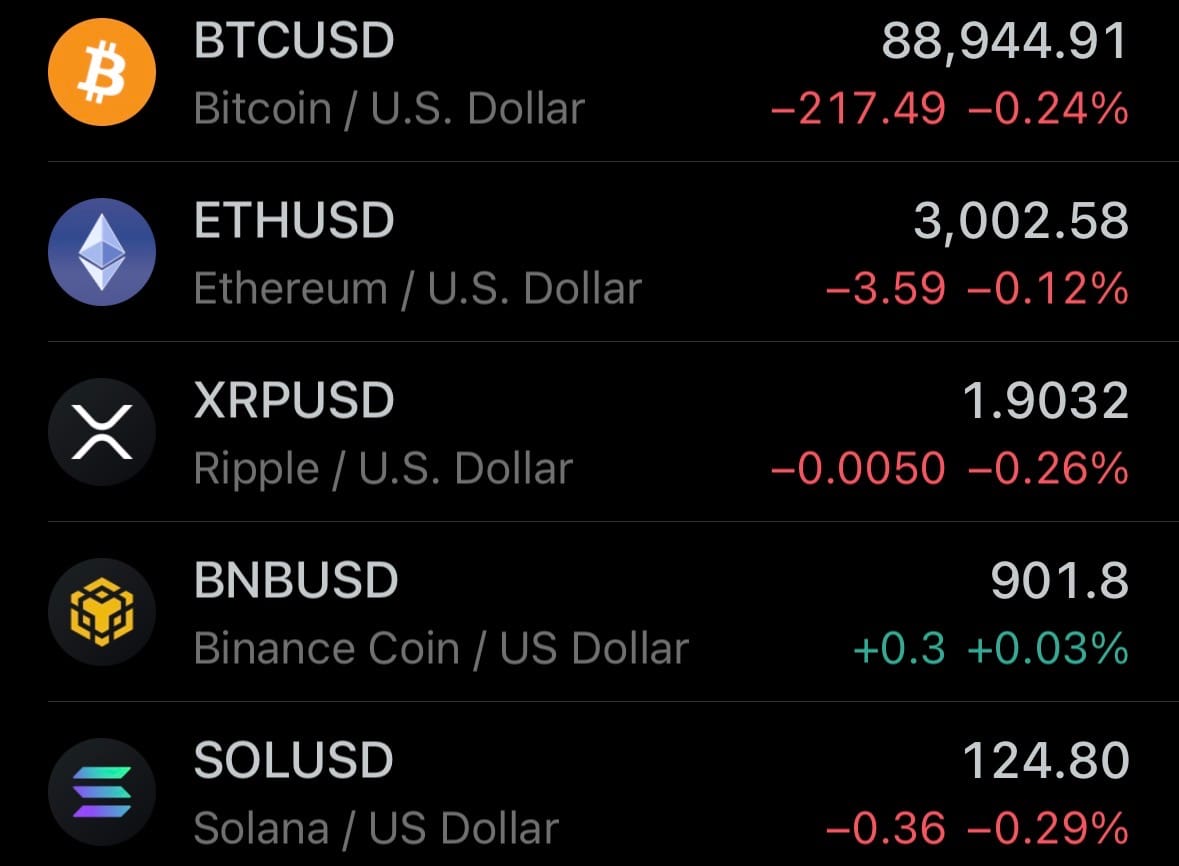
- Yesterday’s crypto market:
Geopolitics & Military Activity:
- On January 28, 2026, the U.S. Navy’s newest aircraft carrier, USS John F. Kennedy (CVN-79), departed Huntington Ingalls Industries’ Newport News Shipbuilding division in Virginia to begin her builder’s sea trials. This marks the first time the ship has operated at sea under her own power, allowing the shipbuilder, Navy, and crew to test critical systems and components in real-world conditions.
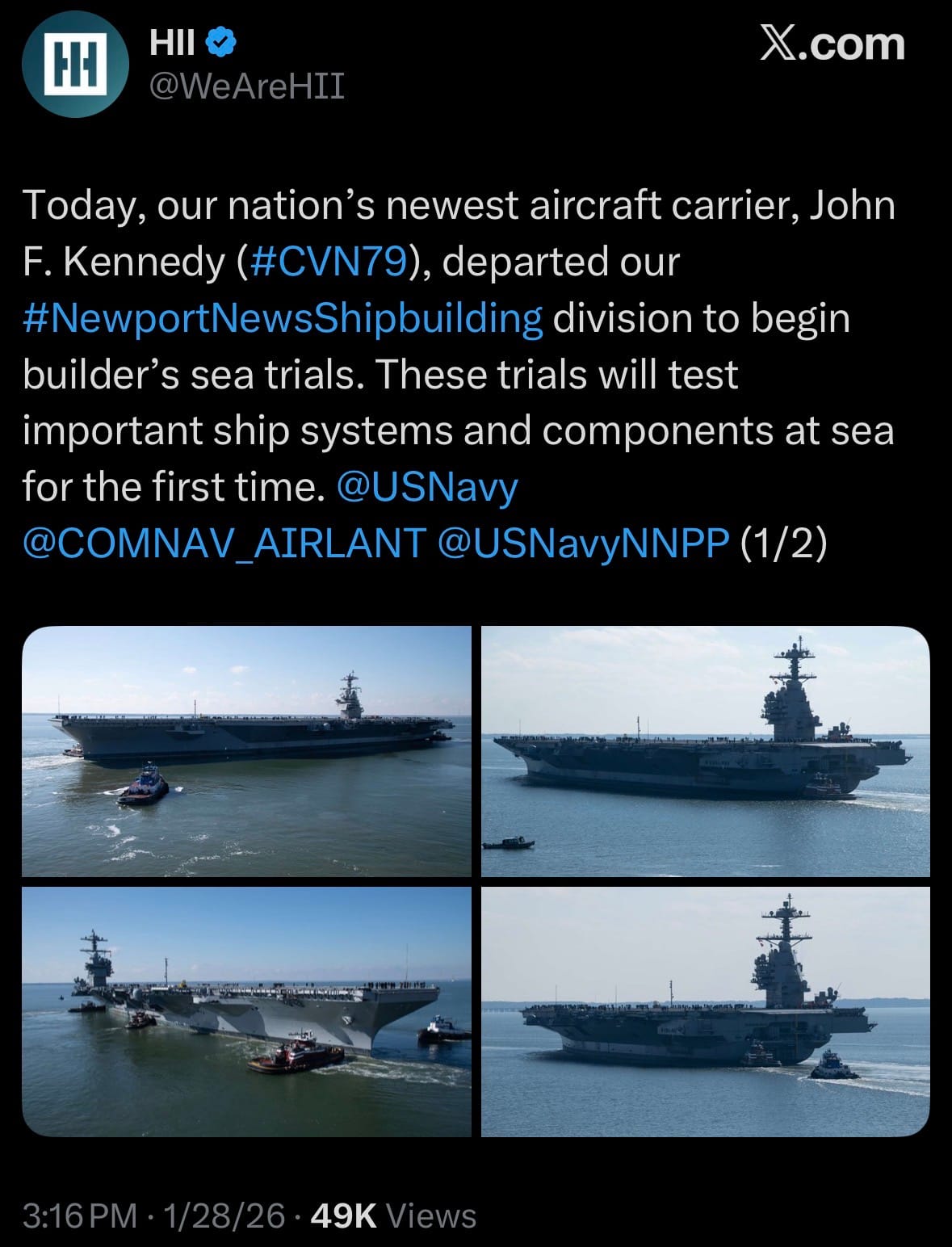
- The trials will evaluate propulsion, electrical systems, navigation, communications, aircraft handling equipment, weapons systems interfaces, and overall seaworthiness over several days off the Virginia coast. Successful completion will lead to acceptance trials, crew certification, and eventual delivery to the Navy later in 2026 or early 2027. The Ford-class carrier, named after the 35th U.S. President, is the second of its class after USS Gerald R. Ford (CVN-78) and features advanced technologies including electromagnetic aircraft launch system (EMALS), advanced arresting gear, dual band radar, and increased electrical generation capacity. No issues were reported during departure, and the Navy emphasized the milestone as a key step toward strengthening naval power projection.
Environment & Weather:
Space:
- On January 28, 2026, SpaceX successfully launched the GPS III-9 satellite to orbit aboard a Falcon 9 rocket from Cape Canaveral Space Force Station in Florida. The mission, designated USSF-124, marked the third accelerated GPS III launch SpaceX has completed for the U.S. Space Force under a fast-tracked contract.
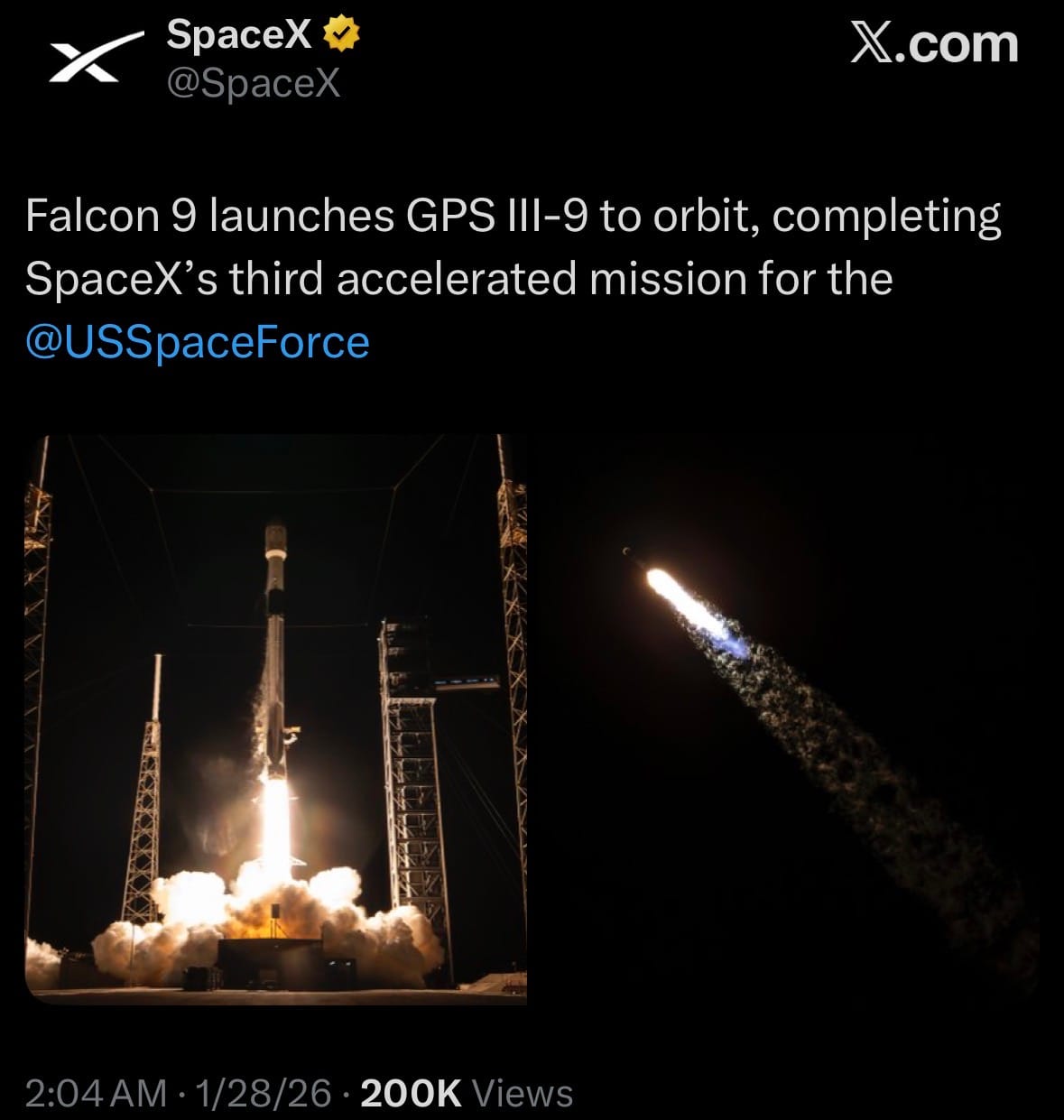
- The Falcon 9 first stage booster (B1083) lifted off at approximately 5:42 p.m. EST (22:42 UTC) and successfully landed on the droneship Just Read the Instructions in the Atlantic Ocean. The GPS III-9 satellite separated from the second stage about 1 hour and 20 minutes after launch and was placed into its target medium Earth orbit. This satellite is the ninth in the modernized GPS III series, featuring improved accuracy, anti-jamming capabilities, and a longer design life.
Science & Technology:
- On January 28, 2026, Neuralink announced that 21 participants, referred to as "Neuralnauts," are now enrolled in its clinical trials worldwide for the Telepathy brain-computer interface (BCI). This milestone, shared in a blog post titled "Two Years of Telepathy," highlights how these early users—primarily individuals with paralysis or conditions like ALS and quadriplegia—are advancing the technology through real-world use.

- The Neuralnauts are enabling progress by controlling computers, gaming, creating art, annotating papers, operating robotic arms, and more solely with their thoughts, with some achieving typing speeds up to 40 words per minute and near-normal mouse-like efficiency. Neuralink credits the participants' dedication for accelerating the program—from just three in 2024 to multiple enrollments per month in 2025—and plans further expansions in 2026, including next-gen implants with triple the capability, automated robotic surgeries, high-volume production, and the VOICE trial for speech restoration at up to 140 words per minute.
Statistic:
- Largest public chemical companies on Earth by market capitalization:
- 🇬🇧 Linde – $211.71B
- 🇫🇷 Air Liquide – $108.14B
- 🇦🇺 Wesfarmers – $66.77B
- 🇩🇪 Merck KGaA – $65.78B
- 🇯🇵 Shin-Etsu Chemical – $59.21B
- 🇺🇸 Air Products and Chemicals – $56.95B
- 🇩🇪 Bayer – $52.87B
- 🇺🇸 Corteva – $49.60B
- 🇩🇪 BASF – $48.82B
- 🇸🇦 SABIC – $45.91B
- 🇨🇳 Wanhua Chemical – $39.35B
- 🇩🇪 Henkel – $35.94B
- 🇨🇭 Sika – $30.78B
- 🇺🇸 PPG Industries – $25.72B
- 🇨🇱 Sociedad Química y Minera (SQM) – $23.87B
- 🇺🇸 Albemarle – $21.69B
- 🇦🇪 Borouge – $21.35B
- 🇶🇦 Industries Qatar – $21.10B
- 🇹🇼 Nan Ya Plastics – $20.34B
- 🇺🇸 Dow – $19.74B
- 🇰🇷 LG Chem – $19.29B
- 🇺🇸 DuPont de Nemours – $18.69B
- 🇨🇭 EMS-Chemie – $18.23B
- 🇺🇸 LyondellBasell – $16.24B
- 🇰🇷 POSCO Chemical – $14.83B
History:
- Supply-chain intelligence begins long before computers, as soon as states realize that knowing what is moving, where it is stored, and who controls it is power. In ancient empires, this intelligence lived in warehouse ledgers, port records, and tax rolls. Egypt tracked grain along the Nile as early as 2500 BC, Rome maintained detailed records of annona (grain supply) to keep cities fed and unrest contained, and Chinese dynasties monitored salt, iron, and silk flows as strategic resources. These records weren’t just accounting—they were early intelligence systems used to predict shortages, enforce control, and punish disloyal regions. During the medieval and early modern periods, mercantile powers like Venice, the Dutch Republic, and later Britain refined this further through port manifests, shipping insurance records, customs houses, and chartered trading companies. Whoever controlled the data about cargo, ships, and trade routes could tax it, block it, or weaponize it. By the 18th and 19th centuries, supply-chain intelligence became a formal tool of state power: Britain’s global trade dominance rested not only on naval strength, but on its ability to monitor shipping, insure cargo, control ports, and deny access to rivals through blockades and trade restrictions. Logistics knowledge—who ships what, through which chokepoints, and on what schedules—became inseparable from strategy.
- The industrial age turned supply-chain intelligence into a system problem. Railroads, steamships, telegraphy, and later telephones created faster, denser trade networks—and forced states and companies to track them more precisely. During World War I and World War II, logistics intelligence became decisive: governments monitored raw materials, factory output, shipping losses, port throughput, and fuel stocks to determine not just battlefield tactics but national survival. The ability to track and disrupt supply chains—through submarine campaigns, bombing of factories and rail hubs, and denial of critical materials—proved as important as frontline combat. After 1945, as global trade expanded and containerization standardized cargo, supply-chain intelligence shifted from national ledgers to corporate and international systems. Multinational companies tracked inventories across continents; customs agencies digitized records; shipping lines and insurers built detailed visibility into global flows. By the late 20th century, this intelligence increasingly merged with finance: trade finance, letters of credit, insurance, and compliance data created a parallel view of global commerce that could be analyzed, restricted, or frozen. Knowing where goods were was no longer enough—knowing who paid for them, who insured them, and which regulations applied became just as important.
- In the 21st century, supply-chain intelligence has become real-time, global, and strategic. Modern systems fuse shipping data, port operations, customs filings, satellite tracking, corporate disclosures, financial transactions, and compliance records into live maps of global trade. Governments use this intelligence to enforce sanctions, export controls, and technology restrictions—tracking not just ships and containers, but ownership structures, intermediaries, and transshipment patterns designed to evade scrutiny. Corporations use similar tools to manage risk, predict disruptions, and optimize sourcing, while intelligence agencies analyze supply chains to identify vulnerabilities, dependencies, and pressure points. Crises—from pandemics to wars—have exposed how deeply strategic supply chains are: a missing semiconductor, a blocked port, or a sanctioned insurer can ripple through entire industries. Today, supply-chain intelligence is not just about efficiency; it is about leverage. It determines who can manufacture advanced technology, who can move energy and food, who can sustain military operations, and who can be economically isolated without firing a shot. What began as warehouse ledgers has evolved into a planetary monitoring system—one that quietly shapes geopolitics, security, and power by revealing, in near real time, how the world actually moves.
Image of the day:

Thanks for reading! Earth is complicated, we make it simple.
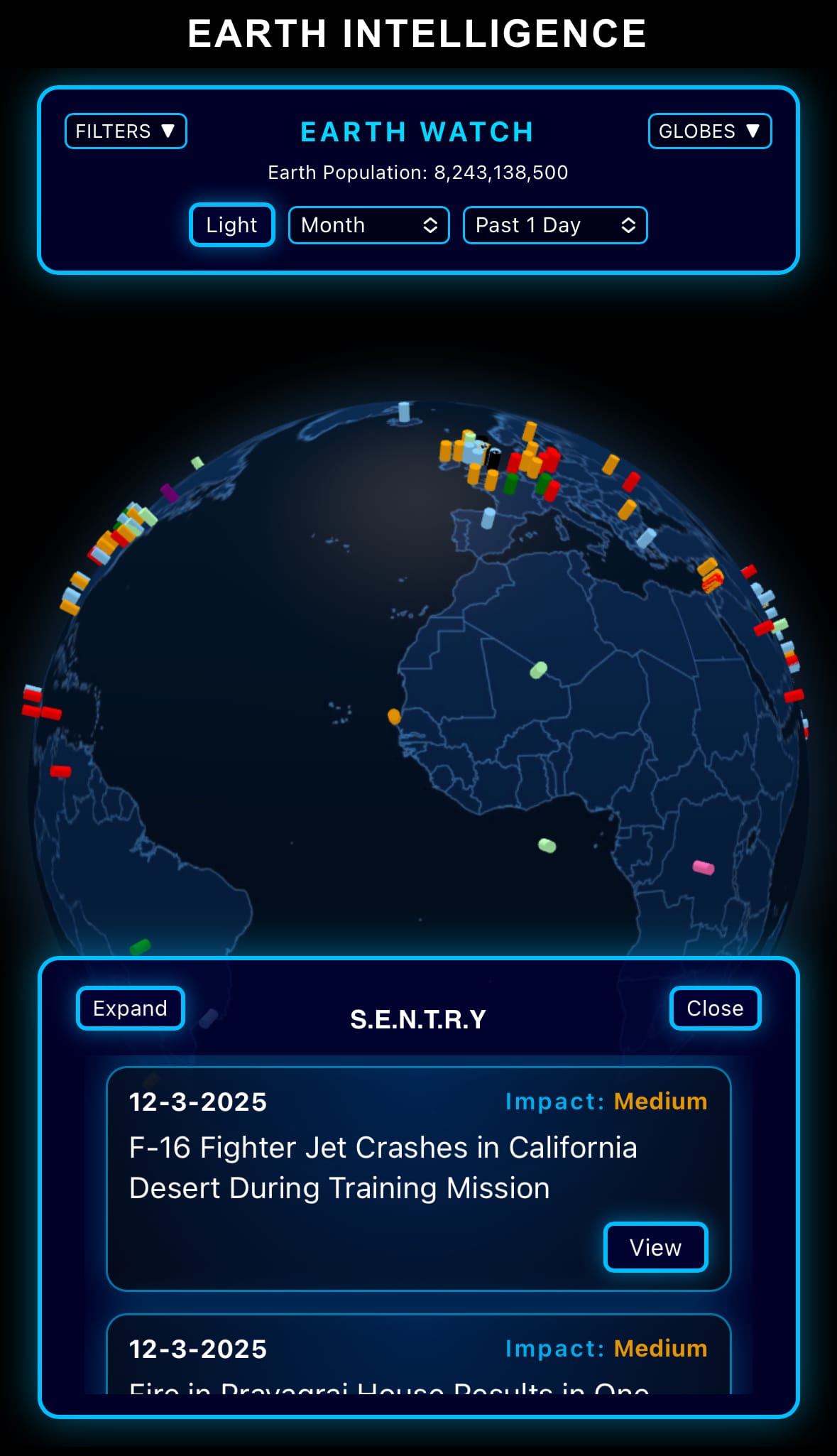
- Click below if you’d like to view our free EARTH WATCH globe:
- Download our mobile app:



Click below to view our previous newsletters:

Support/Suggestions Email:
earthintelligence@earthintel.news