Thursday☕️


Trending:
- On February 19, 2026, Andrew Mountbatten-Windsor—formerly known as Prince Andrew—was arrested by Thames Valley Police on suspicion of misconduct in public office. The arrest occurred at his residence on the Sandringham estate in Norfolk, England, coinciding with his 66th birthday. Police are conducting searches at addresses in Berkshire and Norfolk as part of the ongoing investigation, and he remains in custody.
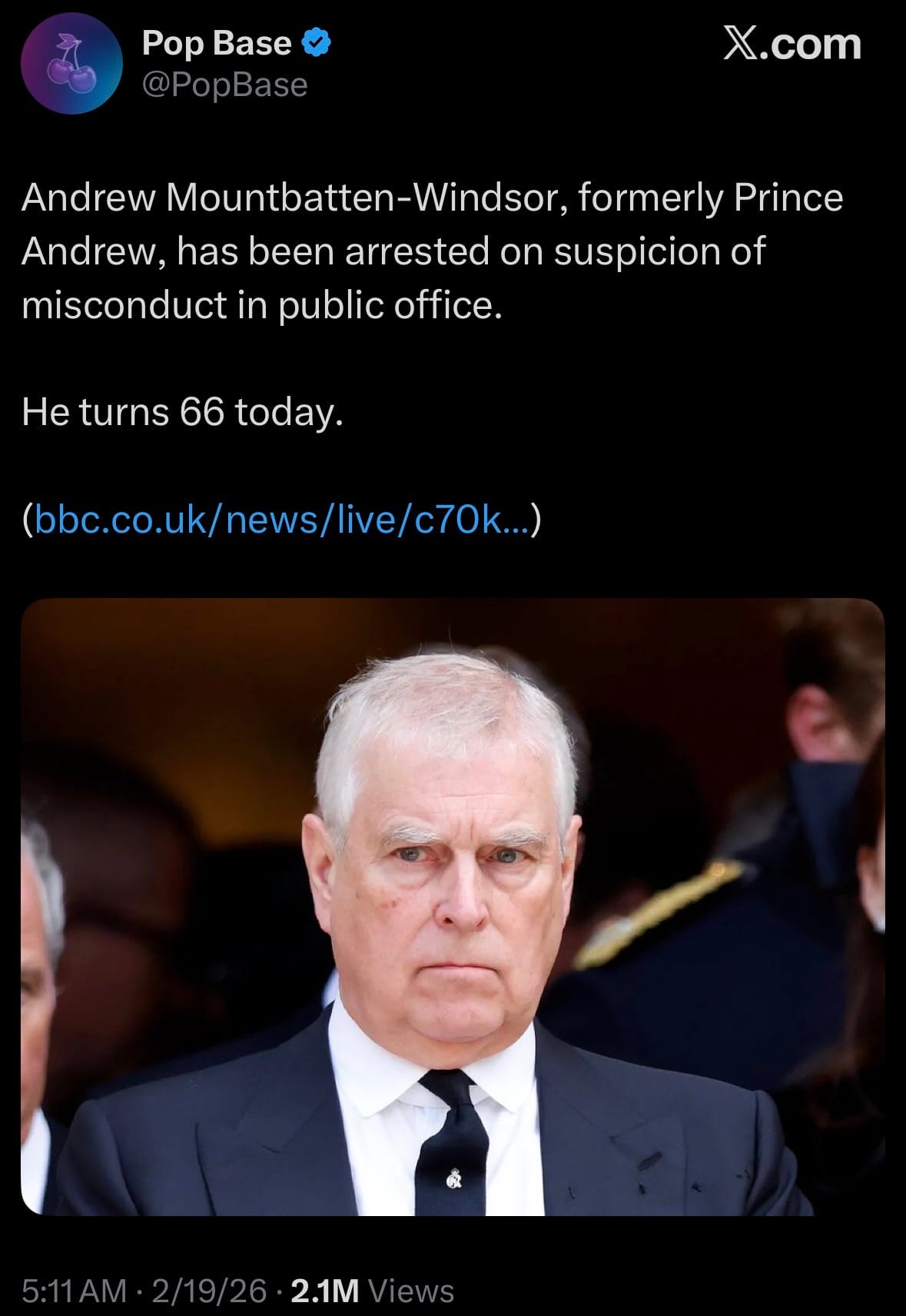
- The case stems from allegations that, during his tenure as a UK trade envoy prior to 2011, he shared confidential government information with the late Jeffrey Epstein, based on documents revealed in recent releases from Epstein-related files by the U.S. Justice Department. Thames Valley Police initiated the probe following a complaint, though they have not publicly detailed specific evidence or charges beyond the suspicion. King Charles III reportedly stated that the law must take its course, while Mountbatten-Windsor has previously denied wrongdoing in connection with Epstein.
Economics & Markets:
- Today’s U.S. stock market:

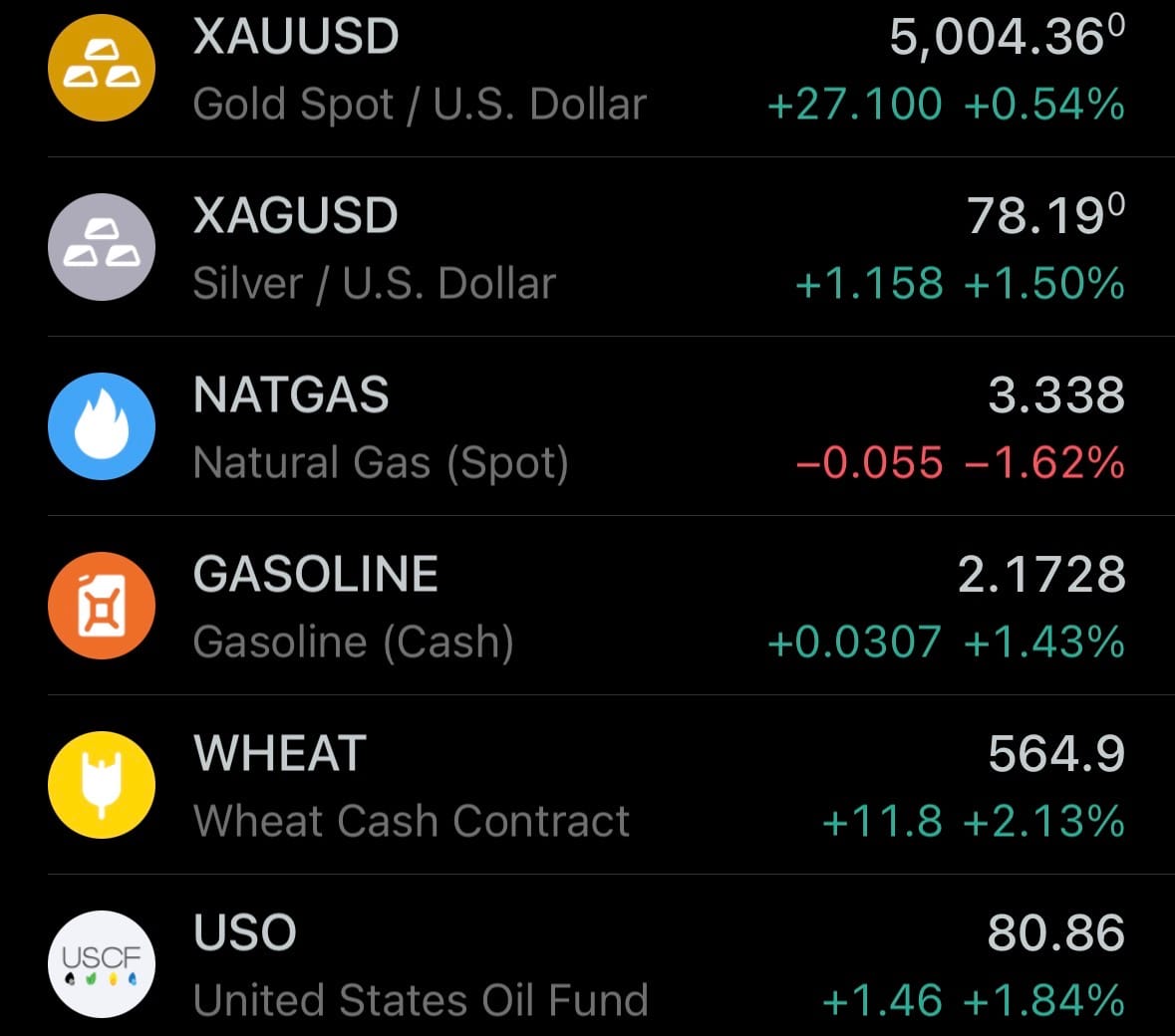
- Today’s commodity market:
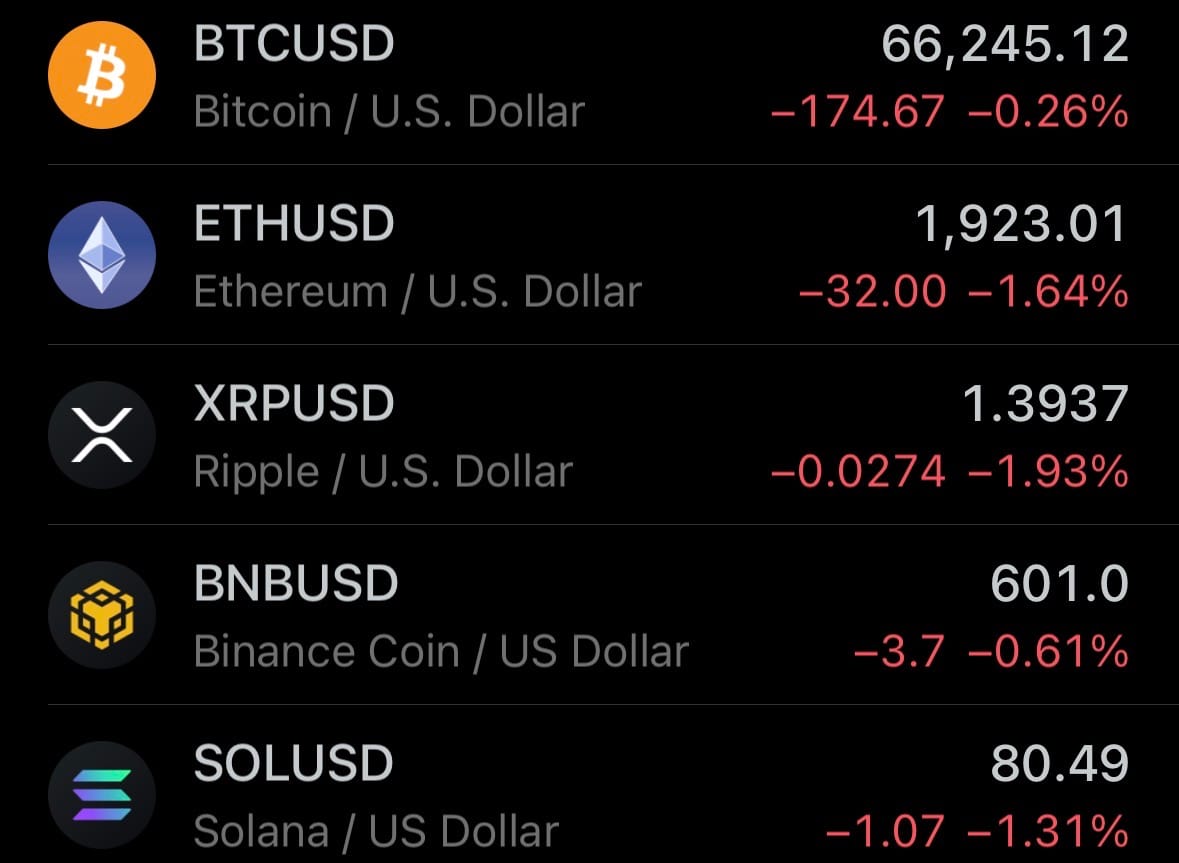
- Today’s crypto market:
Geopolitics & Military Activity:
- On February 19, 2026, the U.S. escalated its military presence near Iran with the USS Gerald R. Ford carrier strike group heading through the Atlantic toward the Mediterranean to join the USS Abraham Lincoln in the Arabian Sea. Dozens of additional U.S. Air Force fighters (F-35s, F-22s, F-16s, F-15s), KC-135 tankers, E-3 AWACS, and C-17 transports have relocated to bases in Jordan, Saudi Arabia, Crete, Spain, and Bulgaria, marking the largest regional Air Force buildup since 2003.

- The deployment supports potential sustained air and naval operations, including possible strikes on Iranian nuclear sites if nuclear talks collapse, though President Trump has made no final decision and readiness claims vary. Iran has responded with fortifications at key sites like Parchin and joint naval exercises; no U.S. ground troop increases have been reported, with the emphasis on deterrence amid ongoing indirect diplomacy.
Environment & Weather:
- On February 19, 2026, Kanlaon Volcano on Negros Island in the Philippines erupted, producing a phreatic explosion that sent a dark ash plume approximately 5,000 meters into the atmosphere. The Philippine Institute of Volcanology and Seismology (PHIVOLCS) raised the alert level to 3 (out of 5), indicating increased unrest and a heightened risk of hazardous eruptions in the coming weeks.
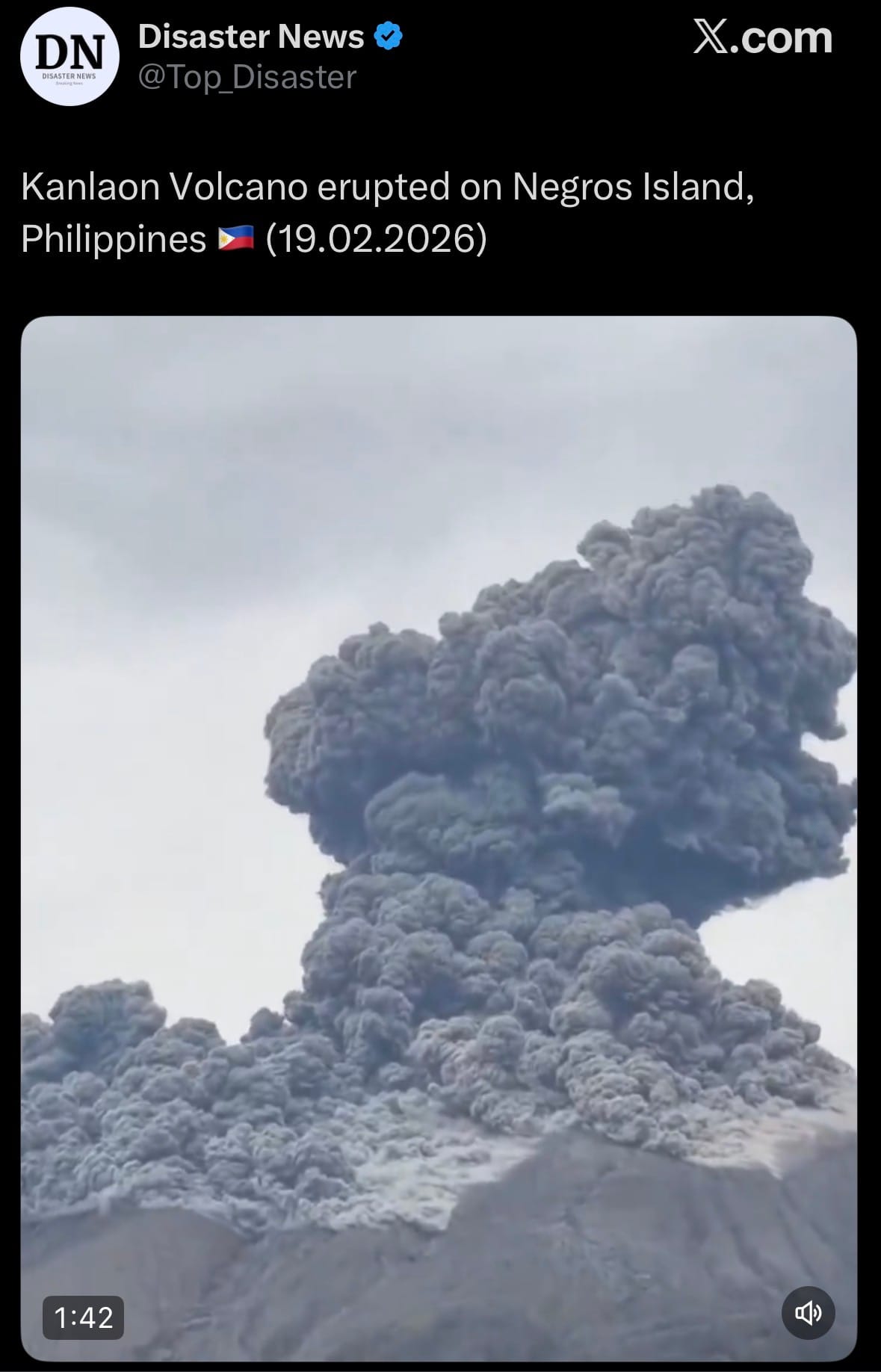
- Ashfall affected several barangays in Negros Occidental and Negros Oriental provinces, prompting local authorities to suspend classes, advise residents to wear masks, and prepare for potential evacuations in high-risk zones. No immediate casualties were reported, but authorities continue to monitor seismic activity closely while urging the public to avoid the 4-kilometer permanent danger zone around the volcano.
Statistic:
- Largest public railroad companies by market capitalization:
- 🇺🇸 Union Pacific Corporation: $157.24B
- 🇺🇸 CSX Corporation: $76.91B
- 🇨🇦 CPKC (Canadian Pacific Kansas City): $75.16B
- 🇺🇸 Norfolk Southern: $71.13B
- 🇨🇦 Canadian National Railway: $66.04B
- 🇯🇵 Central Japan Railway: $29.64B
- 🇯🇵 East Japan Railway: $27.89B
- 🇮🇳 Indian Railway Finance: $16.12B
- 🇨🇳 China Railway Construction: $14.09B
- 🇫🇷 Getlink: $11.33B
- 🇯🇵 West Japan Railway: $9.85B
- 🇯🇵 Tokyu: $7.28B
- 🇯🇵 Hankyu Hanshin Holdings: $7.23B
- 🇦🇺 Qube Holdings: $6.33B
- 🇯🇵 Tokyo Metro: $6.30B
- 🇧🇷 Rumo: $5.69B
- 🇮🇳 Indian Railway Catering & Tourism: $5.57B
- 🇦🇺 Aurizon Holdings: $4.92B
- 🇹🇼 Taiwan High Speed Rail: $4.84B
- 🇯🇵 Kintetsu GHD: $4.13B
- 🇯🇵 Odakyu Electric Railway: $3.95B
- 🇯🇵 Tobu Railway: $3.92B
- 🇯🇵 Kyushu Railway Company: $3.89B
- 🇯🇵 Keio Corporation: $3.12B
- 🇹🇭 Bangkok Expressway and Metro (BEM): $2.93B
History:
- The history of batteries begins with the discovery that chemical reactions can store and release electrical energy on demand. The first true battery was Alessandro Volta’s voltaic pile in 1800, a stack of zinc and copper discs separated by electrolyte-soaked cloth that produced continuous current. This was a turning point: electricity could now be generated without friction machines or static charges. Throughout the 19th century, battery chemistry advanced rapidly. The Daniell cell (1836) improved stability for telegraph networks, while the lead-acid battery (1859), invented by Gaston Planté, became the first rechargeable battery and remains in use today for automotive starter systems and grid backup. These early batteries were heavy and low in energy density, but they enabled portable power for communication, transportation, and industry. By the early 20th century, nickel-based chemistries—like nickel-cadmium—offered greater durability and recharge cycles, expanding use into aviation, military systems, and industrial equipment. Energy storage was no longer experimental; it was infrastructure.
- The late 20th century marked the lithium revolution. In the 1970s and 1980s, researchers explored lithium’s exceptional electrochemical potential, and in 1991, Sony commercialized the first widely adopted lithium-ion battery. Lithium-ion offered dramatically higher energy density, lighter weight, and longer cycle life compared to earlier chemistries. This single breakthrough reshaped consumer electronics—laptops, phones, and eventually electric vehicles became viable at scale. By the 2000s, lithium-ion was the dominant portable energy storage platform, and its trajectory aligned perfectly with the rise of mobile computing. As electric vehicles gained momentum in the 2010s, battery production became a geopolitical and industrial priority. Companies built gigafactories to scale cell manufacturing, driving costs down through volume and incremental chemistry improvements. Variants like lithium iron phosphate (LFP) and nickel-manganese-cobalt (NMC) optimized trade-offs between energy density, cost, and safety. Energy storage shifted from niche to strategic: whoever controlled battery manufacturing controlled the electrification transition.
- Today, batteries are central to transportation, grid stability, and military logistics. Electric vehicles rely on dense battery packs for range and performance; grid-scale storage systems smooth renewable energy variability and stabilize power networks; portable devices, drones, and defense systems depend on compact, high-discharge cells. The global battery ecosystem is concentrated in key regions, particularly East Asia, with massive industrial capacity in China, South Korea, and Japan, while Western nations race to localize production. New frontiers include solid-state batteries, which promise higher energy density and improved safety; sodium-ion chemistries for cost-efficient storage; and next-generation recycling and raw material sourcing to secure supply chains. At the same time, large-scale storage is evolving beyond vehicles into megawatt- and gigawatt-scale battery farms, turning energy storage into grid architecture rather than consumer hardware. The future of batteries is not just about longer range—it is about reshaping how energy is generated, transmitted, and consumed. From Volta’s stacked discs to continent-scale energy storage networks, batteries have become one of the foundational technologies of modern civilization, storing not just electricity but strategic leverage in an electrified world.

Thanks for reading! Earth is complicated, we make it simple.
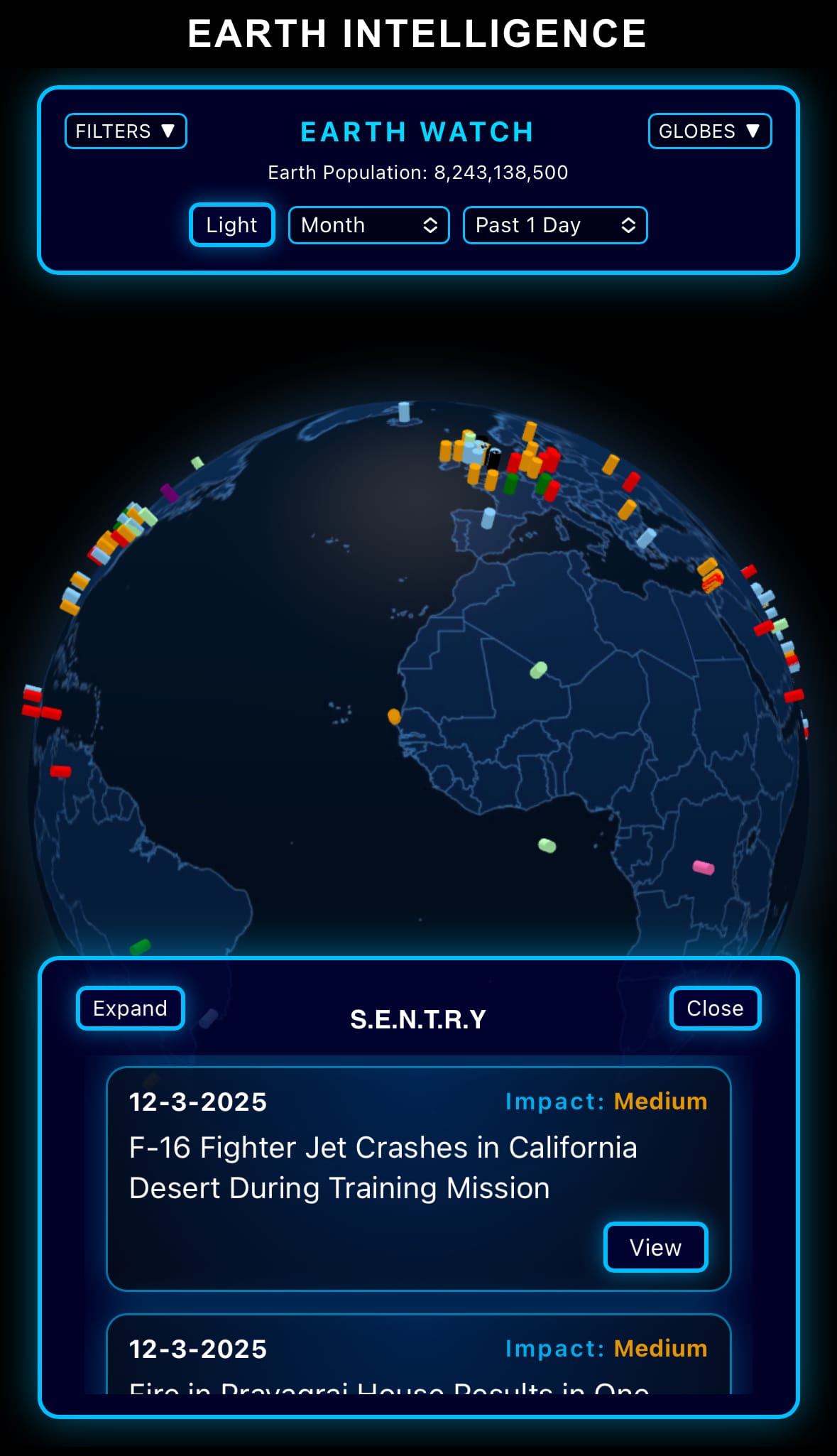
- Click below if you’d like to view our free EARTH WATCH globe:
- Download our mobile app:



Click below to view our previous newsletters:
Support/Suggestions Email:
earthintelligence@earthintel.news