Thursday☕️


Trending:
- On March 25, 2026, Ukraine conducted a major drone strike on the Ust-Luga oil port in Russia’s Leningrad Oblast on the Gulf of Finland, causing a massive fire that engulfed oil storage tanks and at least two tankers.

- Dramatic footage shows intense flames and thick black smoke rising from the facility, one of Russia’s largest Baltic Sea energy export hubs handling tens of millions of tons of oil products and gas condensate annually. Russian authorities have not yet released full details on the extent of the damage.
Economics & Markets:
- As of March 25, 2026, over 500 petrol stations across Australia’s two largest states — New South Wales and Victoria — have run out of at least one type of fuel, mainly due to panic buying triggered by the ongoing Middle East war and global oil supply disruptions. The shortages are now spreading to other states including Queensland and South Australia.
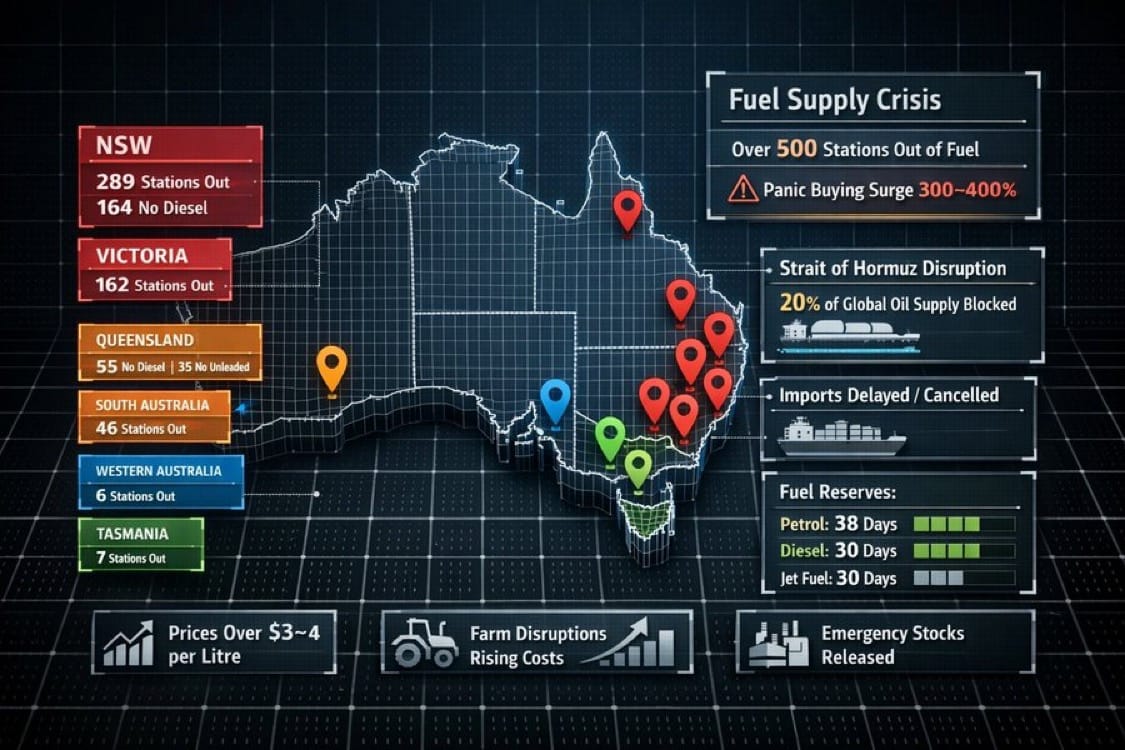
- The Australian government insists that total national fuel supply remains adequate and is not the root cause, urging the public to stop panic buying to ease the pressure on stations.
- Yesterday’s U.S. stock market:

- Yesterday’s commodity market:

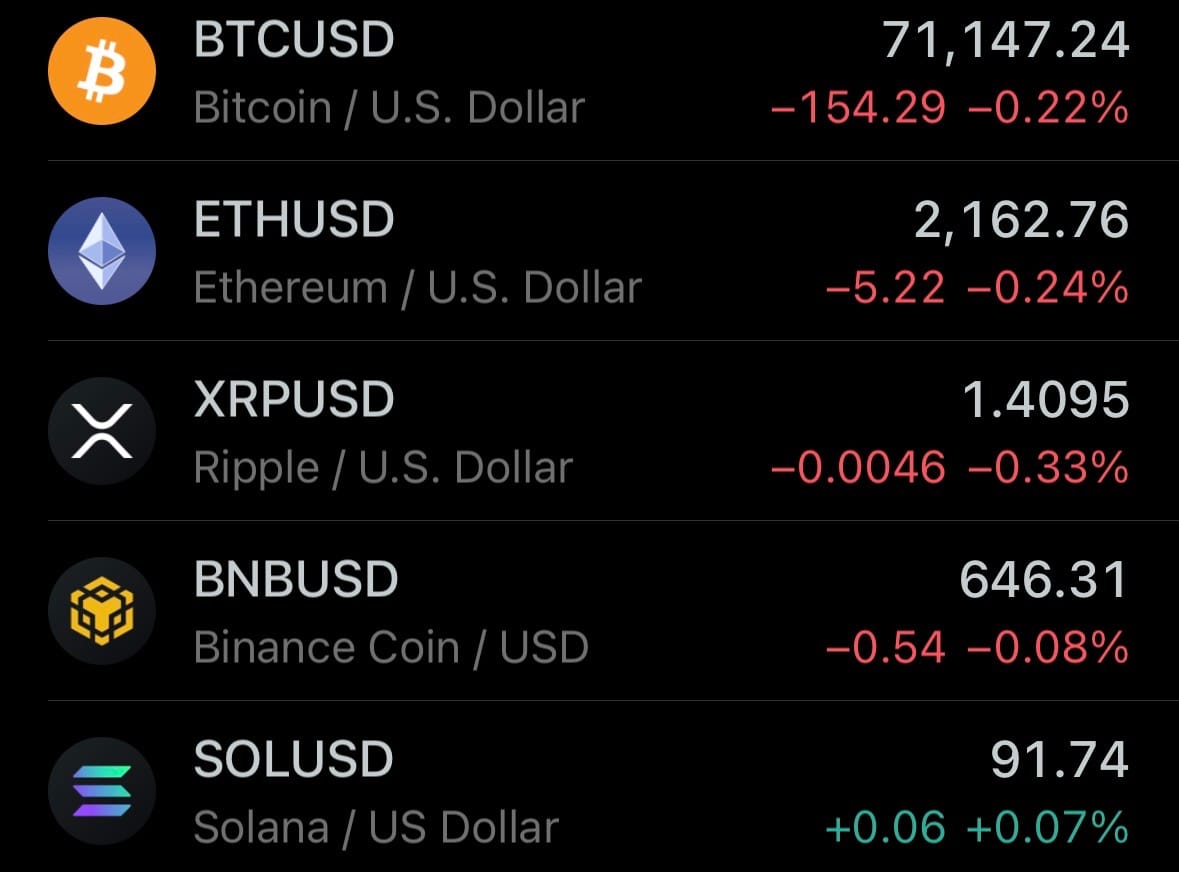
- Yesterday’s crypto market:
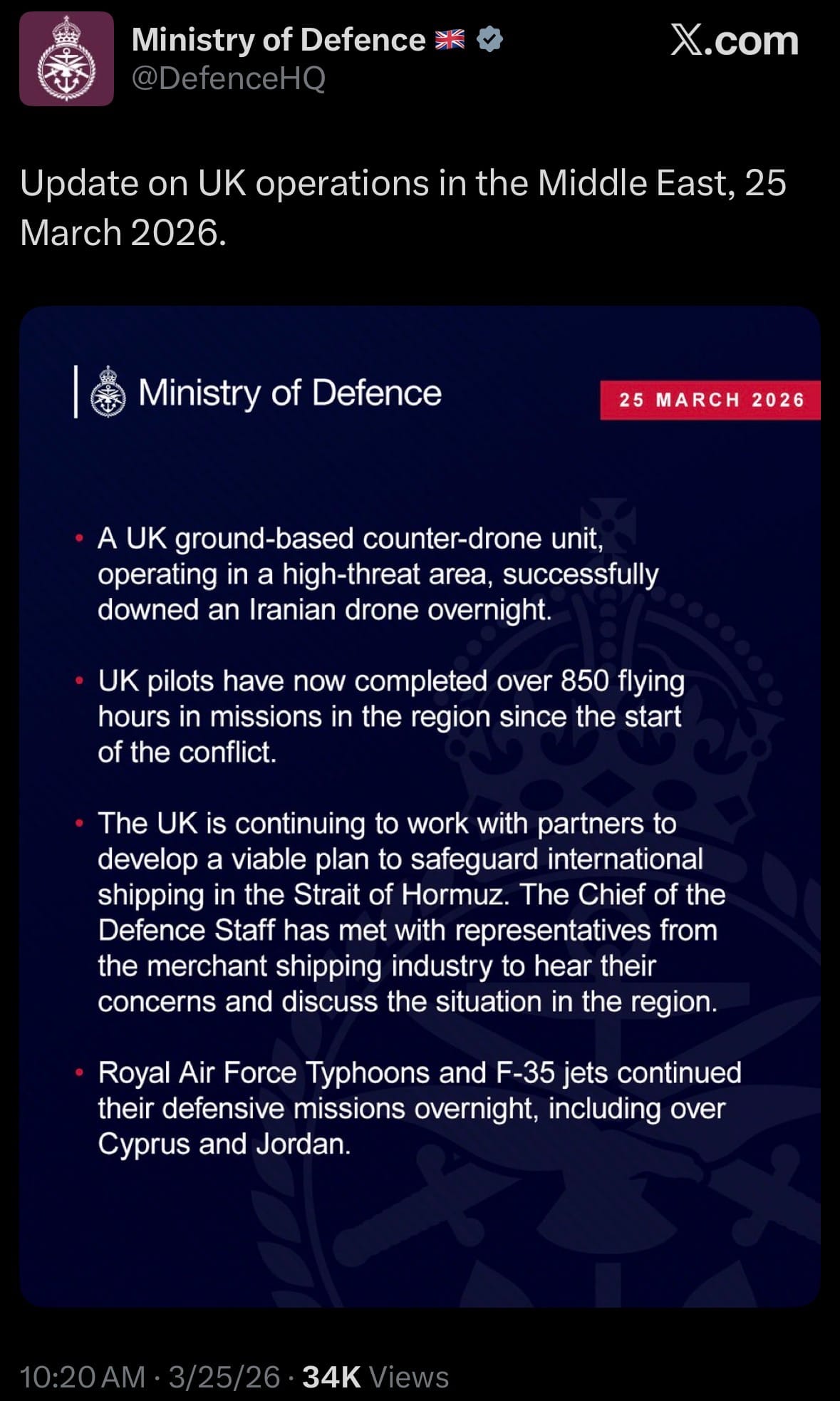
Geopolitics & Military Activity:

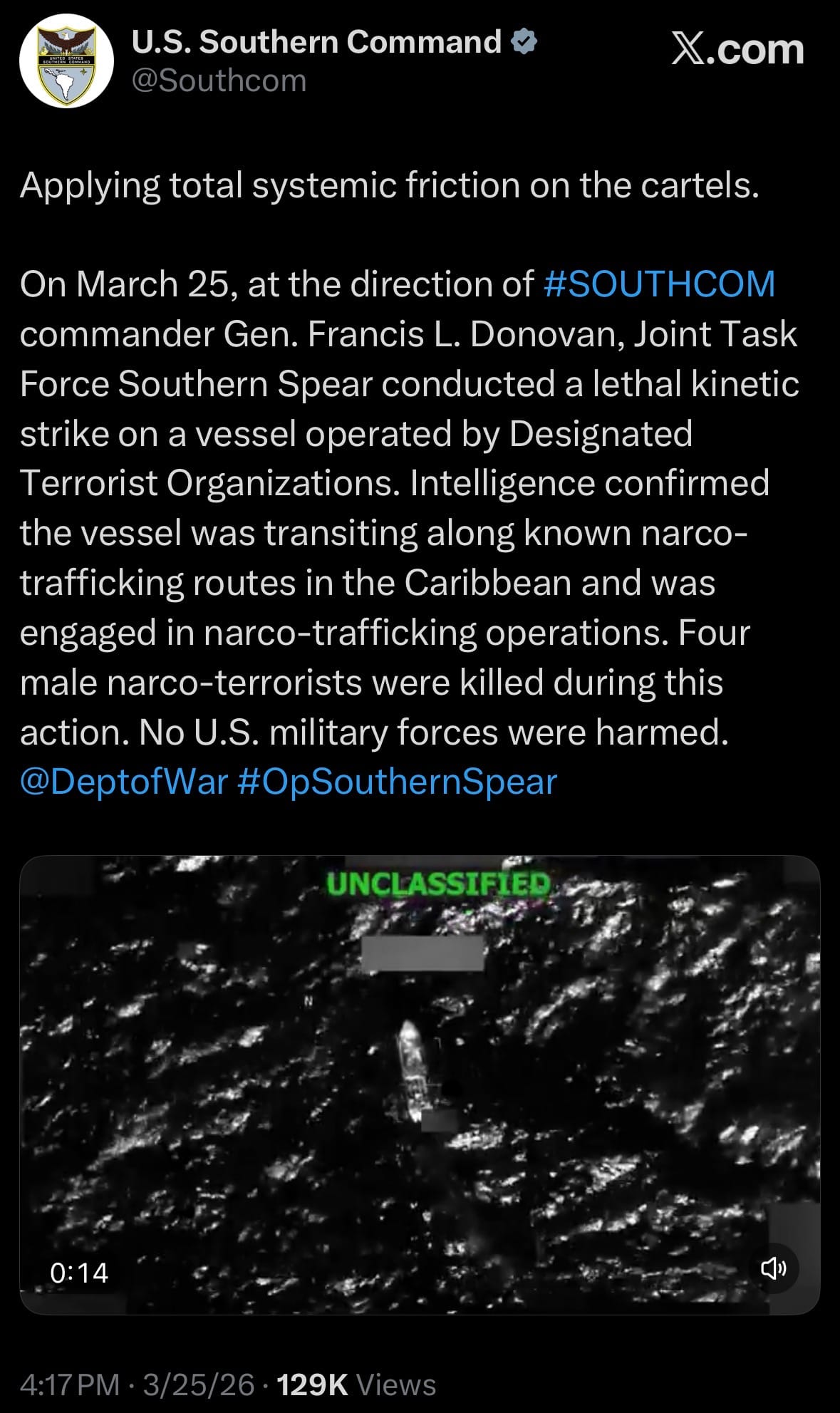
Environment & Weather:
- As of March 25, 2026, rapid and high-impact flash flooding has struck Ibri in Oman due to torrential rains from a powerful, rare low-pressure system affecting the Gulf region.
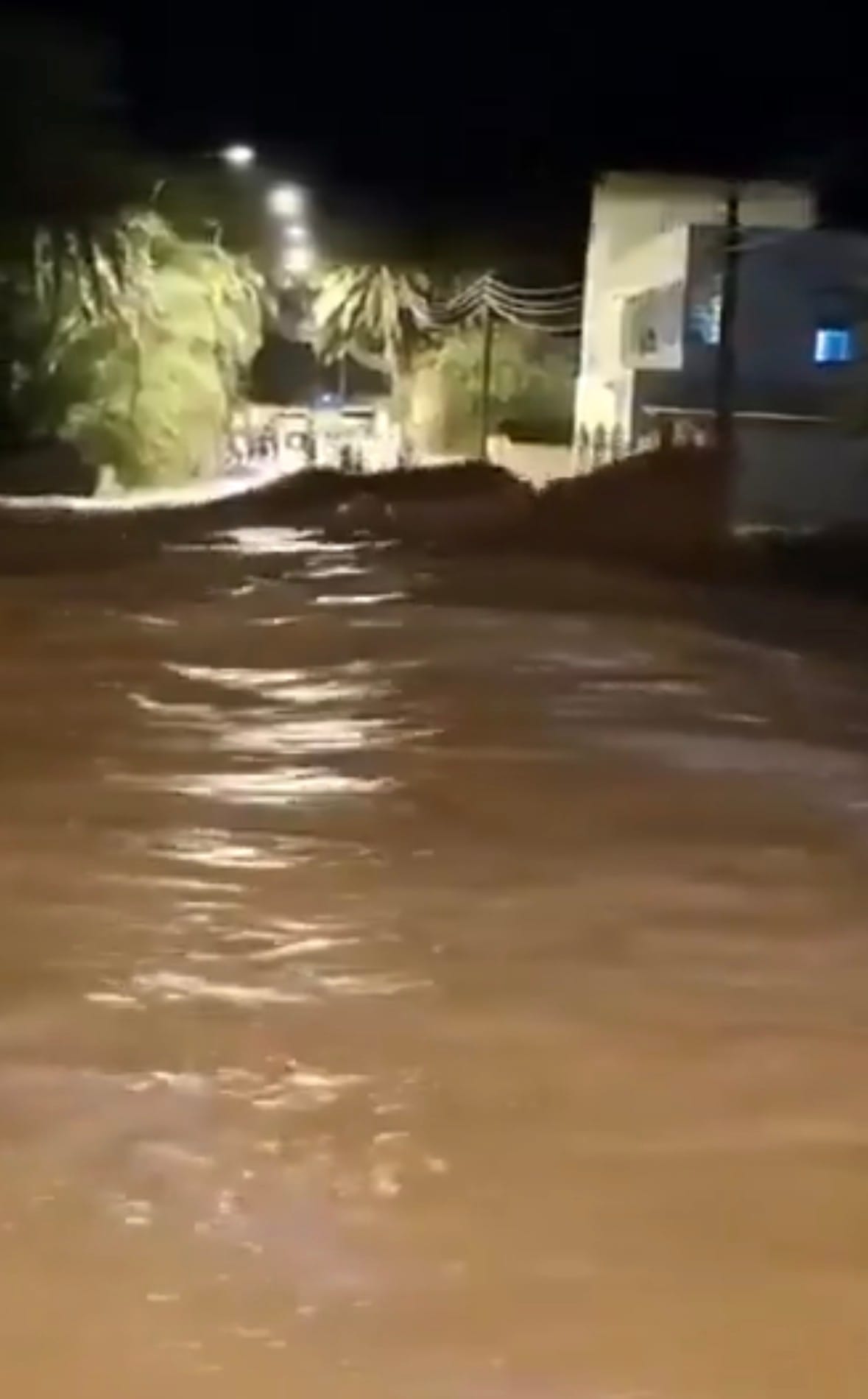
- The same weather system has brought dangerous heavy rainfall, thunderstorms, and flooding to parts of Oman, the UAE, Saudi Arabia, Qatar, and Kuwait since yesterday, causing widespread disruption across the area.
Science & Technology:

Statistic:
- Largest public automakers on Earth by market capitalization:
- 🇺🇸 Tesla: $1.448T
- 🇯🇵 Toyota: $274.91B
- 🇨🇳 BYD: $141.76B
- 🇨🇳 Xiaomi: $107.85B
- 🇰🇷 Hyundai: $84.21B
- 🇺🇸 General Motors: $71.46B
- 🇮🇹 Ferrari: $57.20B
- 🇩🇪 BMW: $55.37B
- 🇩🇪 Mercedes-Benz: $53.48B
- 🇩🇪 Volkswagen: $50.81B
- 🇺🇸 Ford: $46.55B
- 🇮🇳 Maruti Suzuki India: $42.50B
- 🇮🇳 Mahindra & Mahindra: $39.94B
- 🇰🇷 Kia: $39.65B
- 🇩🇪 Porsche: $39.31B
- 🇯🇵 Honda: $32.50B
- 🇨🇳 Geely: $28.68B
- 🇨🇳 Great Wall Motors: $25.93B
- 🇨🇳 SAIC Motor: $24.17B
- 🇨🇳 Seres Group: $24.02B
- 🇯🇵 Suzuki Motor: $23.51B
- 🇨🇳 Chery Automobile: $19.94B
- 🇳🇱 Stellantis: $19.93B
- 🇺🇸 Rivian: $19.38B
- 🇨🇳 Li Auto: $18.52B
History:
- The history of GPS jamming and anti-satellite (ASAT) systems is the story of how nations learned not just to use space—but to deny it to others. GPS itself began as a U.S. military system in the 1970s, becoming fully operational in 1995, providing precise positioning, navigation, and timing (PNT) globally. Almost immediately, militaries realized a vulnerability: GPS signals are extremely weak by the time they reach Earth, making them easy to disrupt. Early forms of GPS jamming emerged in the 1990s, using relatively simple radio transmitters to overpower satellite signals locally. During conflicts like the Iraq War (2003), GPS jamming devices were used to interfere with U.S. precision-guided munitions, marking one of the first real battlefield uses. Alongside jamming, spoofing emerged—broadcasting fake GPS signals to mislead systems rather than just block them. By the 2010s, spoofing incidents were reported affecting ships, drones, and even civilian navigation systems, showing that GPS disruption had moved beyond military labs into real-world operational environments.
- At the same time, nations began developing ways to physically destroy or disable satellites. The first major ASAT demonstration came from the United States in 1985, when an ASM-135 missile launched from an F-15 destroyed a satellite in orbit. The Soviet Union had earlier co-orbital ASAT concepts during the Cold War, where satellites could approach and disable other satellites. The modern era of ASAT weapons became highly visible in 2007, when China destroyed one of its own satellites using a ground-launched missile, creating massive orbital debris and demonstrating a clear capability to target space assets. The United States followed in 2008 with Operation Burnt Frost, intercepting a failing satellite, and India conducted its own ASAT test in 2019, becoming another confirmed space-capable power. Russia has also tested various ASAT systems, including both kinetic and non-kinetic approaches. Today, ASAT capabilities include kinetic kill vehicles (direct impact), electronic warfare (jamming), cyber attacks on satellite networks, and directed energy systems. Major players in this domain are the United States, China, and Russia, with growing capabilities from India and others.
- In the modern world, GPS denial and ASAT capabilities form a critical layer of warfare that directly connects space, cyber, and electronic warfare into one battlefield. GPS is not just for navigation—it underpins aviation routing, military targeting, missile guidance, financial transaction timing, telecommunications synchronization, and power grid operations. Disrupting GPS—even locally—can degrade precision weapons, confuse navigation systems, and disrupt civilian infrastructure. On a larger scale, targeting satellites themselves could impact entire regions or global systems, depending on the scope. Because of this, modern militaries are developing resilient navigation alternatives, anti-jamming technologies, and multi-layered positioning systems that combine GPS with other satellite constellations and inertial navigation. At the same time, space is becoming increasingly contested, with nations preparing for scenarios where satellite access is degraded or denied. The ability to deny space-based systems—whether through jamming signals or destroying satellites—has become one of the most powerful ways to disrupt modern civilization, making GPS and ASAT warfare one of the most strategically important and rapidly evolving domains in global security today.
Image of the day:

Thanks for reading! Earth is complicated, we make it simple.
- Click below if you’d like to view our free EARTH WATCH globe:
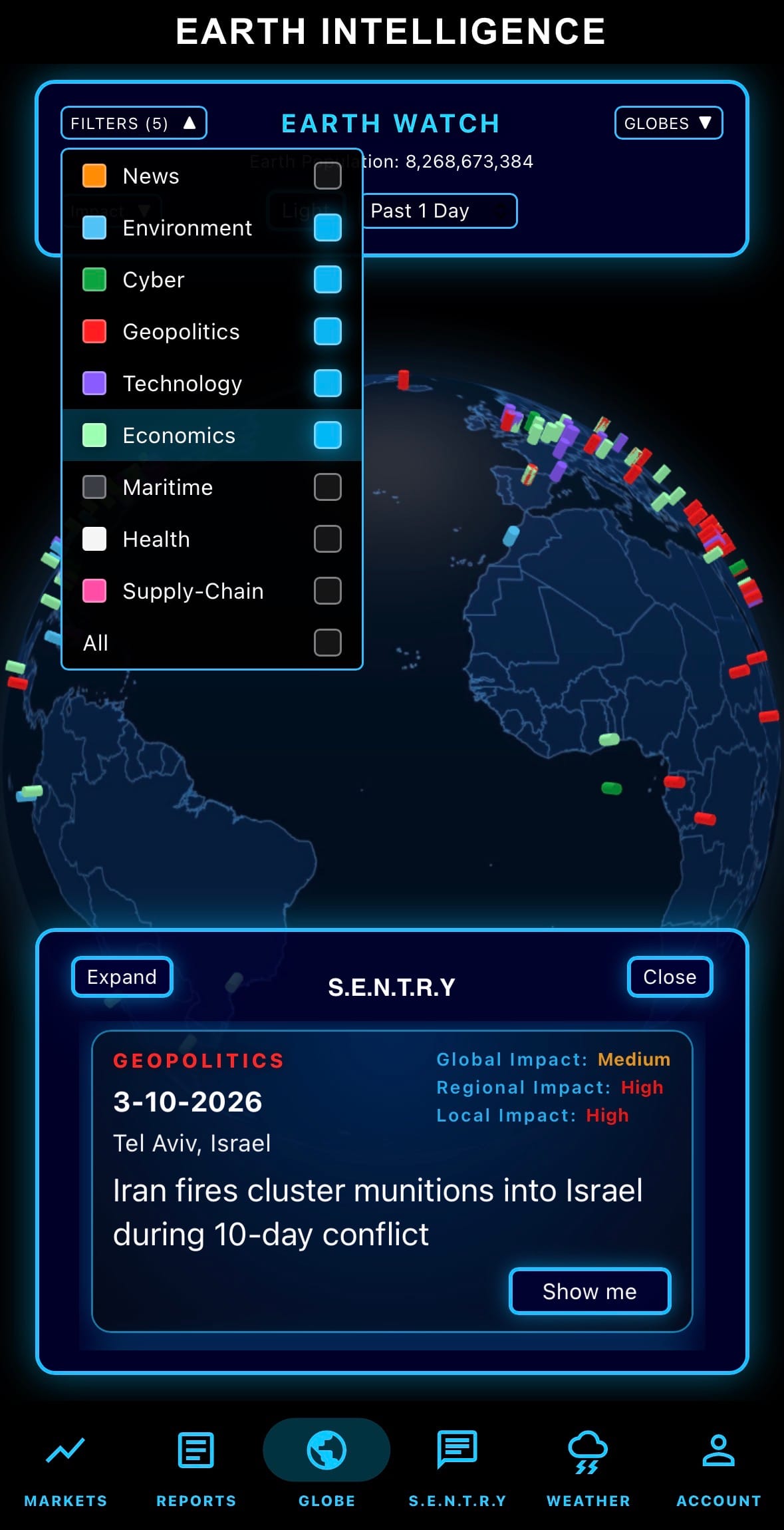
- Download our mobile app:



Click below to view our previous newsletters:

Support/Suggestions Email:
support@earthintel.io