Thursday☕️


Trending:
- On April 1, 2026, NASA launched the Artemis II mission, sending humans on a journey toward the Moon for the first time in over 50 years.
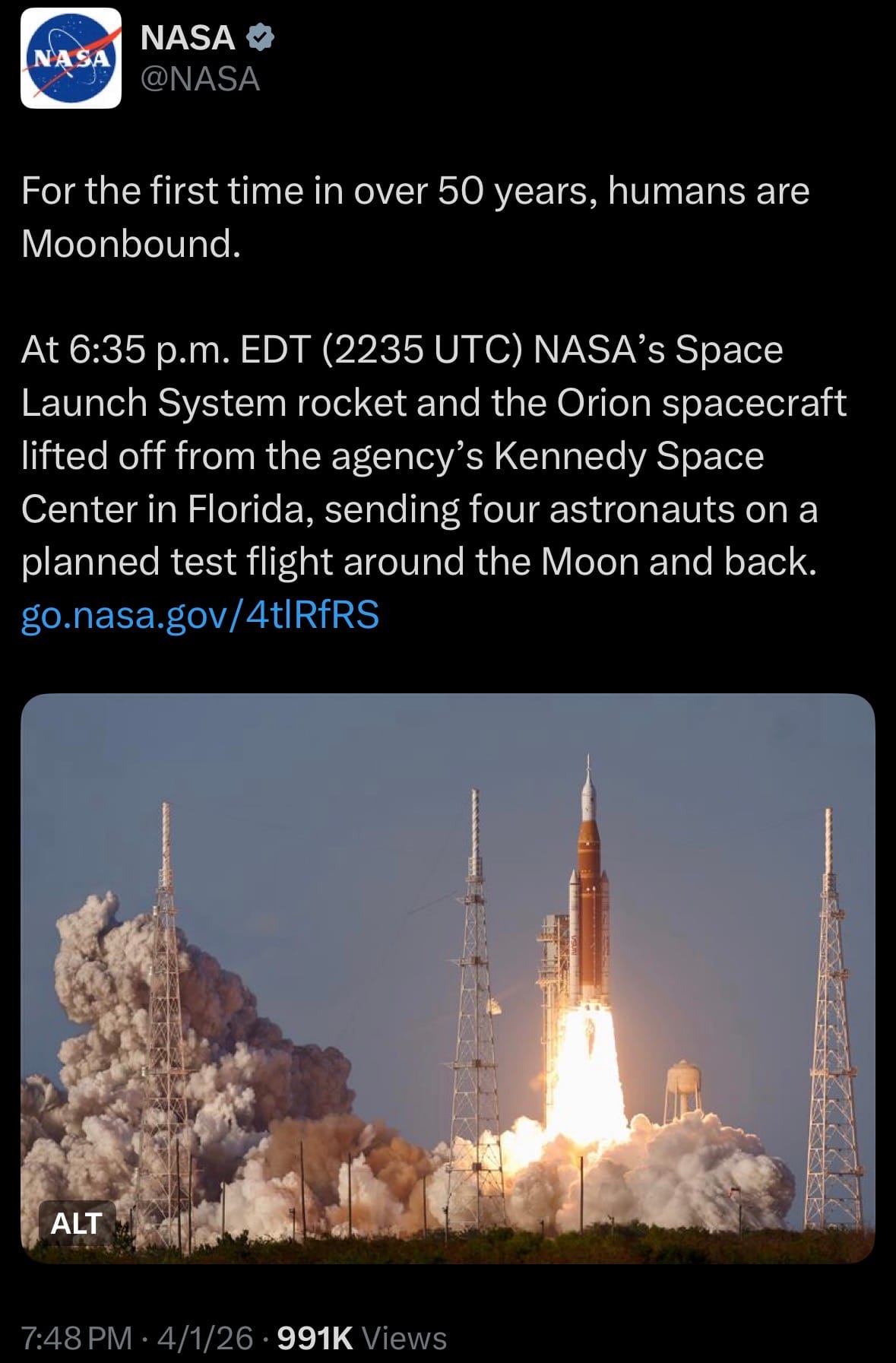
- At 6:35 p.m. EDT (2235 UTC), the Space Launch System rocket lifted off from Kennedy Space Center in Florida carrying the Orion spacecraft with four astronauts on a planned 10-day test flight that will take them around the Moon and safely back to Earth.
Economics & Markets:
- Yesterday’s U.S. market:

- Yesterday’s commodity market:

- Yesterday’s crypto market:

Geopolitics & Military Activity:



Environment & Weather:
- On April 1, 2026, a rare red sandstorm from the Sahara Desert swept through Crete in Greece and parts of Libya, turning the skies an eerie orange-red color and reducing visibility as strong winds carried fine dust particles across the Mediterranean.

- The intense dust storm has already caused flight disruptions and health alerts in affected areas, with the plume now expected to reach Egypt and surrounding regions in the coming hours.
Science & Technology:
- On April 1, 2026, AeroVironment (AV) announced that the U.S. Navy has selected it to provide intelligence, surveillance, and reconnaissance (ISR) services using the JUMP 20-X drone as part of a major effort to modernize and expand naval surveillance operations.
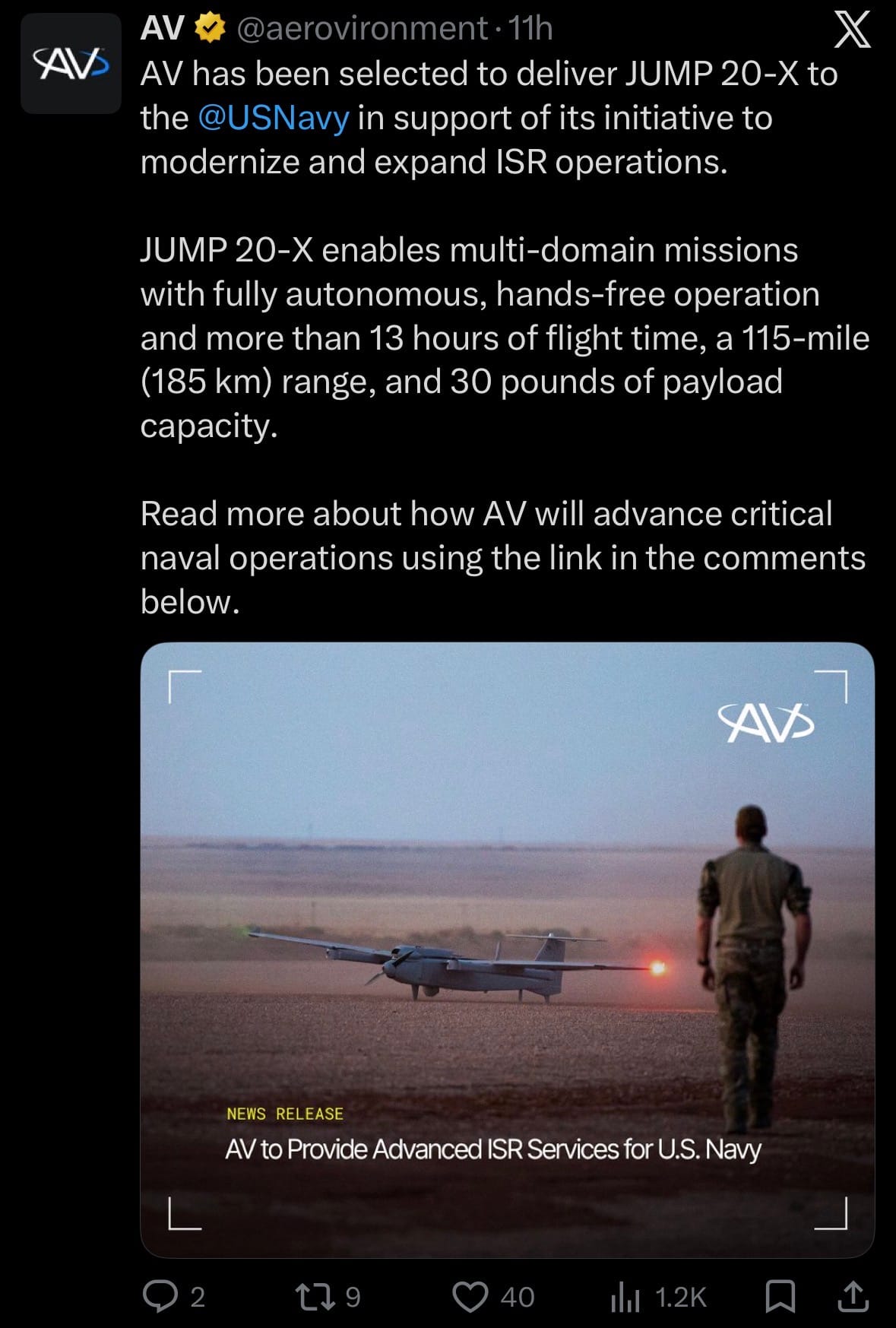
- The JUMP 20-X is a vertical take-off and landing drone that flies completely autonomously with no hands-on control needed, offering more than 13 hours of flight time, a 115-mile range, and the ability to carry up to 30 pounds of sensors and equipment—making it ideal for quick deployment from ships or tight spaces for both sea and land missions.

EARTH INTELLIGENCE:
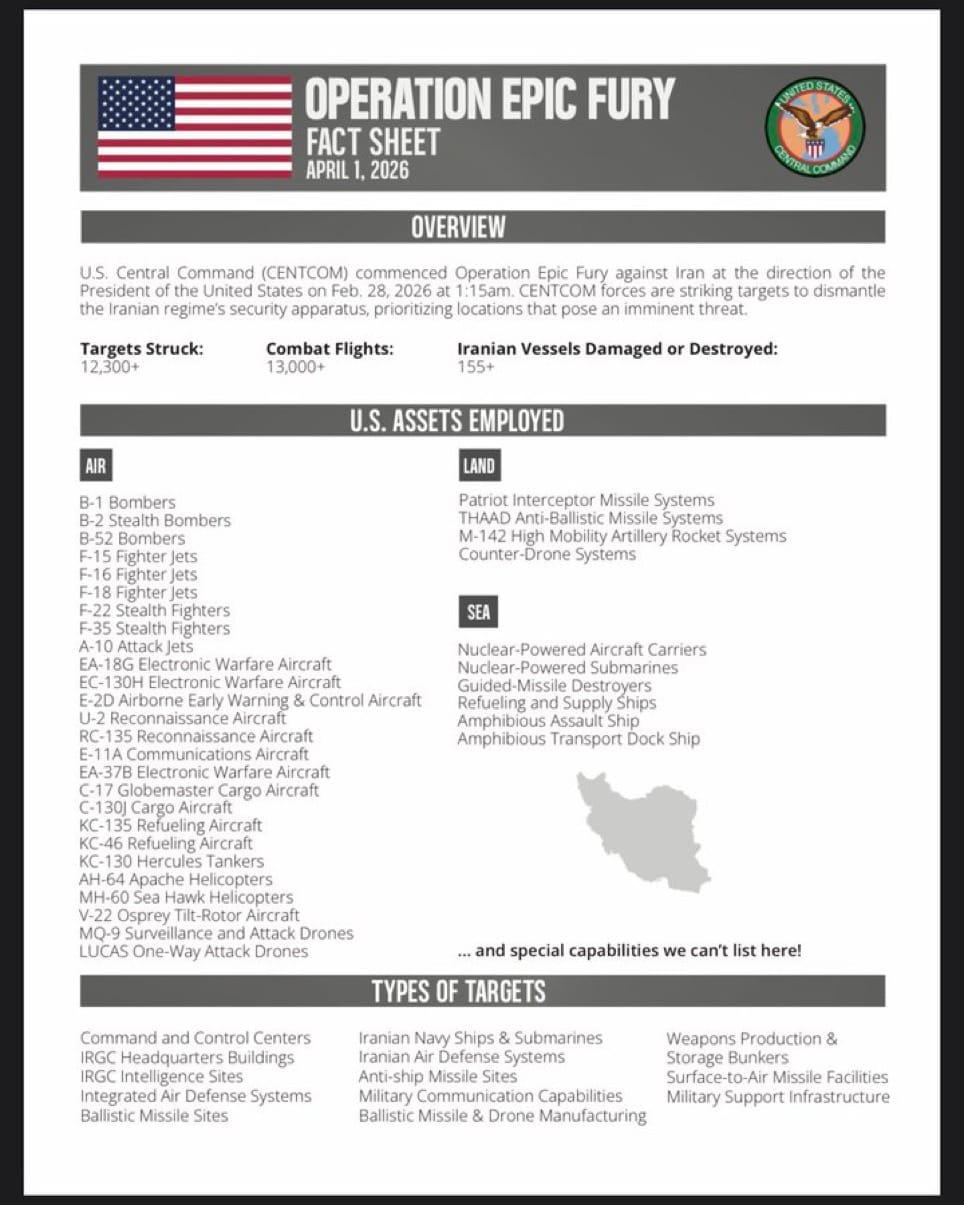
- As of April 2, 2026, global tensions remain critically high with intense pressure and risk in the Middle East stemming from the US and Israeli conflict with Iran, Iranian strikes on Gulf nations and U.S. assets, Israeli operations targeting Hezbollah in Lebanon, continued fighting in Gaza, and Houthi rebels once again attacking ships in the Red Sea and disrupting Suez Canal trade routes.
- In Eastern Europe, the Russia-Ukraine front lines are largely stalled amid ongoing reciprocal strikes on energy infrastructure by both sides, as President Zelenskyy warns that NATO nations—especially the United States—are shifting much of their attention and resources toward the Middle East crisis.
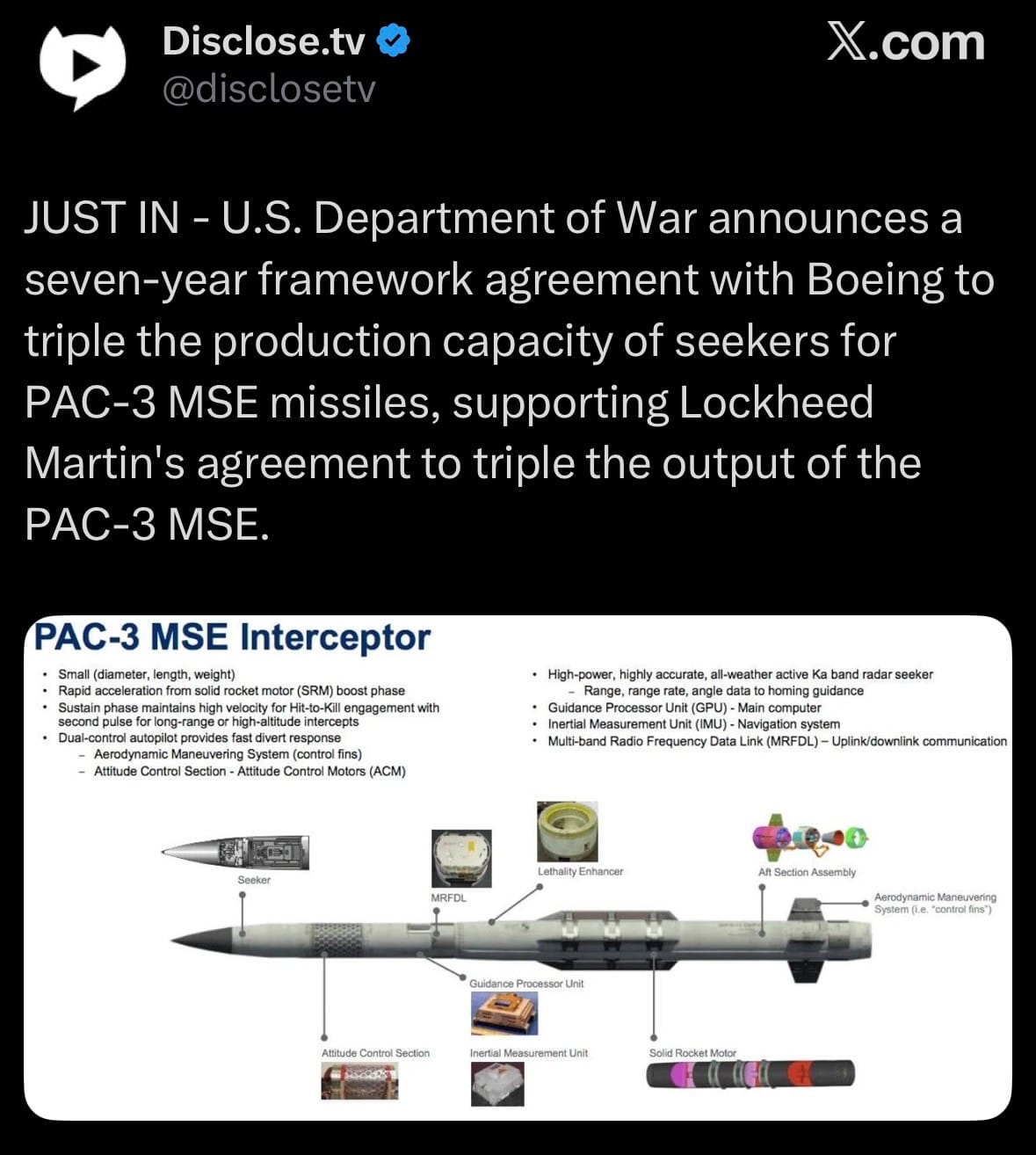
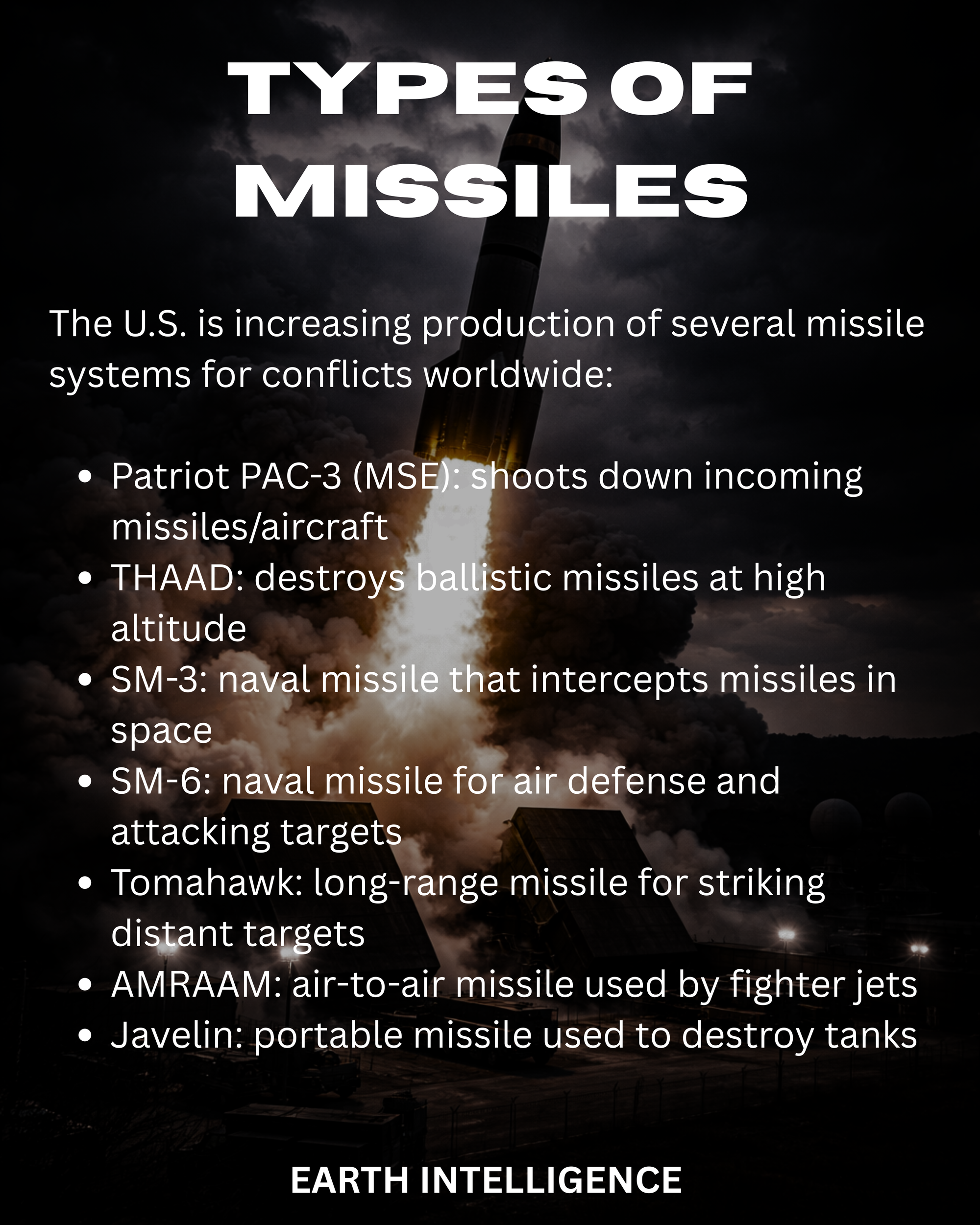
- Meanwhile, NATO countries and the U.S. are pouring billions into defense production, especially missiles, while artificial intelligence continues to drive global dynamics with expanding data centers increasingly powered by nuclear energy; cutting-edge technology remains the fastest-moving sector on Earth and is now being integrated across all military battle spaces and command theaters, with the single greatest risk centered on potential disruptions to oil trade through the Strait of Hormuz.
Statistic:
- Largest public companies on Earth by market capitalization:
- 🇺🇸 NVIDIA: $4.271T
- 🇺🇸 Apple: $3.757T
- 🇺🇸 Alphabet (Google): $3.567T
- 🇺🇸 Microsoft: $2.745T
- 🇺🇸 Amazon: $2.260T
- 🇸🇦 Saudi Aramco: $1.776T
- 🇹🇼 TSMC: $1.771T
- 🇺🇸 Broadcom: $1.486T
- 🇺🇸 Meta Platforms: $1.465T
- 🇺🇸 Tesla: $1.430T
- 🇺🇸 Berkshire Hathaway: $1.032T
- 🇺🇸 Walmart: $994.47B
- 🇺🇸 Eli Lilly: $854.31B
- 🇺🇸 JPMorgan Chase: $796.64B
- 🇰🇷 Samsung: $788.44B
- 🇺🇸 Exxon Mobil: $669.93B
- 🇺🇸 Johnson & Johnson: $588.30B
- 🇨🇳 Tencent: $578.63B
- 🇺🇸 Visa: $575.53B
- 🇳🇱 ASML: $533.92B
- 🇺🇸 Costco: $442.34B
- 🇺🇸 Mastercard: $438.76B
- 🇺🇸 Oracle: $417.68B
- 🇺🇸 Micron Technology: $414.83B
- 🇨🇳 ICBC: $411.91B
History:
- The history of NASA (National Aeronautics and Space Administration) begins in the context of the Cold War and the race for technological and military superiority in space. It was officially established on July 29, 1958, by President Dwight D. Eisenhower, following the Soviet Union’s launch of Sputnik in 1957, which shocked the United States and demonstrated that space had become a new strategic domain. NASA was built from the earlier NACA (National Advisory Committee for Aeronautics), which had been focused on aeronautics research since 1915. In its early years, NASA’s mission was both scientific and geopolitical: to catch up with and surpass Soviet space capabilities. This led to the Mercury program (1958–1963), which successfully put the first Americans into space, followed by the Gemini program (1965–1966), which developed critical capabilities like spacewalks and orbital docking. The defining achievement came with the Apollo program, culminating in Apollo 11 in 1969, when Neil Armstrong and Buzz Aldrin became the first humans to land on the Moon. This marked the peak of the Space Race and established the United States as the dominant space power at the time.
- After the Moon landings, NASA shifted focus from short-term milestones to long-term infrastructure and scientific exploration. In 1981, NASA launched the Space Shuttle program, a partially reusable spacecraft designed to reduce launch costs and enable frequent missions. The Shuttle was used to deploy satellites, conduct scientific experiments, and build major orbital infrastructure, including the International Space Station (ISS), which began assembly in 1998 as a joint effort between the United States, Russia, Europe, Japan, and Canada. During this period, NASA also expanded robotic exploration, sending probes and rovers across the solar system, including missions to Mars, Jupiter, Saturn, and beyond. However, the Shuttle program faced major setbacks with the Challenger disaster in 1986 and the Columbia disaster in 2003, highlighting the risks and complexity of human spaceflight. The Shuttle program was eventually retired in 2011, marking the end of an era of U.S. government-operated human launch systems.
- Today, NASA operates in a new era defined by partnerships with private companies, deep space exploration, and advanced scientific missions. Rather than building all systems internally, NASA now works closely with companies like SpaceX, Boeing, and others through programs such as Commercial Crew, which returned U.S. human launch capability in 2020 with SpaceX’s Crew Dragon. NASA’s current flagship initiative is the Artemis program, which aims to return humans to the Moon and establish a sustained presence there as a stepping stone to Mars. The agency also continues to lead in robotic exploration with missions like the Mars rovers (Curiosity, Perseverance) and space telescopes such as the James Webb Space Telescope (launched in 2021). While NASA remains a central player in space exploration, the landscape has shifted: private companies now handle a growing share of launch and infrastructure, while NASA focuses on science, deep space missions, and long-term exploration strategy. From its origins as a Cold War response agency to its current role as a leader in global space exploration and innovation, NASA has been one of the most influential organizations in the history of science, technology, and human expansion beyond Earth.
Image of the day:

Thanks for reading! Earth is complicated, we make it simple.
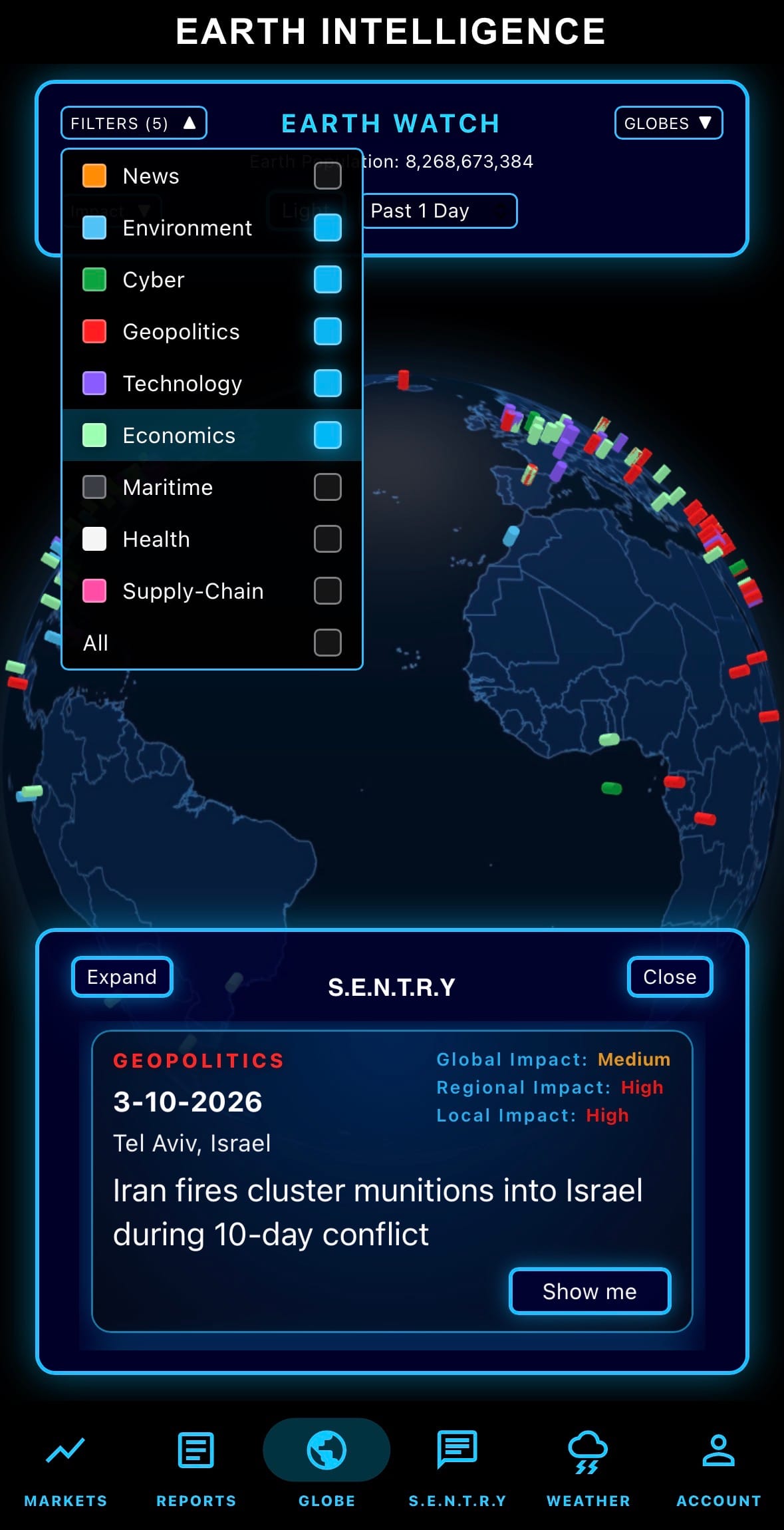
- Click below if you’d like to view our free EARTH WATCH globe:
- Download our mobile app:




Click below to view our previous newsletters:

Support/Suggestions Email:
support@earthintel.io