Thursday☕️

Trending:
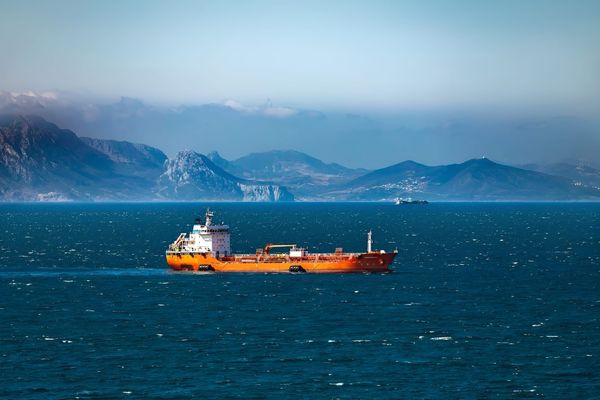
- As of April 9, 2026, Iran is halting all traffic in the Strait of Hormuz in response to Israeli strikes on Lebanon, directly testing the fragile two-week ceasefire deal that was agreed upon just one day ago.

- The move threatens to immediately re-close the critical waterway that had only begun reopening under the ceasefire terms. Iran stated the halt will remain in effect until Israeli attacks on Lebanon stop. This escalation has raised serious concerns about the stability of the ceasefire and the risk of renewed disruption to global oil and gas flows.

Economics & Markets:
Environment & Weather:
Science & Technology:
- On April 8, 2026, San Antonio-based Darkhive announced that the U.S. Department of Defense has awarded it a $49.7 million contract through the APFIT program to accelerate delivery of its advanced autonomous systems.
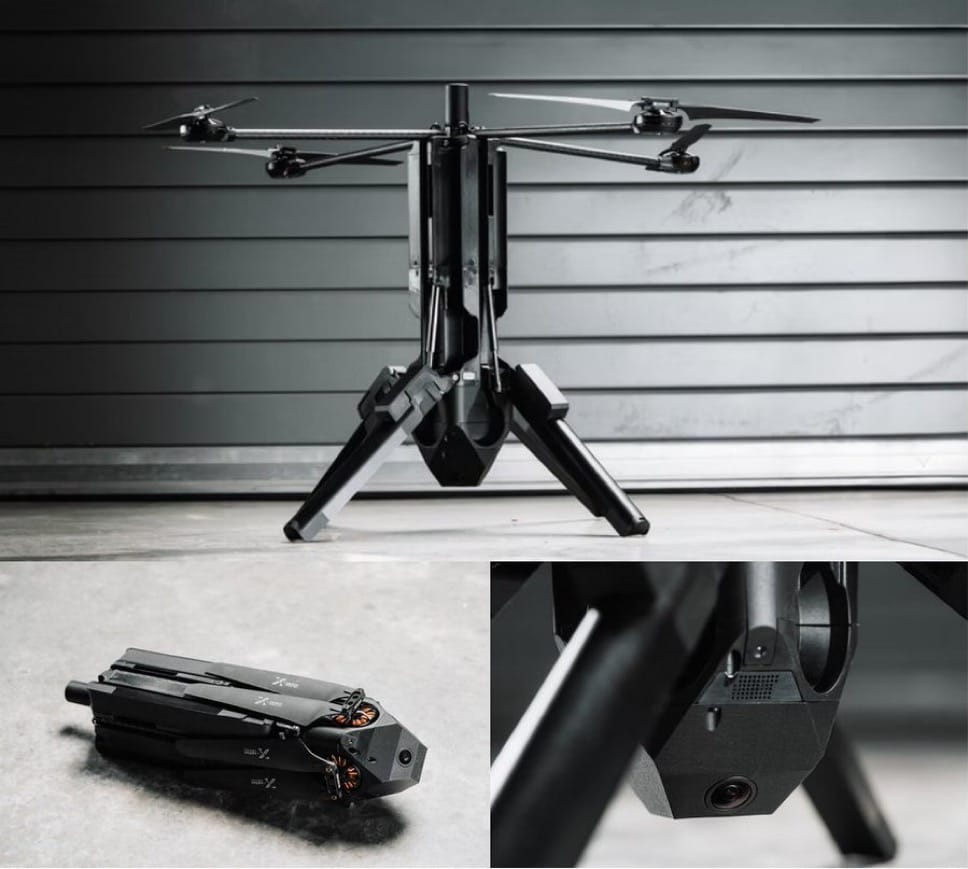
- The contract will help scale production of Darkhive’s OBELISK, a short-range autonomous reconnaissance drone with 45 minutes of flight time, to meet growing demand across U.S. military services.
Claude Agents:
- On April 8, 2026, Anthropic introduced Claude Managed Agents, a new platform that makes it easy to build and deploy AI agents at scale.
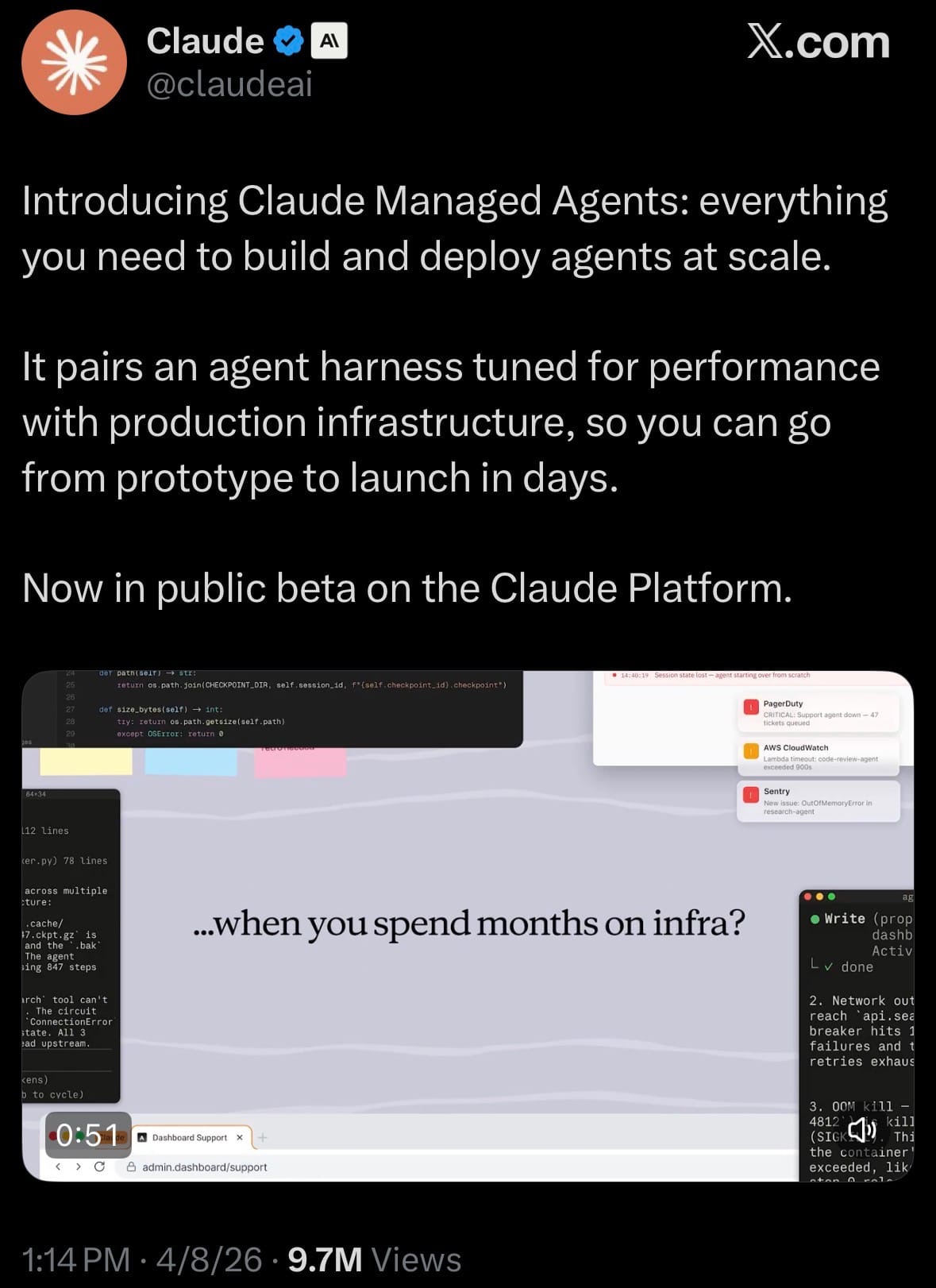
- It combines a high-performance agent harness with production-ready infrastructure, allowing users to move from prototype to full deployment in just days. The feature is now available in public beta on the Claude Platform.
Space:
- On April 9, 2026, China successfully launched SatNet LEO Group 21 using a Long March 6A rocket from the Taiyuan Satellite Launch Center.
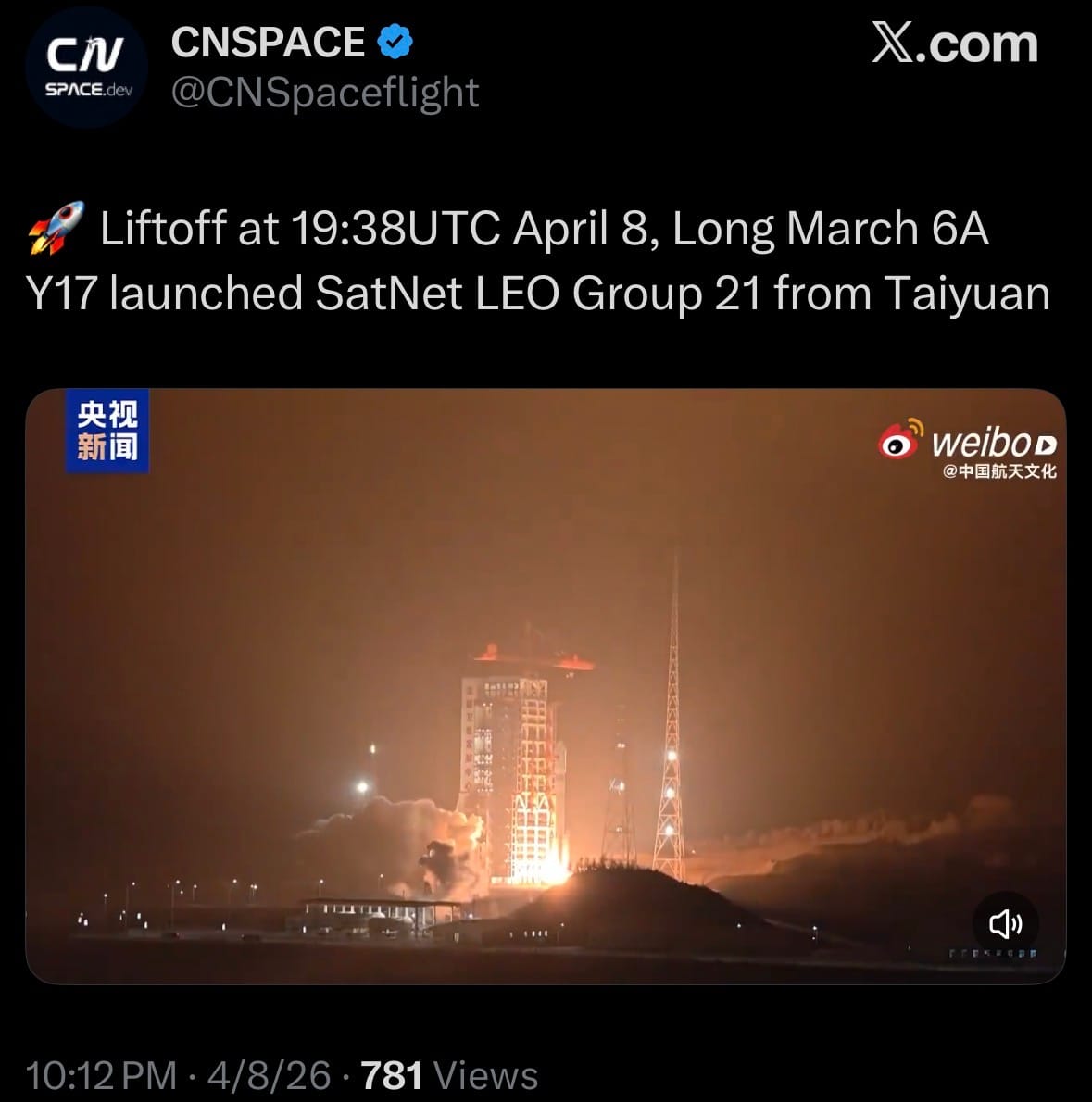
- The mission deployed a batch of satellites (reported as 5 Hulianwang Digui satellites) into low-Earth orbit for China’s state-owned GuoWang (SatNet) broadband megaconstellation. This continues China’s rapid buildup of its national satellite internet network aimed at providing global high-speed connectivity.
Statistic:
- Largest public financial service companies by market capitalization:
- 🇺🇸 JPMorgan Chase: $830.60B
- 🇺🇸 Visa: $595.68B
- 🇺🇸 Mastercard: $452.57B
- 🇨🇳 ICBC: $409.20B
- 🇺🇸 Bank of America: $372.32B
- 🇨🇳 China Construction Bank: $352.86B
- 🇨🇳 Agricultural Bank of China: $337.93B
- 🇬🇧 HSBC: $312.77B
- 🇺🇸 Morgan Stanley: $279.49B
- 🇺🇸 Goldman Sachs: $268.78B
- 🇨🇳 Bank of China: $268.69B
- 🇺🇸 Wells Fargo: $261.22B
- 🇨🇦 Royal Bank of Canada: $236.60B
- 🇺🇸 American Express: $217.20B
- 🇺🇸 Citigroup: $216.02B
- 🇦🇺 Commonwealth Bank: $213.46B
- 🇯🇵 Mitsubishi UFJ Financial: $208.03B
- 🇪🇸 Santander: $175.83B
- 🇺🇸 Charles Schwab: $169.43B
- 🇨🇦 Toronto-Dominion Bank: $166.49B
- 🇨🇳 CM Bank: $158.94B
- 🇮🇳 HDFC Bank: $139.10B
- 🇯🇵 Sumitomo Mitsui Financial Group: $137.32B
- 🇯🇵 SoftBank: $132.47B
- 🇪🇸 BBVA: $131.77B
History:
- The modern shipping container, which transformed global trade, originated from a simple but powerful idea in the mid-20th century: standardizing cargo to eliminate inefficiencies in loading and transport. Before containers, goods were shipped as “break-bulk cargo,” meaning individual items were manually loaded and unloaded, a slow, expensive, and theft-prone process. In 1956, American trucking entrepreneur Malcom McLean revolutionized the system by launching the first container ship, the Ideal X, which carried 58 standardized metal containers from New Jersey to Texas. This innovation drastically reduced loading times—from days to hours—and cut shipping costs by over 90% in some cases. Throughout the late 1950s and 1960s, McLean’s company (Sea-Land) and others expanded container use, while global standards began forming. In 1961, the International Organization for Standardization (ISO) introduced standardized container sizes (notably 20-foot and 40-foot units, now called TEU and FEU), allowing containers to be seamlessly transferred between ships, trucks, and trains. By the late 1960s and early 1970s, containerization spread globally, with major ports like Rotterdam, New York, and Singapore building specialized container terminals, fundamentally reshaping port infrastructure and labor dynamics.
- From the 1970s onward, shipping containers became the backbone of globalization, enabling just-in-time supply chains and the rapid expansion of international trade. Ports evolved into highly automated logistics hubs, and container ships grew dramatically in size, from a few hundred containers to today’s ultra-large vessels carrying over 20,000 TEUs. The system also enabled the rise of manufacturing hubs in Asia, particularly China after its economic reforms in 1978, by making long-distance shipping cheap and reliable. In the 1990s and 2000s, digital tracking, barcoding, and GPS systems were integrated, allowing real-time visibility of cargo across global networks. The 2010s introduced further automation, including robotic cranes and AI-driven logistics optimization, while also exposing vulnerabilities such as supply chain disruptions during events like the COVID-19 pandemic (2020–2022) and incidents like the Ever Given blockage of the Suez Canal in 2021, which halted nearly 12% of global trade temporarily. By 2026, the shipping container system is a highly optimized, tech-driven global infrastructure, integrating IoT sensors, predictive analytics, and increasingly autonomous port operations, while also facing new pressures from geopolitical tensions, reshoring trends, and environmental regulations pushing for greener shipping solutions like alternative fuels and more efficient vessel designs.
Image of the day:

Thanks for reading! Earth is complicated, we make it simple.
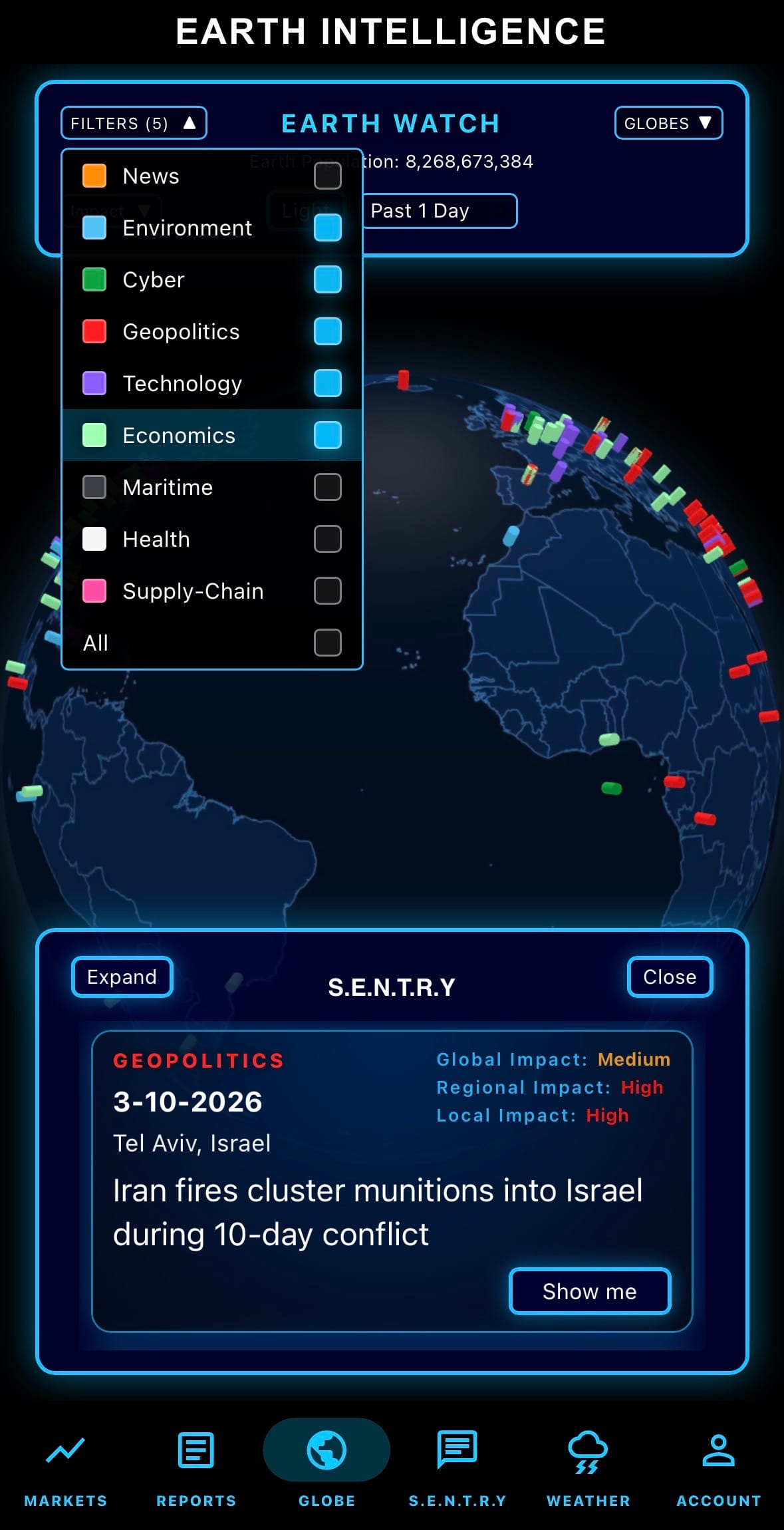
- Click below if you’d like to view our free EARTH WATCH globe:
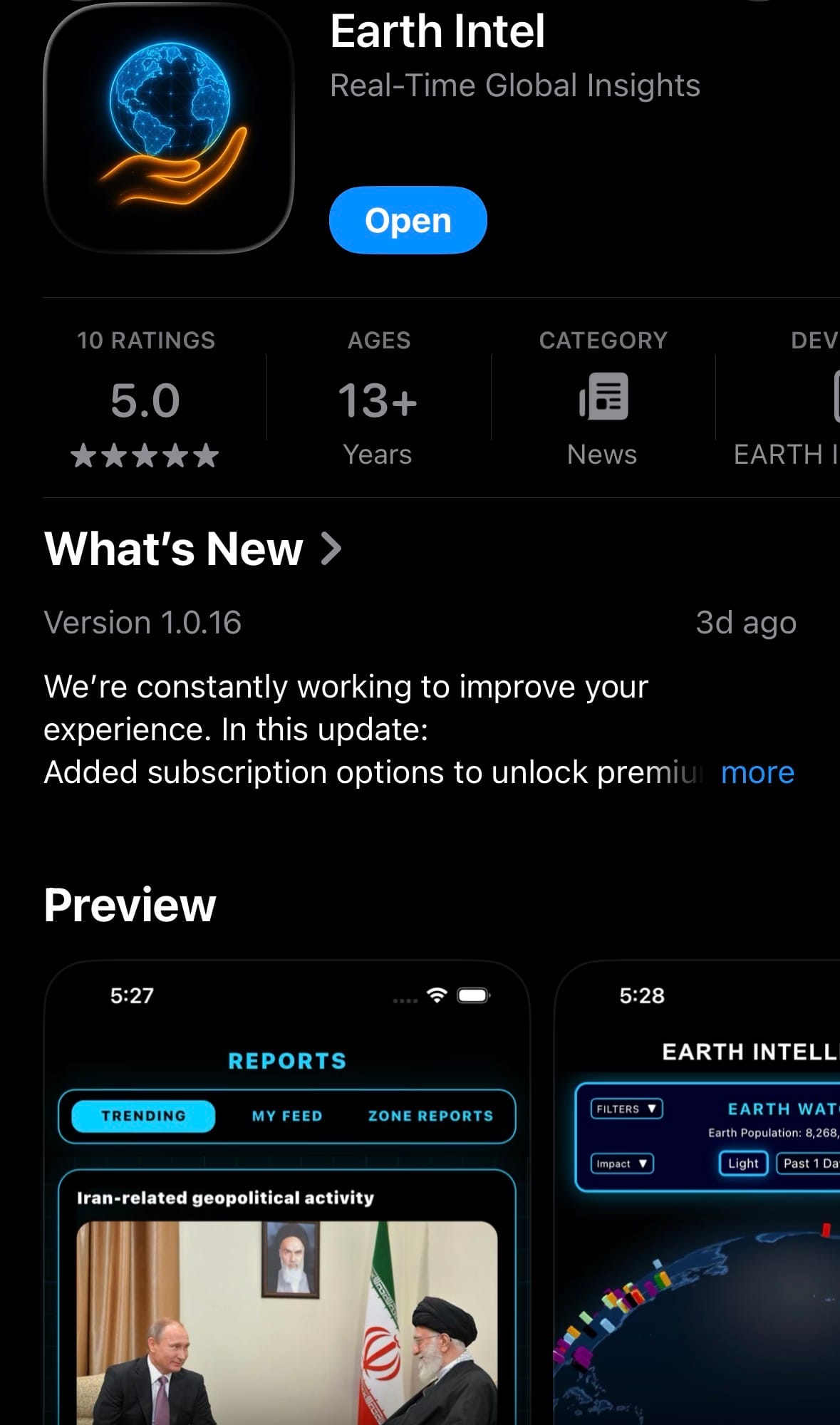
- Download our mobile app:


Click below to view our previous newsletters:
Support/Suggestions Email:
support@earthintel.io