Tuesday☕️

Trending:
- On December 1, 2025, the National Shooting Sports Foundation announced that the FBI's National Instant Criminal Background Check System processed 165,183 firearms-related background checks on Black Friday, November 28, contributing to a weekly total of 530,156 checks for the period from November 22 to 28. This figure represents a 13.6% decrease from the 613,380 checks recorded for the same week in 2024, reflecting a continued high volume of transactions despite the decline. The NSSF, which adjusts FBI data to focus on retail firearm sales by excluding checks for permits, renewals, and other non-purchase activities, attributed the spread-out demand to retailers extending sales promotions throughout the week to avoid overwhelming the system.

- The FBI's NICS, operated through the Criminal Justice Information Services Division, provided responses to 94% of federal background checks within minutes on Black Friday, enabling efficient processing amid the surge. This rapid turnaround supports Second Amendment rights for eligible buyers while screening out prohibited persons based on federal and state criteria, such as felony convictions or domestic violence restraining orders. The system handled the day's volume without reported delays exceeding typical peaks, though the overall 2025 year-to-date checks remain elevated compared to pre-2020 averages, amid ongoing debates over gun access, public safety, and industry sales trends.
Economics & Markets:
- Yesterday’s U.S. stock market:

- Yesterday’s commodity market:
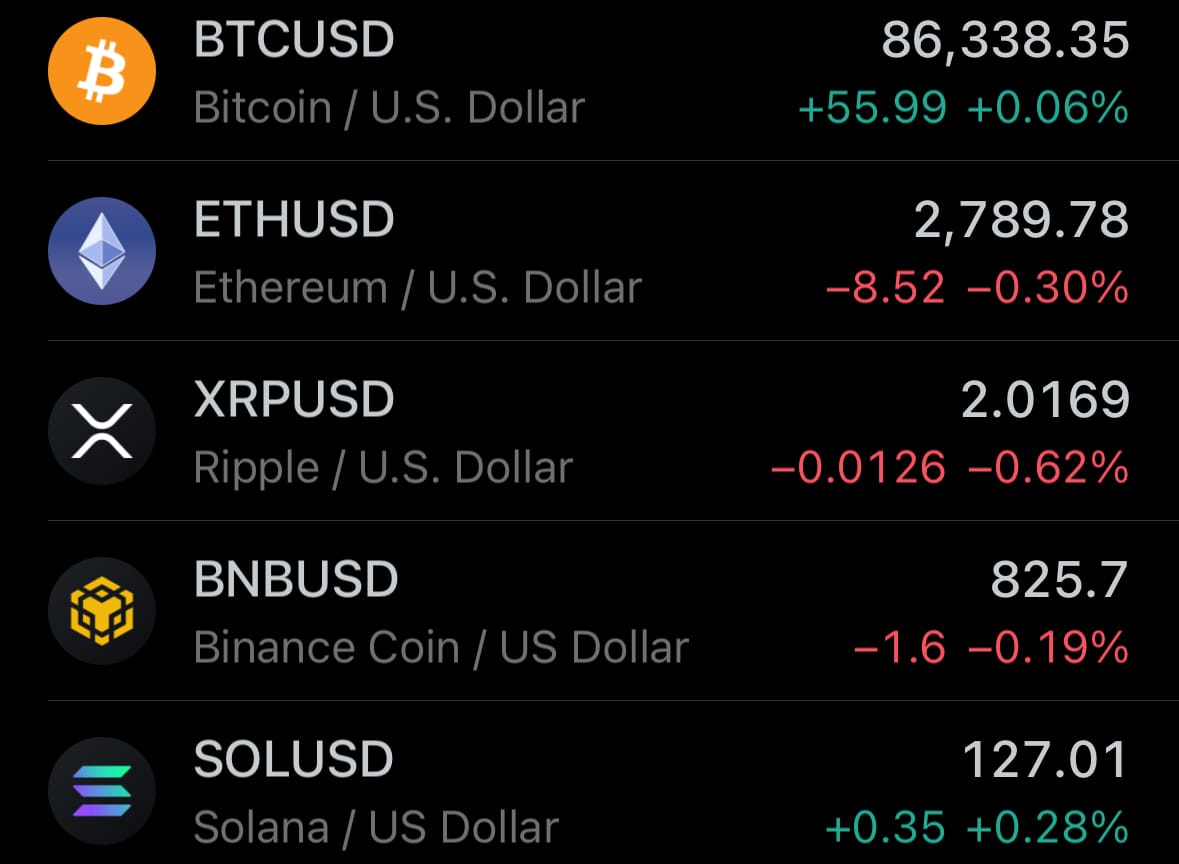
- Yesterday’s crypto market:
Geopolitics & Military Activity:
- On December 1, 2025, Russia's Defense Ministry claimed that its Tsentr Group forces had taken full control of Pokrovsk in Ukraine's Donetsk Oblast, a city that served as a major rail and road hub for Ukrainian logistics before the war. Kremlin spokesman Dmitry Peskov confirmed the announcement, citing footage of Russian troops raising a flag on Shibankov Square near the Industrial Institute and city administration buildings, following months of fighting since mid-2024. Prewar home to about 60,000 people, most of whom have fled, Pokrovsk lies 50 km northwest of Donetsk; Russian officials described the advance as enabling further operations toward Kramatorsk and Sloviansk. Ukrainian military statements on December 1 reported repelling over 40 Russian assaults in the area on November 30, with no confirmation of the city's loss and indications of continued defensive operations amid a challenging situation.
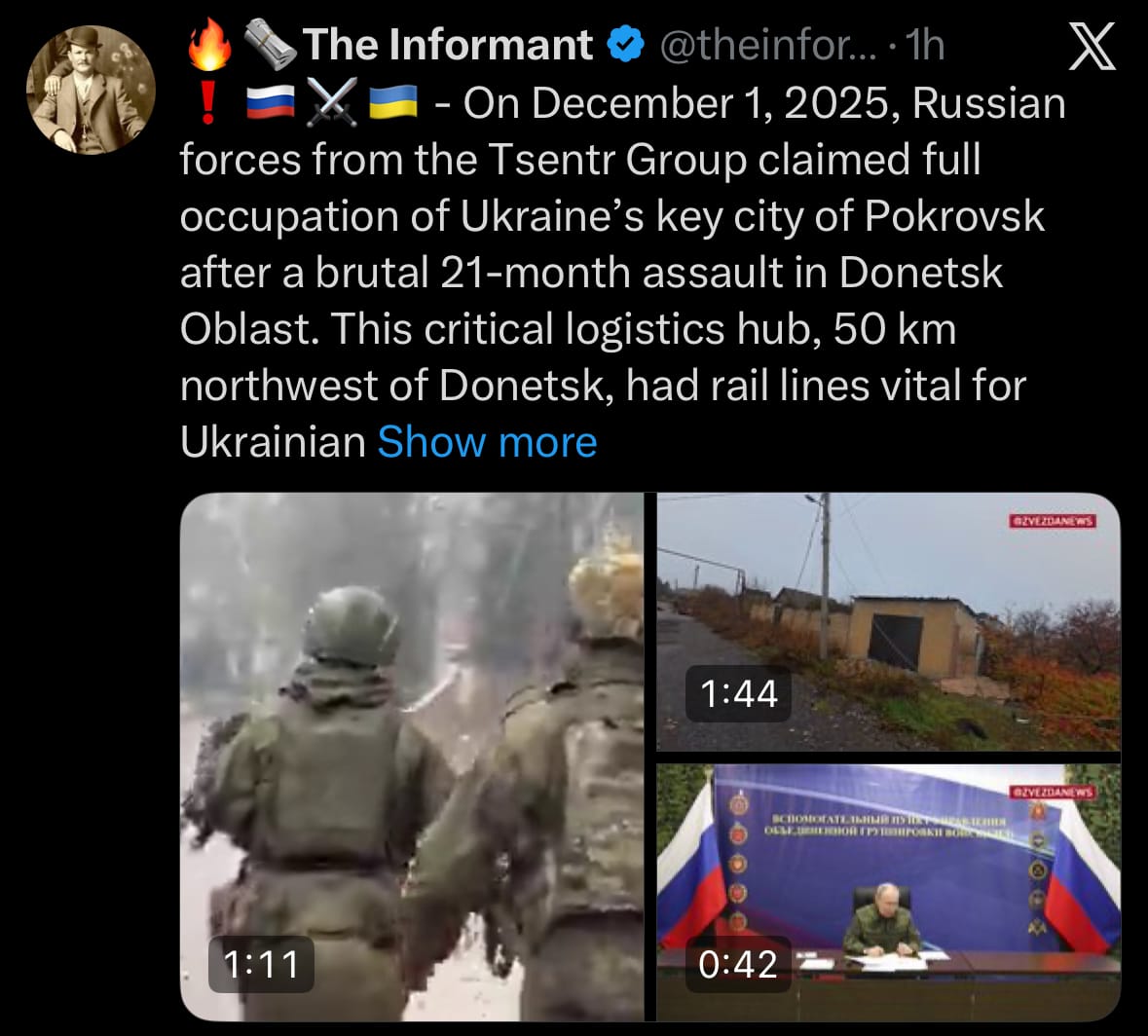
- The Russian claim followed an August 2025 advance that allowed forces to push 22.5 km toward Dobropillya and Bilozerske, partially encircling Ukrainian positions in nearby Myrnohrad and disrupting supply lines to Kramatorsk and Sloviansk. President Vladimir Putin received the report on November 30 at a command post, alongside claims of capturing Vovchansk in Kharkiv Oblast, with General Valery Gerasimov stating it would support broader goals in Donbas. November 2025 saw Russian territorial gains of about 700 square kilometers across 86 settlements—the largest monthly advance since Avdiivka in early 2024—though Ukrainian reports estimate 14,000–15,000 Russian casualties per month in the sector.
Environment & Weather:
- On December 1, 2025, an X1.9-class solar flare erupted from Active Region 4299 on the Sun's northeastern limb at 02:49 UTC, lasting from 02:27 to 03:05 UTC and classified as R3 (strong) on the radio blackout scale. The event ionized Earth's upper atmosphere, causing shortwave radio blackouts over Australia and parts of the western Pacific, with a Type II radio emission detected at 02:43 UTC indicating an associated coronal mass ejection (CME) traveling at an estimated 988 km/s. Observed via NASA's Solar Dynamics Observatory and SOHO coronagraphs, the partial halo CME primarily directed eastward away from Earth due to the region's position, though a secondary filament eruption nearby contributed to the ejecta.
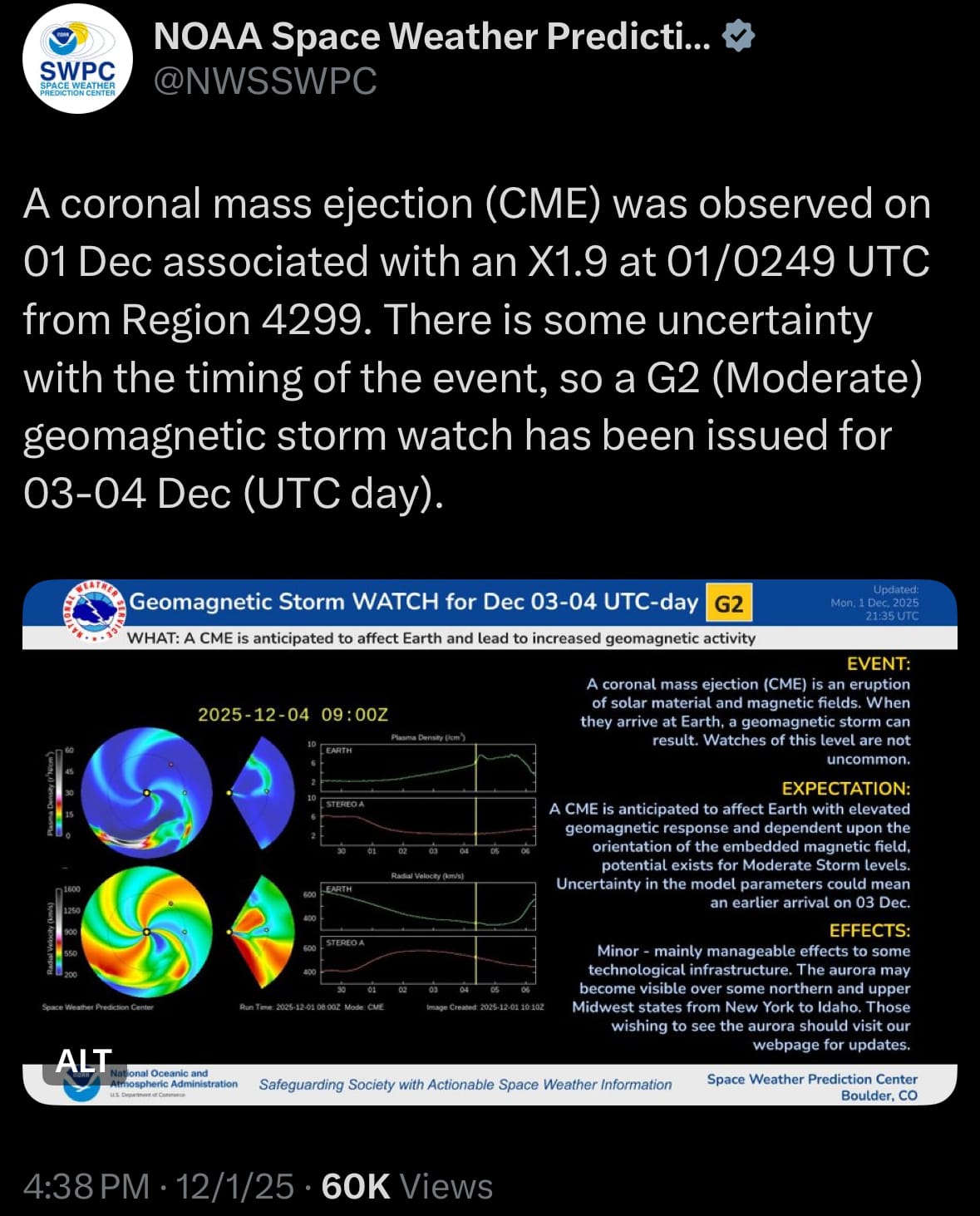
- Due to uncertainties in the CME's travel time and potential for a glancing blow, the NOAA Space Weather Prediction Center issued a G2 (moderate) geomagnetic storm watch for December 3-4, 2025, with possible effects including auroras visible at mid-latitudes, minor disruptions to power grids, satellite operations, and high-frequency radio communications. Solar activity is forecast to remain elevated with 30% chances of additional R3-R5 flares through December 4 from AR 4299 and the incoming AR 4294, a large beta-gamma-delta complex rotating into view; current solar wind speeds are around 426 km/s under waning coronal hole influences, with no immediate storms expected on December 2.
Space:
- On December 1, 2025, Arianespace successfully launched South Korea’s KOMPSAT-7 Earth-observation satellite on the Vega-C rocket (flight VV28) from the Guiana Space Centre in Kourou, French Guiana. Liftoff occurred at 17:21 UTC (14:21 local time). The four-stage solid-and-liquid-propellant Vega-C performed nominally, placing the satellite into a 567 km sun-synchronous orbit with separation confirmed approximately 45 minutes after launch. This was the sixth overall flight of Vega-C and its third in 2025; the mission carried KOMPSAT-7 as the sole payload.
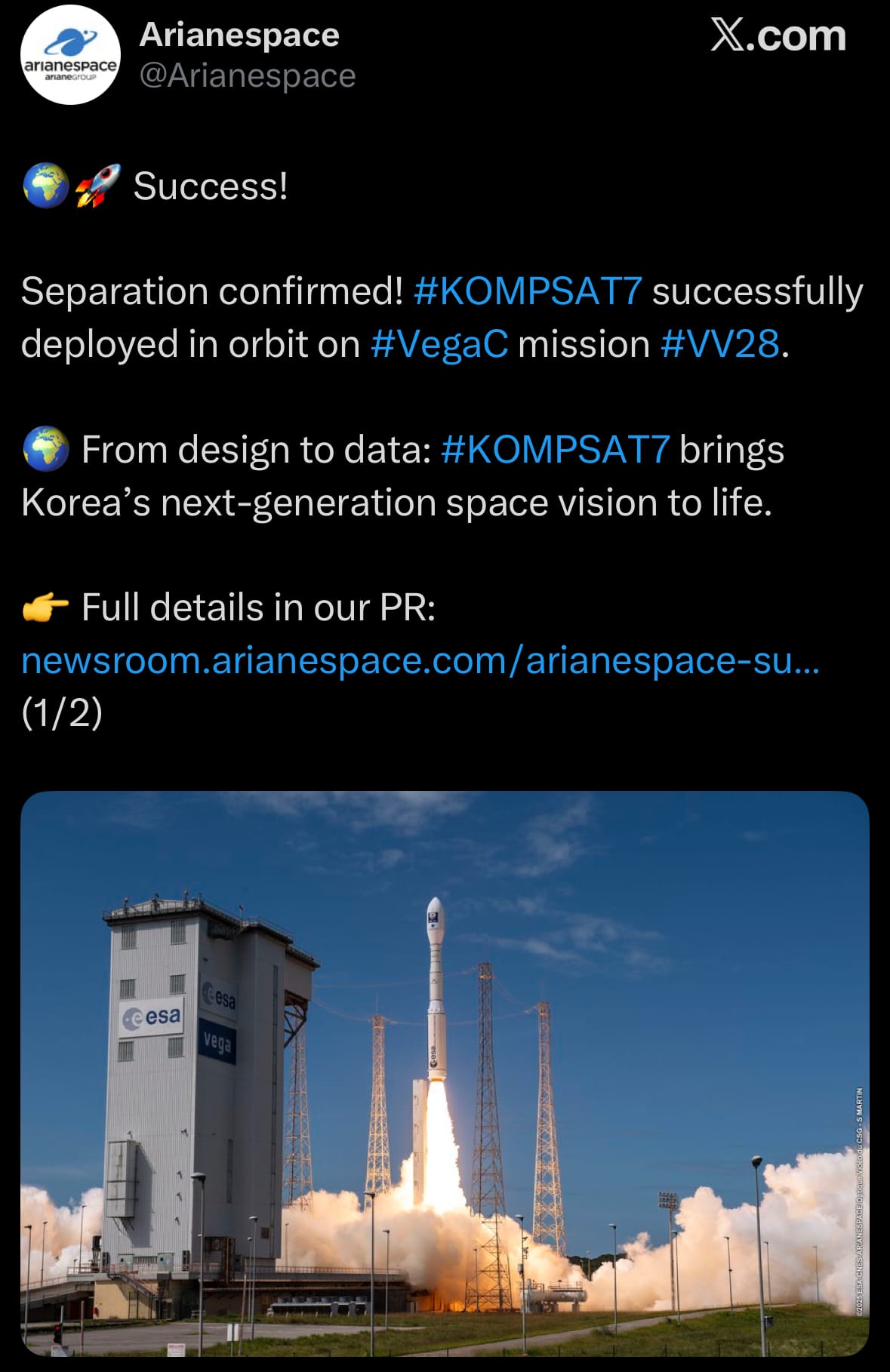
- KOMPSAT-7 (also called Arirang-7), developed by the Korea Aerospace Research Institute (KARI), is a 2,000 kg optical imaging satellite providing 0.3 m panchromatic and 1.2 m multispectral resolution. It is equipped with infrared sensors for fire and volcano monitoring, laser-based optical communication for high-speed data downlink, and a control-moment gyroscope for rapid retargeting. The satellite supports civilian applications including land management, disaster response and environmental monitoring, as well as national security & military tasks. It replaces and upgrades the capabilities of KOMPSAT-3A (launched in March 2025) and is designed for a minimum five-year operational life.
SpaceX launch:
- On December 1, 2025, SpaceX launched a Falcon 9 rocket carrying 29 Starlink satellites from Launch Complex 39A at NASA's Kennedy Space Center in Florida, marking the company's 152nd orbital mission of the year and the 98th dedicated to its broadband constellation. Liftoff occurred at 2:44 a.m. EST (07:44 UTC) during a predawn window, with the two-stage vehicle performing nominally through ascent and stage separation. The first stage, a previously flown booster on its fourth mission, executed a controlled landing on the droneship Just Read the Instructions in the Atlantic Ocean approximately eight minutes after launch, supporting SpaceX's reusable rocket program.
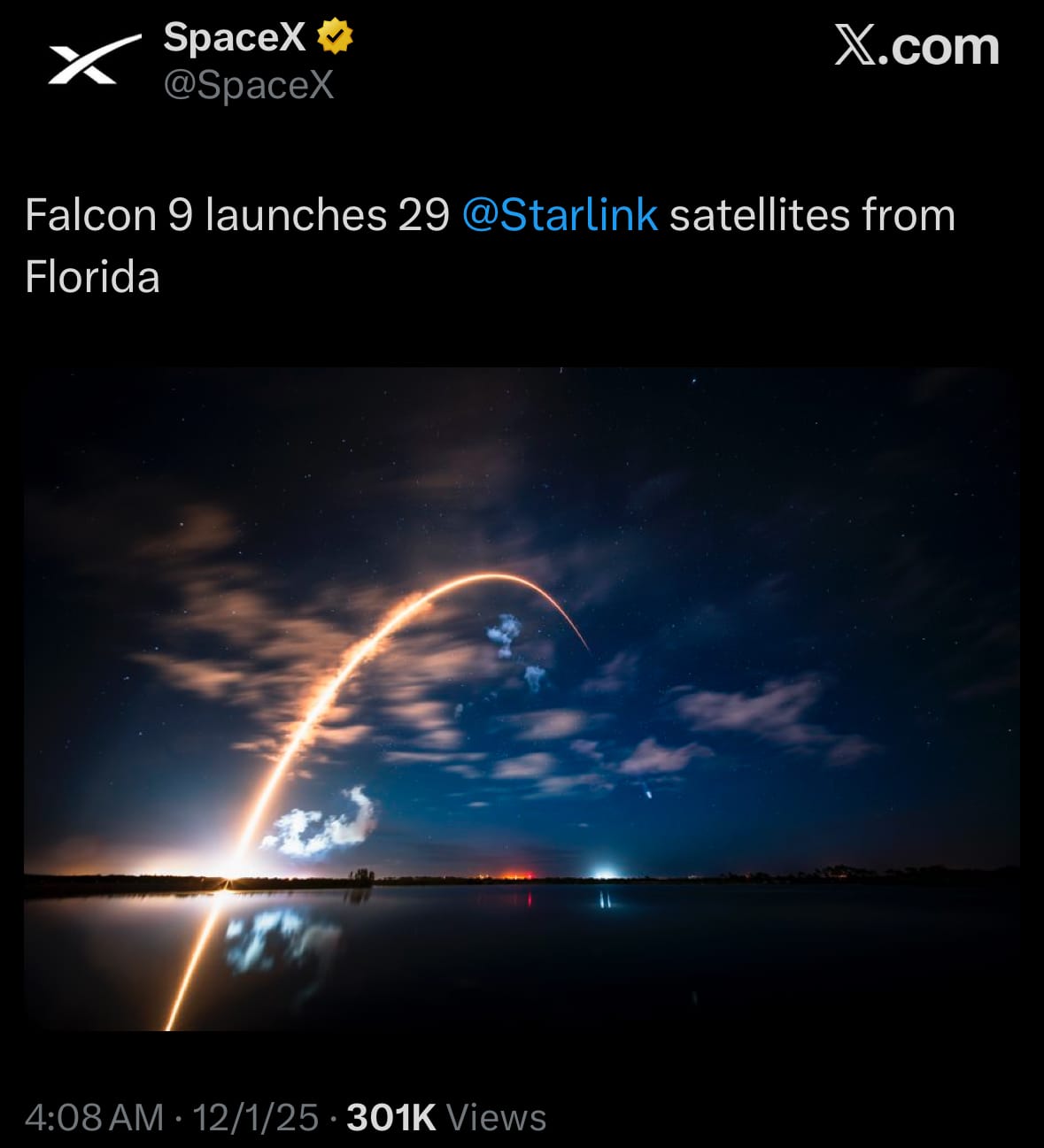
- The Starlink 6-86 mission deployed the satellites into low Earth orbit at an altitude of about 530 kilometers, where they will contribute to expanding global high-speed internet coverage, particularly in underserved regions. The operation underscores SpaceX's accelerated pace in 2025, surpassing prior annual records amid ongoing efforts to scale the constellation toward full operational capacity.
Statistic:
- Largest public banking companies on Earth by market capitalization:
- 🇺🇸 JPMorgan Chase: $849.45B
- 🇨🇳 Agricultural Bank of China: $395.45B
- 🇺🇸 Bank of America: $394.34B
- 🇨🇳 ICBC: $370.63B
- 🇨🇳 China Construction Bank: $357.00B
- 🇨🇳 Bank of China: $276.59B
- 🇺🇸 Wells Fargo: $273.57B
- 🇺🇸 Morgan Stanley: $268.93B
- 🇺🇸 Goldman Sachs: $245.46B
- 🇬🇧 HSBC: $244.99B
- 🇨🇦 Royal Bank Of Canada: $215.62B
- 🇺🇸 Citigroup: $189.02B
- 🇯🇵 Mitsubishi UFJ Financial: $183.09B
- 🇮🇳 HDFC Bank: $181.71B
- 🇨🇳 CM Bank: $170.81B
- 🇺🇸 Charles Schwab: $168.25B
- 🇦🇺 Commonwealth Bank: $166.05B
- 🇪🇸 Santander: $159.46B
- 🇨🇦 Toronto Dominion Bank: $144.04B
- 🇺🇸 Capital One: $140.93B
- 🇪🇸 Banco Bilbao Vizcaya Argentaria: $124.73B
- 🇨🇭 UBS: $121.25B
- 🇸🇬 DBS Group: $118.32B
- 🇯🇵 Sumitomo Mitsui Financial Group: $117.96B
- 🇮🇹 UniCredit: $113.96B
History:
- Energy history stretches from basic combustion to the physics of the atom, but alongside the documented story runs a shadow-line of historical mysteries—artifacts that raise questions about what earlier civilizations may have understood. The confirmed arc begins with fire and biomass: wood, charcoal, animal labor, windmills, and water wheels. By the 17th and 18th centuries, Europe’s hunger for power pushes deep into coal, birthing the steam engine through Newcomen’s and Watt’s designs—heat to motion, motion to industry. The 19th century electrifies the world: hydropower dams and coal-fired generators supply grids that turn cities into glowing circuits. Oil then becomes the master fuel of the 20th century—dense, portable, perfect for engines that reshape transportation. By mid-century, fossil fuels dominate everything: electricity, heat, industry, agriculture, chemicals, global trade. Nuclear power emerges from wartime physics into civilian reactors that generate astonishing energy from tiny amounts of uranium. Solar cells leap from space applications to industrial mass-production in the 2000s, plunging in cost as China scales manufacturing. Wind, geothermal, and hydropower expand into regional pillars of national grids. And today the global mix is a hybrid: coal and natural gas still supply the largest share; solar and wind are the fastest-growing; hydropower remains a backbone; and nuclear provides stable, carbon-free baseload in nations investing aggressively.
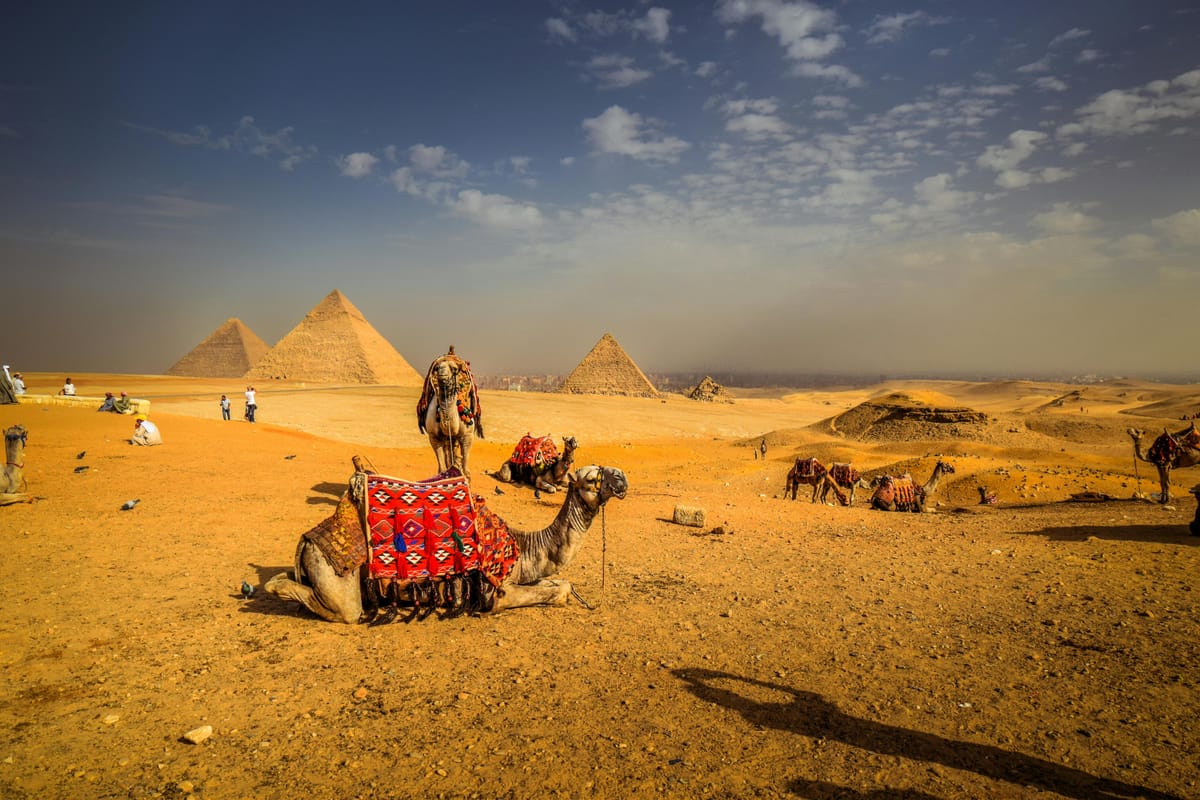
- But woven through history are strange anomalies—objects and monuments sometimes interpreted as hints of earlier energy knowledge. The Baghdad Battery, a 2,000-year-old clay jar with a copper cylinder and iron rod, looks eerily like a primitive electrochemical cell; whether it was truly a power source or just a storage vessel is debated, but the chemistry aligns with a simple battery. Ancient Greek texts describe the “aeolipile,” a steam-powered spinning device from the first century AD—essentially a tiny steam turbine long before industrialization. The pyramids of Egypt, aligned with astronomical precision and built with stone blocks quarried miles away, have inspired theories of lost engineering techniques. None of these artifacts confirm the existence of ancient large-scale energy systems, but they point to a persistent fact: across civilizations, humans repeatedly discover the edges of mechanical, chemical, and electrical power long before the modern era systematizes it. These mysteries sit outside mainstream engineering history, yet they remind us that the search for energy has always had an experimental, and sometimes forgotten, dimension.
- Today the frontier pushes into nuclear fission, small modular reactors, deep geothermal drilling, next-generation solar, hydrogen fuel cycles, and early steps toward fusion. At the same time, we’re wrestling with the hardest challenge in modern engineering: shifting a planet’s energy infrastructure—built on coal, oil, and gas—toward cleaner sources without collapsing the systems that feed, heat, transport, and power billions of people. From fire pits to fission reactors, from water wheels to solar farms, and from mysterious clay “batteries” to quantum-scale materials, the story of energy is a continuum of problem-solving: humanity learning, century after century, how to capture more of the universe and put it to work.
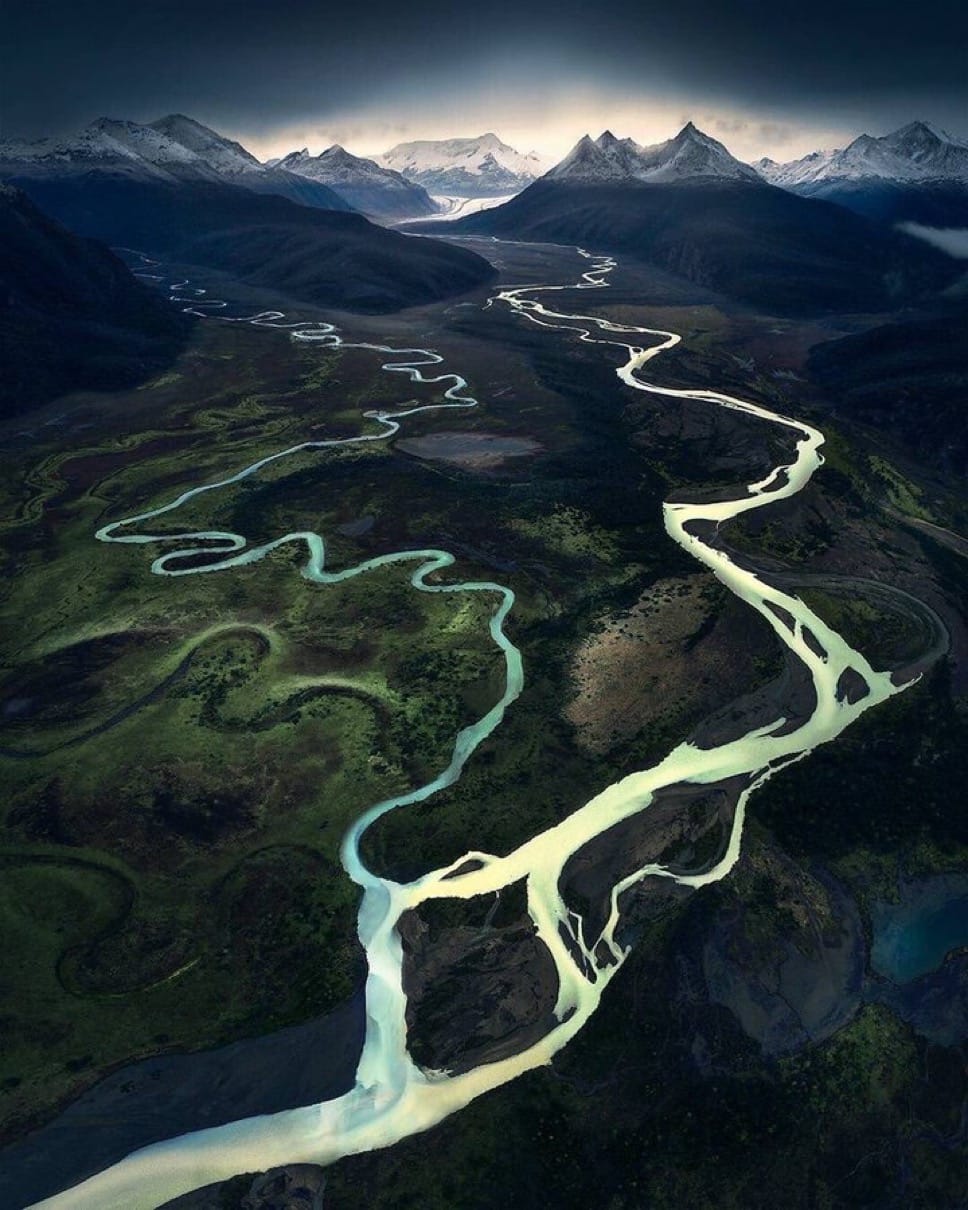
Image of the day:
Thanks for reading! Earth is complicated, we make it simple.
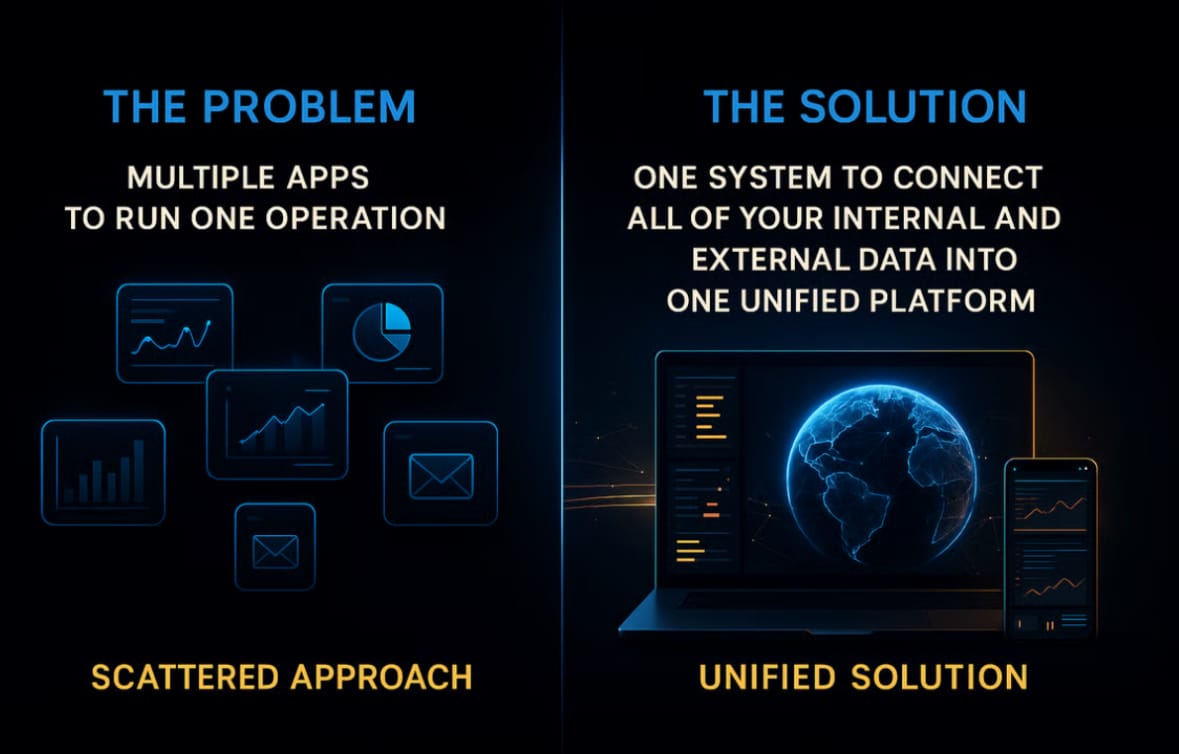

- Click below if you’d like to view our free EARTH WATCH globe:
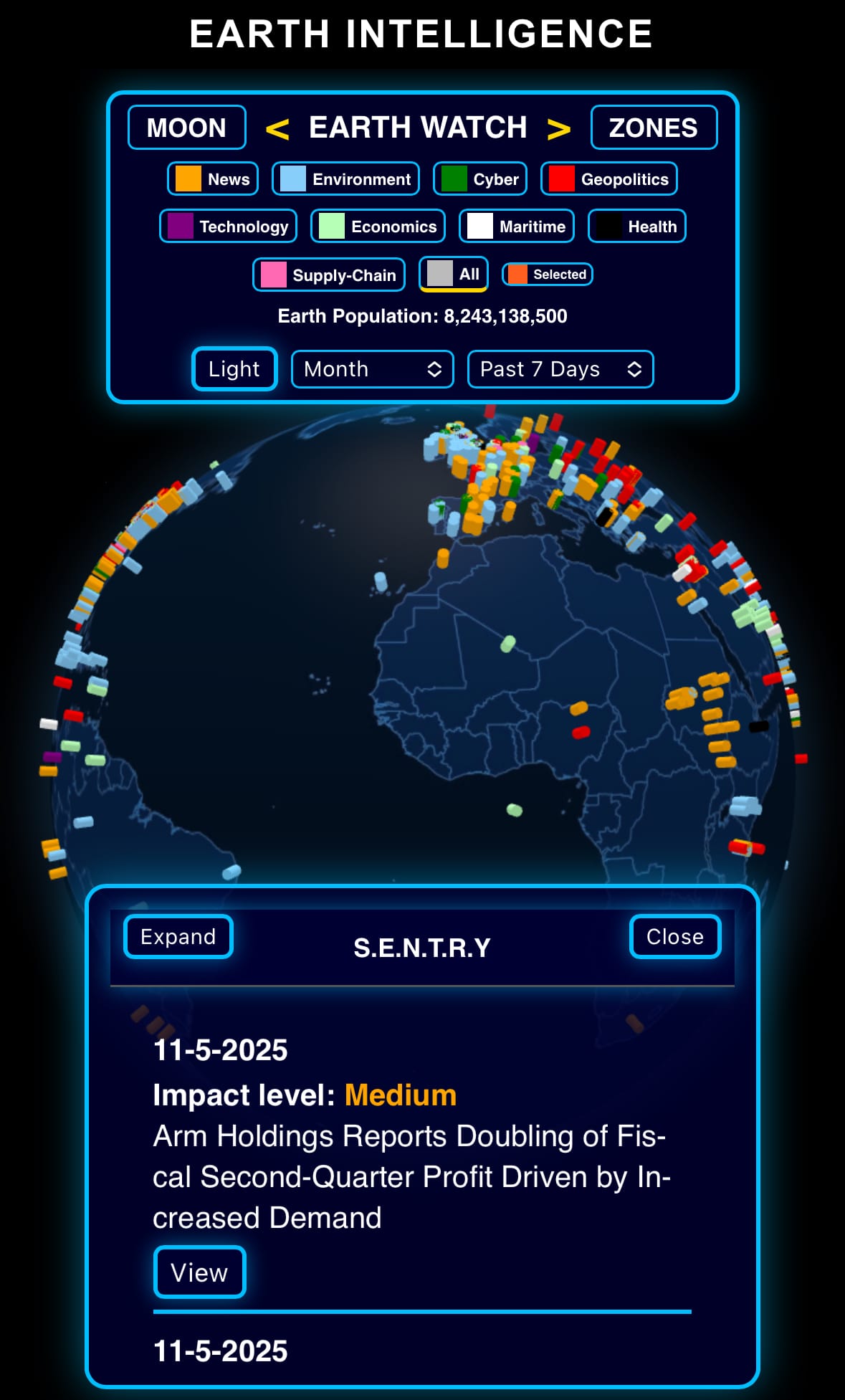
- Download our mobile app on the Apple App Store (Android coming soon):

Click below to view our previous newsletters:
Support/Suggestions Email:
earthintelligence@earthintel.news