Tuesday☕️

Trending:
- On February 23, 2026, Mexico’s Security Secretary Omar García Harfuch reported that at least 25 National Guard members were killed in six separate attacks by the Jalisco New Generation Cartel (CJNG) following a military raid that resulted in the death of cartel leader Nemesio “El Mencho” Oseguera Cervantes. The violence began after a Sunday operation in Tapalpa, Jalisco, where Oseguera Cervantes was wounded in a shootout with special forces and died en route to Mexico City, with U.S. intelligence aiding the mission against the cartel.
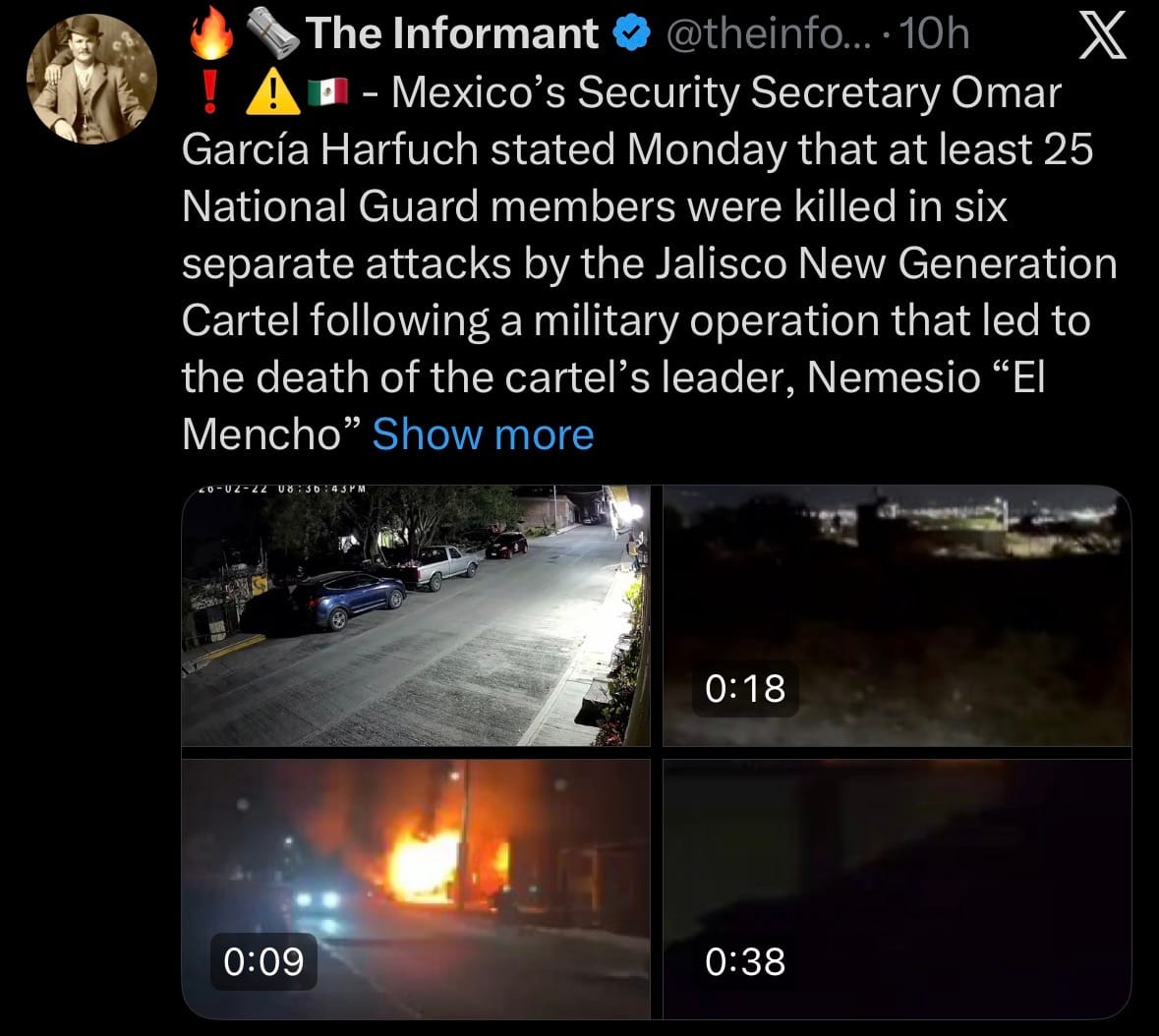
- Additionally, a prison guard and a state prosecutor’s office member were killed, while around 30 CJNG members died in retaliatory clashes involving road blockades, vehicle burnings, and arson on businesses across at least 20 states, raising the total death toll to at least 62.
Economics & Markets:
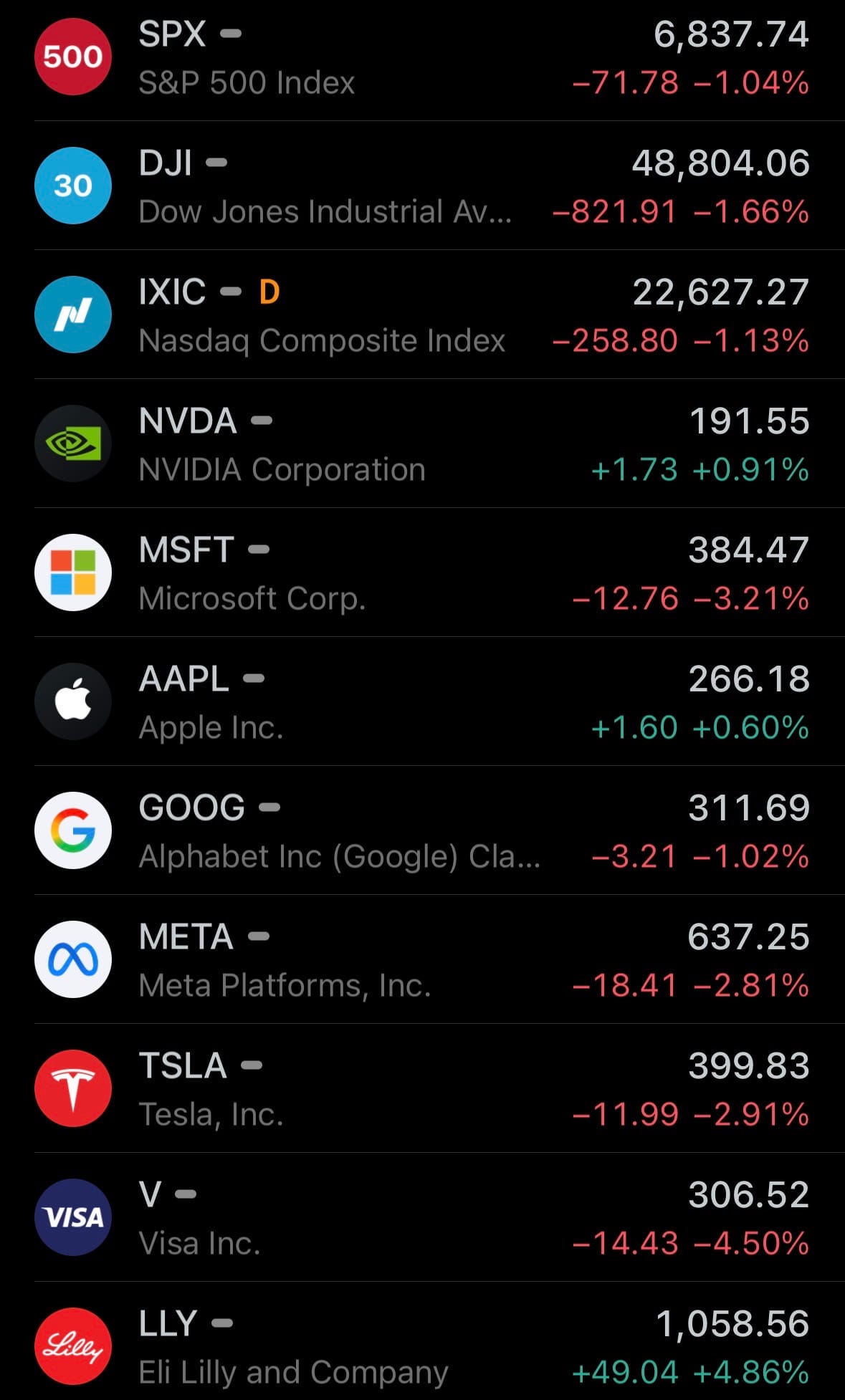
- Yesterday’s U.S. stock market:
- Yesterday’s commodity market:

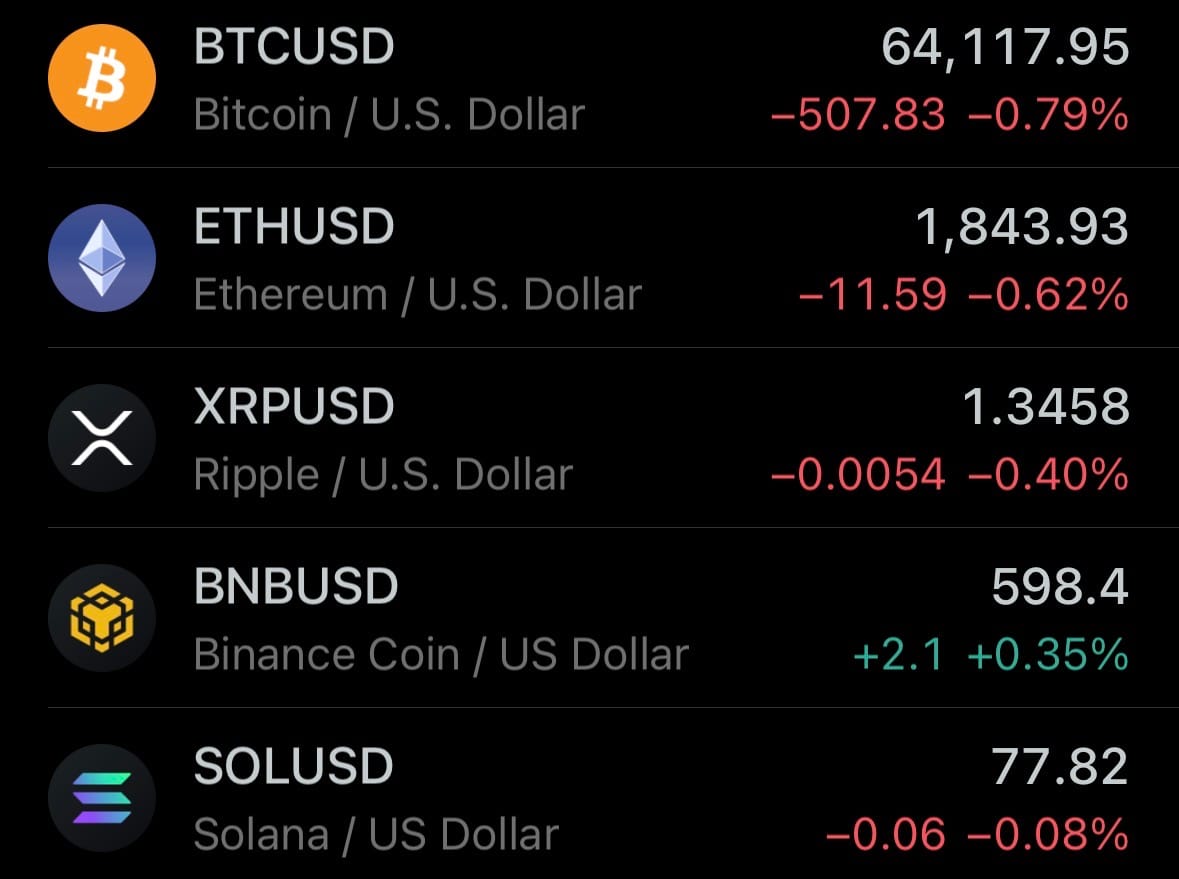
- Yesterday’s crypto market:
Geopolitics & Military Activity:
- On February 23, 2026, the Kaleikino oil pumping station near Almetyevsk in Russia's Tatarstan Republic was struck overnight by a Ukrainian long-range drone attack, as confirmed by SBU sources. The Transneft-operated facility blends crude from Western Siberia and the Volga region before feeding the Druzhba pipeline, a key route for Russian oil exports to Central Europe, especially Hungary and Slovakia.
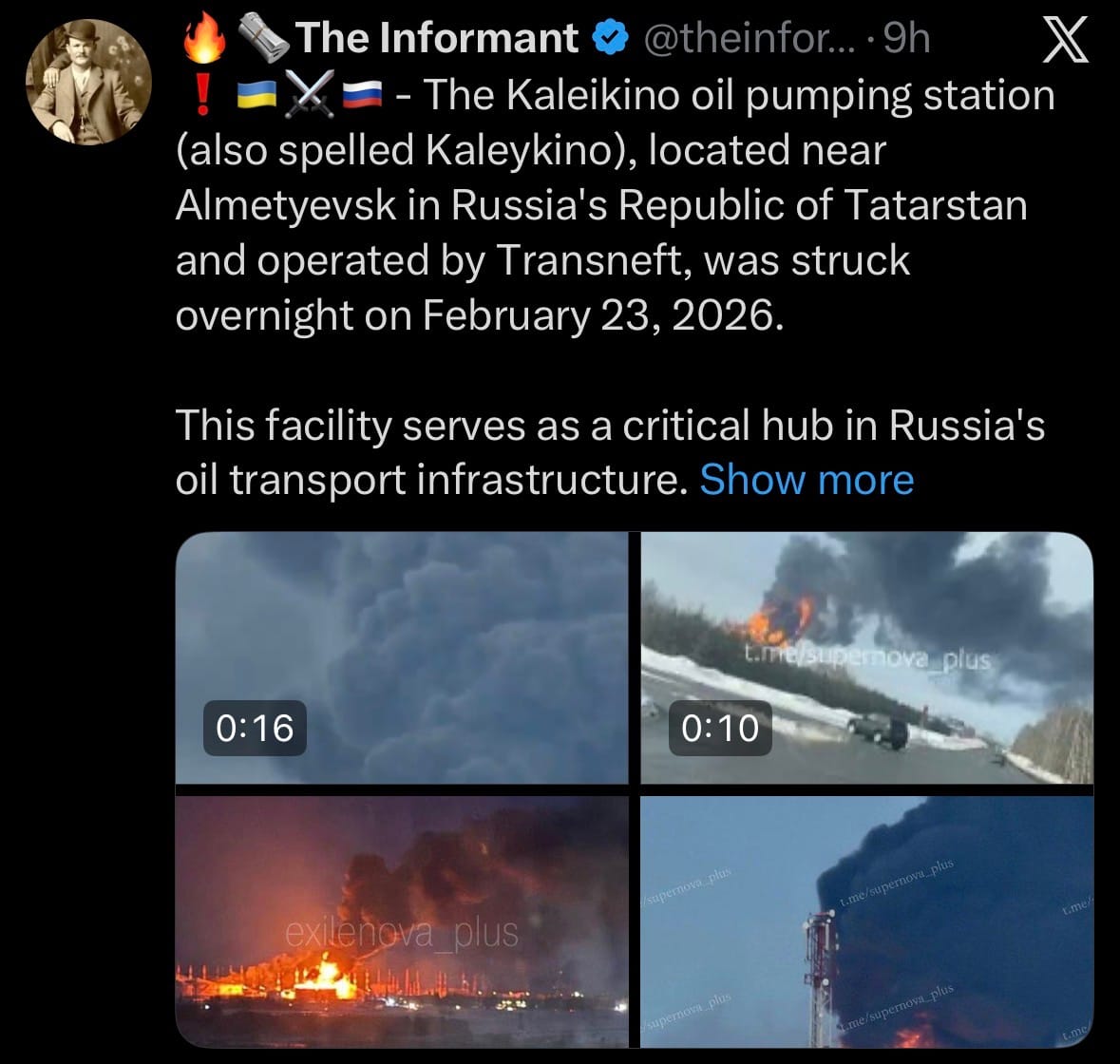
- Six explosions caused a major fire in oil storage tanks with thick black smoke, though Russian officials called it contained from drone debris with no casualties. Damage extent is unclear, but it risks further disrupting Druzhba flows; southern branch shipments to Hungary and Slovakia remain halted since late January 2026 due to prior Ukrainian pipeline damage.
Environment & Weather:
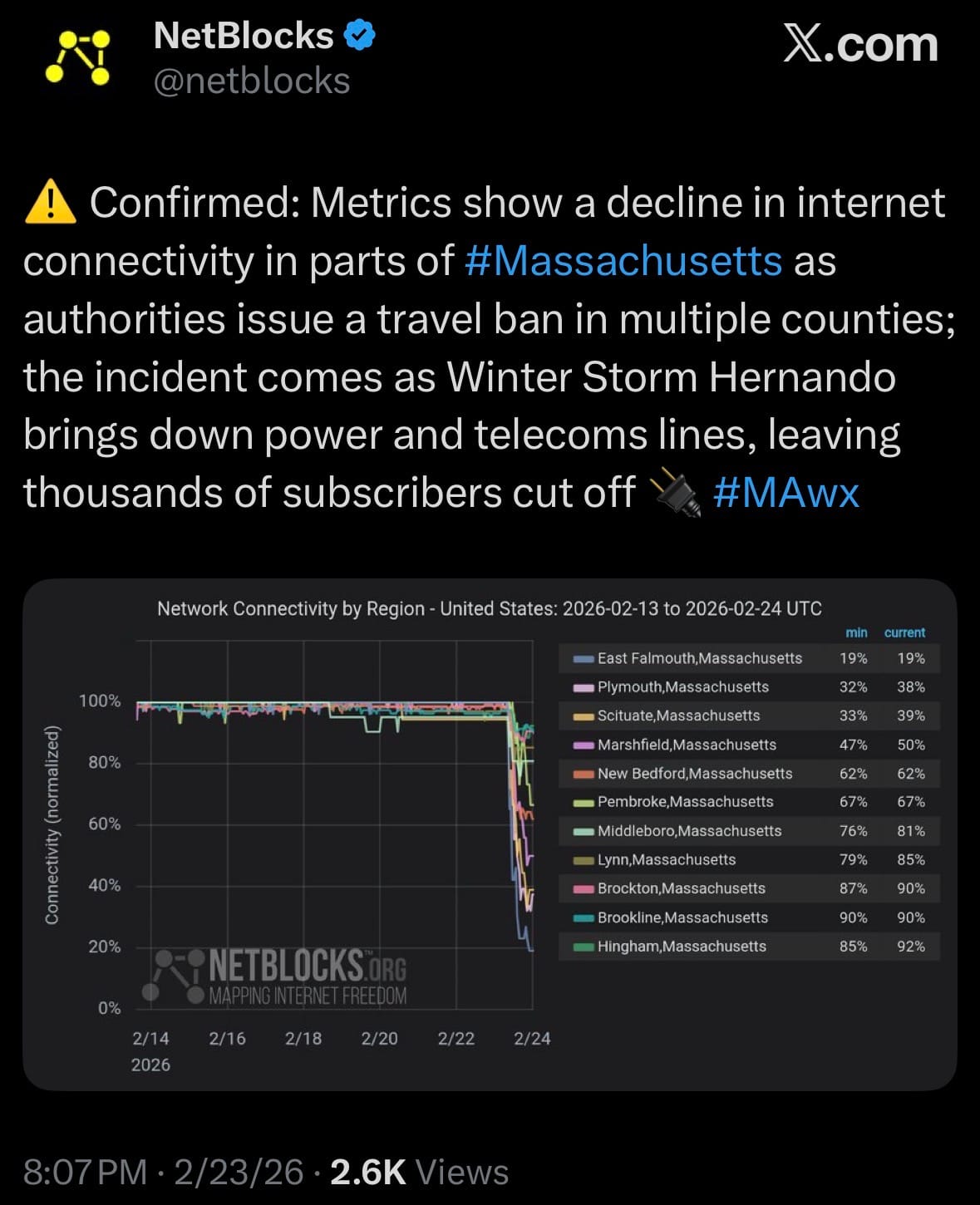
- On February 23, 2026, Winter Storm Hernando, a powerful bomb cyclone and nor'easter, is battering the Northeastern U.S. with heavy wet snow (up to 2–3 feet in places), blizzard conditions, and wind gusts over 50–70 mph, causing widespread downed trees, power lines, and telecom disruptions. In Massachusetts, over 280,000 customers remain without power—mostly in eastern areas like Plymouth and the South Shore—leading to reduced internet connectivity and travel bans in multiple counties.

- The storm has impacted states from Maryland to Maine, with peak East Coast outages exceeding 600,000 customers (including 93,000–127,000 in New Jersey), states of emergency declared in several states, school closures, road restrictions, and thousands of flight cancellations nationwide. Power restoration has started in some areas, but full recovery could take days as lingering winds and drifting snow continue into Tuesday across parts of the Northeast.
Science & Technology:
- On February 23, 2026, the U.S. Air Force and Northrop Grumman agreed to accelerate B-21 Raider production using $4.5 billion in authorized funding, boosting annual output by 25% and shortening delivery timelines while keeping the minimum program at 100 aircraft. Multiple B-21s are in production and flight testing at Palmdale, California, with performance exceeding expectations, software certification time cut by 50%, and next-day flight turnarounds achieved.
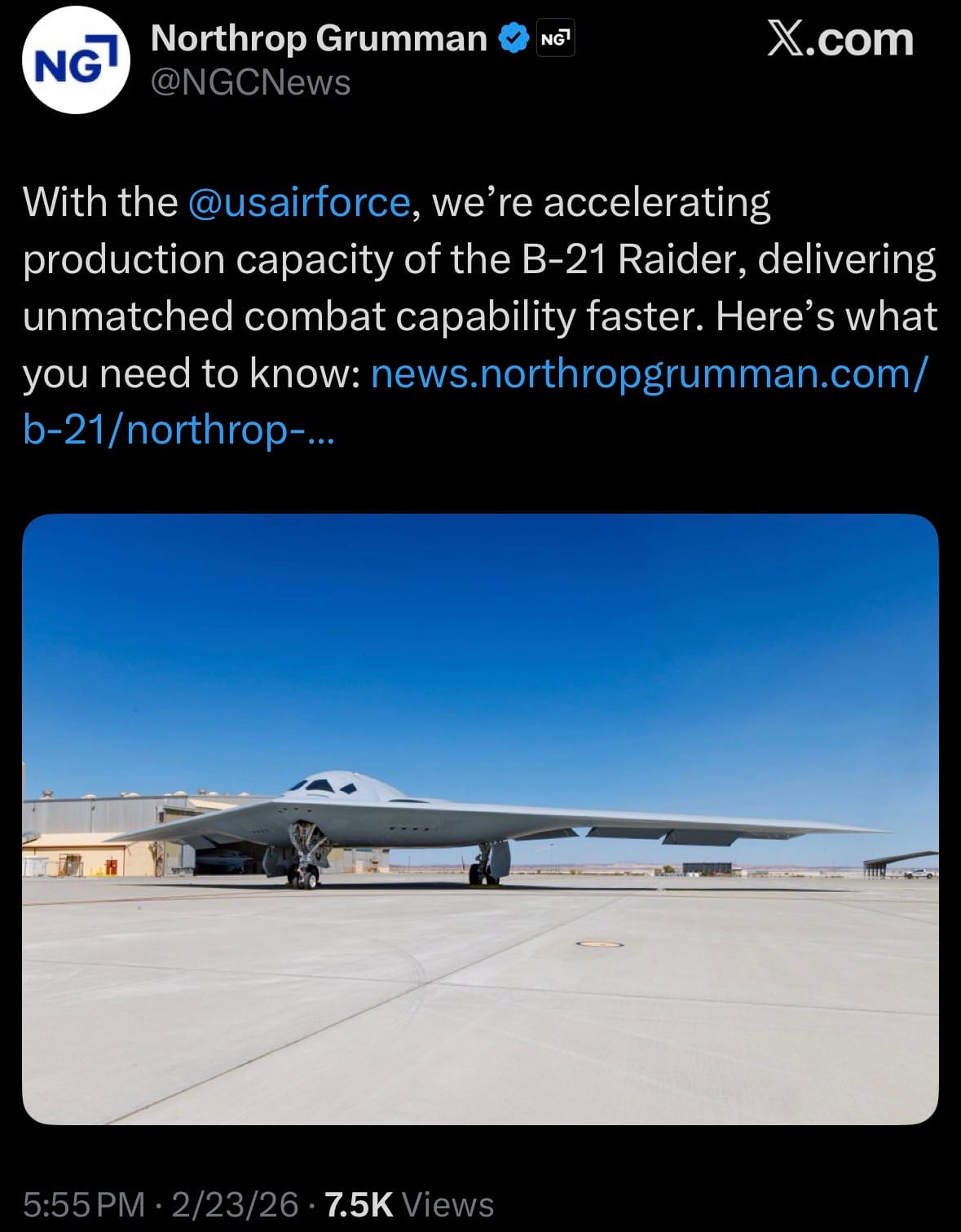
- Northrop Grumman has invested over $5 billion in digital engineering and manufacturing across U.S. facilities to enable faster, more efficient scaling of the sixth-generation stealth bomber. The first aircraft remains on track for delivery to Ellsworth Air Force Base in 2027, delivering unmatched long-range strike and deterrence capabilities sooner.
EARTH INTELLIGENCE:
- We have launched a new custom reporting system through our mobile app! You can now select your interests (categories, regions, & industries) then receive a daily custom report for better situational awareness.
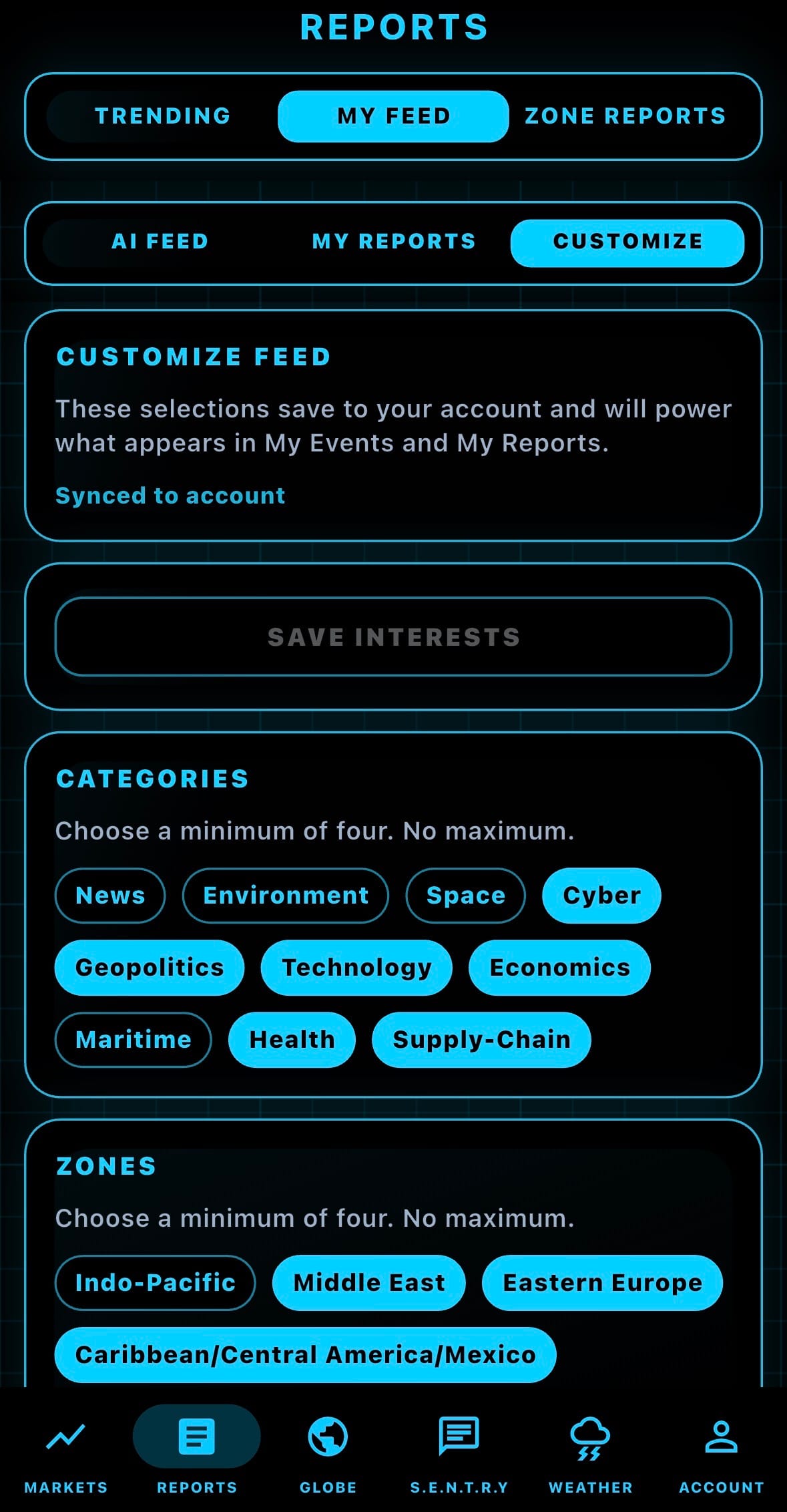
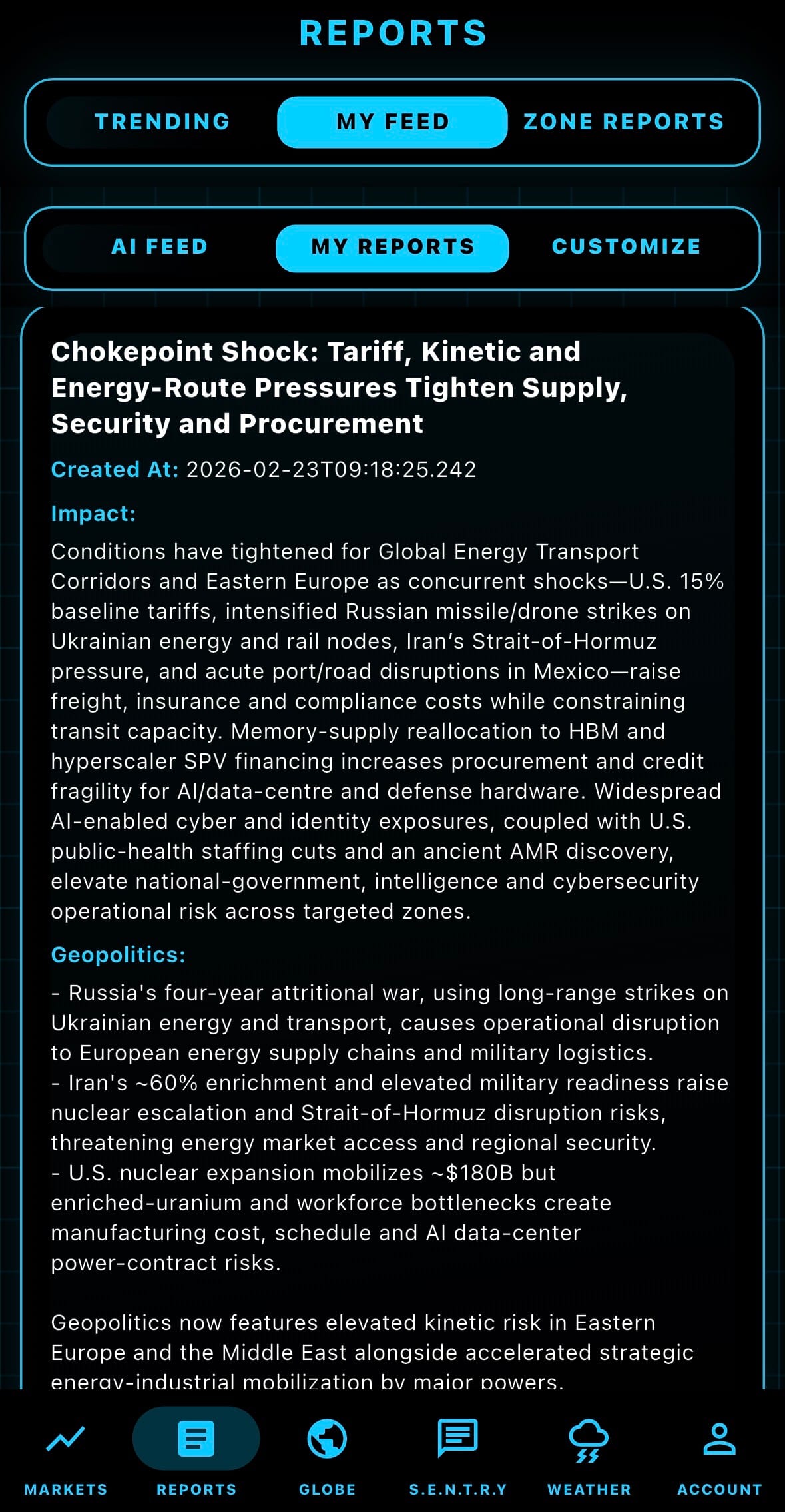
Earth Intel Mobile App
- We have also launched a new Trending feature to explore trending topics around the world.
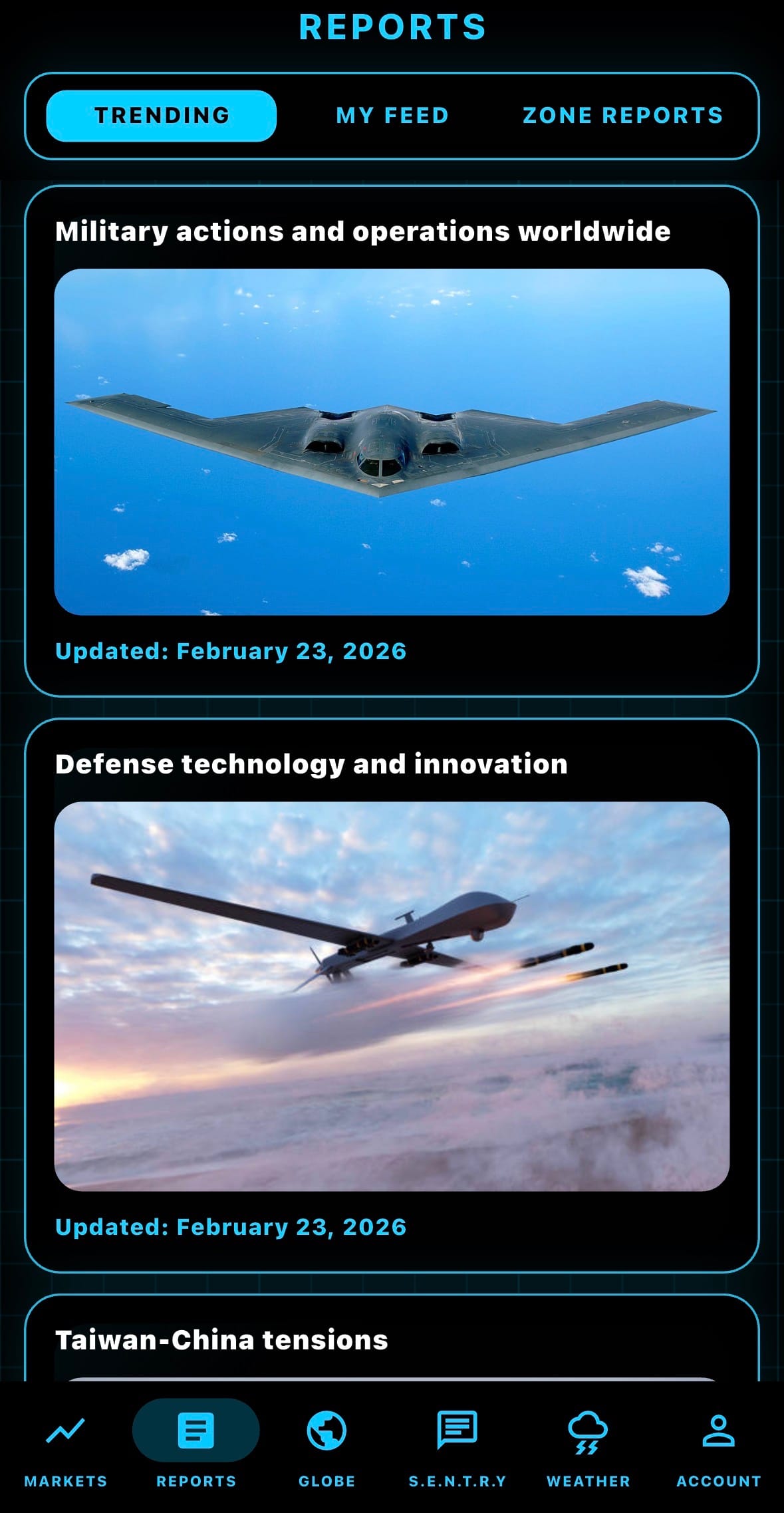
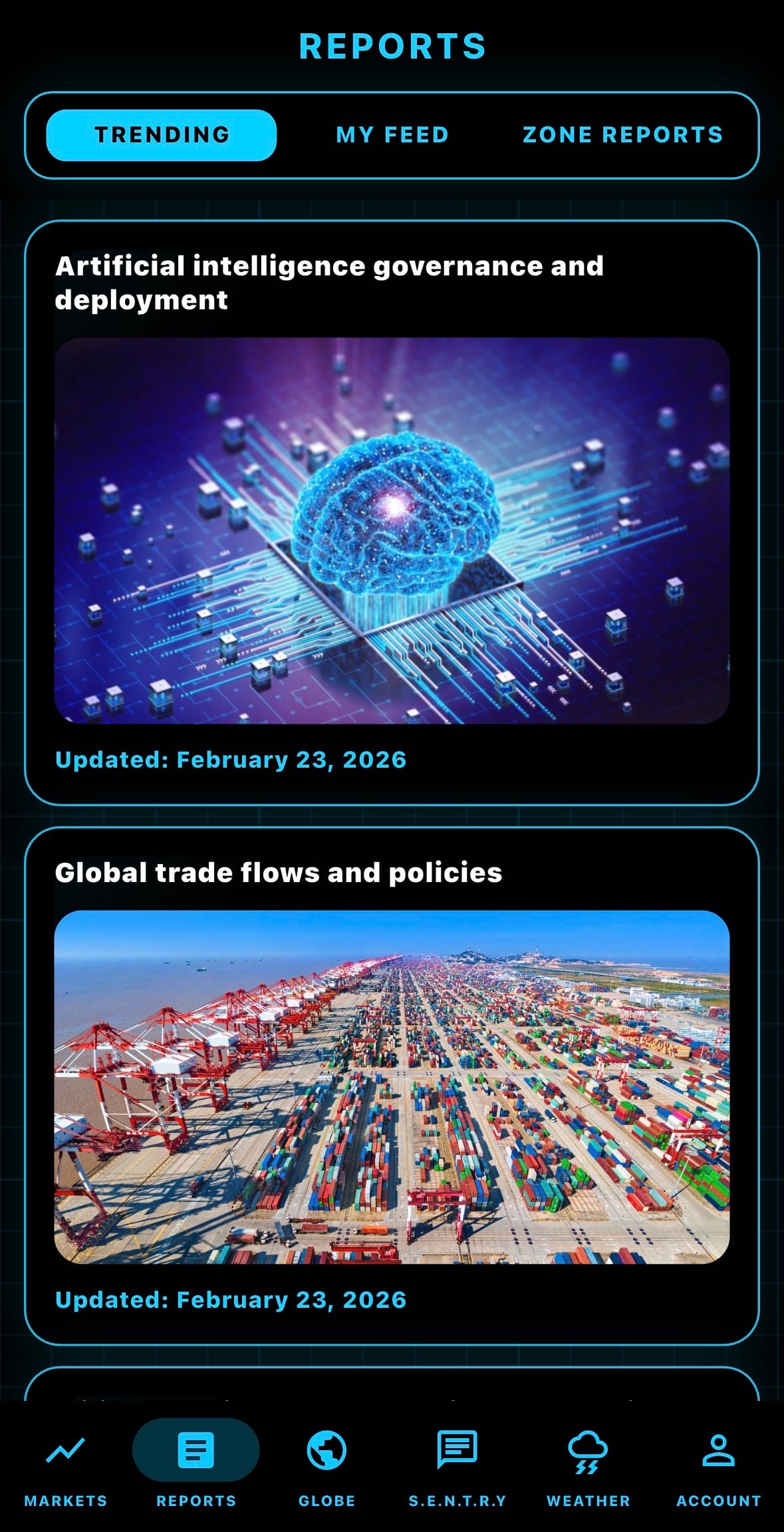
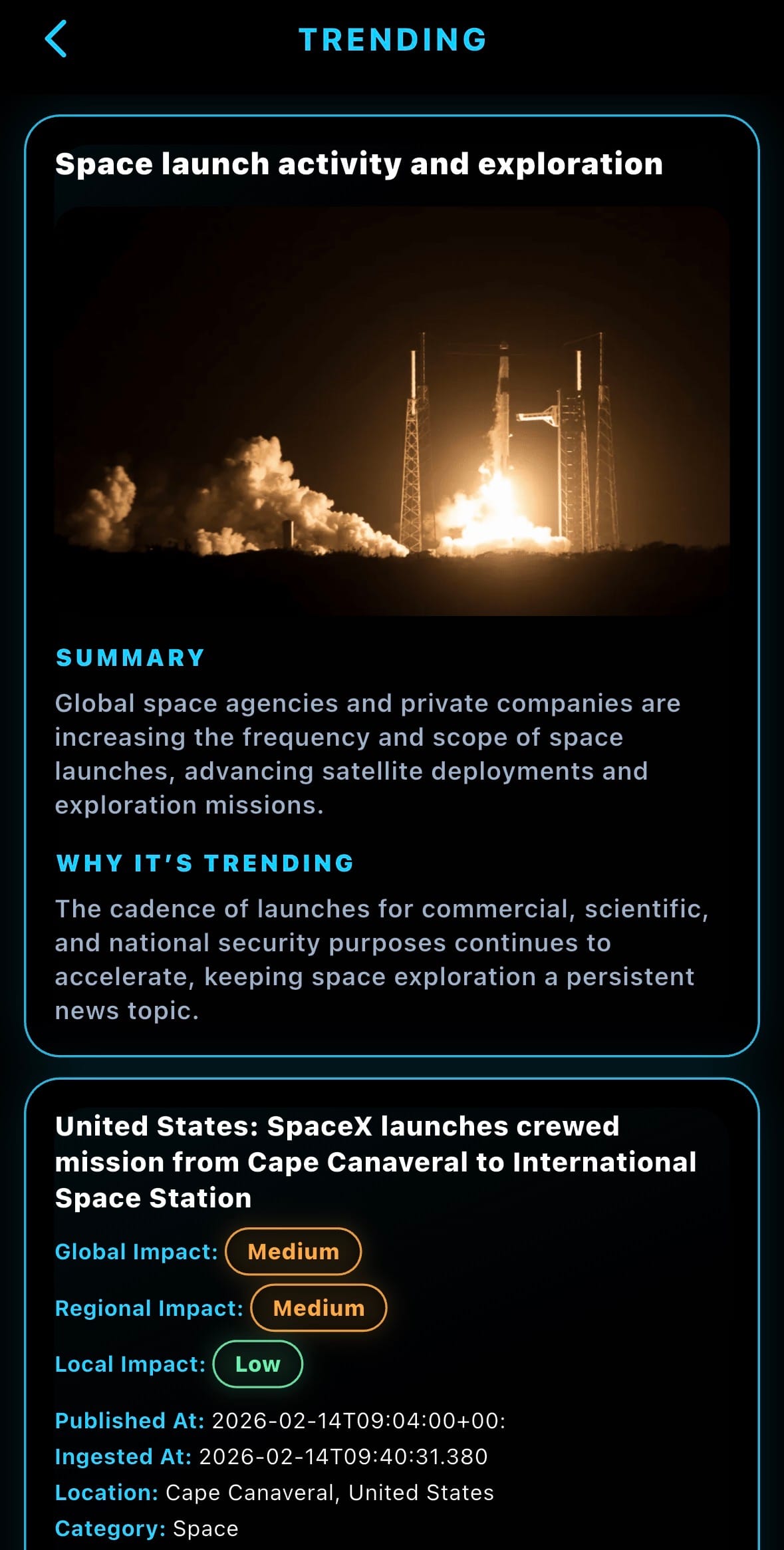
Earth Intel Mobile App
- Download on the AppStore today!


Statistic:
- Largest public banking companies by market capitalization:
- 🇺🇸 JPMorgan Chase: $810.33B
- 🇺🇸 Bank of America: $372.93B
- 🇨🇳 ICBC: $370.29B
- 🇨🇳 China Construction Bank: $330.24B
- 🇨🇳 Agricultural Bank of China: $328.32B
- 🇬🇧 HSBC: $300.06B
- 🇺🇸 Goldman Sachs: $270.12B
- 🇺🇸 Wells Fargo: $267.29B
- 🇺🇸 Morgan Stanley: $265.09B
- 🇨🇳 Bank of China: $247.69B
- 🇨🇦 Royal Bank of Canada: $239.66B
- 🇯🇵 Mitsubishi UFJ Financial: $215.38B
- 🇦🇺 Commonwealth Bank: $209.45B
- 🇺🇸 Citigroup: $198.16B
- 🇪🇸 Santander: $187.80B
- 🇺🇸 Charles Schwab: $168.36B
- 🇮🇳 HDFC Bank: $167.67B
- 🇨🇦 Toronto Dominion Bank: $161.40B
- 🇨🇳 CM Bank: $159.97B
- 🇯🇵 Sumitomo Mitsui Financial Group: $146.99B
- 🇪🇸 BBVA: $135.65B
- 🇨🇭 UBS: $131.22B
- 🇮🇹 UniCredit: $130.08B
- 🇸🇬 DBS Group: $129.20B
- 🇫🇷 BNP Paribas: $126.24B
History:
- Telecommunications infrastructure begins with a simple but revolutionary idea: information can travel faster than physical movement. Early long-distance communication relied on visual systems—beacon fires, signal flags, semaphore towers—but the real transformation came with electricity. The commercial telegraph in the 1830s–1840s allowed coded electrical signals to travel across copper wires at near-instant speed. By 1866, a durable transatlantic cable connected Europe and North America, shrinking decision times in diplomacy, trade, and finance from weeks to minutes. The telephone followed in 1876, but the breakthrough wasn’t just the device—it was the network architecture: switching systems, long-distance trunk lines, and centralized operators. Companies like AT&T in the United States and state-owned postal-telecom systems in Europe built national-scale communication monopolies. By the early 20th century, radio transmission expanded reach further, enabling maritime and military communication without physical wires. Telecommunications had evolved from isolated devices into structured, managed infrastructure spanning nations.
- The mid-20th century introduced the technologies that still define the modern backbone. Microwave relay towers and coaxial trunk lines carried expanding traffic, but the decisive leap came with fiber optics. In the late 1960s, breakthroughs in low-loss optical fiber made it possible to transmit data as pulses of light across vast distances with minimal degradation. By the late 1980s, fiber-optic submarine cables replaced copper systems, creating high-capacity global links beneath the oceans. Today, undersea cables carry the overwhelming majority of intercontinental internet traffic. A relatively small group of specialized engineering firms builds and maintains these cables, while major telecommunications operators and technology companies increasingly co-invest in them to secure bandwidth and reduce latency. On land, fiber networks connect cities, data centers, and cellular towers into a dense web. Telecommunications companies such as China Mobile, AT&T, Verizon, Deutsche Telekom, NTT, Vodafone, Orange, and América Móvil operate national and international networks, while equipment manufacturers like Huawei, Ericsson, Nokia, ZTE, and Samsung build much of the cellular and optical infrastructure. The system is layered: physical fiber and towers at the bottom, routing and switching networks in the middle, and internet services riding on top.
- Mobile networks added another dimension. First-generation cellular in the 1980s was analog and limited. 2G in the 1990s digitized voice and introduced SMS. 3G in the 2000s enabled mobile internet. 4G LTE in the 2010s transformed smartphones into full computing platforms. 5G in the late 2010s and 2020s focuses on higher bandwidth, lower latency, and machine-to-machine connectivity, supporting industrial automation and real-time systems. Alongside traditional telecom operators, large cloud and technology firms—Google, Meta, Microsoft, Amazon—have built global backbone networks and directly invested in submarine cables, reflecting how data traffic is now as strategic as voice once was. Telecommunications infrastructure has become deeply tied to national security, economic competitiveness, and technological sovereignty. It is no longer just about sending messages—it is about controlling bandwidth, routing, resilience, and access in a world where finance, military coordination, logistics, and digital life depend entirely on reliable, high-speed connectivity.
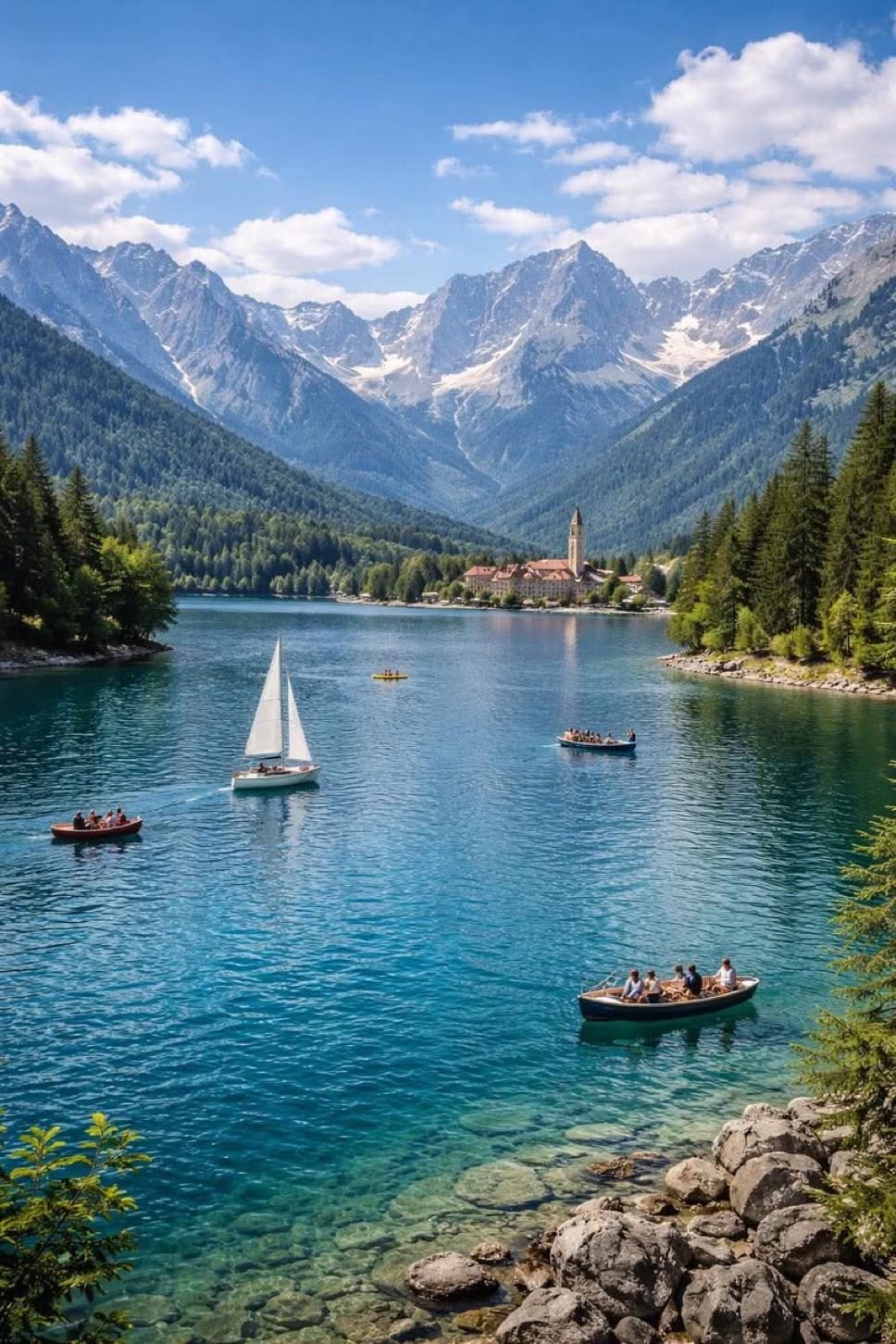
Image of the day:
Thanks for reading! Earth is complicated, we make it simple.
- Click below if you’d like to view our free EARTH WATCH globe:
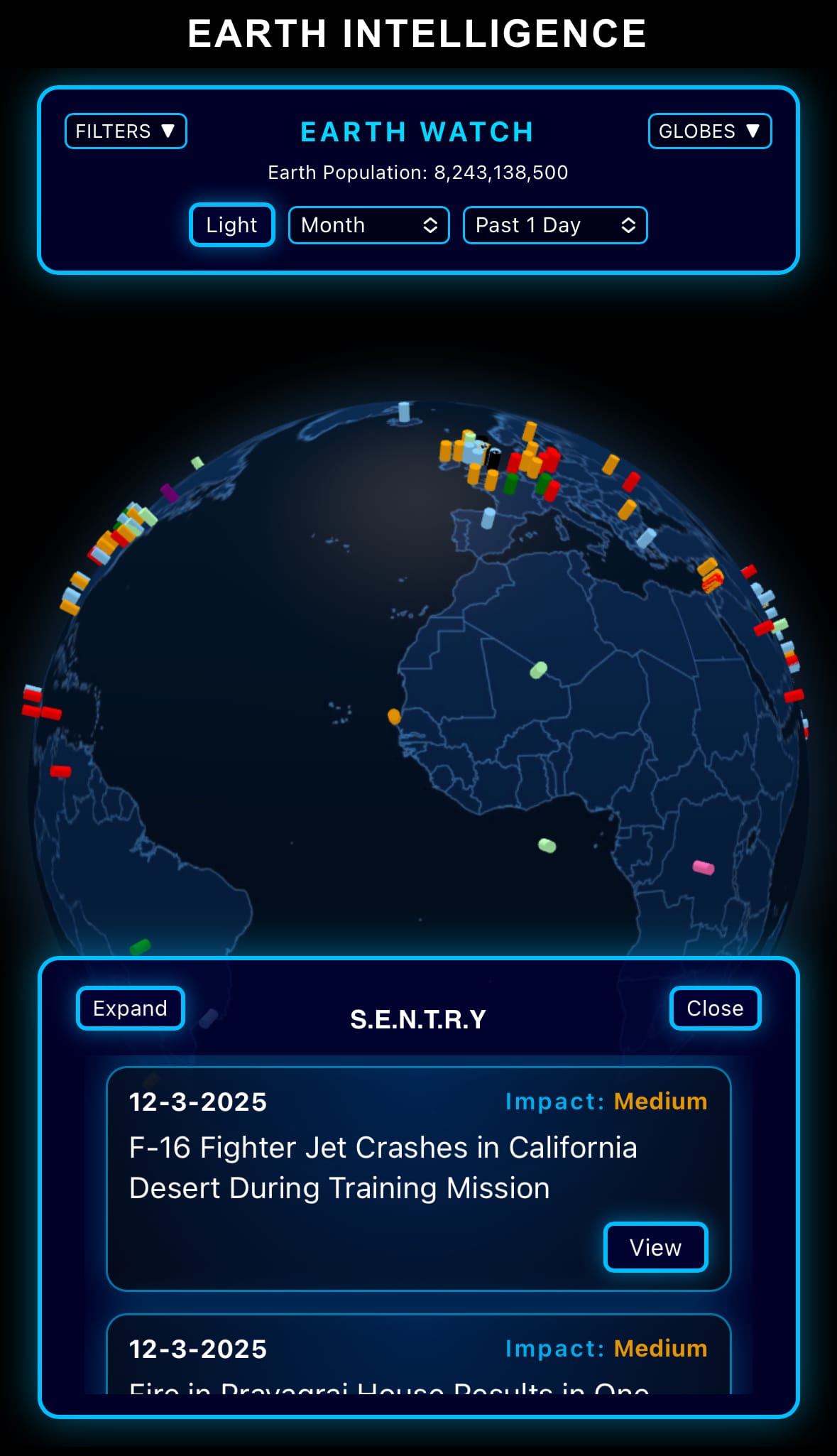
- Download our mobile app:

Click below to view our previous newsletters:

Support/Suggestions Email:
earthintelligence@earthintel.news