Tuesday☕️


Trending:
- Hungarian authorities have seized $80–82 million in cash and gold from a Ukrainian Oschadbank convoy on March 5, 2026, near Budapest. The assets—$40 million in U.S. dollars, €35 million in euros, and 9 kilograms of gold—were taken from two armored vehicles during a routine, pre-approved transfer from Austria to Kyiv. Seven Ukrainian bank employees were briefly detained on suspicion of money laundering but were released shortly after and expelled from Hungary; the seized items remain in Hungarian custody pending investigation.
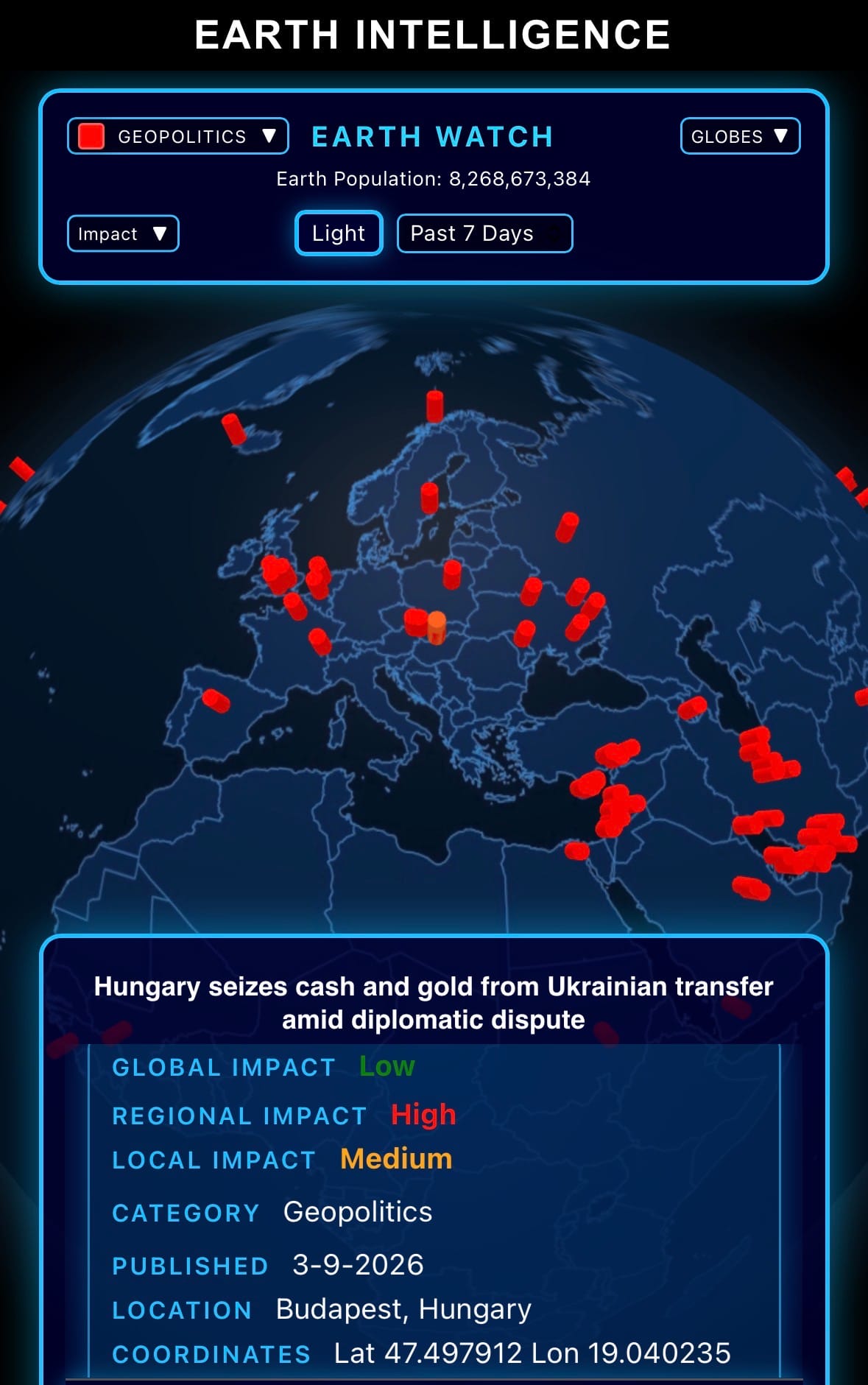
- Ukraine’s Foreign Ministry and Oschadbank have condemned the action as illegal seizure and “state banditry,” demanding immediate return of the assets, while Hungary’s Fidesz party has proposed new legislation allowing retention of the items for up to 60 days during probes, further straining already tense Budapest-Kyiv relations.

Economics & Markets:
- Yesterday’s U.S. stock market:

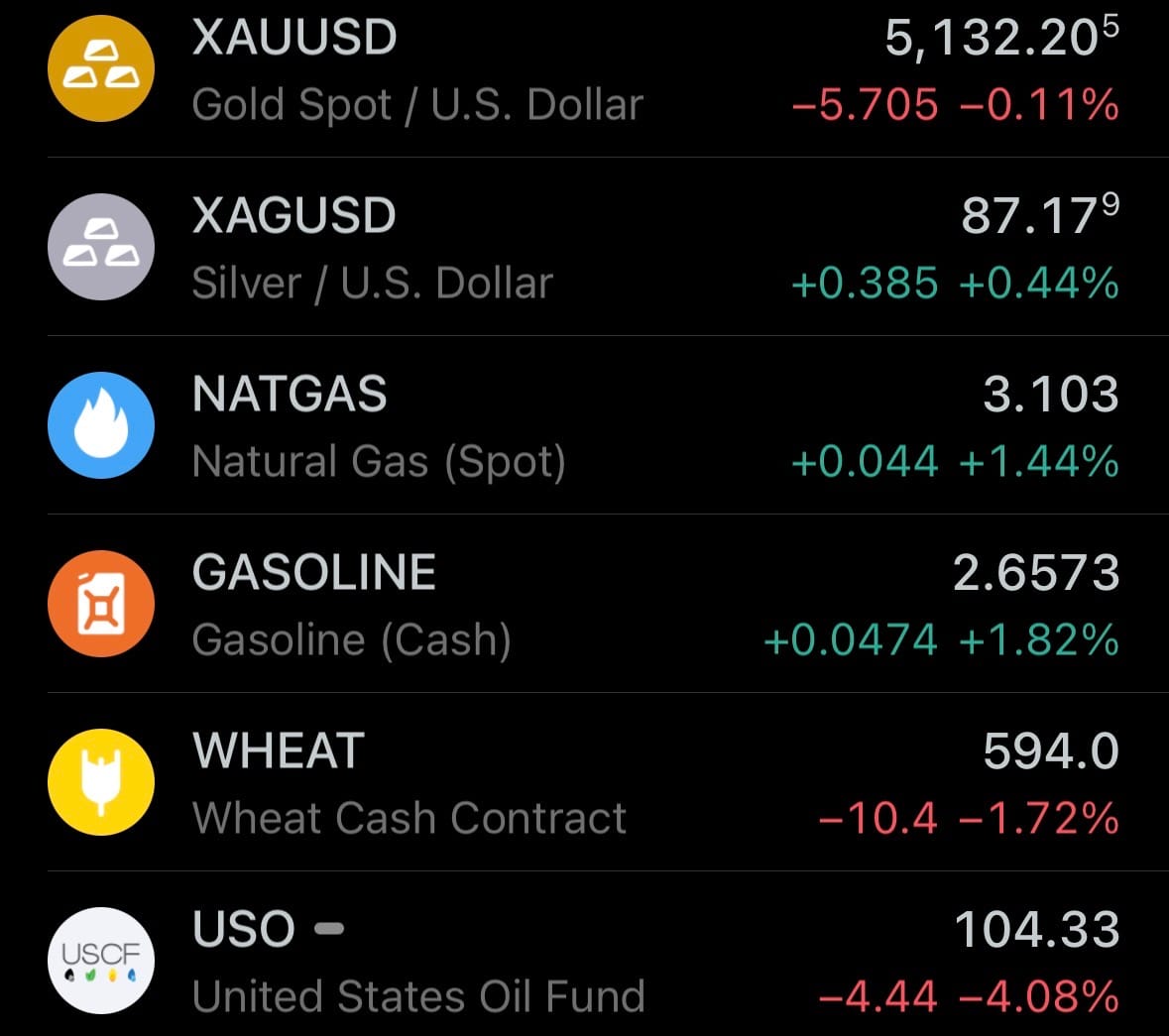
- Yesterday’s commodity market:
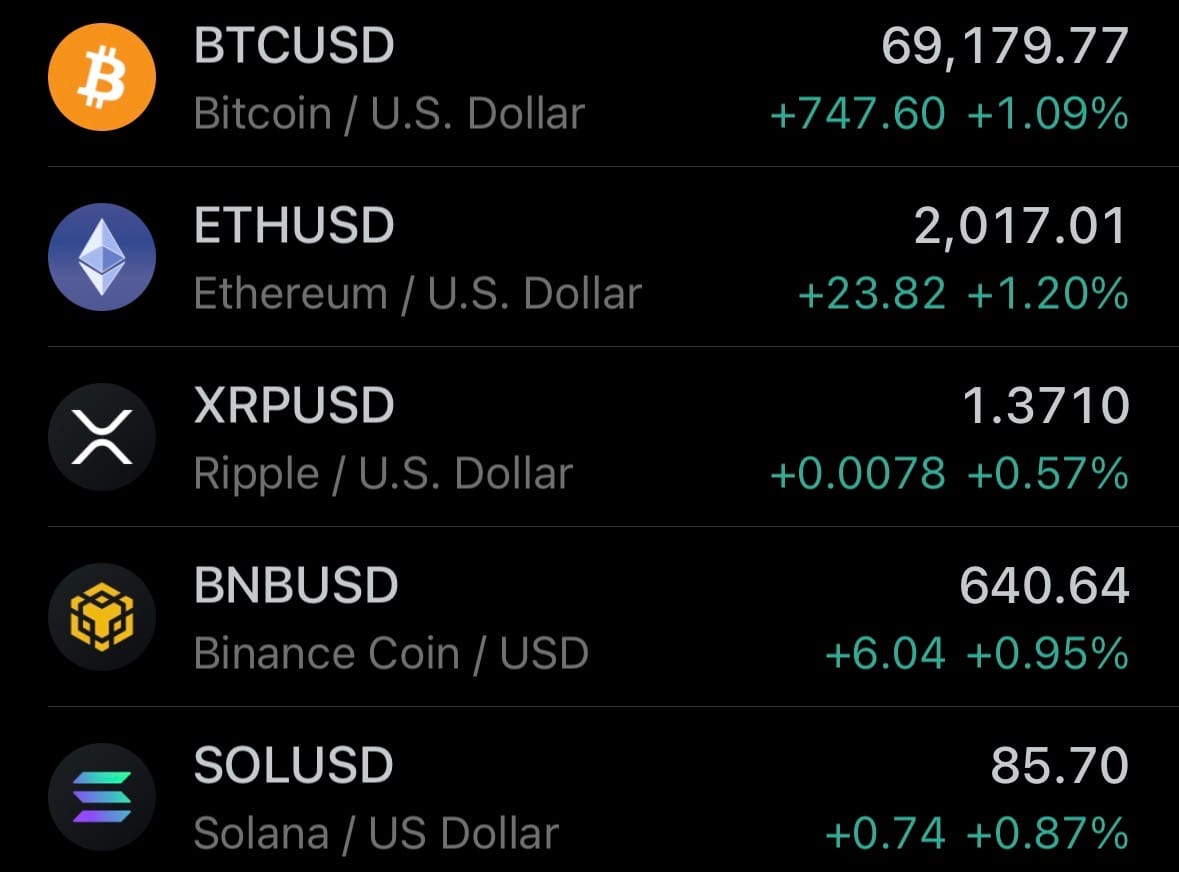
- Yesterday’s crypto market:
Geopolitics & Military Activity:
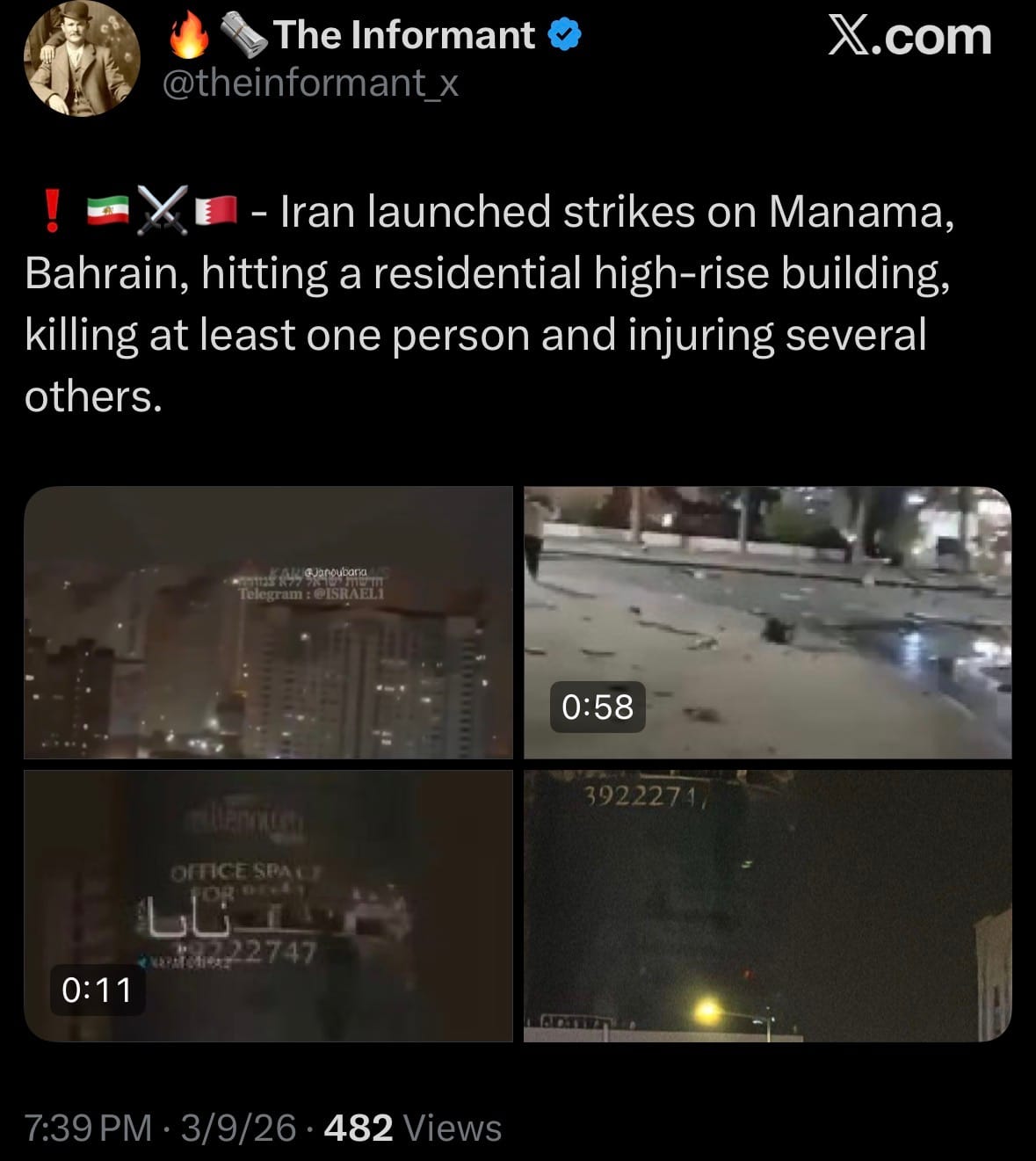
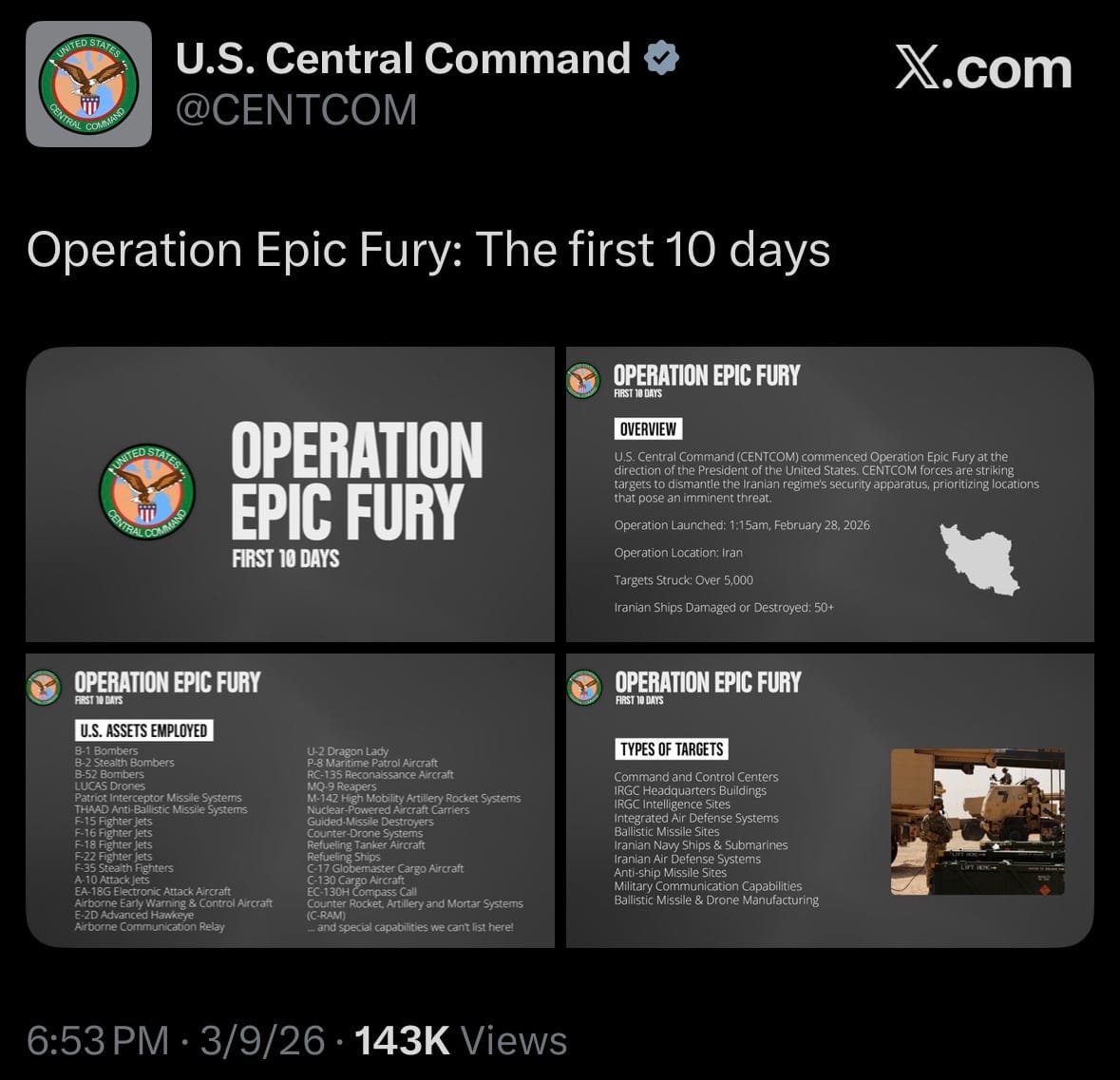
- As of March 9, 2026, Iran launched a drone and missile strike on Manama, Bahrain's capital, hitting a residential high-rise building and causing casualties, with at least one person killed and several others injured amid the escalating U.S.-Israel-Iran war. The attack is part of Iran's ongoing retaliation campaign targeting Gulf states, which has also damaged civilian infrastructure like a water desalination plant and sparked fires near energy sites in the area. In a related development, an Iranian strike hit Bahrain's major Al-Ma'ameer oil facility (operated by state-owned Bapco Energies), igniting a large fire at the refinery complex, leading Bahrain to declare force majeure on oil shipments and suspend exports temporarily.
- These attacks on Gulf energy infrastructure, combined with disruptions in the Strait of Hormuz and production cuts by regional producers, have driven global oil prices sharply higher—surging over 20-25% since the war began, with Brent crude briefly exceeding $110 per barrel—fueling fears of prolonged supply shortages and higher fuel costs worldwide.
Environment & Weather:
Science & Technology:
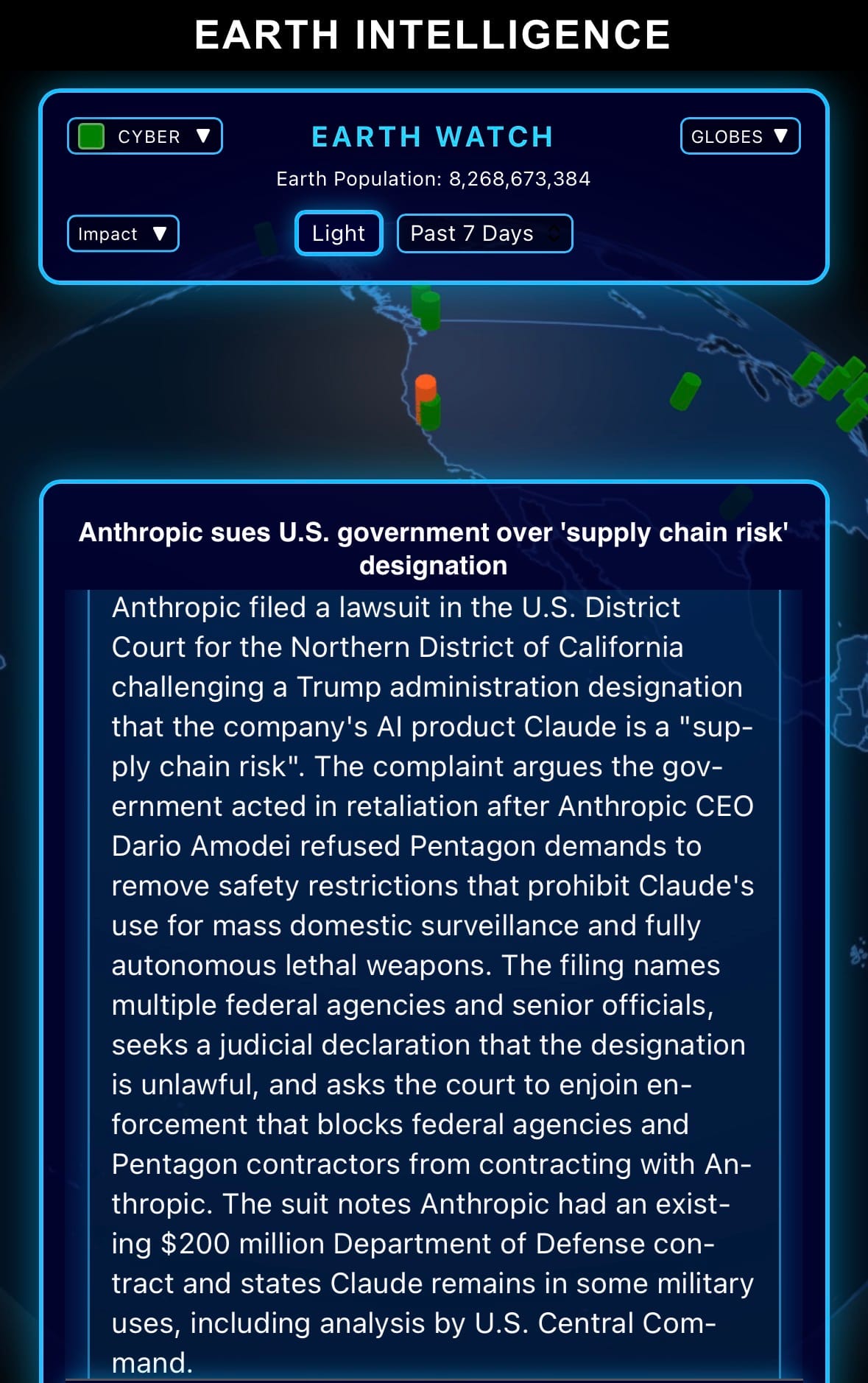
- On March 9, 2026, Anthropic has introduced Code Review, a new feature for Claude Code that automatically analyzes pull requests (PRs) using a team of AI agents. When an codebase opens in an enabled GitHub repository, Claude dispatches multiple agents that work in parallel to hunt for bugs, verify findings to reduce false positives, and rank issues by severity. The results appear as a single high-signal summary comment on the PR, along with inline annotations for specific problems, providing deeper reviews than typical human skims.
- Currently available in research preview for Claude Code Teams and Enterprise users (with costs averaging $15–$25 per review based on token usage and PR complexity), the feature has been internally tested at Anthropic, where it increased substantive review comments from 16% to 54% of PRs with less than 1% of findings flagged as incorrect by engineers.

Statistic:
- Largest public oil companies by market capitalization:
- 🇸🇦 Saudi Aramco: $1.747T
- 🇺🇸 Exxon Mobil: $626.84B
- 🇺🇸 Chevron: $378.75B
- 🇨🇳 PetroChina: $334.18B
- 🇬🇧 Shell: $243.48B
- 🇨🇳 CNOOC: $173.63B
- 🇫🇷 TotalEnergies: $170.52B
- 🇺🇸 ConocoPhillips: $143.05B
- 🇨🇳 Sinopec: $122.61B
- 🇨🇦 Enbridge: $117.68B
- 🇧🇷 Petrobras: $117.02B
- 🇺🇸 Southern Company: $108.86B
- 🇬🇧 BP: $104.13B
- 🇺🇸 Duke Energy: $101.93B
- 🇨🇦 Canadian Natural Resources: $96.38B
- 🇺🇸 Williams Companies: $89.39B
- 🇳🇴 Equinor: $80.90B
- 🇺🇸 Enterprise Products: $80.17B
- 🇦🇪 TAQA: $74.69B
- 🇺🇸 Kinder Morgan: $74.08B
- 🇺🇸 EOG Resources: $71.44B
- 🇮🇹 ENI: $71.07B
- 🇺🇸 SLB (Schlumberger): $70.56B
- 🇨🇦 Suncor Energy: $68.34B
- 🇦🇪 ADNOC Gas: $68.12B
History:
- Sea mines are one of the oldest and most deceptively powerful naval weapons ever created. The basic concept—placing explosive devices in water to damage or destroy ships—dates back centuries. Early ideas appeared in China during the Ming Dynasty in the 14th–16th centuries, where primitive floating explosive charges were developed to defend rivers and harbors. These early devices used gunpowder and mechanical fuses that detonated when ships struck them. The concept spread slowly to Europe, and by the 18th century inventors were experimenting with underwater explosives attached to anchors so they would float just below the surface. A major technological step occurred during the American Revolutionary War when inventor David Bushnell created early underwater mines called “torpedoes.” Bushnell’s devices used contact triggers and were intended to damage British ships. During the American Civil War (1861–1865), sea mines—then commonly called torpedoes—were used extensively by Confederate forces to defend harbors and rivers, successfully sinking or damaging numerous Union vessels. This demonstrated that relatively inexpensive underwater explosives could threaten even powerful naval fleets.
- By the late 19th and early 20th centuries, sea mines had become a formal component of naval strategy. Advances in explosives, electrical detonators, and anchoring systems made them more reliable and dangerous. During World War I, both Allied and Central Powers deployed massive minefields in strategic waterways. One of the most famous examples was the North Sea Mine Barrage, laid in 1918 by the United States and the United Kingdom to restrict German submarine movement between the North Sea and the Atlantic Ocean. These minefields contained tens of thousands of mines designed to damage or destroy submarines. During World War II, sea mines became even more sophisticated and widely used. Mines were deployed not only by ships but also by aircraft and submarines. New types of mines were developed, including magnetic mines, which detonated when detecting the magnetic field of a steel ship, and acoustic mines, which reacted to the sound signatures of vessels. These innovations made mines harder to detect and sweep, and they were used extensively in the Atlantic, Pacific, and European waters to deny access to ports and shipping routes.
- Modern sea mines have evolved into complex naval weapons capable of targeting specific ship types and operating in deep or shallow waters. Today’s mines can be contact mines, influence mines, or smart mines. Influence mines detect changes in magnetic fields, acoustic signatures, or water pressure caused by passing ships. Some modern systems include programmable electronics that allow them to activate only after certain conditions are met, such as counting the number of ships that pass overhead before detonating. Nations with advanced naval capabilities—including the United States, Russia, China, and several NATO countries—maintain mine warfare capabilities both for defensive harbor protection and offensive denial of key sea lanes. Mines can be deployed by ships, submarines, aircraft, and even unmanned underwater vehicles. Despite advances in naval technology, sea mines remain one of the most effective asymmetric naval weapons because they are relatively inexpensive compared to warships and can deny access to critical maritime chokepoints. From primitive gunpowder devices centuries ago to sophisticated sensor-driven underwater weapons today, sea mines continue to play a significant role in naval warfare and maritime strategy.
Image of the day:

Thanks for reading! Earth is complicated, we make it simple.
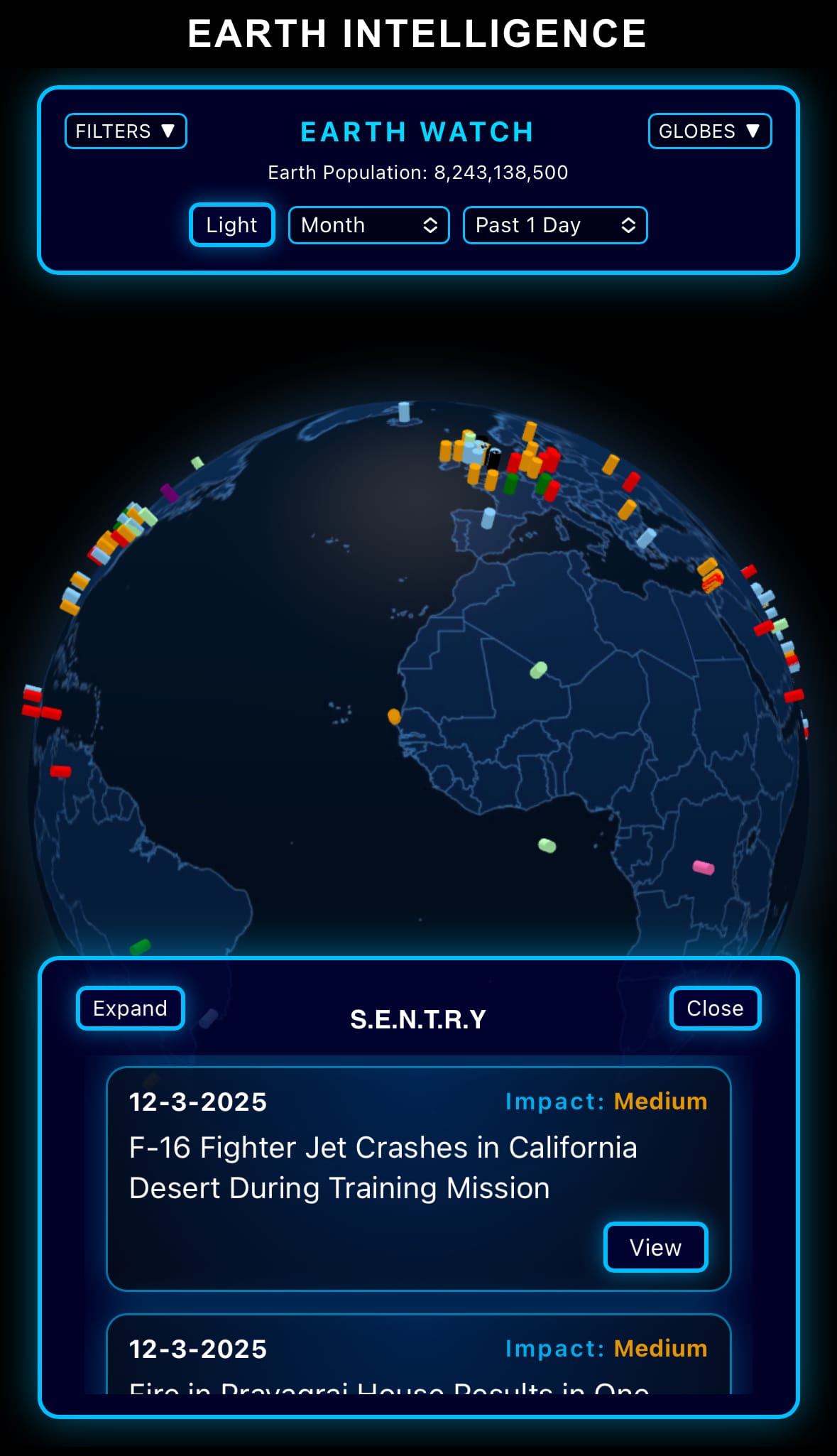
- Click below if you’d like to view our free EARTH WATCH globe:
- Download our mobile app:



Click below to view our previous newsletters:

Support/Suggestions Email:
support@earthintel.io