Wednesday☕️
Trending:
- On November 11, 2025, the Dominican Republic experienced a nationwide power outage that affected the entire country of nearly 11 million residents, starting around 1:23 p.m. local time. The blackout was triggered by a failure in the transmission system at the San Pedro I substation, which caused a cascade effect leading to the shutdown of key generation units at the San Pedro de Macorís and Quisqueya power plants. This incident compounded ongoing issues with the electrical grid, including recent outages lasting up to 10 hours attributed to insufficient maintenance on transmission infrastructure and illegal connections, as noted by Energy Minister Joel Santos.
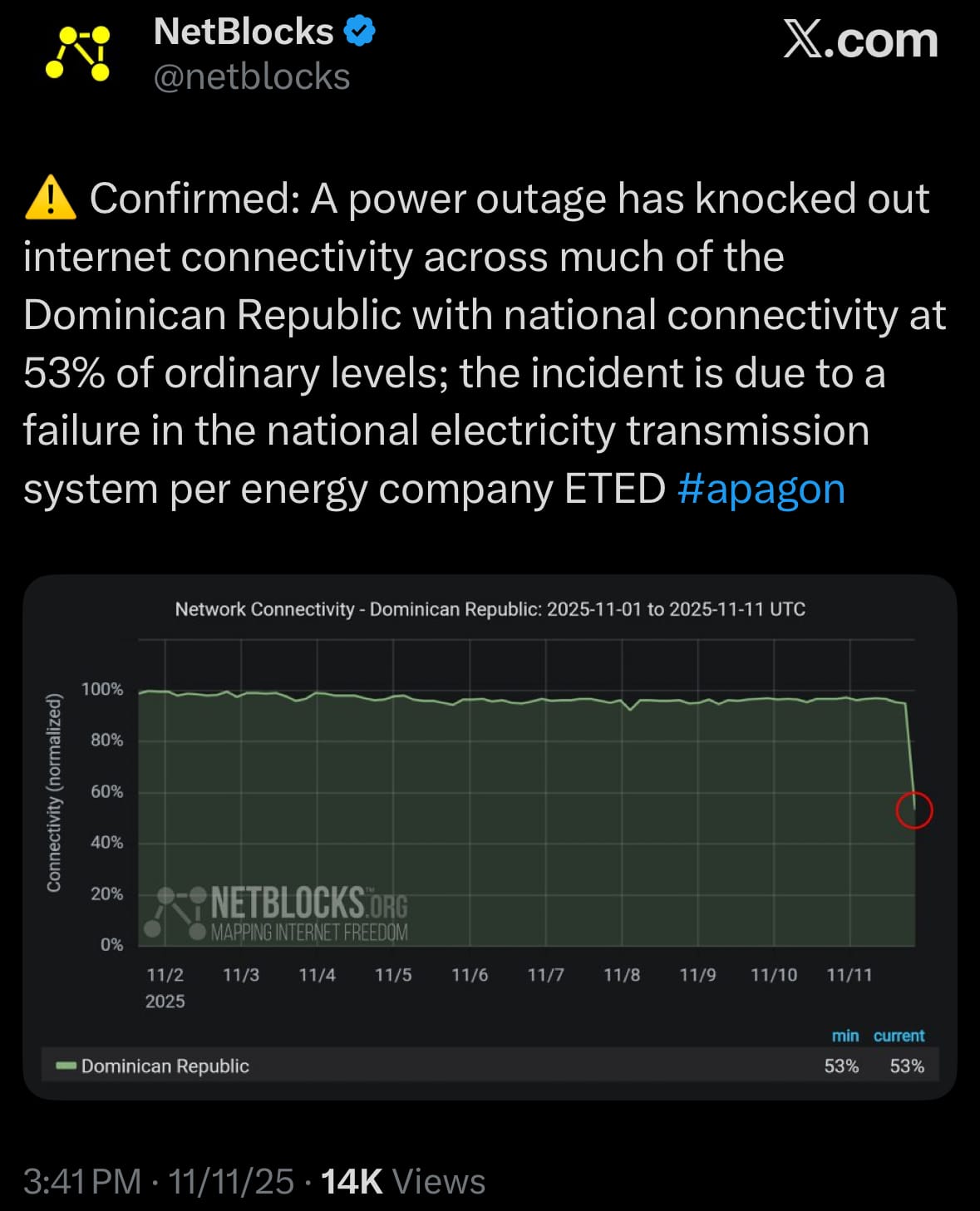
- The outage disrupted daily life across urban centers like Santo Domingo and tourist areas such as Punta Cana, halting public transportation systems including the metro and aerial cable cars, where passengers were temporarily trapped and had to be evacuated on foot. Traffic increased heavily due to non-functional signals, businesses shut down without power for air conditioning or operations, and institutions like hospitals and banks switched to generators. Restoration efforts began promptly, with approximately 500 megawatts—about 15 percent of national demand—recovered by the evening, allowing gradual stabilization, though full recovery timelines remained unspecified pending an official investigation into the event.
Economics & Markets:
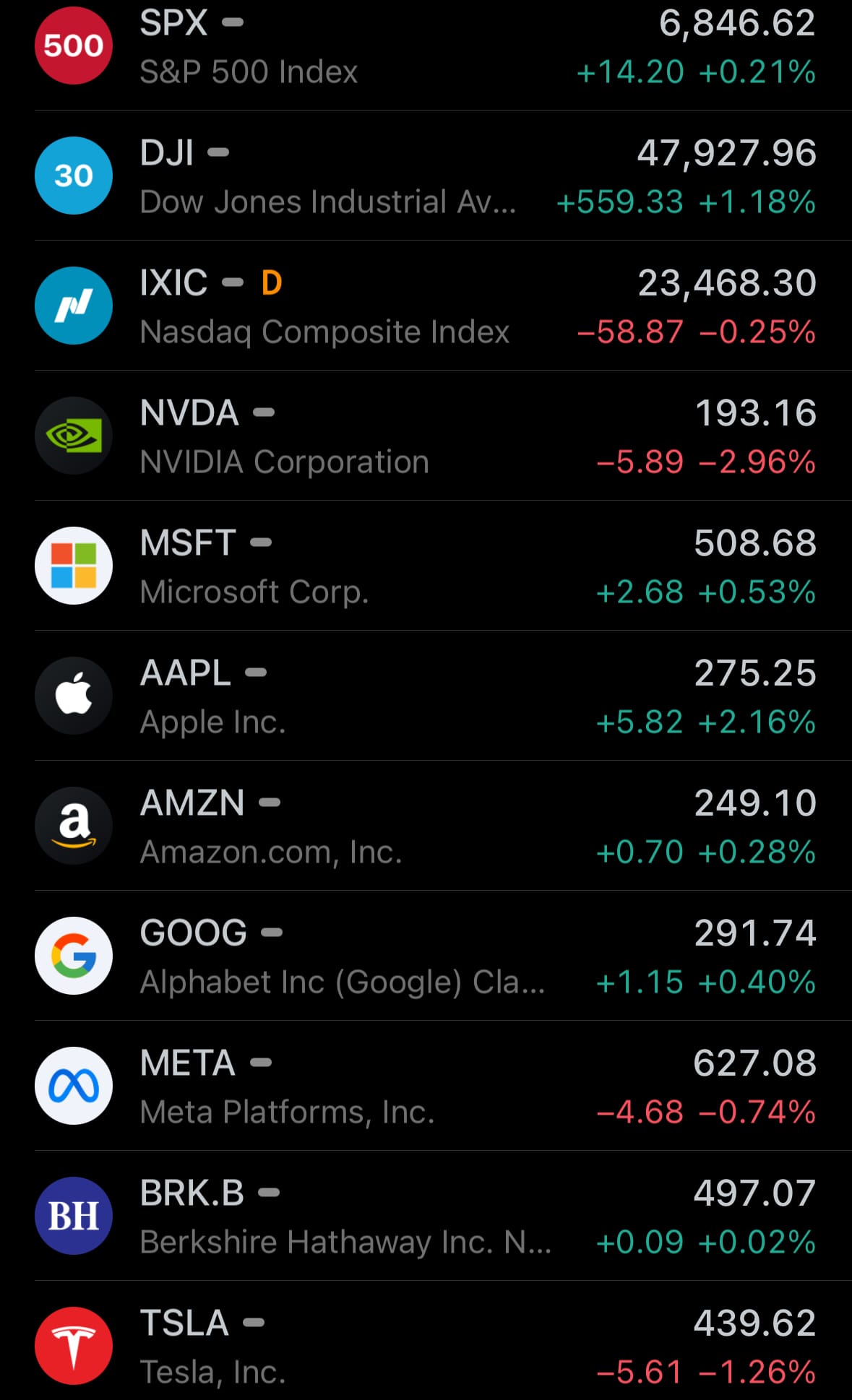
- Yesterday’s U.S. stock market:
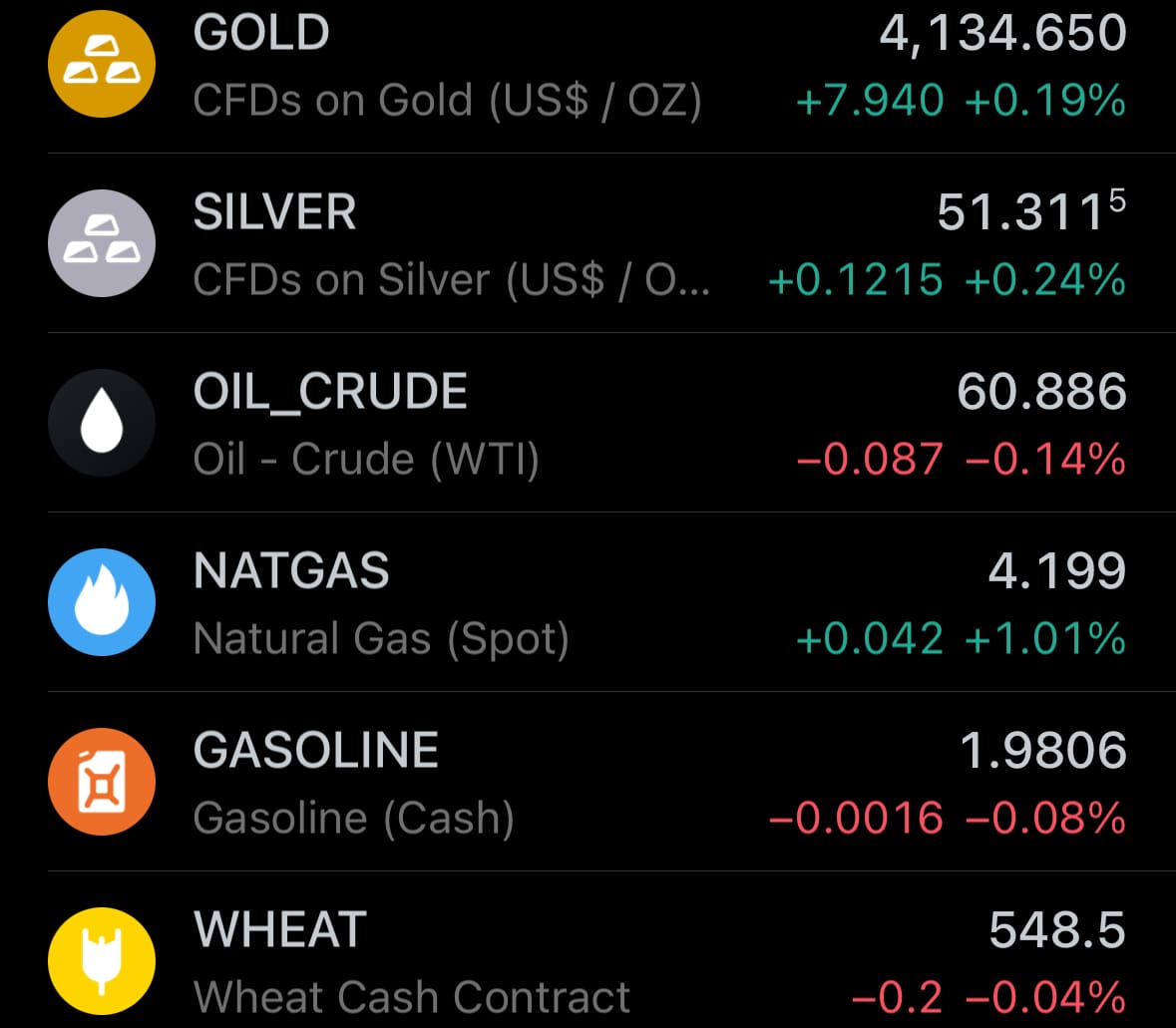
- Yesterday’s commodity market:
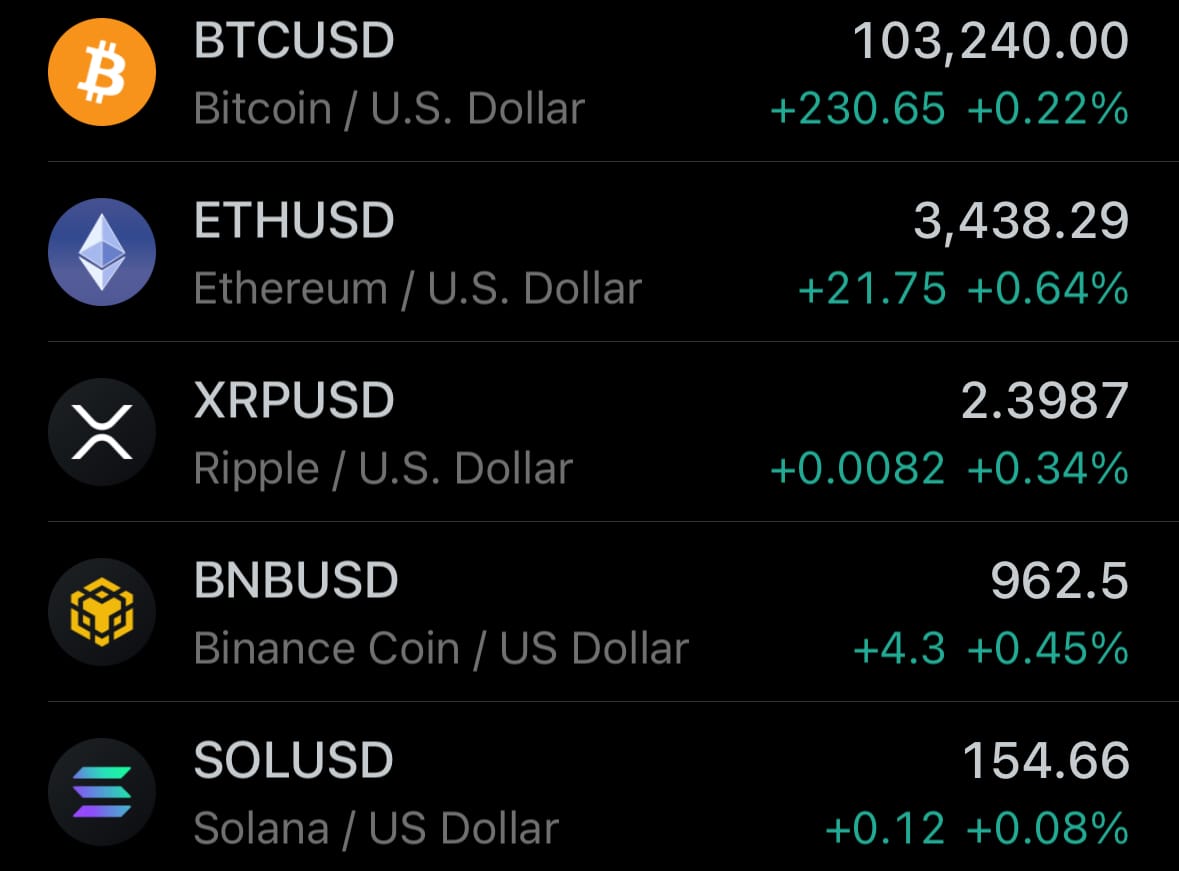
- Yesterday’s crypto market:
Geopolitics & Military Activity:
- On November 11, 2025, Ukrainian forces carried out a drone strike on the Orsknefteorgsintez oil refinery in Russia's Orenburg region, located about 1,400 kilometers (870 miles) from the front lines, resulting in explosions and a fire at the facility. The attack, attributed to Ukraine's Security Service drones, targeted key infrastructure at the refinery, which processes around 6 million tons of oil annually and supplies fuel to Russian military operations. Local authorities reported no casualties, though operations were temporarily disrupted, with emergency services responding to contain the blaze. This marks the second reported strike on the Orsk refinery in recent months, following a similar incident earlier in the year that caused flooding-related damage.
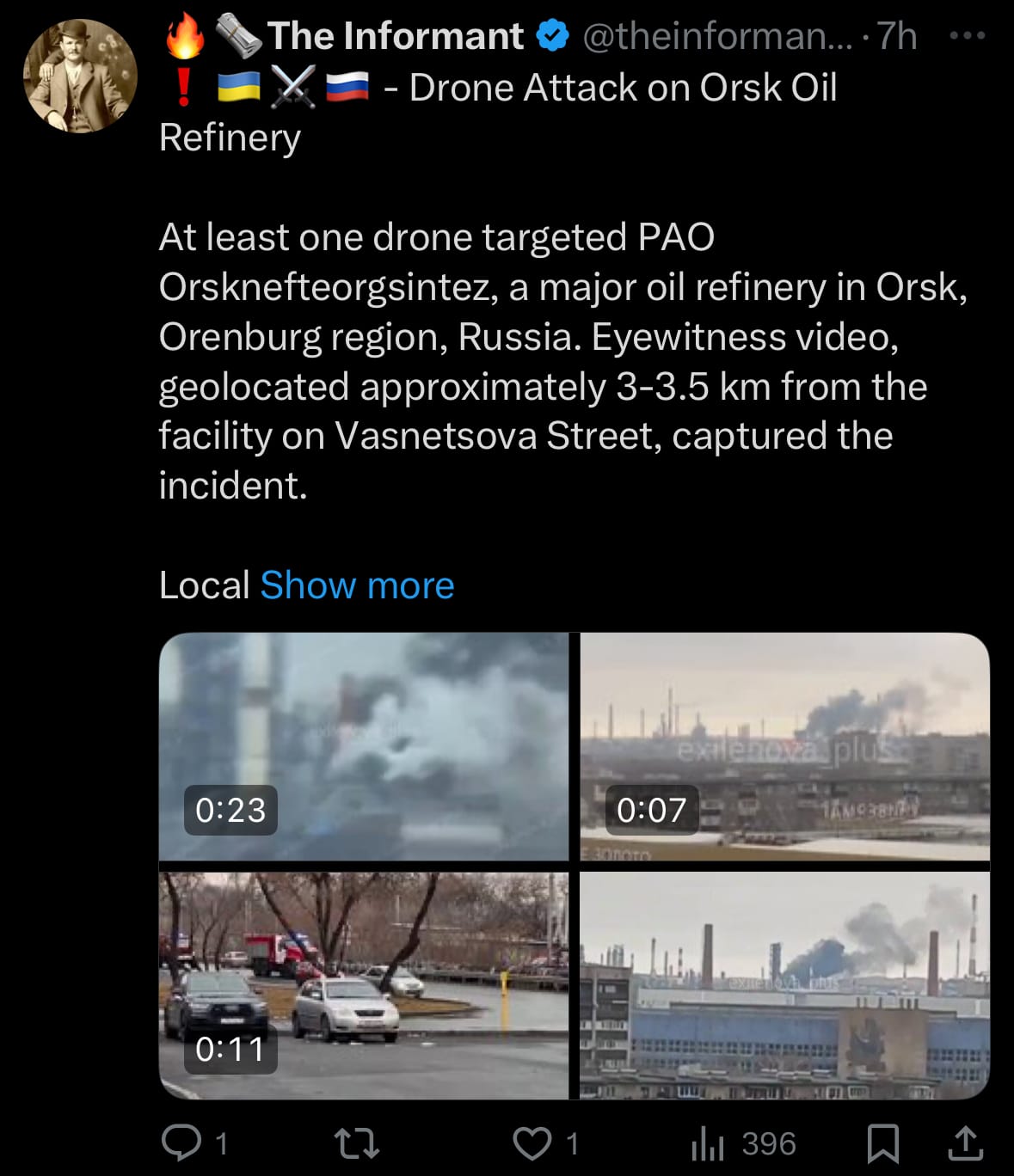
- The strike exemplifies Ukraine's sustained campaign to degrade Russian energy assets, aiming to curtail fuel availability for troops and diminish oil export revenues that support Moscow's war efforts, with Kyiv claiming over 160 successful hits on such targets in 2025 alone. In parallel, Russia has escalated attacks on Ukrainian infrastructure, including a major November 7-8 assault involving over 500 drones and missiles that severely damaged power generation facilities, leading to zero output in some areas and widespread blackouts amid winter preparations. These reciprocal actions highlight a strategic focus on both sides to erode the opponent's logistical networks and economic resilience, potentially prolonging the conflict by straining resources essential to military sustainability.
Environment & Weather:
- On November 11, 2025, a geomagnetic storm reached G4 (severe) levels in the evening, caused by multiple coronal mass ejections (CMEs) from the Sun, including a fast one linked to an X5.1 solar flare that peaked at about 5:04 a.m. EST earlier that day. This was one of the year's strongest space weather events, with the NOAA Space Weather Prediction Center upgrading alerts after starting at G2 (moderate) conditions amid solar wind effects. The storm's impacts are set to continue at high levels through November 12, possibly staying at G4 before dropping to G3 (strong) on November 13, then easing as the CMEs move past Earth. Forecasters highlight some uncertainty in timing due to merging CMEs, known as a "cannibal" event where quicker ones overtake slower ones, increasing the intensity.
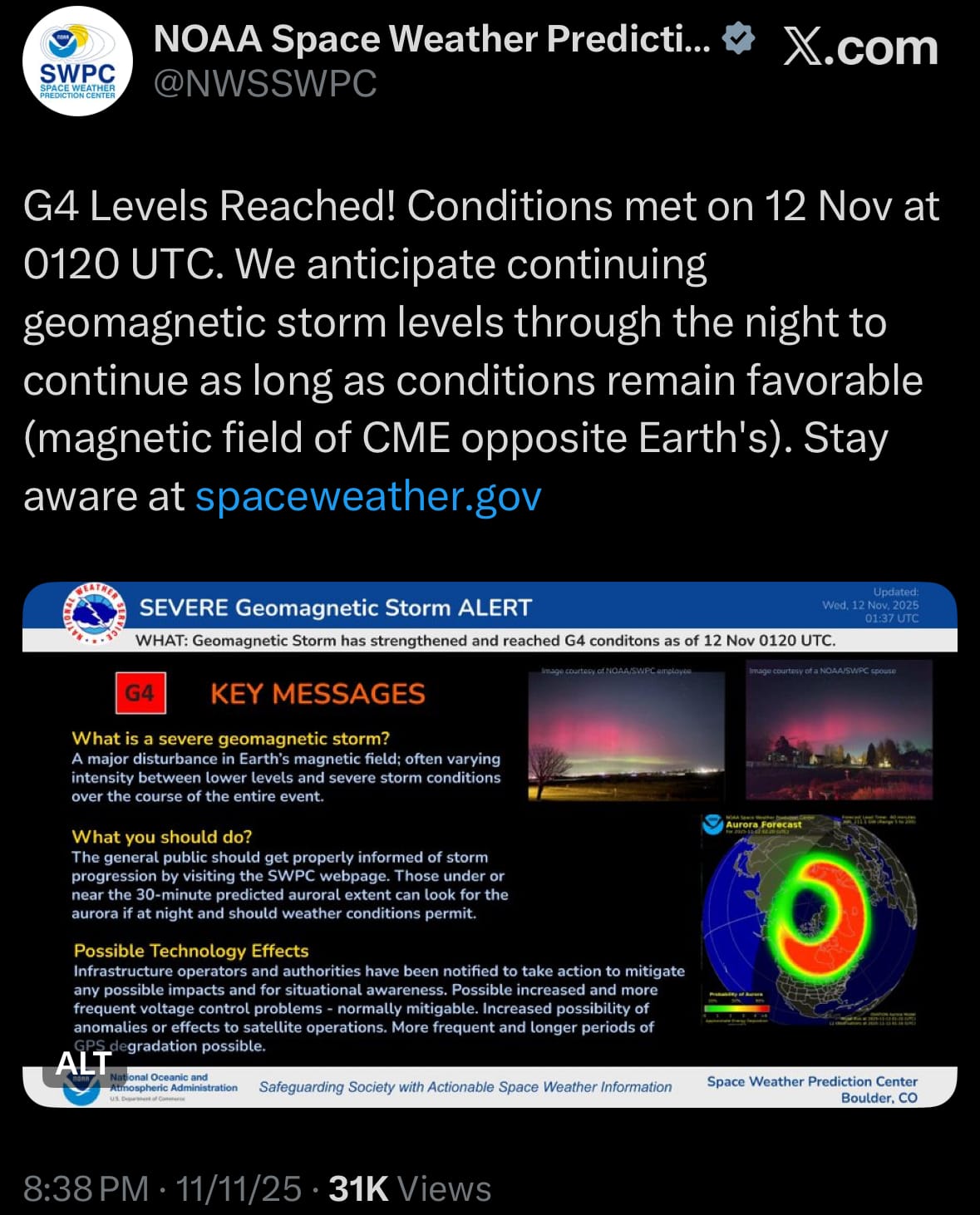
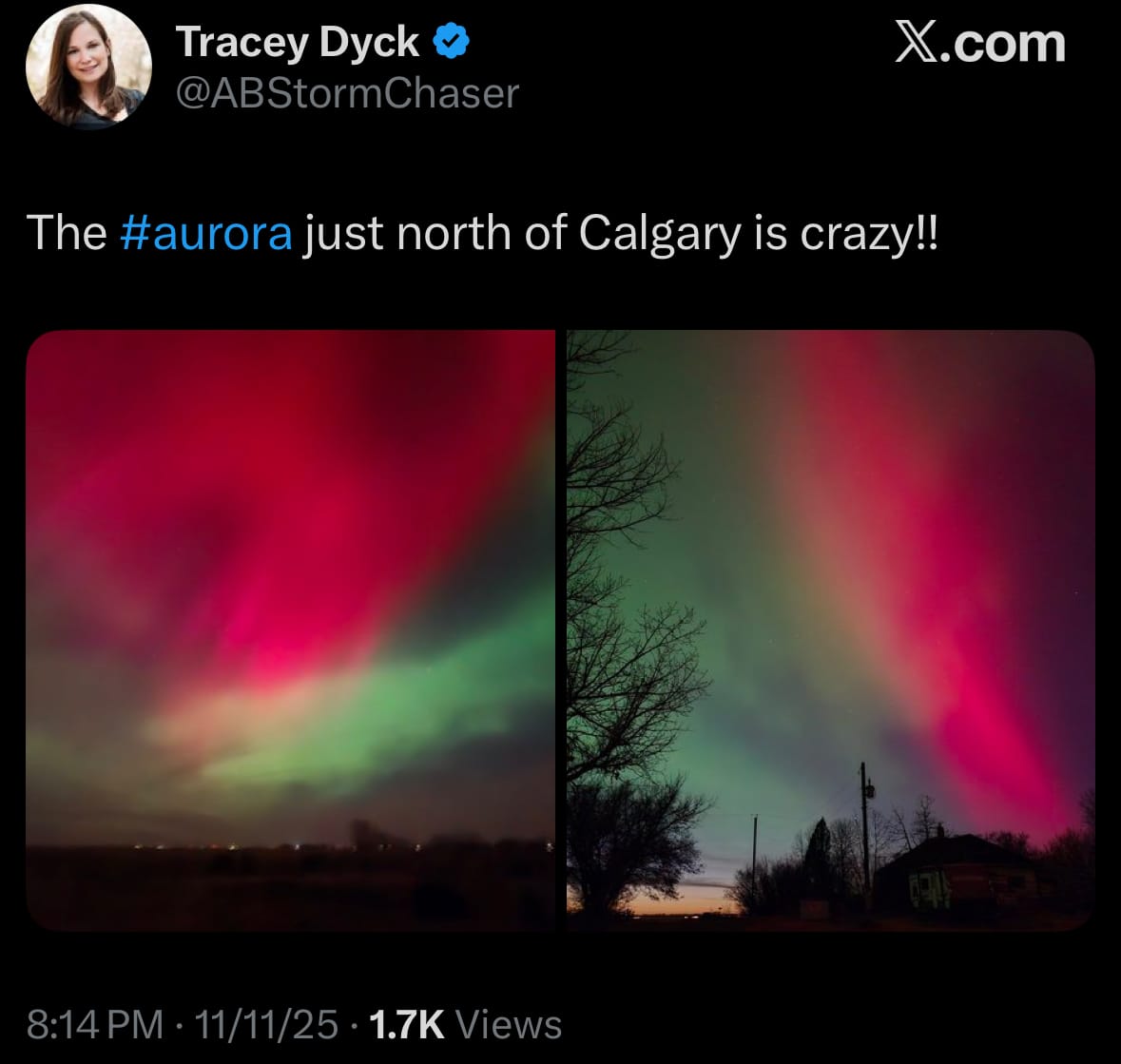
- Aurora borealis appeared across much of North America on the evening of November 11, reaching unusually south to states like Alabama, North Carolina, Missouri, Oklahoma, Texas, Arizona, and California, visible to the naked eye in the north and through long-exposure photos farther south. Bright colors such as greens, purples, reds, and pinks lit up skies in places like Minnesota, Idaho, Maryland, and New England, best seen from 10 p.m. to 2 a.m. local time in dark spots facing north away from lights. At G4 levels, possible effects include small power grid adjustments in high-latitude zones, extra drag on satellites needing position fixes, and brief high-frequency radio outages in polar areas, but no major issues with GPS, aviation, or broad infrastructure have occurred yet.
Statistic:
- Largest public companies on Earth by market capitalization:
- 🇺🇸 NVIDIA: $4.702T
- 🇺🇸 Apple: $4.067T
- 🇺🇸 Microsoft: $3.780T
- 🇺🇸 Alphabet (Google): $3.517T
- 🇺🇸 Amazon: $2.662T
- 🇸🇦 Saudi Aramco: $1.672T
- 🇺🇸 Broadcom: $1.662T
- 🇺🇸 Meta Platforms: $1.580T
- 🇹🇼 TSMC: $1.510T
- 🇺🇸 Tesla: $1.462T
- 🇺🇸 Berkshire Hathaway: $1.071T
- 🇺🇸 Eli Lilly: $886.25B
- 🇺🇸 JPMorgan Chase: $859.20B
- 🇺🇸 Walmart: $824.71B
- 🇨🇳 Tencent: $759.80B
- 🇺🇸 Oracle: $673.21B
- 🇺🇸 Visa: $654.08B
- 🇺🇸 Exxon Mobil: $505.11B
- 🇺🇸 Mastercard: $501.39B
- 🇺🇸 Netflix: $481.54B
- 🇺🇸 Johnson & Johnson: $466.99B
- 🇰🇷 Samsung: $457.43B
- 🇺🇸 Palantir: $455.14B
- 🇨🇳 Agricultural Bank of China: $405.12B
- 🇺🇸 Costco: $405.00B
History:
- Costco’s origins go back to retail innovator Sol Price, who created the concept of the membership warehouse store. In 1954, he founded FedMart, and later in 1976 launched Price Club in a converted airplane hangar in San Diego. His idea was simple but revolutionary: charge customers a yearly membership fee and sell bulk goods at very low markups, focusing first on small businesses that bought in large quantities. By keeping stores bare-bones—pallets on the floor, limited product selection, and minimal advertising—Price Club could pass major savings to members. In 1983, one of Sol Price’s former employees, Jim Sinegal, teamed up with Seattle retailer Jeff Brotman to start Costco. Their first store opened in Seattle, modeled closely after Price Club but with Sinegal’s signature rules: keep markups low, treat employees and vendors well, and sell only high-quality products. Costco grew quickly, expanding across the West Coast and into Canada. In 1993, Price Club and Costco merged to form PriceCostco, combining Price’s original concept with Costco’s rapid growth. Four years later, the company officially became Costco Wholesale and launched its now-famous private label, Kirkland Signature—named after the company’s then-headquarters in Kirkland, Washington.
- From the late 1990s onward, Costco refined its powerful and efficient formula. The stores offered a “treasure hunt” shopping experience, mixing essential items with limited-time deals and seasonal products. By selling only about 4,000 items (compared to over 30,000 in a typical supermarket), Costco kept costs down and quality high. Membership fees became the foundation of its profits, allowing the company to maintain low prices while paying employees well. As it grew globally into countries like the UK, Japan, Korea, Mexico, Australia, and China, Costco adapted to local tastes but kept its core values intact. The launch of Kirkland Signature turned into a success story of its own—often matching or beating national brands in quality and driving customer loyalty. Under leaders like Jim Sinegal, Craig Jelinek, and now Ron Vachris, Costco has stayed true to its original principles: limited selection, unbeatable value, and complete trust between the company and its members. Today, with nearly 900 warehouses worldwide and one of the most loyal customer bases in retail, Costco stands as a symbol of operational excellence and consumer trust built through consistency and simplicity.
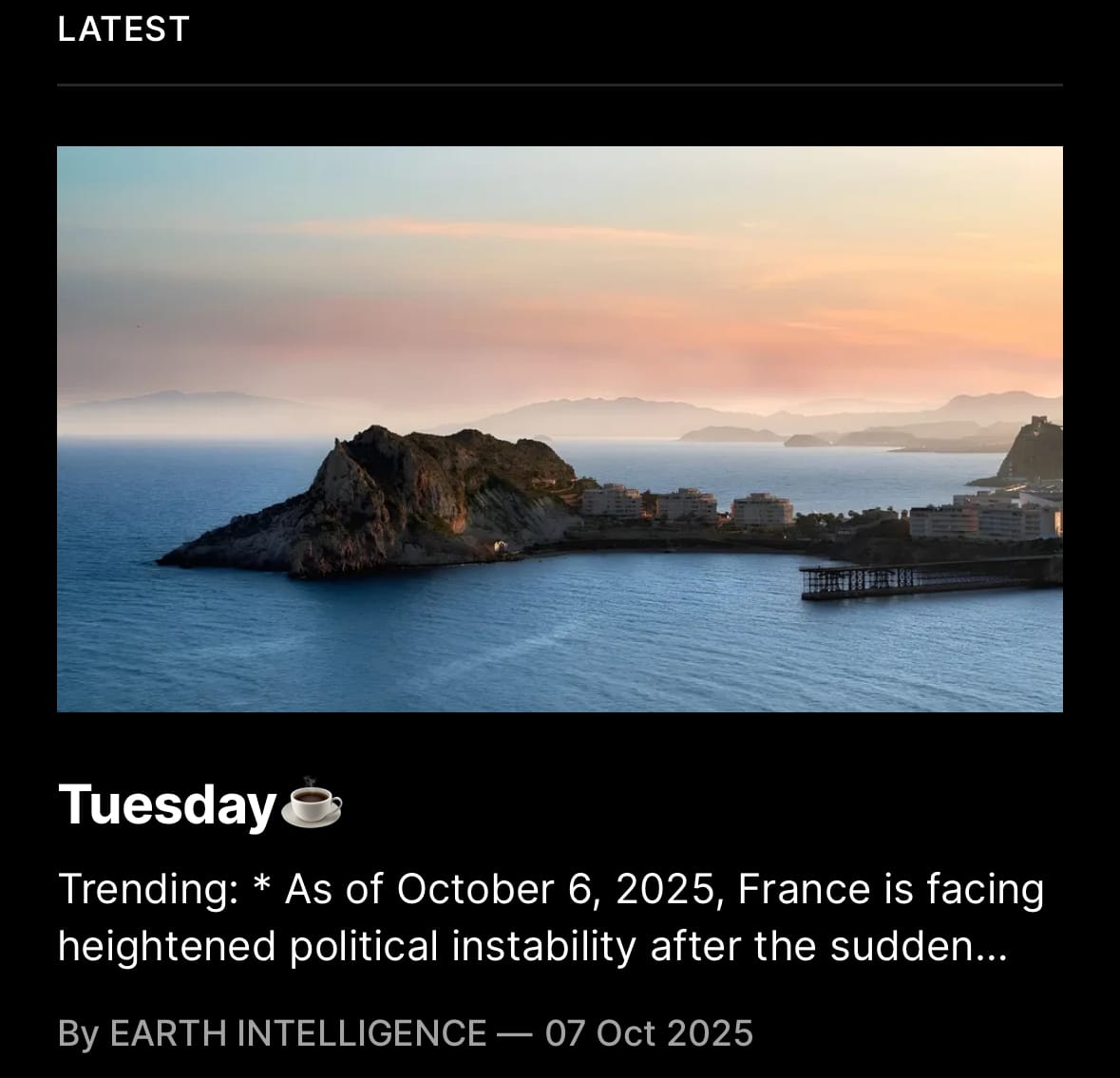
Image of the day:
Thanks for reading!
- EARTH INTELLIGENCE builds private intelligence systems for organizations — connecting their internal and external data with AI to create one interactive command center for real-time awareness, decision making, and predictions.
Earth is complicated, we make it simple.
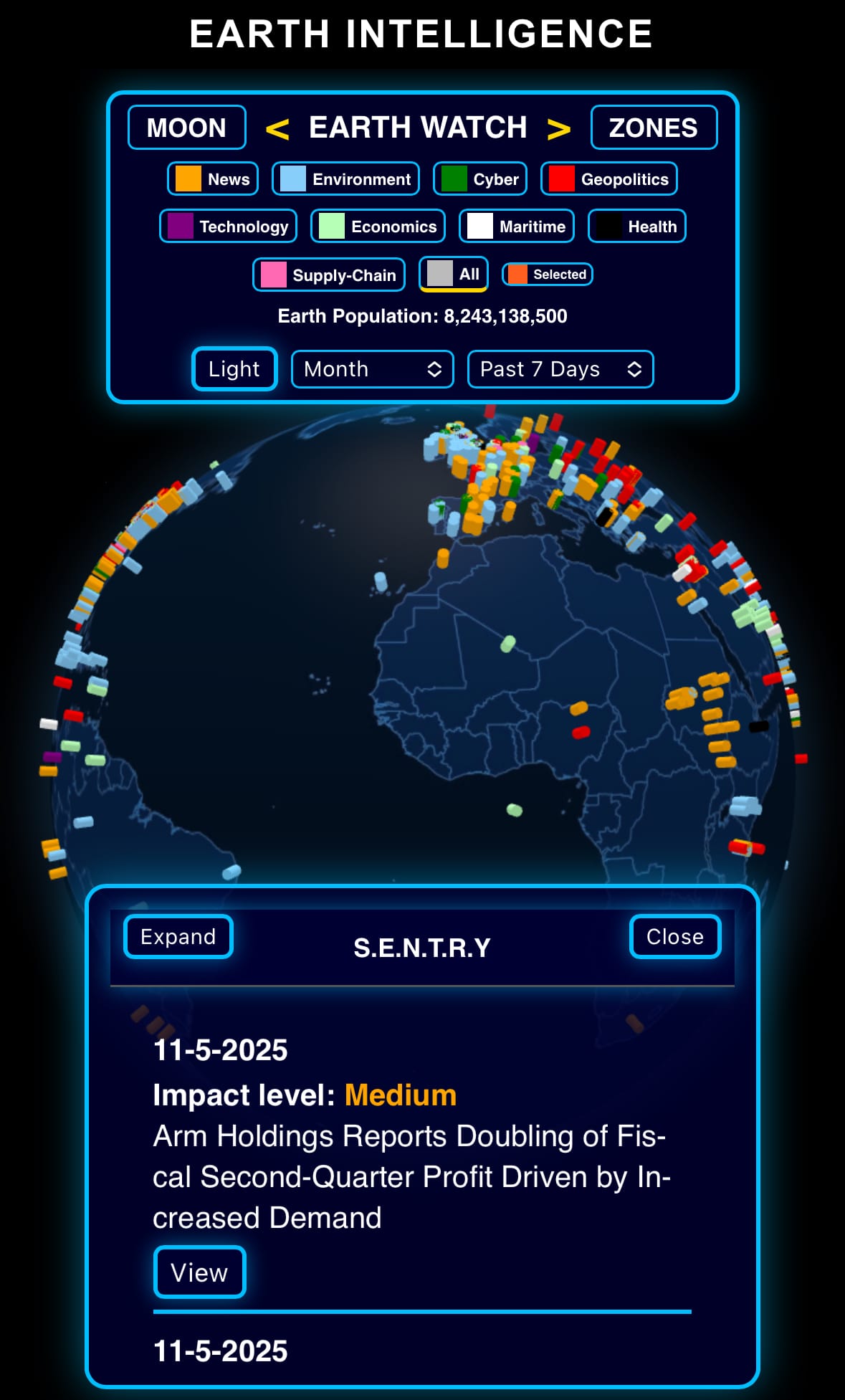
- Click below if you’d like to view our free EARTH WATCH globe:

Click below to view our previous newsletters:
Support/Suggestions Email:
earthintelligence@earthintel.news