Wednesday☕️


Trending:
- On December 16, 2025, U.S. President Donald Trump announced on Truth Social a "total and complete blockade" of all U.S.-sanctioned oil tankers entering or leaving Venezuela. He claimed the country is "completely surrounded by the largest Armada ever assembled in the History of South America" and designated the Venezuelan government under President Nicolás Maduro a Foreign Terrorist Organization, citing allegations of theft of U.S. assets, drug smuggling, human trafficking, and terrorism. The blockade targets vessels involved in Venezuela's oil trade, following a recent U.S. seizure of a sanctioned tanker and ongoing military operations that have included lethal strikes on over 25 vessels, resulting in at least 95 deaths.

- The move escalates a U.S. military buildup in the Caribbean amid efforts to pressure Maduro, whom the U.S. does not recognize as legitimate following disputed elections. Oil prices rose slightly (over 1%), with analysts estimating potential disruption to 800,000-900,000 barrels per day if enforced, though global supplies remain sufficient. Maduro's government has previously denounced similar U.S. actions as piracy aimed at seizing oil reserves; no immediate response to this announcement was reported.
Economics & Markets:
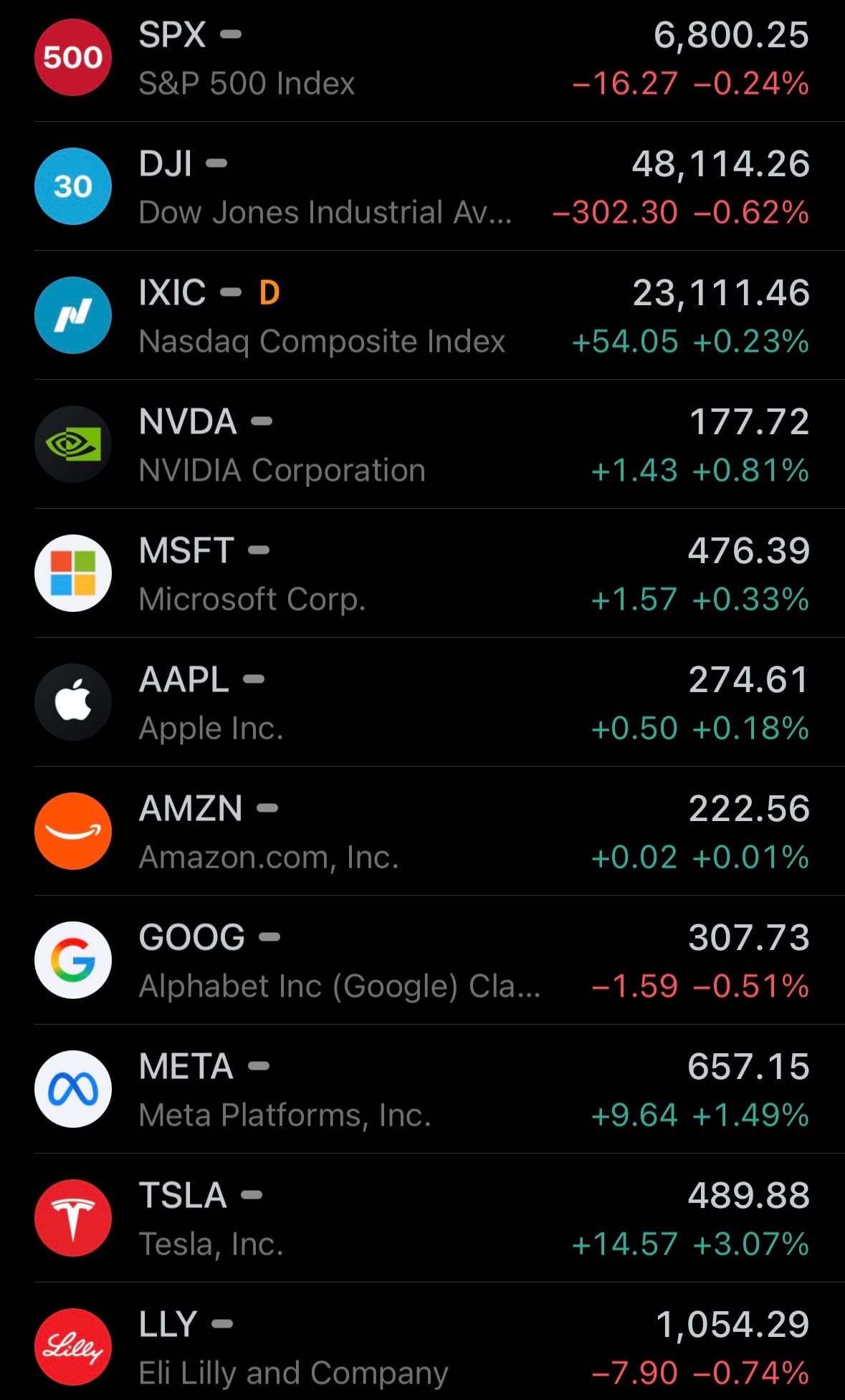
- Yesterday’s U.S. stock market:
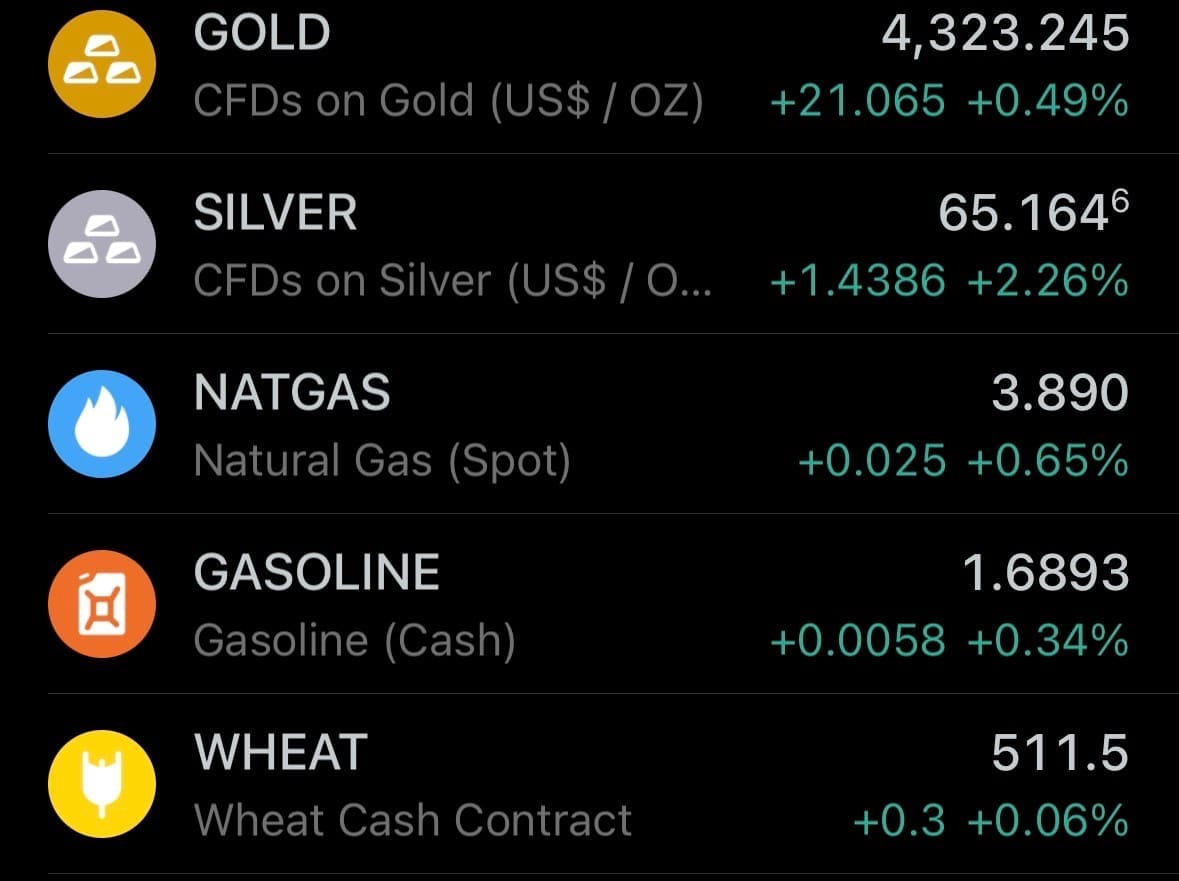
- Yesterday’s commodity market:
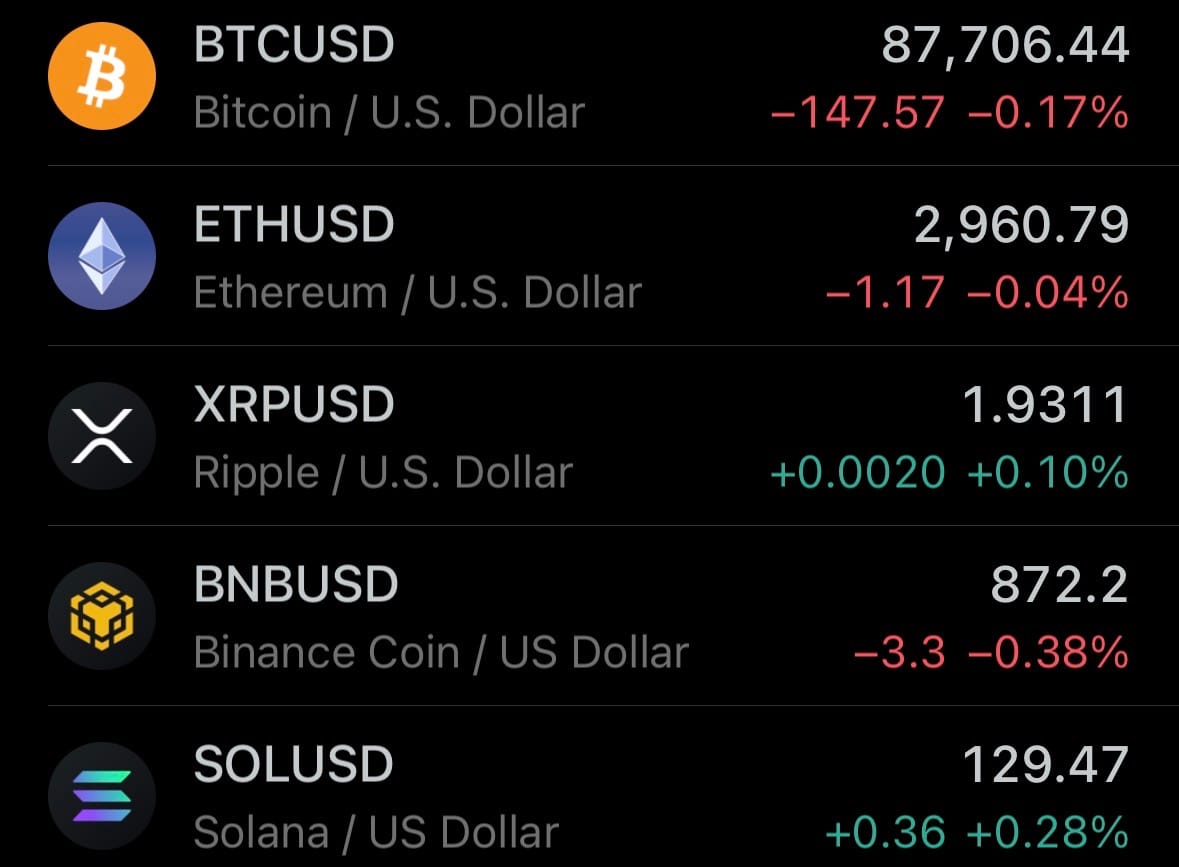
- Yesterday’s crypto market:
Environment & Weather:
- On December 16, 2025, NOAA's GOES-18 (GOES West) satellite captured water vapor imagery showing a Pineapple Express atmospheric river—a narrow plume of deep tropical moisture originating near the Hawaiian Islands—moving toward the Pacific Northwest. This system is delivering heavy rainfall to western Washington, Oregon, and northwestern California, exacerbating ongoing recovery from historic flooding caused by prior atmospheric rivers earlier in December. Impacts include renewed river rises, levee breaches (such as along the White and Green Rivers in Washington), evacuations, mudslides, urban flooding, and strong winds gusting up to 60-90 mph in some areas.

- As of the latest updates on December 16, the event continues with additional rain expected through mid-week, shifting southward and potentially bringing 4-12 inches of precipitation to affected zones, along with high-elevation snow as freezing levels drop. Flood warnings and watches remain active across the region, with rivers like the Skagit and Nooksack at risk of major flooding; a third storm system is forecast for later in the week, prolonging hazards amid saturated ground from back-to-back events.
Science & Technology:
- On December 16, 2025, OpenAI announced the rollout of an updated ChatGPT Images feature, powered by its new flagship image generation model, GPT Image 1.5. The model offers stronger instruction following, more precise editing while preserving details (such as facial likeness, lighting, composition, and branded elements), improved text rendering for denser and smaller text, and generation speeds up to 4x faster than the previous version. It is immediately available to all ChatGPT users (free and paid) through a new dedicated "Images" sidebar section functioning as a creative studio with preset styles, trending prompts, and filters.

- The update also extends to the OpenAI API as GPT Image 1.5, with approximately 20% lower costs for image inputs and outputs compared to the prior model, enabling better integration for developers in areas like marketing, e-commerce, and product visualization. This release intensifies competition with Google's Gemini image tools (including the recent Nano Banana Pro), following reports of OpenAI accelerating plans amid internal efforts to regain leadership in generative AI capabilities. Early benchmarks on platforms like LMArena reportedly placed GPT Image 1.5 at the top for overall performance.
Statistic:
- Largest public construction companies by market capitalization:
- 🇫🇷 Vinci: $78.84B
- 🇮🇳 Larsen & Toubro: $61.49B
- 🇪🇸 Ferrovial: $48.04B
- 🇺🇸 D. R. Horton: $45.30B
- 🇨🇳 China State Construction Engineering: $30.22B
- 🇩🇪 Hochtief: $29.56B
- 🇺🇸 Lennar: $29.03B
- 🇺🇸 Emcor: $27.95B
- 🇪🇸 Grupo ACS: $26.02B
- 🇺🇸 PulteGroup: $24.54B
- 🇺🇸 NVR: $20.80B
- 🇯🇵 Daiwa House: $20.70B
- 🇫🇷 Bouygues: $19.82B
- 🇨🇳 China Communications Construction: $19.13B
- 🇨🇳 China Railway Group: $17.49B
- 🇯🇵 Kajima: $17.42B
- 🇯🇵 Taisei Corporation: $14.92B
- 🇨🇳 China Railway Construction: $14.90B
- 🇯🇵 Obayashi: $14.39B
- 🇯🇵 Sekisui House: $14.36B
- 🇫🇷 Eiffage: $13.81B
- 🇺🇸 Toll Brothers: $13.36B
- 🇨🇳 Power Construction Corp of China: $12.62B
- 🇨🇳 Sichuan Road and Bridge Group (SRBG): $12.38B
- 🇪🇸 Acciona: $11.80B
History:
- Boeing’s origins trace back to 1916, when William E. Boeing founded Pacific Aero Products in Seattle after building his own seaplane, renaming it the Boeing Airplane Company in 1917. Early survival came through U.S. Navy contracts during World War I, but Boeing’s real ascent began in the interwar years as it helped shape modern aviation. The Model 247 (1933) introduced all-metal construction, retractable landing gear, and streamlined aerodynamics, setting the template for modern airliners. Antitrust action under the 1934 Air Mail Act forced Boeing to split apart its vertically integrated empire, separating aircraft manufacturing from airlines and engine companies—ironically sharpening Boeing’s focus on engineering. During World War II, Boeing became indispensable, producing the B-17 Flying Fortress and later the B-29 Superfortress, one of the most complex weapons systems of the war. The Cold War elevated Boeing further: it built the B-47, B-52 (still operational decades later), early ICBMs, and became a pillar of the U.S. space effort, contributing to the Saturn V, Apollo, and early space station systems. In commercial aviation, Boeing defined the jet age with the 707 (1958), then dominated global travel with the 727, 737, and the 747 (1969)—the widebody jumbo jet that reshaped international commerce and tourism. By the late 20th century, Boeing stood as one of the most powerful aerospace manufacturers in history, spanning civil aviation, defense, and space.
- The modern era has been more complex. The 1997 merger with McDonnell Douglas greatly expanded Boeing’s defense portfolio—bringing programs like the F-15, F/A-18, and space systems—but also shifted internal culture toward financial efficiency and shareholder returns. Boeing remained a defense heavyweight through projects such as the KC-46 Pegasus, P-8 Poseidon, missile defense systems, and space platforms, while launching the 787 Dreamliner, which pushed composite materials and fuel efficiency into the commercial mainstream. However, the 737 MAX crashes (2018–2019) triggered the most severe crisis in Boeing’s history, exposing failures in design oversight, certification processes, and corporate governance. In the 2020s, Boeing began a slow recovery amid intense regulatory scrutiny while remaining strategically vital to U.S. national security. That importance was reinforced when Boeing secured the U.S. Air Force’s Next Generation Air Dominance (NGAD) fighter contract, with the aircraft designated F-47, marking Boeing’s return to the forefront of cutting-edge combat aircraft development after years of Lockheed Martin dominance. Alongside NGAD, Boeing continues work on autonomous systems, advanced fighters, military aircraft sustainment, space launch systems, and classified defense programs. Today, Boeing occupies a paradoxical position: a company with unmatched historical influence and ongoing military relevance, yet one still rebuilding trust and engineering credibility. Its future now hinges on whether it can re-center technical excellence and safety while delivering the next generation of aircraft—both civilian and military—after more than a century at the center of global aerospace power.
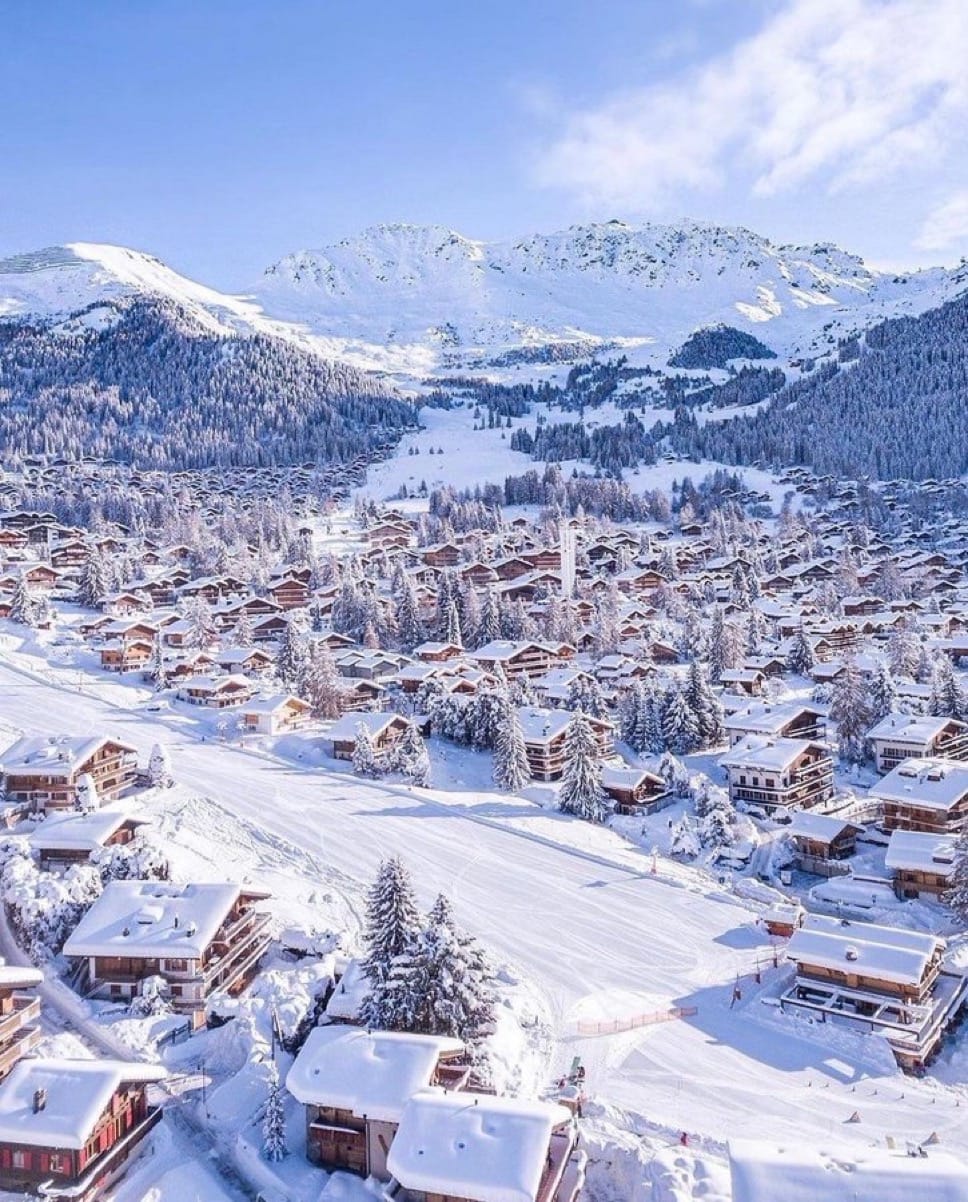
Image of the day:
Thanks for reading! Earth is complicated, we make it simple.


- Click below if you’d like to view our free EARTH WATCH globe:
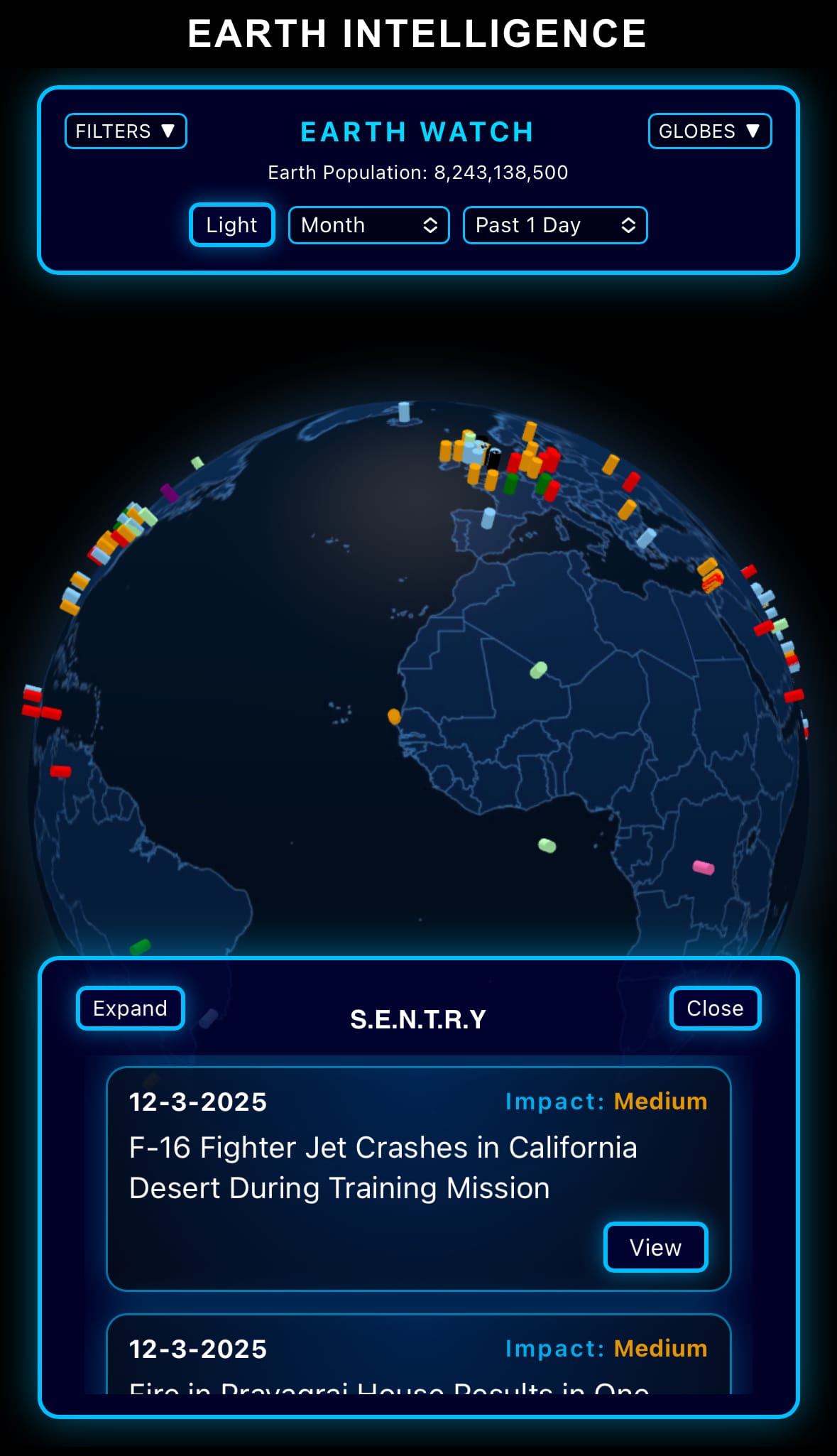
- Download our mobile app on the Apple App Store (Android coming soon):

Click below to view our previous newsletters:

Support/Suggestions Email:
earthintelligence@earthintel.news