Wednesday☕️


Economics & Markets:
- On January 27, 2026, Coinbase announced the launch of copper and platinum futures trading on its platform. Users can now trade these contracts with lower upfront capital requirements compared to traditional exchanges, gaining leveraged exposure to two key industrial metals.

- This addition expands Coinbase’s metals futures offerings beyond gold and silver (already available), allowing traders to access a broader range of commodities critical to manufacturing, electronics, construction, clean energy, and automotive sectors.
- Yesterday’s U.S. stock market:
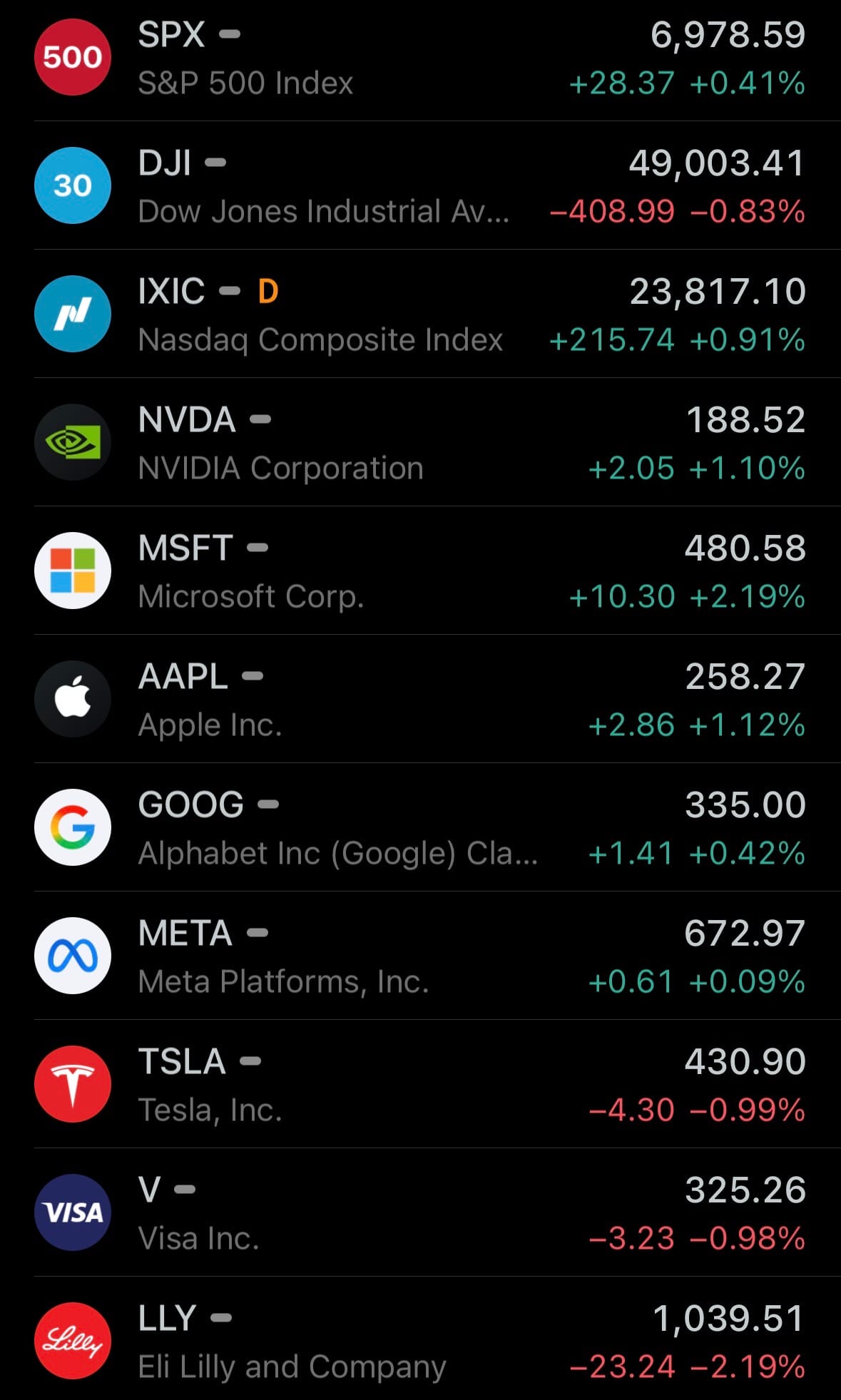
- Yesterday’s commodity market:

- Yesterday’s crypto market:

Geopolitics & Military Activity:
- On January 27, 2026, North Korea launched two short-range ballistic missiles eastward from its west coast, according to South Korea’s Joint Chiefs of Staff (JCS). The first missile was fired around 3:54 p.m. local time, reaching a maximum altitude of about 80 km and traveling approximately 350 km before landing. The second followed at around 4:02 p.m., peaking at roughly 70 km altitude and flying about 340 km. Both missiles fell in waters near North Korea’s east coast, outside South Korea’s exclusive economic zone (EEZ).
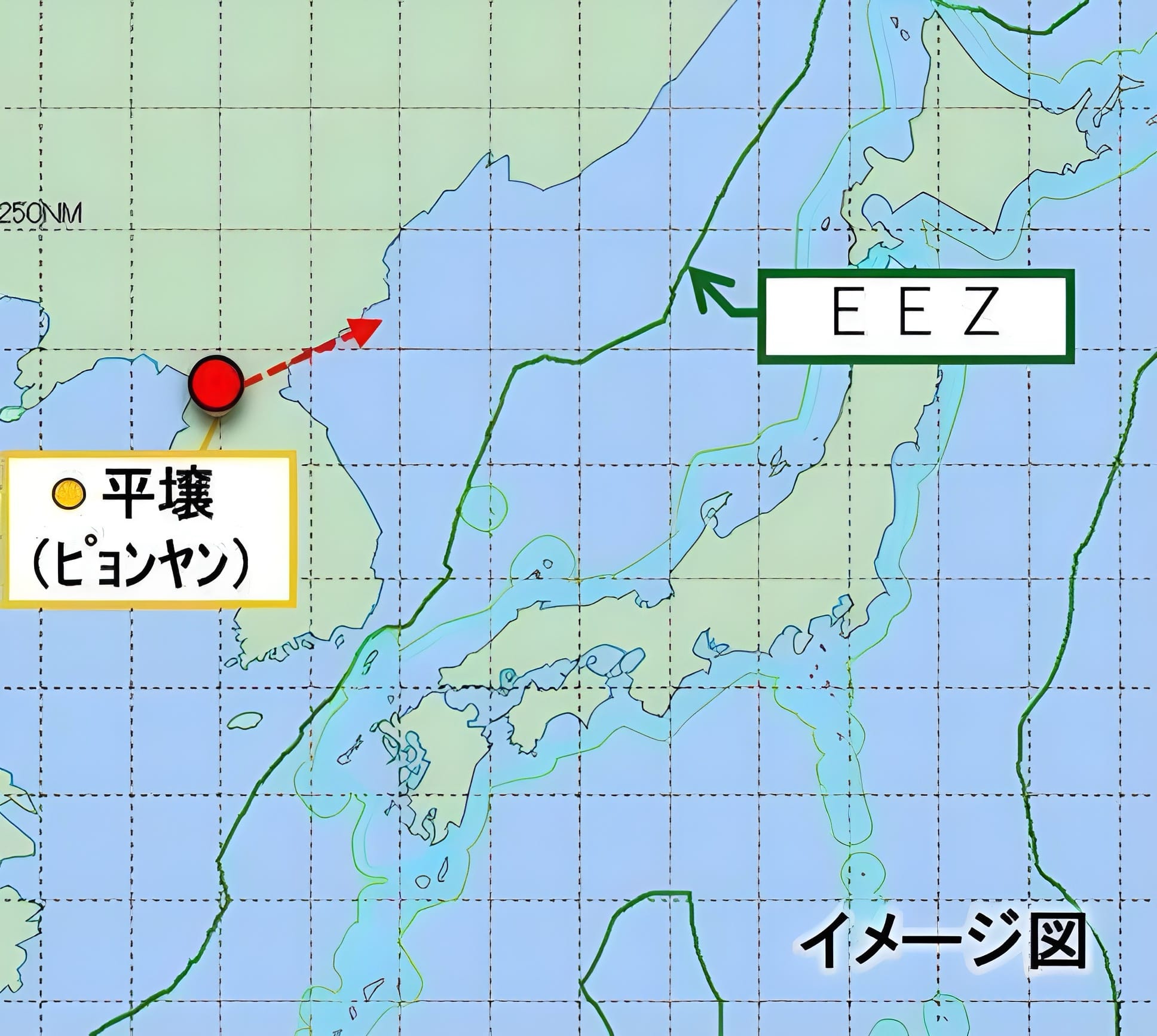
- South Korea stated it is closely coordinating with the United States and Japan to analyze the launches in detail. The launches come amid heightened regional tensions and follow North Korea’s pattern of periodic missile tests to demonstrate capabilities and respond to allied military exercises. No further provocations or statements from Pyongyang were noted in initial reports.
Environment & Weather:
- On January 27, 2026, a massive landslide triggered by heavy rains from Cyclone Harry devastated parts of Niscemi, a hilltop town in southern Sicily. The slide carved out a 4 km (2.5-mile) chasm, with drops of 20–50 meters in places, leaving entire neighborhoods, homes, streets, and vehicles precariously perched on the edge of a sheer cliff. The hillside remains active and continues shifting toward the Gela plain below.
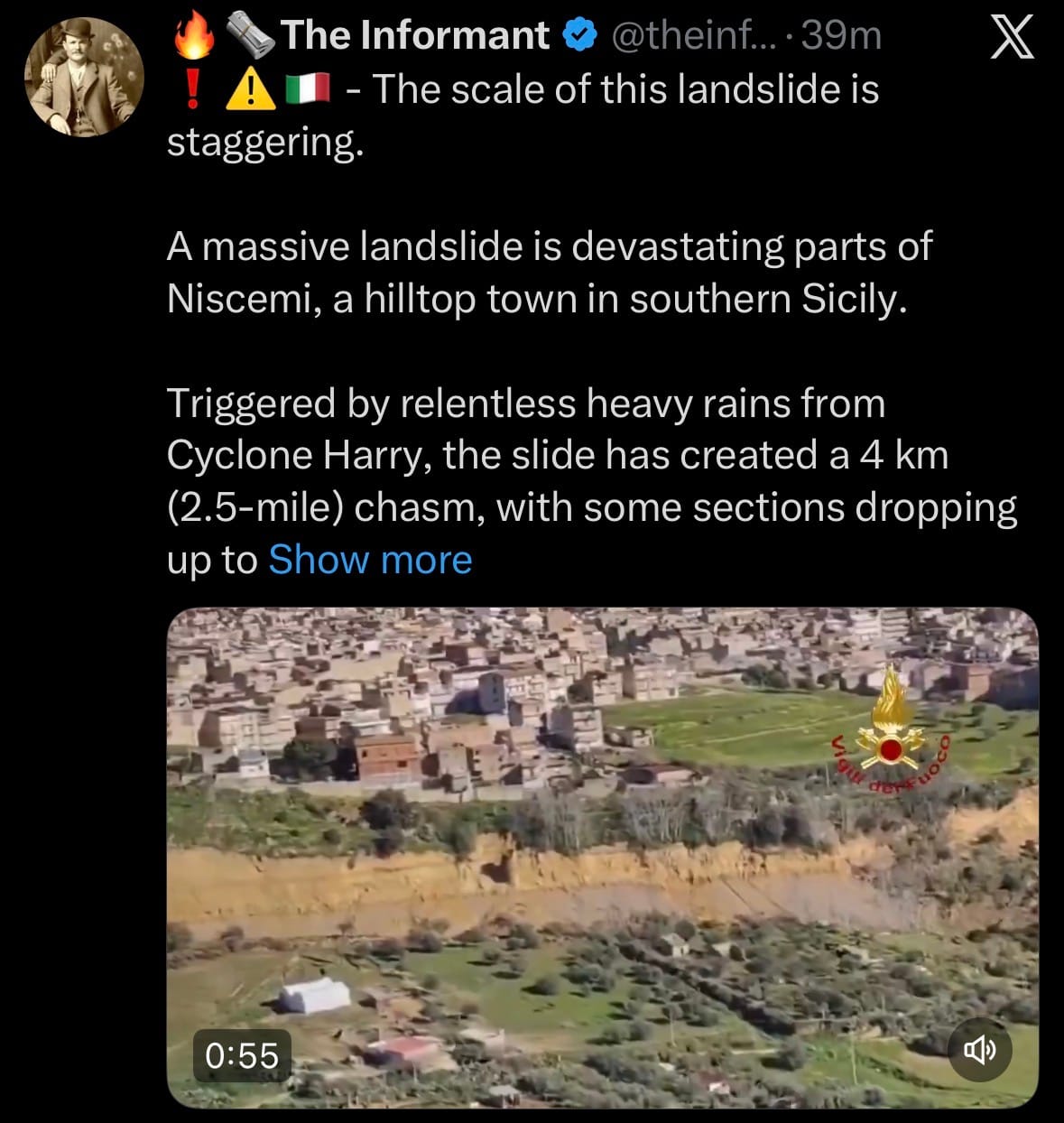
- Mayor Massimiliano Conti called the situation "dramatic" and "dire," urging residents to stay indoors and avoid restricted zones. Over 1,500 people have been evacuated—most staying with relatives or friends, with a smaller group housed in the local sports arena. No deaths or injuries have been reported so far, but hundreds of buildings within 50–70 meters of the edge are at imminent risk of collapse, and some homes may need permanent relocation. Italy has declared a state of emergency for the hardest-hit areas, with regional damage from Cyclone Harry already exceeding €1 billion (and higher when including broader southern Italy impacts).
Science & Technology:
- On January 27, 2026, OpenAI launched Prism, a free dedicated workspace designed specifically for scientists to write, collaborate on, and manage research projects, powered by GPT-5.2. The platform is available immediately to anyone with a standard ChatGPT personal account at prism.openai.com.
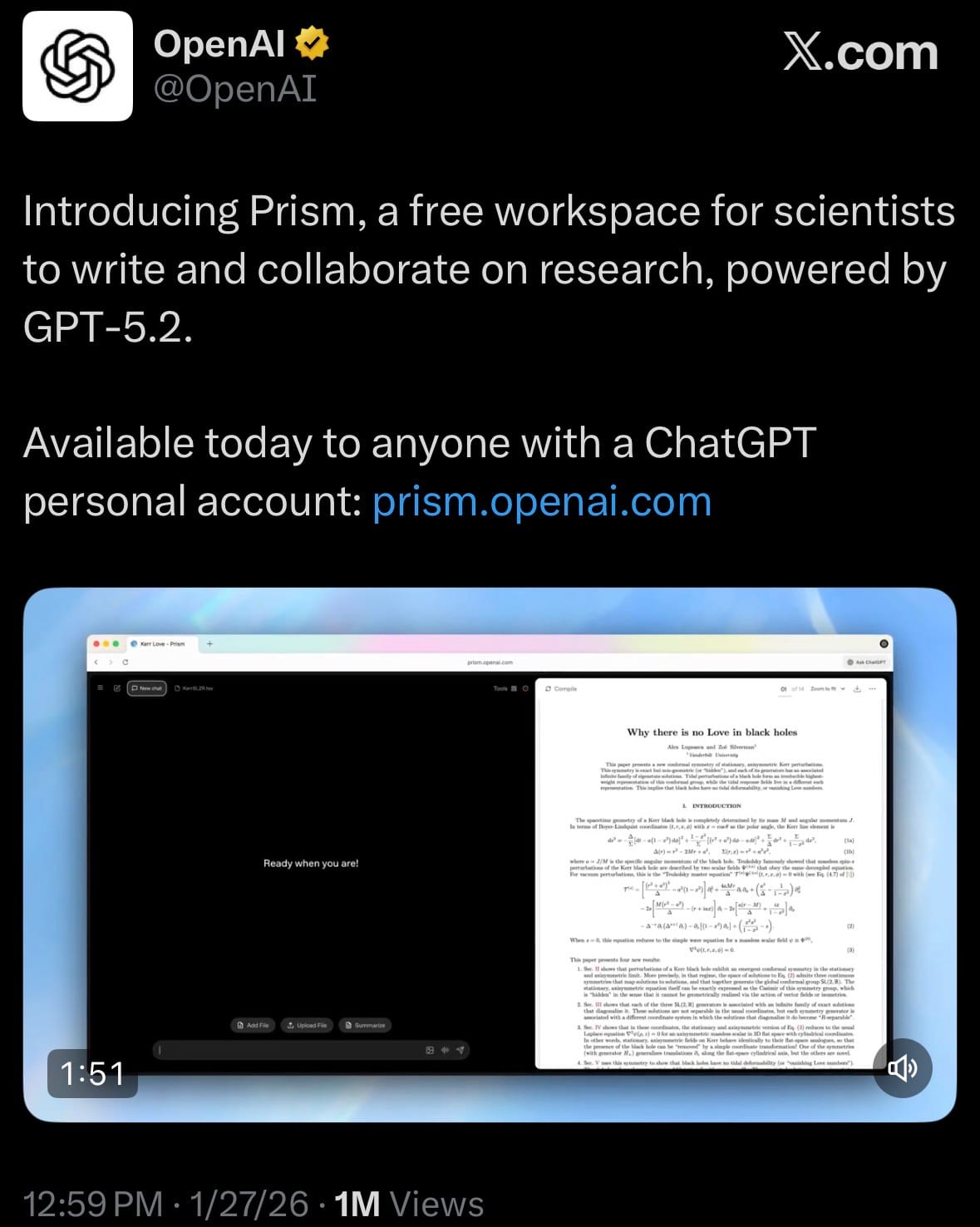
- Prism offers tools for drafting papers, organizing notes and references, generating figures and data visualizations, running code snippets, brainstorming hypotheses, and real-time collaboration with co-authors—all within a clean, research-focused interface. It integrates GPT-5.2’s advanced reasoning, scientific knowledge, and multimodal capabilities to assist with literature synthesis, experiment design, peer-review-style feedback, and manuscript polishing.
Statistic:
- Largest companies on Earth by market capitalization:
- 🇺🇸 NVIDIA – $4.589T
- 🇺🇸 Alphabet (Google) – $4.044T
- 🇺🇸 Apple – $3.816T
- 🇺🇸 Microsoft – $3.572T
- 🇺🇸 Amazon – $2.615T
- 🇹🇼 TSMC – $1.754T
- 🇺🇸 Meta Platforms – $1.696T
- 🇸🇦 Saudi Aramco – $1.629T
- 🇺🇸 Broadcom – $1.577T
- 🇺🇸 Tesla – $1.433T
- 🇺🇸 Berkshire Hathaway – $1.024T
- 🇺🇸 Walmart – $932.34B
- 🇺🇸 Eli Lilly – $931.87B
- 🇺🇸 JPMorgan Chase – $817.52B
- 🇰🇷 Samsung – $757.64B
- 🇨🇳 Tencent – $703.65B
- 🇺🇸 Visa – $627.71B
- 🇺🇸 Exxon Mobil – $583.34B
- 🇳🇱 ASML – $564.59B
- 🇺🇸 Johnson & Johnson – $540.74B
- 🇺🇸 Oracle – $502.51B
- 🇺🇸 Mastercard – $470.45B
- 🇺🇸 Micron Technology – $461.72B
- 🇺🇸 Costco – $430.76B
- 🇨🇳 Alibaba – $412.33B
History:
- “Invisible wars” are conflicts where states deliberately avoid open battle and instead apply force through deniable, indirect, and systemic means—pressure that reshapes outcomes without triggering formal war. These methods are ancient. Athens used economic exclusion and trade denial against rivals in the 5th century BC; Rome manipulated grain supply and client elites to destabilize enemies without legions marching. In the early modern era, empires used privateers to cripple trade while denying responsibility, and great powers quietly financed rebellions or assassinated rival claimants to tilt balance without invasion. By the 19th century, these tactics hardened into statecraft: Britain’s global maritime blockades choked adversaries’ economies; financial leverage and access to insurance and credit became coercive tools; intelligence networks quietly mapped elites, ports, and supply chains. World War I and World War II scaled invisible war to industrial levels—economic blockades starved industries, intelligence services ran sabotage networks across Europe, and deception operations like false troop concentrations and fake radio traffic directly shaped battlefield outcomes. Assassinations and targeted killings were used to remove resistance leaders, silence collaborators, or decapitate networks, often through proxy actors or deniable methods. The lesson was unmistakable: you could win strategically by destroying logistics, morale, leadership, and information—long before armies clashed.
- The Cold War transformed invisible war into a permanent global contest, because nuclear weapons made direct conflict catastrophic. Intelligence agencies became frontline strategic actors. Covert action—deliberately influencing foreign governments, funding proxy forces, sabotaging infrastructure, manipulating elections, or destabilizing regimes—was institutionalized. Intelligence services ran parallel wars across Africa, Latin America, Asia, and the Middle East, backing rival factions, moving weapons through clandestine supply routes, and shaping political outcomes without official declarations. Black operations went further: activities so sensitive they were compartmented even within governments—false-flag operations, deep-cover penetration of rival institutions, clandestine assassinations of key figures, and industrial espionage to steal military and technological advantage. High-profile examples shaped doctrine: targeted killings of militant leaders to disrupt organizations; sabotage of weapons programs; covert support that quietly shifted the outcome of conflicts without visible troop deployments. Intelligence agencies simultaneously fought each other—counterintelligence catching moles, rolling up networks, feeding false information, and quietly neutralizing adversary operations. These were not isolated incidents; they were sustained campaigns, where success was measured in delayed programs, fractured alliances, weakened economies, and leadership paralysis rather than territory gained.
- In the 21st century, invisible wars have become the dominant mode of competition because modern systems are interconnected and fragile. Cyber operations quietly penetrate power grids, financial networks, communications, and industrial control systems—sometimes stealing data, sometimes pre-positioning for future disruption. Economic warfare has become precise and scalable: sanctions targeting individuals, banks, energy sectors, shipping insurance, and critical technologies can grind down a state’s capacity without a single missile launch. Logistics denial exploits global supply chains—chokepoints, port access, container routing, spare parts, and compliance regimes—to quietly starve industries or militaries of what they need. Information warfare operates continuously through media, social platforms, leaks, and narrative shaping, influencing public opinion, elections, and legitimacy. Alongside this, intelligence agencies continue their shadow conflicts: recruiting insiders, sabotaging clandestine procurement networks, exposing or eliminating key operators, and conducting deniable strikes—including assassinations—against individuals judged critical to adversary strategy. These actions are rarely acknowledged, often plausibly denied, and almost never isolated; they are part of long-running campaigns designed to apply constant pressure. Invisible wars are not about spectacle—they are about control. Control of information, money, movement, technology, leadership, and perception. The most decisive battles of the modern era increasingly happen offstage, where outcomes are shaped quietly, incrementally, and irreversibly—long before the world realizes a war was ever underway.
Image of the day:

Thanks for reading! Earth is complicated, we make it simple.
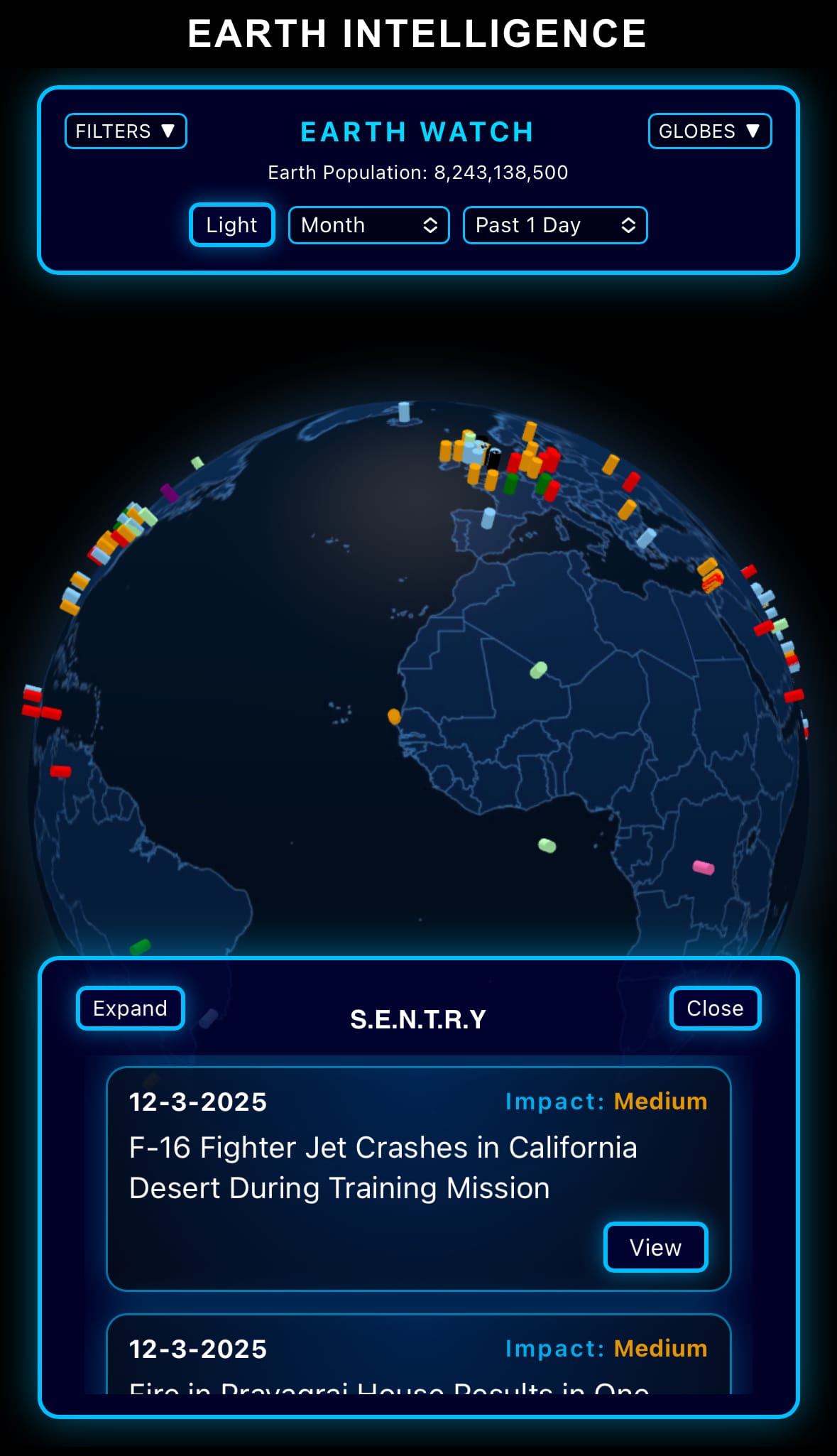
- Click below if you’d like to view our free EARTH WATCH globe:
- Download our mobile app:


Click below to view our previous newsletters:

Support/Suggestions Email:
earthintelligence@earthintel.news