Wednesday☕️


Trending:
- On March 3, 2026, joint Ecuadorian and U.S. military forces launched coordinated operations targeting designated terrorist organizations in Ecuador, focusing on narco-terrorist groups tied to drug trafficking, violence, and corruption in the region. The operations, overseen by U.S. Southern Command (SOUTHCOM), included raids, intelligence sharing, and direct action against cartel-linked networks operating inside Ecuadorian territory.
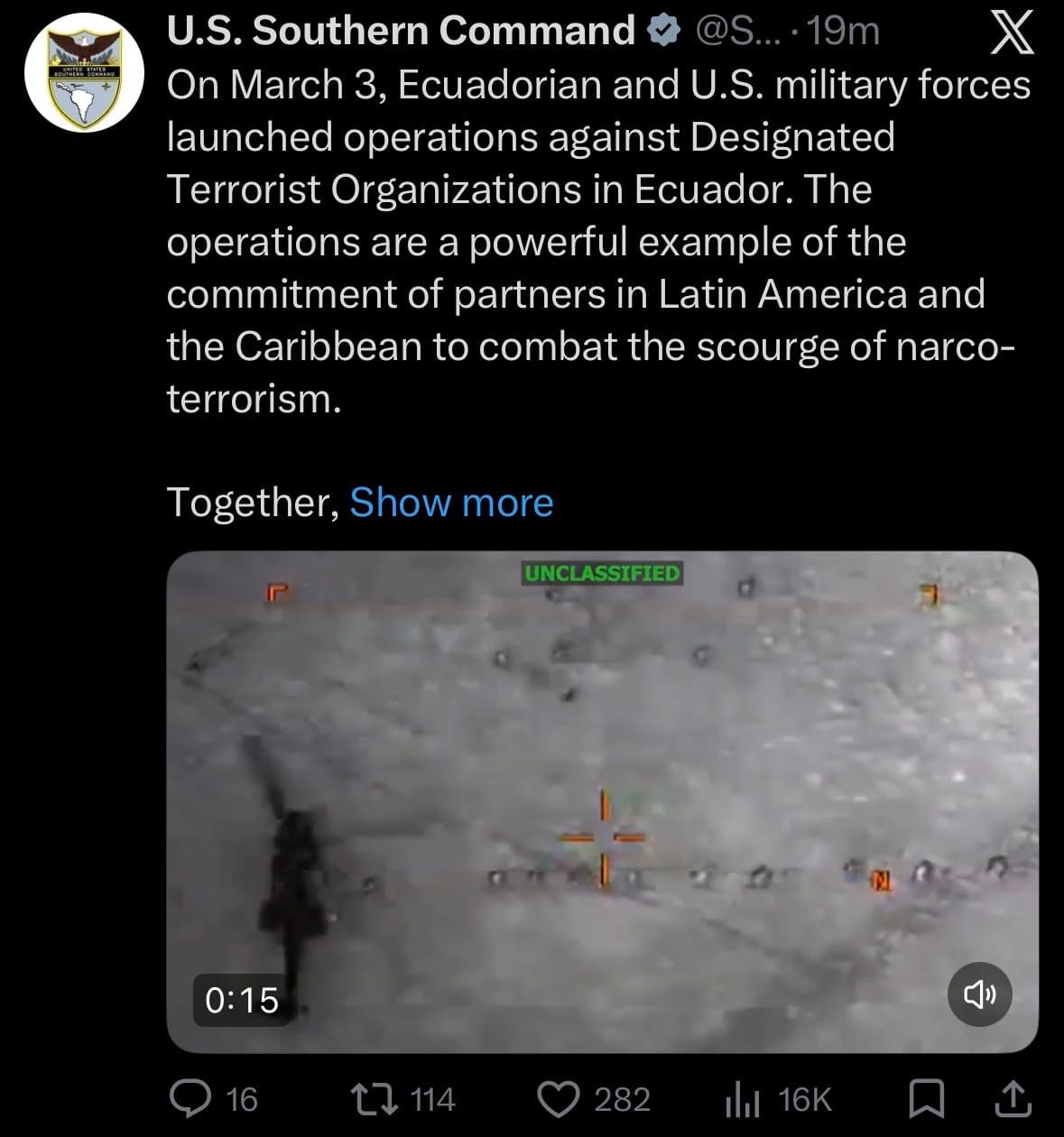
- SOUTHCOM Commander Gen. Francis L. Donovan praised the Ecuadorian armed forces for their courage and commitment, highlighting the partnership's resolve to combat narco-terrorism across Latin America and the Caribbean. Officials called the actions decisive efforts to disrupt the groups' financing, logistics, and operations; no specific locations or casualty figures were released.
Economics & Markets:
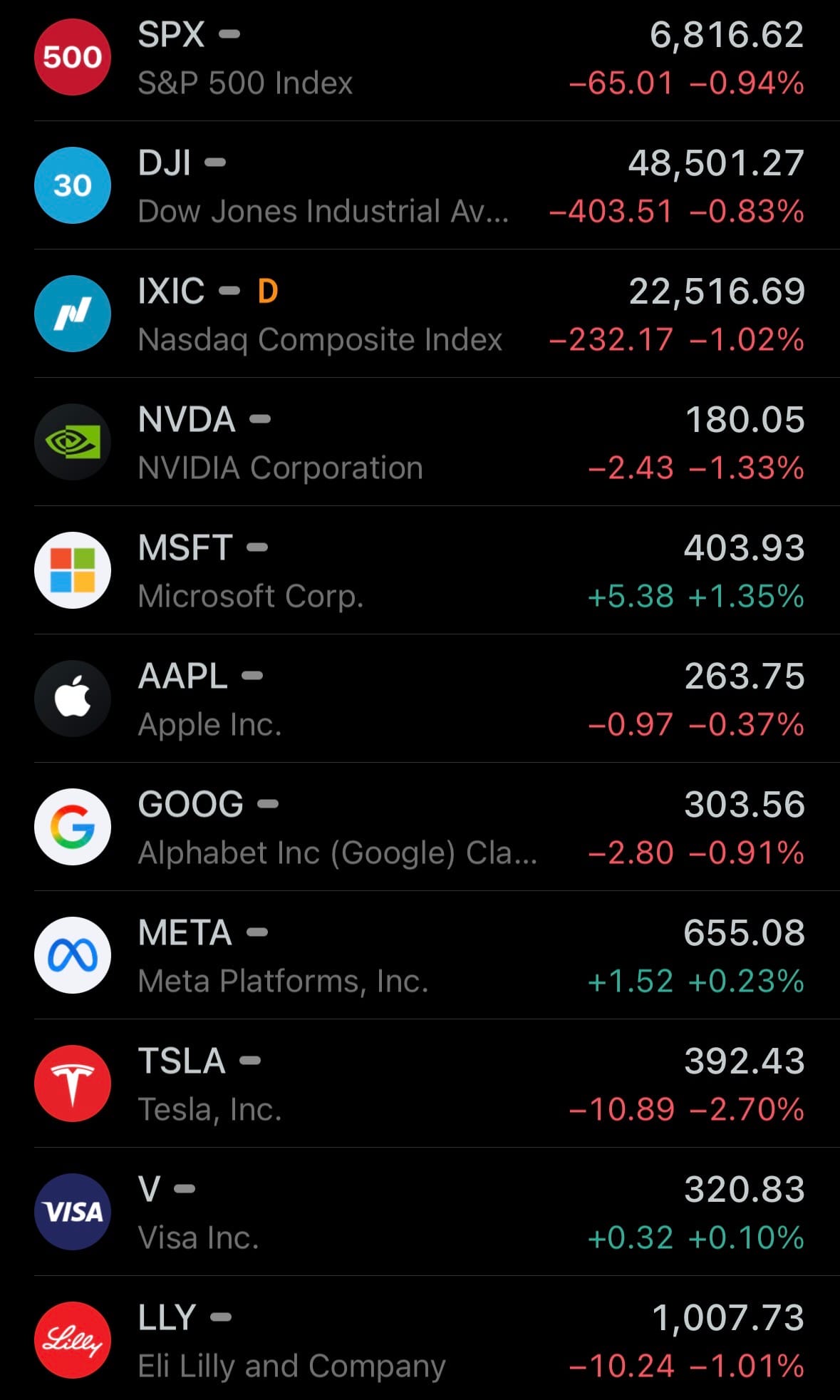
- Yesterday’s U.S. stock market:
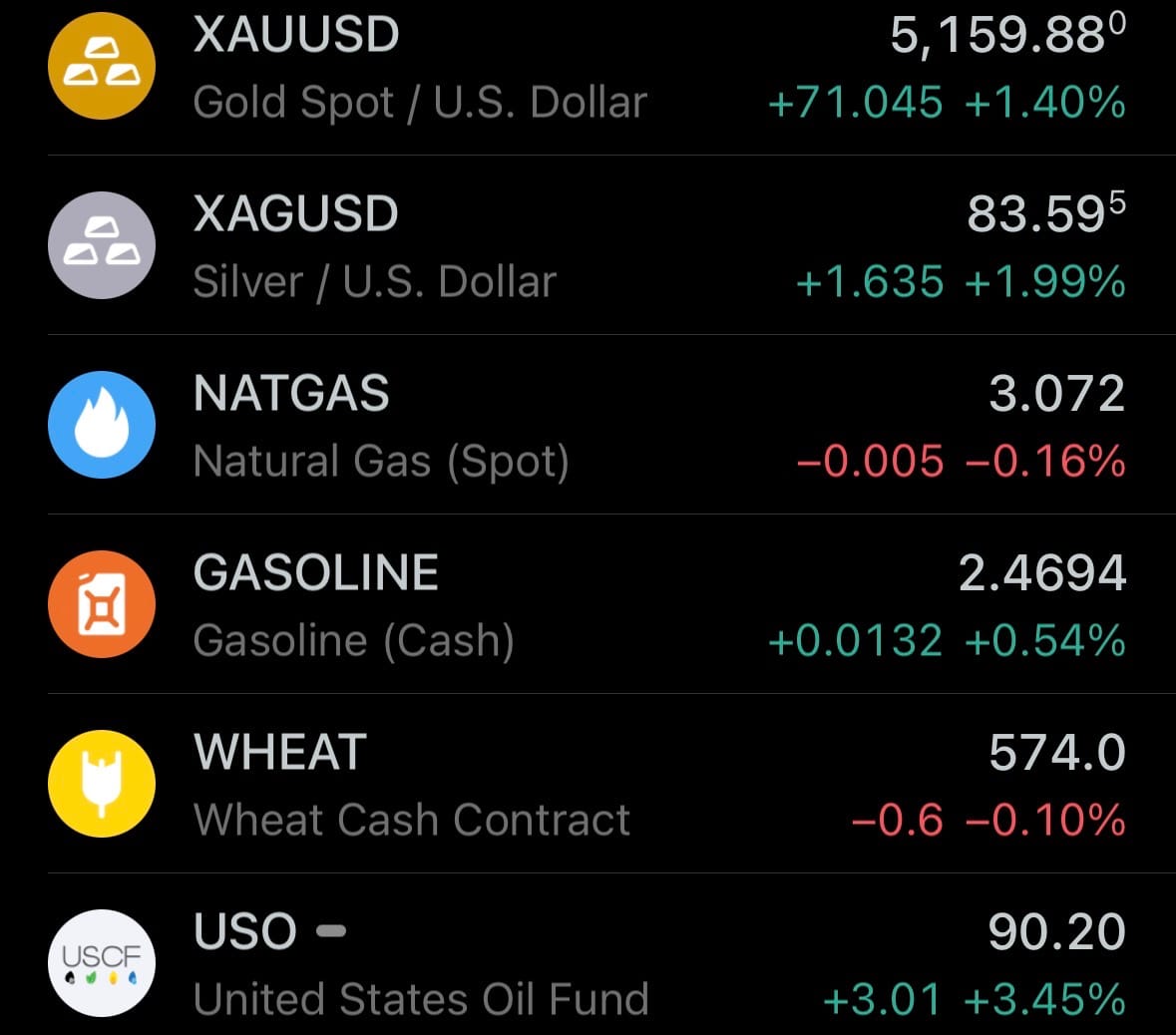
- Yesterday’s commodity market:
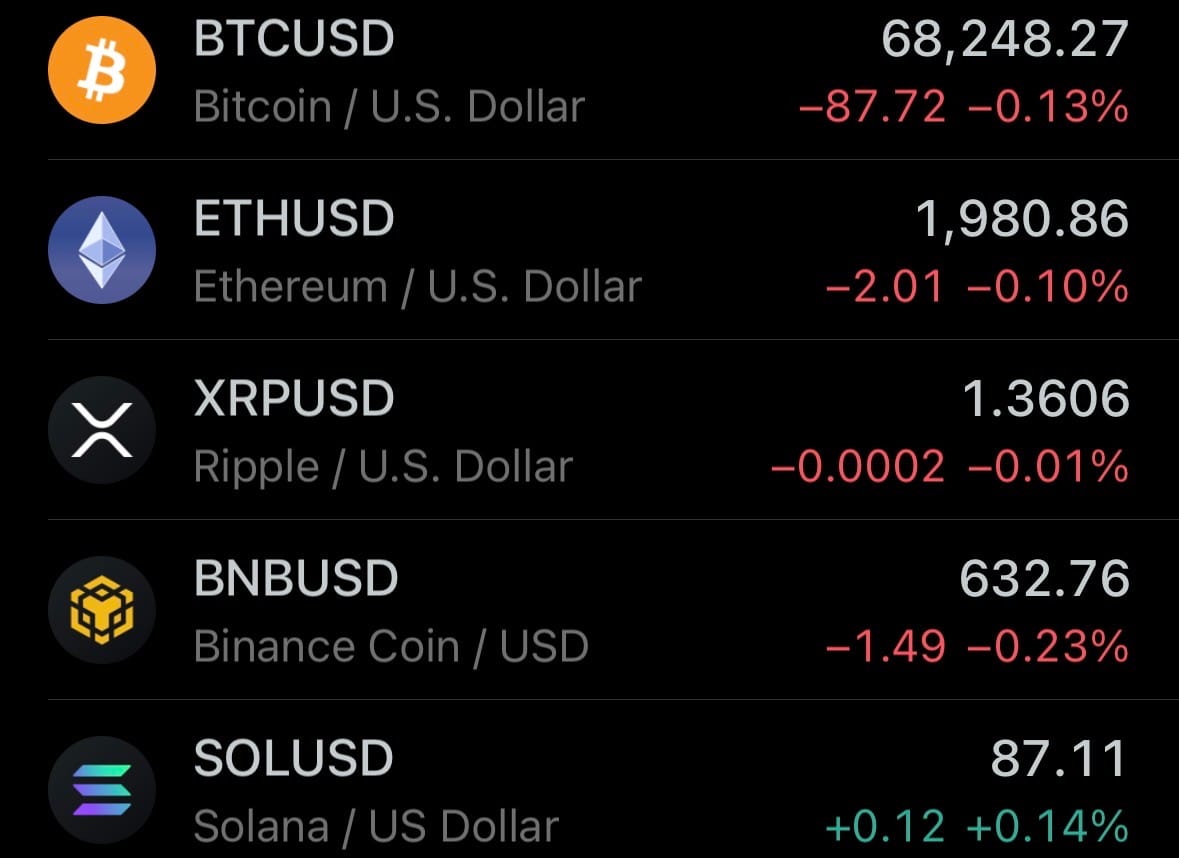
- Yesterday’s crypto market:
Geopolitics & Military Activity:
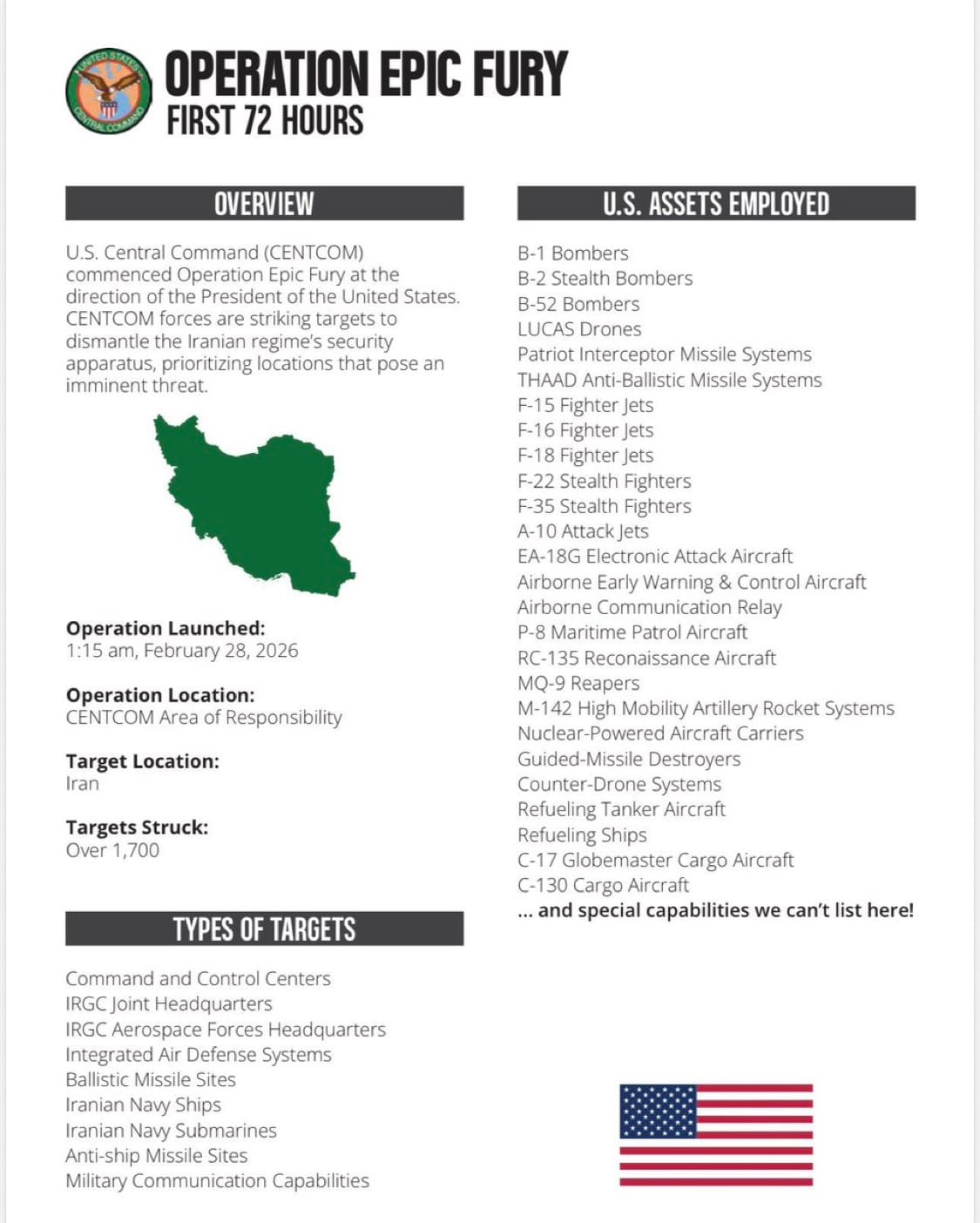
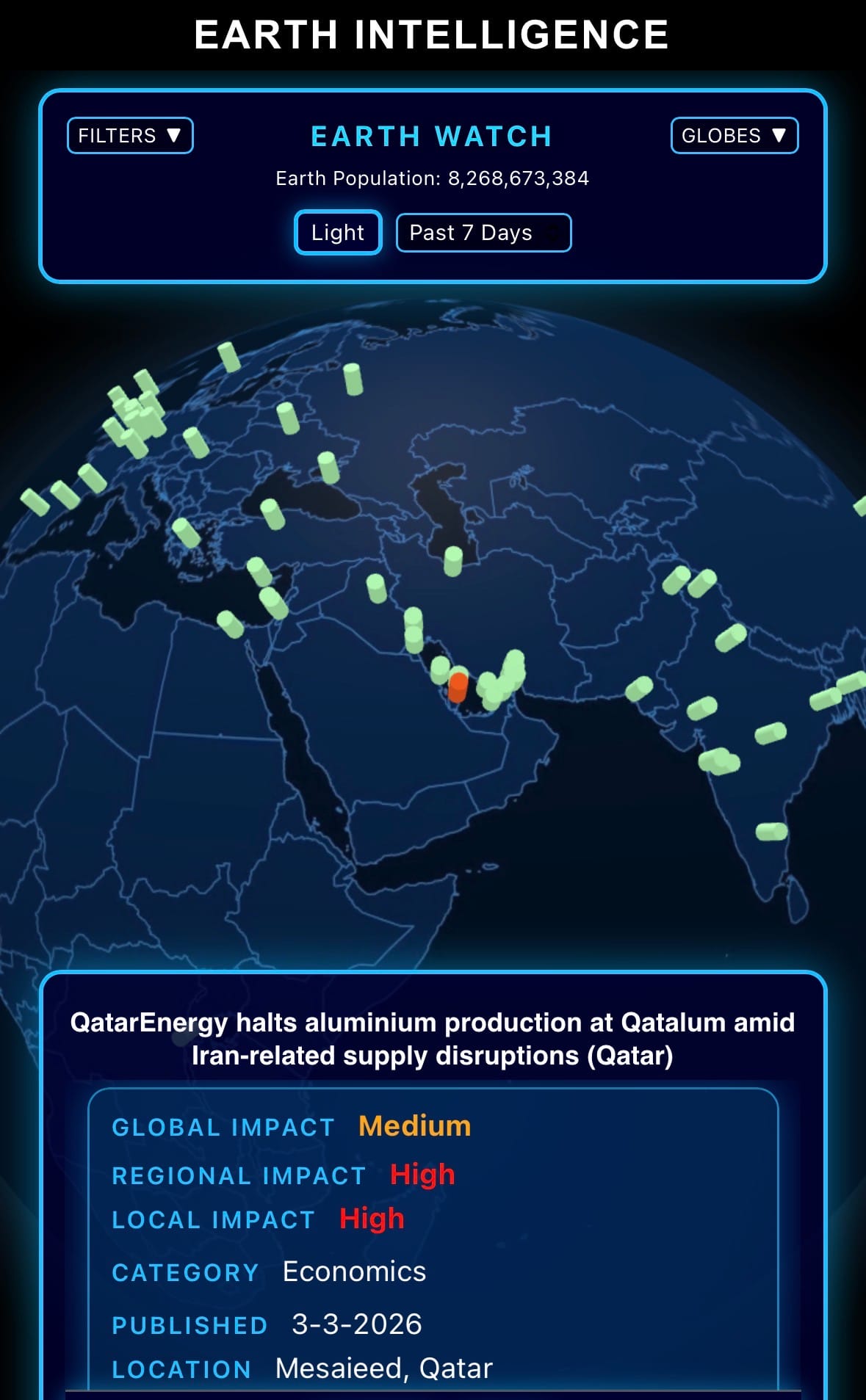
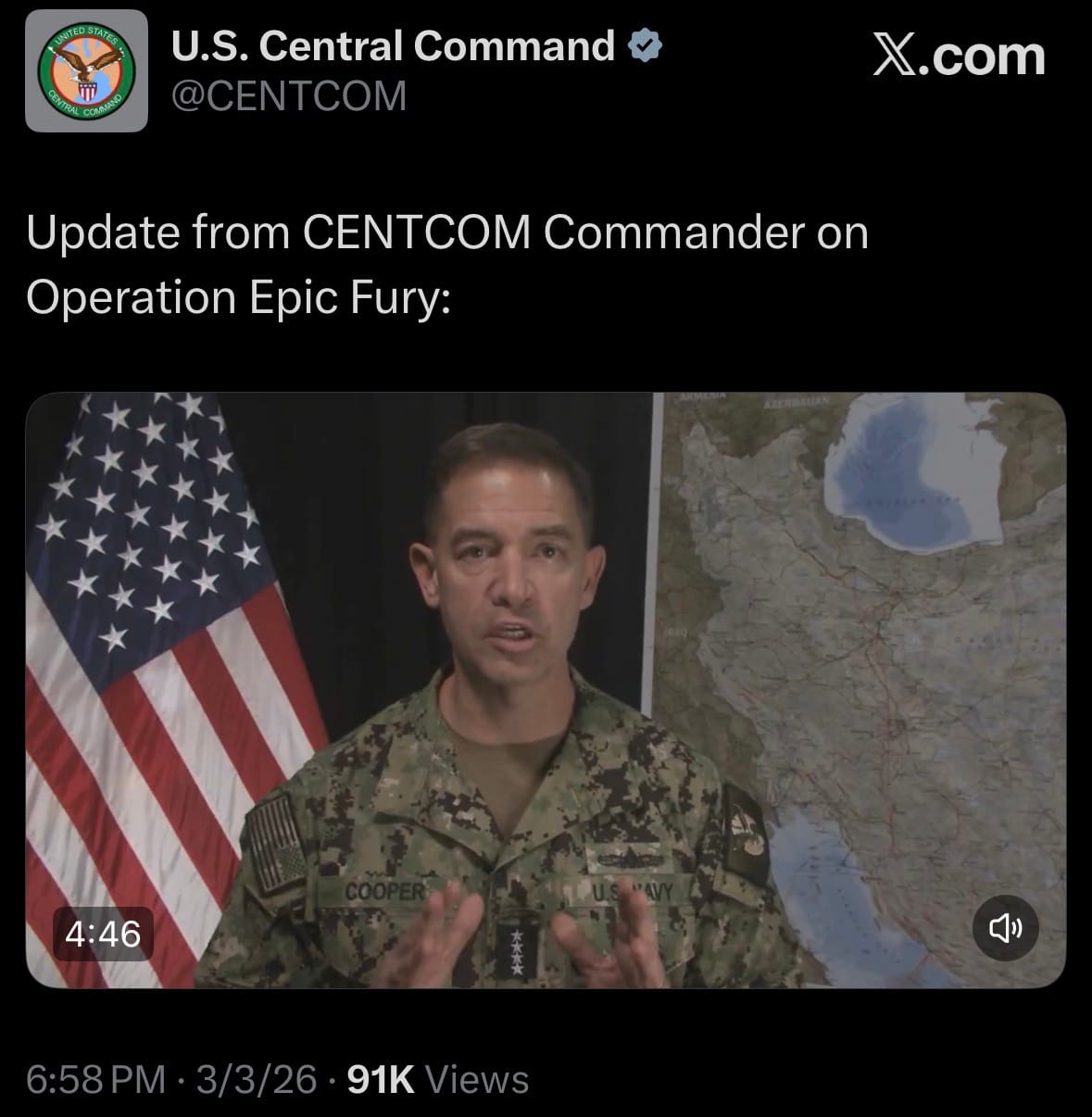
- As of March 3, 2026, Operation Epic Fury (U.S.) and Operation Roaring Lion (Israel) continues with nonstop joint airstrikes and Iranian missile/drone retaliation. U.S. and Israeli forces have hit over 2,000 targets in Iran, including nuclear sites at Natanz, Fordow, and Parchin (severe damage), IRGC headquarters in Tehran, missile bases in Semnan, Isfahan, Kermanshah, and Tabriz, S-300 defenses, naval facilities in Bandar Abbas and Chabahar, and intelligence offices.
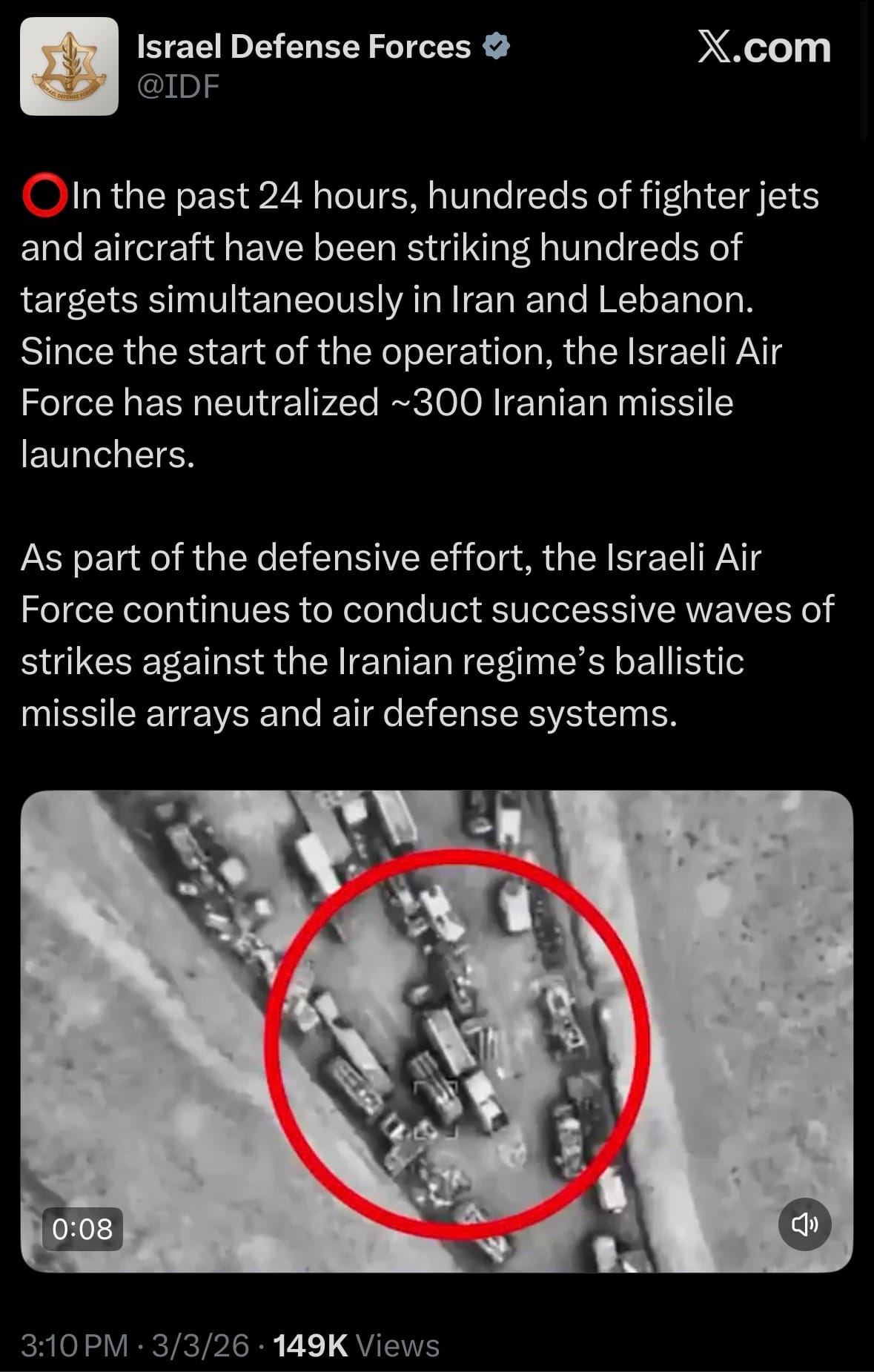
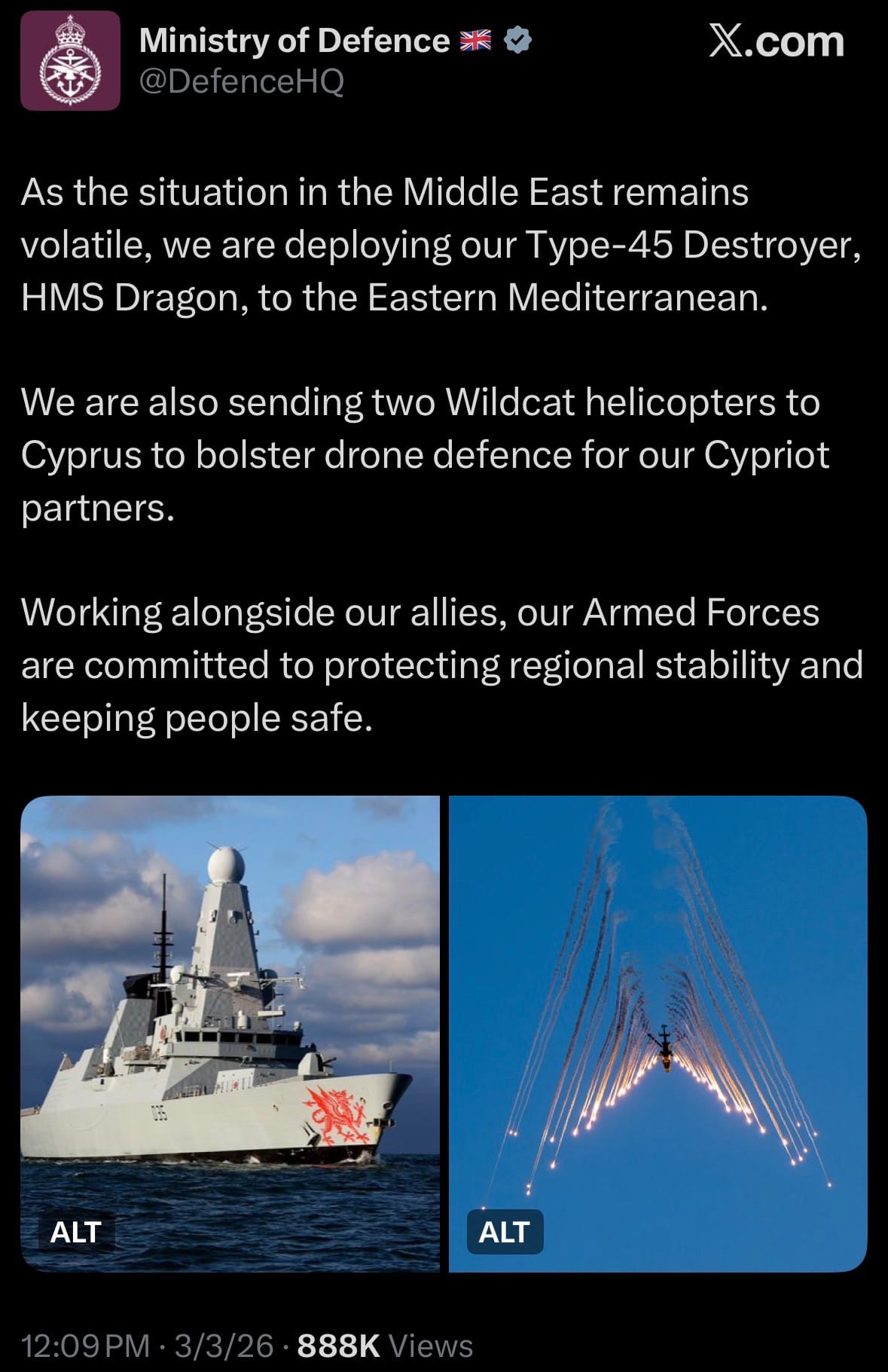
- Iran has fired hundreds of ballistic missiles and drones at U.S. bases in Iraq, Jordan, Kuwait, Qatar, Bahrain (Fifth Fleet HQ), and UAE; Israeli airfields and areas near Tel Aviv and Beit Shemesh; and Saudi energy sites. A February 28 strike on Khamenei’s Tehran compound killed Supreme Leader Ayatollah Ali Khamenei, Quds Force commander Esmail Qaani, Foreign Minister Abbas Araghchi, and senior IRGC generals. Strikes remain ongoing across Iran and proxy sites in Syria, Lebanon (including Beirut), and Yemen, with thousands of casualties, many Iranian projectiles intercepted, regional allies on high alert, and no de-escalation.
Environment & Weather:

Cyber:
Science & Technology:
- On March 3, 2026, OpenAI released GPT-5.3 Instant as the new default model in ChatGPT, rolling out to all users worldwide. This update focuses on everyday conversations, delivering more accurate answers, better-integrated web search results with richer context, and a smoother, more natural tone by reducing unnecessary refusals, preachy disclaimers, overly cautious caveats, and awkward phrasing that previously disrupted flow.

- OpenAI described the changes as making responses "more accurate, less cringe," addressing widespread user feedback about GPT-5.2 Instant feeling patronizing or overly dramatic. The model is also available to developers via the API as "gpt-5.3-chat-latest," with GPT-5.2 Instant remaining accessible for paid users in the legacy section until retirement on June 3, 2026. Updates to Thinking and Pro variants are expected soon.
Statistic:
- Largest public oil and gas companies on Earth by market capitalization:
- 🇸🇦 Saudi Aramco: $1.722T
- 🇺🇸 Exxon Mobil: $632.63B
- 🇺🇸 Chevron: $377.41B
- 🇨🇳 PetroChina: $328.12B
- 🇬🇧 Shell: $234.20B
- 🇨🇳 CNOOC: $174.54B
- 🇫🇷 TotalEnergies: $166.38B
- 🇺🇸 ConocoPhillips: $144.87B
- 🇨🇳 Sinopec: $137.12B
- 🇨🇦 Enbridge: $118.53B
- 🇧🇷 Petrobras: $109.29B
- 🇺🇸 Southern Company: $108.34B
- 🇺🇸 Duke Energy: $102.20B
- 🇬🇧 BP: $99.54B
- 🇺🇸 Williams Companies: $92.72B
- 🇨🇦 Canadian Natural Resources: $91.99B
- 🇦🇪 TAQA: $86.65B
- 🇺🇸 Enterprise Products: $80.93B
- 🇳🇴 Equinor: $77.96B
- 🇺🇸 Kinder Morgan: $75.55B
- 🇺🇸 SLB (Schlumberger): $72.64B
- 🇦🇪 ADNOC Gas: $71.06B
- 🇺🇸 EOG Resources: $69.45B
- 🇨🇦 Suncor Energy: $69.11B
- 🇮🇹 ENI: $67.99B
History:
- Shipbuilding is one of the oldest strategic industries in human civilization because ships determine who can trade, explore, project military power, and control sea routes. The earliest organized ship construction dates back thousands of years. Ancient Egyptians were building large wooden river and coastal vessels along the Nile around 2500 BC, while Phoenician shipyards around 1000 BC produced durable trading ships that connected the Mediterranean world. Greek shipbuilders refined naval warfare vessels like the trireme in the 5th century BC, designed for speed and maneuverability. The Romans later expanded maritime engineering with large transport ships and structured harbor systems such as Portus near Rome in the 1st century AD, which included artificial basins and warehouses to support imperial logistics. In the medieval period, maritime powers like Venice and Genoa transformed shipbuilding into large-scale industrial activity. The Venetian Arsenal, founded in 1104, is often considered one of the first large industrial shipyards in history. It integrated timber supply, rope making, sail production, and weapon manufacturing into a single coordinated system capable of rapidly producing naval fleets. By the 15th–17th centuries, during the Age of Exploration, shipyards in Portugal, Spain, the Netherlands, and England produced ocean-going vessels such as caravels and galleons, which enabled global exploration, colonial expansion, and the formation of worldwide trade routes.
- The Industrial Revolution in the 19th century transformed shipbuilding into heavy industry. Wooden hulls were replaced by iron and eventually steel construction, and sails were replaced by steam propulsion. Shipyards expanded into massive industrial complexes equipped with dry docks, steel rolling mills, cranes, and machine shops. Nations like the United Kingdom, Germany, and the United States built enormous naval shipbuilding industries capable of producing battleships, cruisers, and merchant fleets. By the early 20th century, naval shipyards had become central to national power. World War I and especially World War II demonstrated how critical shipbuilding capacity was to military success. During World War II, American shipyards produced thousands of cargo ships, destroyers, submarines, and aircraft carriers, turning the United States into the largest naval industrial power in the world. Ship construction became faster and more standardized through modular construction techniques and mass production methods. After the war, shipbuilding gradually shifted geographically toward Asia as Japan rebuilt its industrial base and began dominating commercial ship construction during the 1960s and 1970s.
- Today, global shipbuilding is heavily concentrated in East Asia, where China, South Korea, and Japan dominate commercial vessel production. China is currently the world’s largest shipbuilding nation, producing the highest volume of ships and holding the largest share of new global ship orders. Chinese state-owned conglomerates such as China State Shipbuilding Corporation (CSSC) operate massive shipyard networks capable of building container ships, tankers, bulk carriers, and increasingly advanced naval vessels. South Korea is the second largest shipbuilding power, known for its highly advanced yards that specialize in complex vessels such as LNG carriers, large container ships, and specialized offshore platforms. Major South Korean shipbuilders include Hyundai Heavy Industries, Samsung Heavy Industries, and Hanwha Ocean (formerly Daewoo Shipbuilding). Japan ranks third globally, with large shipbuilders such as Imabari Shipbuilding and Mitsubishi Heavy Industries, though its market share has declined compared with China and South Korea. While the United States is not a major commercial shipbuilder today, it remains one of the most advanced naval shipbuilding powers, with shipyards like Newport News Shipbuilding producing nuclear aircraft carriers and submarines for the U.S. Navy. Modern shipyards rely on advanced digital design, robotic welding, modular construction blocks, and enormous dry docks capable of assembling ships over 400 meters long. From ancient wooden hulls carved by hand to highly automated shipyards producing ultra-large container vessels and nuclear warships, shipbuilding remains one of the most strategic industrial capabilities in the world, linking maritime trade, naval power, and global logistics.
Image of the day:
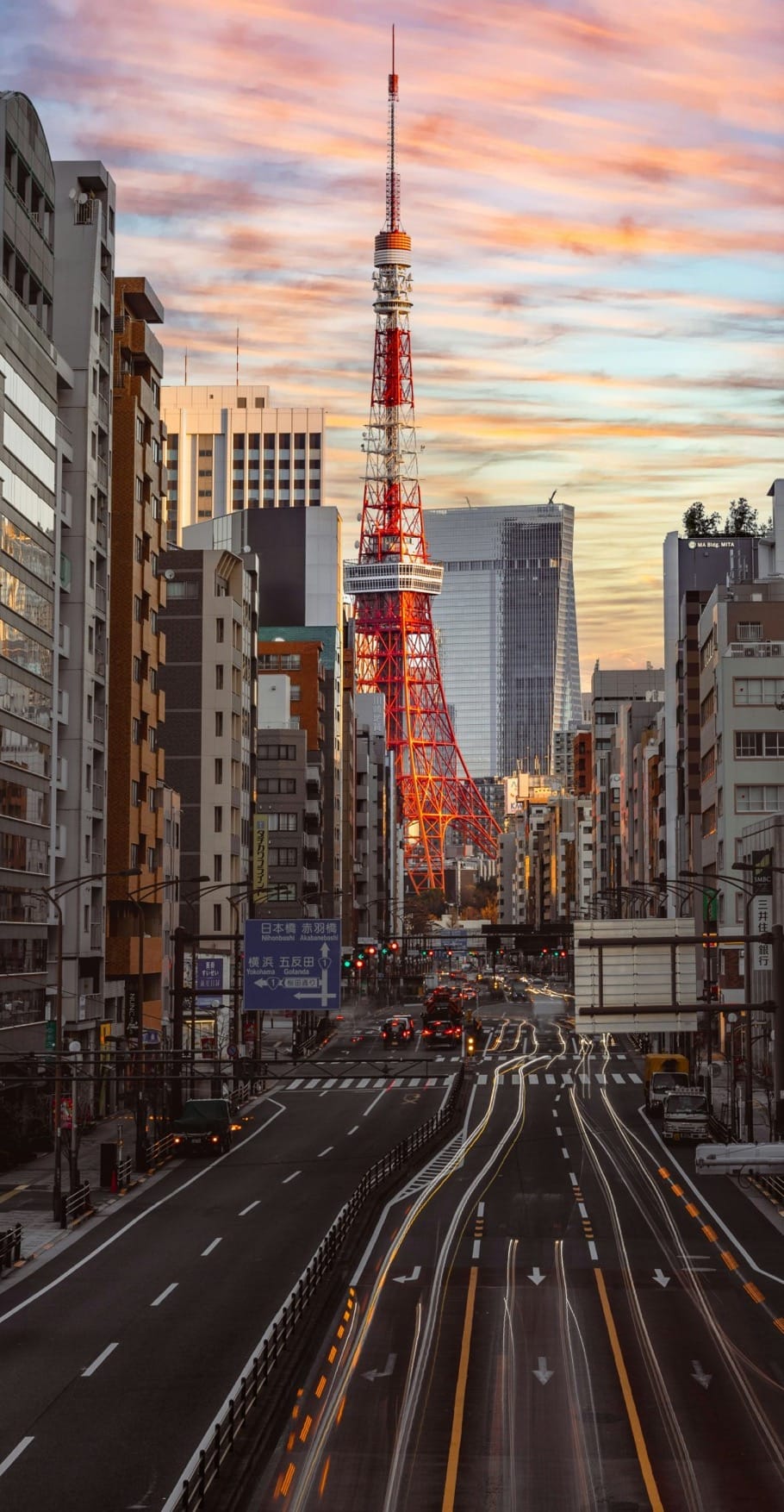
Thanks for reading! Earth is complicated, we make it simple.
- Click below if you’d like to view our free EARTH WATCH globe:
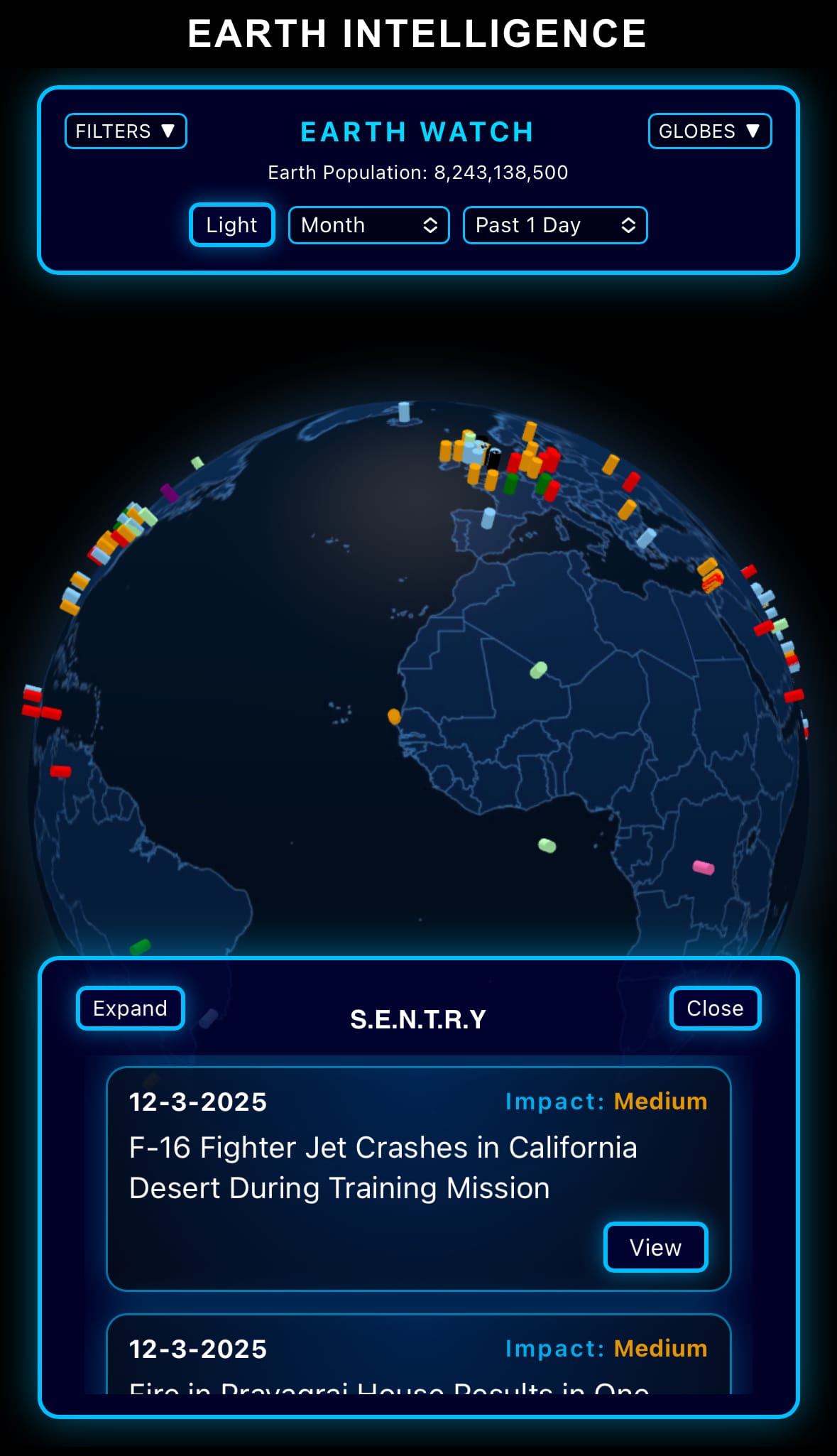
- Download our mobile app:



Click below to view our previous newsletters:
Support/Suggestions Email:
support@earthintel.io