Wednesday☕️


Trending:
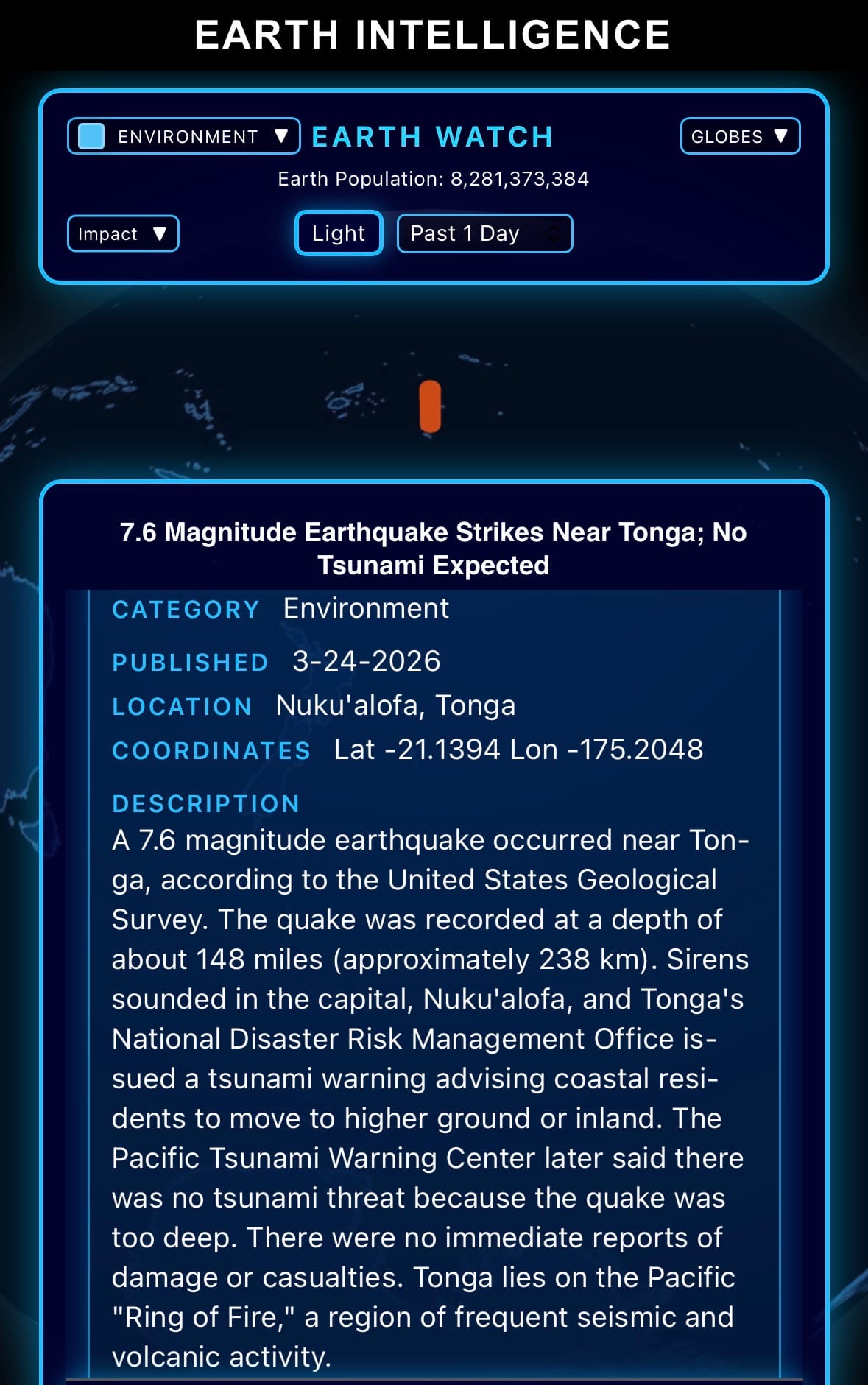
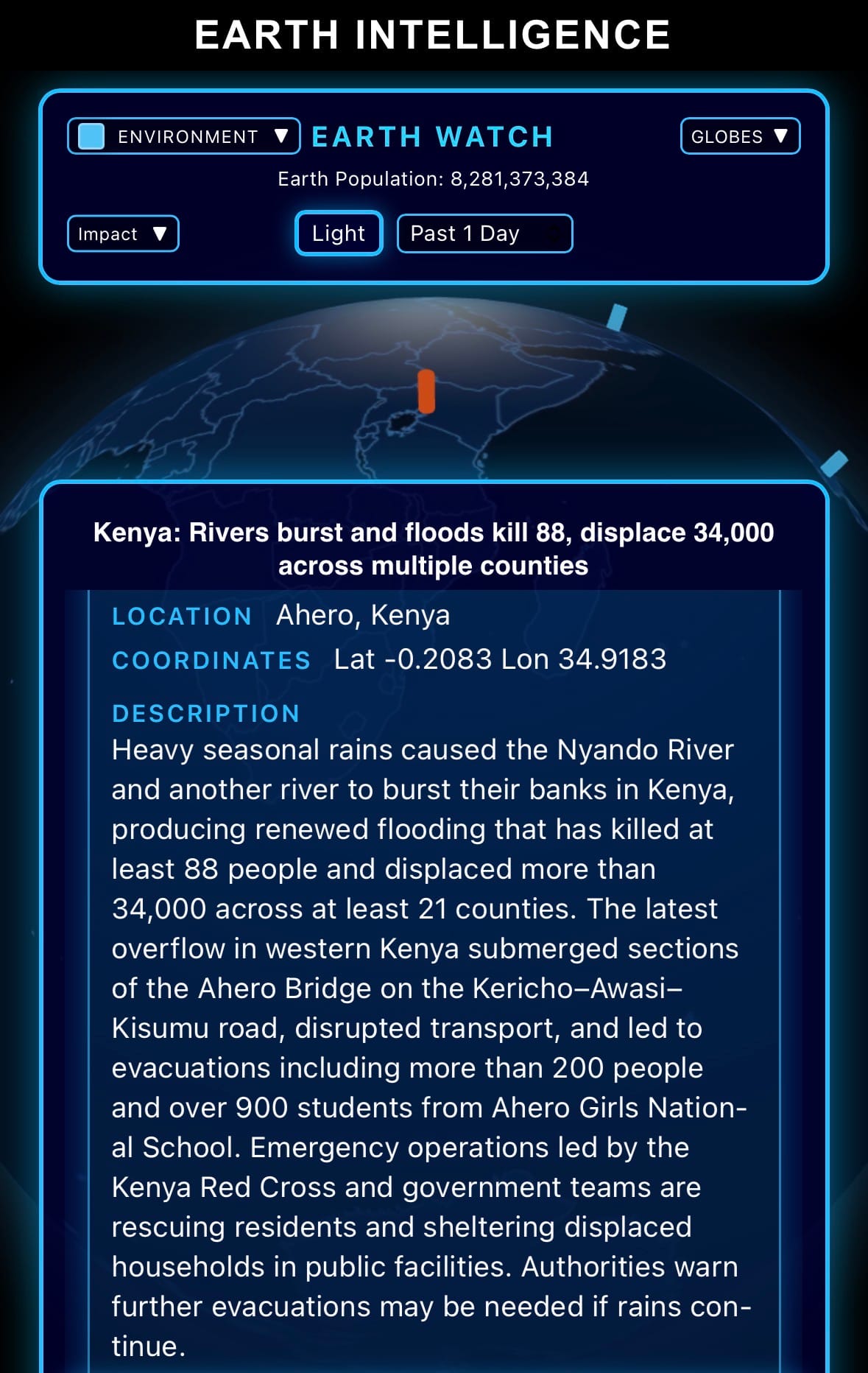
Environment & Weather:
Science & Technology:
- On March 23, 2026, Epirus, Kodiak Robotics, and General Dynamics Land Systems unveiled the Leonidas Autonomous Ground Vehicle (AGV) at the AUSA Global Force Symposium.
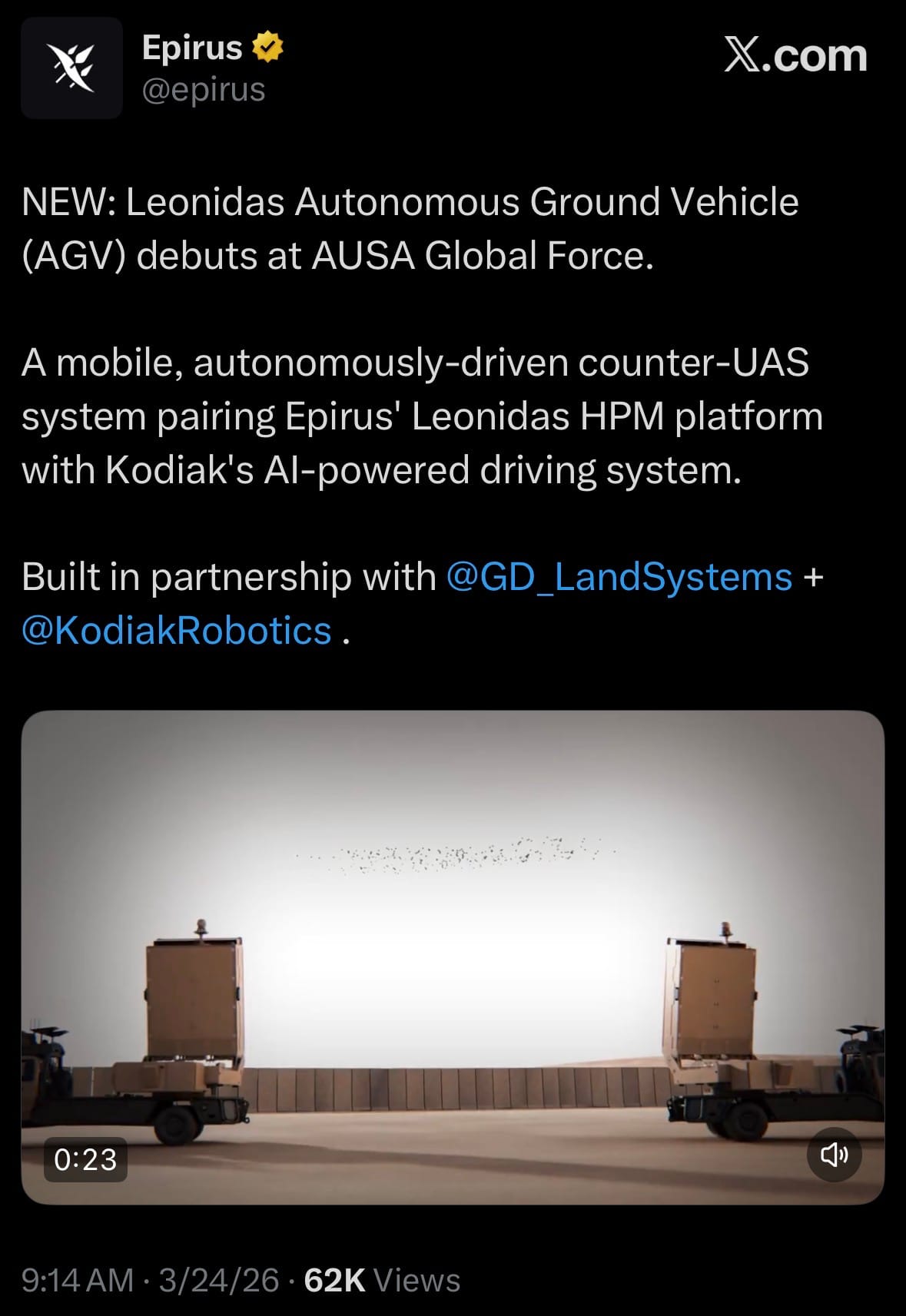
- The system pairs Epirus’ Leonidas high-power microwave counter-drone weapon with Kodiak’s AI-powered autonomous driving technology, creating a fully mobile, driverless platform that can detect, track, and neutralize drone threats on the move — the first system of its kind for the U.S. Army and Marine Corps.
Statistic:
- Largest public companies by market capitalization:
- 🇺🇸 NVIDIA: $4.258T
- 🇺🇸 Apple: $3.698T
- 🇺🇸 Alphabet (Google): $3.498T
- 🇺🇸 Microsoft: $2.770T
- 🇺🇸 Amazon: $2.224T
- 🇹🇼 TSMC: $1.780T
- 🇸🇦 Saudi Aramco: $1.729T
- 🇺🇸 Broadcom: $1.509T
- 🇺🇸 Meta Platforms: $1.499T
- 🇺🇸 Tesla: $1.437T
- 🇺🇸 Berkshire Hathaway: $1.033T
- 🇺🇸 Walmart: $973.03B
- 🇰🇷 Samsung: $842.65B
- 🇺🇸 Eli Lilly: $808.21B
- 🇺🇸 JPMorgan Chase: $788.61B
- 🇺🇸 Exxon Mobil: $689.09B
- 🇨🇳 Tencent: $594.16B
- 🇺🇸 Visa: $585.66B
- 🇺🇸 Johnson & Johnson: $566.97B
- 🇳🇱 ASML: $549.49B
- 🇰🇷 SK Hynix: $458.11B
- 🇺🇸 Micron Technology: $446.05B
- 🇺🇸 Mastercard: $445.26B
- 🇺🇸 Costco: $432.24B
- 🇺🇸 Oracle: $423.03B
History:
- The history of semiconductor manufacturing begins with the invention of the transistor in 1947 at Bell Labs by John Bardeen, Walter Brattain, and William Shockley, which replaced bulky vacuum tubes and enabled modern electronics. This was followed by the development of the integrated circuit (IC) in 1958–1959 by Jack Kilby (Texas Instruments) and Robert Noyce (Fairchild Semiconductor), allowing multiple electronic components to be placed on a single chip. The industry rapidly evolved through the 1960s–1980s, driven by Moore’s Law, which predicted that the number of transistors on a chip would double roughly every two years. Companies like Intel (founded 1968), Texas Instruments, and IBM led early semiconductor innovation, producing increasingly powerful processors. Manufacturing became more complex, requiring ultra-clean environments, precision photolithography, and global supply chains. By the 1990s–2000s, the industry split into two models: integrated device manufacturers (IDMs) like Intel that design and manufacture chips, and the fabless + foundry model, where companies like NVIDIA, AMD, and Qualcomm design chips while specialized manufacturers like TSMC (Taiwan Semiconductor Manufacturing Company, founded 1987) produce them. This shift created a highly specialized, globally distributed supply chain where design, fabrication, equipment, and materials are often controlled by different companies in different countries.
- Today, semiconductor manufacturing is the most critical technological chokepoint in the world. The most advanced chips—used in AI systems, military technology, smartphones, cloud computing, and advanced weapons—are produced by a very small number of companies, with TSMC in Taiwan as the global leader in advanced fabrication, producing the majority of the world’s most cutting-edge chips (including sub-5nm nodes). Samsung (South Korea) is the second major advanced manufacturer, while Intel (United States) is attempting to regain leadership through massive investment in new fabs. The supply chain depends on highly specialized players: ASML (Netherlands) produces the world’s only EUV (extreme ultraviolet) lithography machines, which are essential for manufacturing the most advanced chips; companies like Applied Materials, Lam Research, and KLA (U.S.) provide critical fabrication equipment; and materials come from global sources including Japan and other regions. Because of this concentration, the semiconductor supply chain is extremely fragile and geopolitically sensitive. Control over chip manufacturing determines leadership in AI, defense systems, telecommunications, and economic power. Nations like the United States and China are investing heavily to secure domestic semiconductor capabilities, with China attempting to build its own independent supply chain while facing restrictions on advanced technology. In the modern world, semiconductors are the foundation of everything—from smartphones to fighter jets to data centers—and the ability to design and manufacture them at scale is one of the most decisive factors in global power.
Image of the day:

Thanks for reading! Earth is complicated, we make it simple.
- Click below if you’d like to view our free EARTH WATCH globe:
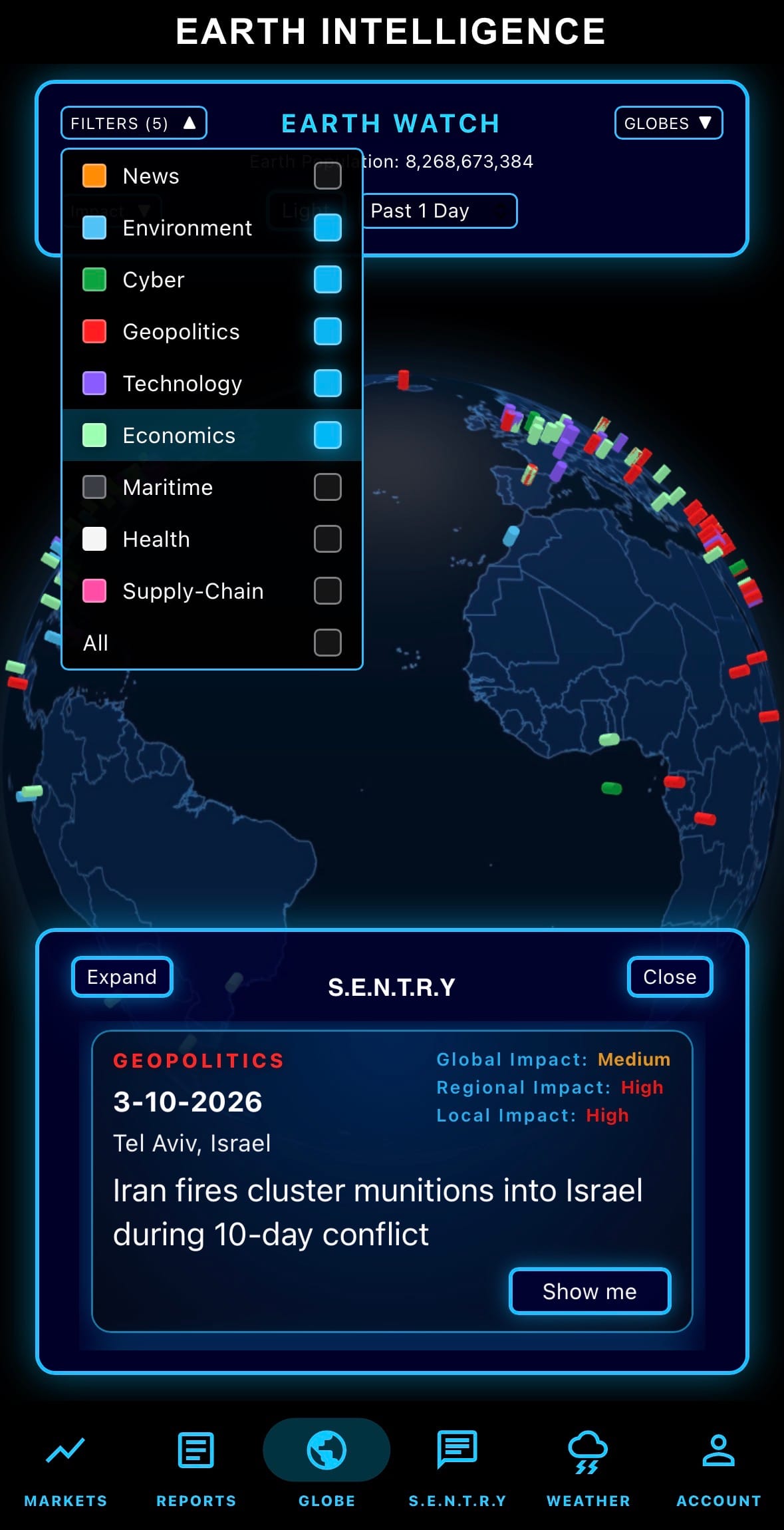
- Download our mobile app:


Click below to view our previous newsletters:

Support/Suggestions Email:
support@earthintel.io