Wednesday☕️


Trending:
- On March 31, 2026, Oracle began a major round of layoffs, cutting an estimated 20,000 to 30,000 employees worldwide — roughly 18% to 20% of its global workforce of about 162,000 people.
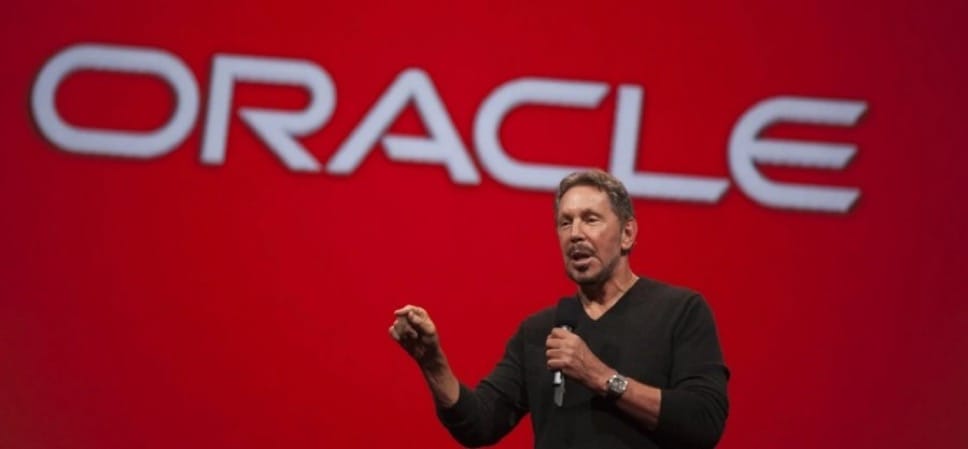
- Many employees across the globe received termination emails yesterday morning confirming the layoffs. The cuts are part of a large-scale restructuring aimed at freeing up $8–10 billion to fund Oracle’s aggressive expansion of AI data centers and cloud infrastructure. The layoffs are impacting multiple divisions, including sales, engineering, and security. Oracle has not yet officially confirmed the total number of jobs being eliminated.
Qatar Energy Exxon Mobile Joint Venture:
- On March 31, 2026, the joint venture between QatarEnergy and ExxonMobil officially started LNG production at the Golden Pass LNG terminal in Texas, following final approvals from the Trump administration.
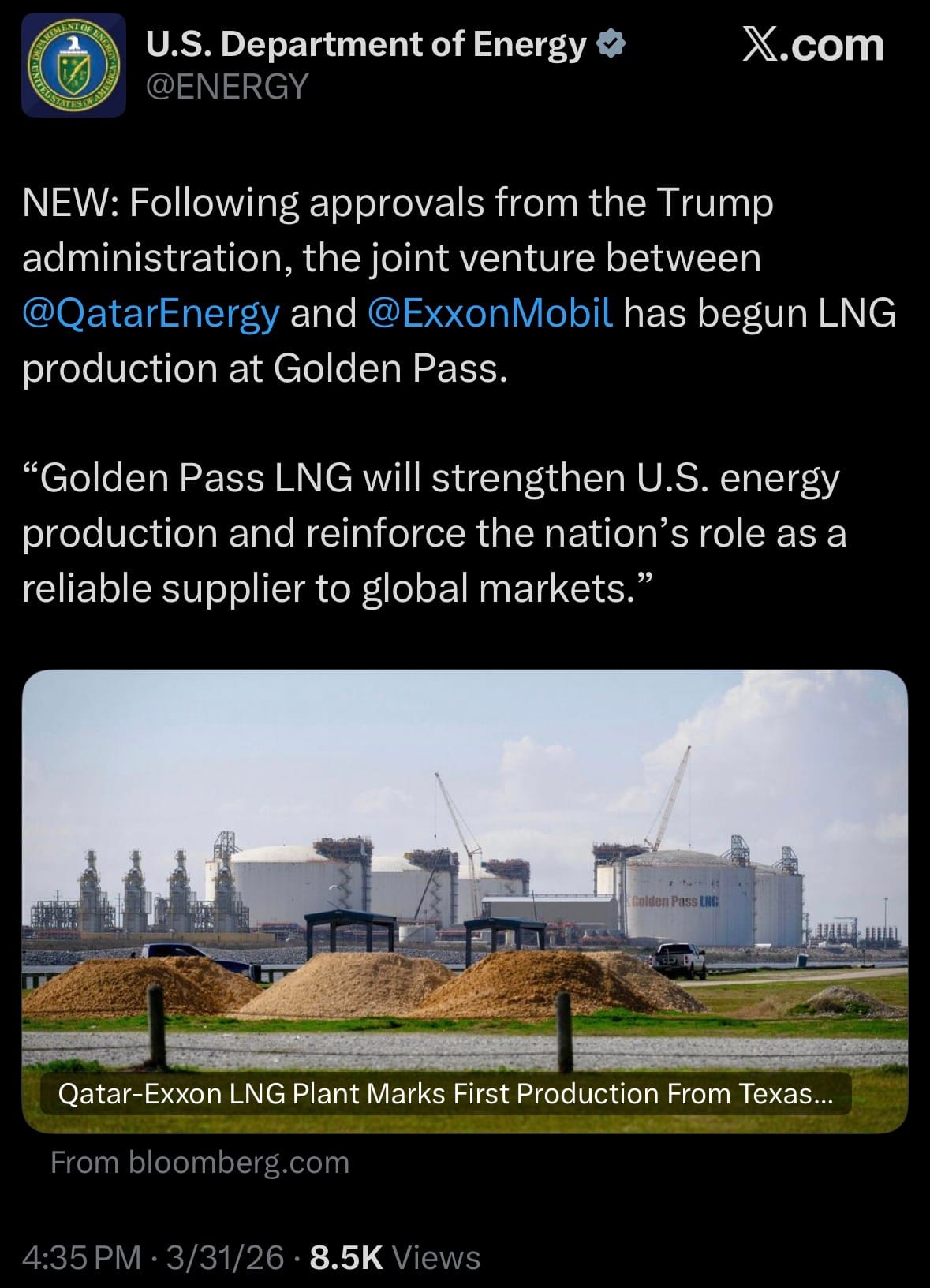
- The $10+ billion facility is now producing liquefied natural gas and is expected to become one of the largest LNG export terminals in the United States. Officials stated that Golden Pass LNG will strengthen U.S. energy production and reinforce America’s role as a reliable supplier to global markets.
Economics & Markets:
- Yesterday’s U.S. stock market:
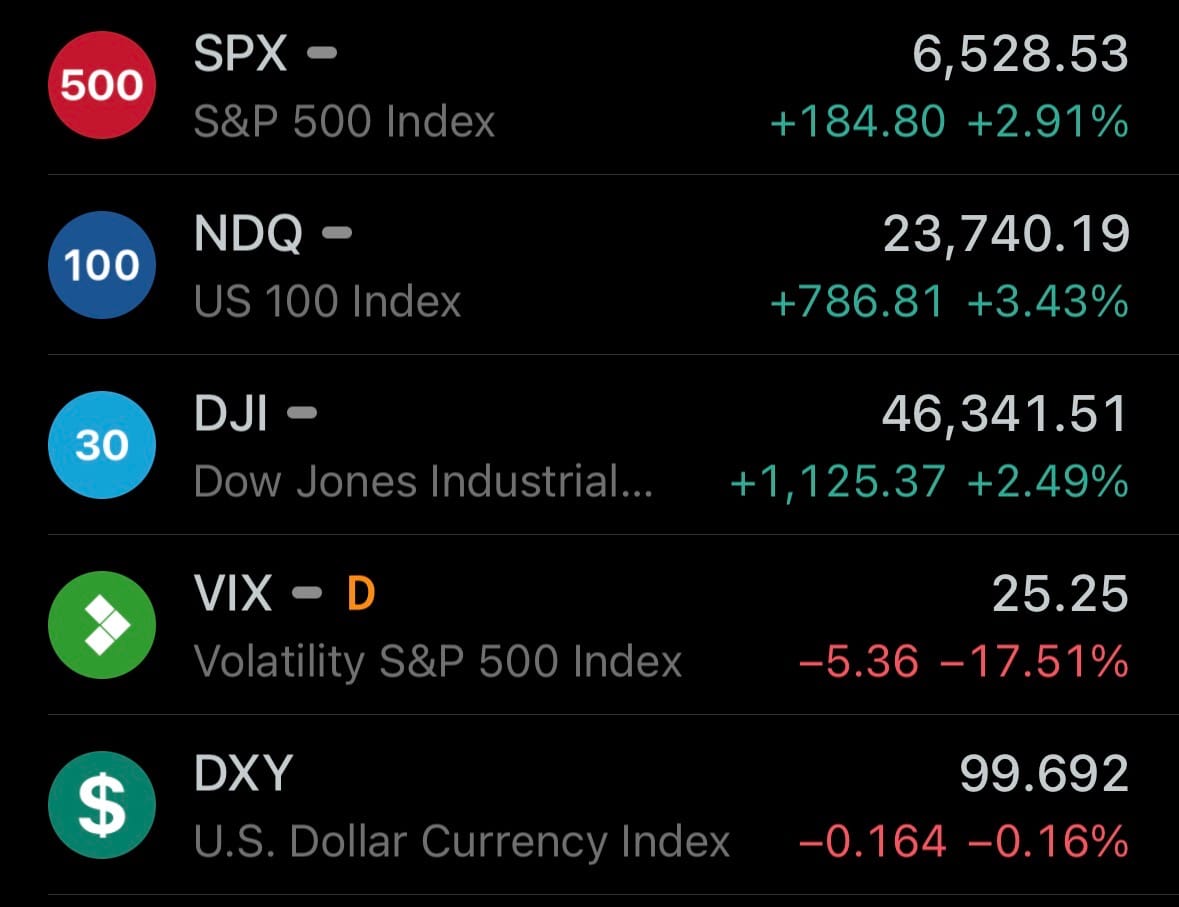
- Yesterday’s commodity market:
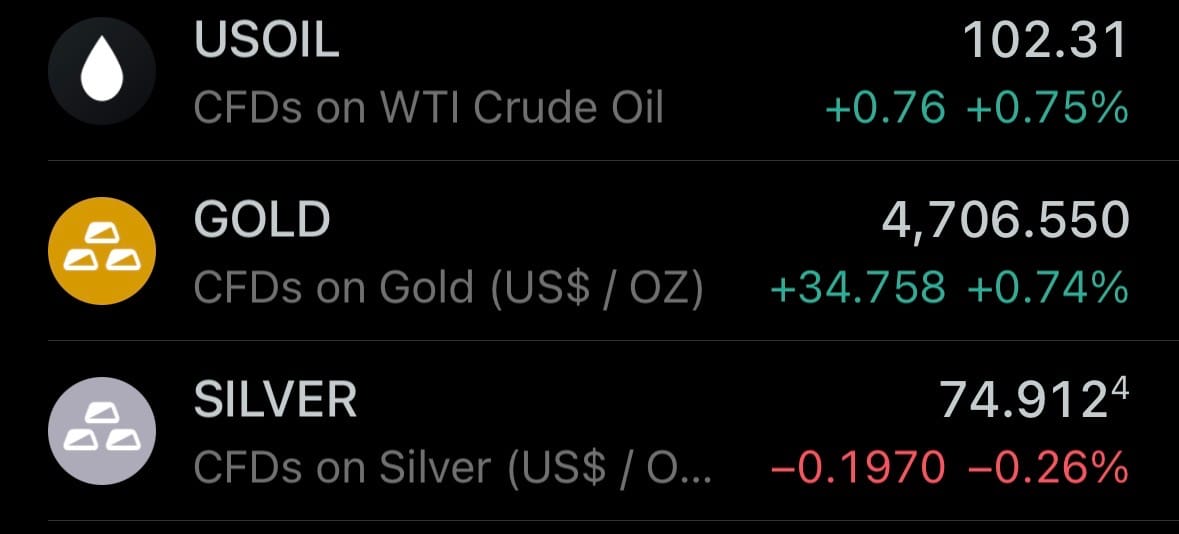
- Yesterday’s crypto market:
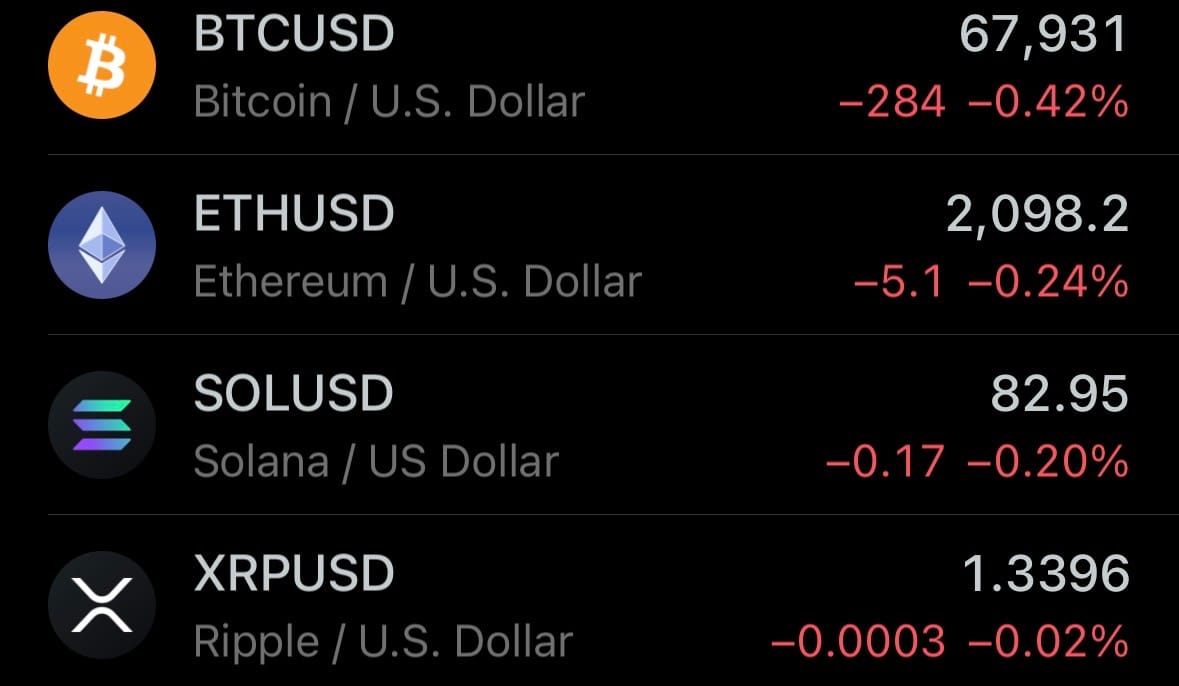
Geopolitics & Military Activity:
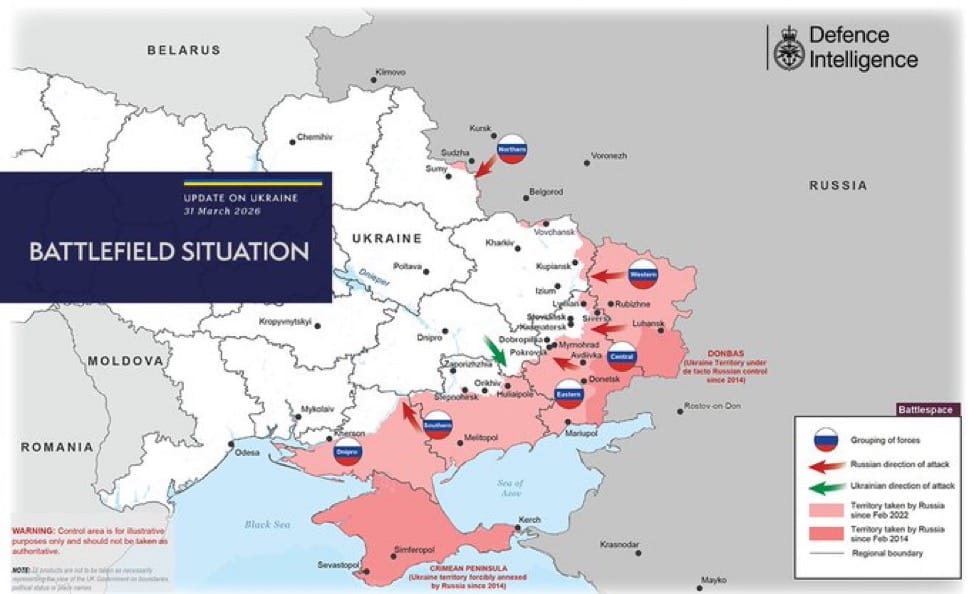
- As of April 1, 2026, a Russian An-26 military transport aircraft crashed in rocky terrain over Crimea after Russia’s Ministry of Defense lost contact with the plane. All 29 people on board are reported dead.
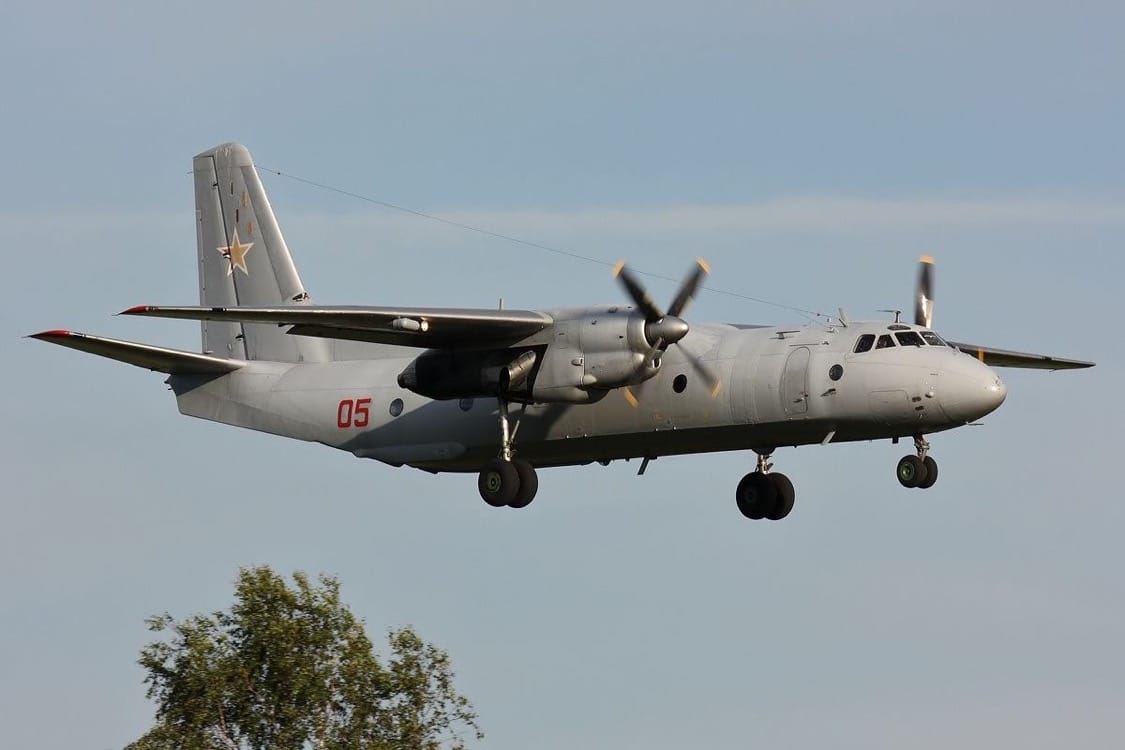
- This marks another significant loss for Russian aviation in the region. Ukrainian drone strikes have repeatedly targeted Russian air bases in Crimea in recent months, including Kacha near Sevastopol, destroying or damaging multiple An-26 aircraft and highlighting the growing vulnerability of Russian logistics and air support in occupied Crimea.
Space:
- On April 1, 2026, NASA plans to launch the Artemis II mission, the first crewed flight of the Artemis program.

- The mission will send four astronauts aboard the Orion spacecraft on a 10-day journey that will take them around the Moon and farther from Earth than any humans have traveled since the Apollo era more than 50 years ago. Artemis II is a critical test flight to validate the Orion spacecraft’s life support systems, navigation, and re-entry capabilities in deep space before future crewed landings on the Moon.
Statistic:
- Largest public financial service companies by market capitalization:
- 🇺🇸 JPMorgan Chase: $793.35B
- 🇺🇸 Visa: $582.73B
- 🇺🇸 Mastercard: $445.91B
- 🇨🇳 ICBC: $409.42B
- 🇨🇳 China Construction Bank: $365.99B
- 🇺🇸 Bank of America: $349.86B
- 🇨🇳 Agricultural Bank of China: $339.96B
- 🇬🇧 HSBC: $285.81B
- 🇨🇳 Bank of China: $274.21B
- 🇺🇸 Morgan Stanley: $261.31B
- 🇺🇸 Goldman Sachs: $251.05B
- 🇺🇸 Wells Fargo: $245.64B
- 🇨🇦 Royal Bank of Canada: $225.86B
- 🇺🇸 American Express: $207.68B
- 🇺🇸 Citigroup: $198.39B
- 🇦🇺 Commonwealth Bank: $195.12B
- 🇯🇵 Mitsubishi UFJ Financial: $191.55B
- 🇺🇸 Charles Schwab: $166.99B
- 🇪🇸 Santander: $164.42B
- 🇨🇳 CM Bank: $158.54B
- 🇨🇦 Toronto-Dominion Bank: $156.45B
- 🇯🇵 SoftBank: $135.36B
- 🇺🇸 S&P Global: $128.79B
- 🇮🇳 HDFC Bank: $127.66B
- 🇯🇵 Sumitomo Mitsui Financial Group: $125.67B
History:
- The history of Saudi Aramco begins with the global race for oil in the early 20th century, when Western companies sought to secure energy resources in the Middle East. In 1933, Saudi Arabia granted a concession to Standard Oil of California (SoCal) to explore for oil. After several years of unsuccessful drilling, a major breakthrough came in 1938 with the discovery of oil at the Dammam No. 7 well, marking the beginning of Saudi Arabia’s transformation into an energy superpower. The company operating the concession evolved into the Arabian American Oil Company (Aramco), with additional stakes later acquired by Texaco, Exxon, and Mobil, forming a powerful consortium of U.S. oil companies. Through the 1940s–1960s, Aramco expanded rapidly, developing massive oil fields such as Ghawar, the largest conventional oil field ever discovered, and building infrastructure including pipelines, refineries, and export terminals. By the mid-20th century, Aramco had become one of the most important oil producers in the world, supplying energy to growing industrial economies in the United States and Europe.
- A major shift occurred in the 1970s, when Saudi Arabia moved to take control of its oil resources amid rising nationalism and geopolitical changes. In 1973, during the oil crisis, Saudi Arabia began acquiring a controlling stake in Aramco, and by 1980, the Saudi government had fully nationalized the company. It was later renamed Saudi Arabian Oil Company (Saudi Aramco). From that point forward, Aramco became the central pillar of Saudi Arabia’s economy and one of the most powerful energy companies in the world. The company controls vast reserves of oil and natural gas and operates some of the largest production and processing facilities globally. Saudi Aramco’s production capacity—often around 10–12 million barrels per day—makes it one of the most influential players in global energy markets, with the ability to impact oil prices and supply dynamics. The company also plays a key role within OPEC, coordinating production levels with other major oil-producing nations.
- Today, Saudi Aramco is widely considered one of the most valuable companies in the world, with a market capitalization in the trillions of dollars. It is the largest oil producer globally and manages some of the most critical energy infrastructure on Earth, including vast oil fields, pipelines, refineries, and export terminals like Ras Tanura, one of the largest oil export facilities in the world. In 2019, Aramco conducted one of the largest initial public offerings (IPO) in history, opening a small portion of the company to public investors while remaining majority state-owned. Beyond oil production, Aramco is expanding into petrochemicals, natural gas, and energy diversification, aligning with Saudi Arabia’s broader economic transformation strategy. Despite global shifts toward renewable energy, Aramco remains central to global energy supply, particularly in oil markets. Its scale, low production costs, and control over massive reserves give it unmatched influence in the energy sector. From a small concession in the 1930s to the most powerful oil company in the world, Saudi Aramco represents one of the most important pillars of the global energy system.
Image of the day:

Thanks for reading! Earth is complicated, we make it simple.
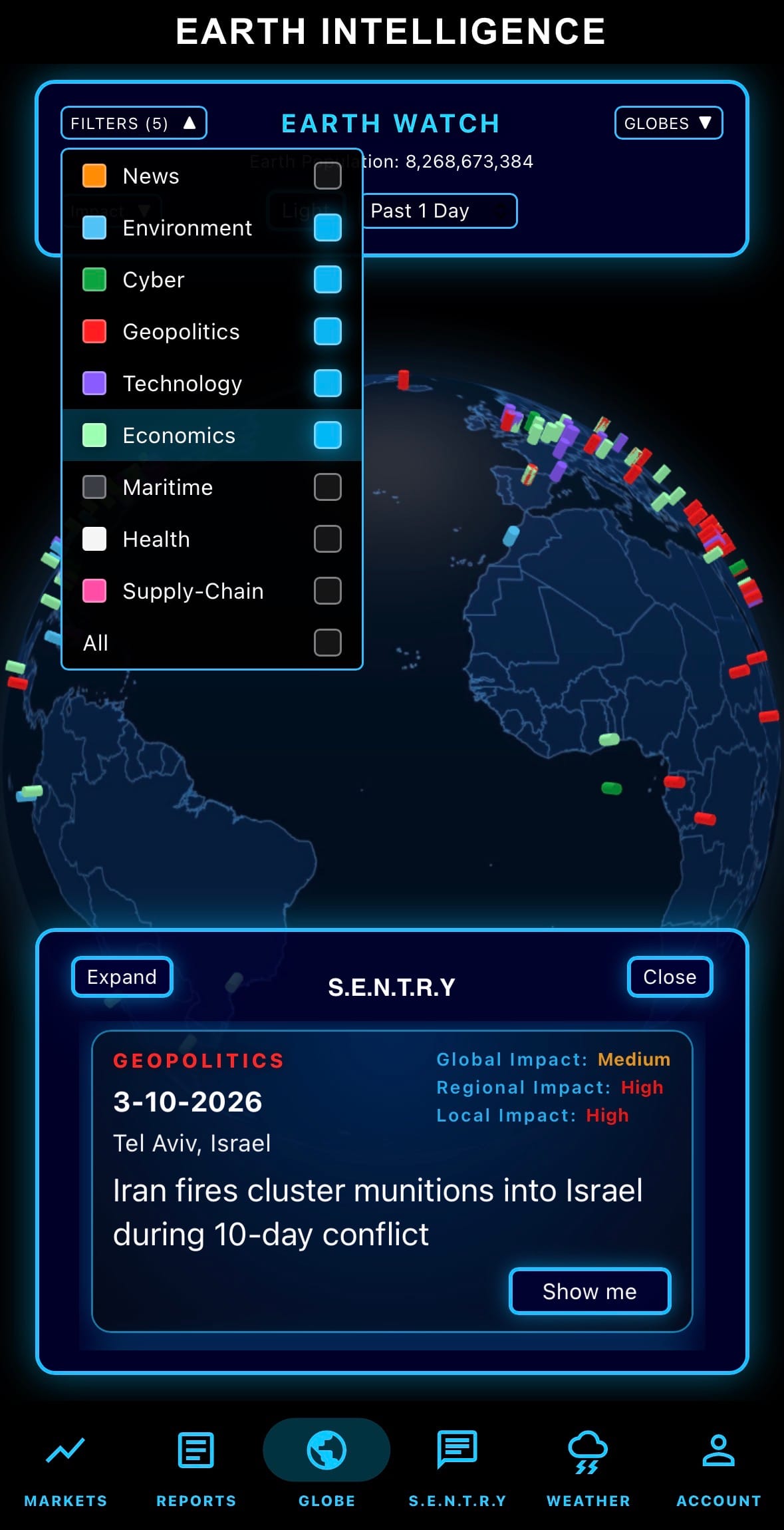
- Click below if you’d like to view our free EARTH WATCH globe:
- Download our mobile app:

Click below to view our previous newsletters:
Support/Suggestions Email:
support@earthintel.io