Wednesday☕️


Trending:
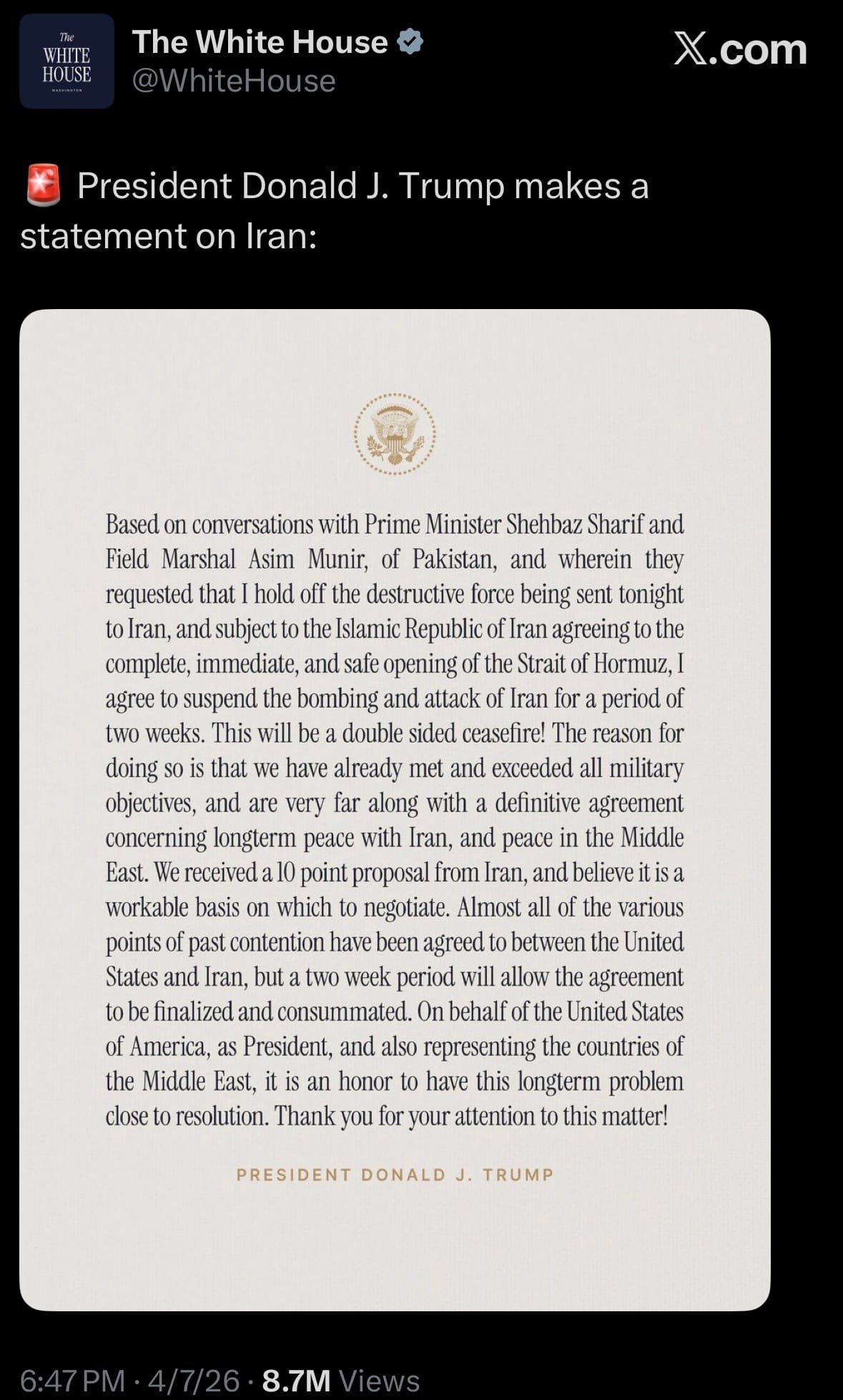
- On April 7, 2026, the United States, Israel, and Iran agreed to a two-week temporary ceasefire yesterday evening. Under the deal, Iran has committed to reopening the Strait of Hormuz to international shipping within 48 hours, while the U.S. and Israel agreed to halt all strikes on Iranian territory and infrastructure for the duration of the truce.
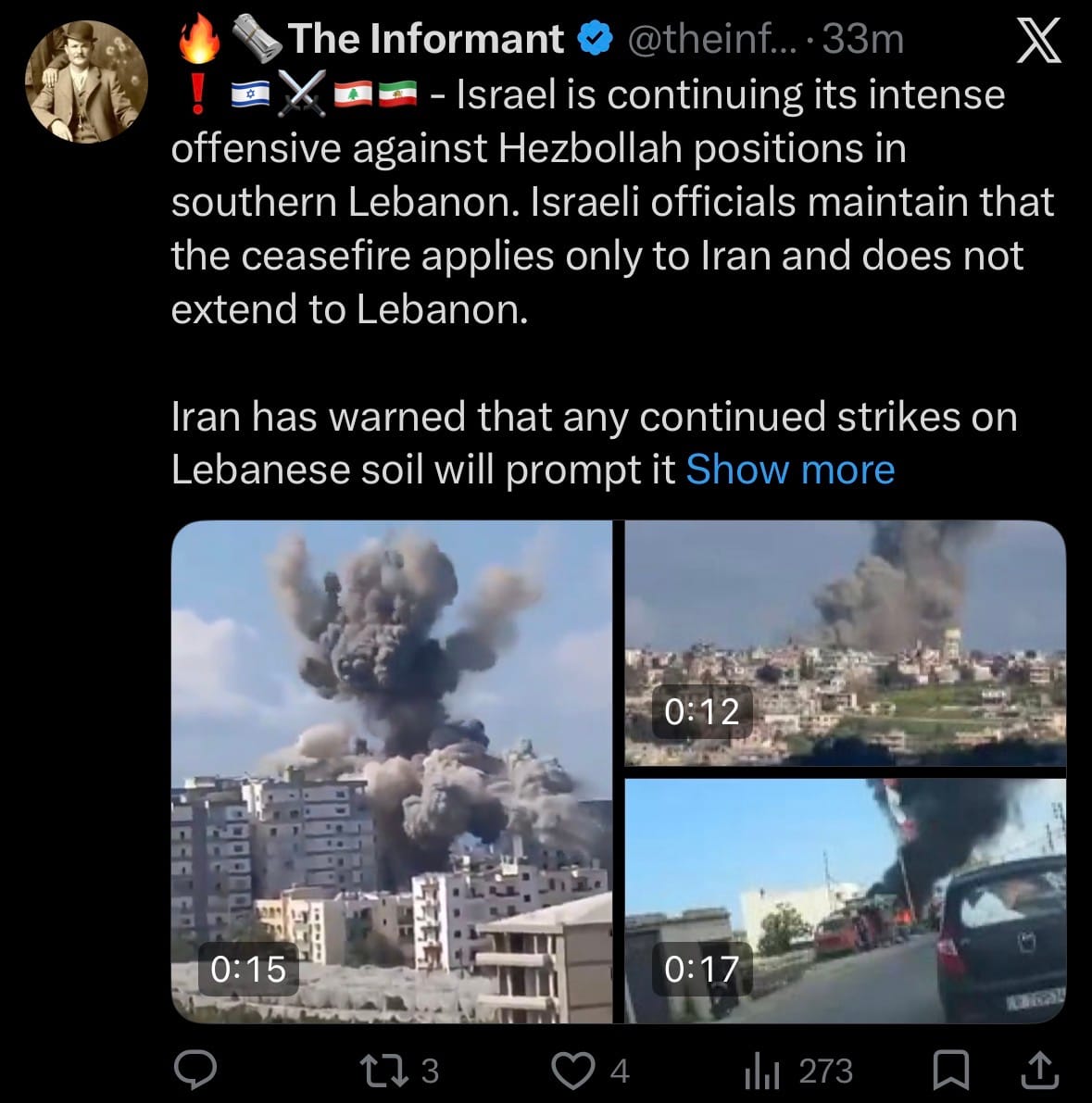
- However, Israel has explicitly stated that the ceasefire does not cover Lebanon. Israeli forces continued airstrikes against Hezbollah targets in southern Lebanon today, particularly in the Tyre, Nabatieh, and Bekaa Valley areas, killing at least 10 people in the past 24 hours. Israeli officials emphasized that operations against Hezbollah will continue independently until their military objectives are met. The ceasefire remains fragile, with both sides accusing each other of violations within the first day.
Cyber:
- On April 7, 2026, the FBI and Department of Justice announced Operation Masquerade, a court-authorized operation that disrupted Russian GRU (military intelligence) infrastructure used for global cyber espionage.
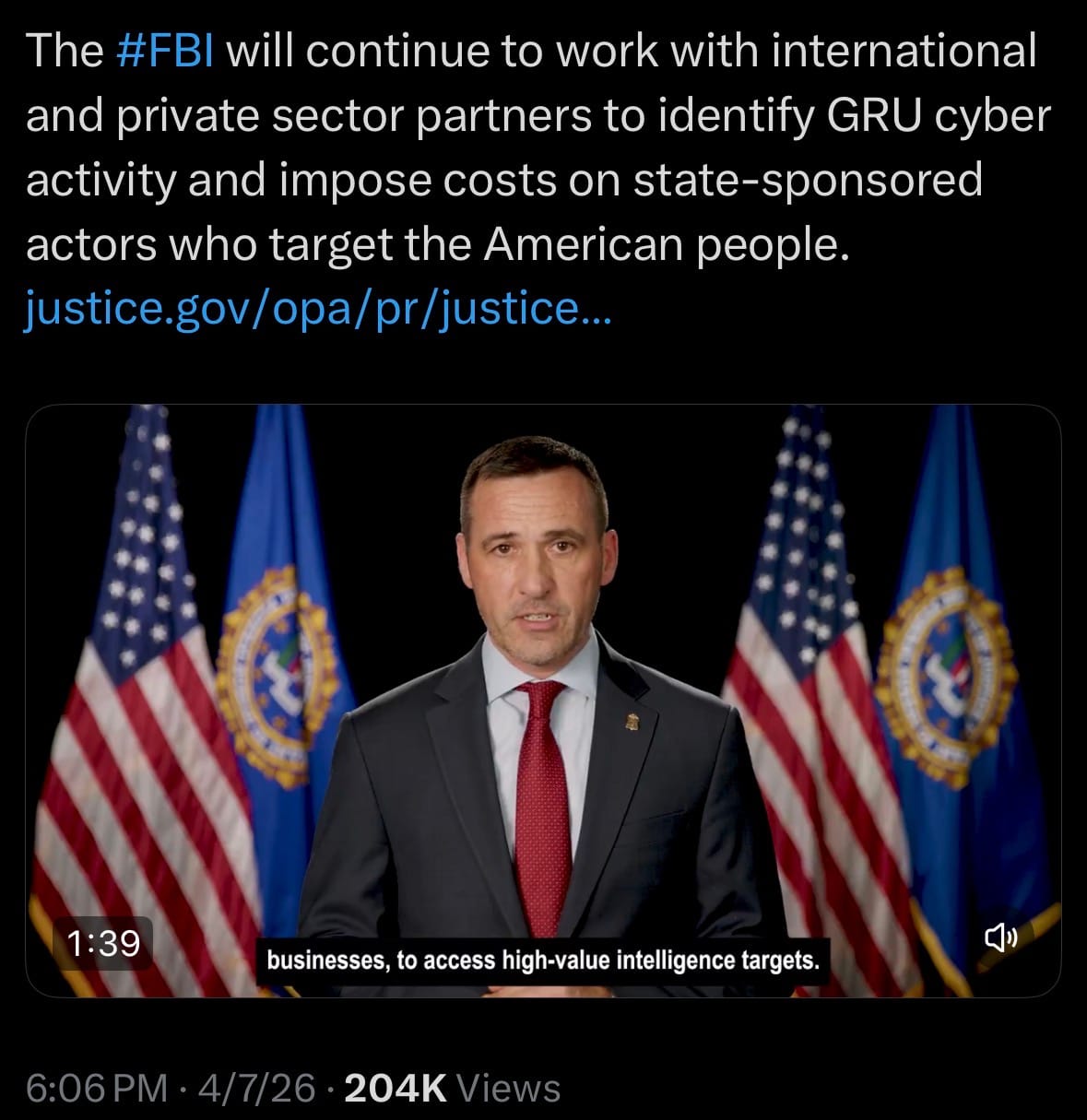
- The operation targeted the notorious hacking group APT28 (also known as Fancy Bear or Forest Blizzard), which since 2024 had been running a widespread DNS hijacking campaign. The GRU compromised home and business routers worldwide to steal emails, passwords, and authentication tokens from government, military, and critical infrastructure targets. The FBI operation successfully cut off the GRU’s access to hundreds of compromised routers in the United States and prevented further exploitation.
Science & Technology:
- April 7, 2026, an American aerospace startup announced it has raised $350 million in Series C funding led by Khosla Ventures, pushing its valuation to $1 billion.

- The company’s mission is to build the world’s fastest aircraft specifically designed for the U.S. military. The founder stated that while the challenge is enormous, the team is prepared to “swing big” to deliver next-generation speed and capability for the American Warfighter.

Space:
- As of April 7, 2026, China successfully launched SpaceSail Polar Group 07, deploying 18 low-Earth orbit satellites for its growing SpaceSail (Qianfan) megaconstellation from the Taiyuan Satellite Launch Center.

- As of April 7, 2026, the U.S. Space Force successfully launched the STP-S29A mission aboard a Northrop Grumman Minotaur IV rocket from Space Launch Complex 8 at Vandenberg Space Force Base, California.

- The mission delivered multiple technology demonstration payloads to low Earth orbit, including the main satellite STPSat-7 along with several CubeSats from the Department of Defense, U.S. Space Force, and academic institutions for experimental testing and research.
Statistic:
- Largest public airport companies on Earth by market capitalization:
- 🇪🇸 Aena: $47.07B
- 🇹🇭 Airports of Thailand: $24.33B
- 🇫🇷 Aéroports de Paris: $13.42B
- 🇲🇽 Grupo Aeroportuario del Pacífico: $12.22B
- 🇮🇳 GMR Airports: $10.92B
- 🇨🇳 Shanghai Airport: $10.23B
- 🇲🇽 Grupo Aeroportuario del Sureste: $10.09B
- 🇨🇭 Zurich Airport: $9.85B
- 🇩🇪 Fraport: $8.69B
- 🇳🇿 Auckland Airport: $8.13B
History:
- The FBI was created in 1908 as the Bureau of Investigation (BOI) under Attorney General Charles Bonaparte to address crimes that crossed state lines, such as land fraud, banking violations, and antitrust enforcement during a period of rapid industrial expansion. In its early years, it lacked structure and authority, but this changed dramatically in 1924 when J. Edgar Hoover became director and began transforming the agency into a professional, centralized force. Hoover introduced formal hiring standards, background checks, and the use of scientific methods in investigations, including the expansion of fingerprint databases (officially centralized in 1924) and the establishment of a national crime lab in 1932. During the 1930s, the FBI rose to national prominence by targeting high-profile criminals like John Dillinger, Bonnie and Clyde, and “Machine Gun” Kelly, as the federal government expanded its authority to combat organized crime during the Great Depression. In 1935, the BOI was officially renamed the Federal Bureau of Investigation (FBI), marking its formal establishment as the primary federal investigative agency. During World War II (1939–1945), the FBI expanded into domestic intelligence, focusing on counterespionage, sabotage prevention, and monitoring foreign agents within the U.S., laying the groundwork for its long-term intelligence role.
- During the Cold War (late 1940s–1991), the FBI’s mission expanded heavily into counterintelligence, particularly against Soviet espionage, while also conducting controversial domestic surveillance operations such as COINTELPRO (1956–1971), which targeted civil rights leaders, political activists, and organizations deemed subversive. These activities led to major public backlash and reforms in the 1970s, including increased congressional oversight and the establishment of guidelines to limit domestic surveillance abuses. In the 1980s and 1990s, the FBI shifted focus toward organized crime, drug trafficking, and emerging terrorism threats, investigating events like the 1993 World Trade Center bombing and the 1995 Oklahoma City bombing. The attacks on September 11, 2001 marked a turning point, transforming the FBI into a dual law enforcement and intelligence agency with counterterrorism as its top priority, leading to the creation of the National Security Branch and deeper integration with the intelligence community. Throughout the 2000s and 2010s, the FBI expanded into cybercrime, election security, and global counterintelligence operations, addressing threats like state-sponsored hacking, ransomware, and insider threats, while also handling major cases such as the Boston Marathon bombing (2013) and high-profile data breaches. By the 2020s and into 2026, the FBI operates as a technologically advanced agency focused on cyber warfare, artificial intelligence–driven threat detection, counterintelligence against adversaries like China and Russia, domestic extremism, and critical infrastructure protection, using advanced data analytics, surveillance technologies, and global partnerships to manage increasingly decentralized and digital threats while balancing ongoing scrutiny over privacy, civil liberties, and the scope of federal power.
Image of the day:

Thanks for reading! Earth is complicated, we make it simple.
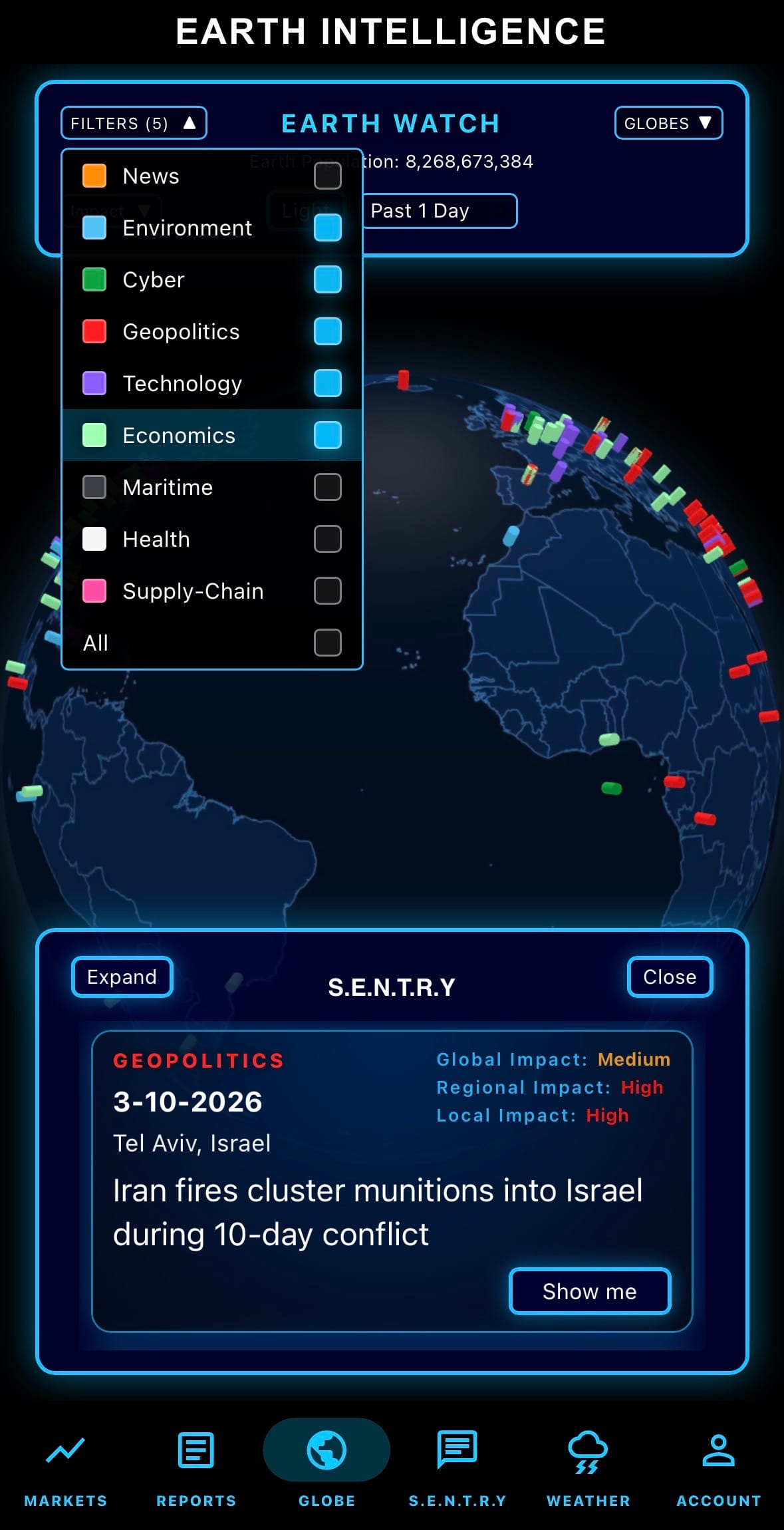
- Click below if you’d like to view our free EARTH WATCH globe:
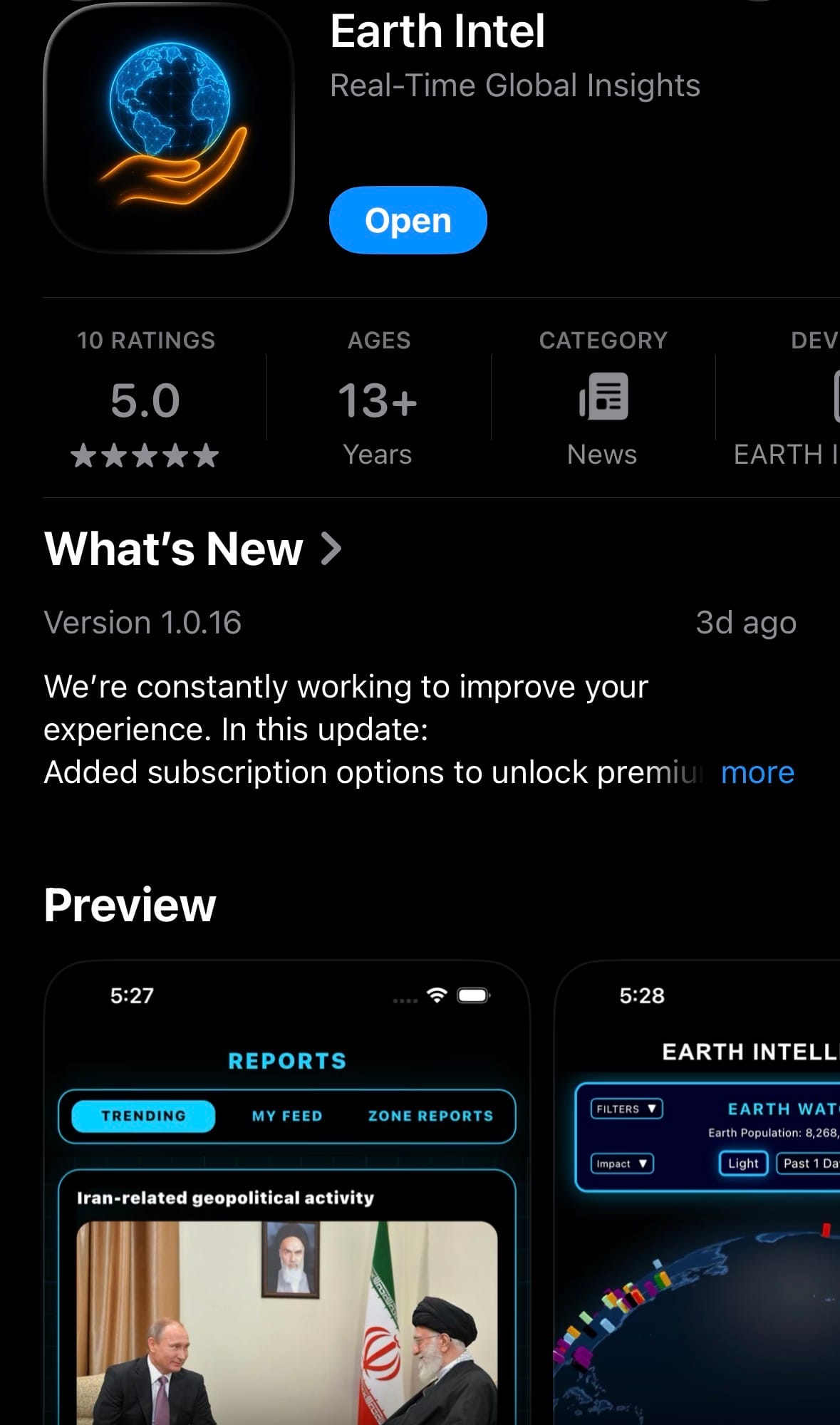
- Download our mobile app:



Click below to view our previous newsletters:
Support/Suggestions Email:
support@earthintel.io