Monday☕️🌎


Trending:
- France is facing worsening fuel shortages, with roughly 1 in 9 stations missing at least one fuel type and diesel prices near record highs, while Europe more broadly is entering winter with higher gas prices and lower storage levels after Middle East supply disruptions.
- Ukrainian drones struck the Moscow region and hit a major Russian oil refinery, adding further pressure to Russia’s refining capacity and fuel supplies.

- Saudi Arabia has reduced some oil shipments to Europe after attacks damaged its critical East-West pipeline, one of the kingdom’s main routes for moving crude to the Red Sea without using the Strait of Hormuz.
- Together, European fuel shortages, tighter gas supplies, attacks on Russian refineries, and reduced Saudi exports are putting additional pressure on global energy markets.
Economics & Markets:
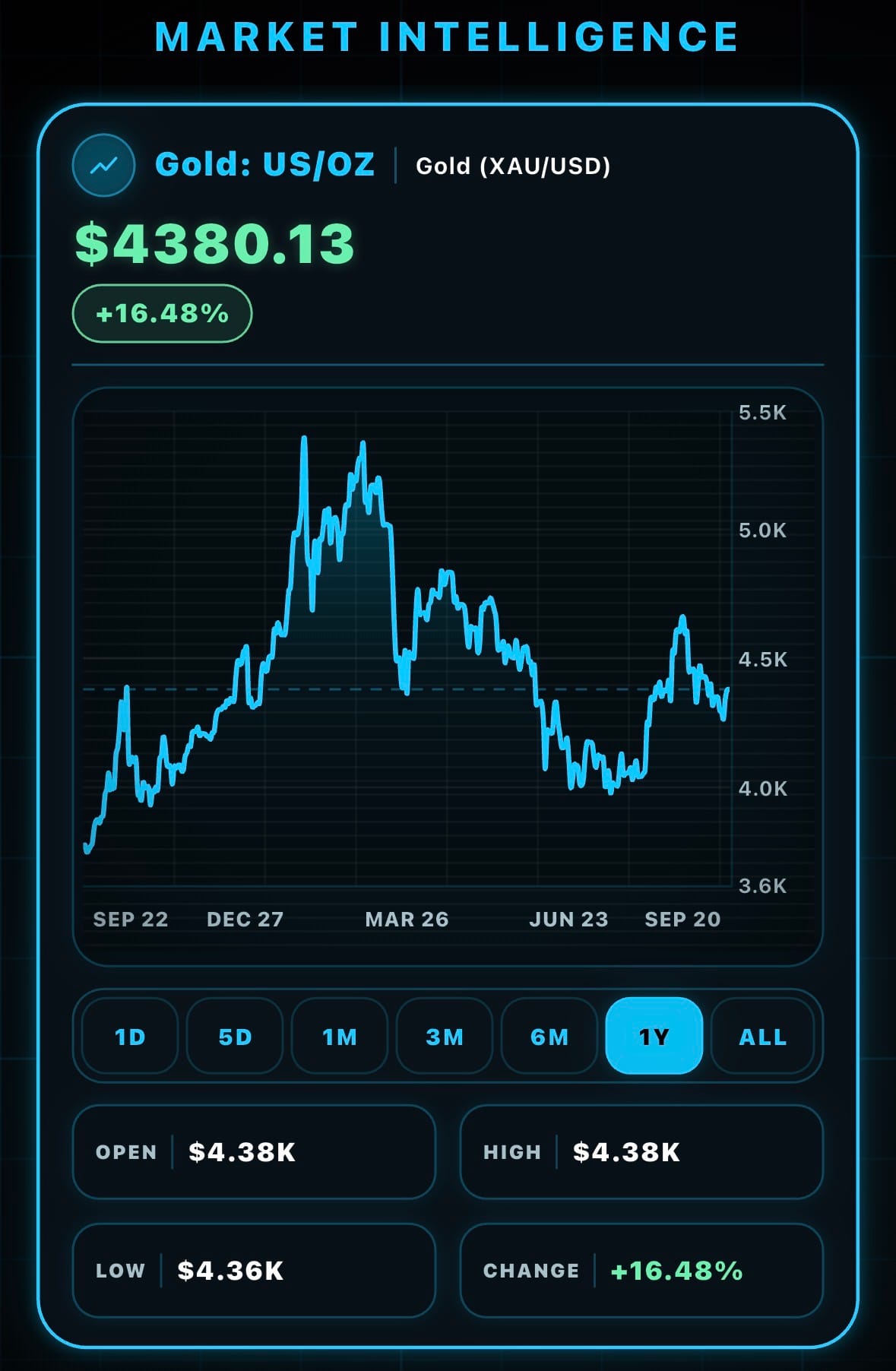
- Past 1 year of gold price action:
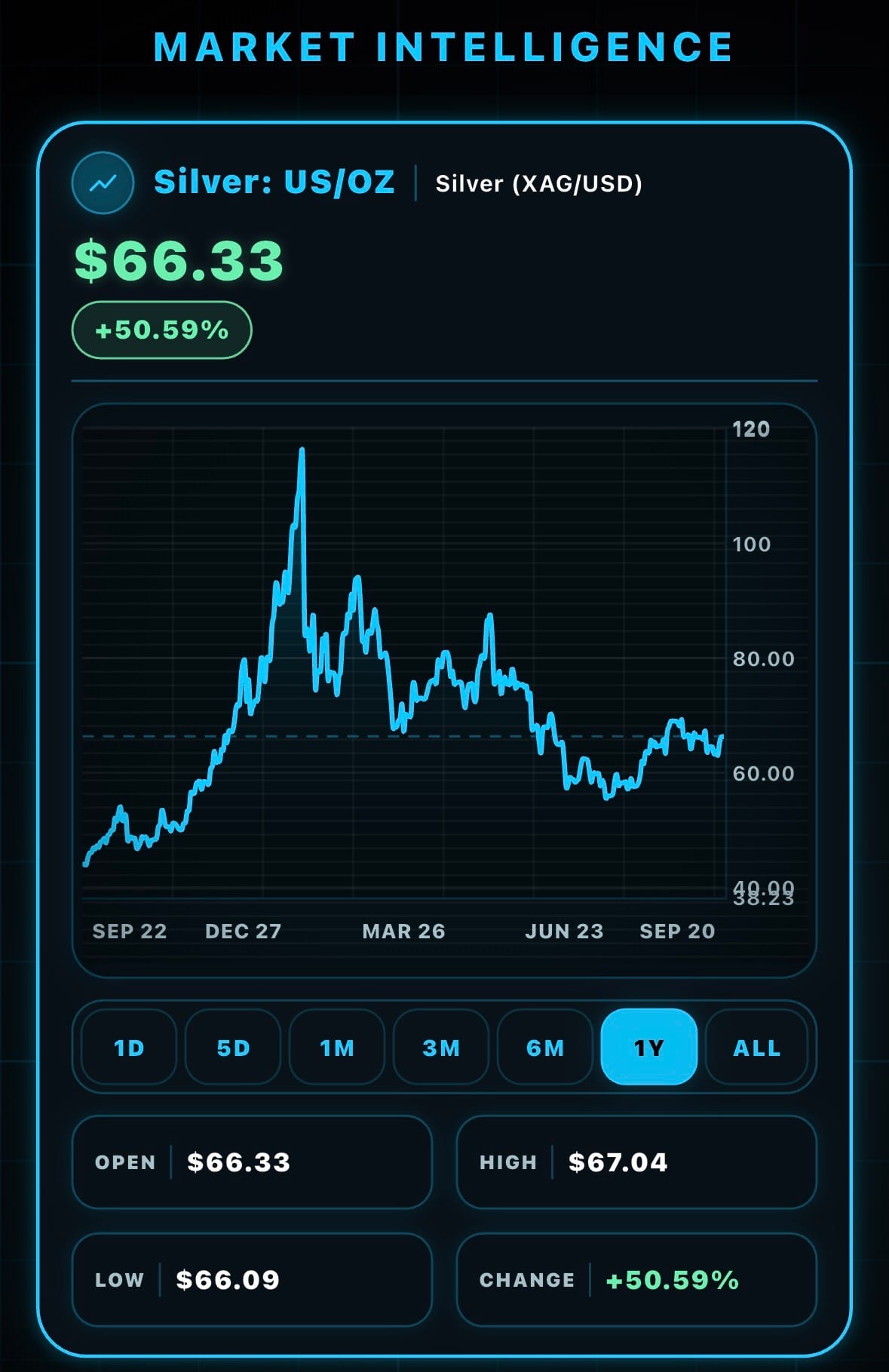
- Past 1 year of silver price action:
Geopolitics & Military Activity:
- September 20, 2026 — Ukraine carried out a massive long-range attack on Russia, launching more than 1,000 drones and other weapons over roughly 48 hours and striking targets including the Moscow Oil Refinery and logistics facilities deep inside Russia.

- Russia said it intercepted 1,110 drones across Russia and occupied areas, while Ukrainian officials said the strikes were aimed at oil, logistics, and other infrastructure supporting Russia’s war effort. During the same period, Russia continued its own missile and drone attacks on Ukraine, causing civilian casualties and damage as both sides intensified long-range strikes against each other.
Science & Technology:
- September 20, 2026 — Alibaba’s Qwen team released Qwen-Image-2.1, a new AI model that can create images from text and edit existing images, while also handling things like transparent backgrounds, product photos, portraits, infographics, and virtual try-ons.

- It is also “open weights,” which means developers can download the actual trained model files and run or customize the AI themselves instead of only accessing it through Alibaba’s website or API.
Space:
- On September 19, 2026, China launched four PIESAT-2 radar-imaging satellites at 6:50 p.m. local time from Taiyuan aboard a Long March 2D rocket. The satellites can map Earth through clouds and at night.
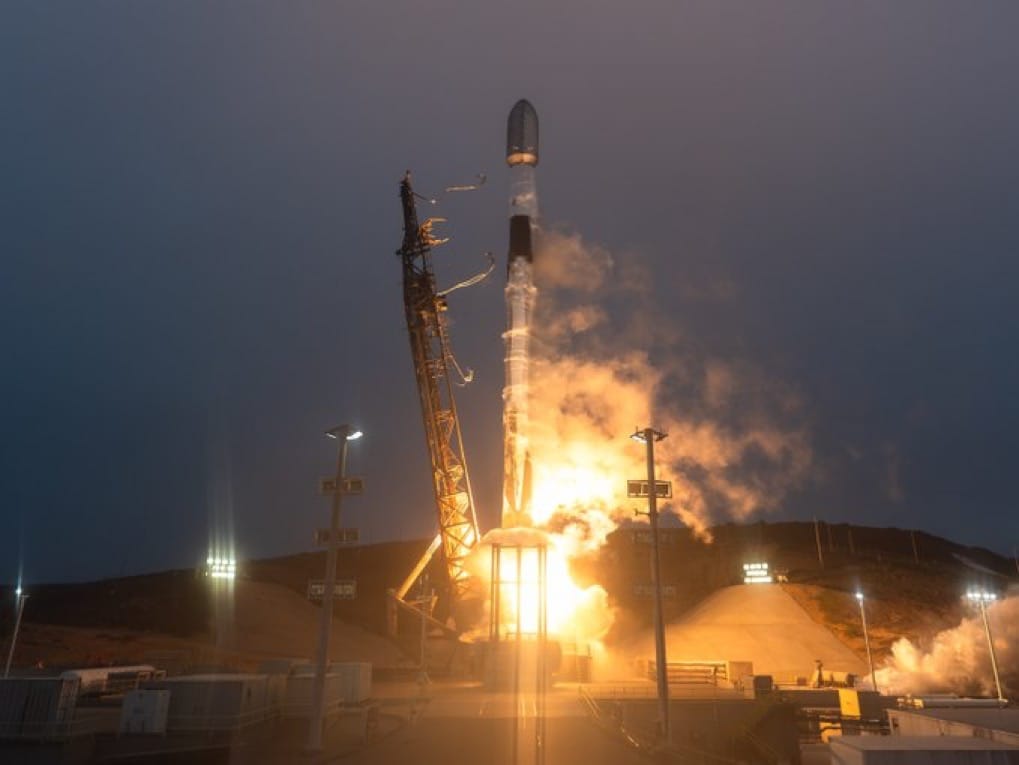
- On September 19, 2026, SpaceX launched 27 Starlink satellites at 6:47 p.m. PDT from Vandenberg Space Force Base in California aboard a Falcon 9. The satellites expand Starlink’s global internet network, and the booster successfully landed on the Of Course I Still Love You droneship.
- On September 20, 2026, China’s CAS Space launched nine commercial satellites at 12:03 p.m. local time from Jiuquan aboard a Kinetica 1 rocket. The satellites are being used for Earth observation and technology testing.
Statistic:
- Top assets by market cap:
- 🥇 Gold: $30.609T
- 🇺🇸 NVIDIA: $5.367T
- 🇺🇸 Apple: $4.905T
- 🇺🇸 Alphabet (Google): $4.212T
- 🥈 Silver: $3.765T
- 🇺🇸 Microsoft: $3.666T
- 🇺🇸 Amazon: $2.736T
- 🇹🇼 TSMC: $2.254T
- 🇺🇸 SpaceX: $2.012T
- 🇺🇸 Broadcom: $1.707T
- 🇺🇸 Meta Platforms: $1.696T
- 🇸🇦 Saudi Aramco: $1.668T
- ₿ Bitcoin: $1.635T
- 🇺🇸 Tesla: $1.438T
- 🇰🇷 Samsung: $1.288T
- 🇺🇸 Micron Technology: $1.147T
- 🇺🇸 Berkshire Hathaway: $1.091T
- 🇺🇸 Vanguard S&P 500 ETF: $1.044T
- 🇺🇸 Eli Lilly: $1.028T
- 🇰🇷 SK Hynix: $958.96B
- 🇺🇸 JPMorgan Chase: $929.48B
- 🇺🇸 AMD: $913.89B
- 🇺🇸 Walmart: $849.36B
- 🇺🇸 iShares Core S&P 500 ETF: $846.07B
- 🇺🇸 SPDR S&P 500 ETF: $785.97B
History of Stealth Aircraft
- The idea behind stealth aircraft is simple: make an airplane much harder for radar, infrared sensors and other detection systems to find, track and target. Early aircraft were accidentally more or less visible to radar depending on their shape and materials, but deliberate modern stealth emerged during the Cold War as Soviet surface-to-air missiles and radar networks became increasingly dangerous. The decisive breakthrough came in the United States during the 1970s. Lockheed Skunk Works engineers, including Ben Rich and Denys Overholser, applied mathematical work on electromagnetic-wave reflection—including research published by Soviet physicist Pyotr Ufimtsev—to calculate how aircraft surfaces could redirect radar energy away from the radar receiver. Lockheed’s secret Have Blue demonstrator first flew in 1977 and led directly to the F-117 Nighthawk, which first flew in 1981 and became operational in 1983 as the world’s first operational aircraft designed around stealth technology. The F-117 proved stealth could work in combat, particularly during Desert Storm in 1991, when it penetrated heavily defended Iraqi airspace to strike high-value targets. The U.S. simultaneously pursued Northrop’s flying-wing approach, eventually producing the B-2 Spirit. First flown in 1989 and operationally delivered beginning in 1993, the B-2 combined shaping, radar-absorbing materials, composite structures, reduced infrared/electromagnetic signatures and a flying-wing configuration into a long-range nuclear and conventional stealth bomber.
- The U.S. then moved stealth from specialized attack aircraft into fighters and an entire combat-aircraft ecosystem. The F-22 Raptor emerged from the Advanced Tactical Fighter competition, with Lockheed’s YF-22 defeating Northrop’s YF-23 in 1991. It combined low observability with internal weapons, integrated sensors, electronic warfare, extreme maneuverability and sustained supersonic flight, becoming the world’s first operational stealth air-dominance fighter in 2005. The next step was the F-35 Lightning II, designed in three versions: the conventional F-35A for the Air Force, short-takeoff/vertical-landing F-35B for the Marine Corps and carrier-based F-35C for the Navy. Unlike the small F-22 fleet, F-35 production expanded into the thousands across the United States and allied nations, effectively industrializing stealth aviation on a scale no previous program achieved. The American stealth lineage therefore runs Have Blue → F-117 → B-2 → F-22 → F-35 → B-21, alongside classified aircraft and next-generation programs. The F-117 officially retired from frontline service in 2008, although aircraft have continued flying for testing and training; the B-2, F-22 and F-35 remain operational, while the new B-21 Raider is moving through flight testing and low-rate production. The Air Force plans to acquire at least 100 B-21s, eventually replacing the B-2 and B-1 as the B-21 and modernized B-52 form the future bomber force. By 2026, two B-21 test aircraft were flying at Edwards AFB, production capacity was being expanded, and testing had progressed into areas including aerial refueling, mission systems and weapons integration.
- Today, the United States has the deepest and most mature overall stealth-aircraft ecosystem, based on publicly documented operational experience: it pioneered operational stealth, has used stealth aircraft in combat for decades, fields stealth fighters and bombers simultaneously, has produced the F-35 at multinational scale, and is already flight-testing its next-generation B-21 bomber. China has become the most significant challenger, particularly through the J-20 stealth fighter and newer programs, while Russia fields the Su-57 in much smaller numbers; other countries including South Korea, Turkey, Japan and European states are developing stealth aircraft themselves or participating in multinational programs. The important distinction is that stealth is much more than making an airplane look unusual: modern low observability combines airframe shaping + radar-absorbing materials + hidden engines and weapons + thermal-signature reduction + electronic warfare + passive sensors + networking + carefully controlled emissions. No aircraft is literally invisible, and sufficiently capable sensors can sometimes detect or track low-observable aircraft—the F-117 itself was shot down over Serbia in 1999—but stealth can dramatically reduce detection and engagement ranges and therefore change the entire air battle. The evolution is essentially early radar → WWII/Cold War air defenses → 1970s Have Blue → 1983 F-117 → 1989 B-2 flight → 2005 F-22 operational → F-35 global fleet → Chinese J-20/Russian Su-57 competition → B-21 → next-generation crewed and autonomous stealth aircraft. What separates the U.S. today is not one airplane but roughly five decades of continuous low-observable development across fighters, attack aircraft and strategic bombers, with the B-21 representing the newest publicly acknowledged generation of that technological lineage.
Image of the day:

Thanks for reading! Earth is complicated, we make it simple.

- Download our mobile app:


Click below to view our previous newsletters:

Support/Suggestions Email:
support@earthintel.io