Your daily briefing on the world, markets, science and technology.
Snapshot:
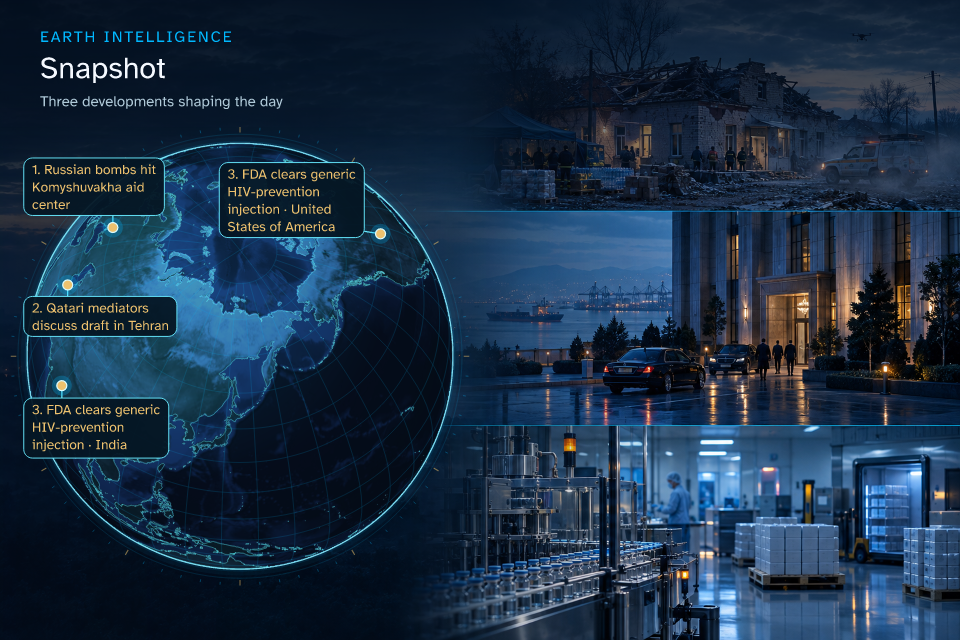
November 2, 2026 — Russian forces bombed an aid center and shelter in Komyshuvakha, Ukraine, killing 26 people; Ukrainian officials said about 20 remained missing as drones hindered rescuers.
November 2, 2026 — Qatari mediators traveled to Tehran after U.S.-Iran talks ended without a deal; Iran said reopening the Strait of Hormuz required Washington to end its port blockade.
November 2, 2026 — The U.S. FDA tentatively approved Dr. Reddy’s generic HIV-prevention lenacapavir injection for about 120 lower-income countries, but local approvals and funding still determine access.
Geopolitics & Military Activity:
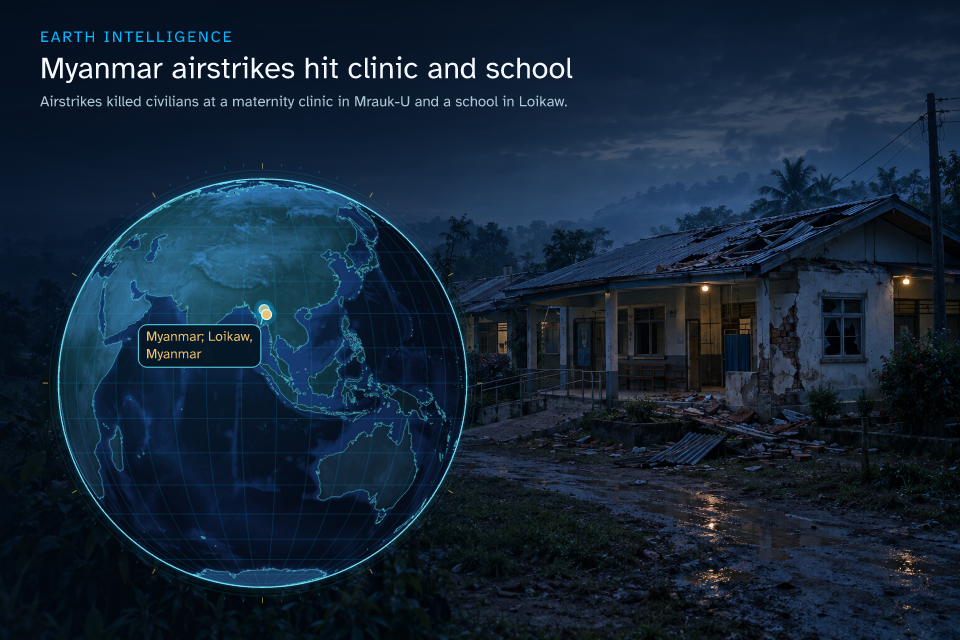
November 1, 2026 — Myanmar military airstrikes hit a maternity clinic in Mrauk-U and a school in Loikaw, Myanmar, killing at least 15 people, including a newborn and three students. The attacks also wounded at least 37 people, local sources and rights monitors said.
November 2, 2026 — The Indian Navy, with Air Force support, freed 20 crew members of Iranian fishing vessel Azini from armed pirates in the Arabian Sea off Somalia. It also secured the vessel, preventing its use in further pirate attacks.
Economics & Markets:
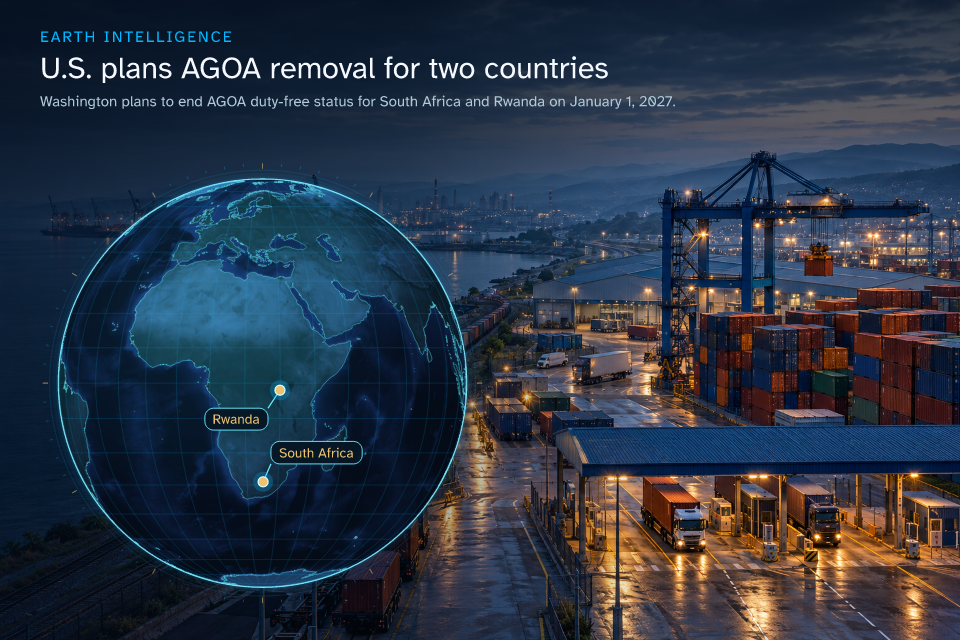
November 2, 2026 — President Donald Trump notified Congress that the United States intends to remove South Africa and Rwanda from AGOA, a program that lets eligible goods enter duty-free, on January 1, 2027. The planned change would end those trade preferences unless Washington reverses it.
November 2, 2026 — China’s central bank, the People’s Bank of China, and the China Securities Regulatory Commission approved a third stock-market support round in Beijing, China. Thirty-one brokers and fund managers applied for over 100 billion yuan through a facility that frees cash for share buying; company buyback loans became permanent at 1%.
November 1, 2026 — Germany’s gas-storage operators’ association, INES, said sites were 61.5% full on November 1, below the 80% legal target. This leaves Germany with a smaller stored-gas buffer as winter starts, not a confirmed supply shortage.
November 2, 2026 — Garment-factory owners in Bangladesh suspended production at at least 690 sites around Dhaka after workers demanded a 30,000-taka monthly minimum wage. The closures stopped work in Gazipur, Ashulia and Mirpur, while the government’s new wage board reviews the pay demand.
Asset
Price
As of (Eastern)
🇺🇸 Apple
339.10999 USD/share
Nov 2, 2026, 7:34 PM EST
🇺🇸 NVIDIA
202.2 USD/share
Nov 2, 2026, 7:33 PM EST
🇺🇸 Microsoft
507.13 USD/share
Nov 2, 2026, 7:34 PM EST
🇺🇸 Alphabet
278.049988 USD/share
Nov 2, 2026, 7:34 PM EST
🇺🇸 Amazon
245.8 USD/share
Nov 2, 2026, 7:34 PM EST
🇹🇼 TSMC
398.44 USD/share
Nov 2, 2026, 7:35 PM EST
🇸🇦 Saudi Aramco
26.1 SAR/share
Nov 2, 2026, 7:35 PM EST
🇺🇸 Tesla
403.95001 USD/share
Nov 2, 2026, 7:36 PM EST
🇺🇸 Meta Platforms
606.53998 USD/share
Nov 2, 2026, 7:35 PM EST
🇺🇸 Broadcom
322.41 USD/share
Nov 2, 2026, 7:35 PM EST
🌐 Gold
3957.28543 USD/troy ounce
Nov 2, 2026, 7:32 PM EST
🌐 Silver
50.7919 USD/troy ounce
Nov 2, 2026, 7:33 PM EST
🌐 Bitcoin
77134.1 USD/coin
Nov 2, 2026, 7:33 PM EST
🌐 Ethereum
2259.48 USD/coin
Nov 2, 2026, 7:33 PM EST
Business:
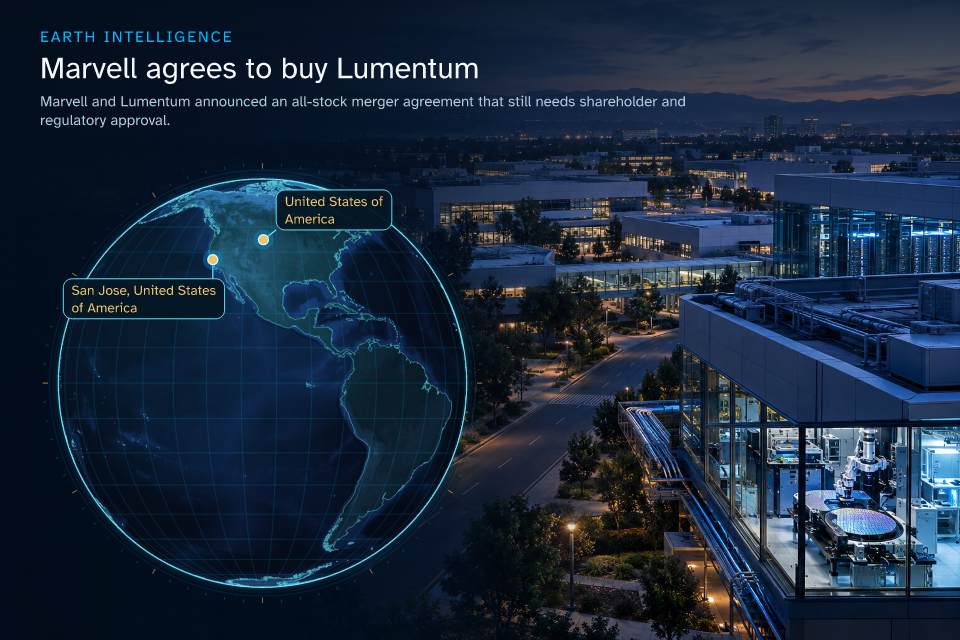
November 2, 2026 — Marvell, a chip-networking company in Santa Clara, United States, agreed to buy San Jose, United States-based optical-parts maker Lumentum in an all-stock deal valued at $115 billion. The merger needs shareholder and regulatory approval and is expected to close in 2028.
November 2, 2026 — Anthropic, the Claude AI maker in San Francisco, United States, filed an amended registration for its planned stock-market listing. It reported $17 billion in July–September revenue, up from $1.4 billion a year earlier; the filing does not mean shares can yet be sold.
November 2, 2026 — ADNOC, the United Arab Emirates state oil company, agreed with OpenAI and G42, an Emirati AI company, in Abu Dhabi, United Arab Emirates, to build AI tools for oil-field planning and trading decisions. It is a multiyear plan, not a completed rollout, and human experts will retain oversight.
November 2, 2026 — onsemi, a U.S. chipmaker, agreed in Scottsdale, United States, to buy Ferric for $600 million, plus up to $175 million tied to revenue goals. Ferric makes compact power controls for AI processors; the deal is expected to close by the end of 2026.
November 2, 2026 — Serbia’s central bank revoked Alta Group’s electronic-money licence in Belgrade, Serbia, after Alta Bank’s closure. Police detained the owner, Davor Macura, on suspicion of siphoning funds; the regulator said it arranged payment processing for existing orders.
Politics & Society:
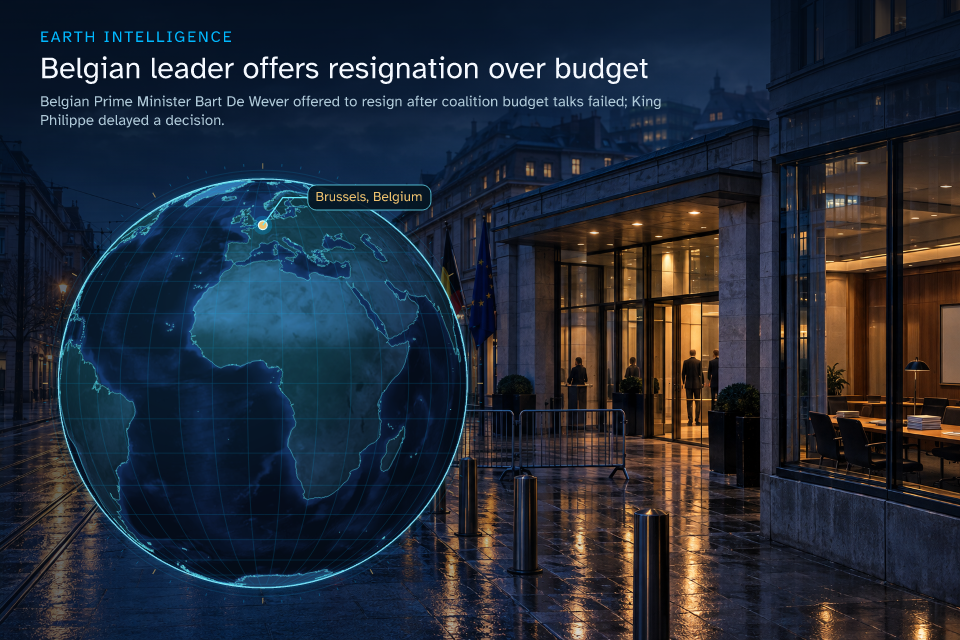
November 2, 2026 — Belgian Prime Minister Bart De Wever offered his resignation in Brussels, Belgium, after five coalition parties failed to agree on the 2027 budget. King Philippe delayed a decision, leaving the government to seek a deal before the December 31 deadline.
November 2, 2026 — South Africa’s Electoral Commission began two days of special municipal voting nationwide for 2.66 million approved voters, including home visits for people unable to travel. It comes before the November 4 vote for councils that oversee local services.
November 2, 2026 — Japan opened the National Disaster Management Agency in Tokyo, Japan, creating a permanent unit of more than 350 workers for preparation, emergency response and rebuilding. It asked residents and municipalities to review evacuation plans and keep at least three days of supplies.
November 2, 2026 — The U.S. Supreme Court in Washington, DC, United States, rejected the Justice Department’s request to set aside 20,000 California mail ballots from people it says may be noncitizens. California election officials can keep processing the ballots before Election Day.
Environment & Weather:
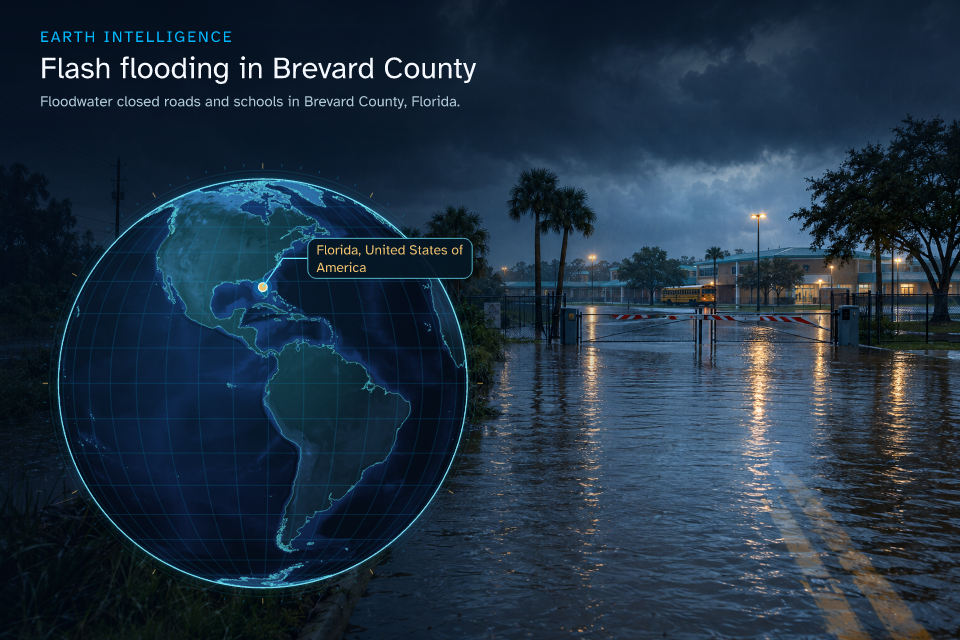
November 2, 2026 — The National Weather Service declared a flash-flood emergency for Palm Bay and West Melbourne, Florida, United States, after 8–12 inches of rain fell. Flooding closed Brevard County schools, blocked roads and led to a shelter opening in Cocoa.
November 2, 2026 — Severe storms dropped large hail across southeast Queensland, Australia, and Cooroy received more than 50 millimetres of rain in 30 minutes. Warnings remained in place south to northern New South Wales for more hail, destructive winds and flash flooding.
November 2, 2026 — India's National Disaster Response Force stopped its search near Kedartal, Uttarakhand, India, because severe weather made the route unsafe. Eight people—seven trekkers and a guide—remained missing after an avalanche, while rescuers stayed at the Kachhi Dhang base camp.
November 2, 2026 — Karnataka, India, said it would send 500 electricity workers and equipment to Andhra Pradesh, India, to repair power lines damaged by Cyclone Arnab. More than 15,000 poles were reported uprooted, leaving several areas without electricity; restoration work remained ahead.
Cyber:
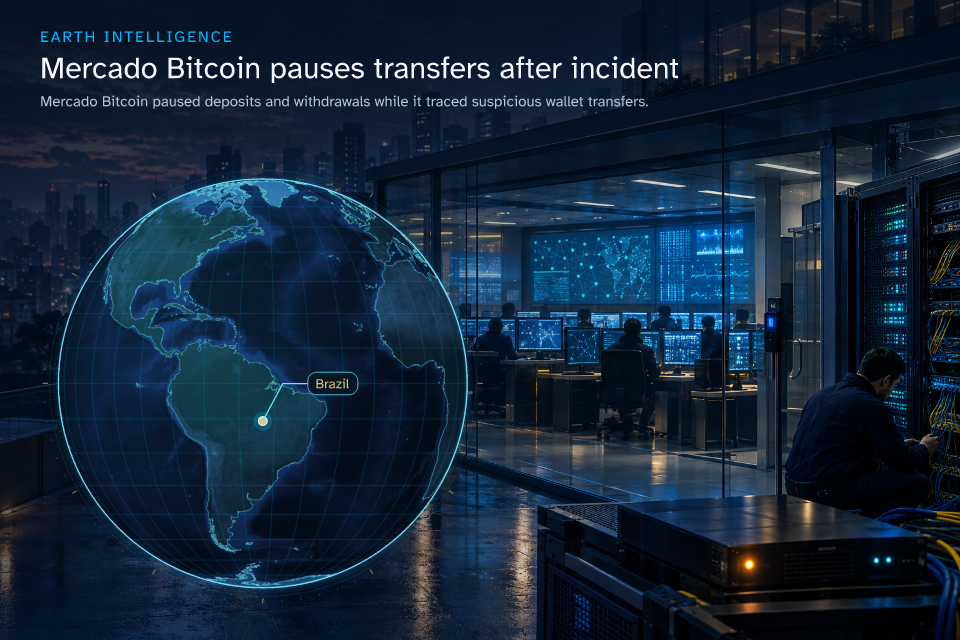
November 2, 2026 — Mercado Bitcoin, Brazil’s largest crypto exchange, paused customer deposits and withdrawals after suspicious transfers from its wallets crossed at least 10 digital-asset networks. The company said customer funds and personal data were unaffected; analysts estimated more than $40 million moved, and no attacker has been identified.
November 2, 2026 — Google’s threat-intelligence team and partners, including Japan’s National Police Agency, disrupted the X.CPE botnet, which had enrolled more than 1.3 million TV set-top boxes in over 200 countries. Google said the devices were used without owners’ knowledge for ad fraud, proxy services and further malware.
November 2, 2026 — @cosme, a Japanese beauty platform, said unauthorized access exposed some membership details for about 3 million people, including names, addresses, contact details and birth dates. It said login passwords and payment-card details were not included and that it is notifying members while investigating.
November 2, 2026 — Unknown attackers disrupted remote refrigeration controls at supermarkets in Belgium, Luxembourg, Sweden, Ireland and Estonia, forcing some stores to discard spoiled food. The problems were limited to affected stores, which were working to restore their cooling systems.
Science & Technology:
November 2, 2026 — President Lee Jae Myung asked South Korea’s National Assembly in Seoul, South Korea, to pass a 2027 budget with 21.3 trillion won for artificial intelligence, chipmaking and data centers. The proposed spending is nearly twice this year’s amount, but lawmakers have not approved it.
November 2, 2026 — The New York Times, New York Daily News, Chicago Tribune and Orlando Sentinel sued Brave Software, the browser and search company, in Manhattan, United States. They accuse it of copying articles, bypassing paywalls and selling index access for artificial-intelligence use; the publishers seek damages and an order to stop the alleged practices.
November 2, 2026 — Envision, a Chinese energy-technology company, said its Galaxy AI data center in Ulanqab, China, is running live workloads on a new 800-volt direct-current power system. The system combines transformers and batteries to supply more power to dense AI server racks at that campus.
Space:
November 2, 2026 — Northwood Space, a satellite ground-network company, raised $375 million in Torrance, California, United States, to expand antenna production and shared ground stations. The funding supports existing contracts and planned hiring for services that link satellites with users on Earth.
November 2, 2026 — Rocket Lab launched Japanese Earth-imaging company iQPS’s WADATSUMI-II radar satellite from Māhia Peninsula, New Zealand. iQPS made first contact after deployment; the satellite expands imaging that can work through clouds and at night.
Trends:
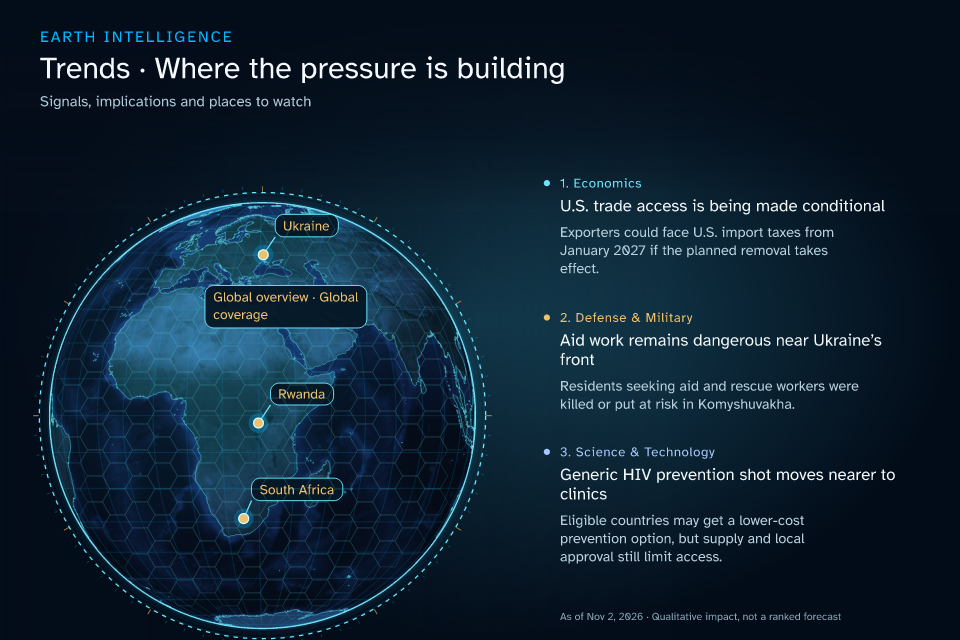
Washington’s plan to end duty-free access for South Africa and Rwanda shows trade preferences can change with policy reviews; exporters face import taxes from January if it goes ahead. Russian bombs in Komyshuvakha, Ukraine, killed 26 people at an aid center and shelter, leaving a local community without a key aid site. FDA’s tentative generic lenacapavir approval moves HIV prevention closer to 120 countries, but supply and local clearance still decide access.
What to watch: Watch whether Washington reverses the AGOA decision before January; that will decide exporters’ costs. At Komyshuvakha, Ukraine, watch rescue results and whether aid can resume safely. For generic lenacapavir, watch first shipments and country approvals; tentative FDA clearance alone does not put injections in clinics.
Statistic of the Day:
Consumer prices in Canada were 3.1 percent higher in September 2026 than in September 2025.
The Consumer Price Index tracks the average change in prices households pay for goods and services. It shows that Canada’s overall consumer price level was 3.1 percent higher than a year earlier.
History of Lenacapavir: from HIV capsid research to prevention:
Lenacapavir is a long-lasting HIV medicine that grew from research on the virus’s protective protein shell. It first offered treatment for people whose HIV resisted several drugs, then trials showed that injections every six months could also help prevent infection.
2006: Researchers began screening compounds that could disrupt HIV’s capsid, the protein shell that carries the virus’s genetic material. The work targeted a part of HIV different from earlier medicines, but turning early chemical leads into a usable drug took years.
2020: Laboratory and early human studies of GS-6207, later named lenacapavir, showed that one under-skin dose could suppress HIV for months. That made twice-yearly dosing plausible, though larger studies were still needed to test safety and treatment results.
December 22, 2022: The U.S. Food and Drug Administration approved lenacapavir with other HIV medicines for adults whose infection resisted many treatments. It was not a cure or a stand-alone drug, but added an option for a small, hard-to-treat group.
July 2024: PURPOSE 1, a study in South Africa and Uganda, found no HIV infections among 2,134 women given lenacapavir. Infections occurred in the daily-pill groups, showing the value of an option that does not require a tablet every day.
July 2025: The World Health Organization recommended twice-yearly lenacapavir as another PrEP choice, medicine used before exposure to prevent HIV. Its use still depends on national approval, funding, HIV testing and health workers able to provide follow-up care.
Image of the Day:
Thanks for reading! Earth is complicated, we make it simple.