Your daily briefing on the world, markets, science and technology.
Snapshot:
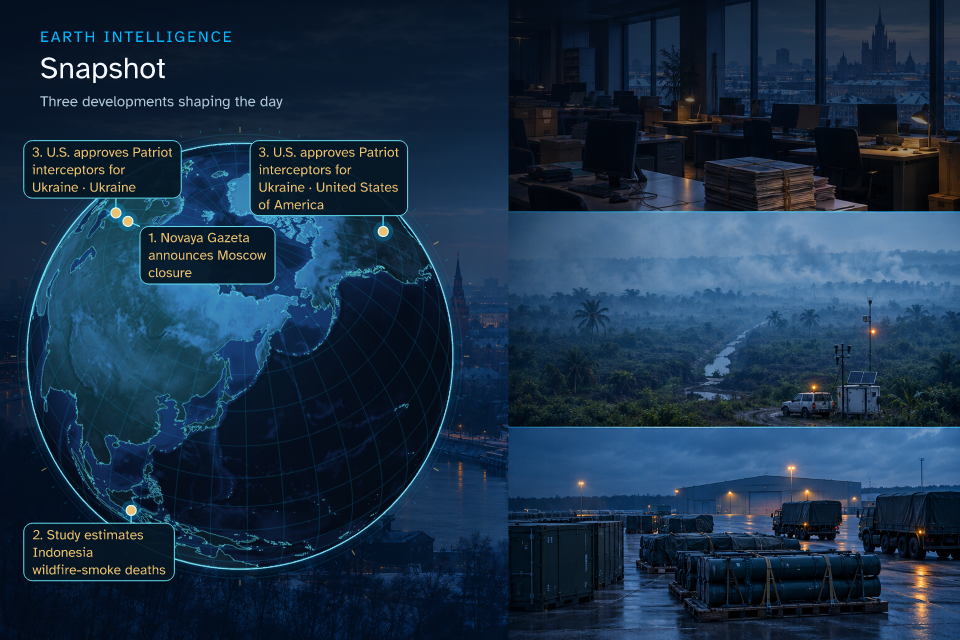
October 30, 2026 — Novaya Gazeta, an independent Moscow newspaper, said it will close on November 9 after eviction from its newsroom and loss of its funding channel.
October 29, 2026 — The Centre for Research on Energy and Clean Air estimated Indonesia’s September fire smoke caused 3,560 deaths and exposed up to 58 million people.
October 30, 2026 — The U.S. State Department approved a proposed $2.1 billion sale of 500 Patriot interceptors to Ukraine, funded by Canada, Germany and Norway, but not yet delivered.
Geopolitics & Military Activity:
October 30, 2026 — Russia and Ukraine began a joint aid and bus evacuation operation in Russian-occupied Oleshky, Ukraine, under a local ceasefire. It brought food and medicine into the frontline town and offered residents a route out; neither side said how many people left.
October 30, 2026 — Algeria’s army sent its first foreign troop convoy since 1973 to Arlit, Niger, a uranium-mining town. Algeria says it is protecting energy and economic interests; troop numbers and the mission timetable were not disclosed.
Economics & Markets:
October 30, 2026 — Insee, France’s statistics office, said France’s economy shrank 0.1% in July–September while preliminary October inflation reached 3.8% by the European Union measure. Energy prices were a main driver of the rise.
October 30, 2026 — The European Union and Canada launched an Alliance for the Future in Montreal, Canada, covering trade, technology, energy and financial markets. They also finished negotiations on a digital trade agreement, which sets rules for cross-border online business.
Asset
Price
As of (Eastern)
🇺🇸 Apple
344.79001 USD/share
Oct 30, 2026, 7:33 PM EDT
🇺🇸 NVIDIA
204.81 USD/share
Oct 30, 2026, 7:33 PM EDT
🇺🇸 Microsoft
521.90002 USD/share
Oct 30, 2026, 7:34 PM EDT
🇺🇸 Alphabet
278.215 USD/share
Oct 30, 2026, 7:34 PM EDT
🇺🇸 Amazon
240.47 USD/share
Oct 30, 2026, 7:34 PM EDT
🇹🇼 TSMC
405.98999 USD/share
Oct 30, 2026, 7:34 PM EDT
🇸🇦 Saudi Aramco
25.92 SAR/share
Oct 30, 2026, 7:35 PM EDT
🇺🇸 Tesla
399.82001 USD/share
Oct 30, 2026, 7:35 PM EDT
🇺🇸 Meta Platforms
614.97998 USD/share
Oct 30, 2026, 7:35 PM EDT
🇺🇸 Broadcom
326.17001 USD/share
Oct 30, 2026, 7:35 PM EDT
🌐 Gold
3875.44011 USD/troy ounce
Oct 30, 2026, 7:32 PM EDT
🌐 Silver
49.126 USD/troy ounce
Oct 30, 2026, 7:32 PM EDT
🌐 Bitcoin
77176.01 USD/coin
Oct 30, 2026, 7:33 PM EDT
🌐 Ethereum
2243.76 USD/coin
Oct 30, 2026, 7:33 PM EDT
Business:
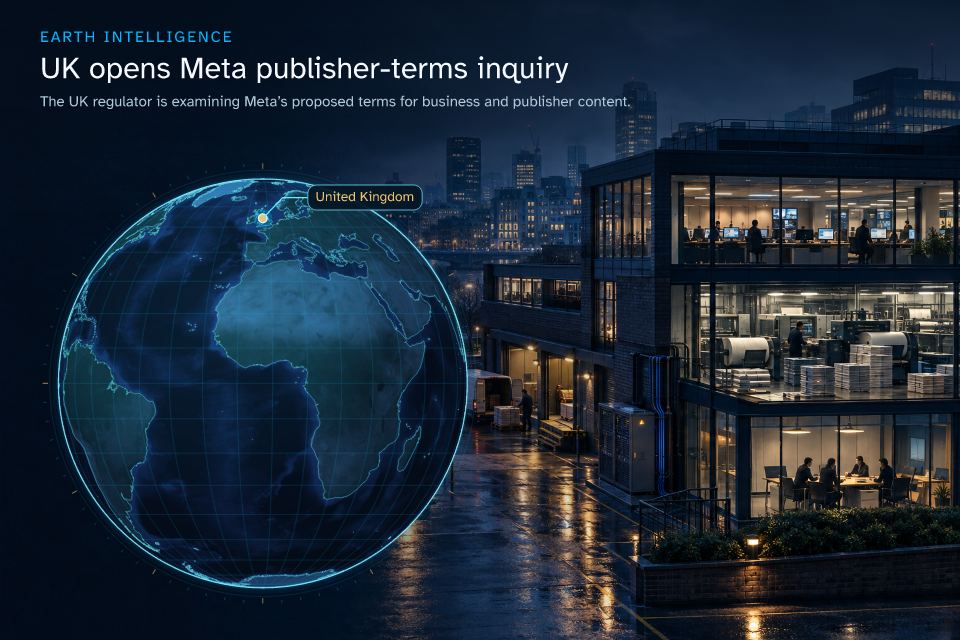
October 30, 2026 — The UK Competition and Markets Authority opened an investigation into Meta in the United Kingdom over paused terms that could let it use publishers’ website content for AI products. The regulator will examine whether the terms unfairly harm thousands of publishers and other businesses; it has not decided that Meta broke the law.
October 29, 2026 — Walmart and Symbotic, a warehouse-automation company, expanded their agreement to add automation at 25 Walmart regional distribution centers in the United States. The companies committed about $6 billion over several years for systems intended to increase storage and move online orders through the network faster.
Politics & Society:
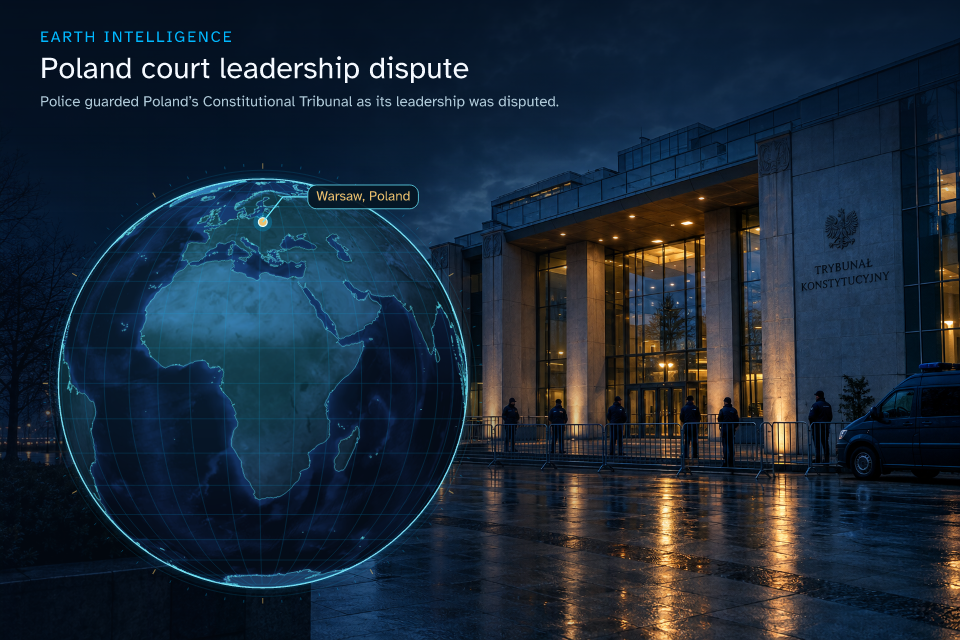
October 30, 2026 — Judge Anna Korwin-Piotrowska suspended Bogdan Święczkowski, head of Poland’s Constitutional Tribunal, in Warsaw, Poland. Police guarded the court during protests, while Święczkowski and opposition figures disputed the move’s legality.
Environment & Weather:
October 29, 2026 — A glacial-lake outburst at Sintaphu Lake in Bhutan released an estimated 7.4 million cubic metres of water and collapsed two bridges in Bhutan. India warned downstream communities in West Bengal and Assam as water moved toward the border; no deaths had been reported.
Cyber:
October 29, 2026 — Cybersecurity company CrowdStrike linked the China-connected group Vapor Panda to AI-assisted intrusions against more than 200 organizations in at least 14 countries; it confirmed follow-on activity at nine victims, including password theft and movement through their networks.
October 30, 2026 — India’s central bank, the Reserve Bank of India, reportedly asked banks to show they follow existing cyber rules and review software links to non-bank lenders and fintech firms after recent data exposure and unauthorized transfers.
Science & Technology:
October 30, 2026 — Samsung Electronics, South Korea’s largest memory-chip maker, said its 2027 high-bandwidth-memory supply is already sold and that AI demand will exceed industry supply. Data-centre builders are the direct buyers; other memory customers could face tighter supply.
Trends:
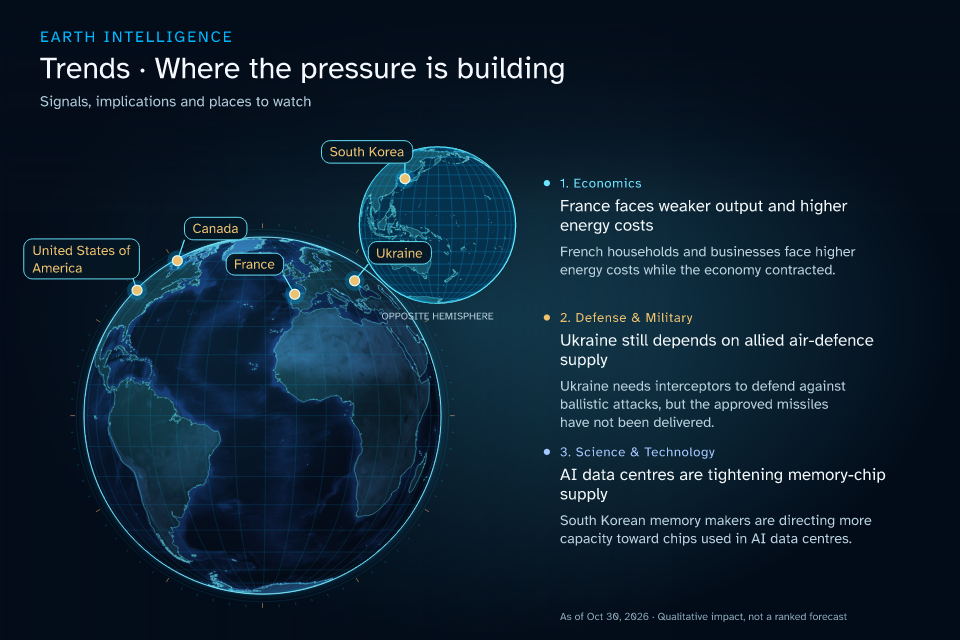
France’s economy shrank 0.1% in July–September as October inflation rose to 3.8%, led by energy. It shows households and firms still face higher costs while output is weak. The United States approved an ally-funded Patriot missile sale for Ukraine; it is planned support, not a delivery. Samsung, South Korea’s largest memory-chip maker, says AI data centres are absorbing more memory chips, which could leave other device makers facing tighter supply.
What to watch: France: watch whether November prices ease and output recovers; October figures are preliminary. Ukraine’s Patriot approval: watch for a contract and delivery dates, because the missiles are not yet there. Samsung: watch whether chip makers add supply fast enough; a shortage is a company forecast, not a measured consumer-price rise.
Statistic of the Day:
Average household electricity prices in the European Union were €0.28 per kilowatthour in the first half of 2026.
A kilowatthour is the amount of electricity used by a 1,000-watt appliance running for one hour. This average includes taxes and levies paid by households across the European Union.
History of The barcode and modern warehouse automation:
The barcode turned everyday goods into items that stores and warehouses could identify by machine. Its path from a 1949 patent idea to shared global standards solved a basic problem: knowing what was moving, selling or missing. That common language now supports scanning, stock records and much warehouse automation.
1952: Bernard Silver and Norman Joseph Woodland filed a U.S. patent application in 1949 and received the patent in 1952. Their circular “bull’s-eye” code was meant to identify products automatically, but scanners and lighting were still too costly and bulky for stores.
1973: U.S. grocery-industry leaders adopted the Universal Product Code, or UPC, on April 3. IBM engineer George Laurer’s line pattern gave makers and retailers one shared format, so the same item number could be read across many stores.
1974: A Marsh supermarket in Troy, Ohio, United States, made the first UPC checkout scan on June 26: a 67-cent pack of Wrigley’s Juicy Fruit gum. Retailers still had to buy scanners and persuade suppliers to print codes widely.
1983: Barcode standards expanded beyond shop counters to wholesale packs, cases and cartons. That let workers scan goods as they moved through loading docks and warehouses, reducing repeated hand counts and making stock records easier to update.
2020: GS1 introduced Digital Link in 2020, connecting QR codes to online product information. The older line barcode remains central to stock tracking, while newer codes can carry or link to more details for warehouses, shops and customers.
Image of the Day:
Thanks for reading! Earth is complicated, we make it simple.