Your daily briefing on the world, markets, science and technology.
Snapshot:
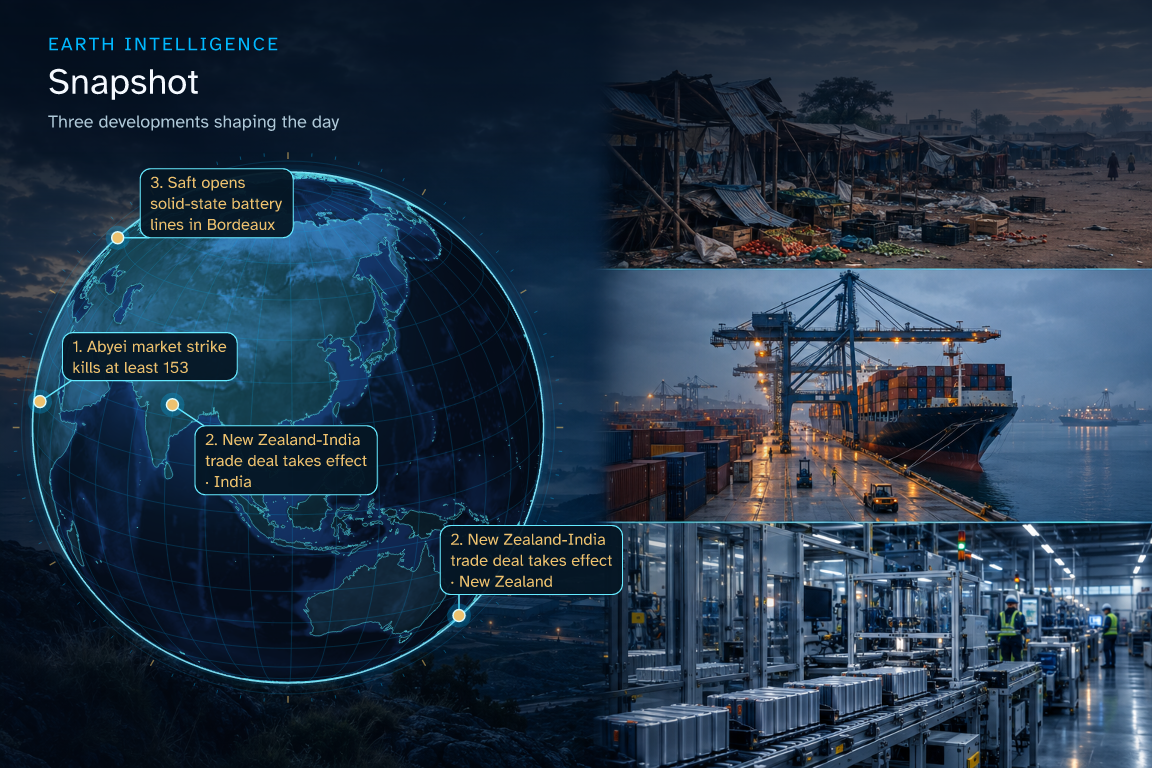
October 19, 2026 — South Sudanese officials blamed Sudan’s army for a market drone strike in disputed Abyei, killing at least 153 people.
October 20, 2026 — New Zealand and India started a trade deal cutting import taxes on 95% of New Zealand’s current exports to India.
October 19, 2026 — TotalEnergies-linked Saft opened Bordeaux, France, production lines for batteries using solids instead of liquids inside, boosting supplies for aircraft, spacecraft and energy storage.
Geopolitics & Military Activity:
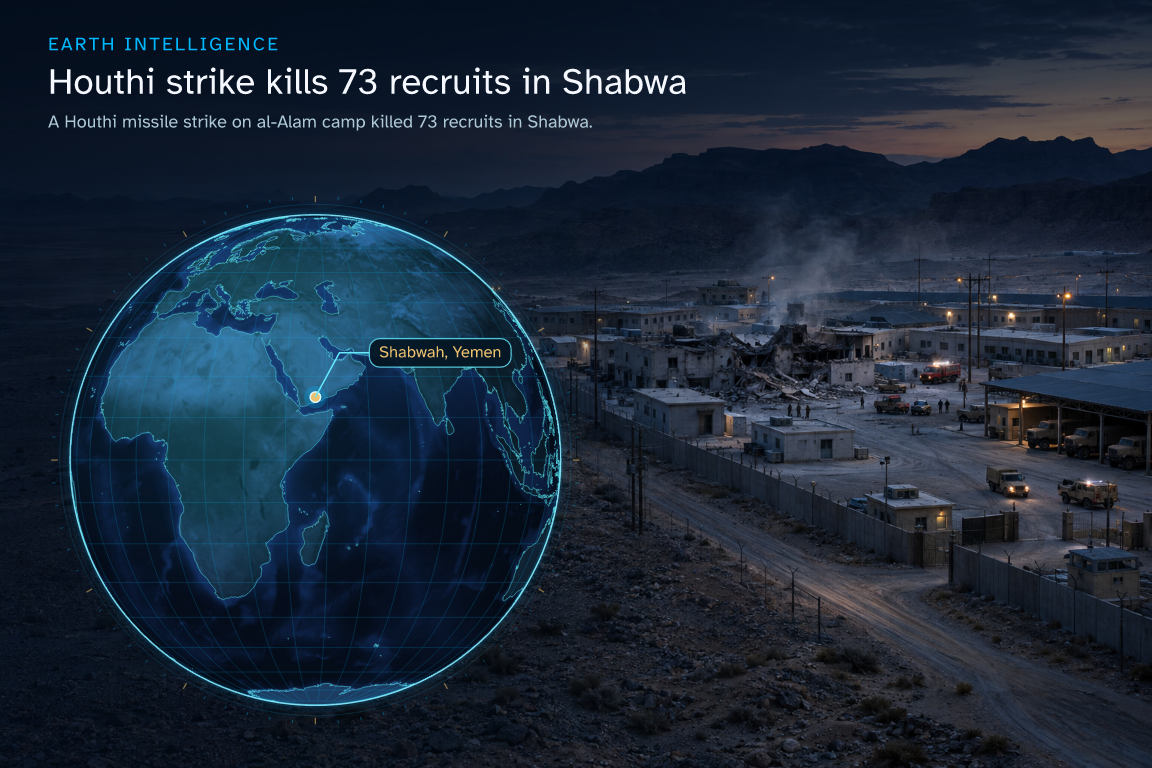
October 20, 2026 — Houthi missiles hit al-Alam camp in Shabwa, Yemen, on October 19, killing 73 recruits and injuring over 200. Fourteen were still missing; hospitals faced more injured people.
October 20, 2026 — The United Kingdom announced air patrols over Saudi Arabia, backed by a transport plane and advisers. They would protect Saudi cities and infrastructure against Houthi drones and missiles, without attacking Houthi sites.
October 20, 2026 — The European Union proposed an undersea communications cable from Greenland, Denmark, to Europe and closer monitoring of activity at sea. The Arctic plan aims to protect communications and improve transport and security.
Economics & Markets:
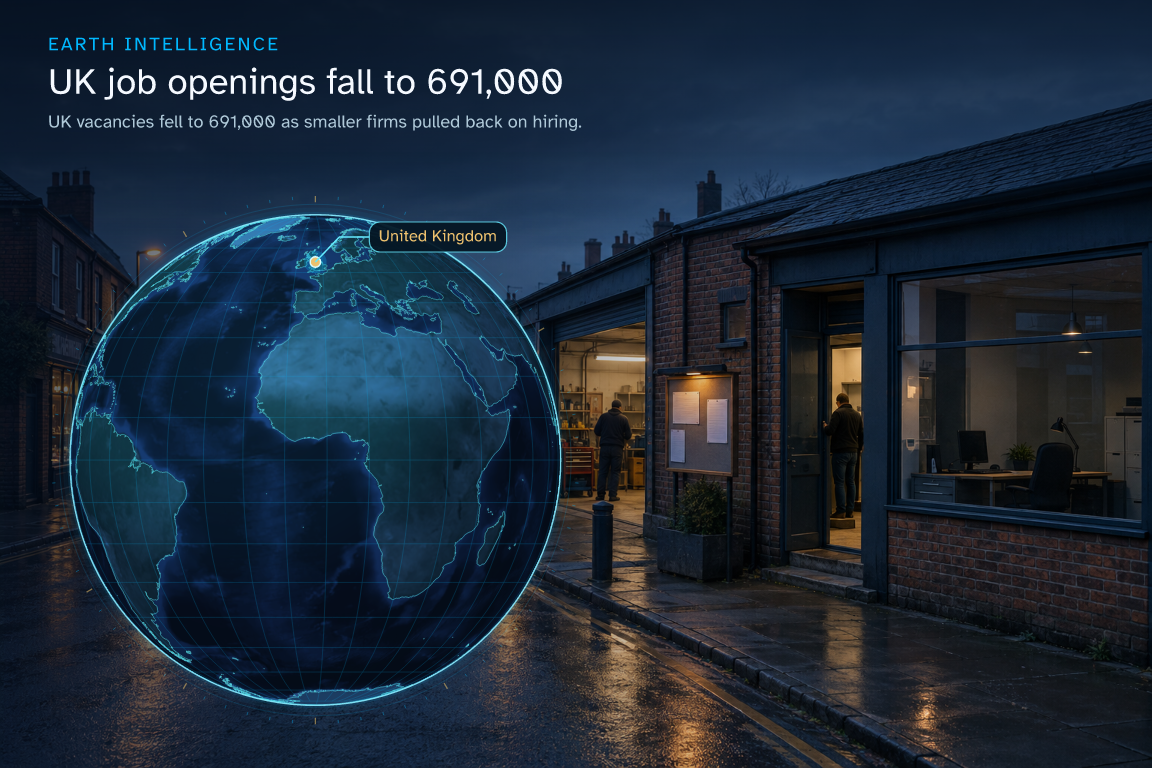
October 20, 2026 — United Kingdom job openings fell by 21,000 to 691,000 in July–September, the lowest outside the pandemic since 2014. Hiring slowed, especially at smaller firms with rising worker costs, giving jobseekers fewer choices.
October 20, 2026 — Mexico stopped buying poultry from Brazil after Newcastle bird disease appeared on a turkey farm in Nova Itaberaba, Brazil. China limited imports from Santa Catarina, Brazil. Producers could lose sales while Brazilian authorities work to keep other markets open.
Asset
Price
As of (Eastern)
🇺🇸 NVIDIA
216.48 USD/share
Oct 20, 2026, 7:34 PM EDT
🇺🇸 Apple
339.73001 USD/share
Oct 20, 2026, 7:35 PM EDT
🇺🇸 Alphabet
336.37 USD/share
Oct 20, 2026, 7:33 PM EDT
🇺🇸 Microsoft
532.13 USD/share
Oct 20, 2026, 7:33 PM EDT
🇺🇸 Amazon
262.76001 USD/share
Oct 20, 2026, 7:33 PM EDT
🇹🇼 TSMC
425.29999 USD/share
Oct 20, 2026, 7:35 PM EDT
🇺🇸 Meta Platforms
694.44 USD/share
Oct 20, 2026, 7:35 PM EDT
🇸🇦 Saudi Aramco
25.48 SAR/share
Oct 20, 2026, 7:34 PM EDT
🇺🇸 Broadcom
334.51001 USD/share
Oct 20, 2026, 7:35 PM EDT
🇺🇸 Tesla
373.77499 USD/share
Oct 20, 2026, 7:33 PM EDT
🌐 Gold
4115.85567 USD/troy ounce
Oct 20, 2026, 7:34 PM EDT
🌐 Silver
57.80102 USD/troy ounce
Oct 20, 2026, 7:32 PM EDT
🌐 Bitcoin
82921.07 USD/coin
Oct 20, 2026, 7:32 PM EDT
🌐 Ethereum
2447.6 USD/coin
Oct 20, 2026, 7:34 PM EDT
Business:
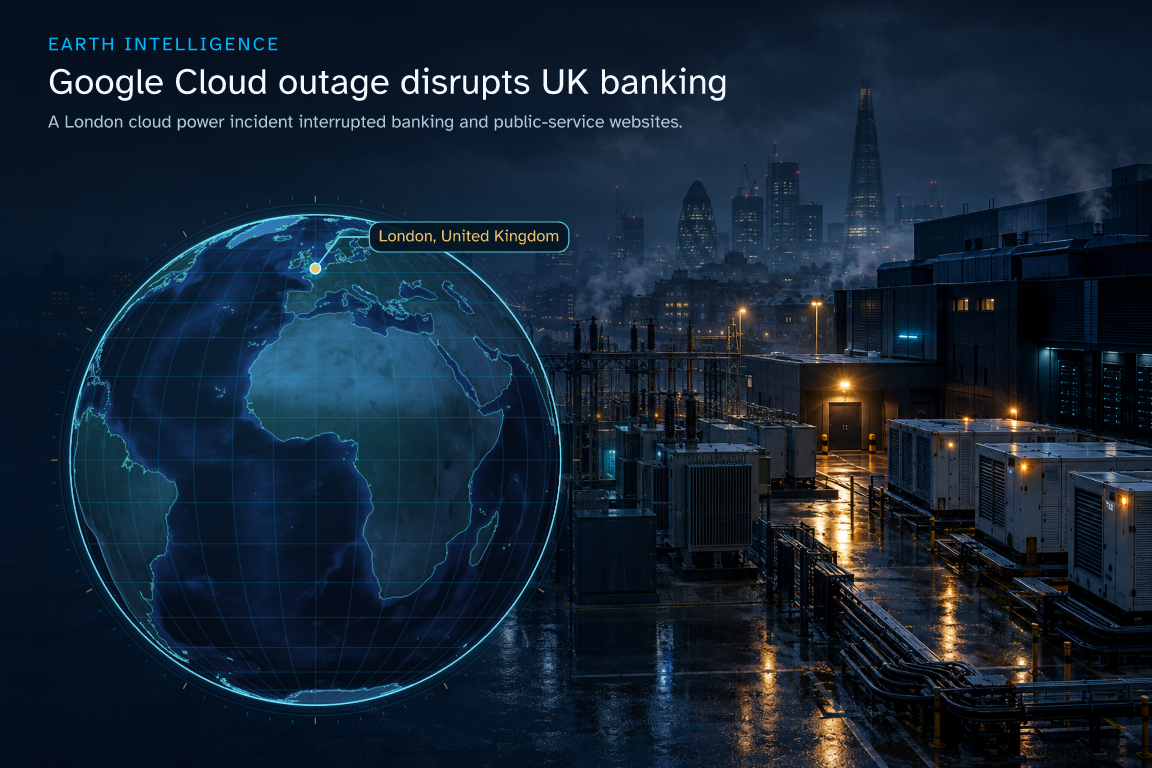
October 20, 2026 — Services returned after a Google Cloud power problem in London, United Kingdom disrupted Revolut, Lloyds, HSBC and public-service websites. Some customers temporarily couldn’t pay, withdraw money or transfer money.
October 20, 2026 — Drugmaker Samsung Bioepis agreed with Bahiafarma and Bionovis to supply eculizumab medicine SB12 to Brazil’s public health system for ten years. Sharing manufacturing methods from 2027 could help Brazil make it, widen rare-disease treatment access and lower costs.
Politics & Society:
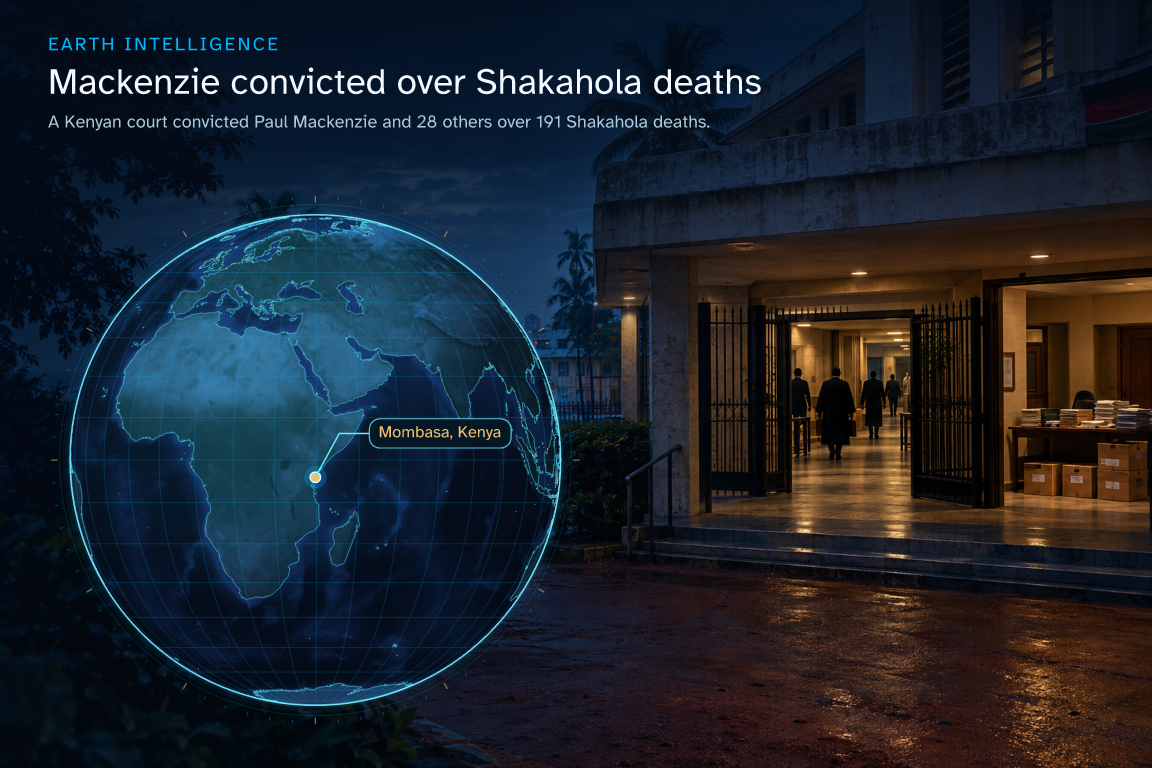
October 19, 2026 — A Mombasa, Kenya court found Pastor Paul Mackenzie and 28 others guilty of murdering 190 children and one adult by forced starvation in their Shakahola religious group. Sentencing is due November 6.
October 20, 2026 — Italy made more acts crimes, strengthened action against youth violence and approved 500 extra soldiers after unrest in Milan. Police and courts gain powers; children and parents could face tougher penalties.
October 20, 2026 — Romania’s Parliament approved diplomat Luca Niculescu’s government, 280–58, ending months of deadlock. Budget decisions can restart, but his government doesn’t control most seats and spends far more than it takes in.
Environment & Weather:
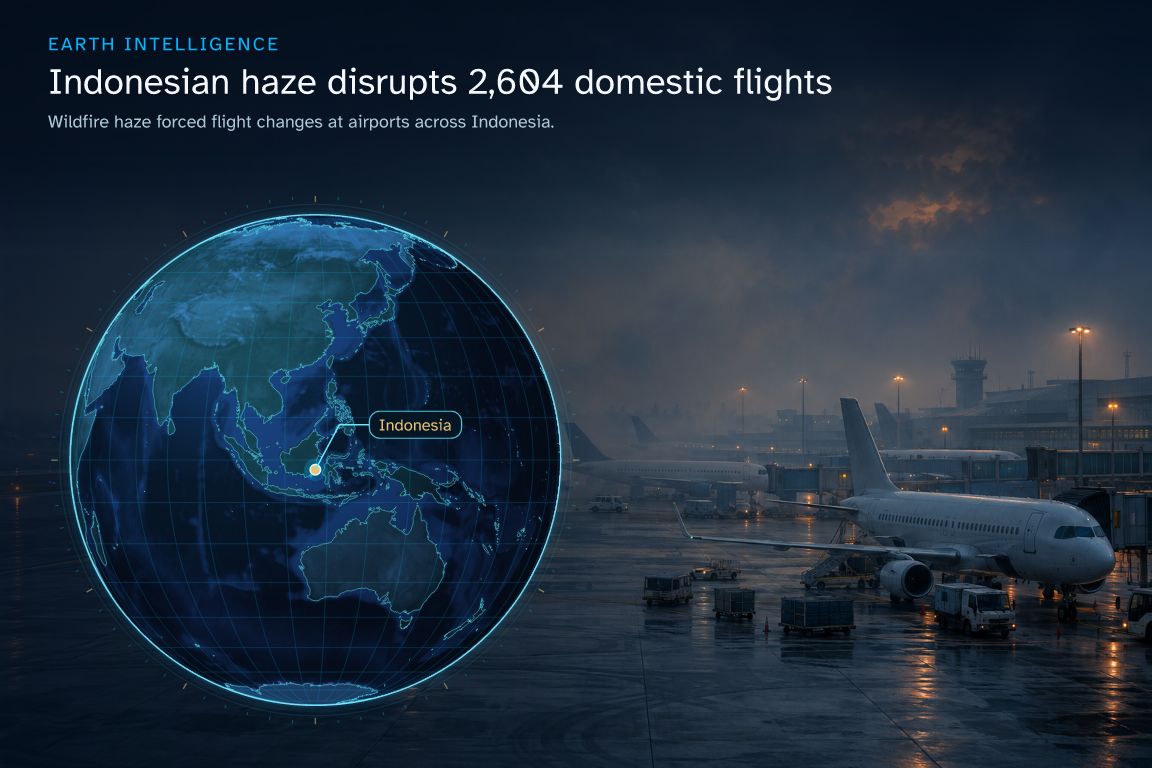
October 19, 2026 — Indonesia increased flight monitoring after wildfire smoke disrupted 2,604 domestic flights since August 11, including 1,420 cancellations or delays. Low visibility also cancelled 14 international flights; airports must follow safety rules for those conditions.
October 19, 2026 — Environmental group Ecologistas en Acción reported Spain’s worst ozone air pollution since 2010. January–September readings from 490 stations suggested 8.6 million people breathed this harmful gas above the legal limit. Hot weather increases the risks.
October 19, 2026 — A gold mine collapsed in Santa Bárbara de Iscuandé, Colombia, killing 14 miners and injuring seven. Nariño authorities ended rescues and began helping families. Governor Luis Alfonso Escobar called for safer small-scale mines operating under the law.
Cyber:
October 20, 2026 — Cybersecurity company Symantec said Russia-linked hackers Swallowtail stole access keys and kept access to a shipbuilder and other defence organizations in two unnamed countries in NATO, a military alliance. Attackers could keep spying.
October 19, 2026 — Researchers at Citizen Lab and Serbia’s SHARE Foundation found likely spying software targeting prosecutor Rade Bajić in Belgrade, Serbia. His corruption-case communications could be exposed; the attacker remains unknown.
Science & Technology:
October 19, 2026 — Meta finished stage one of its Prometheus AI computing centre in New Albany, Ohio, United States. Expanding to one million graphics-processing chips for its Muse artificial-intelligence models needs substantial local electricity, cooling and infrastructure.
October 20, 2026 — New Jersey, United States launched a shared supercomputer project worth over $125 million to double the state’s research-computing power from 2027. The state, Chris and Melody Malachowsky, and SHI International fund access for universities, businesses and students.
Space:
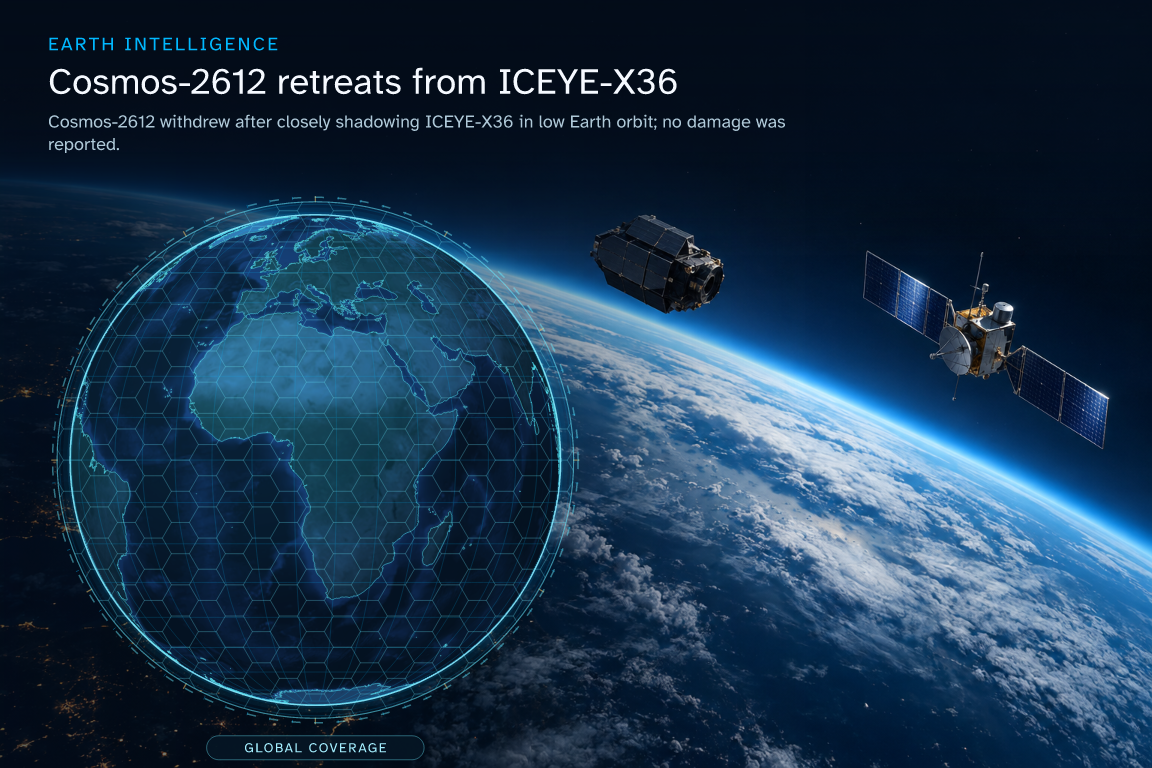
October 19, 2026 — Russia’s Cosmos-2612 satellite moved away after approaching within hundreds of metres of ICEYE US’s ICEYE-X36 in orbit close to Earth. No damage was reported; exact distance and purpose remain unclear. It may have inspected or interfered with the other satellite.
Trends:
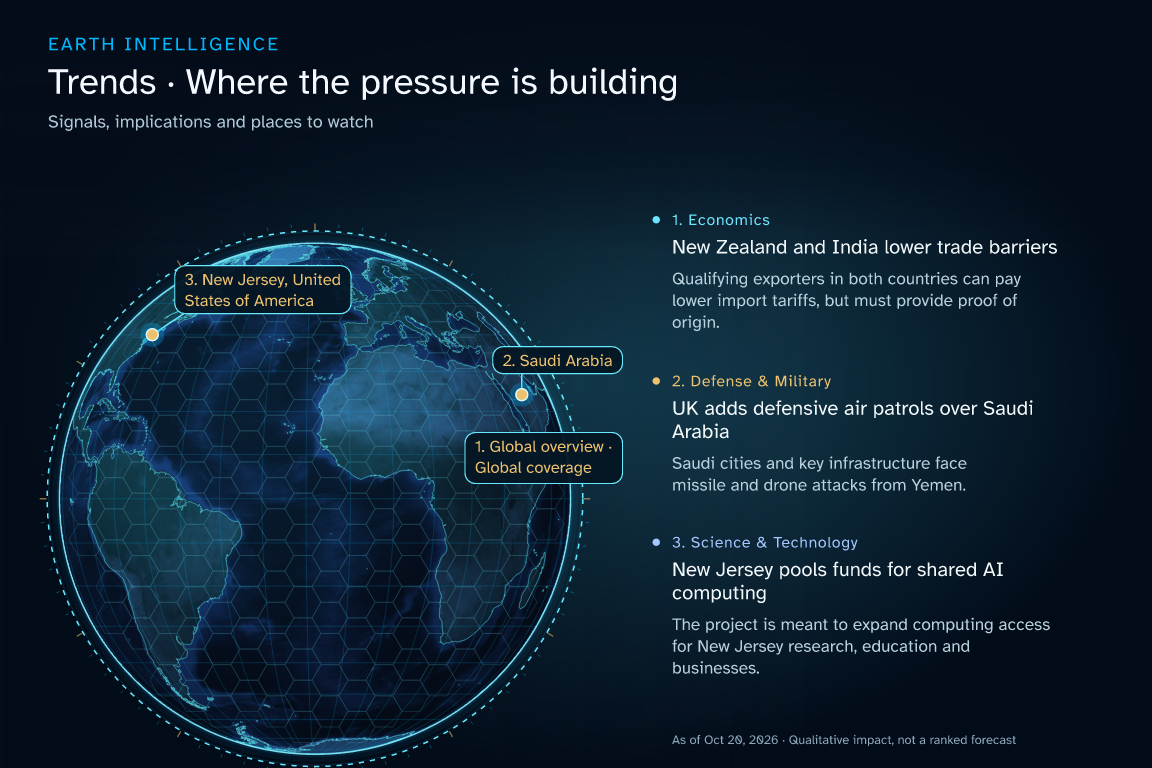
New Zealand and India’s lower import taxes could make trade cheaper; businesses must prove where goods were made. United Kingdom air patrols could protect Saudi Arabia from attacks without striking Houthi sites. New Jersey’s shared supercomputer could let more researchers use expensive equipment. These separate events affect different people and places.
What to watch: Whether businesses use the New Zealand–India tax cuts; whether UK patrols protect Saudi communities; and whether researchers, students and businesses can use New Jersey’s computer in 2027.
Statistic of the Day:
Hungary’s central bank kept its main interest rate at 5.50 percent, effective October 21, 2026.
It guides what banks pay to borrow money and earn on deposits. Because it stayed the same, those official rates did too.
History of batteries: from discovery to everyday power:
Batteries grew from early electricity experiments into rechargeable power for phones, vehicles and energy storage. Scientists needed to store more energy safely and reuse batteries. Today’s solid-state designs replace the liquid carrying charged particles inside a battery with a solid material.
1800: Italian physicist Alessandro Volta invented the first battery, the voltaic pile. It offered a new way to make electricity through chemistry. The electrical unit “volt” is named after him.
1970s: Chemist Stanley Whittingham developed a rechargeable lithium battery with materials that could hold and release charged lithium particles. It stored a lot of energy, but its lithium metal could easily catch fire.
1980: Chemist John Goodenough’s team used cobalt oxide, a material made of cobalt and oxygen, in the battery’s positive side. It produced about four volts, roughly twice the earlier design’s voltage.
1985: Chemist Akira Yoshino used Goodenough’s material with carbon on the other side, replacing lithium metal that reacts easily. This made a more practical battery that could be recharged hundreds of times.
1991–2019: Lithium-ion batteries went on sale in 1991, helping make smaller phones, portable computers and electric vehicles practical. Whittingham, Goodenough and Yoshino shared the 2019 Chemistry Nobel Prize for these advances.
Image of the Day:
Thanks for reading! Earth is complicated, we make it simple.