Friday☕️


Trending:
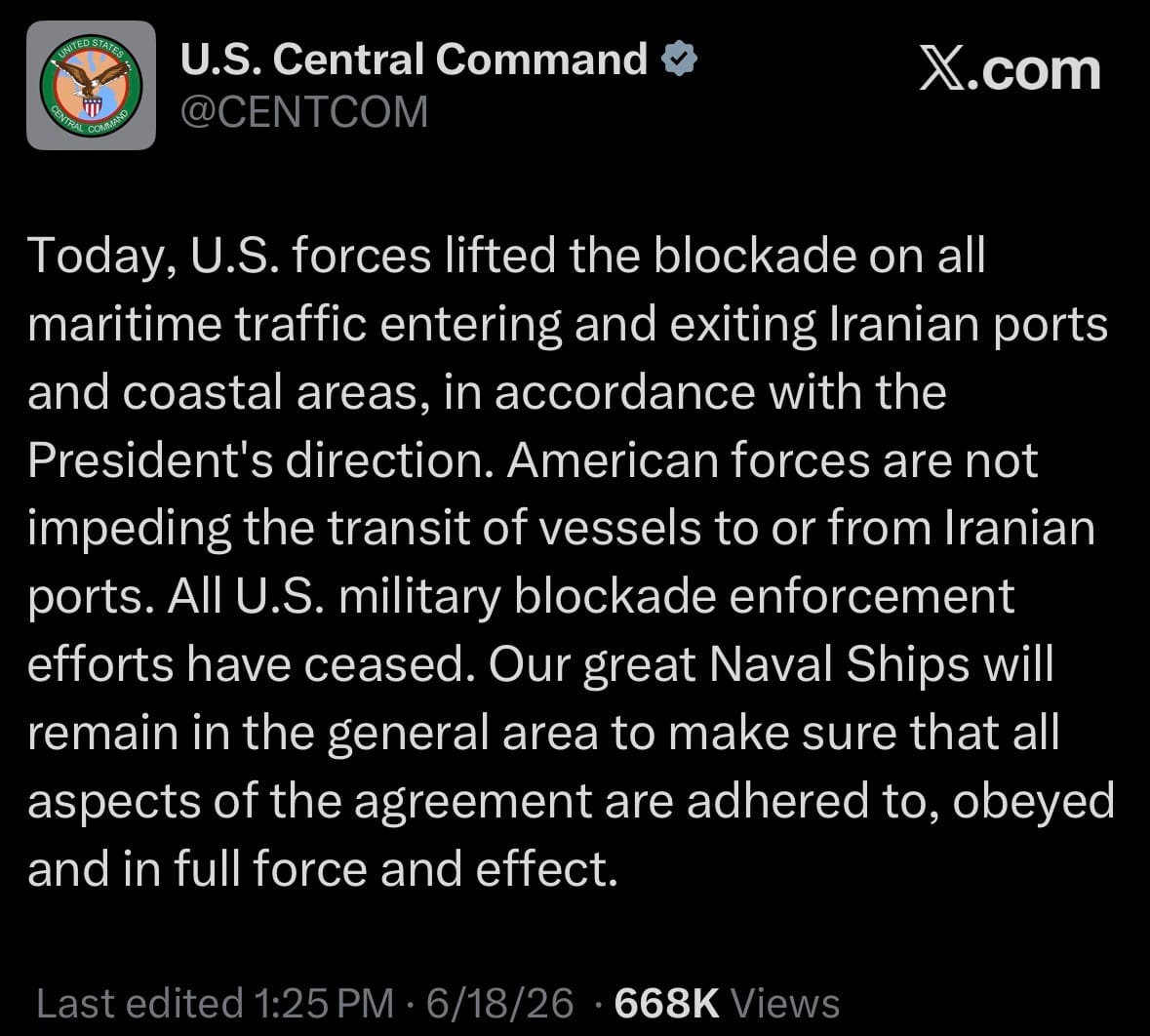
- On June 18, 2026, U.S. forces officially lifted the naval blockade on Iran. All restrictions on maritime traffic entering and exiting Iranian ports and coastal areas have been removed, and American forces are no longer impeding any vessels. U.S. naval ships will remain in the region to monitor compliance with the agreement.
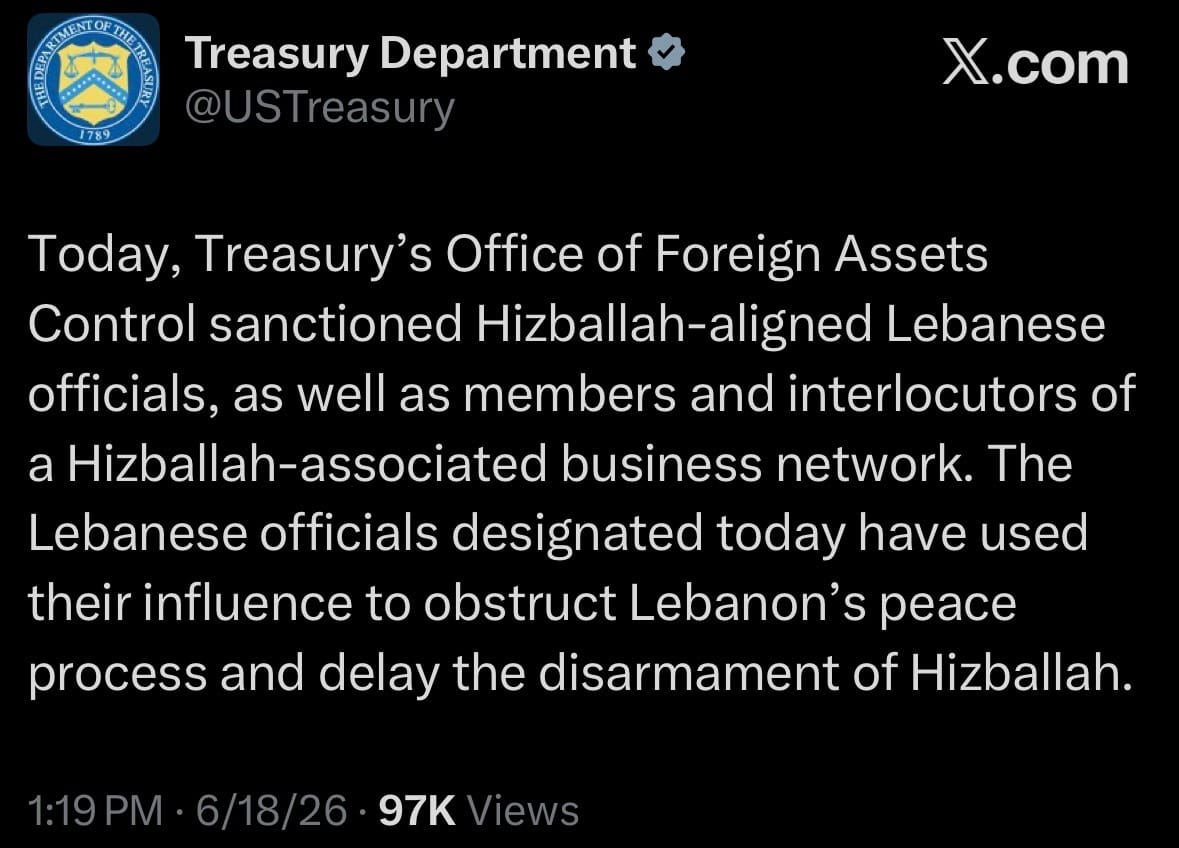
- On June 18, 2026, the Israel Defense Forces (IDF) announced it will remain deployed in a Security Zone approximately 10 km inside Lebanese territory.
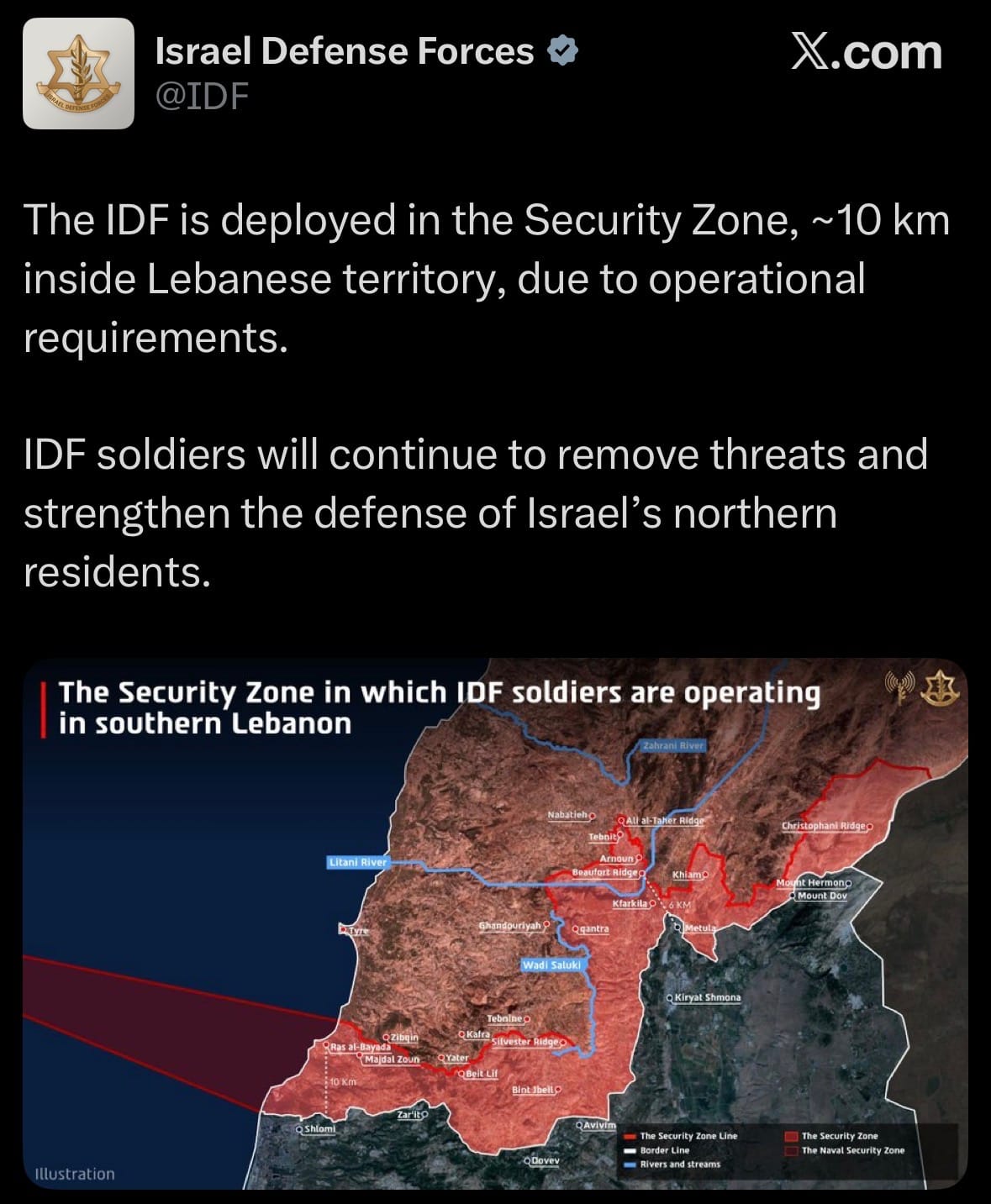
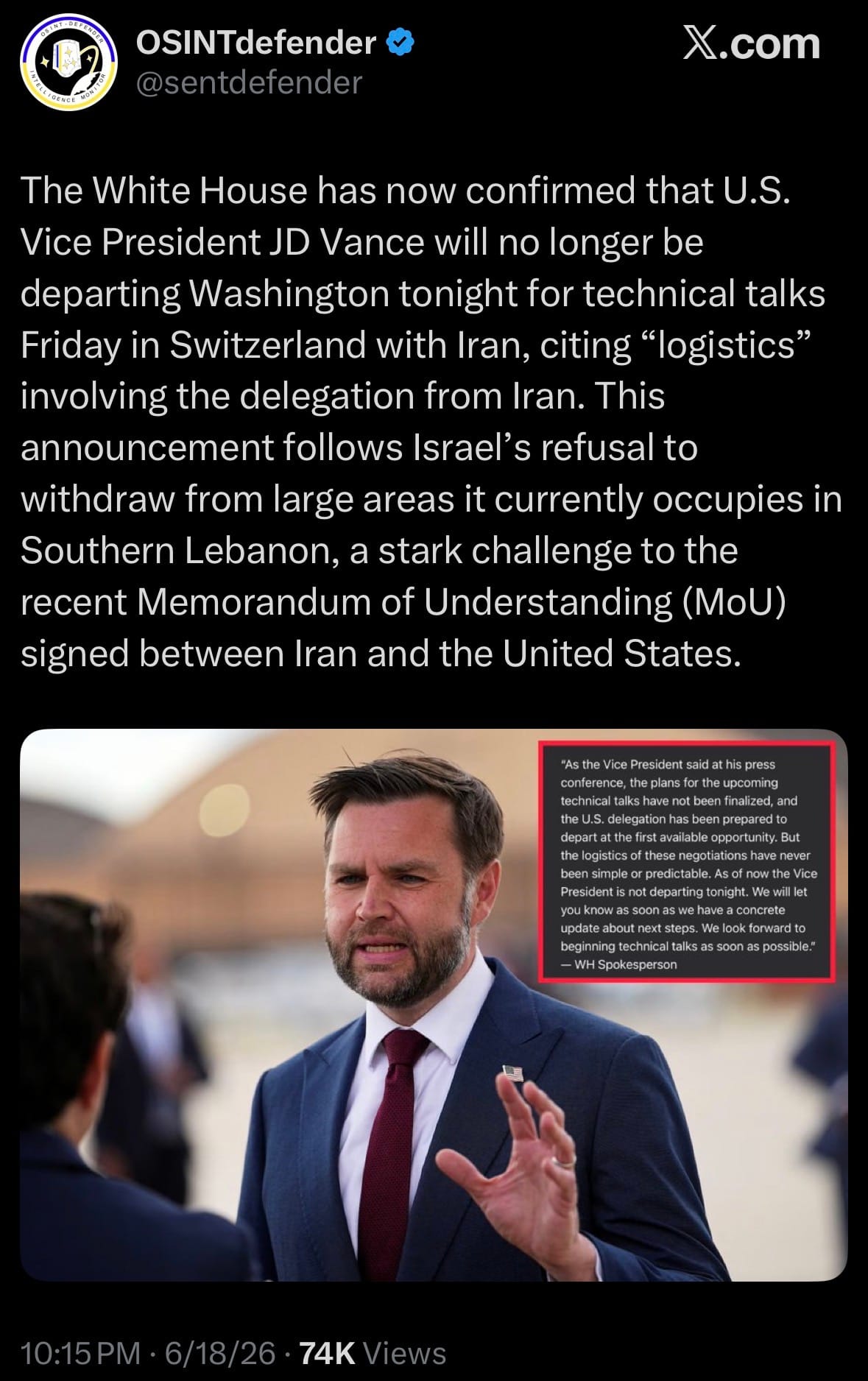
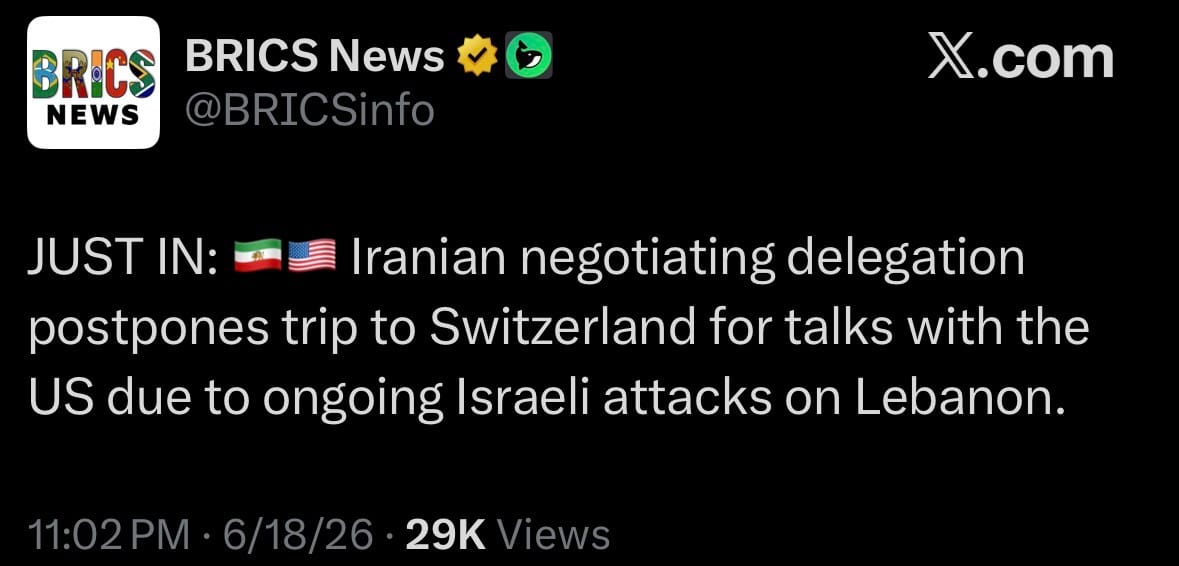
- This position directly conflicts with the U.S.-Iran MOU signed yesterday, which requires an immediate and permanent ceasefire on all fronts including Lebanon and respect for Lebanese territorial integrity, placing the Trump administration in a difficult position as it tries to implement the new agreement.
Cyber:
- On June 18, 2026, the FBI and its international partners announced they successfully took down SocGholish, a major piece of malware.
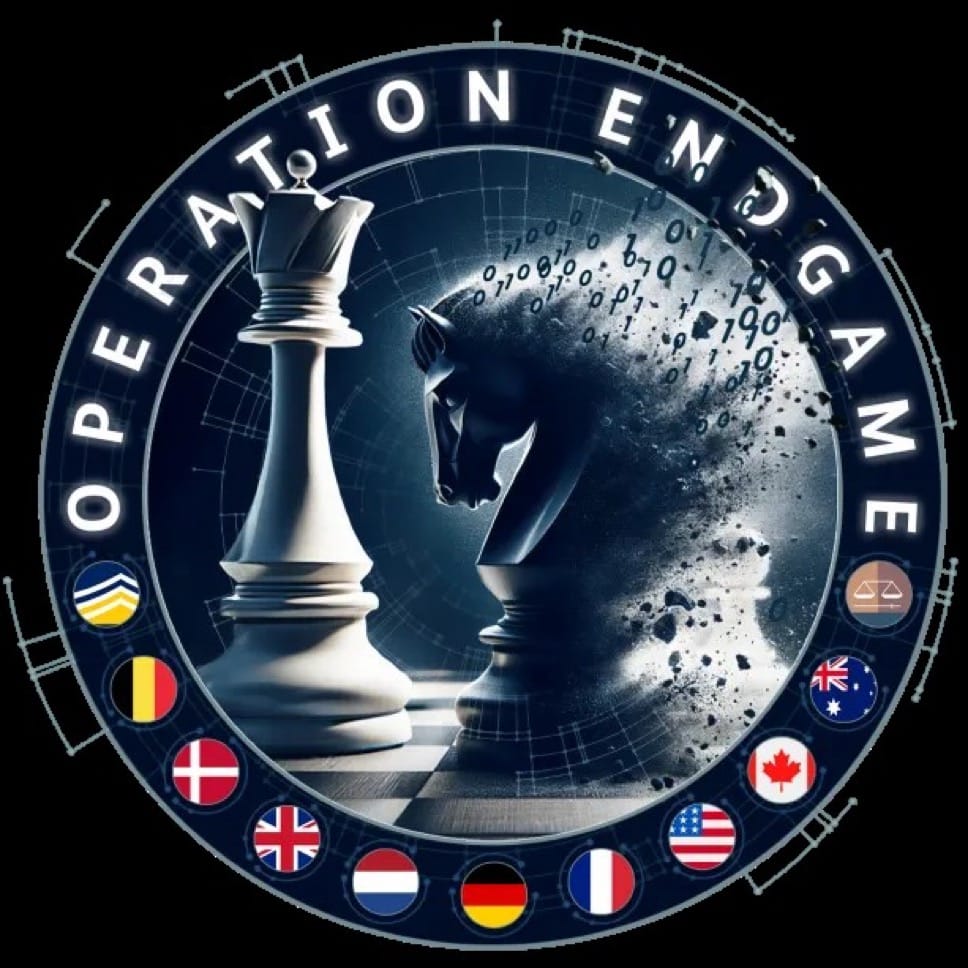
- SocGholish tricked people for years by showing fake browser updates on hacked websites, infecting computers and turning them into a botnet used for ransomware attacks and spying. In this operation, officials shut down 106 servers, cleaned up nearly 15,000 websites, disabled the entire botnet, and notified the victims.
Science & Technology:
- On June 19, 2026, Perplexity introduced “Brain” for its Computer product.

- Brain is a continuously learning memory system that connects every task to a growing context graph, making the AI remember previous work and become smarter and more helpful with each use. It is now available as a research preview for all Perplexity Max subscribers.
Statistic:
- Largest assets on Earth by market capitalization:
- Gold: $29.057T
- 🇺🇸 NVIDIA: $5.103T
- 🇺🇸 Alphabet (Google): $4.483T
- 🇺🇸 Apple: $4.376T
- Silver: $3.622T
- 🇺🇸 Microsoft: $2.818T
- 🇺🇸 Amazon: $2.628T
- 🇺🇸 SpaceX: $2.437T
- 🇹🇼 TSMC: $2.396T
- 🇺🇸 Broadcom: $1.957T
- 🇸🇦 Saudi Aramco: $1.709T
- 🇰🇷 Samsung: $1.548T
- 🇺🇸 Tesla: $1.504T
- 🇺🇸 Meta Platforms: $1.465T
- 🇰🇷 SK Hynix: $1.291T
- 🇺🇸 Micron Technology: $1.278T
- Bitcoin: $1.255T
- 🇺🇸 Berkshire Hathaway: $1.055T
- 🇺🇸 Vanguard S&P 500 ETF (VOO): $985.13B
- 🇺🇸 Eli Lilly: $979.64B
- 🇺🇸 Walmart: $932.52B
- 🇺🇸 AMD: $876.23B
- 🇺🇸 JPMorgan Chase: $871.43B
- 🇺🇸 iShares Core S&P 500 ETF (IVV): $825.23B
- 🇺🇸 SPDR S&P 500 ETF (SPY): $783.61B
- 🇳🇱 ASML: $743.73B
History:
- Hezbollah (“Party of God”) emerged during one of the most turbulent periods in Middle Eastern history. Its roots trace to the 1979 Iranian Revolution, when Iran’s new Islamic government began supporting Shia Islamist movements abroad. The immediate catalyst was Israel’s invasion of Lebanon in 1982 during the Lebanese Civil War (1975–1990). Iran’s Islamic Revolutionary Guard Corps (IRGC) deployed advisers to Lebanon’s Bekaa Valley and helped organize several Shia militias into what became Hezbollah. The group formally announced itself in 1985, declaring opposition to Israel, support for Iran’s revolutionary ideology, and resistance against foreign occupation. Throughout the 1980s, Hezbollah expanded through guerrilla warfare, social services, religious institutions, schools, hospitals, and political organizing. One of the most significant events was the 1983 Beirut barracks bombing, which killed 241 U.S. servicemembers and 58 French troops. During Israel’s occupation of southern Lebanon (1982–2000), Hezbollah steadily grew in strength through attacks against Israeli forces and the Israeli-backed South Lebanon Army (SLA). When Israel withdrew from most of southern Lebanon in May 2000, Hezbollah portrayed the withdrawal as a major victory, dramatically increasing its prestige throughout Lebanon and the wider Arab world.
- Following the end of Lebanon’s civil war and Israel’s withdrawal, Hezbollah transformed from a militia into a hybrid organization that functioned simultaneously as a political party, social services network, intelligence organization, media apparatus, and military force. It entered Lebanese politics in 1992, won parliamentary seats, and gradually became one of the most influential actors in the country. The group’s military capabilities expanded significantly through Iranian funding, weapons transfers, intelligence support, and training. A major turning point came during the 2006 Lebanon War, when Hezbollah fought Israel for 34 days and continued launching rockets despite intense Israeli military operations. During the Syrian Civil War (beginning 2011), Hezbollah deployed thousands of fighters to support Syrian President Bashar al-Assad, gaining extensive battlefield experience alongside Iranian and Russian-backed forces. By the early 2020s, Hezbollah was widely considered one of the most powerful non-state military organizations in the world, possessing tens of thousands of fighters and one of the largest missile and rocket arsenals held by any non-state actor.
- The most recent chapter began after the October 2023 Gaza War, when Hezbollah opened a northern front against Israel through cross-border attacks. This escalated into the 2024 Lebanon conflict and continued tensions through 2025–2026. Since March 2026, Israel has conducted major military operations in Lebanon and expanded control over parts of southern Lebanon, with Israeli leaders discussing a long-term security or buffer zone extending north from the border to reduce Hezbollah’s ability to threaten northern Israel. Israeli officials argue these operations are necessary to prevent Hezbollah from rebuilding military infrastructure near the border, while Hezbollah and the Lebanese government view the continued Israeli presence as an occupation and justification for armed resistance. Israel has indicated it intends to maintain positions in parts of southern Lebanon despite ceasefire efforts, while Hezbollah has refused to fully disarm while Israeli forces remain on Lebanese territory. This has created a situation that many compare to the earlier 1982–2000 South Lebanon occupation, the very conflict that originally helped give rise to Hezbollah itself. By 2026, Hezbollah remains a central actor in Lebanon, a key Iranian regional ally, and one of the most influential armed non-state organizations in modern history, while the future of southern Lebanon remains one of the most significant flashpoints in the Middle East.
Image of the day:

Thanks for reading! Earth is complicated, we make it simple.
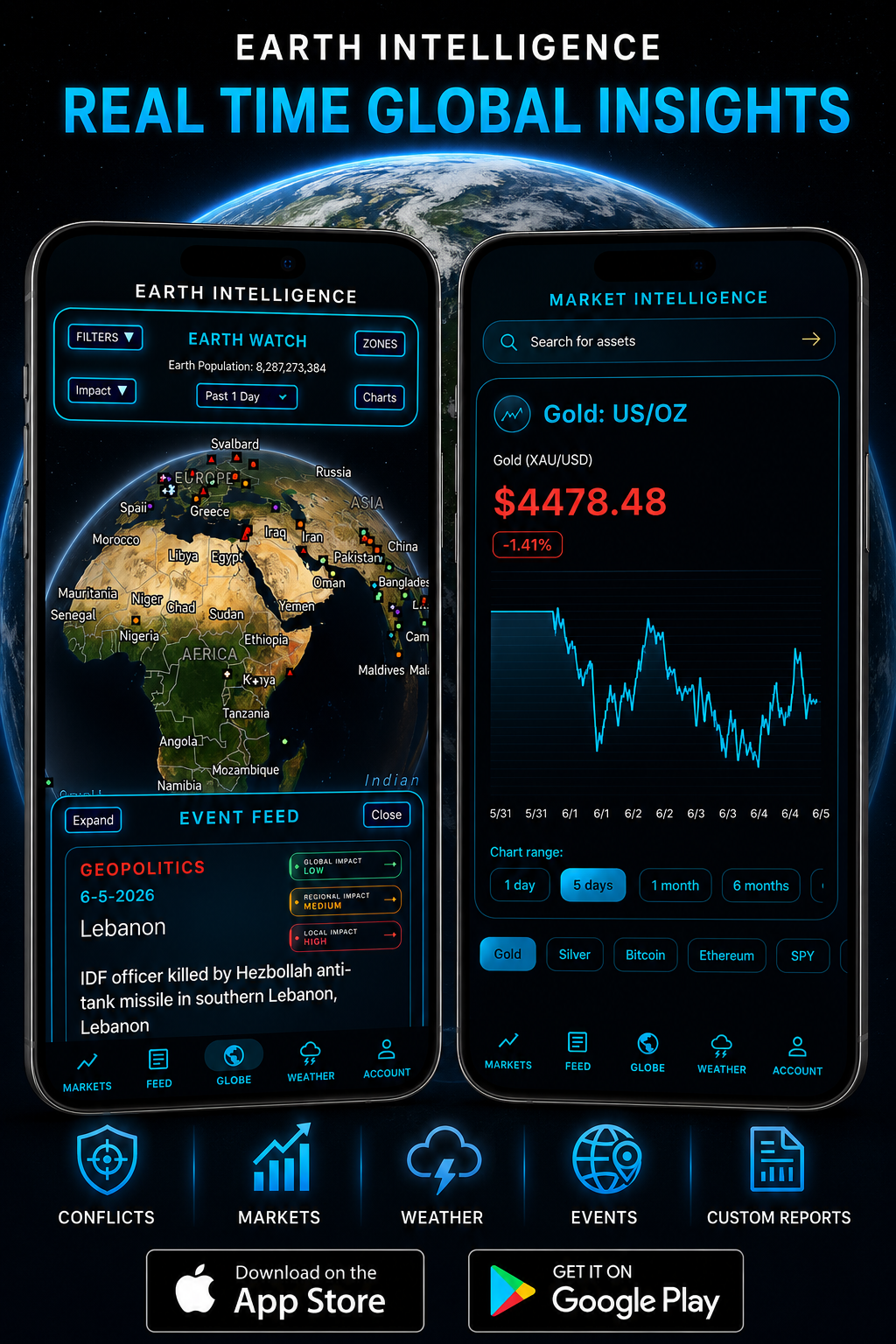
- Download our mobile app:

Click below to view our previous newsletters:
Support/Suggestions Email:
support@earthintel.io