Monday☕️🌎

Trending:
- Yesterday, Yemen’s Houthis launched waves of missiles and drones at the government-held port of Mokha on the Red Sea, killing at least seven people and wounding dozens as fighting in Yemen continues to escalate.
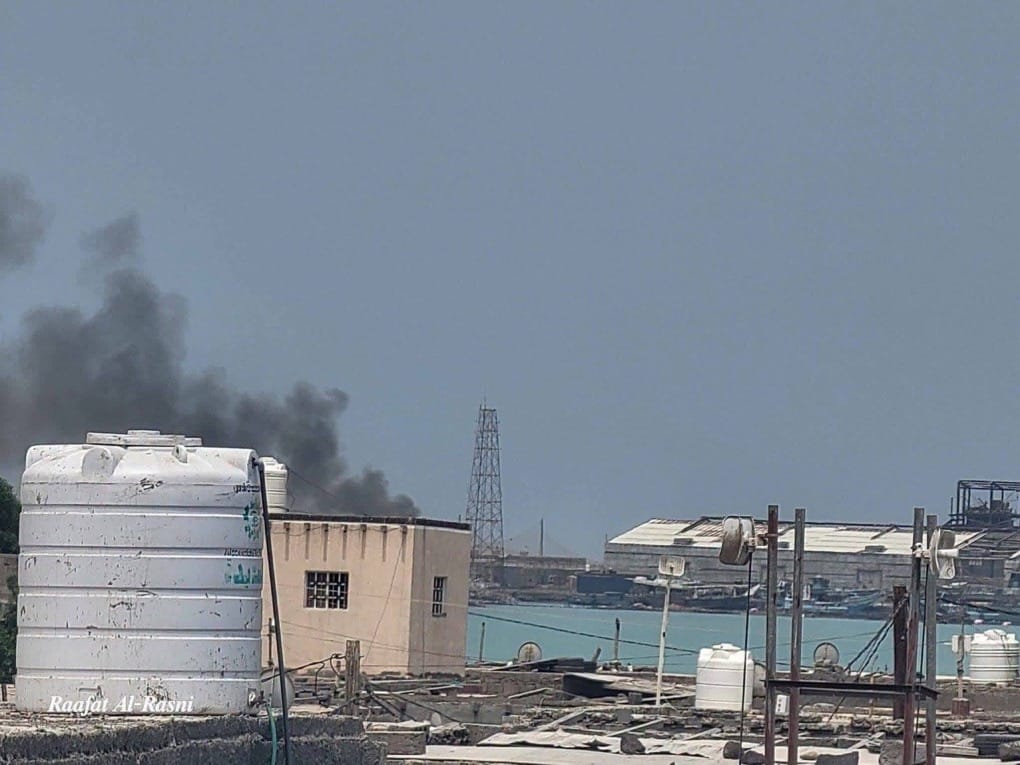
- The Houthis said they targeted Saudi-backed troops and weapons, while Yemeni government officials said the strikes also heavily damaged civilian port infrastructure, commercial goods, and food supplies—raising concerns about further disruption to a key shipping hub that provides an alternative to Houthi-controlled Hodeida.
Economics & Markets:
- The United States has joined Japan in buying Japanese yen to help strengthen the currency after it fell to historically weak levels against the U.S. dollar.
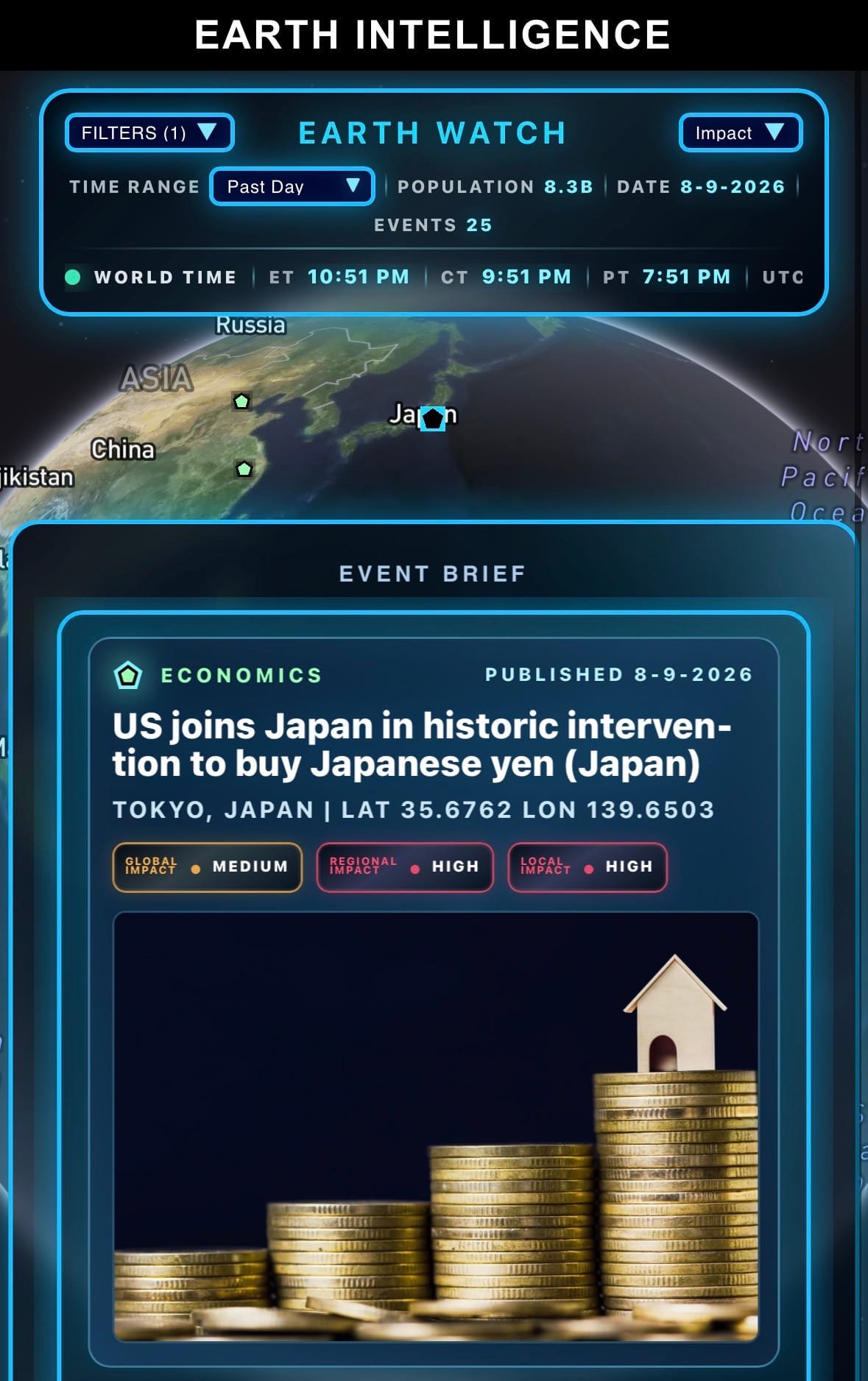
- The rare intervention—the first time the U.S. has directly bought yen since 1998—is aimed at stabilizing Japan’s currency and preventing further disruption to global financial markets.
Brazilian Crypto Regulation:
- Brazil will introduce new crypto transfer rules starting January 1, 2027, requiring a 24-hour waiting period for transfers above $10,000 from newly funded accounts to self-custody wallets or foreign crypto platforms.
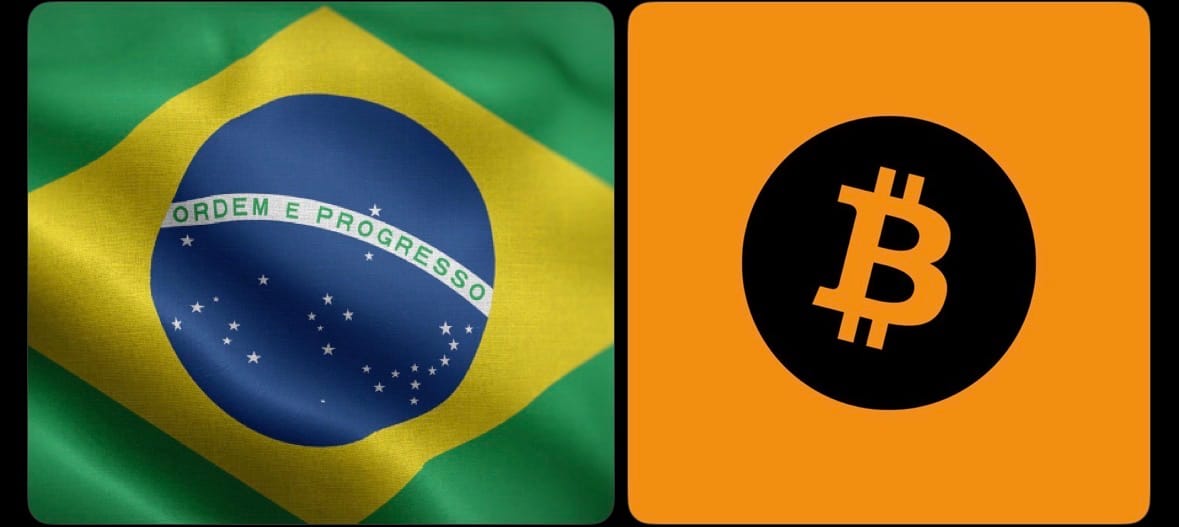
- The rule covers Bitcoin, stablecoins, and other cryptocurrencies and is designed to give financial institutions more time to detect fraud, money laundering, and suspicious cross-border transactions.
Geopolitics & Military Activity:
Space:
- On August 8, SpaceX launched its Starlink Group 17-38 mission aboard a Falcon 9 rocket, deploying another batch of Starlink satellites into low Earth orbit.
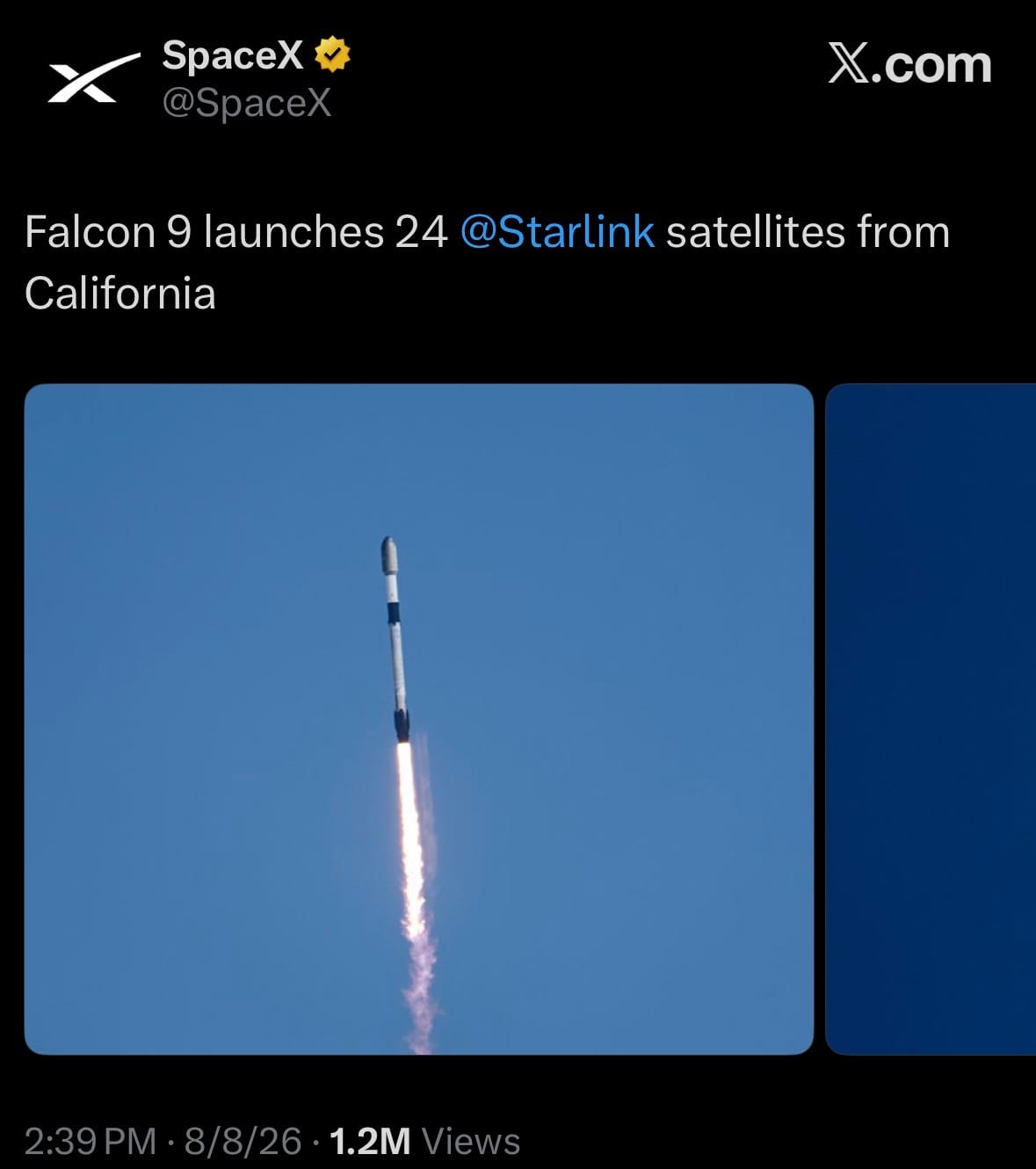
- The mission expands SpaceX’s Starlink constellation, which provides high-speed internet connectivity worldwide, particularly in areas with limited or unavailable ground-based internet infrastructure.
Statistic:
- Largest assets on Earth by market capitalization:
- 🥇 Gold: $30.537T
- 🇺🇸 NVIDIA: $5.424T
- 🇺🇸 Apple: $4.572T
- 🇺🇸 Alphabet (Google): $4.322T
- 🇺🇸 Microsoft: $3.712T
- 🥈 Silver: $3.595T
- 🇺🇸 Amazon: $2.960T
- 🇹🇼 TSMC: $2.178T
- 🇺🇸 Broadcom: $2.035T
- 🇺🇸 SpaceX: $1.753T
- 🇸🇦 Saudi Aramco: $1.713T
- 🇺🇸 Meta Platforms (Facebook): $1.508T
- ₿ Bitcoin: $1.303T
- 🇺🇸 Tesla: $1.297T
- 🇺🇸 Berkshire Hathaway: $1.125T
- 🇰🇷 Samsung: $1.068T
- 🇺🇸 Eli Lilly: $1.056T
- 🇺🇸 Vanguard S&P 500 ETF: $1.017T
- 🇺🇸 Micron Technology: $991.12B
- 🇺🇸 JPMorgan Chase: $950.35B
- 🇺🇸 iShares Core S&P 500 ETF: $903.80B
- 🇺🇸 Walmart: $890.11B
- 🇺🇸 SPDR S&P 500 ETF: $810.09B
- 🇺🇸 AMD: $789.07B
- 🇰🇷 SK Hynix: $718.78B
- 🇺🇸 Vanguard Total Stock Market Index Fund ETF Shares: $677.24B
History:
- Submarines evolved from centuries of attempts to travel and fight underwater. Ancient accounts describe diving devices, and Leonardo da Vinci sketched underwater concepts around 1500, but the first documented navigable submarine was built by Cornelis Drebbel around 1620. During the American Revolution, David Bushnell’s Turtle (1775–1776) attempted to attach explosives to a British warship, becoming the first known submarine combat attempt. In 1864, the Confederate H.L. Hunley became the first submarine to sink an enemy ship when it attacked USS Housatonic, although Hunley was also lost. Practical submarines emerged in the late 1800s through inventors such as John Philip Holland, whose designs combined gasoline or diesel engines on the surface with electric motors underwater. The U.S. Navy commissioned USS Holland in 1900. German U-boats became major weapons in both World Wars, especially against merchant shipping. The biggest technological leap came with the German Type XXI in 1944, which was designed primarily for underwater operation. Then, under Admiral Hyman G. Rickover, the U.S. launched USS Nautilus in 1955, the world’s first operational nuclear-powered submarine. Nuclear propulsion allowed submarines to stay underwater for months instead of hours or days. In 1960, USS George Washington launched a Polaris ballistic missile while submerged, creating the modern nuclear ballistic-missile submarine, or SSBN.
- Modern submarines fall into several main categories. SSKs are diesel-electric or air-independent-propulsion boats, usually optimized for coastal or regional operations. SSNs are nuclear-powered attack submarines used to hunt ships and submarines, gather intelligence, launch cruise missiles, support special forces, and operate globally. SSBNs carry nuclear ballistic missiles and form the most survivable part of a country’s nuclear deterrent. The United States currently operates Los Angeles-class, Seawolf-class, and Virginia-class attack submarines, while the Ohio class remains the backbone of its strategic nuclear force. The U.S. originally built 18 Ohio-class submarines; 14 remain SSBNs, while four were converted into cruise-missile SSGNs. Each Ohio SSBN can carry up to 20 Trident II D5 ballistic missiles. The class is being replaced by the new Columbia-class, which is intended to serve into the 2080s. Russia operates advanced Yasen-M attack submarines and Borei-A ballistic-missile submarines. China operates roughly 60+ submarines, including nuclear attack boats, ballistic-missile submarines, and many conventional boats, and is expected to expand significantly over the next decade. Britain fields Astute-class SSNs and Vanguard SSBNs, France operates Suffren-class SSNs and Triomphant SSBNs, while Japan and South Korea operate some of the world’s best conventional submarines.
- Overall, the United States has the strongest submarine force on Earth because it combines advanced nuclear propulsion, extremely quiet machinery, sophisticated sonar, long-range weapons, experienced crews, global logistics, intelligence networks, and a fully nuclear-powered fleet. The Virginia class is one of the most versatile submarines in service, combining stealth, intelligence collection, Tomahawk missiles, torpedoes, special operations support, and unmanned underwater systems. The Seawolf class remains one of the most capable and quiet attack submarines ever built, while Russia’s Yasen-M is a major peer competitor with powerful sensors and a large missile load. For strategic deterrence, the Ohio class with Trident II D5 missiles remains one of the world’s most powerful nuclear systems, with the Columbia class designed to replace it. China is the fastest-growing challenger, but much of its fleet is still conventional, while every U.S. combat submarine is nuclear-powered. The future of submarines is focused on quieter propulsion, AI-assisted sonar, autonomous underwater drones, seabed warfare, hypersonic weapons, special-operations payloads, and networked undersea systems. The core advantage has never changed: a submarine’s power comes from its ability to disappear beneath the ocean and remain extremely difficult to find.
Image of the day:

Thanks for reading! Earth is complicated, we make it simple.
- Download our mobile app:



Click below to view our previous newsletters:

Support/Suggestions Email:
support@earthintel.io