Friday☕️🌎


Trending:
- August 13, 2026 — U.S. Central Command (CENTCOM) announced Task Force Falcon Strike, the first multinational U.S.-led force designed to combine attack drones operating in the air, on the water, and underwater with military partners across the Middle East.
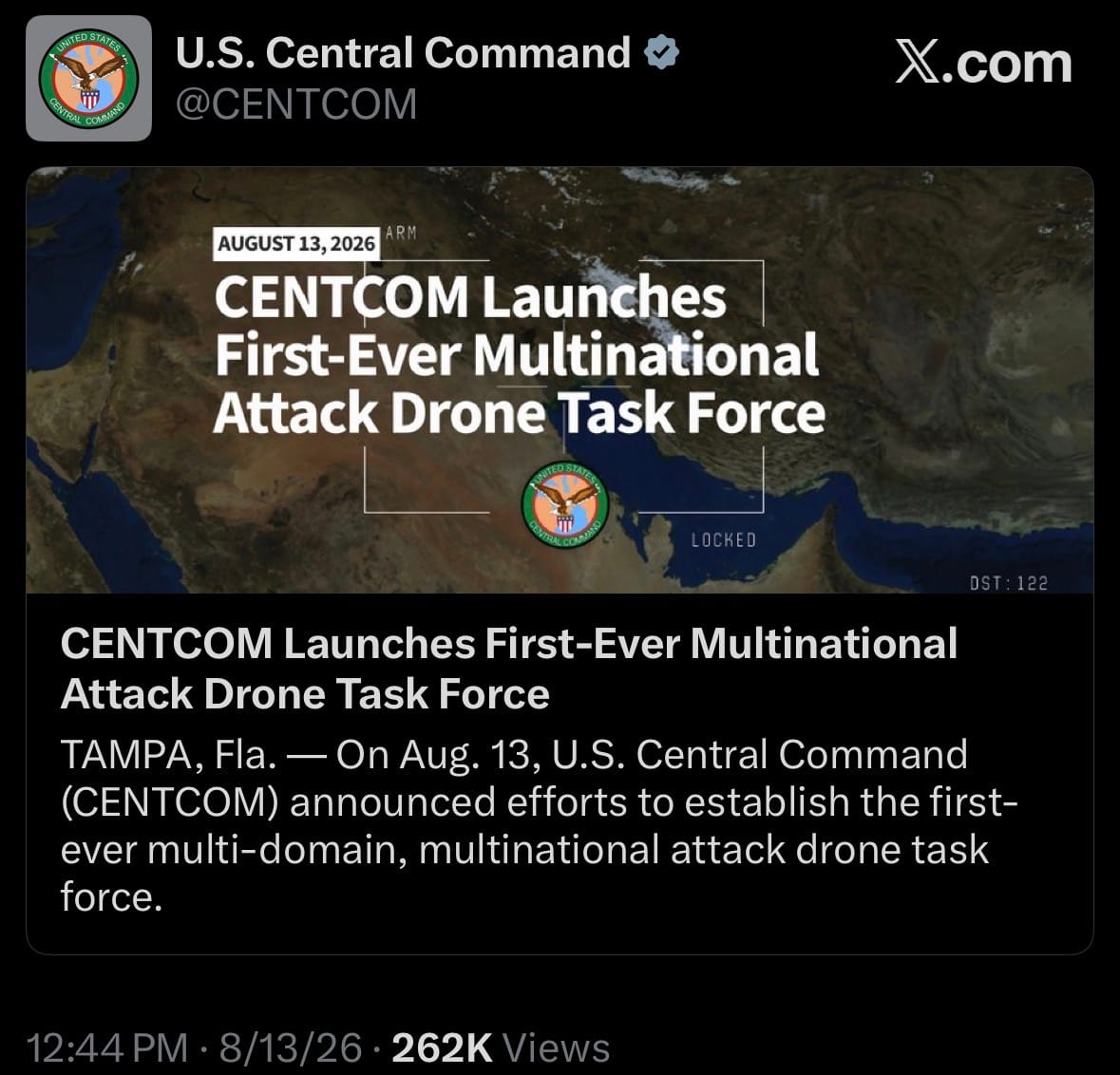
- The new unit builds on Task Force Scorpion Strike, which has already used one-way attack drones from U.S. Navy ships and unmanned boats in operations against Iran, with Falcon Strike expanding these capabilities into a larger regional force for deterrence and combat operations.
Economics & Markets:
Environment & Weather:
- August 13, 2026 — A major wildfire broke out near Lokva Rogoznica on Croatia’s Adriatic coast, spreading quickly through dry forests and into residential areas due to strong winds.

- Homes and vehicles have burned, residents and tourists have been evacuated by road and sea, the main coastal highway is closed, and more than 100 firefighters are battling the fire, with no injuries reported so far.
Science & Technology:
- August 13, 2026 — OpenAI introduced Ultrafast mode for GPT-5.6 Sol, allowing its most capable AI model to generate responses up to 14× faster—reaching up to 750 tokens per second while maintaining the same intelligence.
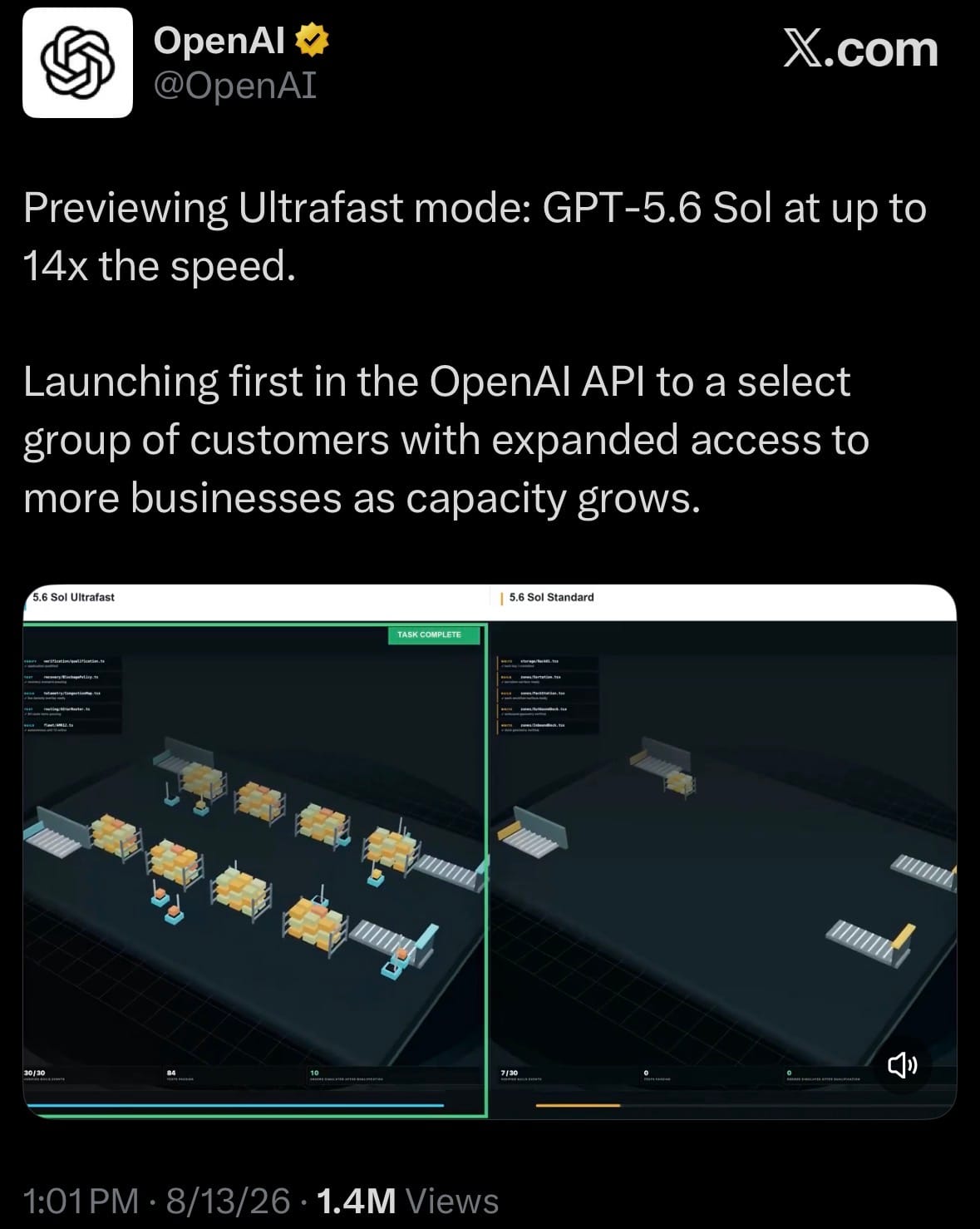
- Powered by Cerebras, it is launching first through the OpenAI API for select businesses and is designed for real-time AI applications like coding agents, voice assistants, customer support, financial research, and security operations.
Statistic:
- Largest automakers by employee counts:
- 🇨🇳 BYD: 968,900
- 🇩🇪 Volkswagen: 656,134
- 🇯🇵 Toyota: 389,144
- 🇮🇳 Mahindra & Mahindra: 260,000
- 🇳🇱 Stellantis: 248,243
- 🇯🇵 Honda: 194,173
- 🇨🇳 SAIC Motor: 187,739
- 🇺🇸 Ford: 169,000
- 🇩🇪 Mercedes-Benz: 163,132
- 🇺🇸 General Motors: 162,000
- 🇩🇪 BMW: 159,104
- 🇯🇵 Nissan: 133,580
- 🇺🇸 Tesla: 125,665
- 🇨🇳 Dongfeng Motor: 112,706
- 🇫🇷 Renault: 105,497
- 🇨🇳 GAC: 86,451
- 🇮🇳 Tata Motors: 86,259
- 🇨🇳 Great Wall Motors: 84,915
- 🇯🇵 Suzuki Motor: 72,372
- 🇨🇳 Geely: 64,000
- 🇰🇷 Hyundai: 63,018
- 🇨🇳 Chongqing Changan: 55,119
- 🇯🇵 Mazda: 48,783
- 🇨🇳 NIO: 45,635
- 🇨🇳 Xiaomi: 45,527
- 🇯🇵 Isuzu: 45,034
History of Honda:
- Honda started with Soichiro Honda (1906–1991), a Japanese mechanic obsessed with engines, racing, and manufacturing. He left school for Tokyo at 15, worked as a mechanic, and founded Tokai Seiki in 1937 to manufacture piston rings. His early parts failed Toyota’s quality standards, forcing him to improve his knowledge of metallurgy and manufacturing until he became a supplier. World War II bombing and the 1945 Mikawa earthquake heavily damaged his factories, so he sold what remained to Toyota. In 1946, Honda started the Honda Technical Research Institute, initially attaching small surplus engines to bicycles because postwar Japan desperately needed cheap transportation. He developed the A-Type engine in 1947, then founded Honda Motor Co. on September 24, 1948, with 1 million yen in capital. Takeo Fujisawa joined in 1949 and became Honda’s crucial business partner: Soichiro focused on engineering while Fujisawa built the business, financing, dealerships, and expansion. Honda released the Dream D-Type motorcycle in 1949, became Japan’s largest motorcycle manufacturer by 1955, and introduced the legendary Super Cub C100 in 1958. Simple, reliable, fuel-efficient, and easy to ride, the Super Cub eventually exceeded 100 million units, becoming the most-produced motor vehicle family in history. Honda entered America in 1959, competed at the Isle of Man TT, and by 1963 was America’s best-selling motorcycle brand.
- Honda entered automobiles with the T360 truck in 1963, followed by the S500 sports car, then entered Formula One in 1964—an extraordinary move for such a new automaker. Its major breakthrough was the Civic in 1972. Honda’s CVCC engine met strict American emissions requirements without initially needing a catalytic converter, establishing Honda as an engineering-focused alternative to larger automakers during the oil and pollution crises of the 1970s. The Accord followed in 1976 and became enormously successful in America. Honda began U.S. motorcycle production in Ohio in 1979 and automobile production at Marysville in 1982, becoming the first Japanese automaker to manufacture cars in the United States. Honda created Acura in 1986, the first Japanese luxury automotive brand, and introduced the revolutionary NSX in 1990, a mid-engine aluminum supercar developed with input from Formula One champion Ayrton Senna. Honda also became a major racing power: its engines dominated portions of Formula One, particularly the McLaren-Honda era of 1988–1992 with Senna and Alain Prost. Meanwhile Honda expanded into generators, lawn equipment, marine engines, ATVs, scooters and industrial engines. It introduced the Insight hybrid in North America in 1999, unveiled the humanoid robot ASIMO in 2000, and eventually entered aviation with the HondaJet, which received FAA certification in 2015.
- Today, Honda is much more than a car company. It produces automobiles, motorcycles, aircraft, marine engines, generators, power equipment and advanced mobility technology, while researching robotics, batteries, hydrogen, electrification and autonomous systems. Its major vehicle families include the Civic, Accord, CR-V, HR-V, Pilot, Passport and Ridgeline, alongside Acura’s luxury vehicles. Its motorcycle range stretches from the Super Cub and scooters to the Gold Wing, Africa Twin and CBR superbikes. Honda has produced hundreds of millions of motorcycles and surpassed 100 million automobiles produced globally in 2016. Its engineering history spans almost every scale of mobility: 1946 motorized bicycles → 1948 Honda Motor → 1958 Super Cub → 1963 cars → 1964 Formula One → 1972 Civic → 1986 Acura → 1990 NSX → 1999 hybrid vehicles → 2000 humanoid robots → 2015 HondaJet → today’s electrification, fuel cells, batteries and advanced mobility systems. Honda’s defining strategy has remained remarkably consistent: build engines extremely well, use racing and experimentation to push engineering forward, then apply that technology across completely different forms of transportation.
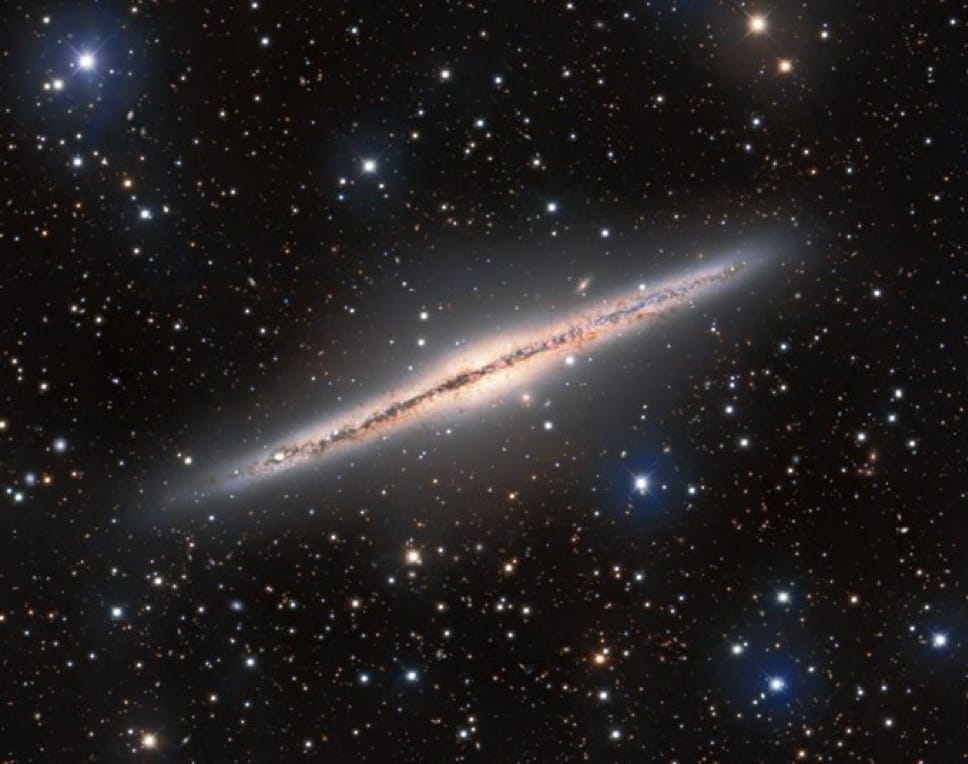
Image of the day:
Thanks for reading! Earth is complicated, we make it simple.
- Download our mobile app:



Click below to view our previous newsletters:
Support/Suggestions Email:
support@earthintel.io