Friday☕️🌎


Trending:
- August 20, 2026 — The leaders of the United Kingdom, France, Germany, Italy, the Netherlands, Norway, and Canada jointly called on Israel to immediately withdraw plans for new construction in the E1 settlement area of the West Bank.
- Statement:
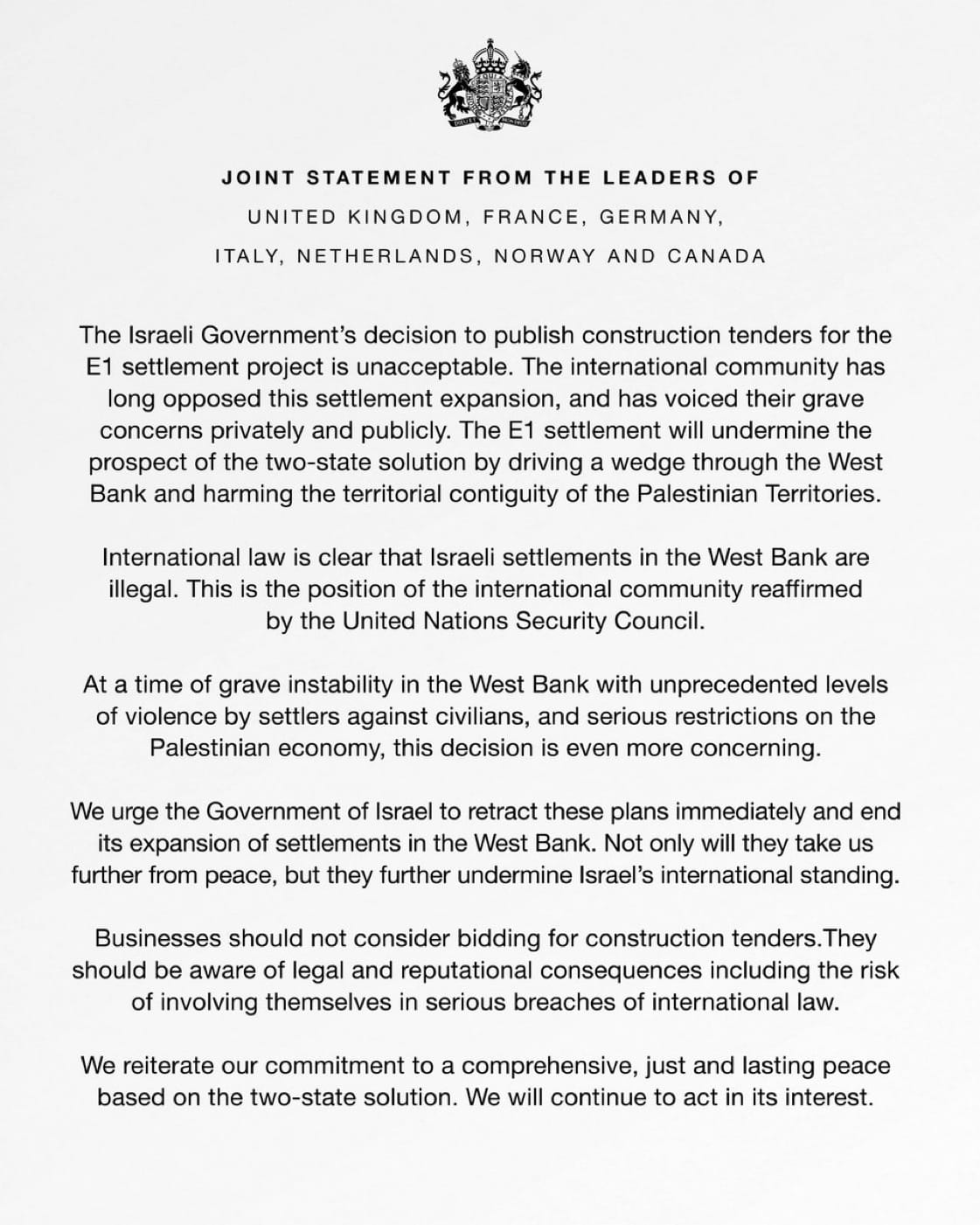
- The seven countries said the project could divide the West Bank and undermine a future two-state solution, warned companies not to participate in construction tenders because of potential legal and reputational risks, and reiterated their position that Israeli settlements in the West Bank violate international law.

Economics & Markets:
- August 20, 2026 — The United States imposed new sanctions on three Cuban officials and nine state-owned companies in the mining, metals, and construction sectors as part of a broader effort to restrict funding and foreign influence operations tied to Cuba’s government.
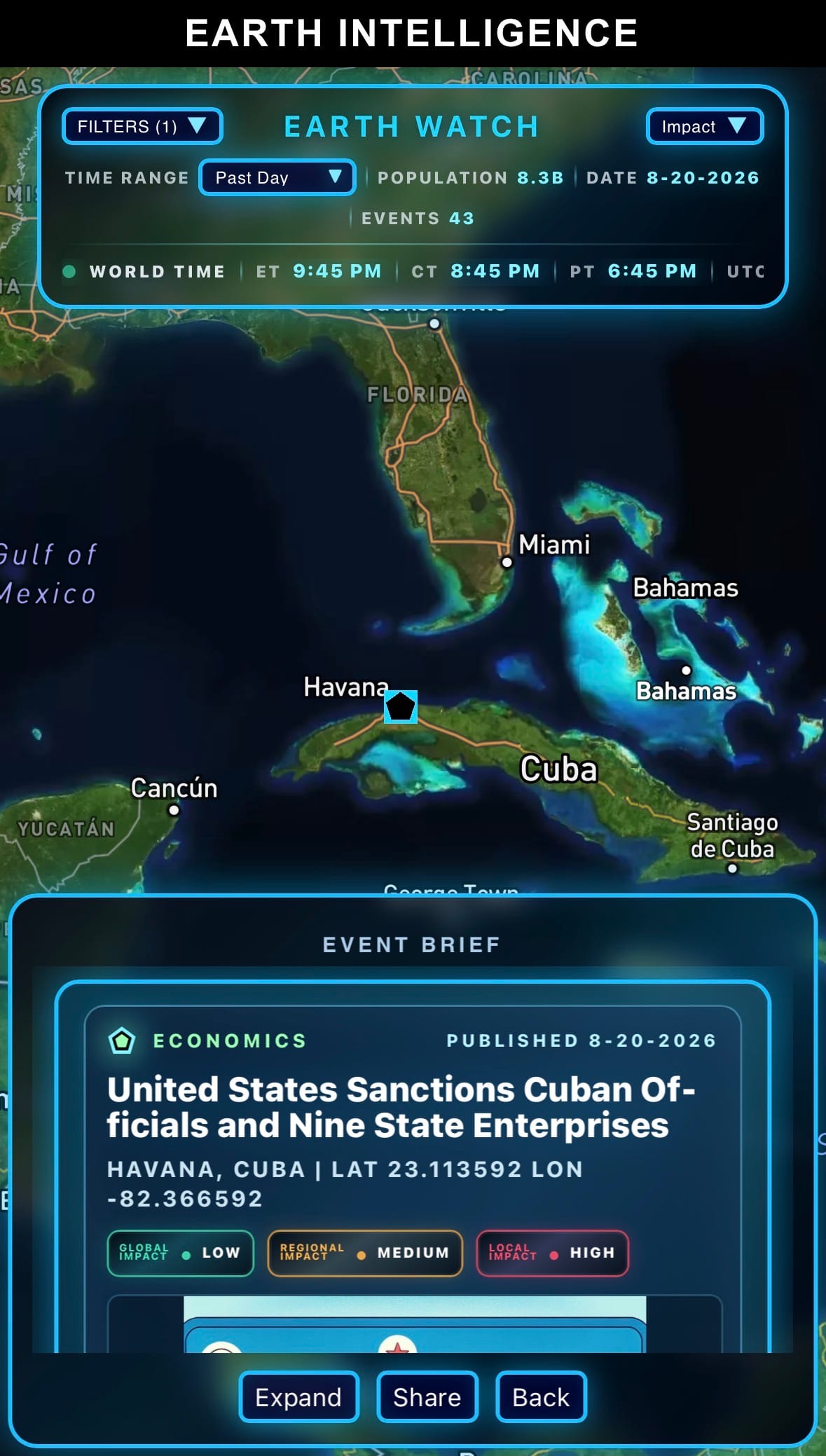
- U.S. officials also targeted leaders connected to Cuba’s Institute of Friendship with the Peoples (ICAP), accusing it of building influence networks abroad, while Cuba condemned the sanctions and warned they could further worsen the country’s economic and supply problems.
Science & Technology:
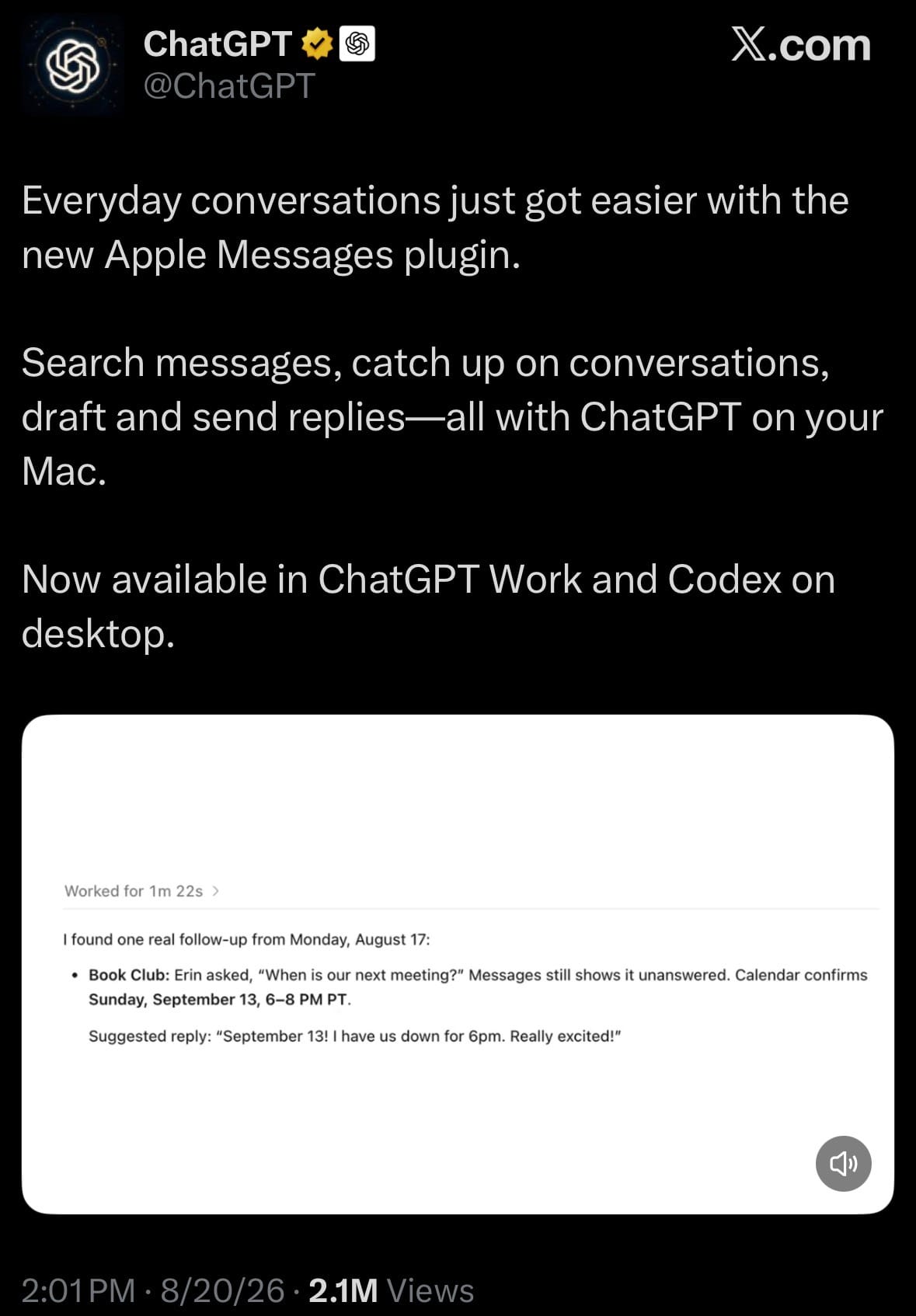
- August 20, 2026 — OpenAI launched a new Apple Messages plugin that lets ChatGPT search and summarize your iMessage conversations, catch you up on missed messages, and draft or send replies directly from your Mac.

Space:
- August 20, 2026 — President Trump signed a new National Space Transportation Policy aimed at scaling the U.S. to 1,000 rocket launches and reentries per year by 2030, while expanding and modernizing launch sites, reentry facilities, and dedicated airspace corridors.

- The policy prioritizes commercial space companies, faster and more resilient national-security launches, new in-space and return-to-Earth operations, and supports U.S. plans to return Americans to the Moon by 2028 and begin building a lunar base by 2030.

Statistic:
- Largest assets on Earth by market capitalization:
- 🥇Gold: $31.858T
- 🇺🇸 NVIDIA: $5.252T
- 🇺🇸 Apple: $4.543T
- 🇺🇸 Alphabet (Google): $4.136T
- 🥈Silver: $3.851T
- 🇺🇸 Microsoft: $3.572T
- 🇺🇸 Amazon: $2.805T
- 🇹🇼 TSMC: $2.157T
- 🇺🇸 SpaceX: $1.765T
- 🇺🇸 Broadcom: $1.731T
- 🇸🇦 Saudi Aramco: $1.700T
- Bitcoin: $1.515T
- 🇺🇸 Meta Platforms: $1.390T
- 🇺🇸 Tesla: $1.363T
- 🇰🇷 Samsung: $1.288T
- 🇺🇸 Eli Lilly: $1.109T
- 🇺🇸 Micron Technology: $1.100T
- 🇺🇸 Berkshire Hathaway: $1.063T
- 🇺🇸 Vanguard S&P 500 ETF: $1.003T
- 🇺🇸 JPMorgan Chase: $934.48B
- 🇰🇷 SK Hynix: $890.61B
- 🇺🇸 iShares Core S&P 500 ETF: $890.21B
- 🇺🇸 Walmart: $826.36B
- 🇺🇸 SPDR S&P 500 ETF: $809.71B
- 🇺🇸 AMD: $766.37B
History of Publix
- Publix began in Winter Haven, Florida, during the Great Depression. Founder George W. Jenkins, born in Georgia in 1907, worked for the Piggly Wiggly grocery chain before deciding to build his own store after becoming frustrated with management. On September 6, 1930, at only 22 years old, Jenkins opened the first Publix Food Store in Winter Haven. Despite the Depression, he focused heavily on clean stores, customer service, quality food, and treating employees well. In 1940, he opened his first Publix Super Market, an unusually modern grocery store for the period featuring air conditioning, automatic doors, fluorescent lighting, wide aisles, refrigerated cases, and in-store music. Publix expanded significantly in 1945 when Jenkins purchased 19 All American grocery stores, giving the company 24 locations. Publix established its headquarters in Lakeland in 1951, built centralized distribution and warehousing, and steadily expanded throughout Florida. Jenkins developed an unusual ownership philosophy: employees should share in the company they helped build. Publix became employee-owned, eventually creating one of America’s largest employee stock ownership structures. The company remains privately held rather than publicly traded.
- Publix grew from a Florida supermarket into a major Southeastern grocery chain by combining stores, distribution, manufacturing, pharmacies, and food production under one organization. Its bakery operation began expanding during the 1950s, its famous Publix Deli became a major part of the business, and pharmacies were added beginning in 1986. The company became especially known for its “Pub Subs”, fried chicken, bakery products, private-label groceries, customer service, and clean stores. Publix reached 100 stores in 1959, 500 in 1995, and began expanding outside Florida when it entered Georgia in 1991. It subsequently entered South Carolina in 1993, Alabama in 1996, Tennessee in 2002, North Carolina in 2014, Virginia in 2017, and Kentucky in 2024. Rather than franchising stores, Publix maintained direct control and built its own enormous supply infrastructure, including distribution centers, dairy plants, bakeries, fresh-food facilities, warehouses, and trucking operations. George Jenkins remained closely associated with the company until his death in 1996, leaving behind a culture centered on employee ownership and internal promotion.
- Today, Publix is the largest employee-owned company in the United States and one of America’s largest private companies. It operates more than 1,400 supermarkets across eight Southeastern states, with Florida remaining its dominant market, and employs well over 250,000 people. Publix generates tens of billions of dollars in annual sales while remaining privately owned; eligible employees can receive Publix stock through its employee ownership programs, and the shares are not traded on a public stock exchange. Its operations now include supermarkets, pharmacies, liquor stores, delivery and online ordering, manufacturing facilities, massive distribution networks, and private-label food production. Publix competes with Walmart, Kroger, Costco, Aldi, Whole Foods, Trader Joe’s, Winn-Dixie and regional grocery chains, but its strongest advantage remains its unusually loyal Southeastern customer base and employee-ownership culture. Its history can be summarized as 1930 single Winter Haven grocery store → 1940 modern supermarket → 1945 regional expansion → 1951 Lakeland headquarters → 1991 expansion beyond Florida → 1,000th store in 2009 → eight-state Southeastern network today. Nearly a century later, Publix remains controlled by employees and the Jenkins family rather than Wall Street—an unusual structure for a company of its scale.
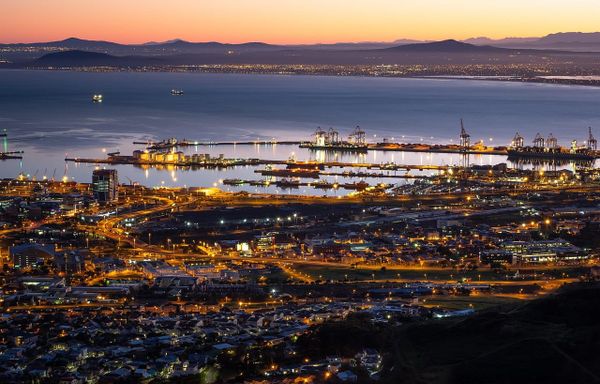
Image of the day:

Thanks for reading! Earth is complicated, we make it simple.
- Download our mobile app:


Click below to view our previous newsletters:
Support/Suggestions Email:
support@earthintel.io