Monday☕️🌎


Trending:
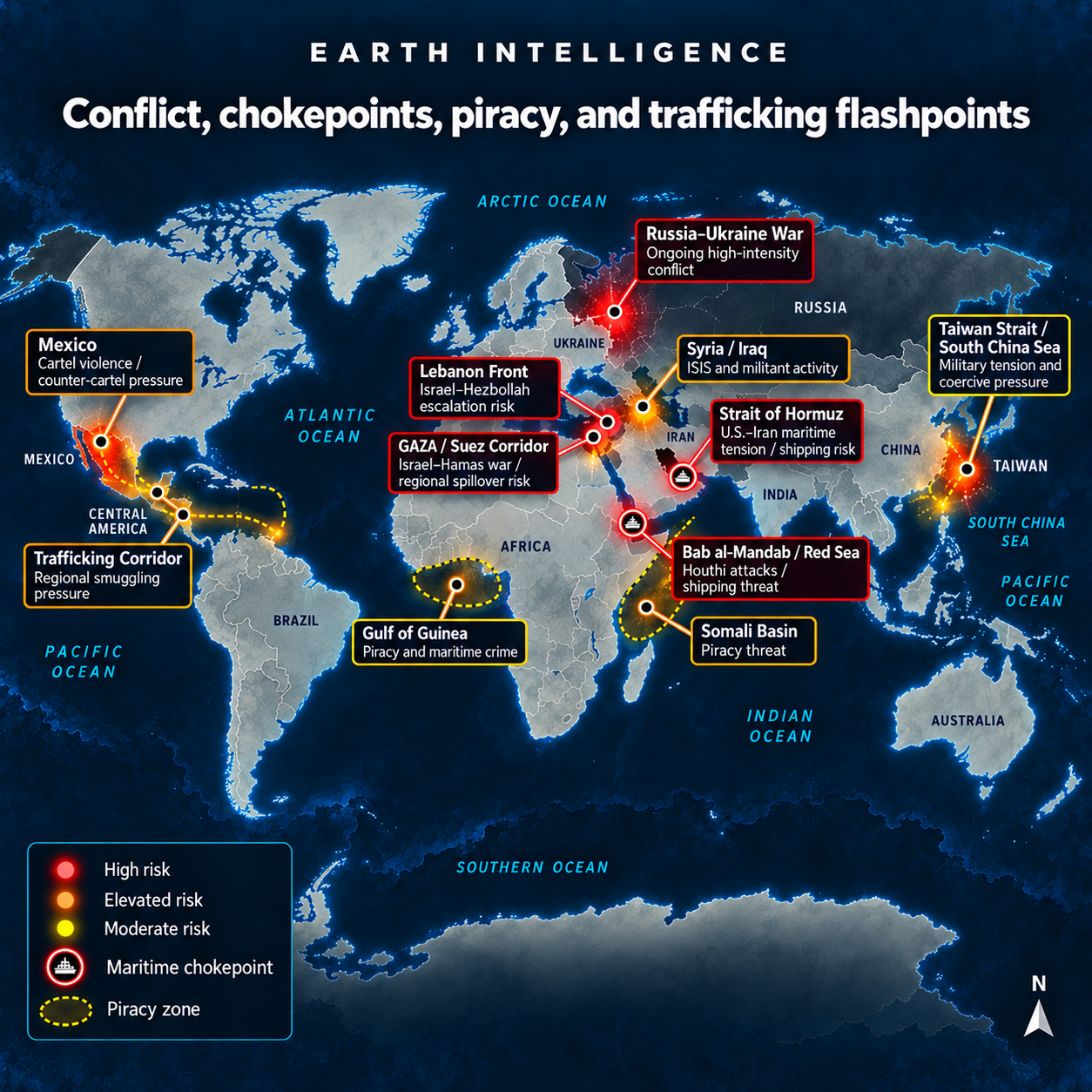
- September 13, 2026 — Saudi Arabia shut down its East-West oil pipeline after multiple drone attacks launched from Iraq damaged sites along the route and injured several people.
- Refinery Satellite Image (post strike):
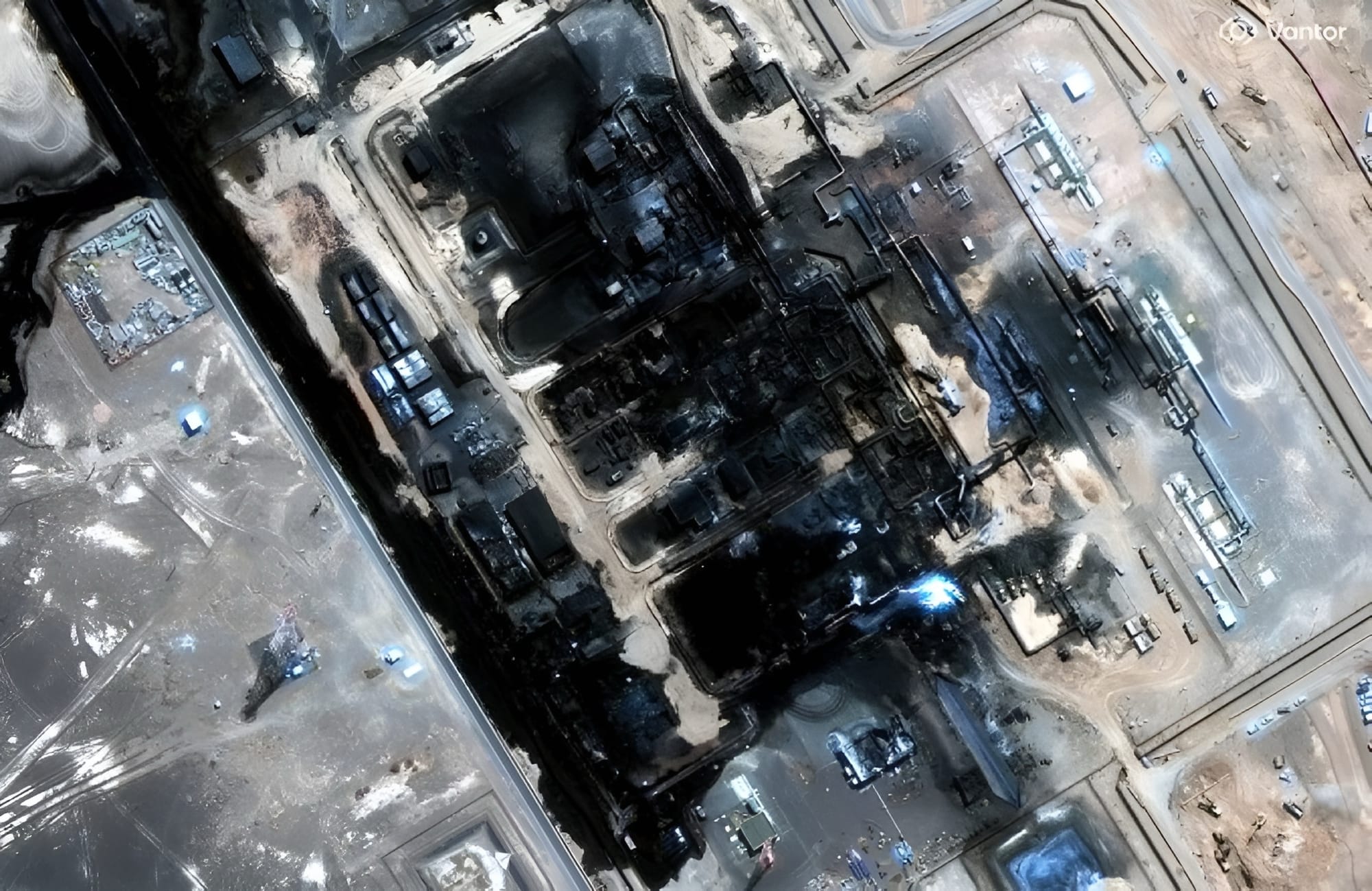
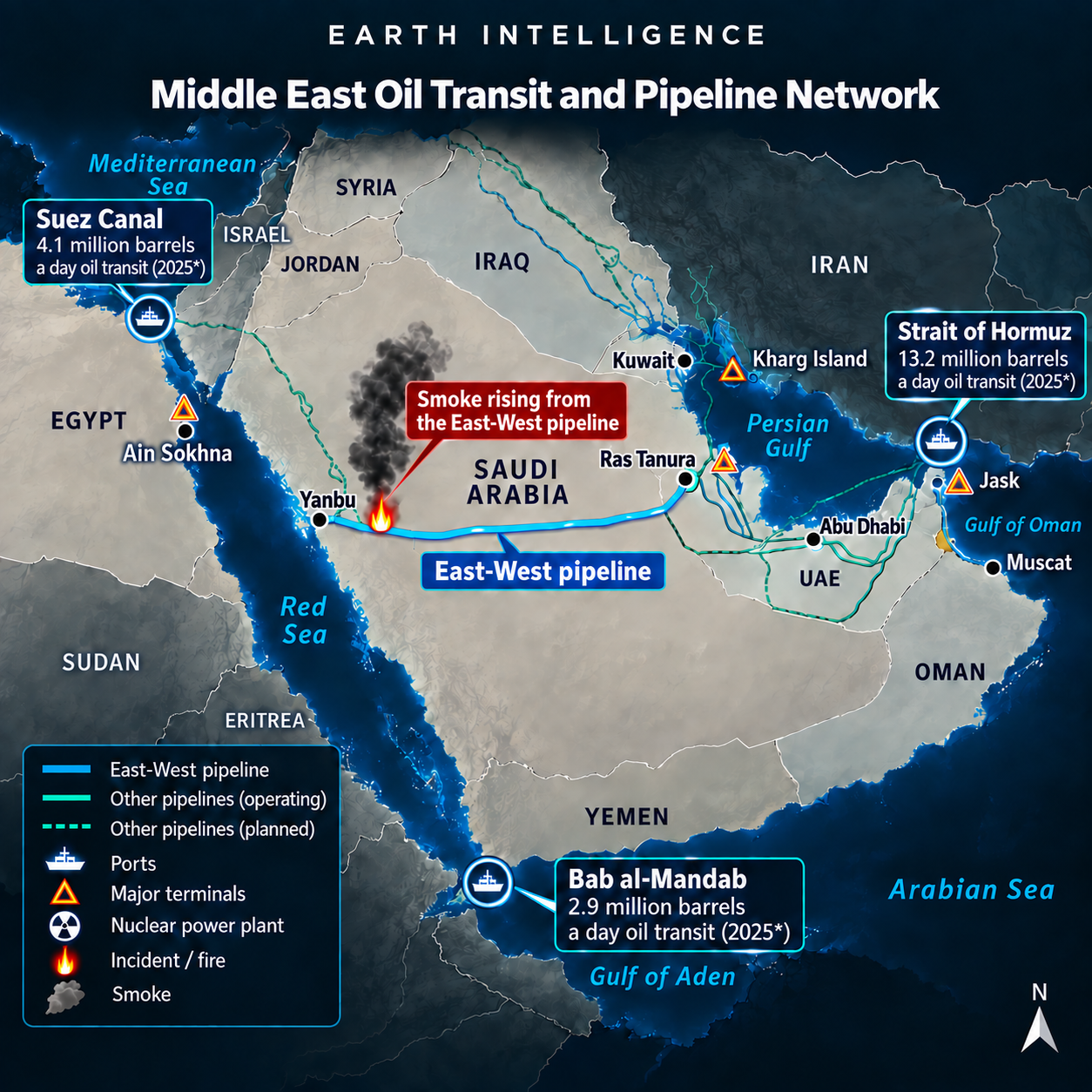
- The pipeline normally moves roughly 3–4 million barrels per day toward Yanbu and can carry up to 7 million, making its shutdown especially significant because it is Saudi Arabia’s main way to bypass the heavily disrupted Strait of Hormuz; combined with growing risks around Bab el-Mandeb, the attack is adding further pressure to global oil supplies and prices.
Economics & Markets:
- September 13, 2026 — A global motor-oil shortage linked partly to disruptions in oil supplies from the Iran war is now affecting U.S. consumers, with Costco limiting purchases of Kirkland synthetic motor oil to two units per member per week.
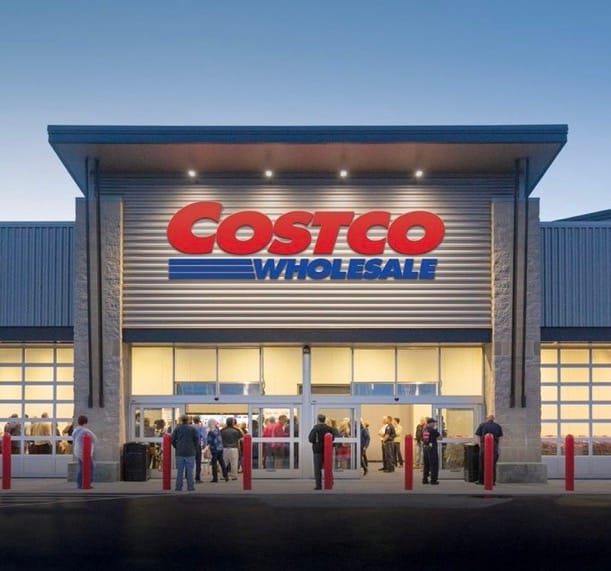
- Prices have also surged, with a 10-quart package of Kirkland synthetic oil rising from around $30 to $58 as refiners prioritize gasoline and diesel production amid tight global fuel supplies.
Geopolitics & Military Activity:
- September 13, 2026 — Ukrainian drones struck Russia’s Slavyansk ECO oil refinery in Krasnodar Krai overnight, igniting a fire at the facility, with Ukraine saying a major processing unit and fuel storage were hit.
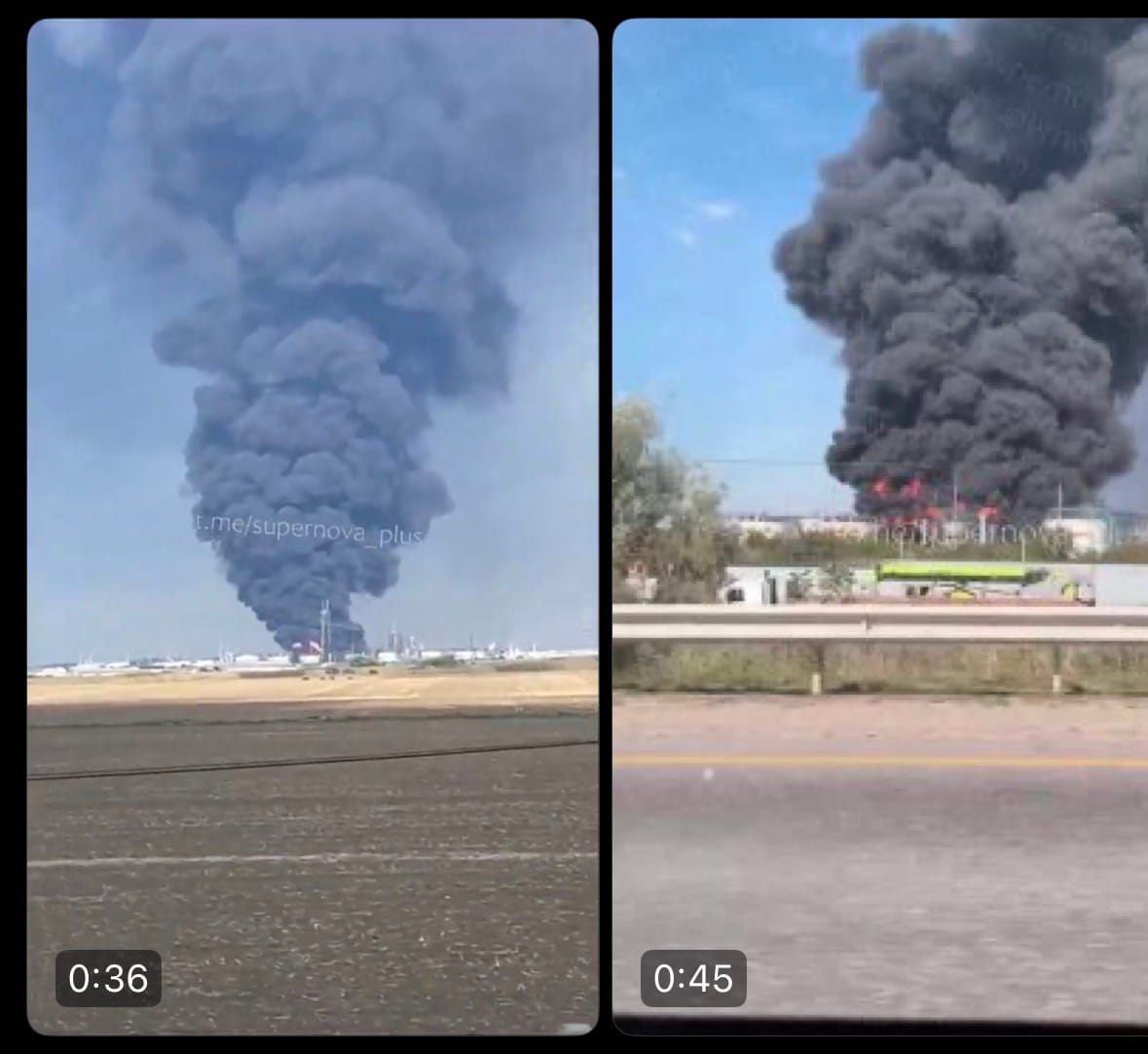
- Ukraine also reported strikes on the TANECO refinery in Tatarstan and a Russian drone facility in Millerovo, continuing its campaign to disrupt Russia’s fuel production and military supply network.

Environment & Weather:

Science & Technology:
Space:
- O3b mPOWER 11, 12 & 13 — September 13, 2026 — SpaceX successfully launched three SES communications satellites aboard a Falcon 9 at 2:50 p.m. local time from Cape Canaveral, Florida.
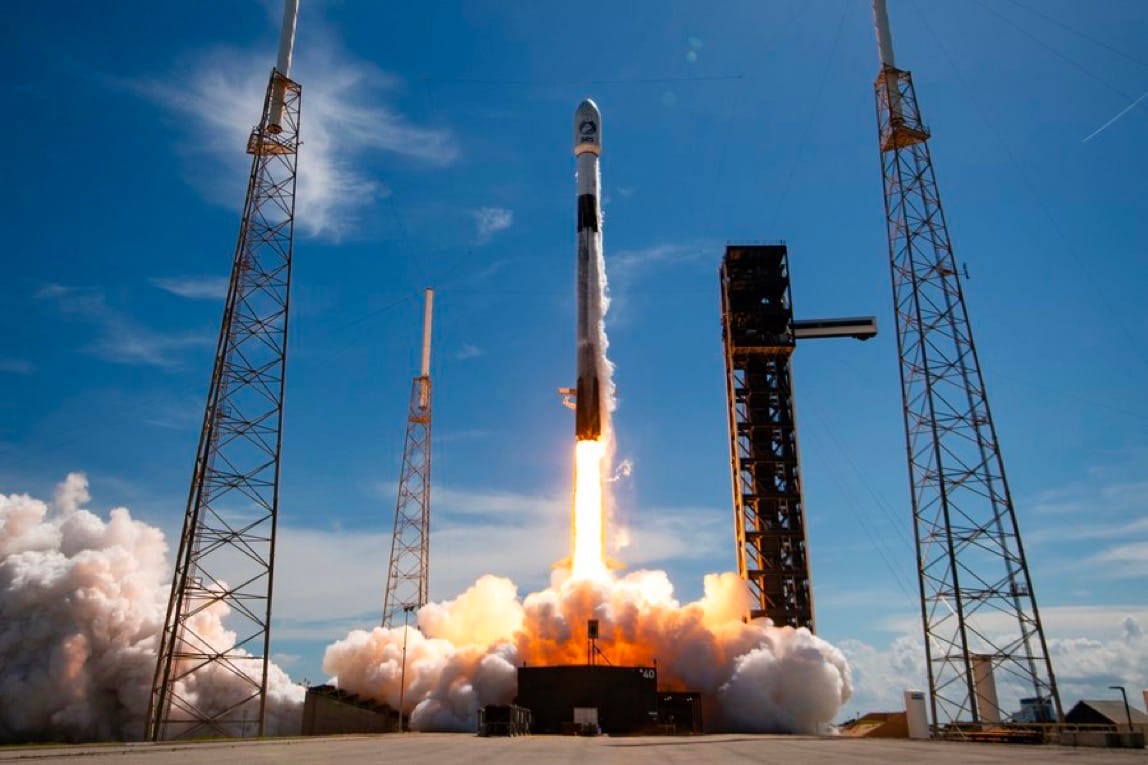
- The satellites complete SES’s 13-satellite O3b mPOWER network, which provides fast, low-latency internet and communications worldwide.
Statistic:
- Top assets by market capitalization:
- 🥇 Gold: $30.444T
- 🇺🇸 NVIDIA: $5.271T
- 🇺🇸 Apple: $4.849T
- 🇺🇸 Alphabet (Google): $4.102T
- 🇺🇸 Microsoft: $3.680T
- 🥈 Silver: $3.634T
- 🇺🇸 Amazon: $2.769T
- 🇹🇼 TSMC: $2.246T
- 🇺🇸 SpaceX: $1.993T
- 🇺🇸 Broadcom: $1.728T
- 🇸🇦 Saudi Aramco: $1.657T
- 🇺🇸 Meta Platforms: $1.650T
- ₿ Bitcoin: $1.541T
- 🇺🇸 Tesla: $1.443T
- 🇰🇷 Samsung: $1.228T
- 🇺🇸 Micron Technology: $1.101T
- 🇺🇸 Berkshire Hathaway: $1.092T
- 🇺🇸 Vanguard S&P 500 ETF: $1.045T
- 🇺🇸 Eli Lilly: $994.91B
- 🇺🇸 JPMorgan Chase: $946.92B
- 🇰🇷 SK Hynix: $906.49B
- 🇺🇸 Walmart: $852.70B
- 🇺🇸 AMD: $842.56B
- 🇺🇸 iShares Core S&P 500 ETF: $832.57B
- 🇺🇸 SPDR S&P 500 ETF: $806.19B
History of SpaceX
- SpaceX began with Elon Musk’s goal of dramatically lowering the cost of reaching orbit and eventually making humanity multiplanetary. Musk founded Space Exploration Technologies Corp. in 2002, investing roughly $100 million of his own money after concluding that existing launch vehicles were too expensive. Rather than simply assembling rockets from established contractors, SpaceX vertically integrated engines, structures, avionics, software, manufacturing, launch operations, and eventually satellites. Its first rocket, Falcon 1, failed on its first three launches in 2006–2008, pushing the company close to collapse. On September 28, 2008, its fourth flight successfully reached orbit, becoming the first privately developed liquid-fueled rocket to do so. NASA then awarded SpaceX a major Commercial Resupply Services contract, providing crucial business while SpaceX developed the much larger Falcon 9 and Dragon. Falcon 9 first reached orbit in 2010; Dragon became the first commercial spacecraft to reach the ISS in 2012. Musk’s major breakthrough was reusability: Falcon 9’s first stage successfully landed on land in 2015, landed on a drone ship in 2016, and a previously flown orbital-class booster flew again in 2017. Instead of discarding an entire rocket after every mission, SpaceX began repeatedly flying boosters, dramatically increasing launch cadence. Falcon Heavy, essentially three Falcon 9-derived cores operating together, debuted in 2018 with Musk’s Tesla Roadster as its demonstration payload and became one of the world’s most capable operational heavy-lift rockets. Crew Dragon then restored American orbital human launch capability in 2020, carrying NASA astronauts from Florida for the first time since the Space Shuttle retired in 2011.
- SpaceX then transformed from a launch company into an enormous space infrastructure company. Falcon 9 now launches commercial communications and Earth-observation satellites, NASA spacecraft and cargo, astronauts, national-security payloads, lunar missions, and SpaceX’s own satellites. Its Transporter and Bandwagon rideshare missions allow many smaller customers to share one Falcon 9, dramatically expanding access to orbit. Starlink, whose operational deployment began in 2019, created a vertically integrated business in which SpaceX builds satellites, launches them on its own reusable rockets, operates the constellation, manufactures customer terminals, and sells internet service—providing recurring revenue instead of earning money only when a rocket launches. By September 2026, Starlink had grown beyond 11,000 active satellites. Starshield adapts SpaceX satellite technology for U.S. national-security customers, including secure communications, Earth observation and hosted government payloads. SpaceX has become deeply embedded in NASA and national-security space through cargo, Commercial Crew, lunar-development, launch, Space Force and intelligence-community contracts. One correction to the idea that NASA “doesn’t use its own rockets anymore”: NASA still operates programs such as SLS/Orion for Artemis, but it deliberately purchases many launch and transportation services commercially. For routine ISS astronaut transportation, Falcon 9/Crew Dragon is currently NASA’s only certified operational U.S. commercial system; Boeing’s Starliner remained uncertified as of mid-2026 after serious flight-test problems. SpaceX launches from LC-39A at Kennedy Space Center and SLC-40 at Cape Canaveral in Florida, SLC-4E at Vandenberg Space Force Base in California, and Starbase in South Texas, while McGregor, Texas is a major engine/rocket testing center. LC-39A itself is historically significant: it launched Apollo astronauts toward the Moon and Space Shuttles before SpaceX took over operation of the pad under a NASA agreement in 2014.
- Today, SpaceX’s advantage comes from combining Falcon 9 + Falcon Heavy + Dragon + Starlink + Starshield + Starship + reusable launch infrastructure inside one organization. Falcon 9 has reached a launch cadence no Western competitor currently approaches: it flew roughly 165 orbital missions in 2025, while individual competitors such as ULA, Blue Origin, Rocket Lab’s Electron, Europe’s Ariane program, and Japan’s launch program operated at far lower cadence. China is the only national space ecosystem approaching comparable overall launch scale, but even China’s entire collection of launch providers remains behind SpaceX alone in orbital launch cadence and especially reusable-booster operational experience. In 2026 SpaceX remains the world’s dominant launcher by mass placed into orbit, although competition is increasing. The next step is Starship/Super Heavy, a fully reusable, methane-fueled super-heavy system designed to carry vastly more mass than Falcon 9, support NASA’s Artemis lunar program, deploy much larger Starlink spacecraft, enable orbital refueling, and ultimately transport cargo and people to the Moon and Mars. SpaceX makes money through commercial launches, rideshares, NASA cargo and crew missions, government/national-security contracts, Starlink subscriptions and hardware, Starshield, and other spacecraft services, giving it multiple businesses that reinforce one another. Its evolution is essentially 2002 founding → Falcon 1 failures → 2008 first orbit/NASA lifeline → 2010 Falcon 9 → 2012 Dragon/ISS → 2015 reusable landing → 2017 booster reflight → 2018 Falcon Heavy → 2019 Starlink → 2020 Crew Dragon → Starshield/national-security expansion → Starship → today’s extraordinary launch cadence. The key advantage is the flywheel: SpaceX builds rockets cheaply → reuses them → launches more frequently → uses those launches to deploy its own satellites → earns recurring Starlink/government revenue → uses that scale to manufacture and launch even more cheaply → reinvests into Starship. That system—not simply having a powerful rocket—is why SpaceX has established such a large lead over today’s commercial launch competitors and has significantly strengthened the United States’ overall position in space.
Image of the day:

Thanks for reading! Earth is complicated, we make it simple.
- Download our mobile app:


Click below to view our previous newsletters:

Support/Suggestions Email:
support@earthintel.io