Your daily briefing on the world, markets, science and technology.
Snapshot:
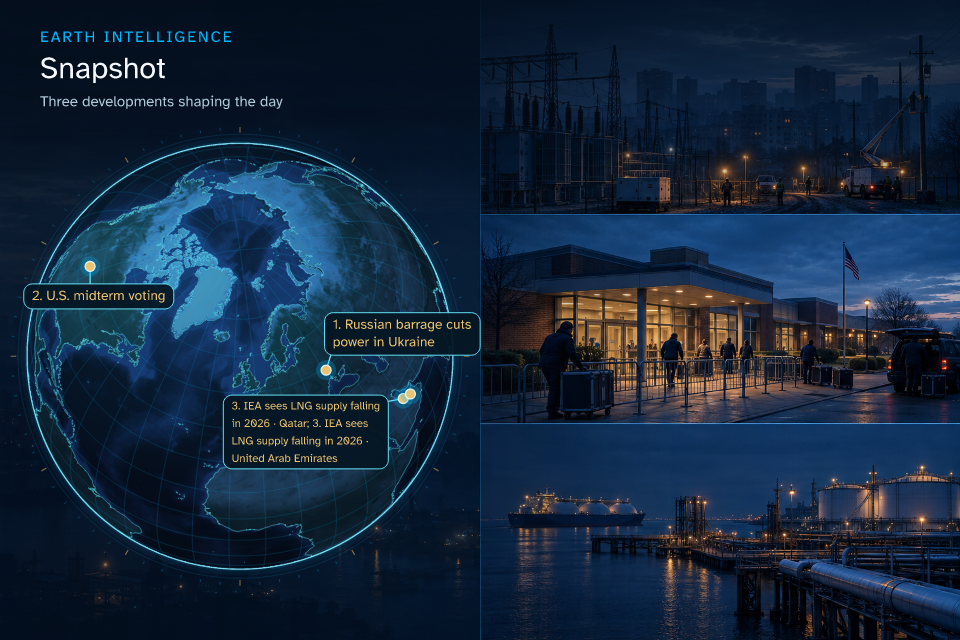
November 3, 2026 — Ukrainian officials said Russian forces fired 289 drones, 17 ballistic missiles and 59 cruise missiles across nine regions, killing 31 people and cutting emergency power.
November 3, 2026 — U.S. voters cast ballots for all 435 House seats, a third of the Senate and 36 governorships; control of Congress, affecting laws and spending, remained undecided.
November 3, 2026 — International Energy Agency said disruption in the Strait of Hormuz cut Qatar and UAE liquefied-gas shipments by more than 60 billion cubic metres between March and October.
Geopolitics & Military Activity:
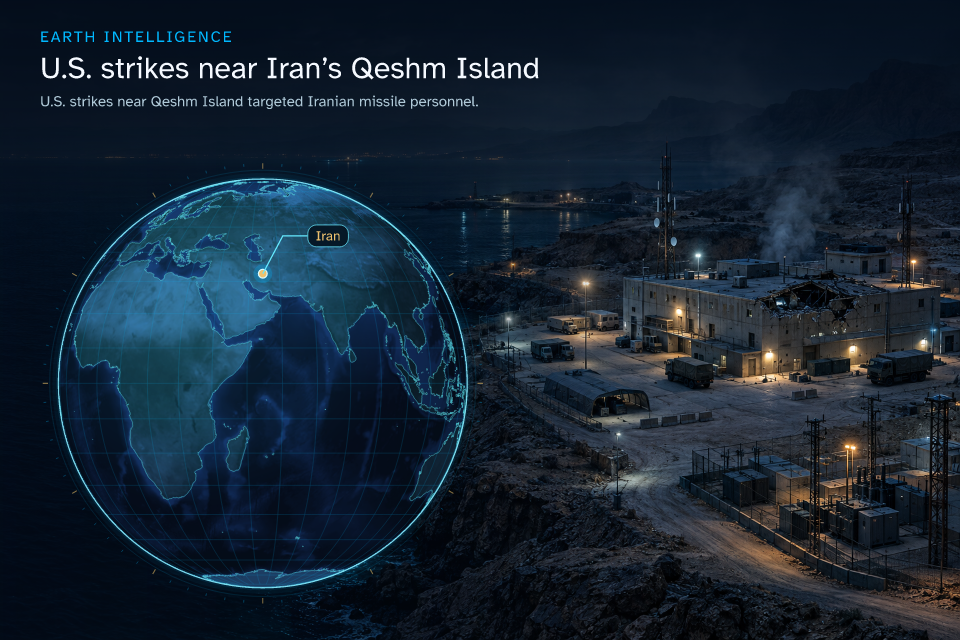
November 2, 2026 — U.S. forces carried out limited strikes near Qeshm Island, Iran, in the Strait of Hormuz, targeting Iranian personnel using surface-to-air missiles against U.S. assets. The action came while talks to avoid wider fighting continued.
November 3, 2026 — At a November 3 briefing, the United Nations Population Fund said fighting and blocked roads around Taiz, Yemen, left about 13,000 pregnant women without essential care. Five of 27 emergency maternity facilities were still operating, and 18 aid trucks were unable to enter.
November 2, 2026 — Uganda began withdrawing bilateral troops from Lower Shabelle, Somalia. The African Union stabilization mission plans to take over four bases in November to limit gaps near Mogadishu, Somalia, that al-Shabab could exploit.
November 2, 2026 — North Korea said it tested a cruise missile with a dispersal warhead, a weapon that scatters smaller munitions, on November 2. The claimed flight and warhead performance have not been independently verified.
Economics & Markets:
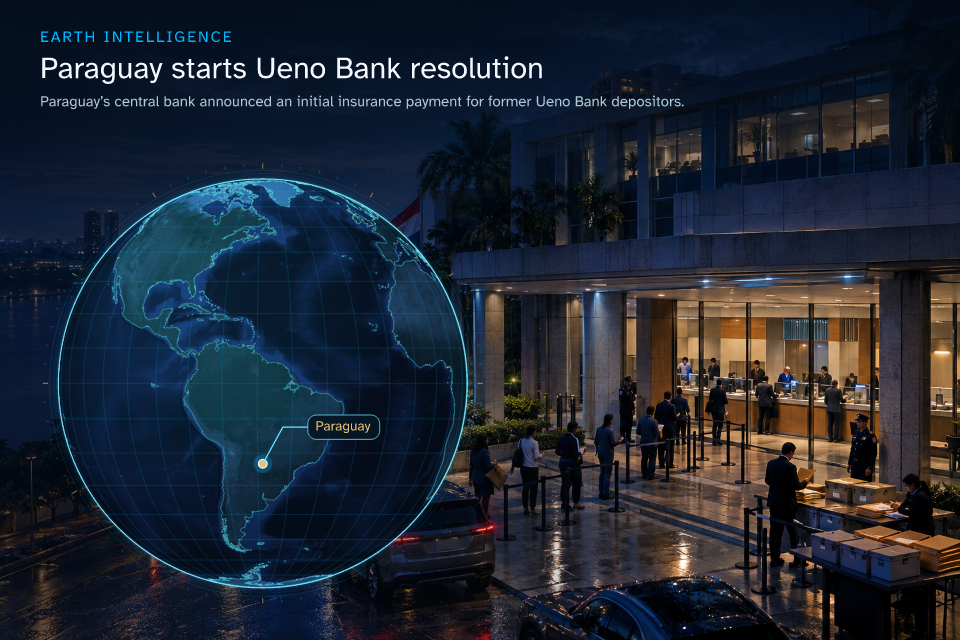
November 3, 2026 — Paraguay’s central bank said Ueno Bank depositors will receive an initial deposit-insurance payment of up to ₲10 million after the lender entered resolution over a solvency shortfall. It has not yet set the schedule for balances still unpaid.
November 3, 2026 — Ireland’s Central Statistics Office estimated October consumer prices were 4.0% above a year earlier, up from 3.8% in September. Energy prices were 18.3% higher; the preliminary estimate may change when final figures are published.
Asset
Price
As of (Eastern)
🇺🇸 NVIDIA
206.57001 USD/share
Nov 3, 2026, 7:34 PM EST
🇺🇸 Apple
331.73999 USD/share
Nov 3, 2026, 7:35 PM EST
🇺🇸 Microsoft
520.77002 USD/share
Nov 3, 2026, 7:34 PM EST
🇺🇸 Alphabet
278.29999 USD/share
Nov 3, 2026, 7:35 PM EST
🇺🇸 Amazon
250.74001 USD/share
Nov 3, 2026, 7:33 PM EST
🇹🇼 TSMC
404.66 USD/share
Nov 3, 2026, 7:34 PM EST
🇸🇦 Saudi Aramco
26.16 SAR/share
Nov 3, 2026, 7:33 PM EST
🇺🇸 Meta Platforms
620.95001 USD/share
Nov 3, 2026, 7:34 PM EST
🇺🇸 Broadcom
332.089996 USD/share
Nov 3, 2026, 7:33 PM EST
🇺🇸 Tesla
398.22 USD/share
Nov 3, 2026, 7:33 PM EST
🌐 Gold
3933.92002 USD/troy ounce
Nov 3, 2026, 7:32 PM EST
🌐 Silver
49.66093 USD/troy ounce
Nov 3, 2026, 7:32 PM EST
🌐 Bitcoin
77076.43 USD/coin
Nov 3, 2026, 7:35 PM EST
🌐 Ethereum
2264.51 USD/coin
Nov 3, 2026, 7:35 PM EST
Business:
November 3, 2026 — Marathon Petroleum, a U.S. fuel refiner, agreed to sell refineries in St. Paul Park, Minnesota, United States, and Mandan, North Dakota, United States, to fuel refiner CVR Energy for $4.2 billion. The deal would shift 177,000 barrels a day of refining capacity and related fuel-distribution assets if approved.
November 3, 2026 — Shell Australia agreed to sell its 16.67% stake in the North West Shelf gas project near Karratha, Australia, to XRG, an Abu Dhabi, United Arab Emirates energy investor, for $1.45 billion. The ownership change still needs approvals and is expected to close in 2027.
November 3, 2026 — Lonza, a Swiss company that develops and makes medicines for other firms, agreed to buy five U.S. drug-production sites from Merck KGaA, the German seller. The agreement would transfer about 1,100 workers across Missouri, Wisconsin, California and Indiana, United States; completion is expected in mid-2027.
November 3, 2026 — Schaeffler, a German car-parts maker, said it plans to cut 3,460 jobs at 16 sites in Germany, France, Slovakia and Belgium, and close five sites. The reductions are planned for 2027 and 2028, not completed layoffs.
Politics & Society:
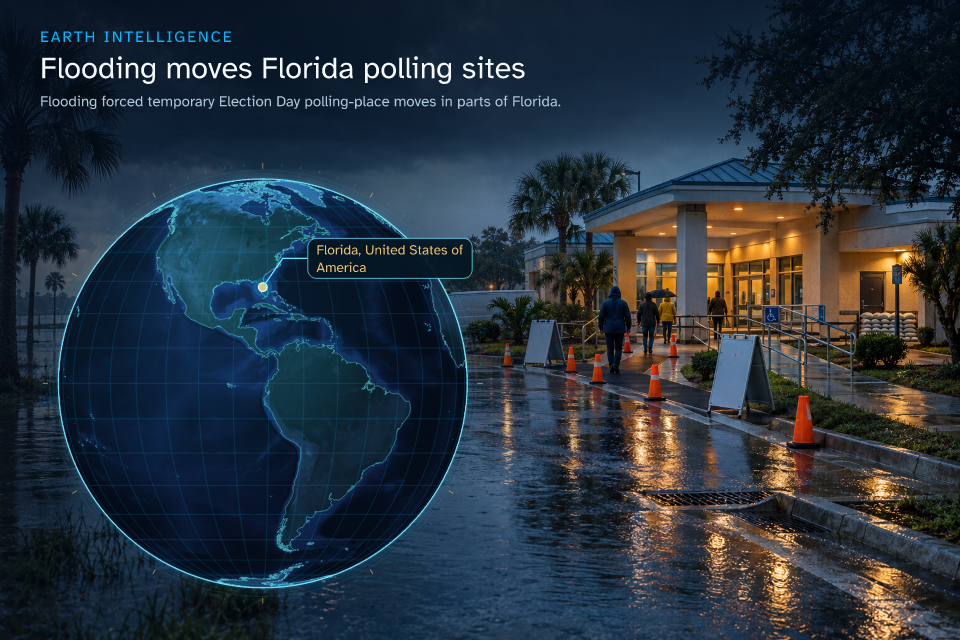
November 2, 2026 — In Florida, United States, Governor Ron DeSantis issued an emergency order allowing election supervisors to move polling places in seven counties after flooding. Affected voters had to use temporary sites, which officials said could still change.
November 2, 2026 — Western Australia Police released final results from a five-month live face-scanning trial across Western Australia, Australia. It scanned 1.38 million faces and led to 122 arrests, with nine wrong alerts; police will now review it before deciding on further use.
November 3, 2026 — The U.S. Ninth Circuit Court of Appeals let the federal Justice Department resume asking state and local election officials to separate ballots it says may be from noncitizens. States still do not have to comply while the case continues.
November 3, 2026 — In Stockholm, Sweden, parliament rejected Centre Party leader Elisabeth Thand Ringqvist as prime minister, then Speaker Andreas Norlén asked Prime Minister Ulf Kristersson to try forming a cabinet. Sweden remains without an agreed government after its September election.
Environment & Weather:
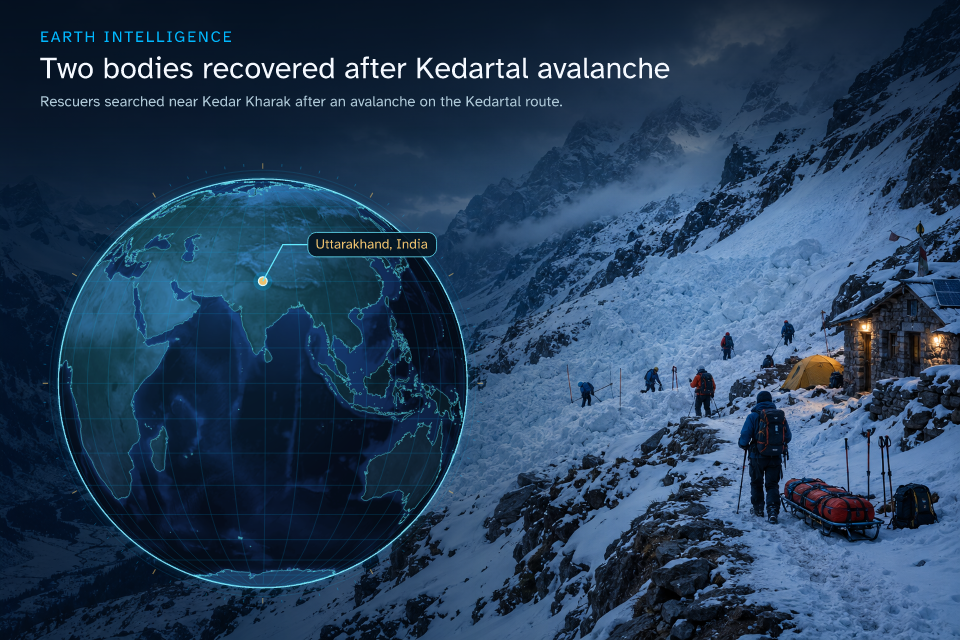
November 3, 2026 — Uttarakhand’s State Disaster Response Force and the Nehru Institute of Mountaineering recovered two bodies near Kedar Kharak, Uttarakhand, India, after an avalanche. Six trekkers remained missing, and bad weather continued to hamper the search.
November 3, 2026 — Rio Tinto committed A$28 million to a 7,500-square-kilometre waterless barrier south of Broome, Western Australia, Australia, to slow cane toad spread toward the Pilbara. Partners will alter artificial water points across six cattle stations; work starts in 2027 and could take two to five years.
November 2, 2026 — Victoria Planning Minister Sonya Kilkenny approved developer Virya’s Meering West Wind Farm near Bendigo, Victoria, Australia. The 155-turbine proposal has 1.3 gigawatts of wind power and a 1,000-megawatt-hour battery; building is due in 2029, but its planned power-line link is uncertain.
November 3, 2026 — Cyclone Murasu came ashore near Ongole, Andhra Pradesh, India, killing at least two people and damaging crops, homes and power equipment in 15 districts. The state opened 171 relief camps, where 12,230 people remained.
November 3, 2026 — Flooding in Palm Bay, Florida, United States, had killed two people and led emergency crews to rescue hundreds. Some homes suffered major damage, and officials said water could take days to drain.
Cyber:
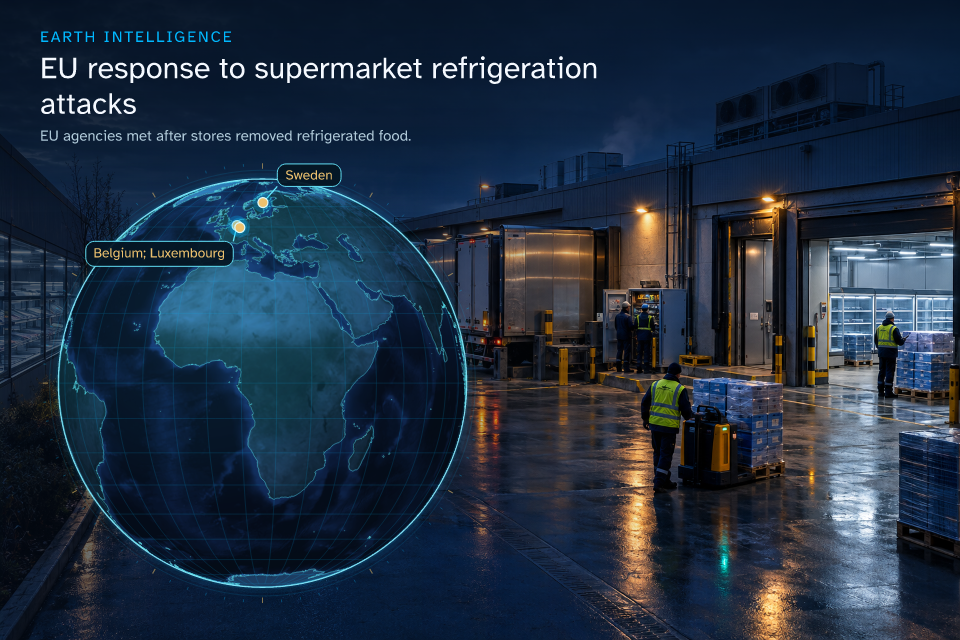
November 3, 2026 — The European Commission held meetings in Brussels, Belgium, after cyber incidents disrupted supermarket refrigeration in Belgium, Sweden, Luxembourg, Ireland, Italy and Estonia, making some stores remove chilled and frozen food. Investigators have not identified a culprit or proven that all incidents were linked.
November 3, 2026 — VulnCheck, a cybersecurity company, disclosed that attackers used a flaw in Siemens industrial computers to place malware on its test systems. No affected companies or outages were identified; Siemens fixed the flaw in version 4.3.4.1.
November 3, 2026 — South Korea’s government began an inquiry in Seoul, South Korea, and reissued 168 passports after a file with President Lee Jae Myung’s travel data and other delegation details was online for nearly five months. Officials say it appears to be a leak, not a hacking attack, and are tracing its source.
November 2, 2026 — Barracuda Networks released patches for two security flaws in its email and web-security appliances. An attacker who can reach an appliance’s admin controls could combine the flaws to take full control, so Barracuda urged customers to update and limit access.
Science & Technology:
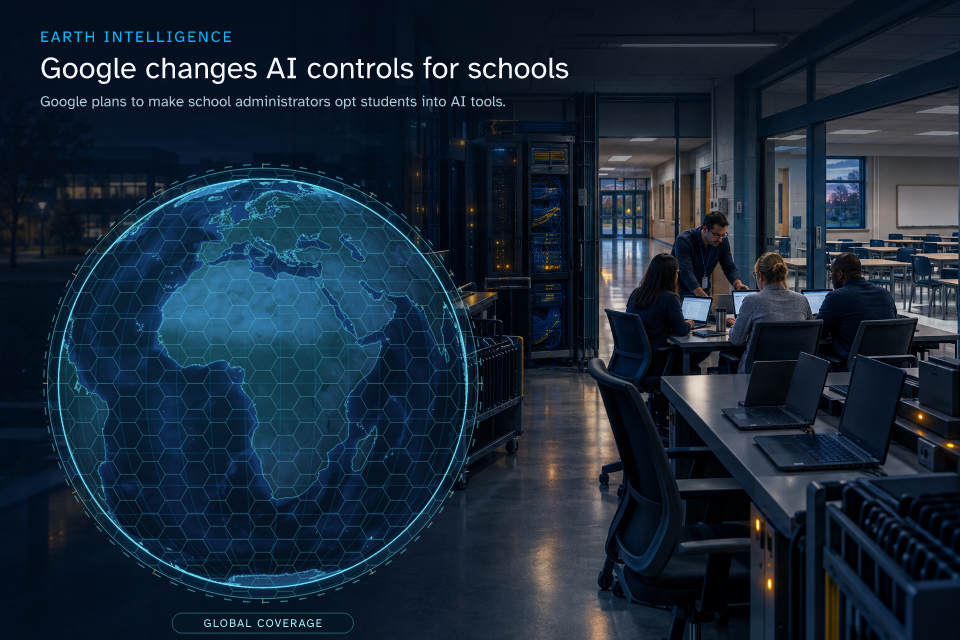
November 3, 2026 — Google said it will switch its artificial-intelligence services off by default for K–12 student accounts worldwide unless school administrators turn them on. The planned controls cover Gemini, NotebookLM, Classroom and Search, with rollout details still to come.
November 3, 2026 — FPT, a Vietnamese technology company, started trial runs at its semiconductor testing and packaging plant in Bac Ninh, Vietnam. The six-line facility is designed to test up to 300 million chips a year, but its first customer order is still expected rather than completed.
November 3, 2026 — Apple, the iPhone maker, opened a worldwide developer preview that lets third-party apps give Siri AI their own actions and multi-step skills. It is beta software, not a public launch; Siri AI remains unavailable on iPhone, iPad and Watch in the European Union.
November 3, 2026 — The PAVE Consortium, led by ISGlobal, published research from Brazil, Cambodia, the Dominican Republic, El Salvador, Eswatini, Honduras, Malawi, Nigeria and Tanzania. In more than 50,000 women, HPV tests plus AI image checks identified severe cervical precancer; health systems have not yet adopted the method.
Space:
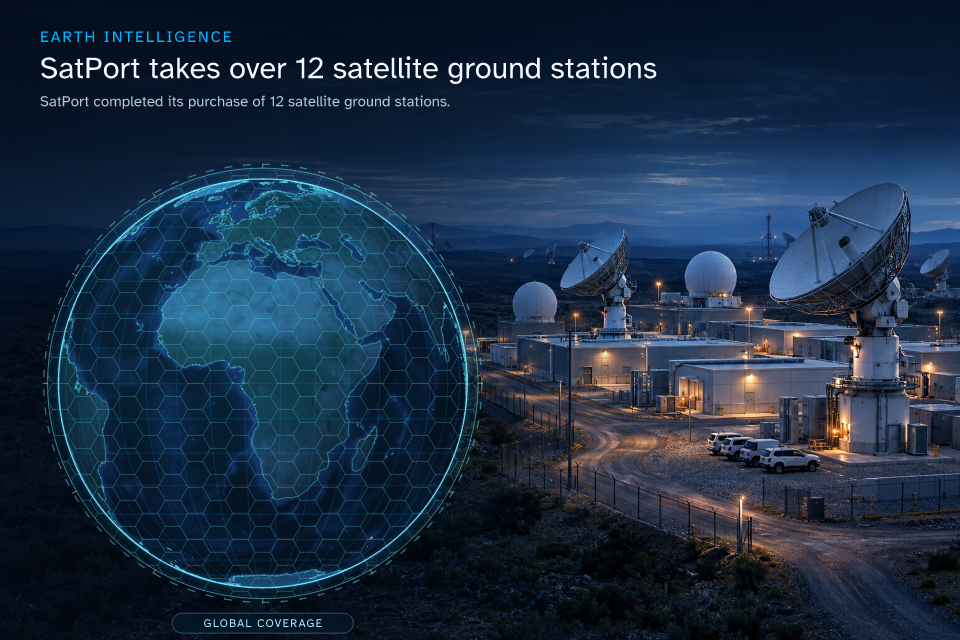
November 3, 2026 — SatPort, an EQT-backed operator of satellite ground stations, completed its purchase from Speedcast of 12 sites in 11 countries across five continents. More than 100 staff moved to SatPort, while Speedcast will keep using the sites under a long-term deal.
November 3, 2026 — NASA and Starfish Space said their SSPICY technology test is unrecoverable after Otter, Starfish’s first servicing spacecraft, lost contact in low Earth orbit. A software fault keeps its radio off, ending planned tests to inspect disabled U.S. objects in orbit.
November 2, 2026 — The European Space Agency announced that the National and Kapodistrian University of Athens and Astrolight, a Lithuanian laser-communications company, completed a working laser link between ERMIS-3 in low Earth orbit and Holomondas, Greece. It is Greece’s first such satellite-to-ground link.
Trends:
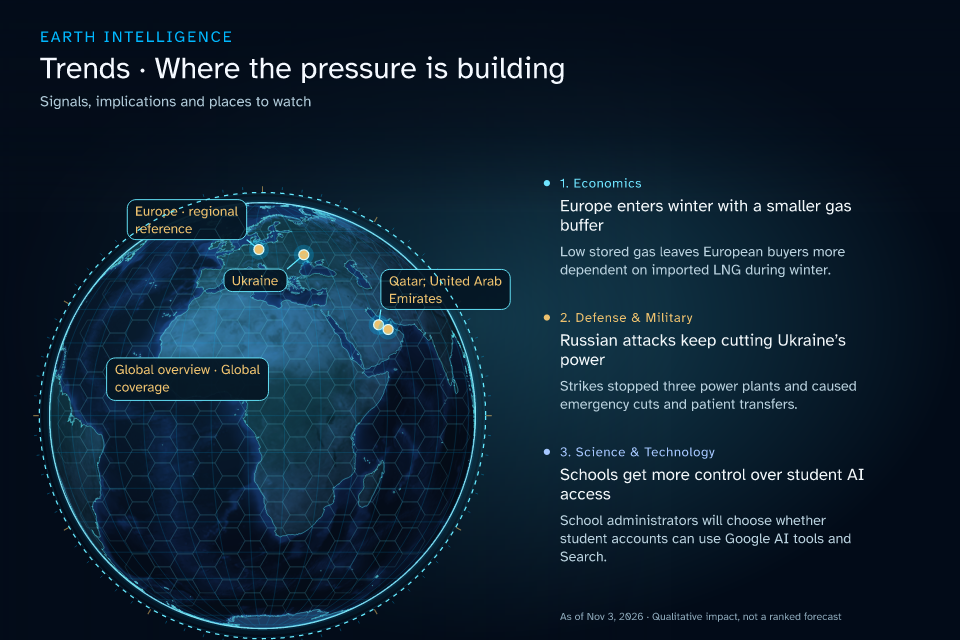
IEA’s November 3 gas review says Gulf shipping disruption and low European storage have narrowed the winter buffer; European buyers may face tighter supplies and higher prices. Russian strikes in Ukraine halted three power plants, causing emergency cuts and hospital transfers. Google will set its K–12 AI tools off by default, so school administrators will decide which student accounts can use them.
What to watch: Watch the IEA gas review for signs that LNG supply is recovering before winter demand rises, Ukraine’s repairs after the November 3 strikes, and how Google-using schools choose which AI tools and Search to enable for students.
Statistic of the Day:
The Bank of Canada set its overnight policy rate at 2.50 percent in Canada on October 28, 2026.
The overnight rate is the Bank of Canada’s main policy interest rate for lending between banks overnight. The bank raised it by 0.25 percentage points, which can feed through to some borrowing and saving rates.
History of Space laser communications:
Space laser communications use tightly aimed infrared beams to move more data than radio can carry in one link. Their development solved problems of accurate pointing, relaying and long distance, while clouds and weather can still interrupt links to ground stations.
Introduction: Space laser communications use tightly aimed infrared beams to move more data than radio can carry in one link. Their development solved problems of accurate pointing, relaying and long distance, while clouds and weather can still interrupt links to ground stations.
1964: October 31, 1964 — NASA’s Goddard Space Flight Center in Maryland, United States, first tracked a satellite with laser pulses. It was not a data link, but it proved the precise pointing and timing needed to aim narrow beams at spacecraft.
2001: November 30, 2001 — Europe’s Artemis relay satellite received images by laser from France’s SPOT-4 Earth-observation satellite, then sent them to Toulouse, France. The test showed a relay could shorten the wait for pictures that otherwise stayed stored aboard the lower satellite.
2013: October 18, 2013 — NASA’s Lunar Laser Communications Demonstration sent data from lunar orbit to New Mexico, United States, at 622 megabits a second. The experiment showed a smaller, lower-power laser terminal could carry much more data than comparable radio equipment.
2021: December 7, 2021 — NASA launched its Laser Communications Relay Demonstration into geosynchronous orbit, where it tested regular laser links with ground stations in California and Hawaii, United States. Using more than one station helped operators work around local cloud cover.
2023: November 14, 2023 — NASA’s Deep Space Optical Communications experiment exchanged laser data from about 16 million kilometers away, beyond the Moon. It extended the method toward deep-space missions, while near-Earth relays continue testing how to keep high-speed links dependable.
Image of the Day:
Thanks for reading! Earth is complicated, we make it simple.