Thursday☕️🌎


Trending:
- September 16, 2026 — The Federal Reserve raised interest rates by 0.25 percentage point to a 3.75%–4.00% range, its first rate hike since July 2023, after a unanimous 12–0 vote as inflation remains above its 2% target.
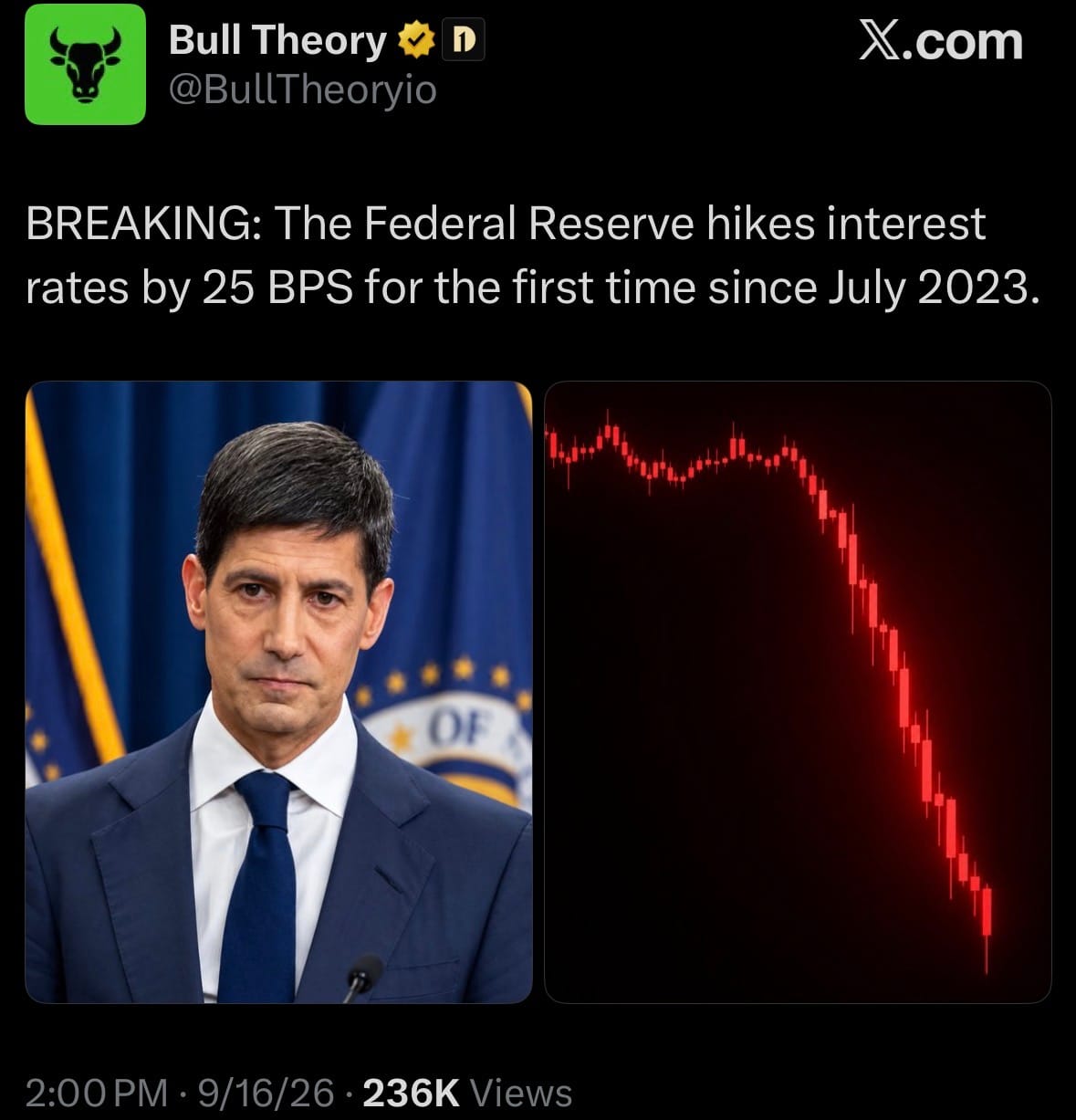
- Most Fed officials expect one more increase this year, while the Fed also raised its 2026 inflation forecasts to 3.7% for headline PCE and 3.4% for core PCE, signaling that borrowing costs could stay higher for longer.
Geopolitics & Military Activity:
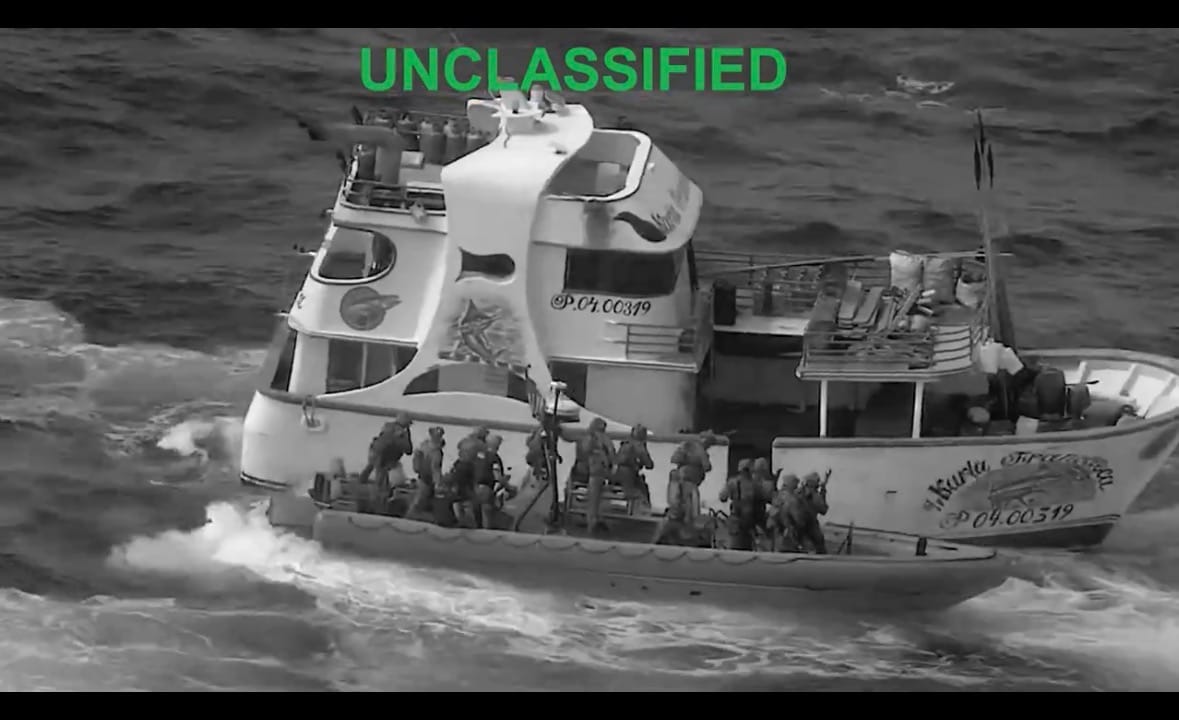
- September 16, 2026 — U.S. Southern Command forces intercepted another floating refueling vessel in the Eastern Pacific that SOUTHCOM says was supporting drug-trafficking operations for Ecuador’s Los Choneros organization. The crew was transferred to Ecuadorian authorities before U.S. forces sank the vessel, continuing a series of operations aimed at dismantling the offshore logistics network used to support long-range drug-smuggling boats.
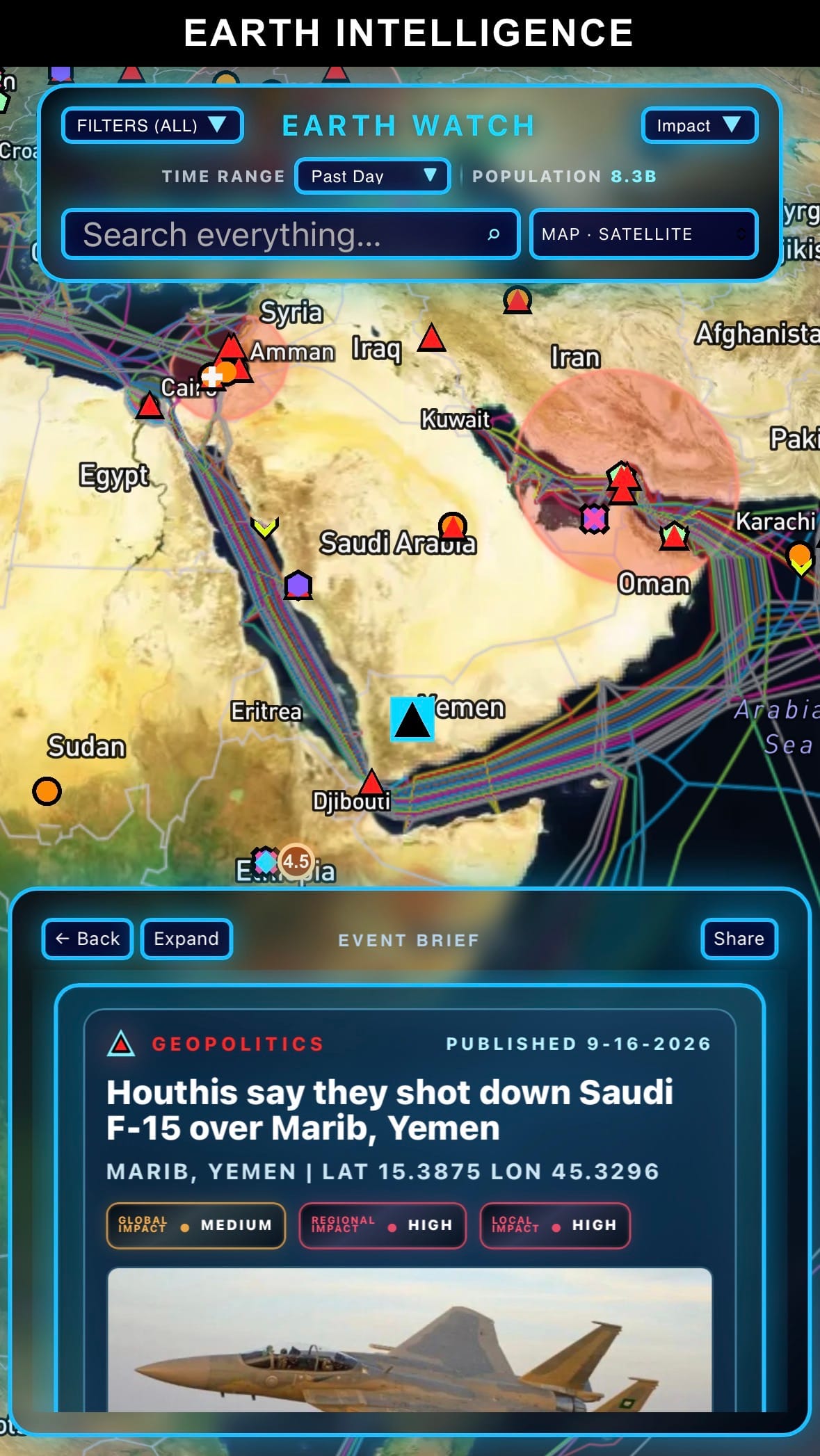
- September 15, 2026 — U.S. officials secretly met senior Houthi representatives in Oman, where the Houthis reportedly said they would continue their 2025 ceasefire with the U.S. and avoid attacking American vessels, while Saudi vessels could remain targets. The talks come as the Houthis expand operations around the Red Sea and Saudi Arabia seeks greater U.S. military support, while Washington has so far avoided directly reentering the conflict.

Science & Technology:
- September 15, 2026 — The U.S. Navy selected Saronic to build new LCU 1700 landing craft at its $3.2 billion Port Alpha shipyard in Brownsville, Texas, as part of a $280.5 million program involving three U.S. shipbuilders.
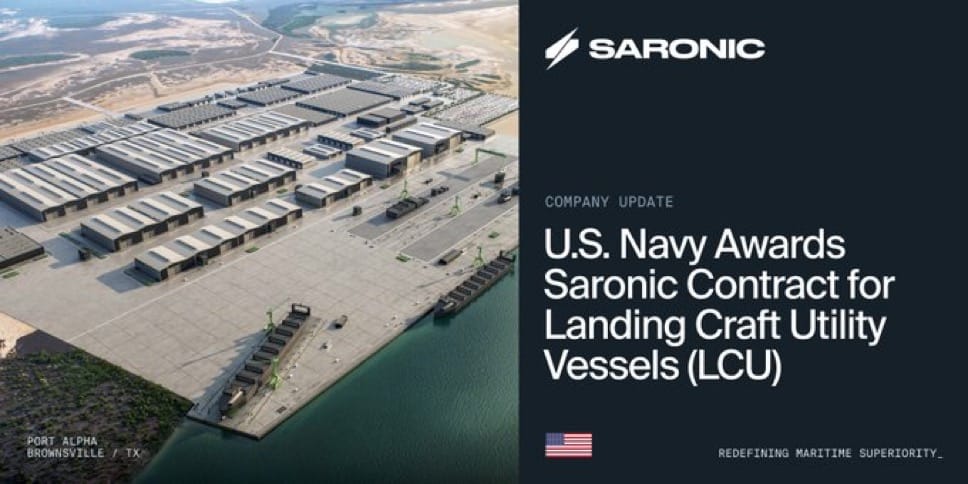
- The vessels can carry troops, vehicles and heavy cargo directly onto beaches and undeveloped shorelines, replacing landing craft that average more than 50 years old; production at Port Alpha is expected to begin in 2028 with deliveries in 2029.


Space:
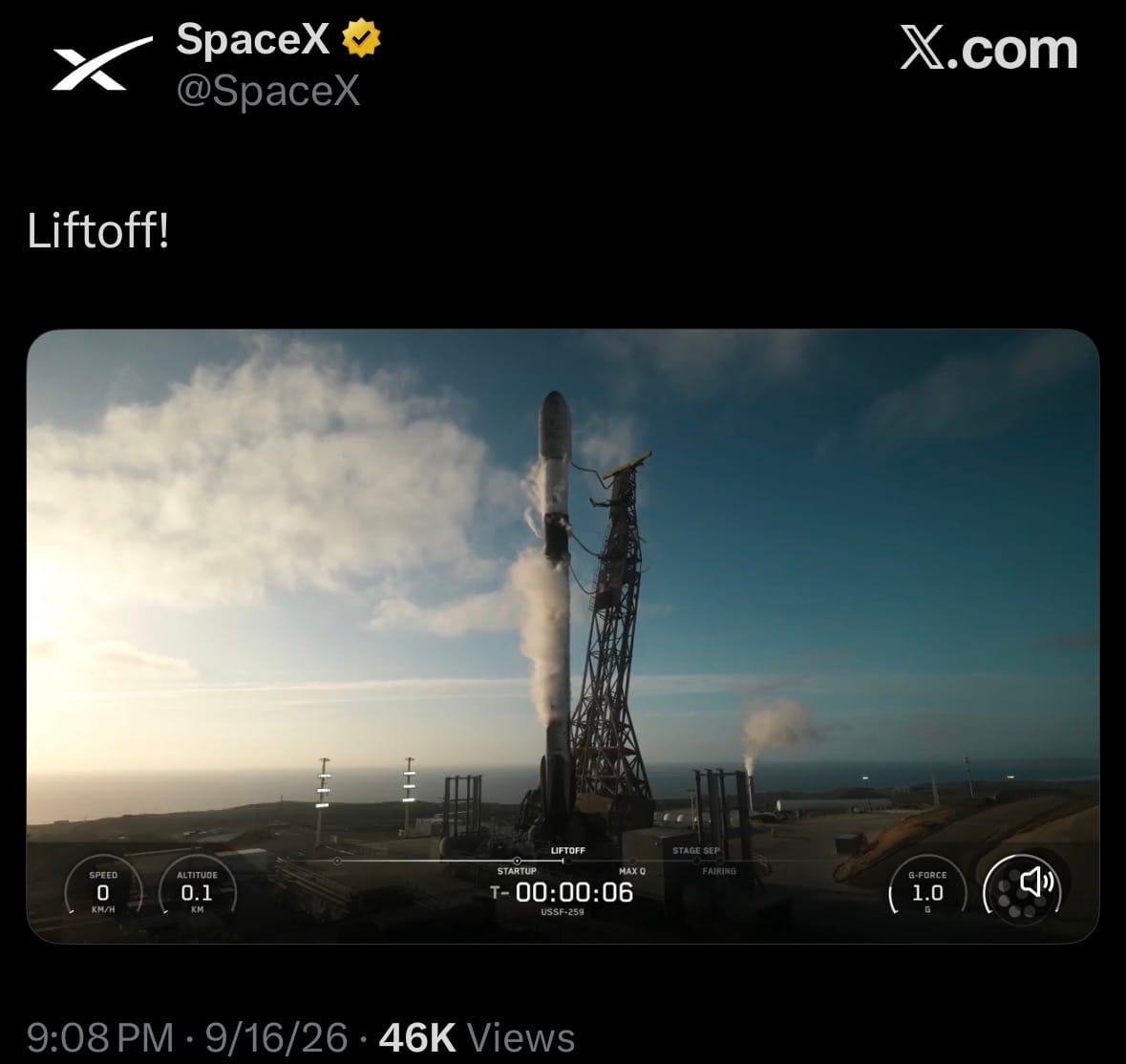
- USSF-259 — September 16, 2026 — SpaceX launched a Falcon 9 from Vandenberg Space Force Base in California carrying a classified U.S. Space Force payload into low Earth orbit, marking its second classified Space Force mission in less than a week. The mission’s exact satellites and purpose remain classified, while the Falcon 9 first-stage booster was expected to land on the Of Course I Still Love You droneship after launch.
- Progress MS-35 — September 16, 2026 — Russia successfully launched the uncrewed Progress MS-35 cargo spacecraft aboard a Soyuz rocket at 6:33 p.m. local time from Baikonur Cosmodrome in Kazakhstan, carrying nearly three tons of food, fuel and supplies to the International Space Station. The spacecraft reached orbit successfully and is scheduled to dock automatically with the ISS on September 19.
Statistic:
- Top assets by market cap:
- 🥇 Gold: $29.972T
- 🇺🇸 NVIDIA: $5.165T
- 🇺🇸 Apple: $4.851T
- 🇺🇸 Alphabet (Google): $4.150T
- 🇺🇸 Microsoft: $3.640T
- 🥈 Silver: $3.573T
- 🇺🇸 Amazon: $2.653T
- 🇹🇼 TSMC: $2.166T
- 🇺🇸 SpaceX: $1.988T
- 🇺🇸 Meta Platforms: $1.715T
- 🇸🇦 Saudi Aramco: $1.653T
- 🇺🇸 Broadcom: $1.620T
- ₿ Bitcoin: $1.519T
- 🇺🇸 Tesla: $1.414T
- 🇰🇷 Samsung: $1.208T
- 🇺🇸 Berkshire Hathaway: $1.112T
- 🇺🇸 Micron Technology: $1.046T
- 🇺🇸 Vanguard S&P 500 ETF: $1.031T
- 🇺🇸 Eli Lilly: $1.014T
- 🇺🇸 JPMorgan Chase: $927.49B
- 🇰🇷 SK Hynix: $906.79B
- 🇺🇸 Walmart: $855.49B
- 🇺🇸 AMD: $836.64B
- 🇺🇸 iShares Core S&P 500 ETF: $813.24B
- 🇺🇸 SPDR S&P 500 ETF: $799.35B
- 🇺🇸 Visa: $692.54B
History of Lockheed Martin
- Lockheed Martin traces its roots to the beginnings of American aviation. Brothers Allan and Malcolm Loughead founded an early aircraft company in California in 1912; their name was later standardized to Lockheed. After several reorganizations, the Lockheed Aircraft Company was established in 1926 and became known for fast aircraft such as the Vega, flown by aviators including Amelia Earhart. During World War II, Lockheed became a major military manufacturer, producing aircraft including the P-38 Lightning and Hudson, while its factories built thousands of aircraft for the Allied war effort. In 1943, engineer Clarence “Kelly” Johnson created the organization that became Skunk Works, Lockheed’s secretive advanced-development division designed to rapidly produce breakthrough aircraft. It developed the P-80, America’s first operational jet fighter, followed by the U-2 spy plane in the 1950s, the A-12 reconnaissance aircraft and legendary SR-71 Blackbird, which could fly above 80,000 feet at more than Mach 3. Lockheed also expanded into missiles, satellites, submarine-launched ballistic missiles and space systems, becoming deeply integrated into America’s Cold War defense and intelligence infrastructure.
- The modern company resulted from decades of consolidation across the U.S. defense industry. Martin Marietta traced its lineage partly to aviation pioneer Glenn L. Martin, whose aircraft company dated to 1912 and later became important in bombers, missiles, rockets and spacecraft. Martin built vehicles including the Titan rocket family, which launched military satellites, NASA missions and Gemini spacecraft. Lockheed meanwhile developed aircraft including the C-130 Hercules (first flight 1954), F-104 Starfighter, C-5 Galaxy, P-3 Orion and later the stealth F-117 Nighthawk through Skunk Works. After the Cold War reduced U.S. defense spending, the industry consolidated dramatically. Lockheed and Martin Marietta merged in 1995, creating Lockheed Martin, followed by the approximately $9.1 billion acquisition of Loral’s defense-electronics businesses in 1996. One of its most consequential victories came in 2001, when Lockheed Martin won the Joint Strike Fighter competition with the X-35 design, which became the F-35 Lightning II—a multinational stealth fighter program involving the U.S. and numerous allied countries and one of the largest military procurement programs ever undertaken.
- Today, Lockheed Martin is the world’s largest defense contractor by defense-related revenue and sits at the center of the U.S. and allied military-industrial base. Its major businesses span Aeronautics, Missiles and Fire Control, Rotary and Mission Systems, and Space. Major programs include the F-35, F-16, C-130J, F-22 sustainment, Sikorsky Black Hawk helicopters, Aegis combat systems, PAC-3 missile-defense interceptors, THAAD, JASSM, LRASM, HIMARS fire-control and launcher systems, hypersonic weapons, military satellites, missile-warning spacecraft and strategic missile programs. Lockheed acquired Sikorsky from United Technologies for about $9 billion in 2015, adding one of America’s most important helicopter manufacturers. The company works heavily with the Department of War/Defense, NASA, intelligence agencies, Space Force, Missile Defense Agency and allied governments, while Skunk Works continues developing classified and next-generation aerospace technology. Lockheed’s evolution is essentially 1912 early Loughead aircraft → 1926 Lockheed Aircraft → WWII P-38 → 1943 Skunk Works → U-2/A-12/SR-71 → missiles and space → stealth aircraft → 1995 Lockheed + Martin Marietta → 2001 F-35 victory → 2015 Sikorsky → today’s integrated aircraft, missiles, missile defense, space and classified-technology giant. Its strength is no longer one particular aircraft: Lockheed is embedded across the entire modern defense architecture, from fighters and helicopters to precision missiles, air defense, satellites, nuclear deterrence, space systems and classified advanced weapons development.
Image of the day:

Thanks for reading! Earth is complicated, we make it simple.

- Download our mobile app:


Click below to view our previous newsletters:

Support/Suggestions Email:
support@earthintel.io