Tuesday☕️

Trending:
- On June 22, 2026, the FBI announced the arrest of Ibrahim Khaldoon Hilmi, who is accused of orchestrating one of the largest Medicare fraud schemes in history worth $3.7 billion.
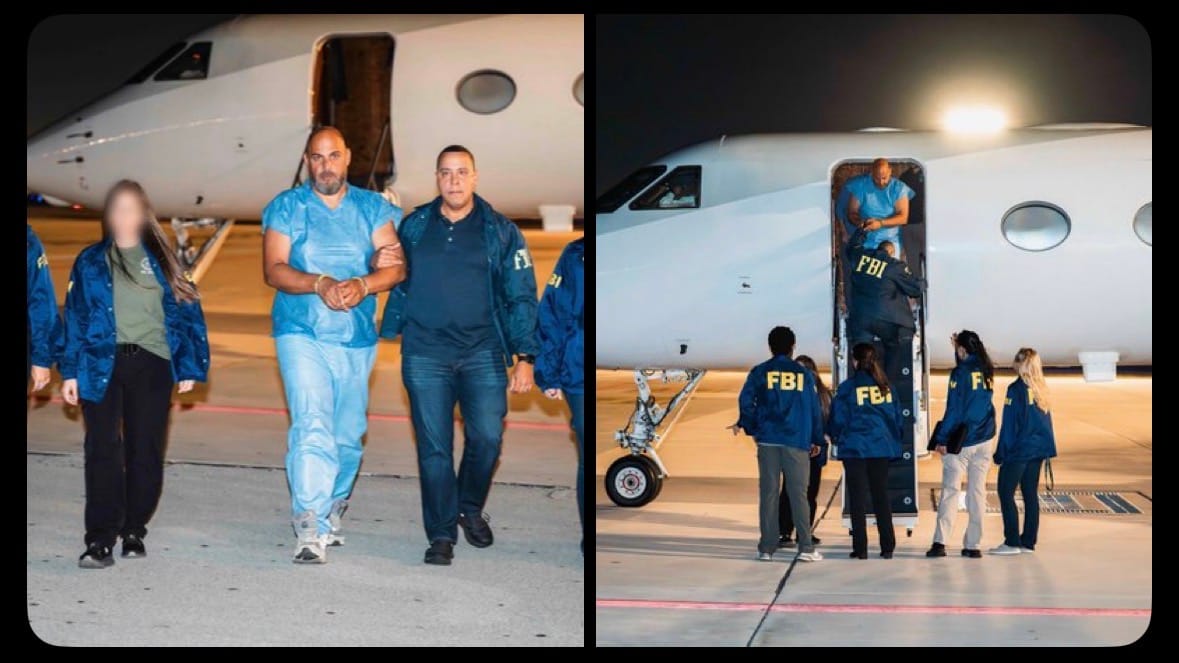
- Hilmi had been on the run since May 2025 but was captured in Turkey through international cooperation and returned to the United States to face charges. This case is part of the Trump administration’s ongoing crackdown on major healthcare fraud.
Geopolitics & Military Activity:
- On June 22, 2026, Ukraine launched a precision cruise missile strike on the Voronezh Semiconductor Devices Plant (VZPP-S) inside Russia. The facility, which produces microelectronics for Russian missiles including the Kh-101, Iskander, and Pantsir systems, was set on fire. Russian officials reported three to five people killed and dozens injured in the attack.

- This strike represents an escalation in Ukraine’s deep-strike campaign, shifting focus from fuel depots to Russia’s hardest-to-replace industrial bottleneck: semiconductors. The same operation also hit a space-communications center near Moscow.
Current war casualties (as of June 23, 2026):
- Russian total casualties: ~1.39–1.40 million (killed + wounded)
- Ukrainian total casualties: ~500,000–600,000
Science & Technology:
- On June 22, 2026, Chevron signed a 20-year agreement to supply power to Microsoft’s $7 billion data center in West Texas.
- Under the deal, known as Project Kilby, Chevron will build a dedicated 2.67-gigawatt natural gas-fired power plant co-located next to the data center using gas from the Permian Basin. The facility is expected to start delivering power in 2028 and will support Microsoft’s growing AI infrastructure needs.
Statistic:
- Largest assets by market capitalization:
- Gold: $28.812T
- 🇺🇸 NVIDIA: $5.053T
- 🇺🇸 Apple: $4.362T
- 🇺🇸 Alphabet (Google): $4.256T
- Silver: $3.531T
- 🇺🇸 Microsoft: $2.728T
- 🇺🇸 Amazon: $2.504T
- 🇹🇼 TSMC: $2.425T
- 🇺🇸 SpaceX: $2.036T
- 🇺🇸 Broadcom: $1.865T
- 🇸🇦 Saudi Aramco: $1.703T
- 🇺🇸 Tesla: $1.521T
- 🇺🇸 Meta Platforms: $1.431T
- 🇰🇷 Samsung: $1.409T
- 🇺🇸 Micron Technology: $1.366T
- Bitcoin: $1.275T
- 🇰🇷 SK Hynix: $1.223T
- 🇺🇸 Berkshire Hathaway: $1.054T
- 🇺🇸 Eli Lilly: $982.77B
- 🇺🇸 Vanguard S&P 500 ETF (VOO): $982.25B
- 🇺🇸 Walmart: $932.52B
- 🇺🇸 AMD: $899.48B
- 🇺🇸 JPMorgan Chase: $888.20B
- 🇺🇸 iShares Core S&P 500 ETF (IVV): $834.82B
- 🇺🇸 SPDR S&P 500 ETF (SPY): $768.79B
- 🇳🇱 ASML: $743.56B
- 🇺🇸 Intel: $708.36B
History:
- The FBI (Federal Bureau of Investigation) was founded on July 26, 1908, as the Bureau of Investigation (BOI) under Attorney General Charles Bonaparte. At the time, the United States had no centralized federal investigative agency capable of pursuing criminals across state lines. Early investigations focused on land fraud, banking crimes, antitrust violations, public corruption, and interstate criminal activity. During World War I (1914–1918), the Bureau expanded rapidly, investigating German espionage, sabotage, and violations of the Espionage Act (1917) and Sedition Act (1918). After the war, it became heavily involved in the First Red Scare (1919–1920), targeting suspected communist and anarchist networks. The agency’s defining figure arrived in 1924, when J. Edgar Hoover became director. Hoover would remain in charge for nearly 48 years (1924–1972), longer than any leader of a major U.S. government agency. He modernized investigations through fingerprint databases, centralized criminal records, forensic laboratories, standardized training, and intelligence files. In 1935, the organization was renamed the Federal Bureau of Investigation (FBI). During the Great Depression, the FBI became nationally famous by hunting gangsters such as John Dillinger (killed 1934), Baby Face Nelson (killed 1934), Machine Gun Kelly (captured 1933), Pretty Boy Floyd (killed 1934), and investigating criminal groups operating across state borders. These cases transformed the FBI into one of the most recognizable law enforcement organizations in America.
- During World War II (1939–1945), the FBI shifted heavily toward counterintelligence and domestic security. It monitored Nazi espionage networks, investigated sabotage plots, and played a role in operations against German agents, including the famous Operation Pastorius (1942), where Nazi saboteurs were captured after landing in the United States. The Cold War dramatically expanded FBI power and influence. Throughout the 1940s–1980s, the FBI became America’s primary domestic counterintelligence organization against Soviet espionage. It investigated major spy cases involving individuals such as Julius and Ethel Rosenberg, Robert Hanssen, and numerous Soviet intelligence networks. Hoover’s FBI also launched the controversial COINTELPRO (Counter Intelligence Program) from 1956–1971, which targeted communist organizations, anti-war groups, Black nationalist organizations, civil rights leaders, and other political movements. The FBI conducted surveillance of Martin Luther King Jr., infiltrated activist groups, and maintained extensive domestic intelligence files. Following Hoover’s death in 1972, investigations by Congress—including the Church Committee (1975)—revealed intelligence abuses across multiple agencies and led to significant reforms, oversight mechanisms, and restrictions on domestic surveillance. During the 1980s and 1990s, the FBI expanded into organized crime, public corruption, hostage rescue, and counterterrorism. The creation of the Hostage Rescue Team (HRT) in 1983 gave the Bureau an elite tactical force comparable to military special operations units. Major events included investigations into the 1993 World Trade Center bombing, the Oklahoma City bombing (1995), Ruby Ridge (1992), and the Waco siege (1993).
- The September 11, 2001 attacks fundamentally transformed the FBI from primarily a criminal investigative agency into a hybrid law enforcement and intelligence organization. Counterterrorism became the top priority. The Bureau greatly expanded its intelligence capabilities, cyber divisions, foreign intelligence investigations, surveillance authorities, and cooperation with agencies such as the CIA, NSA, DHS, and foreign intelligence partners. The FBI established and expanded Joint Terrorism Task Forces (JTTFs) across the country, integrating federal, state, local, military, and intelligence personnel into unified counterterrorism operations. Throughout the 2000s and 2010s, major priorities included Al-Qaeda, ISIS, cybercrime, Chinese espionage, Russian intelligence activities, election security, ransomware groups, organized crime, public corruption, and insider threats. High-profile investigations included the Boston Marathon Bombing (2013), Chinese economic espionage cases, Russian intelligence operations, and the arrest of former FBI agent Robert Hanssen (2001)—one of the most damaging spies in U.S. history. By 2026, the FBI employs approximately 38,000 personnel, operates 56 field offices, over 350 resident agencies, and dozens of overseas legal attaché offices. It investigates terrorism, cyber warfare, espionage, organized crime, violent crime, human trafficking, financial fraud, public corruption, critical infrastructure threats, and foreign influence operations. Today, the FBI sits at the center of America’s domestic security architecture, functioning as both the nation’s premier federal law enforcement agency and its primary domestic intelligence service. Over more than a century, it has evolved from a small group of investigators into one of the most powerful and influential security organizations in the world, shaping everything from organized crime enforcement and counterintelligence to cyber warfare and national security.
Image of the day:

Thanks for reading! Earth is complicated, we make it simple.
- Download our mobile app:



Click below to view our previous newsletters:

Support/Suggestions Email:
support@earthintel.io