Tuesday☕️🌎


Trending:
- Nicaraguan President Daniel Ortega announced that the country will no longer hold elections, effectively ending any democratic challenge to his long-standing rule and that of his wife, Rosario Murillo, who serves as co-president.

- The move, which follows years of disputed votes, opposition crackdowns, and international criticism, solidifies what critics describe as a family dictatorship, with Ortega rejecting future electoral processes and tying them to foreign interference.
Economics & Markets:
- China’s car market is on track for its worst year since 2021, with passenger vehicle sales plunging about 20% in the first half of 2026 amid weak consumer demand, economic uncertainty, and intense price competition.
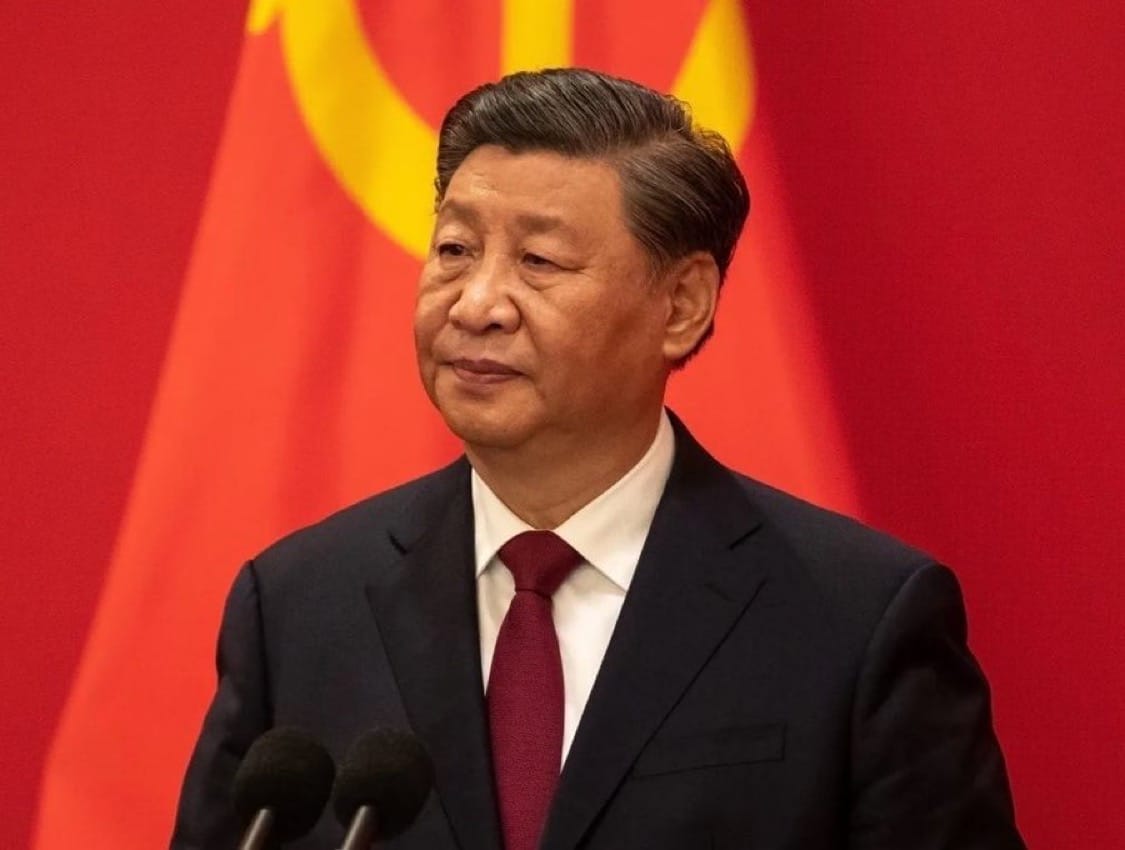
- The China Passenger Car Association has slashed its full-year forecast to a 14% decline, as domestic sales continue to suffer while exports provide some offset for manufacturers.
Geopolitics & Military Activity:
Science & Technology:
- July 20, 2026: Archer Aviation and Anduril Industries unveiled a new dual-use, autonomous series hybrid-electric VTOL aircraft platform they jointly developed over the last two years, with Anduril showing the defense variant called “Thunder” at the Farnborough Airshow today.
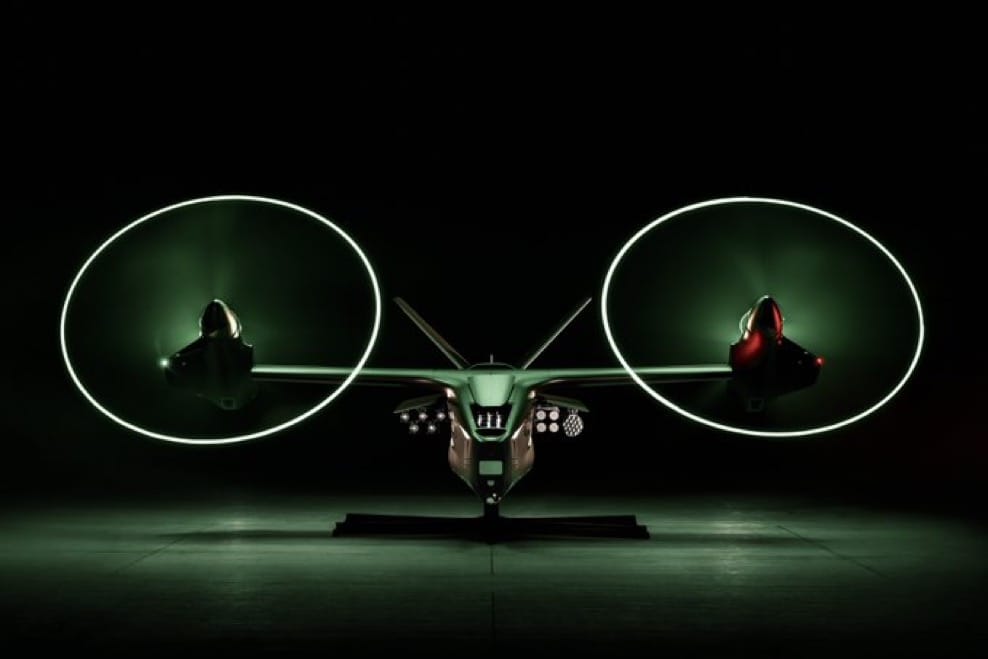
- The platform is designed for scalable autonomy in both military “loyal wingman” roles (operating alongside crewed aircraft without risking pilots) and commercial cargo delivery into areas without runways, aiming to build a broad, cost-effective supply chain that meets growing demand for affordable, long-range vertical lift operations. A commercial variant will be detailed later this week.

Statistic:
- Largest public European Union companies by market capitalization:
- 🇳🇱 ASML: $667.95B
- 🇫🇷 LVMH: $274.10B
- 🇫🇷 L’Oréal: $231.24B
- 🇩🇪 Siemens: $230.92B
- 🇩🇰 Novo Nordisk: $219.46B
- 🇫🇷 Hermès: $200.43B
- 🇳🇱 Prosus: $199.43B
- 🇪🇸 Santander: $190.55B
- 🇪🇸 Inditex: $189.97B
- 🇩🇪 SAP: $186.68B
- 🇩🇪 Allianz SE: $183.10B
- 🇮🇪 Seagate Technology: $179.93B
- 🇫🇷 TotalEnergies: $179.51B
- 🇳🇱 Airbus: $172.38B
- 🇫🇷 Schneider Electric: $170.36B
- 🇪🇸 Iberdrola: $159.75B
- 🇧🇪 Anheuser-Busch InBev: $156.17B
- 🇮🇪 Eaton: $155.86B
- 🇫🇷 Safran: $153.64B
- 🇩🇪 Deutsche Telekom: $149.64B
- 🇩🇪 Siemens Energy: $146.87B
- 🇪🇸 BBVA: $139.07B
- 🇮🇹 UniCredit: $138.74B
- 🇫🇷 BNP Paribas: $129.93B
- 🇫🇷 Air Liquide: $129.01B
- 🇮🇹 Intesa Sanpaolo: $127.98B
History:
- Helicopters trace their origins back nearly 2,000 years, beginning with simple rotary-wing toys in ancient China around 400 BC, where children played with bamboo “flying tops” that spun upward when rotated between the hands. The concept later appeared in sketches by Leonardo da Vinci around 1489, whose famous “aerial screw” envisioned a machine capable of vertical flight, although the technology of the time made it impossible to build. During the 1700s and 1800s, inventors across Europe experimented with small rotorcraft powered by springs, steam engines, and early internal combustion engines, but none could lift a person in a controlled manner. The first significant breakthrough came in 1907, when French inventors Louis and Jacques Bréguet built the Gyroplane No. 1, one of the first machines to briefly lift a person from the ground while tethered. That same year, Paul Cornu achieved what is generally recognized as the first free, untethered helicopter flight carrying a pilot. Throughout the 1920s and 1930s, engineers struggled with stability, vibration, power, and rotor control until Spanish engineer Juan de la Cierva developed the autogyro, introducing the articulated rotor system that solved many control problems and became the foundation of modern helicopter design. Building on these advances, Russian-American engineer Igor Sikorsky designed the VS-300, which first flew in 1939 and introduced the now-standard configuration of one large main rotor and a tail rotor to counter torque. Sikorsky’s R-4, entering service in 1942, became the world’s first mass-produced helicopter and the first to see operational military service.
- World War II proved helicopters could rescue downed airmen, evacuate wounded soldiers, transport supplies, and reach areas inaccessible to fixed-wing aircraft. During the Korean War (1950–1953), helicopters revolutionized battlefield medicine through rapid medical evacuation, dramatically improving survival rates for wounded troops. The Vietnam War became known as the first true “helicopter war,” with aircraft such as the Bell UH-1 Huey transforming military doctrine by enabling air assault operations, troop transport, close air support, reconnaissance, command and control, medical evacuation, and resupply deep into combat zones. At the same time, civilian helicopters expanded into emergency medical services, offshore oil operations, firefighting, law enforcement, search and rescue, executive transportation, news gathering, construction, utility work, and tourism. The Cold War accelerated helicopter development as the United States and Soviet Union produced increasingly specialized aircraft, including attack helicopters like the AH-64 Apache, heavy-lift helicopters such as the CH-47 Chinook and CH-53, naval anti-submarine helicopters, and reconnaissance platforms. Notable manufacturers that emerged include Sikorsky, Bell, Boeing, Airbus Helicopters, Leonardo, Robinson Helicopter Company, Russian Helicopters, Kamov, and Mil, many of which continue producing military and civilian rotorcraft today.
- Modern helicopters rely on powerful turbine engines, composite materials, digital flight controls, advanced avionics, night-vision systems, satellite navigation, weather radar, and increasingly autonomous flight technologies. Their greatest advantage is the ability to take off and land vertically (VTOL), hover in place, fly backward or sideways, and operate without runways, making them invaluable in locations where fixed-wing aircraft cannot operate. Today’s helicopters perform missions ranging from military assault, special operations, anti-submarine warfare, intelligence gathering, firefighting, disaster relief, and humanitarian aid to emergency medical transport, offshore energy support, cargo lifting, agriculture, and law enforcement. Some of the world’s most advanced military helicopters include the AH-64 Apache, UH-60 Black Hawk, CH-47 Chinook, CH-53K King Stallion, V-22 Osprey (a tiltrotor aircraft combining helicopter and airplane capabilities), Mil Mi-26 (the world’s largest operational helicopter), and Ka-52 Alligator. Current research is focused on making helicopters faster, quieter, more fuel-efficient, and easier to maintain through technologies such as fly-by-wire controls, autonomous flight systems, hybrid-electric propulsion, improved rotor designs, and compound helicopters like the Sikorsky X2 and SB-1 Defiant, which combine traditional rotors with additional propulsive systems to achieve much higher speeds. More recently, electric vertical takeoff and landing (eVTOL) aircraft have emerged, using distributed electric motors to provide helicopter-like vertical flight for urban transportation. While eVTOL aircraft are expected to complement helicopters in some commercial roles, conventional helicopters remain unmatched for heavy lifting, long-range military missions, emergency response, and operations in the world’s most demanding environments, making them one of the most versatile aircraft ever developed.
Image of the day:

Thanks for reading! Earth is complicated, we make it simple.
- Download our mobile app:



Click below to view our previous newsletters:

Support/Suggestions Email:
support@earthintel.io