Tuesday🌎☕️


Trending:
- Today, Italy confirmed it has deployed about 700 military personnel and advanced air defense systems across Saudi Arabia, Bahrain, Kuwait, and the Gulf region to help defend against threats linked to Iran.
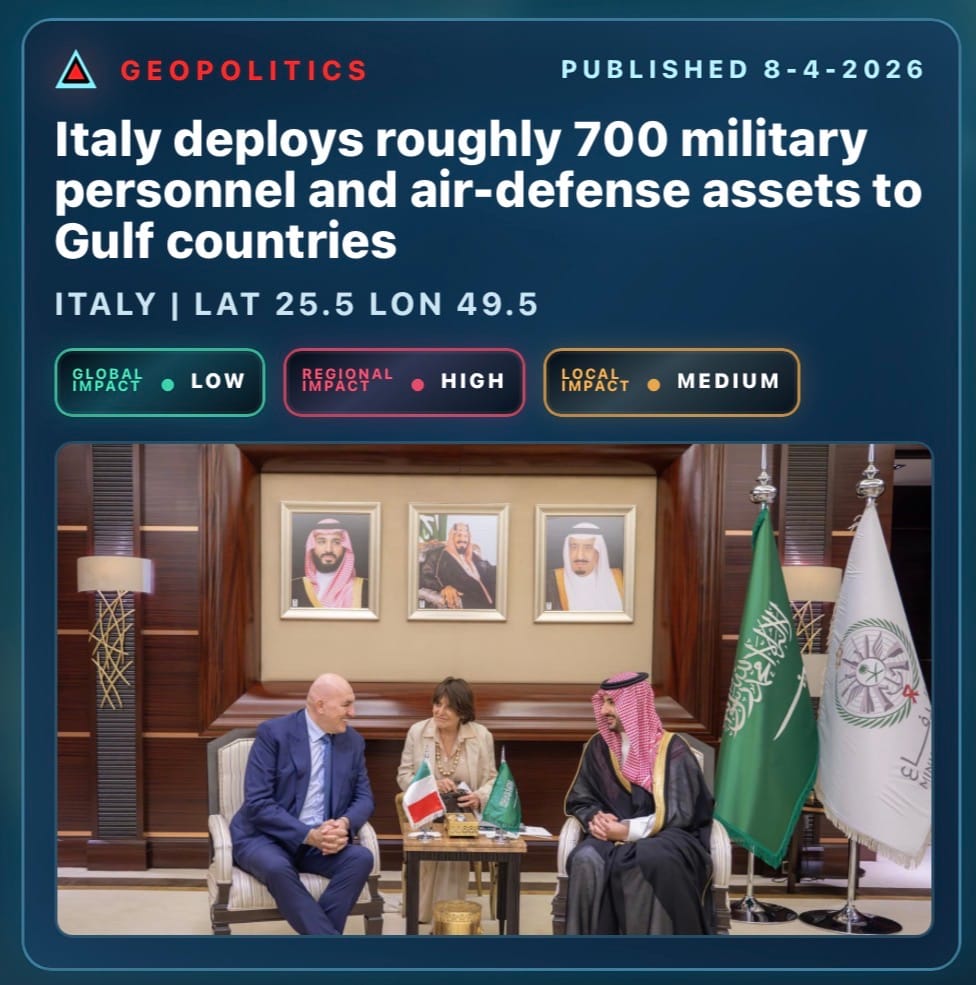
- The deployment includes Eurofighter fighter jets, air defense systems, radar, surveillance aircraft, and counter-drone technology, highlighting continued European support for Gulf security amid rising regional tensions.
Economics & Markets:
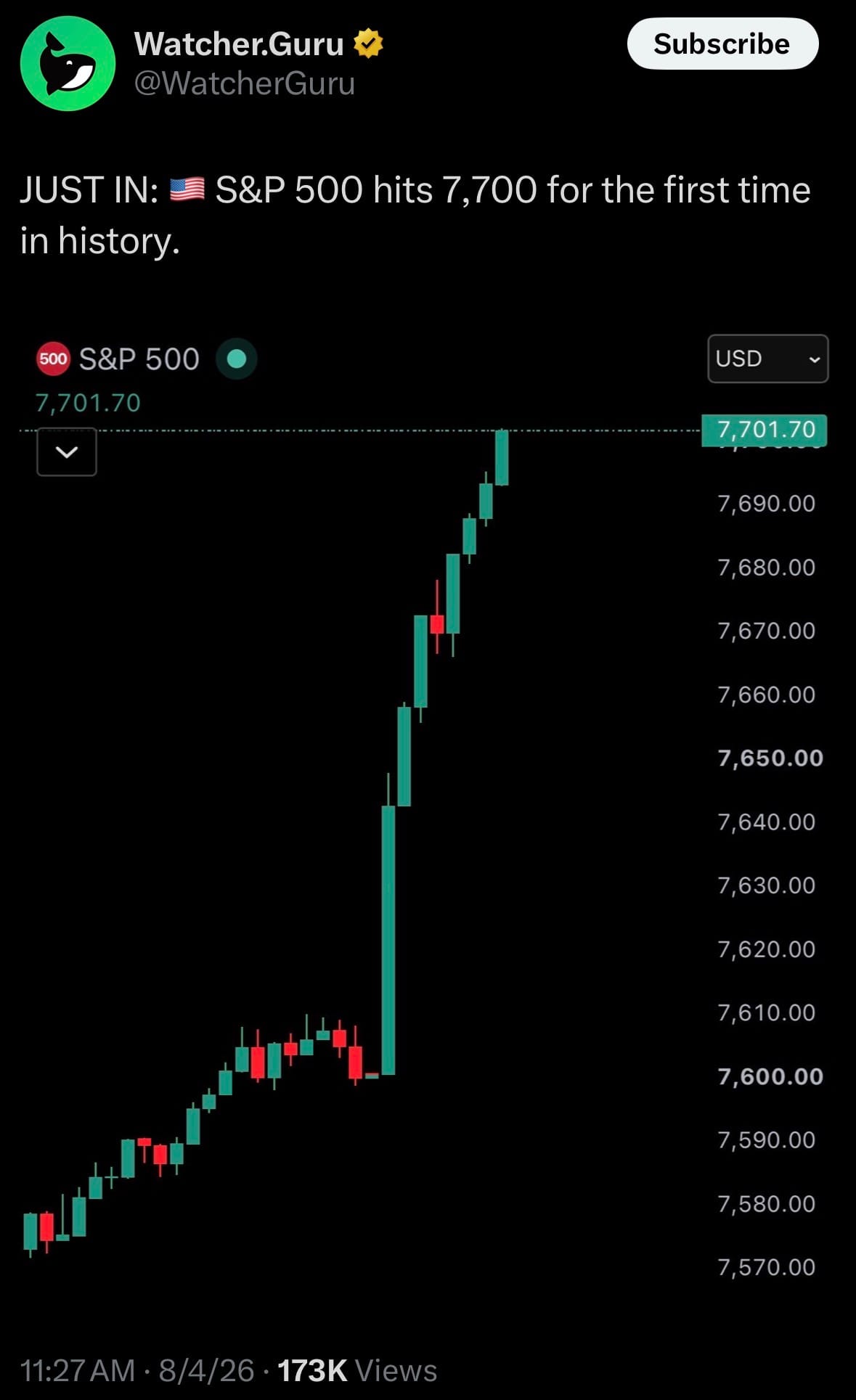
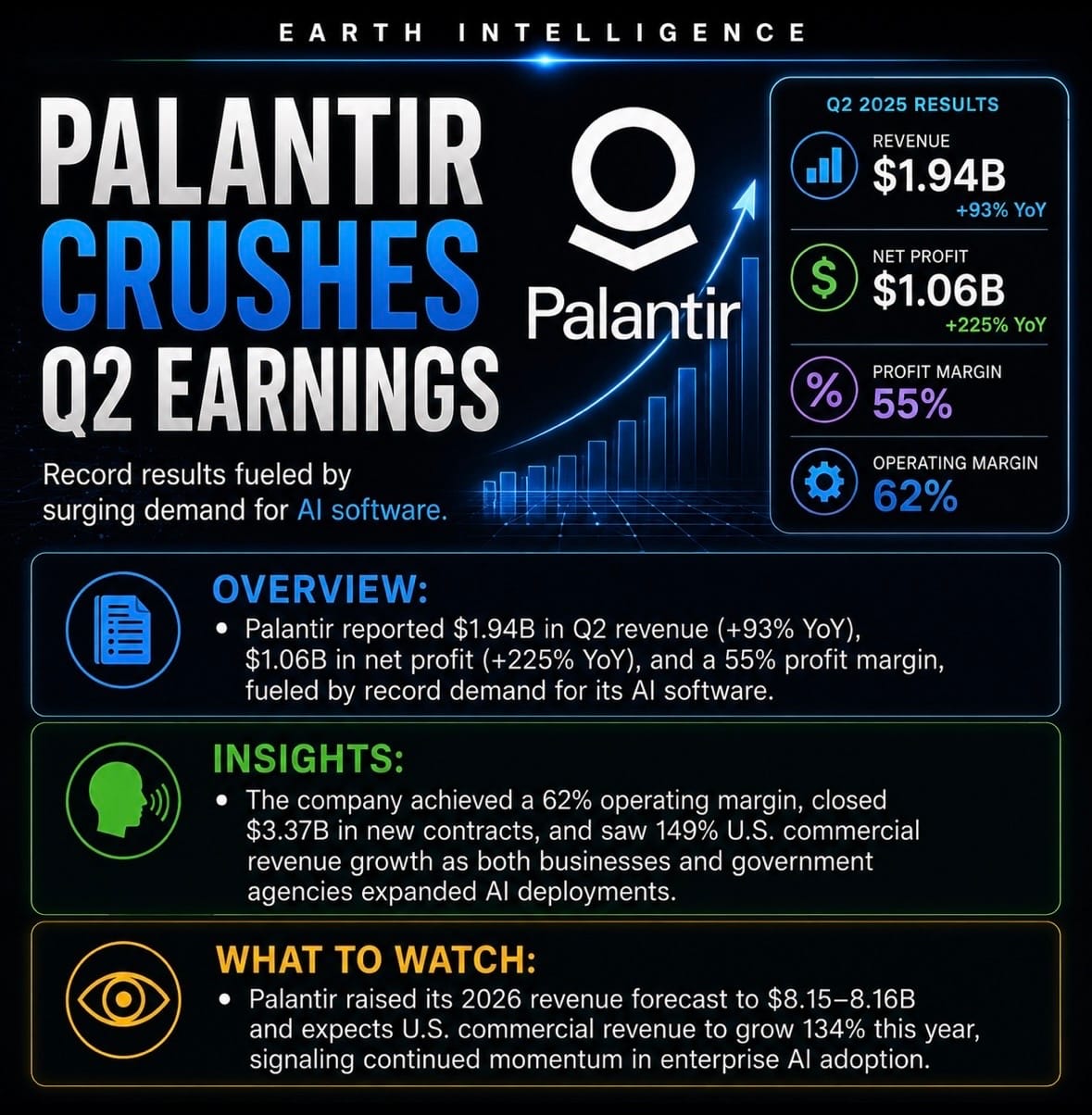
Geopolitics & Military Activity:
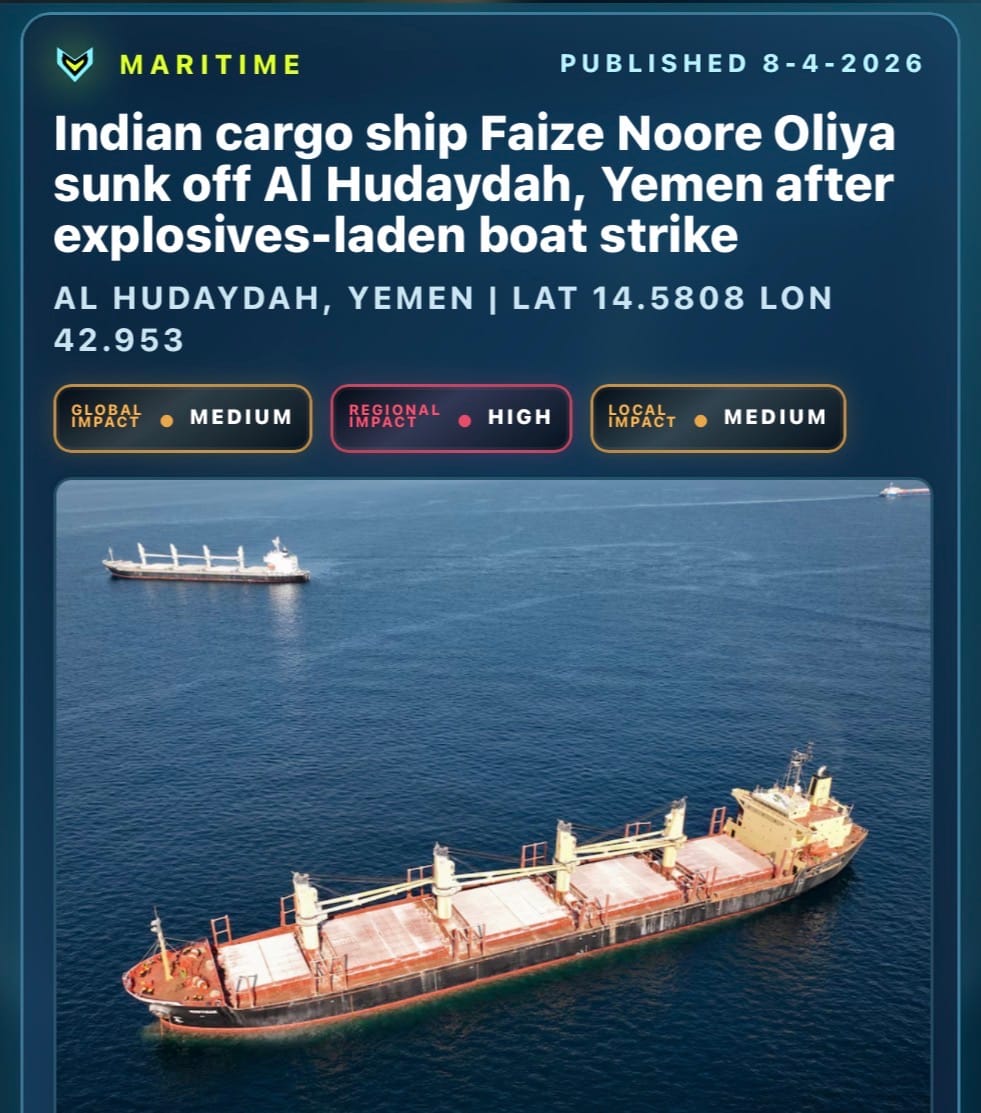
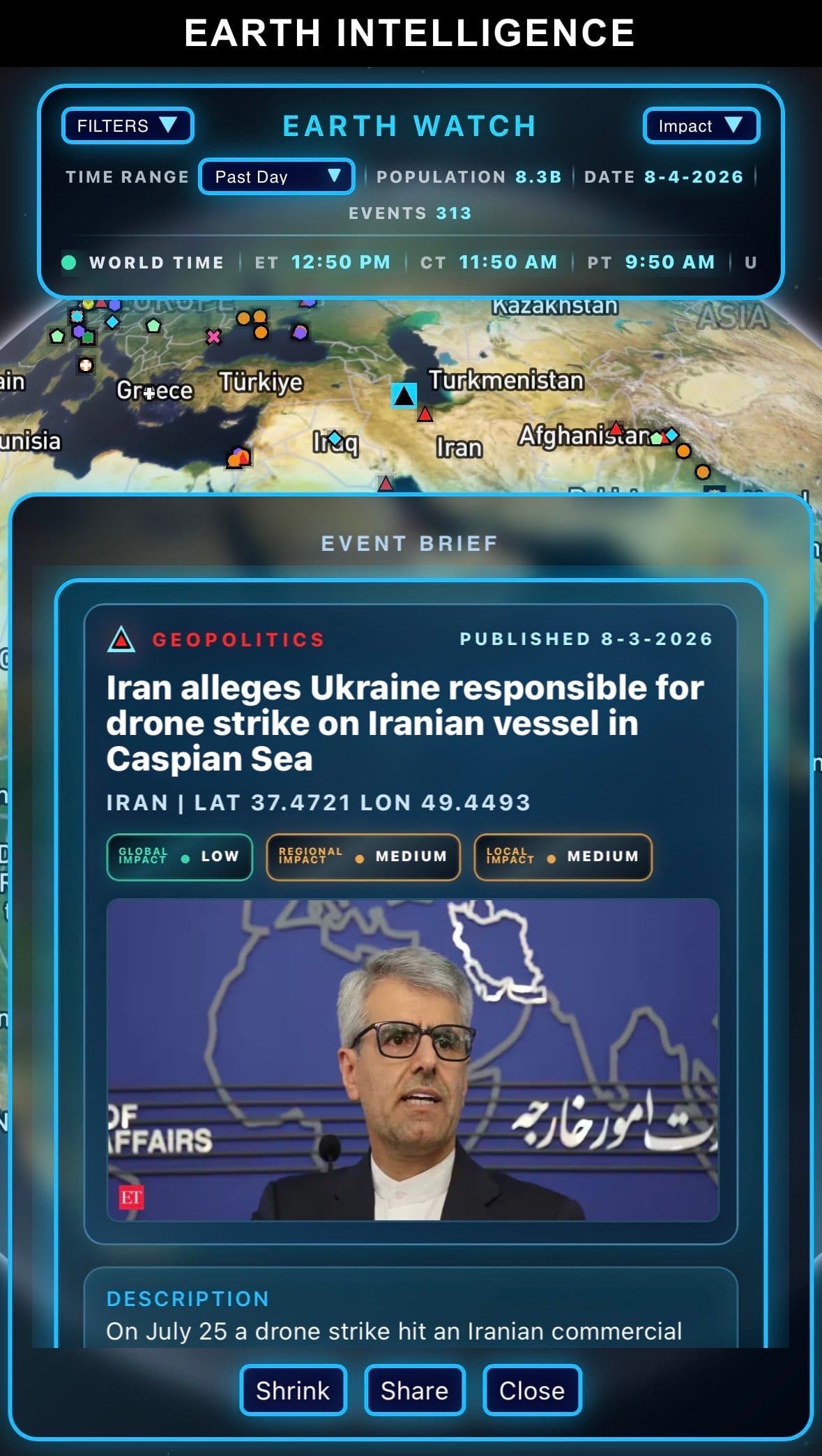
- All 14 crew aboard — 13 Indian nationals and one Yemeni national — were rescued unharmed by joint naval and coast guard units of Yemen's National Resistance Forces (NRF). The NRF attributed the attack to Yemen's Houthi group; the Houthis had not issued a public statement at the time of reporting. The incident follows a recent uptick in attacks on commercial shipping in the Red Sea and a Houthi-declared naval blockade against Saudi Arabia.
Science & Technology:
- Today, NVIDIA released Alpamayo 2 Super, its most advanced open AI model for autonomous vehicles, giving automakers a powerful AI system that can understand road conditions, reason through complex situations, and make driving decisions more like a human instead of simply reacting to what it sees.
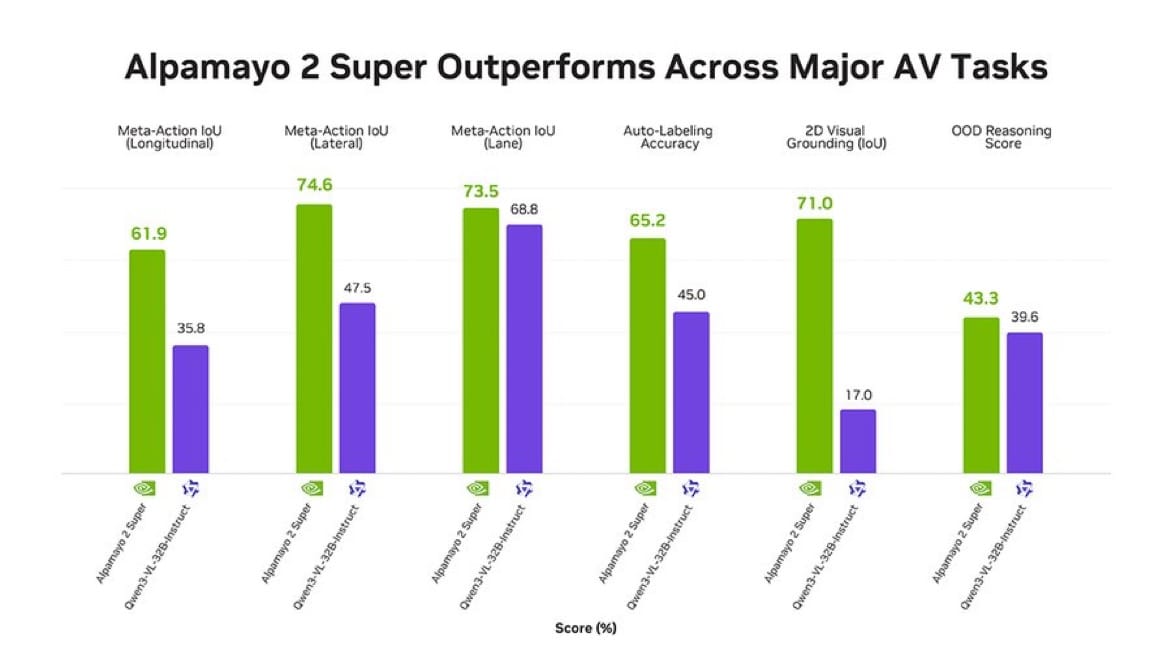
- The model is being released under an open commercial license so companies can customize and deploy it to accelerate the development of robotaxis, self-driving trucks, delivery vehicles, and other autonomous machines.

Statistic:
- Largest assets on Earth by market capitalization:
- 🥇 Gold: $28.797T
- 🇺🇸 NVIDIA: $5.104T
- 🇺🇸 Alphabet (Google): $4.560T
- 🇺🇸 Apple: $4.468T
- 🇺🇸 Microsoft: $3.691T
- 🥈 Silver: $3.371T
- 🇺🇸 Amazon: $2.998T
- 🇹🇼 TSMC: $2.160T
- 🇺🇸 Broadcom: $1.981T
- 🇸🇦 Saudi Aramco: $1.732T
- 🇺🇸 SpaceX: $1.609T
- 🇺🇸 Meta Platforms (Facebook): $1.482T
- ₿ Bitcoin: $1.284T
- 🇺🇸 Tesla: $1.284T
- 🇺🇸 Berkshire Hathaway: $1.109T
- 🇰🇷 Samsung: $1.105T
- 🇺🇸 Vanguard S&P 500 ETF: $1.011T
- 🇺🇸 Micron Technology: $1.011T
- 🇺🇸 Eli Lilly: $1.004T
- 🇺🇸 JPMorgan Chase: $958.38B
- 🇺🇸 iShares Core S&P 500 ETF: $895.30B
- 🇺🇸 Walmart: $876.62B
- 🇺🇸 AMD: $855.36B
- 🇺🇸 SPDR S&P 500 ETF: $818.50B
- 🇰🇷 SK Hynix: $785.55B
History:
- Air defense began as simple anti-aircraft guns designed to protect cities and armies from aircraft. During World War I (1914–1918), nations adapted artillery to shoot at reconnaissance planes and bombers, creating the first dedicated anti-aircraft weapons. The biggest breakthrough came before World War II, when Britain built the Chain Home radar network (1938), the world’s first large-scale radar-based air defense system. During the Battle of Britain (1940), radar, command centers, fighter aircraft, and anti-aircraft guns worked together to stop German air attacks, proving that integrated air defense was far more effective than individual weapons. After World War II, the arrival of jet aircraft, ballistic missiles, and nuclear weapons led to guided surface-to-air missiles. The United States deployed Nike Ajax (1954) and Nike Hercules (1958), while the Soviet Union fielded the S-25, S-75, and later the S-300 family. The Vietnam War and 1973 Arab-Israeli War demonstrated that layered air-defense networks combining radar, missiles, fighters, and anti-aircraft guns could significantly challenge even advanced air forces.
- Today, air defense is a layered network rather than a single missile system. It combines early-warning satellites, long-range radar, airborne warning aircraft (AWACS), command centers, electronic warfare, fighter aircraft, anti-aircraft guns, lasers, and multiple layers of surface-to-air missiles. The United States operates the world’s largest integrated system using Stinger, NASAMS, Patriot PAC-3, THAAD, Aegis, and Ground-Based Midcourse Defense (GMD) to defend against drones, aircraft, cruise missiles, ballistic missiles, and limited intercontinental ballistic missiles. Israel operates one of the world’s most combat-tested networks with Iron Dome for rockets and drones, David’s Sling for larger missiles, Arrow 2 and Arrow 3 for ballistic missiles, and the emerging Iron Beam laser system. Russia fields the Pantsir-S, Buk-M3, S-300, S-400, and S-500, while China operates the HQ-9, HQ-22, HQ-16, HQ-17, and the developing HQ-19 strategic interceptor. Europe’s leading systems include SAMP/T, IRIS-T SLM, NASAMS, and Sky Sabre, while countries such as India, Japan, South Korea, and Turkey have developed their own layered air-defense systems alongside imported technology.
- Overall, the United States has the world’s strongest air-defense capability because it combines the largest network of missile-warning satellites, global radar coverage, Aegis destroyers, Patriot batteries, THAAD, homeland missile defense, advanced fighter aircraft, intelligence systems, and worldwide military bases into one integrated architecture. Israel has the most combat-proven territorial air-defense network after years of intercepting rockets, drones, and ballistic missiles in active conflicts. Russia remains one of the world’s leaders in long-range surface-to-air missile technology, while China has built the fastest-growing integrated air-defense network and continues rapidly expanding its capabilities. However, no air-defense system is perfect. Large drone swarms, cruise missiles, hypersonic weapons, electronic warfare, stealth aircraft, and saturation attacks can overwhelm even the most advanced defenses. The future of air defense is focused on artificial intelligence, autonomous interceptors, directed-energy lasers, high-power microwave weapons, cheaper missile interceptors, and fully networked defense systems that connect every sensor and weapon into a single real-time battlefield.
Image of the day:

Thanks for reading! Earth is complicated, we make it simple.
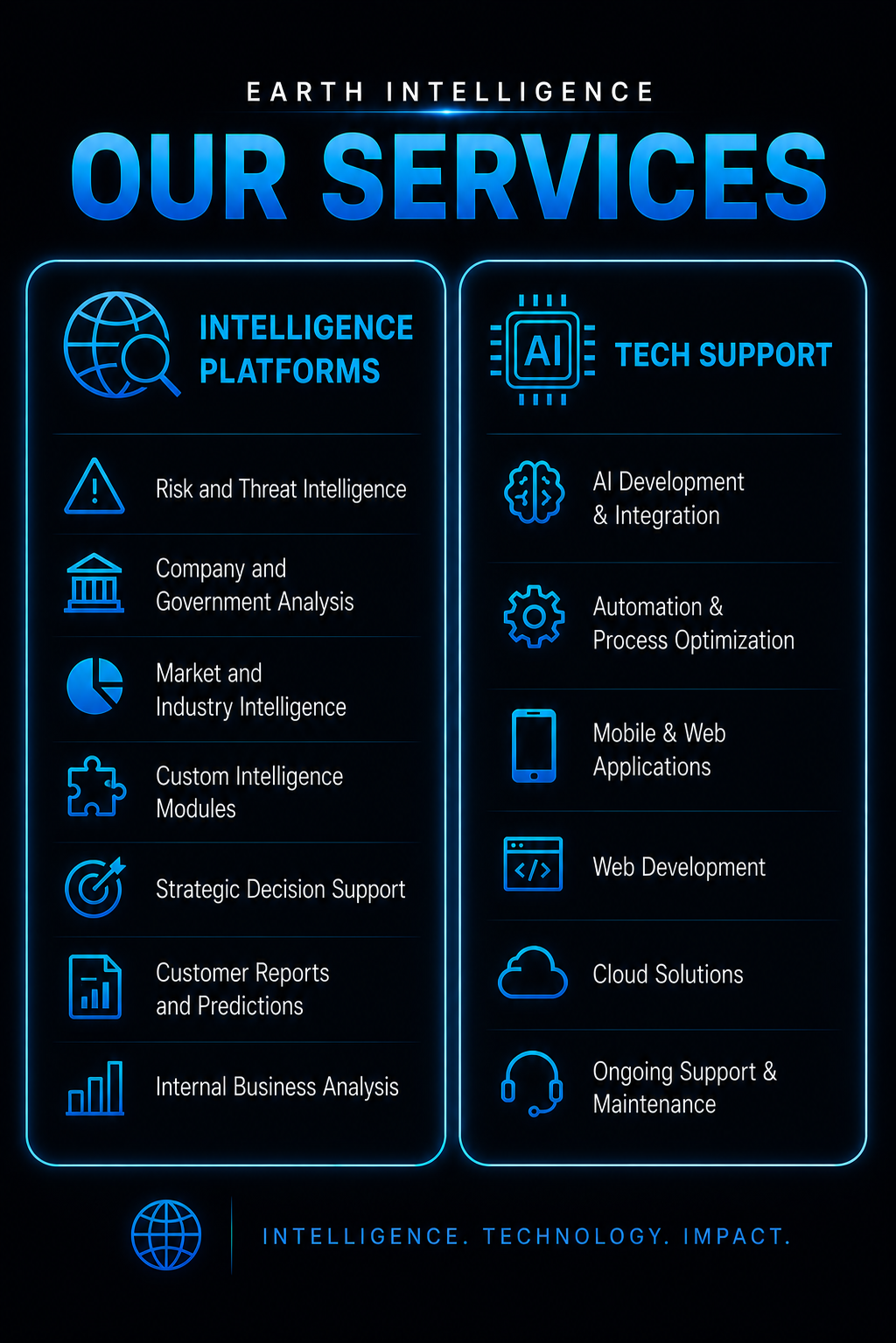
- Download our mobile app:



Click below to view our previous newsletters:

Support/Suggestions Email:
support@earthintel.io