Wednesday☕️🌎


Trending:
- September 8, 2026 — U.S. Central Command destroyed five Iranian crude-oil tankers after CENTCOM said Iran’s Revolutionary Guard twice attempted to strike a U.S. Navy warship with ballistic missiles over the previous two days; the warship avoided the attacks and no Americans were injured.
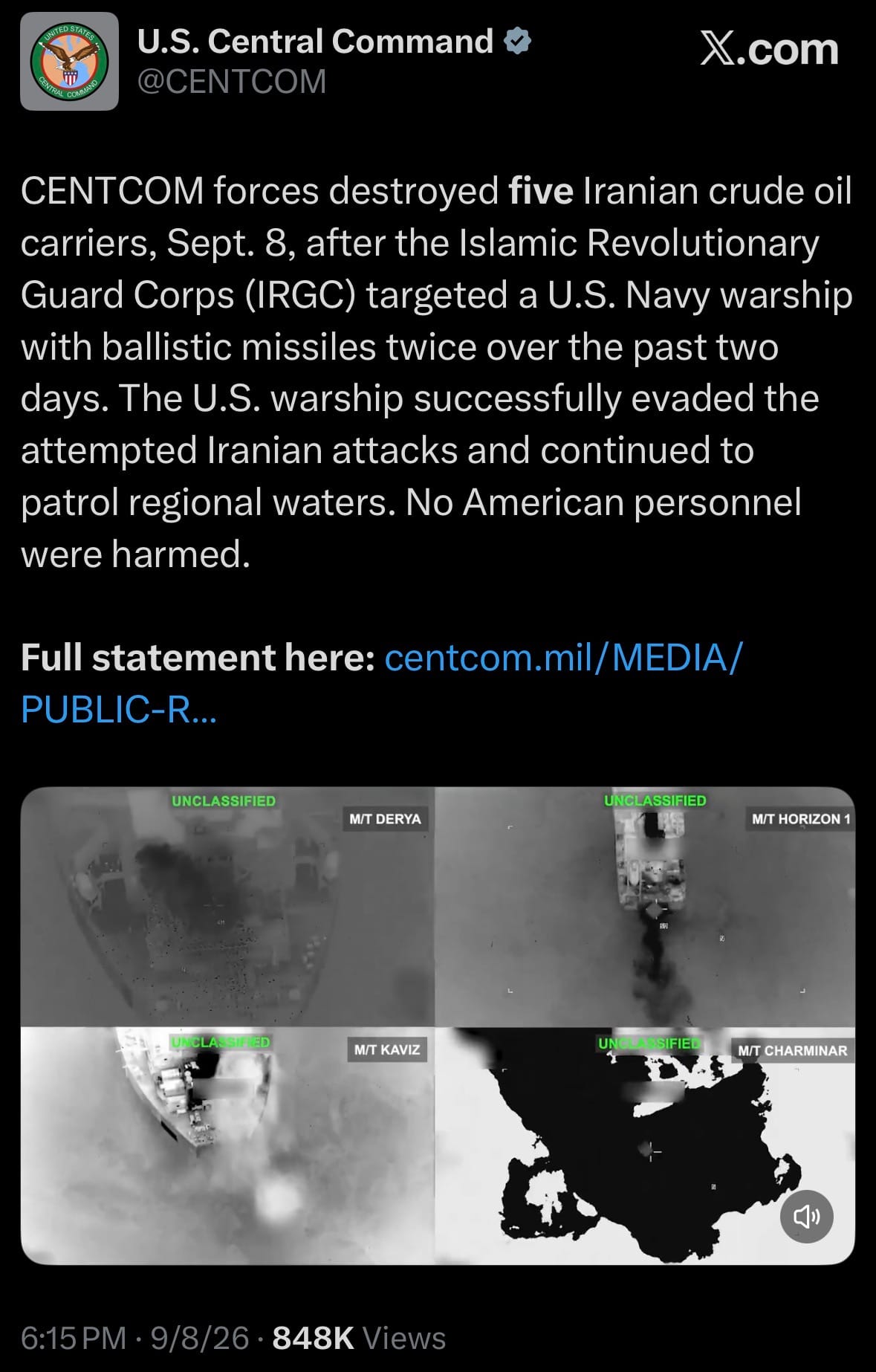
- U.S. forces ordered the crews to abandon the tankers before striking four vessels in the Gulf of Oman and one near Iran’s Kharg Island, targeting what CENTCOM says is a multibillion-dollar oil network used to fund the IRGC and its regional allies.
Economics & Markets:
Cyber:
- September 8, 2026 — Israel clarified that Greece will control the source code for the central command-and-control software being developed for its new €3.035 billion Achilles Shield air-defense network.
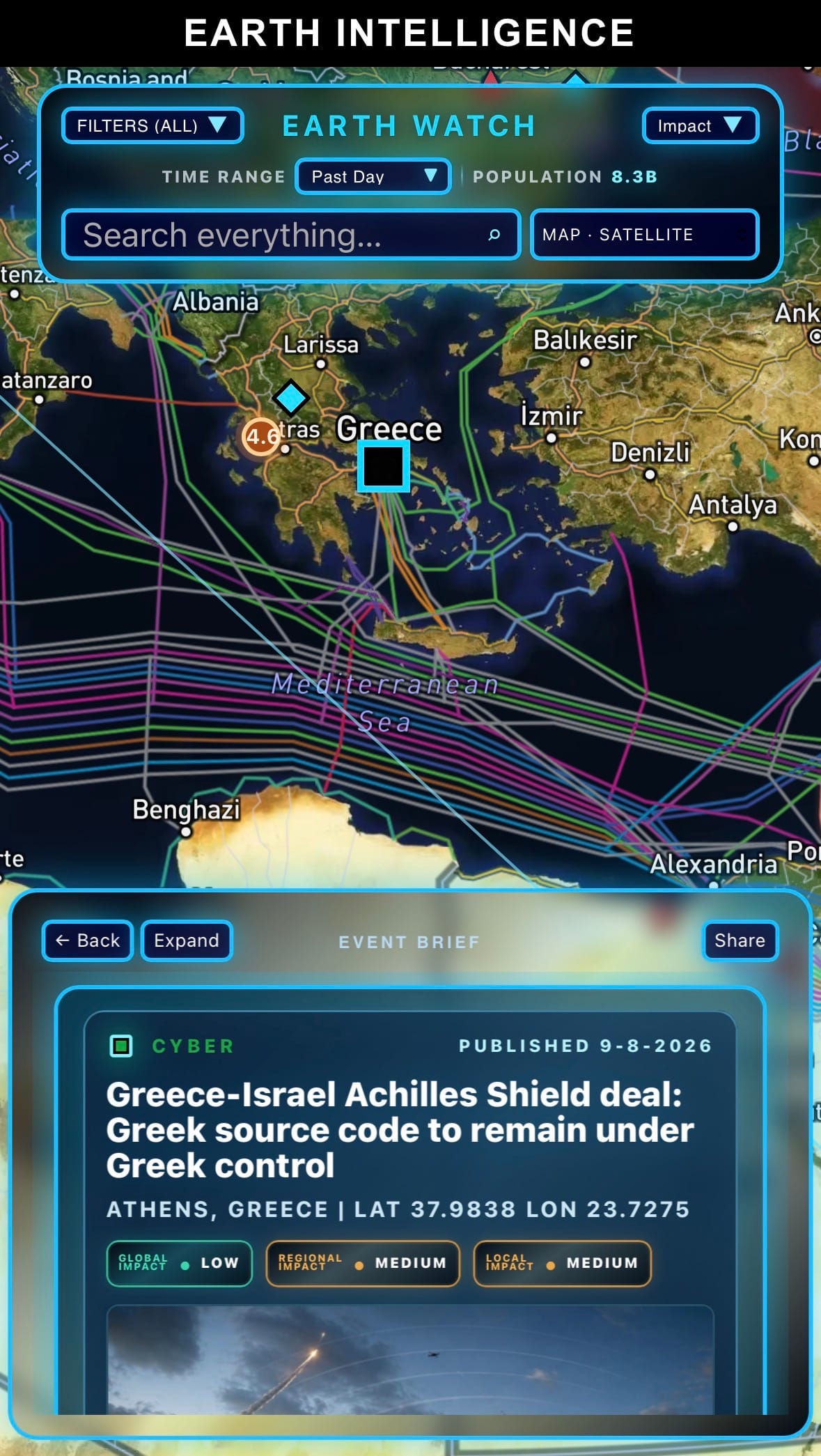
- Israeli technology and expertise will be transferred to Greek companies to develop the Greek-controlled software, which will connect systems including SPYDER, Barak MX and David’s Sling into one nationwide defense network; the Israeli source code used in Israel’s own systems will remain protected.
Environment & Weather:
Science & Technology:
- September 8, 2026 — OpenAI launched ChatGPT Images 2.5, its newest image-generation model, producing sharper and more realistic images while generating them up to 50% faster than Images 2.0.
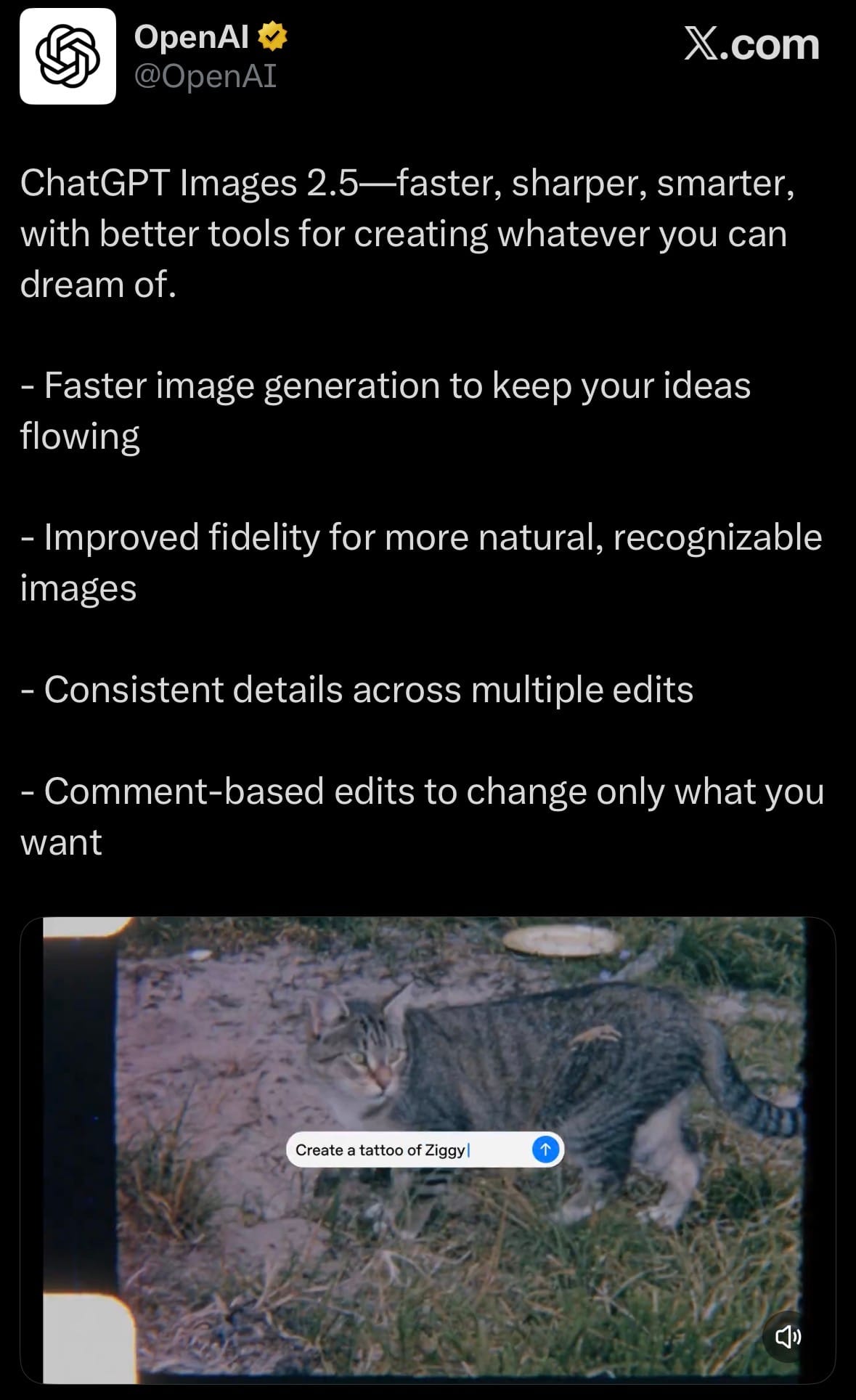
- It also improves consistency across repeated edits and adds tools including comments for changing specific parts of an image, Sketch for turning drawings into finished images, and templates for quickly creating things like posters and product images; it is rolling out across ChatGPT, Work, and Codex.
Statistic:
- Top assets by market cap:
- 🥇 Gold: $30.670T
- 🇺🇸 NVIDIA: $5.450T
- 🇺🇸 Apple: $4.614T
- 🇺🇸 Alphabet (Google): $4.101T
- 🥈 Silver: $3.744T
- 🇺🇸 Microsoft: $3.667T
- 🇺🇸 Amazon: $2.771T
- 🇹🇼 TSMC: $2.276T
- 🇺🇸 SpaceX: $2.023T
- 🇺🇸 Broadcom: $1.753T
- 🇸🇦 Saudi Aramco: $1.678T
- ₿ Bitcoin: $1.580T
- 🇺🇸 Meta Platforms: $1.562T
- 🇺🇸 Tesla: $1.454T
- 🇰🇷 Samsung: $1.334T
- 🇺🇸 Micron Technology: $1.129T
- 🇺🇸 Berkshire Hathaway: $1.082T
- 🇺🇸 Vanguard S&P 500 ETF: $1.047T
- 🇺🇸 Eli Lilly: $1.002T
- 🇰🇷 SK Hynix: $982.19B
- 🇺🇸 JPMorgan Chase: $939.69B
- 🇺🇸 iShares Core S&P 500 ETF: $865.19B
- 🇺🇸 Walmart: $843.95B
- 🇺🇸 AMD: $825.60B
- 🇺🇸 SPDR S&P 500 ETF: $809.75B
- 🇺🇸 Vanguard Total Stock Market ETF: $689.27B
History of Sea Mines
- Sea mines evolved from early attempts to destroy ships with underwater explosives. Chinese records describe explosive naval weapons centuries ago, while European inventors experimented with floating and submerged charges during the 1500s–1700s. During the American Revolution, David Bushnell developed underwater explosives alongside his Turtle submarine, and in 1777 Americans attempted to use floating charges against British ships. The first large-scale successful mine warfare came during the American Civil War (1861–1865), when the Confederacy deployed thousands of what were then commonly called “torpedoes” to defend rivers and harbors. After the USS Tecumseh struck one at Mobile Bay in 1864, Admiral David Farragut famously ordered his fleet forward—giving rise to “Damn the torpedoes.” By the late 1800s, electrically controlled mines, contact detonators, improved explosives, and mass production turned mines into practical weapons for controlling coastlines and shipping routes.
- Sea mines became major strategic weapons during the two World Wars. In World War I, Britain and the United States created the enormous North Sea Mine Barrage, laying more than 70,000 mines in an attempt to restrict German U-boats. WWII produced far more sophisticated systems: traditional contact mines exploded when struck, while magnetic, acoustic, and pressure mines could detect changes caused by a passing ship without physical contact. Aircraft and submarines could secretly lay mines deep inside enemy-controlled waters, while specialized minesweepers attempted to clear safe passages. Germany heavily mined European waters, Britain used mines against Axis shipping, and the United States conducted Operation Starvation in 1945, using B-29 bombers to mine Japanese waterways and ports; the campaign severely disrupted Japanese maritime transportation. During the Cold War, mines became programmable and increasingly difficult to detect, while the U.S., Soviet Union, NATO, and other powers developed specialized mine countermeasure ships, helicopters, sonar, divers, remotely operated vehicles, and explosive disposal teams.
- Today, sea mines remain dangerous because they are relatively inexpensive weapons capable of threatening ships worth hundreds of millions or billions of dollars and disrupting entire ports or shipping routes. Modern categories include moored mines anchored below the surface, bottom mines resting on the seabed, drifting mines, remotely controlled mines, and sophisticated influence mines that identify ships through magnetic, acoustic, pressure, or combined signatures. Some advanced systems can wait for specific targets, count passing vessels, delay activation, or resist traditional sweeping methods. Major mine-warfare capabilities exist in countries including the United States, China, Russia, Iran, North Korea, and numerous NATO and Asian navies; Iran is particularly important because mines could threaten traffic through the narrow Strait of Hormuz, while China incorporates mine warfare into planning for contested Western Pacific waters. Modern countermeasures are increasingly moving toward unmanned surface vessels, underwater drones, autonomous sonar, AI-assisted detection, helicopters, and robotic mine-neutralization systems, keeping sailors farther from the minefield. The evolution is essentially early underwater explosives → Civil War “torpedoes” → WWI mass minefields → WWII magnetic/acoustic mines → Cold War programmable mines → modern intelligent seabed weapons → autonomous robotic mine warfare and countermeasures.
Image of the day:

Thanks for reading! Earth is complicated, we make it simple.

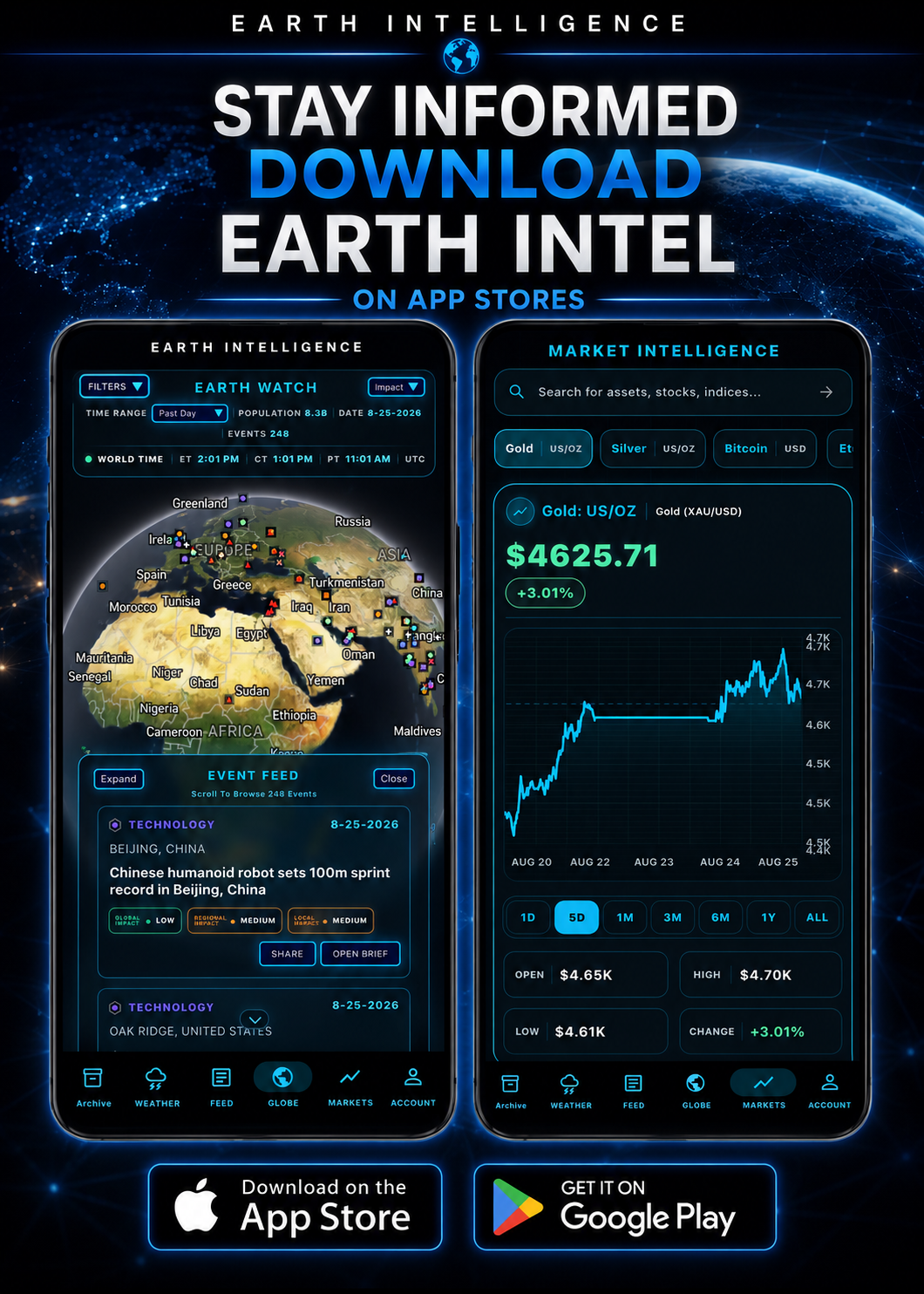
- Download our mobile app:


Click below to view our previous newsletters:

Support/Suggestions Email:
support@earthintel.io