Wednesday☕️🌎


Trending:
- September 15, 2026 — U.S. Southern Command forces intercepted another floating refueling vessel in the Eastern Pacific that SOUTHCOM says was supporting drug-trafficking operations for Ecuador’s Los Choneros organization.

- The crew was removed for transfer to Ecuadorian authorities before U.S. forces sank the vessel, continuing a series of operations aimed at eliminating offshore fuel stations used to support long-range drug-smuggling boats.
Economics & Markets:
Geopolitics & Military Activity:
- September 15, 2026 — The U.S. is completing its military withdrawal from Iraq by September 30, ending the coalition mission that returned in 2014 after Iraq requested international help fighting ISIS; the remaining forces are primarily in the Kurdish region around Erbil and are expected to redeploy to Jordan and other regional locations.
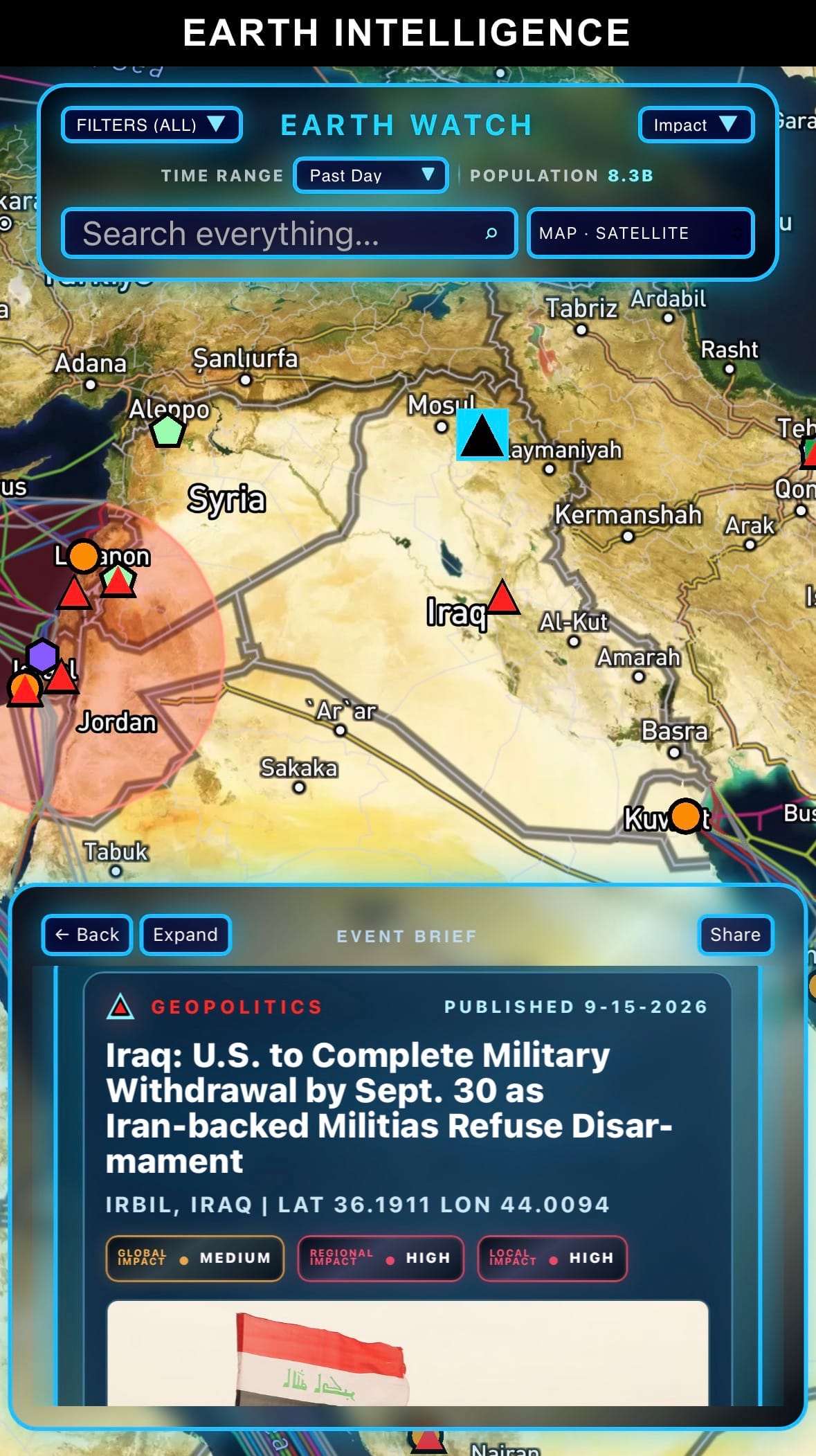
- ISIS has been reduced largely to scattered cells, but major Iran-backed Iraqi militias are refusing to disarm, leaving Iraq responsible for containing both ISIS remnants and armed groups operating outside full government control.

Science & Technology:
- September 15, 2026 — Salesforce and Anthropic launched Salesforce in Claude, a new integration that lets employees use Claude to directly work with their company’s Salesforce data for account research, call preparation, pipeline reviews, follow-ups, and CRM updates.

- The beta includes 37 built-in sales skills and follows each employee’s existing Salesforce permissions, allowing Claude to read business data and take approved actions without users manually navigating Salesforce.
Space:
- SpaceSail Polar Group #15 — September 15, 2026 — China’s LandSpace successfully launched 10 SpaceSail internet satellites aboard a ZhuQue-2E rocket at 2:26 p.m. local time from Jiuquan Satellite Launch Center, expanding China’s planned rival to Starlink.
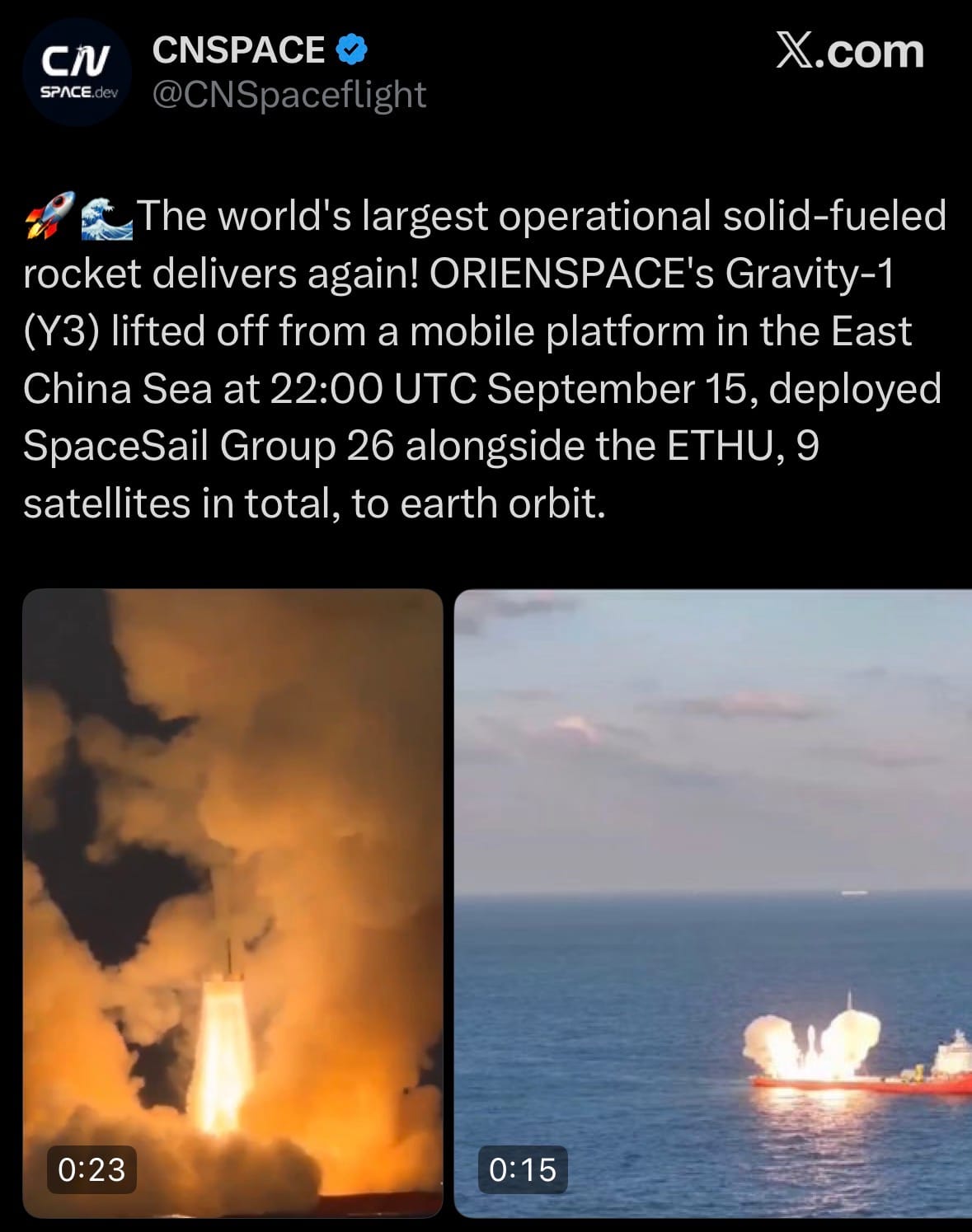
- SpaceSail Polar Group #16 — September 16, 2026 — China’s OrienSpace successfully launched another nine SpaceSail internet satellites aboard its Gravity-1 rocket at 6:00 a.m. local time from a sea-launch site operated through Haiyang Oriental Spaceport, further expanding the same constellation.
Statistic:
- Public companies ranked by number of employees:
- 🇺🇸 Walmart: 2,100,000
- 🇺🇸 Amazon: 1,595,000
- 🇨🇳 BYD: 968,900
- 🇨🇳 JD.com: 900,000
- 🇹🇼 Foxconn: 826,608
- 🇮🇪 Accenture: 799,000
- 🇩🇪 Volkswagen: 656,134
- 🇮🇳 Tata Consultancy Services: 607,979
- 🇩🇪 DHL Group (Deutsche Post): 594,879
- 🇬🇧 Compass Group: 580,000
- 🇨🇳 JD Logistics: 498,709
- 🇺🇸 Home Depot: 470,000
- 🇷🇺 Gazprom: 468,000
- 🇺🇸 United Parcel Service: 460,000
- 🇨🇳 China Mobile: 455,405
- 🇺🇸 Concentrix: 455,000
- 🇨🇳 Agricultural Bank of China: 454,716
- 🇫🇷 Teleperformance: 446,052
- 🇨🇳 ICBC: 419,252
- 🇺🇸 Marriott International: 414,000
- 🇺🇸 Target: 400,000
- 🇺🇸 Kroger: 400,000
- 🇨🇳 PetroChina: 398,440
- 🇳🇱 Ahold Delhaize: 390,000
- 🇺🇸 UnitedHealth: 390,000
History of Walmart
- Walmart grew out of Sam Walton’s belief that a retailer could make more money by selling huge volumes at consistently low prices, especially in smaller American towns that larger chains often ignored. After serving in the Army during World War II, Walton purchased a Ben Franklin variety-store franchise in Newport, Arkansas, in 1945 with help from a $20,000 loan from his father-in-law and $5,000 of his own savings. He experimented with lower prices, higher sales volume, better inventory management, and buying merchandise directly from suppliers. After losing the lease on that successful store, Sam and his wife Helen Walton moved to Bentonville, Arkansas, where he opened Walton’s 5&10 in 1950. Walton and his brother Bud Walton expanded additional variety stores before Sam developed a larger discount-store concept. On July 2, 1962, the first Walmart Discount City opened in Rogers, Arkansas. Competitors such as Kmart were concentrating heavily on larger metropolitan areas, while Walmart built stores throughout smaller Southern and Midwestern communities, creating regional clusters that could efficiently share warehouses, trucks, management, and advertising.
- Walmart’s major breakthrough was not simply cheap merchandise—it was an extraordinarily efficient logistics and supply-chain system. The company incorporated as Wal-Mart Stores in 1969 and completed its IPO in 1970, using public capital to finance warehouses, distribution centers, technology, and expansion. Walmart built its own trucking network and placed distribution centers close to clusters of stores, allowing merchandise to move rapidly from suppliers through warehouses and onto shelves. It became an early retail leader in barcodes, computerized inventory, electronic data interchange, satellite communications, demand forecasting, and eventually RFID, giving headquarters unusually detailed information about what was selling across the country. Walmart reached approximately $1 billion in annual sales in 1980, opened its first Sam’s Club in 1983, and introduced the Walmart Supercenter in 1988, combining a traditional discount store with a full supermarket. Sam Walton died in 1992, the same year Walmart surpassed Sears to become America’s largest retailer by sales. International expansion followed through Mexico, Canada, China, the UK and other markets, although several international ventures struggled or were eventually sold. Walmart became famous for enormous purchasing power: its scale allowed it to negotiate aggressively with suppliers and continually reduce prices through its “Everyday Low Price” model.
- Today, Walmart has evolved from an Arkansas discount store into the world’s largest company by revenue and the world’s largest private employer, with roughly 2.1 million employees and more than 10,000 stores and clubs across about 20 countries. Its major businesses include Walmart U.S., Walmart International, Sam’s Club, Walmart.com, grocery, pharmacies, financial services, advertising through Walmart Connect, marketplace sellers, delivery, fulfillment, and membership programs such as Walmart+. The rise of Amazon forced another major transformation: Walmart invested heavily in e-commerce, automated fulfillment centers, robotics, AI, data analytics, same-day delivery, curbside pickup, and using its enormous store network as local distribution infrastructure. Grocery has become particularly important—Walmart is America’s largest grocery retailer—while its stores give it a physical advantage for delivering products quickly to most of the U.S. population. It now competes simultaneously with Amazon in e-commerce, Costco in warehouse retail, Target in general merchandise, Kroger and Aldi in groceries, and major digital advertising and marketplace businesses. The evolution is essentially 1945 Sam Walton’s first franchise → 1950 Walton’s 5&10 → 1962 first Walmart → 1970 IPO → distribution/logistics revolution → 1983 Sam’s Club → 1988 Supercenter → 1990s America’s largest retailer/global expansion → 2000s massive supply-chain dominance → Amazon/e-commerce challenge → delivery, automation and AI → today’s $600+ billion global retail ecosystem. Walmart’s core idea has remained remarkably consistent for more than 60 years: use enormous scale, technology, purchasing power, and logistics efficiency to lower the cost of each transaction, sell more products, and keep prices lower than competitors.
Image of the day:
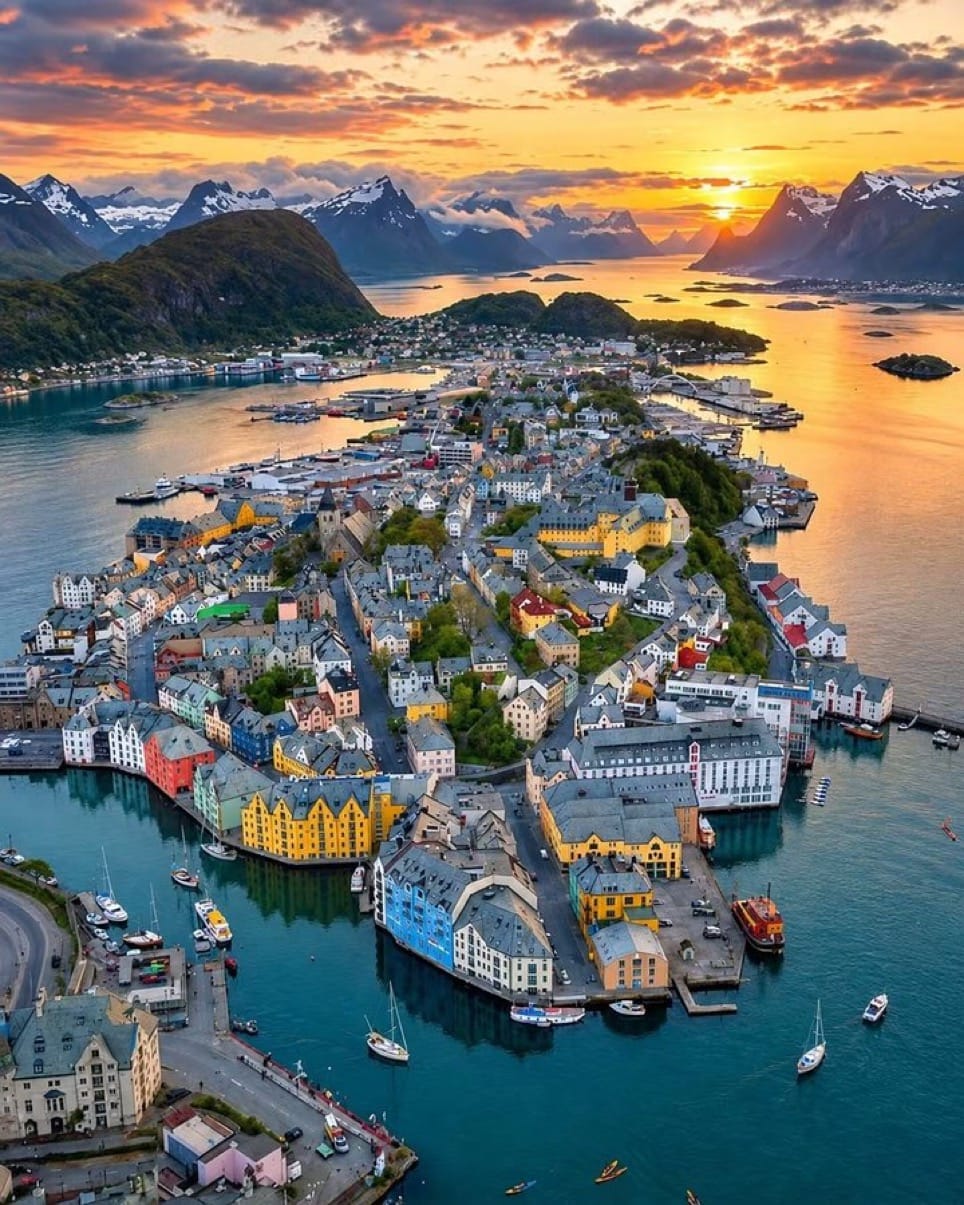
Thanks for reading! Earth is complicated, we make it simple.
- Download our mobile app:


Click below to view our previous newsletters:

Support/Suggestions Email:
support@earthintel.io