Friday☕️🌎

Trending:
- Traffic through the Strait of Hormuz held steady but subdued from late June through July 3, 2026, with roughly 30–40 verified crossings per day according to Kpler data—well below pre-war levels and the recent peak of about 70 on June 24—following the late-June US-Iran re-escalation that included attacks on tankers Ever Lovely and Kiku plus Iranian strikes on US bases in Bahrain and Kuwait.
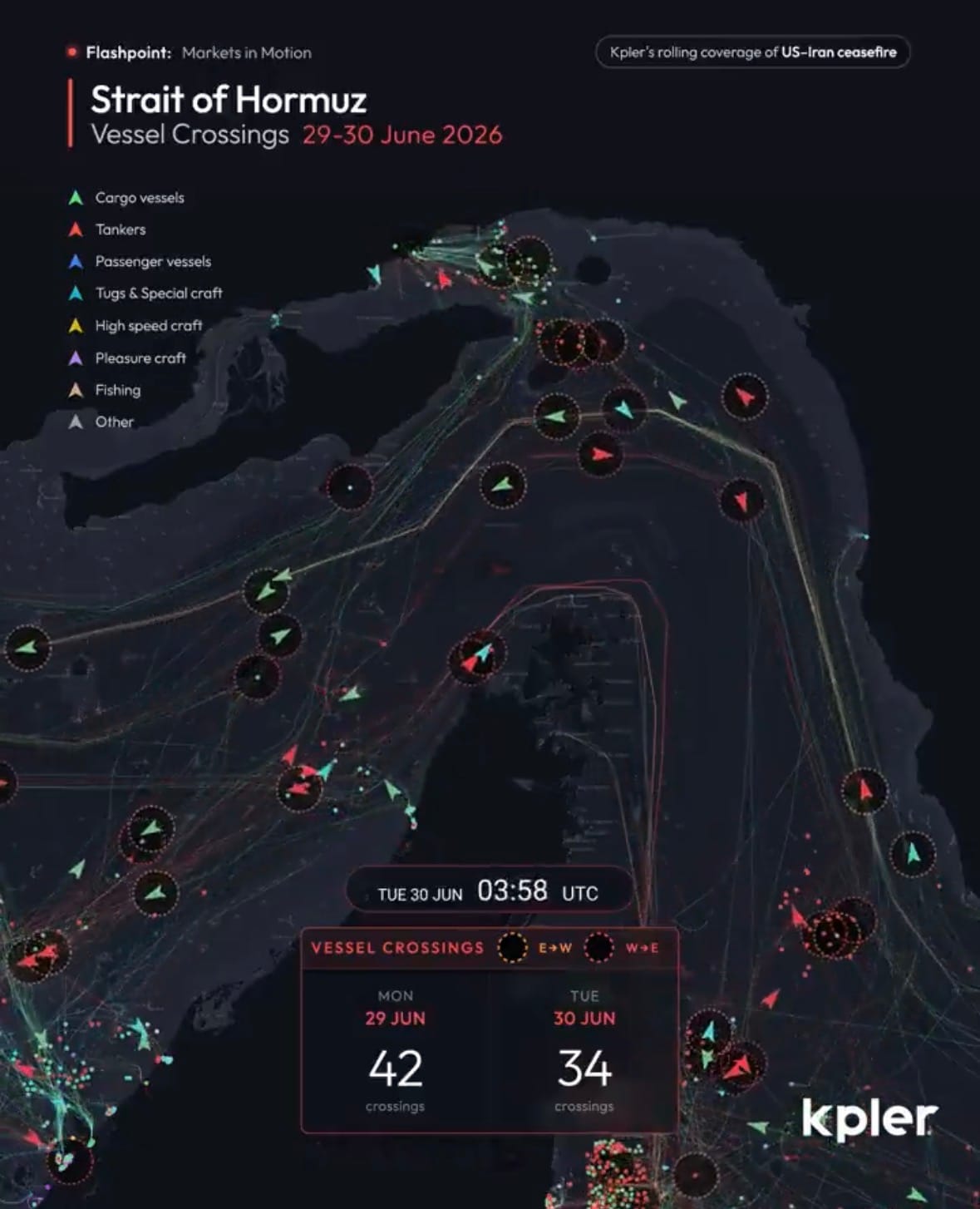
- The IMO has recorded 49 confirmed regional incidents since the crisis began in February 2026, including deadly events like the Settebello (three seafarers killed on June 9) and CMA CGM San Antonio (eight injured on May 5), while around 11,000 seafarers remain stranded in the Gulf after the IMO paused evacuations.
Geopolitics & Military Activity:
- France, with US support and participation from other European nations, plans to join an international deployment to southern Lebanon at the request of the Lebanese government, according to Al Arabiya citing the French Foreign Ministry.
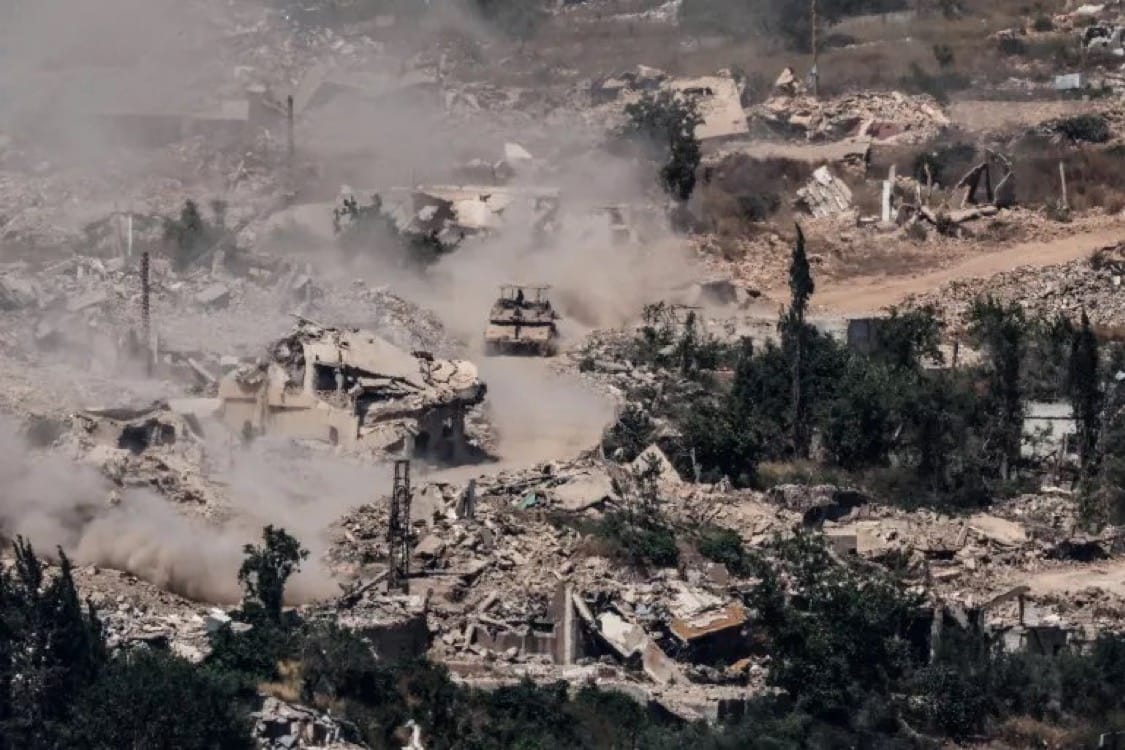
- It remains unclear whether the force will operate under the existing UNIFIL mission or as a standalone peacekeeping effort amid ongoing ceasefire violations and tensions in the region.
Science & Technology:
- The US Air Force has awarded AEVEX Aerospace a $50 million contract to develop a long-range strike drone optimized for GPS-denied environments, advancing capabilities in contested and electronically jammed battle spaces.

- The program focuses on resilient autonomous systems that can conduct precision strikes deep into adversary territory without reliance on satellite navigation, supporting broader US efforts to maintain air superiority in high-threat scenarios.
Space:
- Amazon launched its eighth Project Leo mission (LA-08) on July 3, 2026, deploying additional satellites for its low-Earth orbit broadband constellation aimed at competing with Starlink.
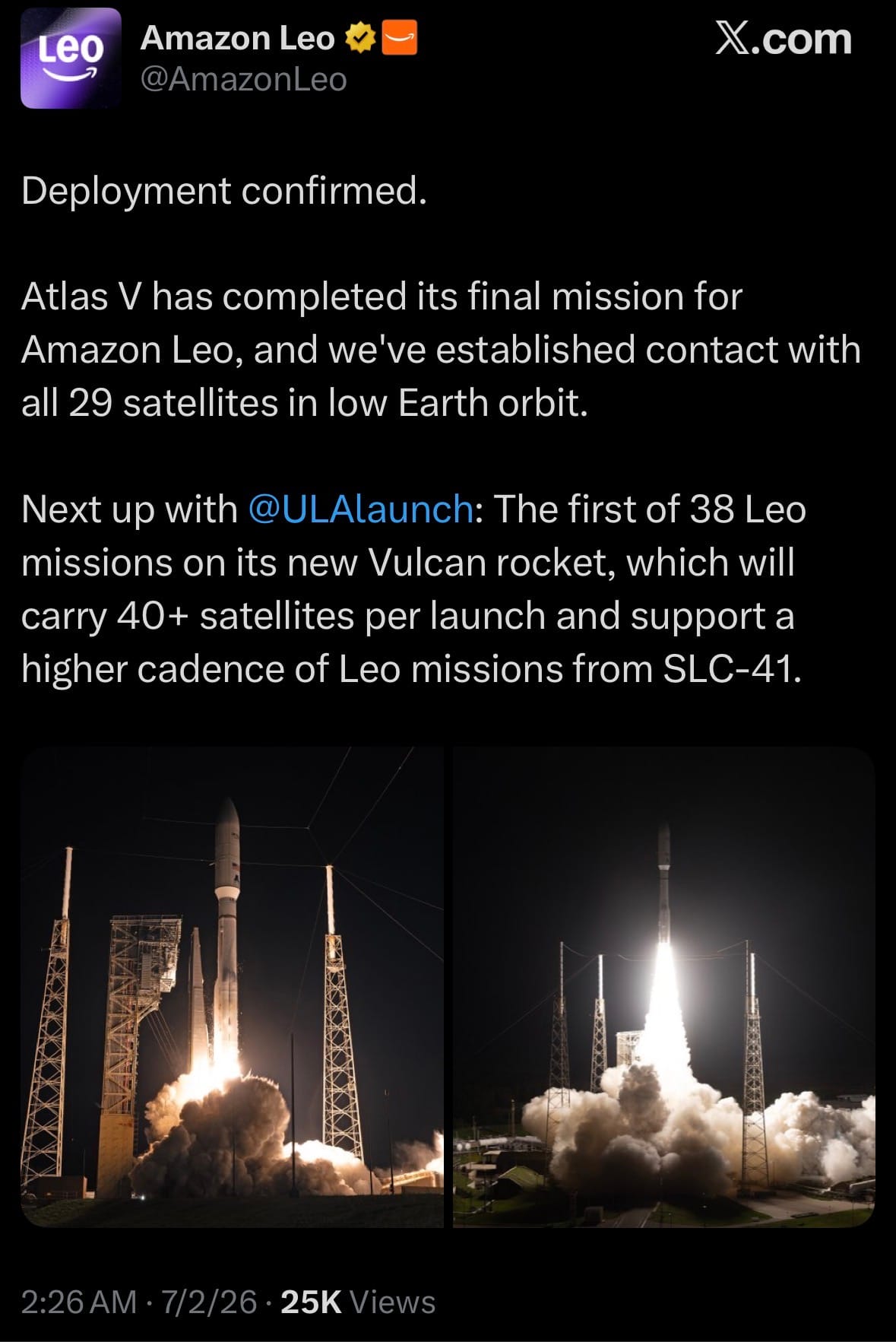
- The mission continues Amazon’s rollout toward thousands of satellites, with the company having hundreds already in orbit as part of its ambitious plan to provide global connectivity.
Statistic:
- Largest assets on Earth by market capitalization:
- 🥇 Gold: $29.191T
- 🇺🇸 NVIDIA: $4.718T
- 🇺🇸 Apple: $4.532T
- 🇺🇸 Alphabet (Google): $4.346T
- 🪙 Silver: $3.542T
- 🇺🇸 Microsoft: $2.900T
- 🇺🇸 Amazon: $2.610T
- 🇹🇼 TSMC: $2.251T
- 🇺🇸 SpaceX: $2.134T
- 🇺🇸 Broadcom: $1.714T
- 🇸🇦 Saudi Aramco: $1.681T
- 🇺🇸 Meta Platforms: $1.479T
- 🇺🇸 Tesla: $1.477T
- 🇰🇷 Samsung: $1.298T
- ₿ Bitcoin: $1.229T
- 🇺🇸 Micron Technology: $1.101T
- 🇺🇸 Berkshire Hathaway: $1.095T
- 🇺🇸 Eli Lilly: $1.082T
- 🇰🇷 SK Hynix: $1.050T
- 🇺🇸 Vanguard S&P 500 ETF: $980.45B
- 🇺🇸 JPMorgan Chase: $896.21B
- 🇺🇸 Walmart: $890.03B
- 🇺🇸 iShares Core S&P 500 ETF: $888.34B
- 🇺🇸 AMD: $844.35B
- 🇺🇸 SPDR S&P 500 ETF: $778.72B
- 🇺🇸 Visa: $688.67B
History:
- The history of public water supply is the history of civilization itself. The first large-scale systems appeared in Mesopotamia and Ancient Egypt (c. 4000–3000 BC) through canals, wells, reservoirs, and irrigation. The Indus Valley Civilization (2600–1900 BC) built some of the world’s first engineered urban water systems, including covered sewers, household wells, and public baths. The Minoans (c. 2000 BC) developed pressurized clay pipes, while the Assyrians (700s BC) constructed canals and aqueducts. The greatest breakthrough came with the Roman aqueducts, beginning with the Aqua Appia (312 BC). At its peak, Rome operated 11 major aqueducts delivering approximately 1 million cubic meters (264 million gallons) of fresh water every day to homes, baths, fountains, and industry. Following the collapse of the Western Roman Empire in 476 AD, much of Europe’s water infrastructure deteriorated, contributing to poor sanitation and repeated outbreaks of diseases such as cholera, typhoid, and dysentery for centuries. Modern water treatment began with the first municipal slow sand filtration system in Scotland (1804), followed by James Simpson’s large-scale filtration system in London (1829). The Broad Street cholera outbreak (1854) led Dr. John Snow to demonstrate that contaminated water spread disease, while Louis Pasteur’s Germ Theory (1861) scientifically confirmed microorganisms as the cause of many illnesses. Public water safety improved dramatically after continuous chlorination was introduced in Jersey City in 1908, one of the most important public health advances in modern history.
- Modern treatment plants use multiple layers of purification rather than relying on a single filter. Water is first collected from rivers, lakes, reservoirs, groundwater aquifers, or desalination plants, then passes through screens that remove large debris. Chemicals such as aluminum sulfate or ferric chloride are added during coagulation and flocculation, causing dirt, bacteria, and organic material to clump together before settling during sedimentation. The water then moves through rapid sand filters, slow sand filters, activated carbon filters, membrane filtration, microfiltration, ultrafiltration, nanofiltration, or reverse osmosis, depending on the system. Finally, utilities disinfect water using chlorine, chloramine, ozone, ultraviolet (UV) light, or combinations of these technologies before distributing it through thousands of miles of underground pipelines. Countries have adopted different approaches: Singapore’s NEWater (2003) uses microfiltration, reverse osmosis, and UV disinfection to recycle wastewater into ultra-pure drinking water; Israel has become a world leader in desalination, producing much of its drinking water from the Mediterranean Sea; while nations such as Switzerland, Norway, Finland, Iceland, the Netherlands, Canada, and New Zealand consistently rank among those with the safest drinking water systems. Today, many treatment plants continuously monitor pH, chlorine residuals, turbidity, dissolved oxygen, microbial contamination, PFAS (“forever chemicals”), heavy metals, and thousands of other quality indicators using automated sensors and laboratory testing.
- By 2026, water infrastructure is considered one of the world’s most critical strategic systems because it is tightly interconnected with the electric power grid. Most modern treatment plants depend on electricity to operate high-capacity pumps, filtration systems, chemical dosing equipment, sensors, automation systems, pressure controls, and distribution networks. Wastewater treatment plants are equally dependent on continuous electrical power. If a prolonged nationwide power outage occurred in highly urbanized countries such as the United States, United Kingdom, Germany, Japan, or South Korea, emergency generators could keep major facilities operating temporarily, but many systems would eventually lose pumping capacity, water pressure, and treatment capability if fuel supplies were exhausted. This could lead to boil-water advisories, reduced firefighting capability, wastewater overflows, contamination risks, and interruptions to hospitals, industry, agriculture, and daily life. Because of these risks, water utilities are designated as critical infrastructure in many countries and are protected through redundant power supplies, backup generators, fuel reserves, cybersecurity systems, and emergency response plans. As populations grow and climate pressures increase, governments are investing heavily in AI-assisted monitoring, smart leak detection, desalination, advanced membrane technology, water recycling, and resilient infrastructure. From ancient Roman aqueducts to AI-managed purification systems, clean water remains one of the most essential—and most strategically important—engineering achievements supporting modern civilization.
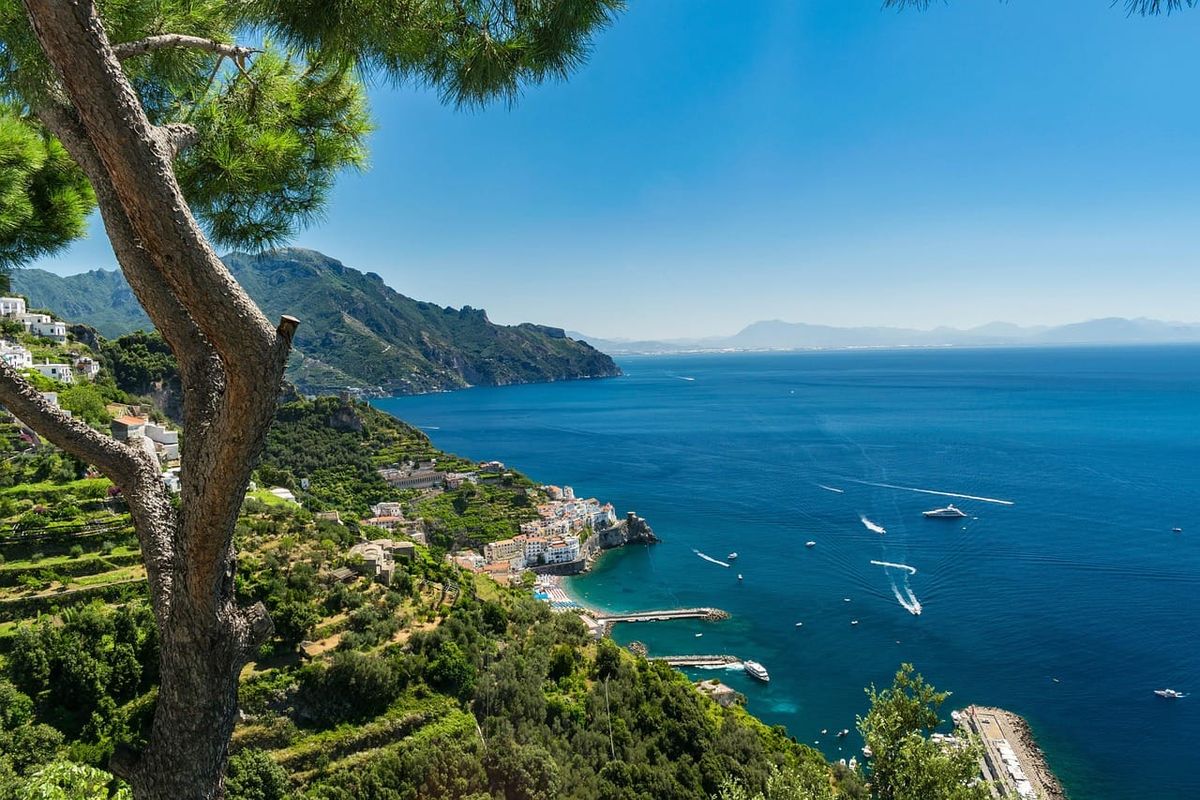
Image of the day:
Thanks for reading! Earth is complicated, we make it simple.
- Download our mobile app:



Click below to view our previous newsletters:
Support/Suggestions Email:
support@earthintel.io