Thursday☕️

Trending:
- At least 18 people were killed and 85 injured, including two children, in Russia’s large-scale overnight missile and drone attack on Kyiv on July 1–2, 2026, with the death toll rising as rescuers recovered bodies from rubble at around 30 damaged sites, including collapsed residential buildings, a hotel, and civilian infrastructure.
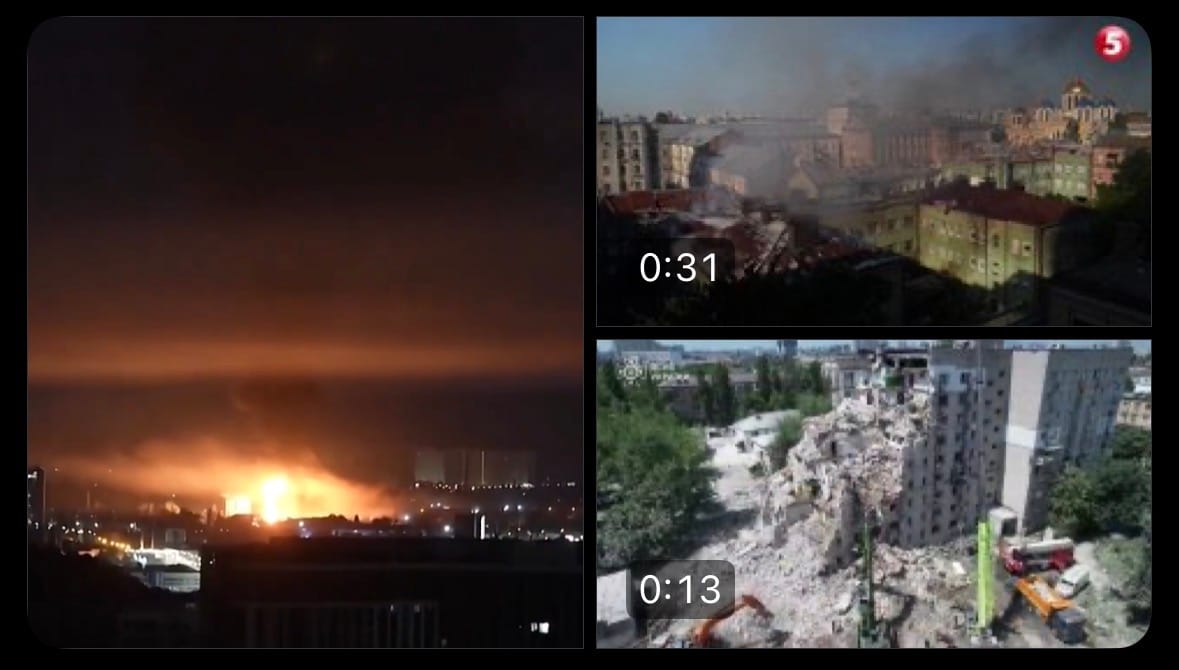
- Ukraine’s Foreign Minister warned the toll could increase further, while researchers reported strikes also hit the Palladin Institute of Biochemistry, destroying labs and equipment tied to research on Alzheimer’s, Parkinson’s, and diabetes; the attack fits an escalating cycle of strikes as both sides target energy and military infrastructure.
Space:
- SpaceX launched 24 Starlink satellites into low-Earth orbit via a Falcon 9 rocket from Vandenberg Space Force Base in California on July 2, 2026.
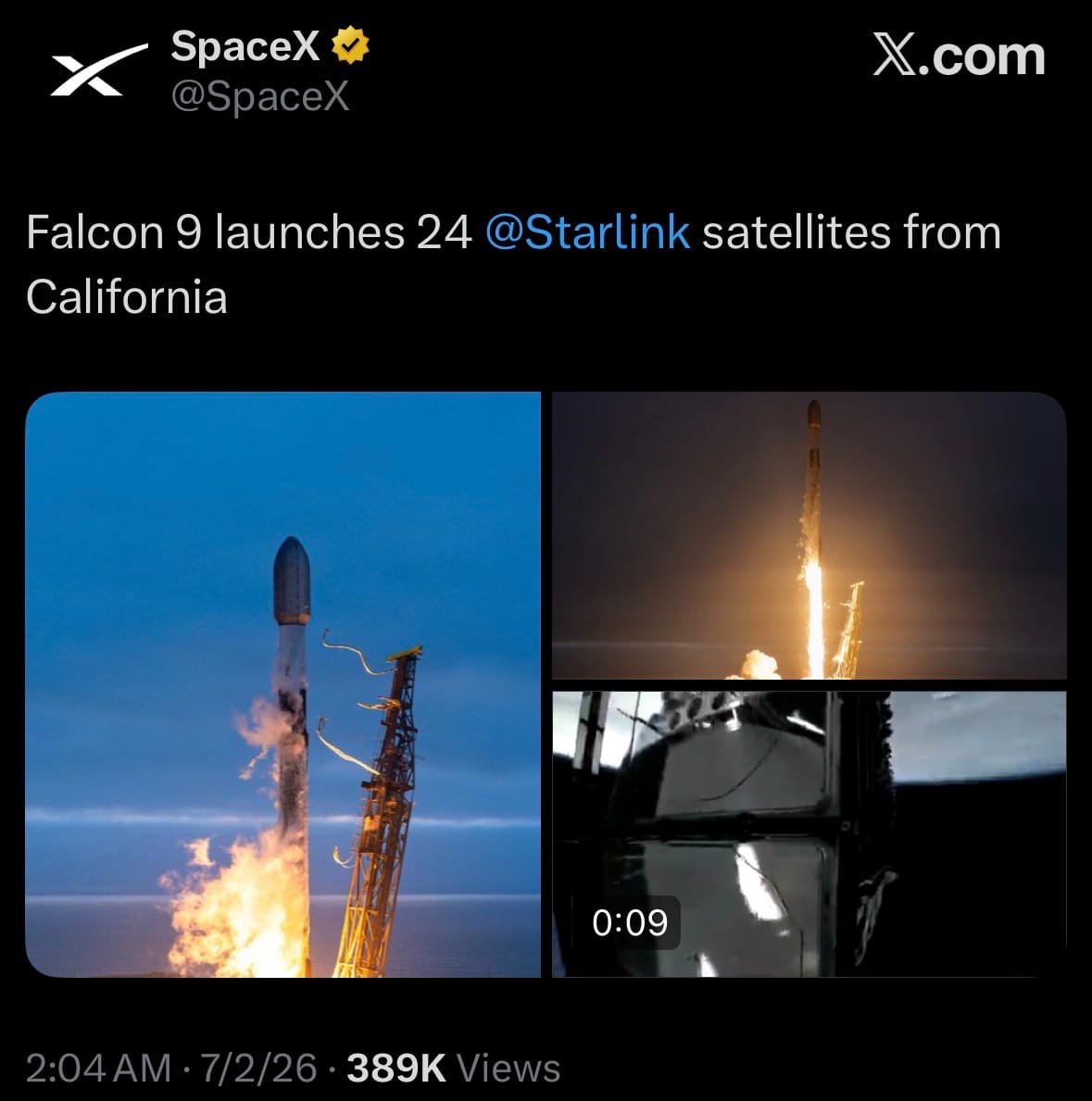
- The mission continues rapid expansion of the constellation, which now exceeds 11,000 operational satellites and maintains a substantial lead over other commercial and government operators.
Science & Technology:
- OpenAI has proposed giving the US government a 5% equity stake valued at $42.5 billion, joining a small list of companies with notable government ownership such as major stakes in entities like Fannie Mae, Freddie Mac, Intel, and certain defense contractors through various investment vehicles.
- The offer aims to strengthen alignment on national security, AI regulation, and strategic priorities amid ongoing scrutiny of advanced AI development.
Statistic:
- Largest automakers by market capitalization:
- 🇺🇸 Tesla: $1.488T
- 🇯🇵 Toyota: $206.47B
- 🇨🇳 BYD: $112.50B
- 🇰🇷 Hyundai: $81.85B
- 🇨🇳 Xiaomi: $75.67B
- 🇺🇸 General Motors: $67.62B
- 🇮🇹 Ferrari: $67.29B
- 🇺🇸 Ford: $53.70B
- 🇩🇪 Mercedes-Benz: $49.27B
- 🇮🇳 Maruti Suzuki India: $47.29B
- 🇩🇪 Porsche: $46.37B
- 🇩🇪 BMW: $42.09B
- 🇩🇪 Volkswagen: $41.73B
- 🇮🇳 Mahindra & Mahindra: $39.97B
- 🇰🇷 Kia: $36.60B
- 🇯🇵 Honda: $36.51B
- 🇺🇸 Rivian: $25.42B
- 🇯🇵 Suzuki Motor: $24.72B
- 🇨🇳 Geely: $23.81B
- 🇨🇳 Great Wall Motors: $18.95B
- 🇨🇳 Chery Automobile: $18.42B
- 🇳🇱 Stellantis: $16.87B
- 🇨🇳 SAIC Motor: $16.77B
- 🇮🇳 Tata Motors: $16.63B
- 🇮🇳 Hyundai Motor India: $16.61B
History:
- The modern Russian state is built on more than 1,100 years of political evolution, beginning with the Kievan Rus’ (862–1240), a federation of East Slavic principalities traditionally traced to the Varangian prince Rurik in 862 AD. In 988, Prince Vladimir I adopted Eastern Orthodox Christianity, permanently shaping Russian religion, culture, and identity. Following the Mongol invasion (1237–1240), much of the region came under the Golden Horde for over two centuries. During this period, the Grand Duchy of Moscow gradually expanded its influence, culminating in Ivan III (“Ivan the Great”) ending Mongol dominance in 1480. His grandson, Ivan IV (“Ivan the Terrible”), became Russia’s first officially crowned Tsar in 1547, centralizing authority and dramatically expanding Russian territory eastward into Siberia. After the Time of Troubles (1598–1613), the Romanov dynasty came to power in 1613, ruling for more than 300 years. Under Peter the Great (1682–1725), Russia modernized its military, founded St. Petersburg (1703), and defeated Sweden in the Great Northern War (1700–1721), emerging as a major European power. Catherine the Great (1762–1796) continued territorial expansion into Crimea, Poland, and the Black Sea. Throughout the 1700s and 1800s, Russia became one of Europe’s largest empires, stretching from Eastern Europe across Siberia to the Pacific Ocean and eventually into Alaska.
- Russia has repeatedly fought major wars against European powers, though the causes varied by era rather than reflecting a single continuous pattern. Significant conflicts include the Great Northern War (1700–1721) against Sweden, the Napoleonic Wars (1803–1815) culminating in Napoleon’s failed invasion of Russia in 1812, the Crimean War (1853–1856) against Britain, France, and the Ottoman Empire, World War I (1914–1918) against the Central Powers, and World War II (1941–1945) after Nazi Germany launched Operation Barbarossa on June 22, 1941. Between these conflicts, Russia often cooperated diplomatically with European states, including participation in the Concert of Europe after 1815 and alliances before World War I. Internally, the empire experienced growing unrest that led to the Russian Revolution of 1917, ending Romanov rule after Tsar Nicholas II abdicated. The Bolsheviks, led by Vladimir Lenin, seized power in the October Revolution, followed by the Russian Civil War (1917–1922). The Union of Soviet Socialist Republics (USSR) was officially established in 1922, creating a communist state that would become one of the two global superpowers of the 20th century. Under Joseph Stalin (1924–1953), the Soviet Union rapidly industrialized, collectivized agriculture, and expanded its military, while also carrying out widespread political repression. Following the Allied victory in 1945, the Soviet Union dominated Eastern Europe and entered the Cold War (1947–1991) against the United States and NATO. The rivalry drove the nuclear arms race, the Space Race, global proxy wars, and intelligence competition. The Soviet Union dissolved in 1991, ending communist rule and leading to the creation of the modern Russian Federation, initially led by Boris Yeltsin.
- Since 2000, under Vladimir Putin, Russia has recentralized political authority, modernized parts of its military, and pursued a more assertive foreign policy. Major events include the Second Chechen War, the 2008 war with Georgia, the annexation of Crimea in 2014, military intervention in Syria (2015), and the full-scale invasion of Ukraine in 2022, which became Europe’s largest conventional war since World War II. The conflict reshaped European security, accelerated NATO expansion with Finland (2023) and Sweden (2024) joining the alliance, and led to extensive sanctions, military aid to Ukraine, and a major increase in European defense spending. By 2026, Russia remains the world’s largest country by land area, spans 11 time zones, possesses one of the world’s largest nuclear arsenals, and remains a permanent member of the United Nations Security Council. Its government consists of a President as head of state, a Prime Minister as head of government, the Federal Assembly (State Duma and Federation Council), the judiciary, and numerous federal ministries and security organizations including the FSB, SVR, and GRU. Throughout its history, Russia has viewed geographic depth and buffer zones as critical to national security after repeated invasions by the Mongols, Napoleon, Imperial Germany, and Nazi Germany. Meanwhile, many European states have viewed Russian expansion toward Central and Eastern Europe as a security concern. These competing strategic perspectives have been a recurring feature of European history for centuries and continue to influence geopolitics today. Rather than reflecting an inevitable cycle of conflict, Russia’s relationship with Europe has alternated between cooperation, alliance, rivalry, and war depending on the political, economic, ideological, and security conditions of each era.
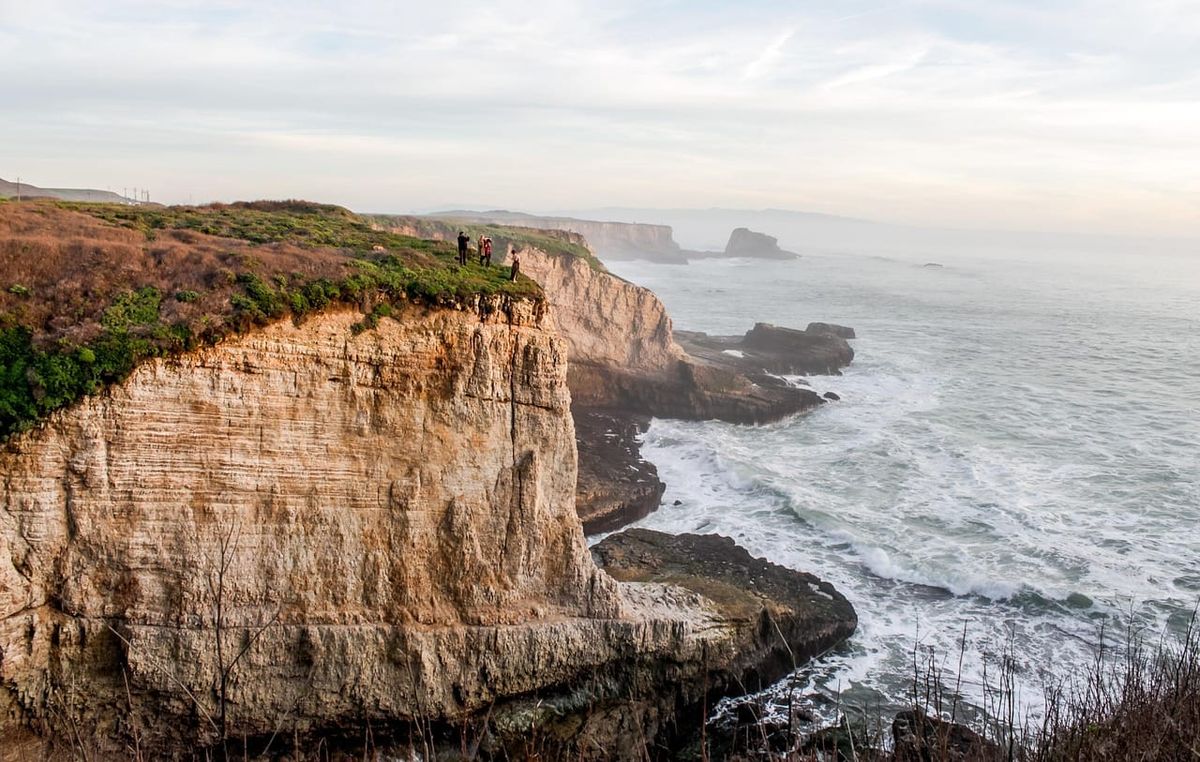
Image of the day:
Thanks for reading! Earth is complicated, we make it simple.
- Download our mobile app:


Click below to view our previous newsletters:
Support/Suggestions Email:
support@earthintel.io