Tuesday☕️🌎


Trending:
- On June 29, 2026, the IDF announced the completion of sealing a large Hamas tunnel complex near the Philadelphi Corridor in southern Rafah, using over 30,000 cubic meters of concrete.

- The tunnel extended over 16 km and included living quarters and a command center beneath civilian areas; this is part of ongoing Israeli operations against Hamas amid the broader regional conflict involving Iran and its allies.
Economics & Markets:
- US Strategic Petroleum Reserve crude inventories fell by about 5.5 million barrels week-over-week to a multi-year low of 325.7 million barrels last week, driven primarily by ongoing emergency releases to offset supply disruptions from the US-Iran conflict.
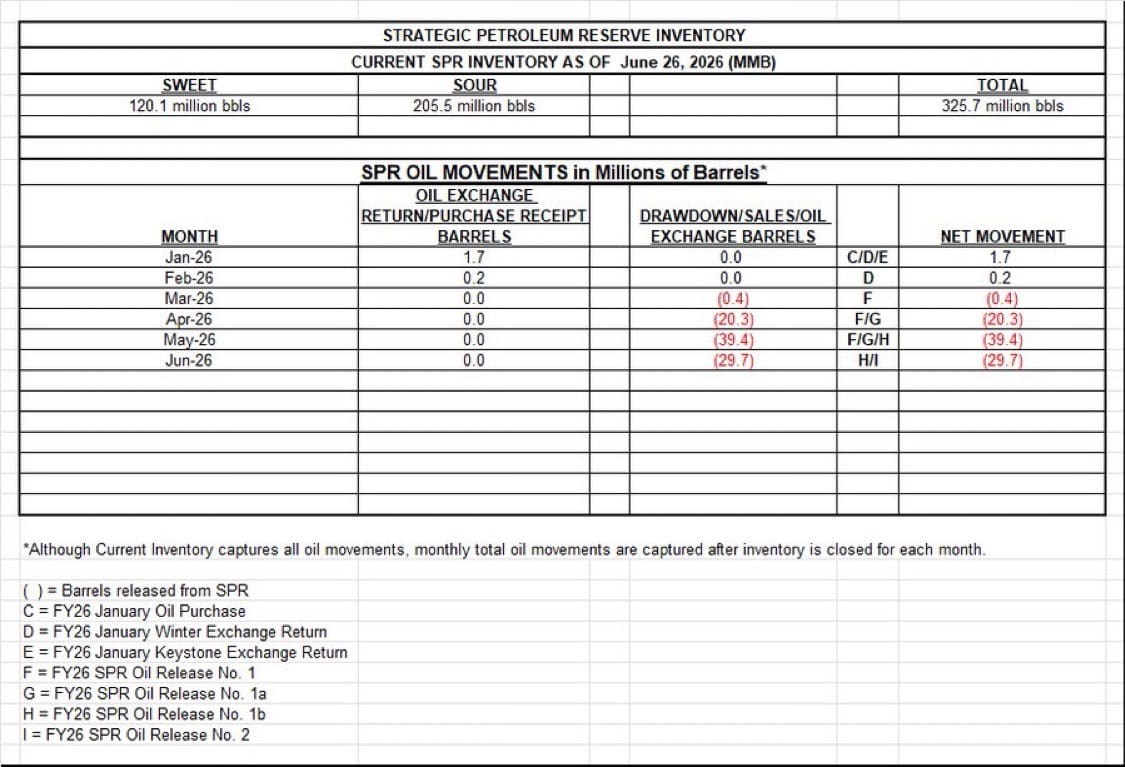
- At the same time, US crude exports have surged to near-record highs (around 5.2–6 million barrels per day in recent weeks) as global buyers in Asia and Europe turn to American supplies to replace lost Middle Eastern volumes amid Strait of Hormuz tensions.
Wildlife:

Science & Technology:
- Amazon’s Zoox has unveiled the next iteration of its purpose-built robotaxi following over 500,000 rides, incorporating real rider feedback for a more comfortable cabin, brighter touchscreen, improved charging pad, refreshed interior, and clearer front/rear exterior cues.

Statistic:
- Largest video game companies by market capitalization:
- 🇺🇸 Microsoft: $2.737T
- 🇨🇳 Tencent: $483.15B
- 🇯🇵 Sony: $120.32B
- 🇨🇳 NetEase: $82.75B
- 🇸🇬 Sea Limited: $56.93B
- 🇺🇸 Electronic Arts: $51.41B
- 🇯🇵 Nintendo: $49.14B
- 🇺🇸 Take-Two Interactive: $45.88B
- 🇺🇸 Roblox: $38.90B
- 🇦🇺 Aristocrat: $25.34B
- 🇨🇳 Zhejiang Century Huatong: $15.14B
- 🇯🇵 Bandai Namco: $14.86B
- 🇯🇵 Konami Holdings: $14.72B
- 🇺🇸 Unity Software: $12.35B
- 🇯🇵 Nexon: $10.49B
- 🇺🇸 GameStop: $9.88B
- 🇯🇵 Capcom: $7.82B
- 🇨🇳 Kunlun Tech: $7.68B
- 🇨🇳 Giant Network Group: $7.50B
- 🇰🇷 Krafton: $7.02B
- 🇹🇼 International Games System: $6.93B
- 🇨🇳 37 Interactive Entertainment: $6.05B
- 🇵🇱 CD Projekt: $5.87B
- 🇯🇵 Square Enix: $5.37B
- 🇬🇧 Entain: $5.01B
- 🇨🇳 Kingnet Network: $4.99B
History:
- Video games began as scientific experiments before becoming one of the largest entertainment industries in history. The earliest known electronic game was the Cathode-Ray Tube Amusement Device (1947), followed by OXO (1952), a computerized tic-tac-toe game, and Tennis for Two (1958). In 1962, MIT students created Spacewar!, one of the first influential computer games. The commercial industry began with Magnavox Odyssey (1972), the first home video game console, and Pong (1972) by Atari, which launched the arcade gaming era. Arcades exploded with games such as Space Invaders (1978), Asteroids (1979), Pac-Man (1980)—which became one of the highest-grossing arcade games ever—and Donkey Kong (1981), introducing Mario. A market crash in 1983 nearly collapsed the North American industry due to oversaturation and poor-quality games. The industry was revived by Nintendo’s NES (1983 Japan, 1985 U.S.), launching legendary franchises including Super Mario Bros. (1985), The Legend of Zelda (1986), Metroid (1986), and later Pokémon (1996). The 1990s saw the rise of Sega Genesis (1988), Sony PlayStation (1994), Nintendo 64 (1996), and PC classics including Doom (1993), Warcraft (1994), Command & Conquer (1995), Quake (1996), Diablo (1996), GoldenEye 007 (1997), StarCraft (1998), and Half-Life (1998), laying the foundation for modern first-person shooters, RTS games, RPGs, and online multiplayer.
- The 2000s and 2010s transformed gaming into a global online industry. Microsoft launched the Xbox (2001) and Xbox Live (2002), making online console gaming mainstream. Valve released Steam (2003), which became the largest PC game distribution platform. Major titles included World of Warcraft (2004), which peaked at over 12 million subscribers; League of Legends (2009) with approximately 150 million monthly players; Minecraft (2009) with over 300 million copies sold, making it the best-selling game in history; Counter-Strike (over 30 million monthly players across CS2); Grand Theft Auto V (2013) with 215 million+ copies sold; Roblox (2006) with roughly 100 million daily active users; Fortnite (2017) with more than 650 million registered players; PUBG (2017) with over 1.3 billion downloads across all platforms; Call of Duty: Warzone (2020) exceeding 125 million players; and Valorant (2020) with around 35 million monthly players. Mobile gaming exploded following the iPhone (2007) and App Store (2008), producing titles such as Candy Crush, Clash of Clans, Pokémon GO, and Honor of Kings, each reaching hundreds of millions of players worldwide. Esports also became a major industry, with games like League of Legends, Counter-Strike, Dota 2, Valorant, and Rocket League filling arenas and awarding prize pools worth tens of millions of dollars.
- By 2026, video games have become one of the world’s largest entertainment industries, generating well over $200 billion annually and serving more than 3.4 billion players worldwide. The industry is dominated by companies including Nintendo, Sony, Microsoft, Tencent, Valve, Epic Games, Electronic Arts, Activision Blizzard, Ubisoft, Take-Two Interactive, Riot Games, Roblox, Mojang, and Bandai Namco. Gaming now spans PC, PlayStation, Xbox, Nintendo Switch, mobile devices, cloud gaming, virtual reality (VR), augmented reality (AR), and AI-powered experiences. Beyond entertainment, video games are used for military simulation, pilot training, education, medical rehabilitation, engineering visualization, architecture, autonomous systems testing, and artificial intelligence research. Modern titles support millions of concurrent players across global server networks, while streaming platforms such as Twitch and YouTube Gaming attract hundreds of millions of viewers every month. From simple electronic experiments in 1947 to vast virtual worlds with hundreds of millions of players, video games have evolved into one of the most influential technological, cultural, and economic developments of the digital age.
Image of the day:

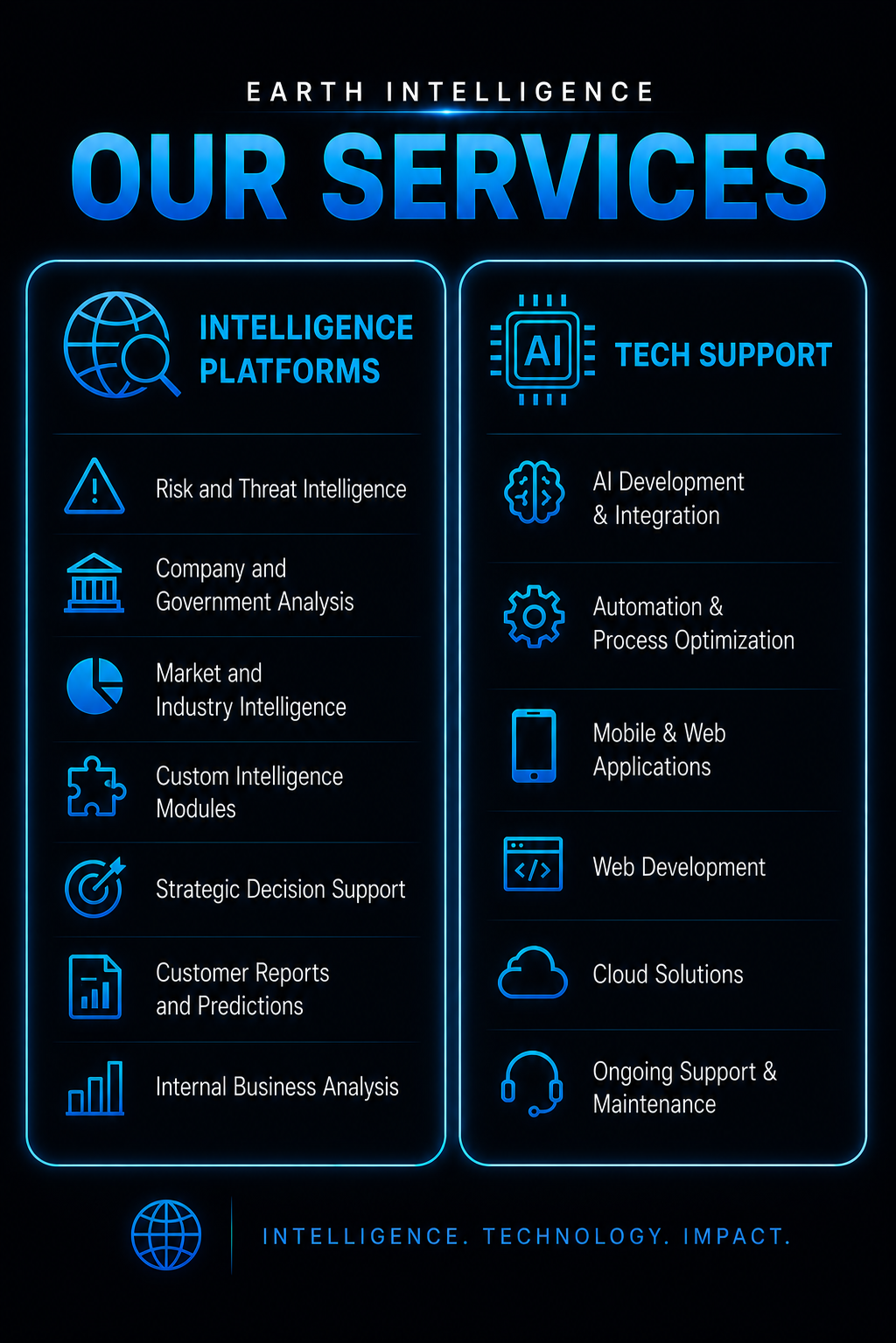
Thanks for reading! Earth is complicated, we make it simple.
- Download our mobile app:
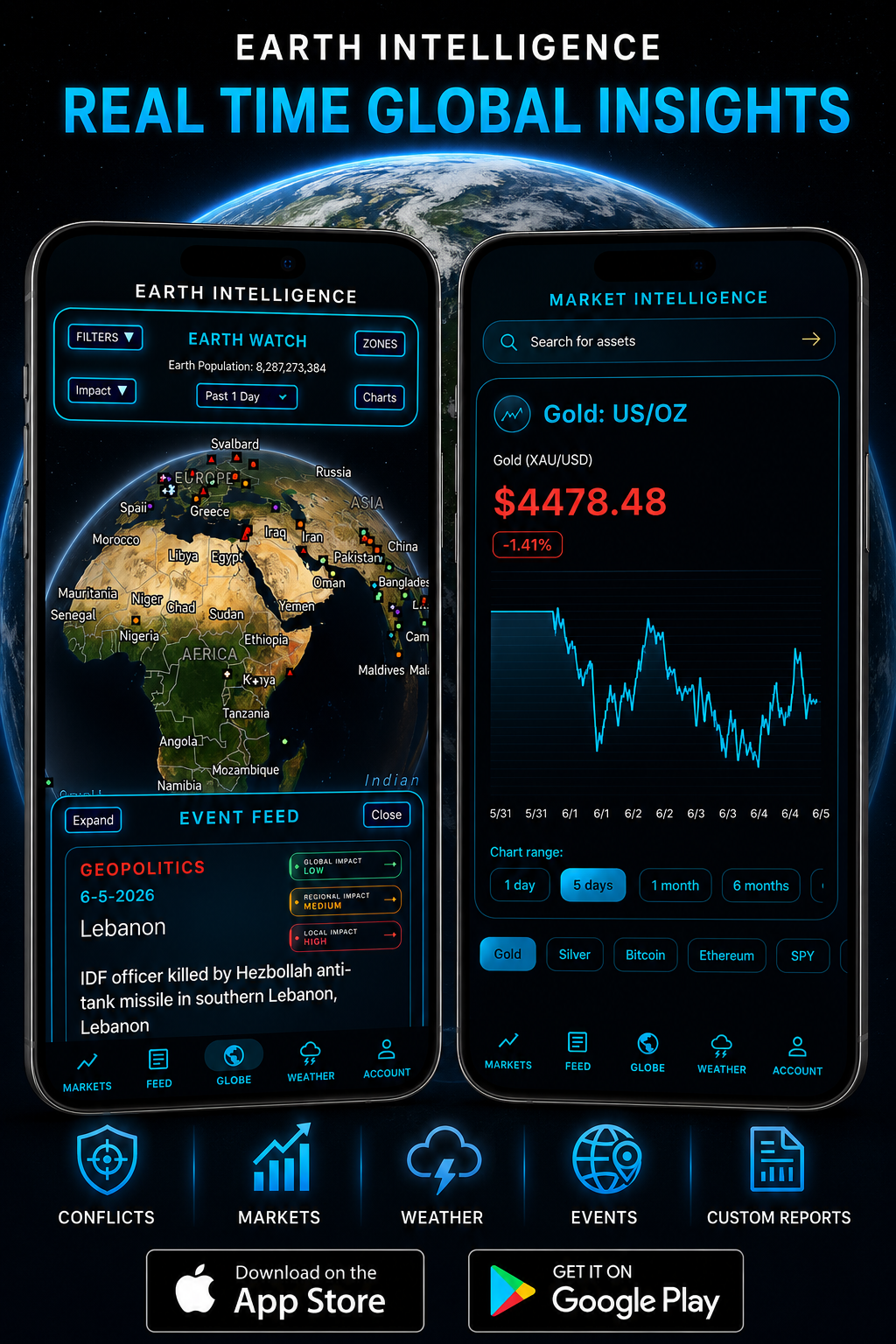


Click below to view our previous newsletters:

Support/Suggestions Email:
support@earthintel.io