Monday☕️


Trending:
- On May 17, two U.S. Navy EA-18G Growler jets collided mid-air during a demonstration at the Gunfighter Skies Air Show at Mountain Home Air Force Base in Idaho.
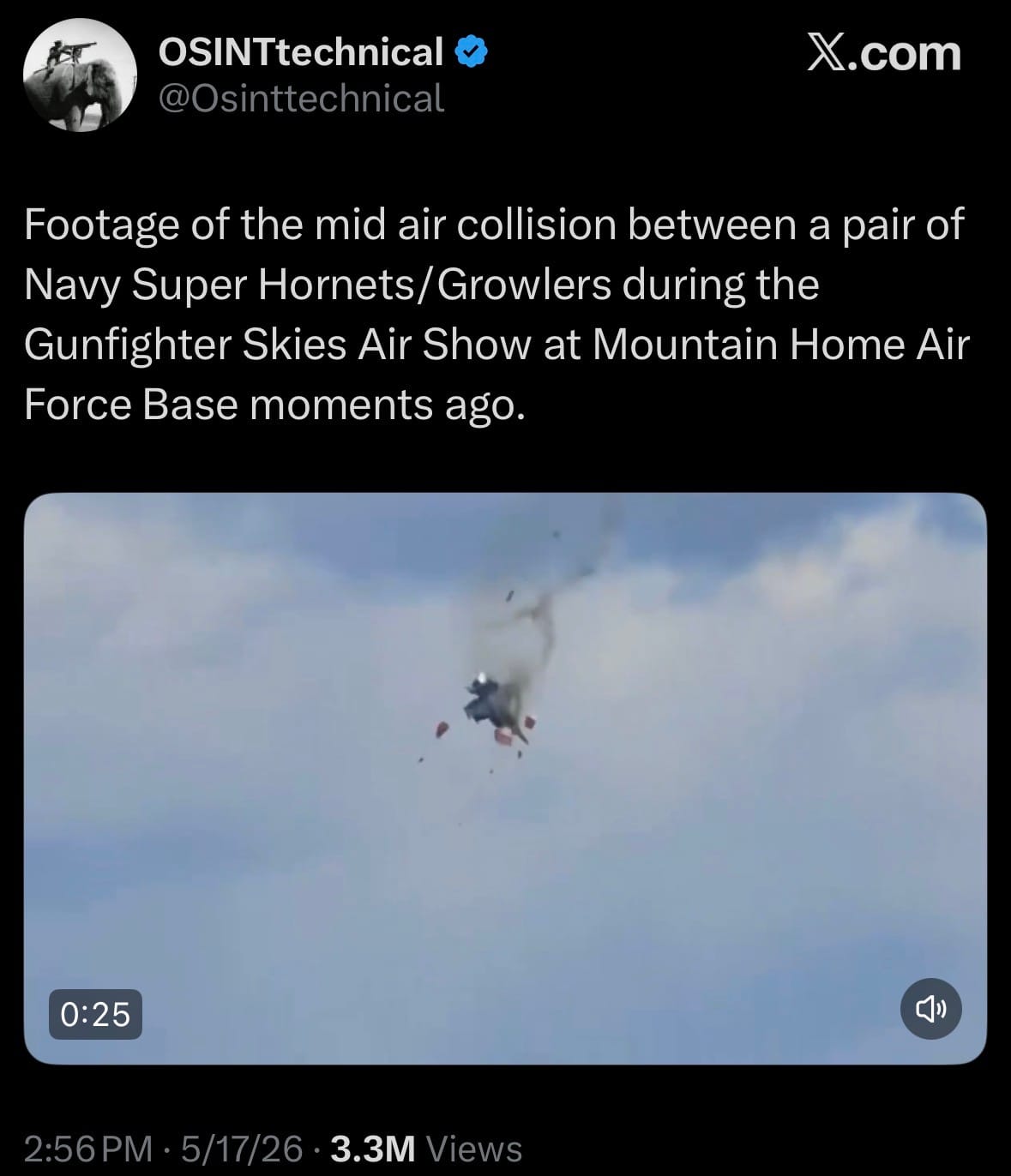
- All four crew members (two pilots and two electronic warfare officers) ejected safely and are in stable condition. The air show was canceled, and an investigation is underway. No one on the ground was injured.
Economics & Markets:
- Today, the New York Fed will inject $6.576 billion into the financial system through a Treasury bill purchase operation scheduled for 9:00–9:20 AM ET.
- This is a routine reserve management purchase (part of a larger ~$26 billion plan over several weeks), not an emergency move. It adds liquidity by the Fed buying short-term Treasuries from banks and dealers.



Geopolitics & Military Activity:
- On May 17, Ukraine carried out one of its largest drone attacks yet on Moscow and surrounding regions overnight.

- Russian officials say they intercepted over 550 Ukrainian drones across multiple areas, but debris and strikes still killed at least 3–4 people (including three in the Moscow region) and injured around 12–18 others. Targets included an oil refinery, fuel facilities, and residential areas near the capital.

Space:
- On May 17, China successfully launched SpaceSail Polar Group #9 aboard a Long March 8 rocket from Wenchang Space Launch Site.
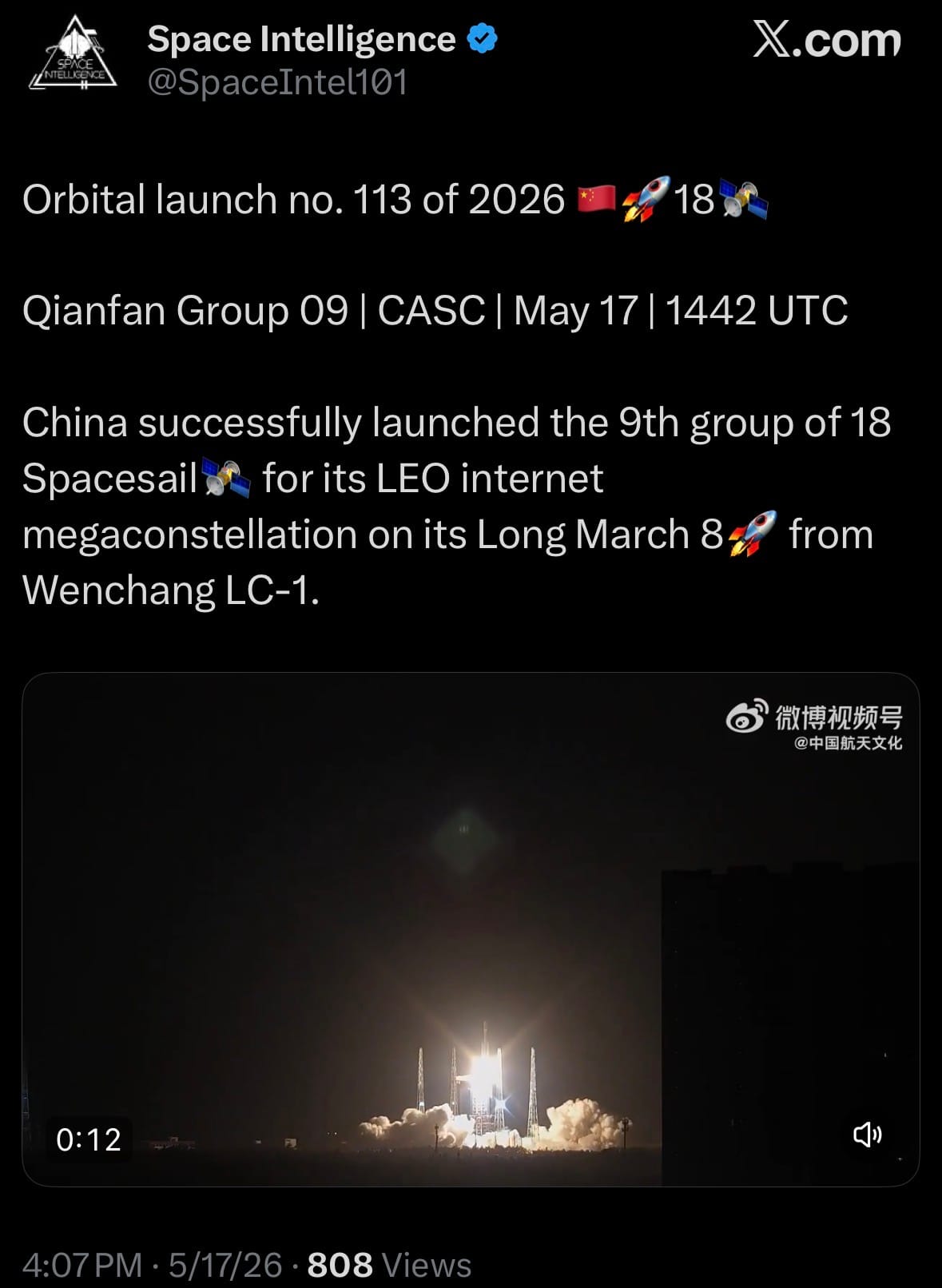
- The mission deployed 18 communication satellites into polar orbit for the G60/SpaceSail (Qianfan) constellation, advancing China’s plan to build a massive low-latency broadband network rivaling Starlink, with a goal of 1,296 satellites by 2027 and up to 12,000 long-term.
Today’s Sponsors:


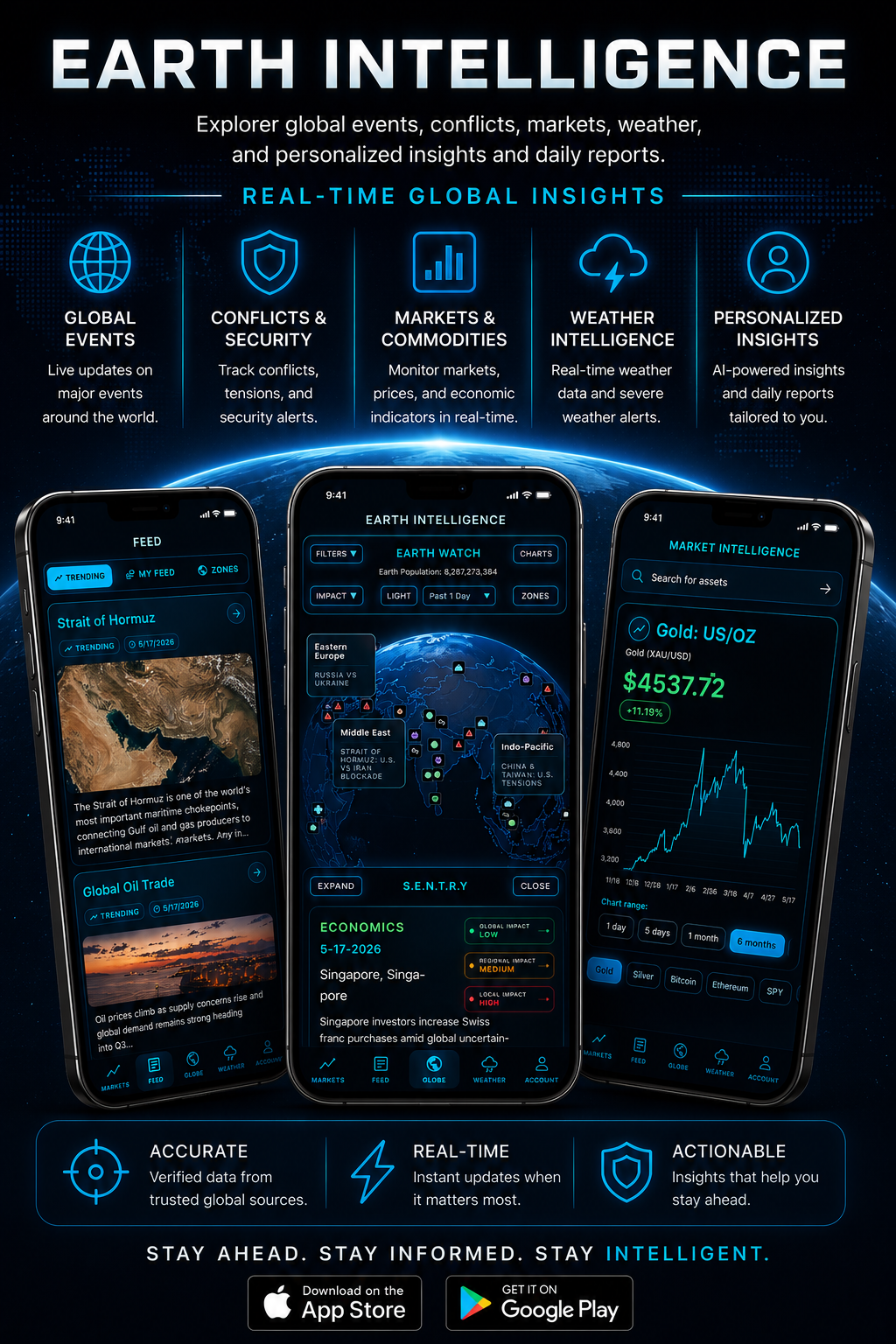
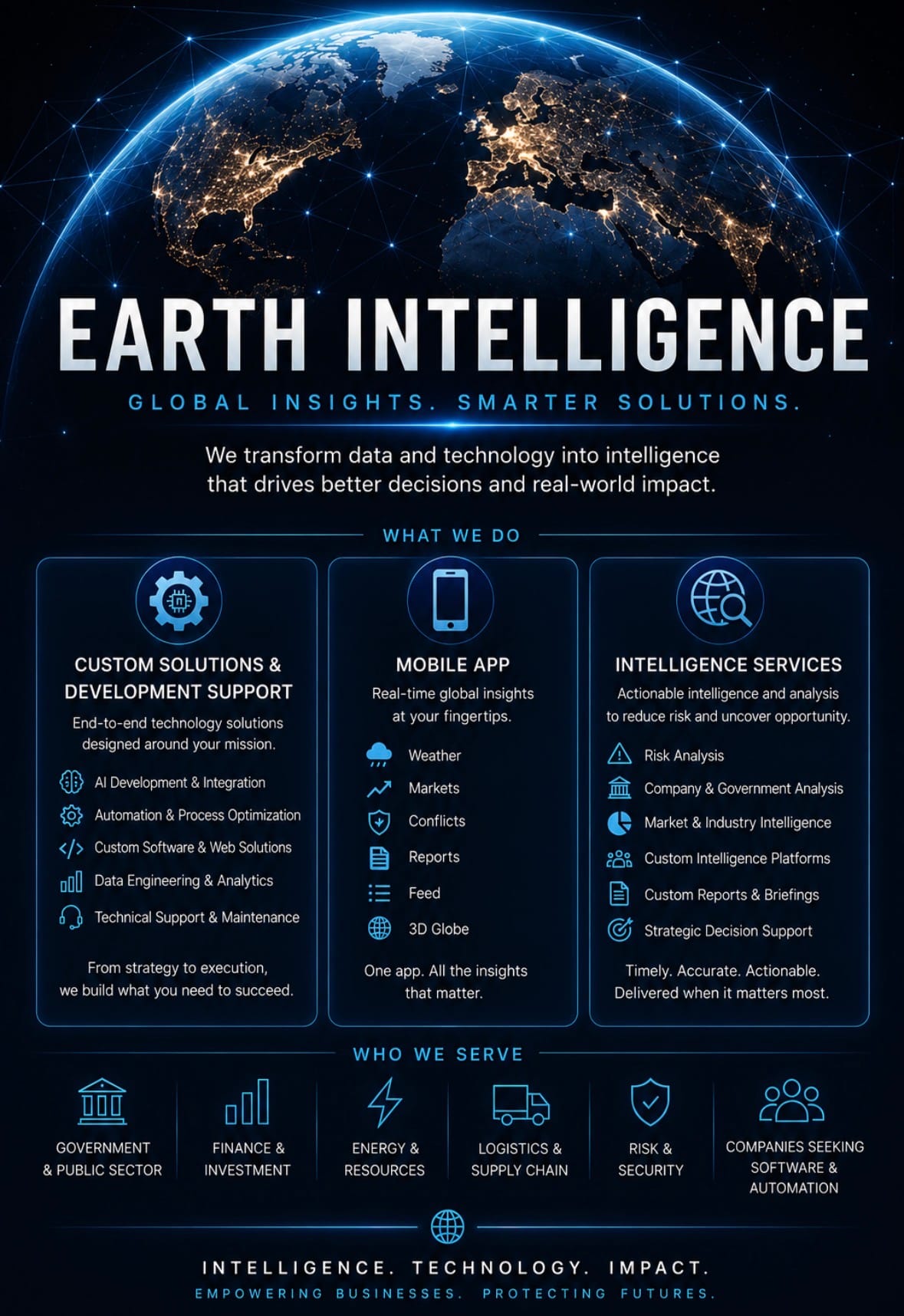
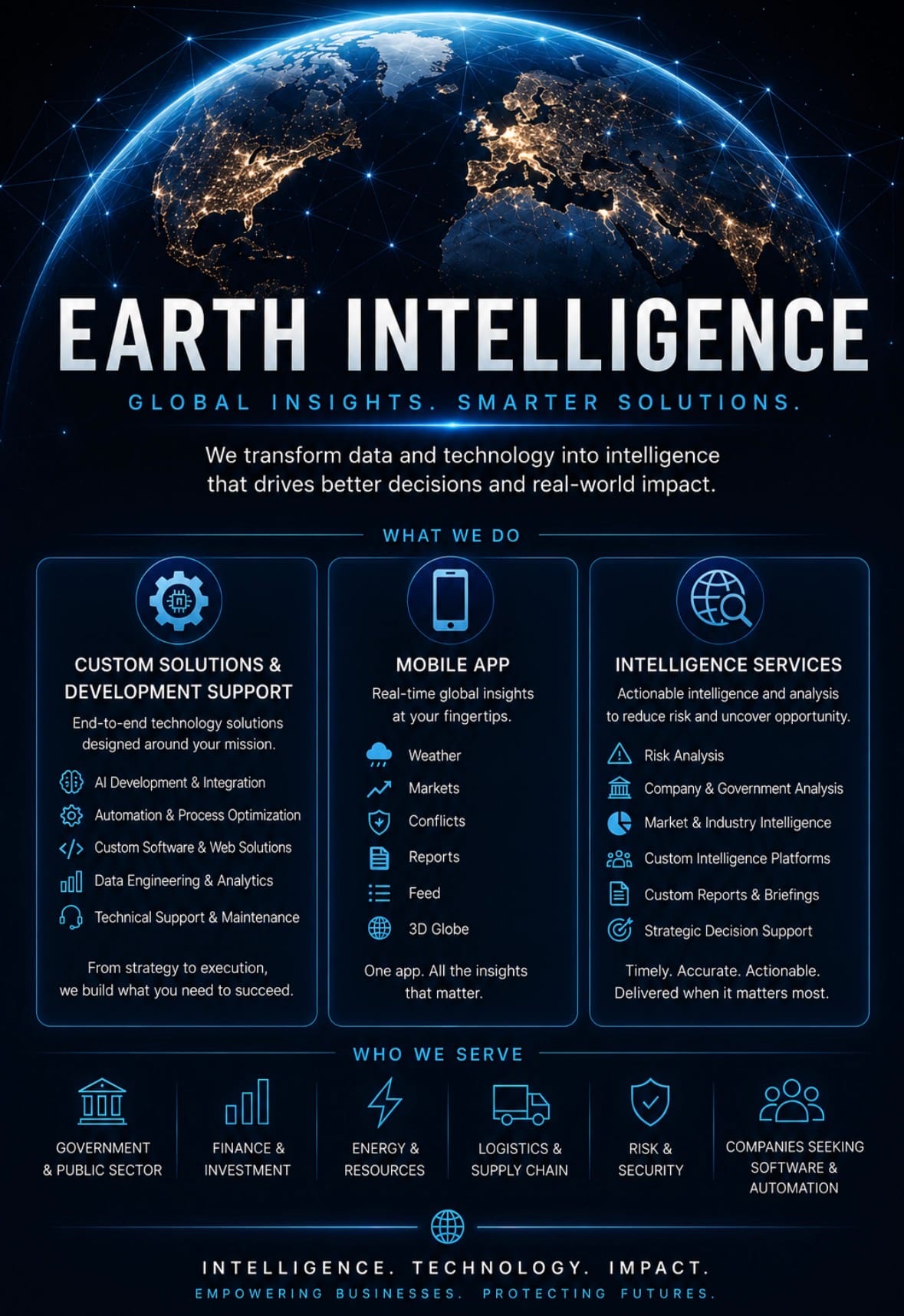
EARTH INTELLIGENCE:
Statistic:
- Largest assets on Earth by market capitalization:
- Gold: $31.507T
- 🇺🇸 NVIDIA: $5.457T
- 🇺🇸 Alphabet (Google): $4.765T
- 🇺🇸 Apple: $4.409T
- Silver: $4.316T
- 🇺🇸 Microsoft: $3.134T
- 🇺🇸 Amazon: $2.841T
- 🇹🇼 TSMC: $2.097T
- 🇺🇸 Broadcom: $2.013T
- 🇸🇦 Saudi Aramco: $1.790T
- 🇺🇸 Tesla: $1.585T
- 🇺🇸 Meta Platforms (Facebook): $1.559T
- Bitcoin: $1.545T
- 🇰🇷 Samsung: $1.161T
- 🇺🇸 Walmart: $1.047T
- 🇺🇸 Berkshire Hathaway: $1.041T
- Vanguard S&P 500 ETF: $954.28B
- 🇺🇸 Eli Lilly: $896.12B
- 🇰🇷 SK Hynix: $834.83B
- iShares Core S&P 500 ETF: $825.75B
- 🇺🇸 Micron Technology: $817.22B
- 🇺🇸 JPMorgan Chase: $797.98B
- SPDR S&P 500 ETF: $765.21B
- 🇺🇸 AMD: $691.53B
- 🇺🇸 Exxon Mobil: $654.57B
- Vanguard Total Stock Market Index Fund ETF Shares: $639.35B
History:
- DARPA—the Defense Advanced Research Projects Agency—was created in 1958 directly after the Soviet Union launched Sputnik (1957), which shocked the United States and exposed how far behind it might be in advanced science and strategic technology. The U.S. government realized it needed an organization focused not on conventional procurement, but on high-risk, breakthrough research that could prevent technological surprise. Originally called ARPA, the agency was designed to operate differently from traditional military structures: small teams, rapid experimentation, long timelines, and massive freedom for scientists and engineers. During the 1960s, ARPA funded projects in missile defense, space systems, command-and-control networks, and early computing. One of its most important creations was ARPANET (1969), a decentralized computer communication network originally built to maintain communications during disruptions or attack. ARPANET later evolved into the modern internet. At the same time, DARPA helped advance satellite systems, stealth concepts, and interactive computing, creating an ecosystem where universities, defense contractors, intelligence agencies, and private industry all became interconnected. Much of what later became Silicon Valley was heavily influenced by this defense R&D pipeline.
- During the 1970s–1990s, DARPA became deeply tied to the rise of “black budget” innovation—classified programs funded through hidden defense allocations and developed largely outside public view. One of the most important breakthroughs was stealth technology, developed through Lockheed Skunk Works with DARPA support, leading to aircraft like the F-117 Nighthawk (first flight 1981) and later the B-2 Spirit. DARPA also funded early autonomous systems, precision-guided weapons, drone concepts, advanced sensors, and AI research decades before those fields became mainstream. Throughout the Cold War, DARPA operated as a bridge between military strategy and frontier science, often developing technologies years or decades ahead of public awareness. By the 1990s and 2000s, DARPA was pushing into robotics, machine learning, cyber warfare, exoskeletons, battlefield networking, and advanced surveillance systems. Programs from DARPA heavily influenced technologies like GPS-enabled warfare, modern drones, voice assistants, autonomous navigation, and predictive AI systems. The agency’s model—small experimental teams funding radical ideas—became one of the most influential innovation systems in modern history.
- From 2010–2026, DARPA and the broader black-budget ecosystem expanded into areas that increasingly blur the line between science fiction and operational reality. Major focus areas now include hypersonic weapons, autonomous drone swarms, AI-driven battlefield systems, quantum sensing, cyber operations, directed-energy weapons, synthetic biology, and brain-computer interfaces. DARPA programs have explored direct neural interfaces allowing communication between the brain and machines, advanced prosthetics controlled by thought, and cognitive enhancement systems for soldiers. At the same time, military AI has shifted from simple automation to real-time decision support, predictive targeting, and autonomous coordination across land, sea, air, cyber, and space domains. The black-budget side of this ecosystem—much of it still classified—likely extends further into advanced aerospace, electronic warfare, orbital systems, and next-generation surveillance infrastructure than the public fully understands. By 2026, DARPA is no longer just a defense research agency; it is effectively a strategic engine for shaping the technological future itself. Many of the systems that define modern civilization—internet infrastructure, autonomous systems, AI architectures, stealth technology, advanced networking, and even elements of modern biotech—either originated from or were accelerated by the DARPA ecosystem, making it one of the most powerful hidden innovation forces in the modern world.
Image of the day:

Thanks for reading! Earth is complicated, we make it simple.
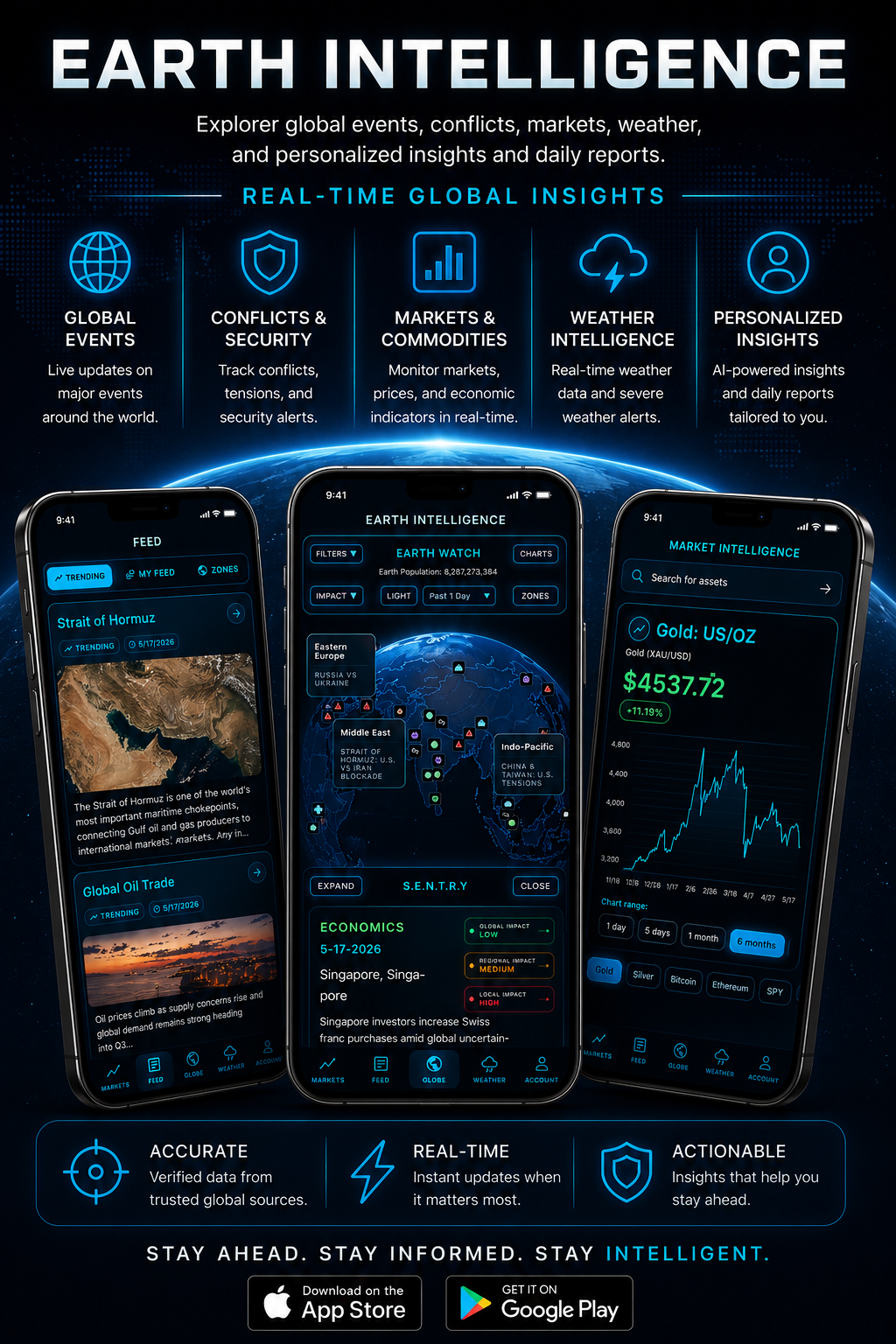
- Download our mobile app:


Click below to view our previous newsletters:

Support/Suggestions Email:
support@earthintel.io