Wednesday☕️


Trending:
- On May 13, Amazon launched Amazon Now, its new ultra-fast 30-minute delivery service. It brings thousands of everyday items — fresh groceries, household essentials, and last-minute needs — directly to customers’ doors in about 30 minutes or less.
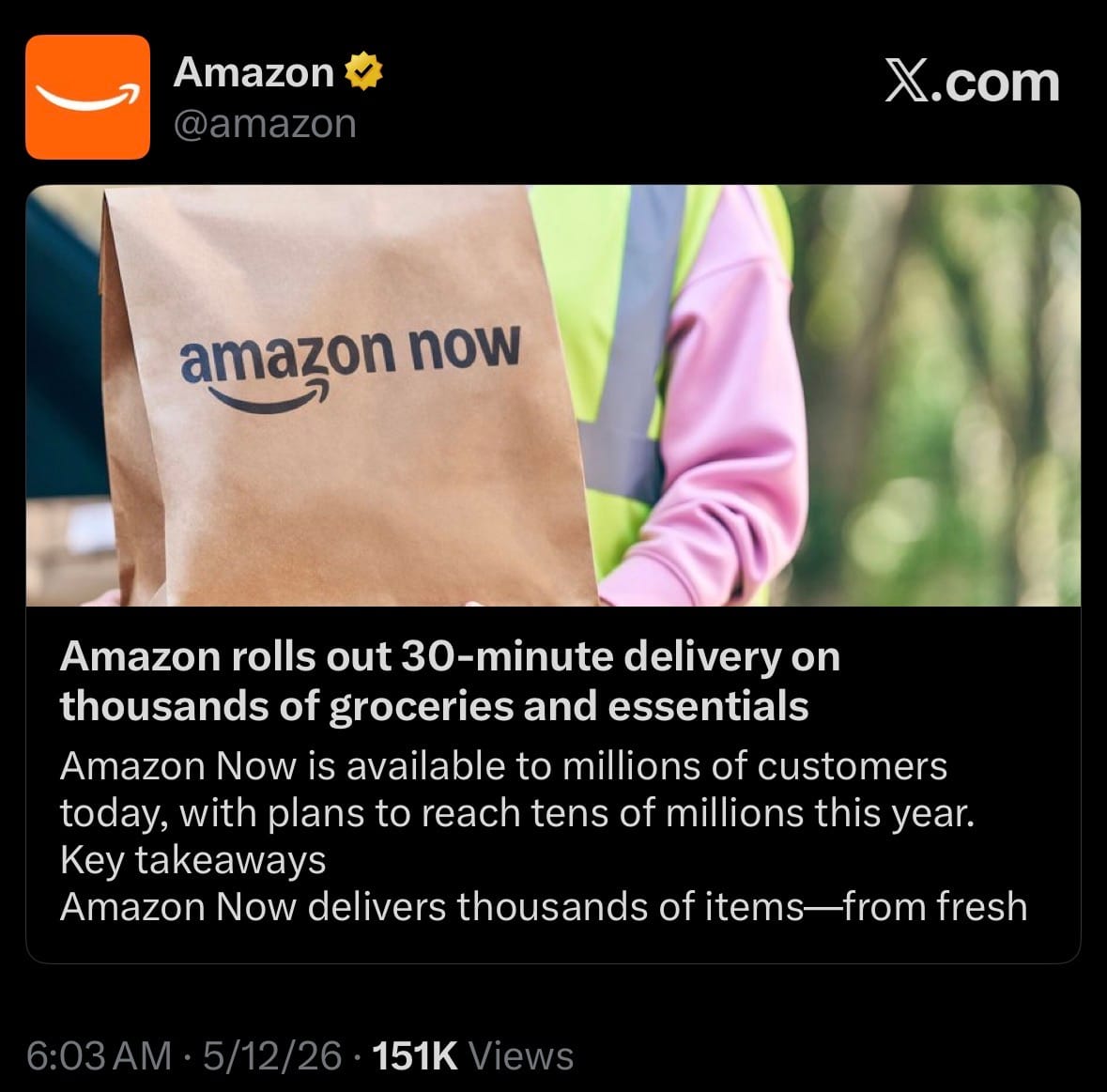
- The service is now live in dozens of U.S. cities including Atlanta, Dallas-Fort Worth, Philadelphia, and Seattle, with plans to expand rapidly to tens of millions of customers this year using a network of small, neighborhood fulfillment centers.
Economics & Markets:

Geopolitics & Military Activity:
Science & Technology:
- On May 11, the U.S. Army awarded Anduril a contract to deliver its Lattice AI-powered Battle Management System for missile defense across the Western Pacific.
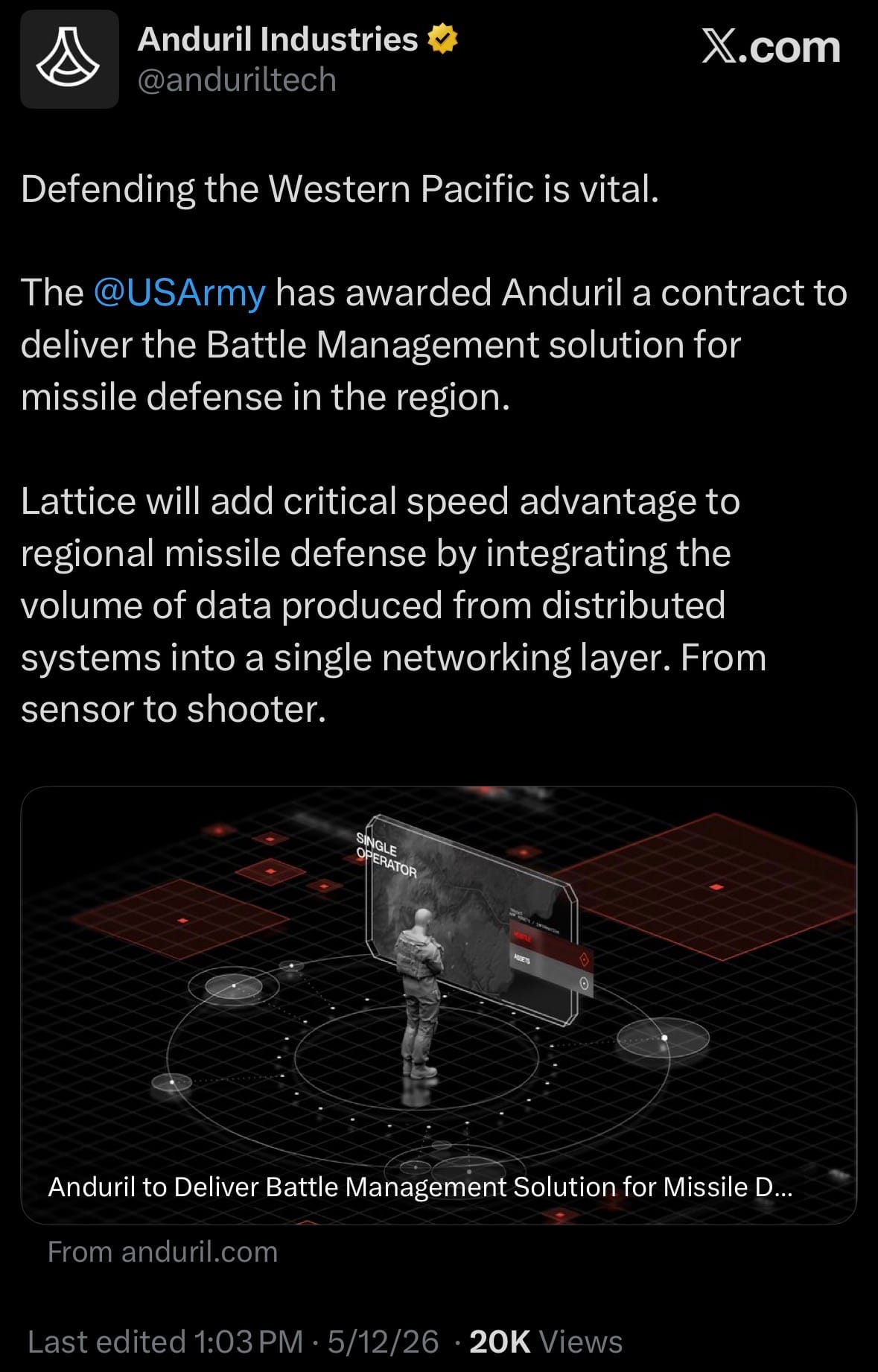
- Lattice will integrate data from sensors across the region into a single network, enabling much faster detection-to-shooter response times against missile threats and strengthening defense of key allies and U.S. forces in the area.
Space:
- On May 12, China successfully launched SpaceSail Polar Group 09 aboard a Long March 6A rocket from Taiyuan Satellite Launch Center.
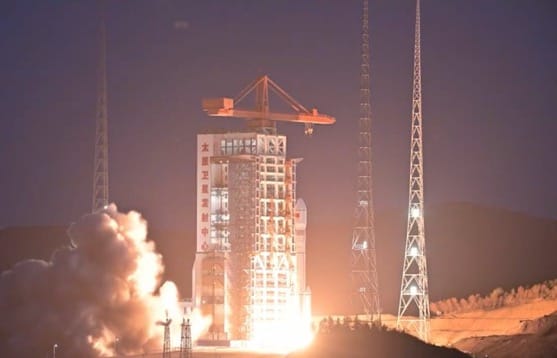
- The mission deployed 18 Low Earth Orbit communication satellites with Ku, Q, and V-band payloads for the G60/SpaceSail constellation, advancing China’s plan for a massive low-latency broadband network (targeting 1,296 satellites by 2027 and up to 12,000 long-term).
Statistic:
- Largest public automakers on Earth by market capitalization:
- 🇺🇸 Tesla: $1.627T
- 🇯🇵 Toyota: $215.11B
- 🇨🇳 BYD: $133.13B
- 🇰🇷 Hyundai: $114.67B
- 🇨🇳 Xiaomi: $104.84B
- 🇺🇸 General Motors: $68.92B
- 🇮🇹 Ferrari: $58.06B
- 🇩🇪 BMW: $57.11B
- 🇩🇪 Mercedes-Benz: $52.24B
- 🇩🇪 Volkswagen: $51.11B
- 🇩🇪 Porsche: $47.94B
- 🇺🇸 Ford: $47.77B
- 🇰🇷 Kia: $44.34B
- 🇮🇳 Maruti Suzuki India: $43.52B
- 🇮🇳 Mahindra & Mahindra: $40.07B
- 🇯🇵 Honda: $31.28B
- 🇨🇳 Geely: $31.09B
- 🇨🇳 Great Wall Motors: $24.82B
- 🇨🇳 SAIC Motor: $22.66B
- 🇨🇳 Chery Automobile: $22.49B
- 🇨🇳 Seres Group: $22.23B
- 🇯🇵 Suzuki Motor: $21.86B
- 🇳🇱 Stellantis: $21.44B
- 🇨🇳 Li Auto: $19.12B
- 🇺🇸 Rivian: $18.73B
History:
- Spaceports began as military missile testing sites before evolving into the gateways of the modern space age. The first true spaceport was Peenemünde, Germany, developed in the 1930s–1940s for testing the V-2 rocket under Wernher von Braun. After World War II, both the United States and Soviet Union rapidly expanded rocket facilities as part of the Cold War and the emerging space race. The Soviet Union established the Baikonur Cosmodrome in Kazakhstan (1955), which became the launch site for some of the most important missions in history, including Sputnik 1 in 1957, the first artificial satellite, and Yuri Gagarin’s flight in 1961, the first human spaceflight. In the United States, Cape Canaveral (1949) and later the Kennedy Space Center (1962) became the center of American launch operations, supporting Mercury, Gemini, Apollo, and Space Shuttle missions. Early spaceports were heavily military and government-controlled, built around ballistic missile technology, remote locations, and massive launch infrastructure capable of handling increasingly powerful rockets.
- From the 1970s–2000s, spaceports evolved into global infrastructure supporting both government and commercial launches. The Soviet Union expanded launch operations at Baikonur, while the U.S. modernized Cape Canaveral and Vandenberg for satellite deployment, reconnaissance, and shuttle missions. Europe established the Guiana Space Centre in French Guiana (1968) near the equator for launch efficiency, while countries like China built major facilities such as Jiuquan, Taiyuan, Xichang, and later Wenchang, supporting both military and civilian missions. Private industry began reshaping the sector in the 2000s, especially with companies like SpaceX, which transformed launch economics through reusable rockets. This led to the rise of modern commercial spaceports such as Starbase in Texas, Rocket Lab’s facilities in New Zealand, and multiple privately integrated launch sites across the world. Spaceports also diversified into specialized roles: polar launches, equatorial launches, reusable booster recovery, military rapid-response launches, and even sea-based launch systems.
- By 2026, spaceports have evolved from isolated rocket fields into highly strategic aerospace hubs tied to national security, global communications, commercial industry, and future off-world expansion. Major players now include the United States, China, Russia, India, Europe, and emerging private-sector operators. Starbase, operated by SpaceX, has become one of the most important next-generation spaceports due to Starship development and ambitions for Mars missions. China has aggressively expanded its launch infrastructure as part of its long-term lunar and orbital ambitions, while countries in the Middle East, Africa, and Southeast Asia are pursuing regional launch capabilities. Modern spaceports now integrate launch operations, AI-driven logistics, satellite deployment, autonomous tracking systems, reusable booster recovery, and increasingly military space operations. The evolution is clear: spaceports began as Cold War missile facilities, became national symbols during the space race, and are now transforming into permanent infrastructure for the emerging space economy and the future expansion of humanity beyond Earth.
Image of the day:

Thanks for reading! Earth is complicated, we make it simple.
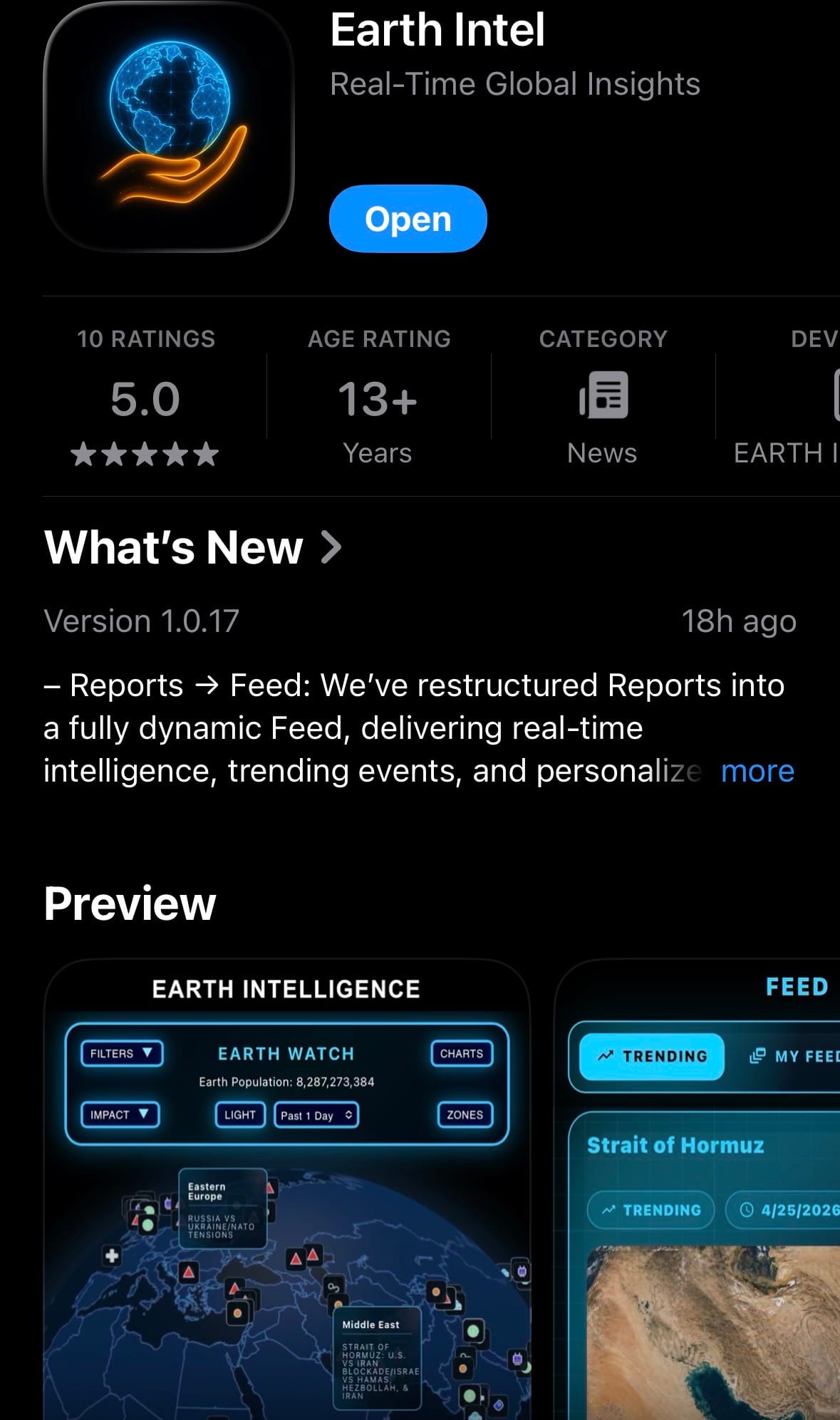
- Download our mobile app:


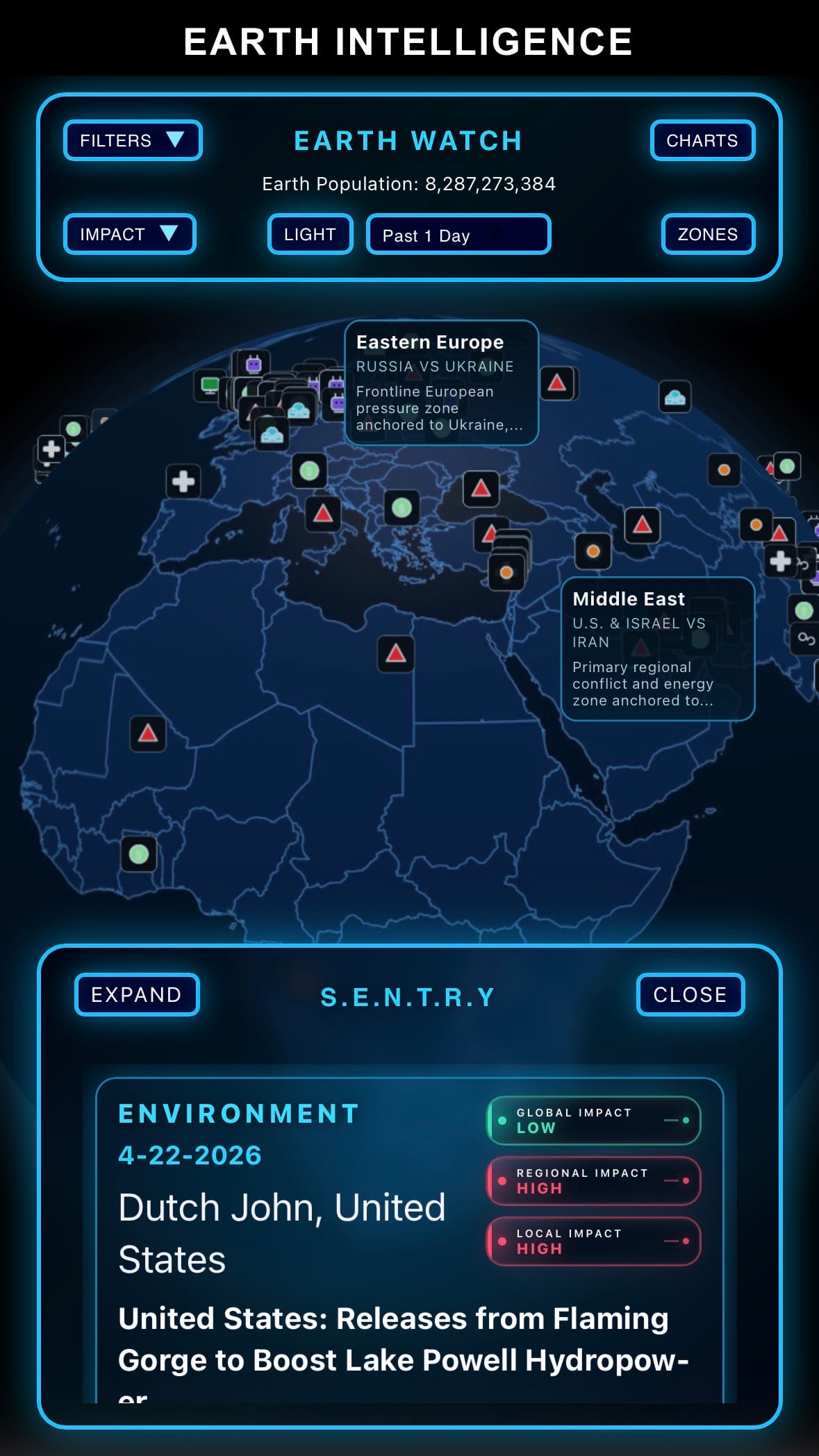
- Click below if you’d like to view our free EARTH WATCH globe:
Click below to view our previous newsletters:

Support/Suggestions Email:
support@earthintel.io