Thursday☕️


Economics & Markets:
- On May 13, the U.S. Senate confirmed Kevin Warsh as the new Chairman of the Federal Reserve Board of Governors in a 54-45 vote, mostly along party lines.

- Warsh, a former Fed governor, will succeed Jerome Powell (whose term ends May 15) and takes over leadership of the central bank at a time of economic uncertainty and pressure for interest rate decisions.



Geopolitics & Military Activity:
- On May 13, U.S. and international partners (led by JIATFS) identified illicit narcotics hidden aboard the container ship M/V EVER FAME.
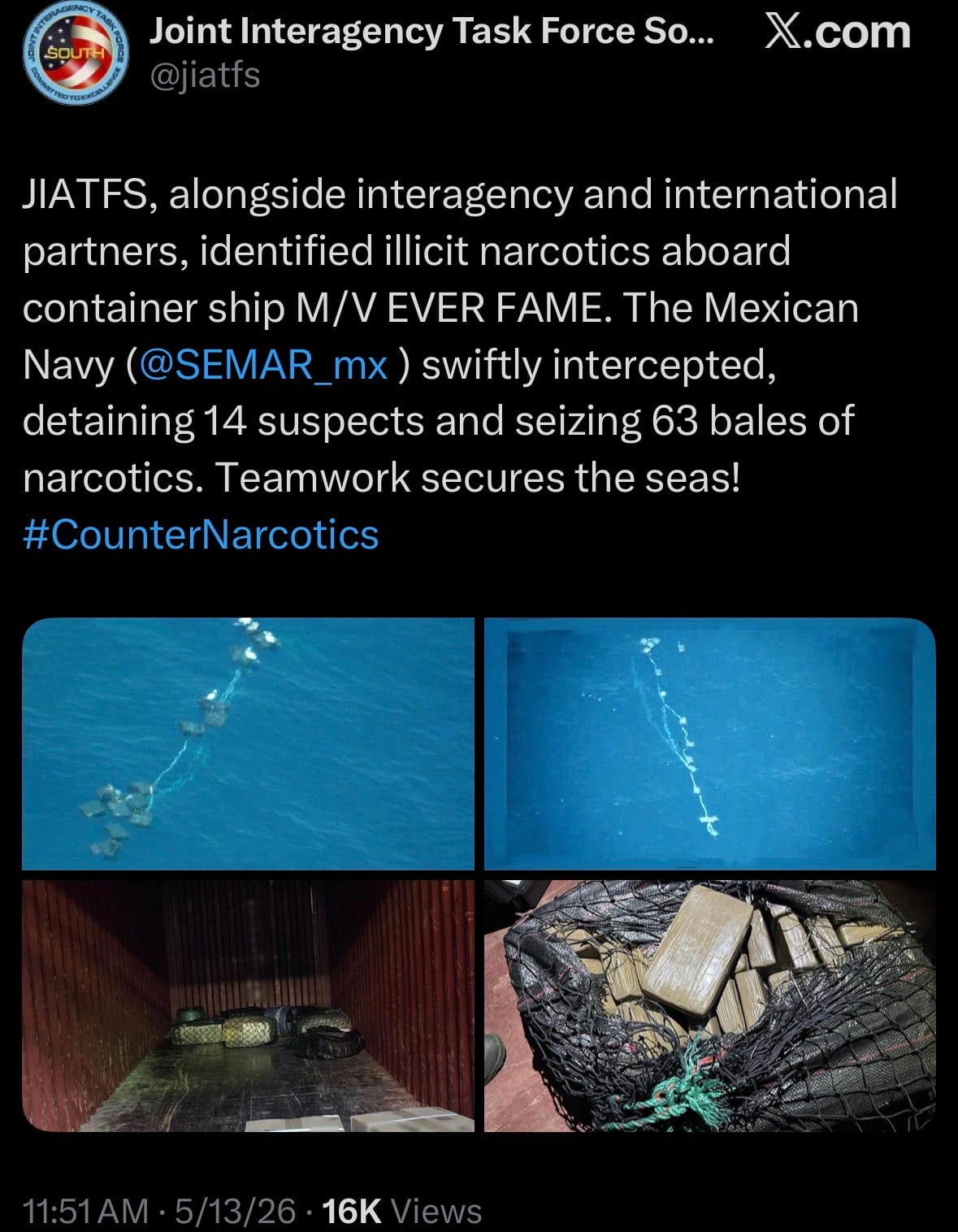
- The Mexican Navy quickly intercepted the vessel, detaining 14 suspects and seizing 63 bales of narcotics. This successful joint counter-narcotics operation highlights strong teamwork in securing the seas.
Science & Technology:
- On May 13, the Pentagon announced framework agreements with Anduril, CoAspire, Leidos, and Zone 5 to acquire more than 10,000 containerized missiles for the U.S. military.
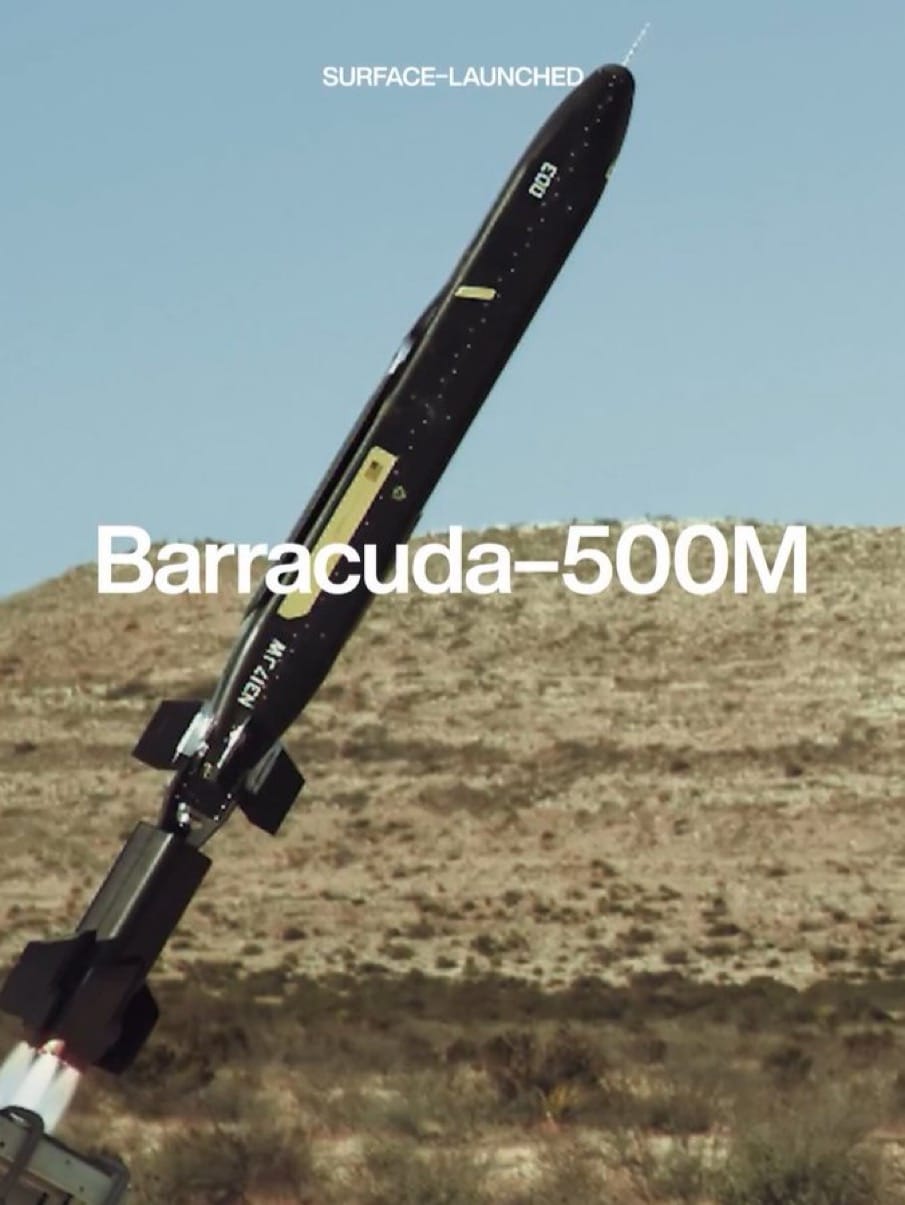
- As part of this effort, Anduril signed a production deal for its Surface-Launched Barracuda-500M, committing to deliver at least 1,000 missiles per year starting in the first half of 2027, along with more than 60 containerized launch systems.

Statistic:
- Largest public financial institutions by market capitalization:
- 🇺🇸 JPMorgan Chase: $804.52B
- 🇺🇸 Visa: $609.14B
- 🇺🇸 Mastercard: $433.52B
- 🇨🇳 China Construction Bank: $369.94B
- 🇺🇸 Bank of America: $353.69B
- 🇨🇳 Agricultural Bank of China: $343.00B
- 🇨🇳 ICBC: $318.65B
- 🇬🇧 HSBC: $310.82B
- 🇺🇸 Morgan Stanley: $305.72B
- 🇺🇸 Goldman Sachs: $281.85B
- 🇨🇳 Bank of China: $271.21B
- 🇨🇦 Royal Bank Of Canada: $250.18B
- 🇺🇸 Wells Fargo: $225.01B
- 🇯🇵 SoftBank Group Corp.: $218.04B
- 🇺🇸 Citigroup: $211.66B
- 🇺🇸 American Express: $211.25B
- 🇯🇵 Mitsubishi UFJ Financial: $210.06B
- 🇦🇺 Commonwealth Bank: $185.74B
- 🇨🇦 Toronto Dominion Bank: $178.63B
- 🇪🇸 Santander: $171.94B
- 🇺🇸 Charles Schwab: $158.55B
- 🇨🇳 CM Bank: $152.10B
- 🇨🇭 UBS: $151.69B
- 🇺🇸 Interactive Brokers: $144.70B
- 🇯🇵 Sumitomo Mitsui Financial Group: $142.09B
History:
- The U.S. Space Force was officially established on December 20, 2019, becoming the first new branch of the U.S. military since the Air Force was created in 1947, but its roots go much deeper into the Cold War and the early space race. After the Soviet Union launched Sputnik in 1957, the United States realized space was no longer just scientific—it was strategic. During the 1960s–1980s, military space operations expanded rapidly through the Air Force, including satellite communications, missile warning systems, GPS development, reconnaissance satellites, and nuclear launch detection networks. Programs like the Defense Support Program (DSP) and the development of GPS transformed space into a critical military domain. During the Cold War, the U.S. increasingly relied on satellites for intelligence, navigation, and global command-and-control, while fears grew that adversaries could attack or disable those systems. Throughout the 1990s and 2000s, space became even more integrated into warfare, especially during conflicts like the Gulf War, where GPS and satellite communications became central to precision warfare. However, these systems were still managed primarily under the Air Force through organizations like Air Force Space Command (AFSPC).
- The push for a dedicated Space Force accelerated in the 2010s as China and Russia rapidly developed anti-satellite weapons, cyber capabilities, orbital surveillance systems, and electronic warfare targeting satellites. U.S. military leaders increasingly warned that space had become a contested warfighting domain rather than a safe support layer. In 2018, President Donald Trump publicly called for the creation of a separate military branch focused solely on space operations, arguing that “space is a warfighting domain.” This led to the formal establishment of the United States Space Force (USSF) in 2019 under the Department of the Air Force. The Space Force absorbed many responsibilities from Air Force Space Command, including satellite operations, missile warning, orbital tracking, GPS infrastructure, and space domain awareness. Its mission expanded beyond just supporting operations on Earth to actively defending U.S. assets in orbit and preparing for potential conflict in space. The branch also introduced its own structure, ranks, and identity, with personnel known as “Guardians.”
- From 2020–2026, the Space Force rapidly evolved into a major strategic component of U.S. defense infrastructure. It now manages constellations related to GPS, missile warning, military communications, space surveillance, and orbital tracking while coordinating closely with agencies like NASA, the National Reconnaissance Office (NRO), and U.S. Space Command (re-established in 2019). Modern priorities include defending satellites from cyber attacks, jamming, kinetic anti-satellite weapons, and electronic warfare while improving resilience through distributed satellite constellations and commercial partnerships with companies like SpaceX. The rise of mega-constellations, hypersonic weapons, and real-time global surveillance has made space one of the most critical operational domains on Earth. By 2026, the Space Force is no longer viewed as science fiction or symbolic—it functions as the military branch responsible for protecting the orbital infrastructure that modern civilization depends on, including communications, navigation, missile detection, intelligence gathering, and increasingly the future architecture of both military and economic activity in space.
Image of the day:

Thanks for reading! Earth is complicated, we make it simple.

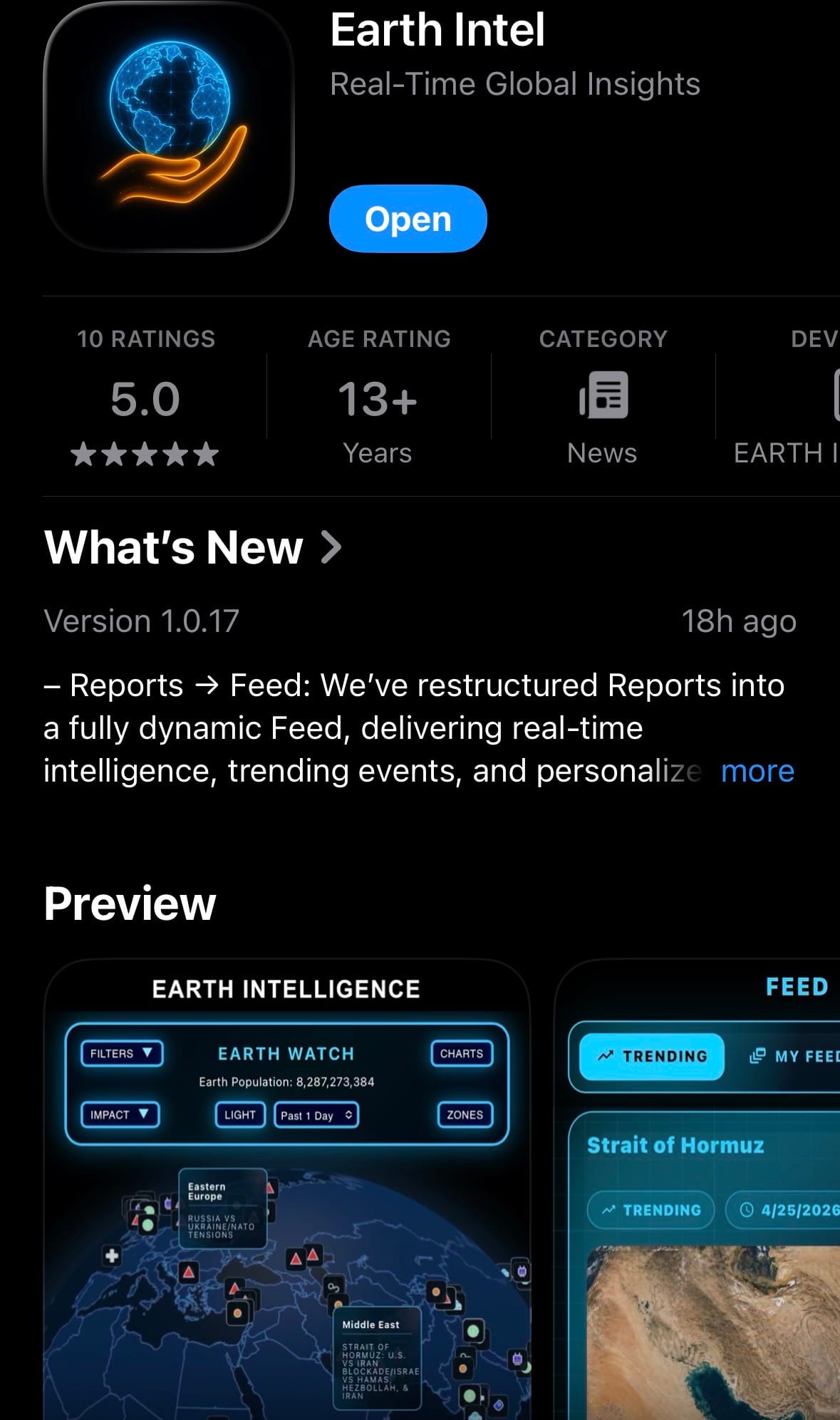
- Download our mobile app:


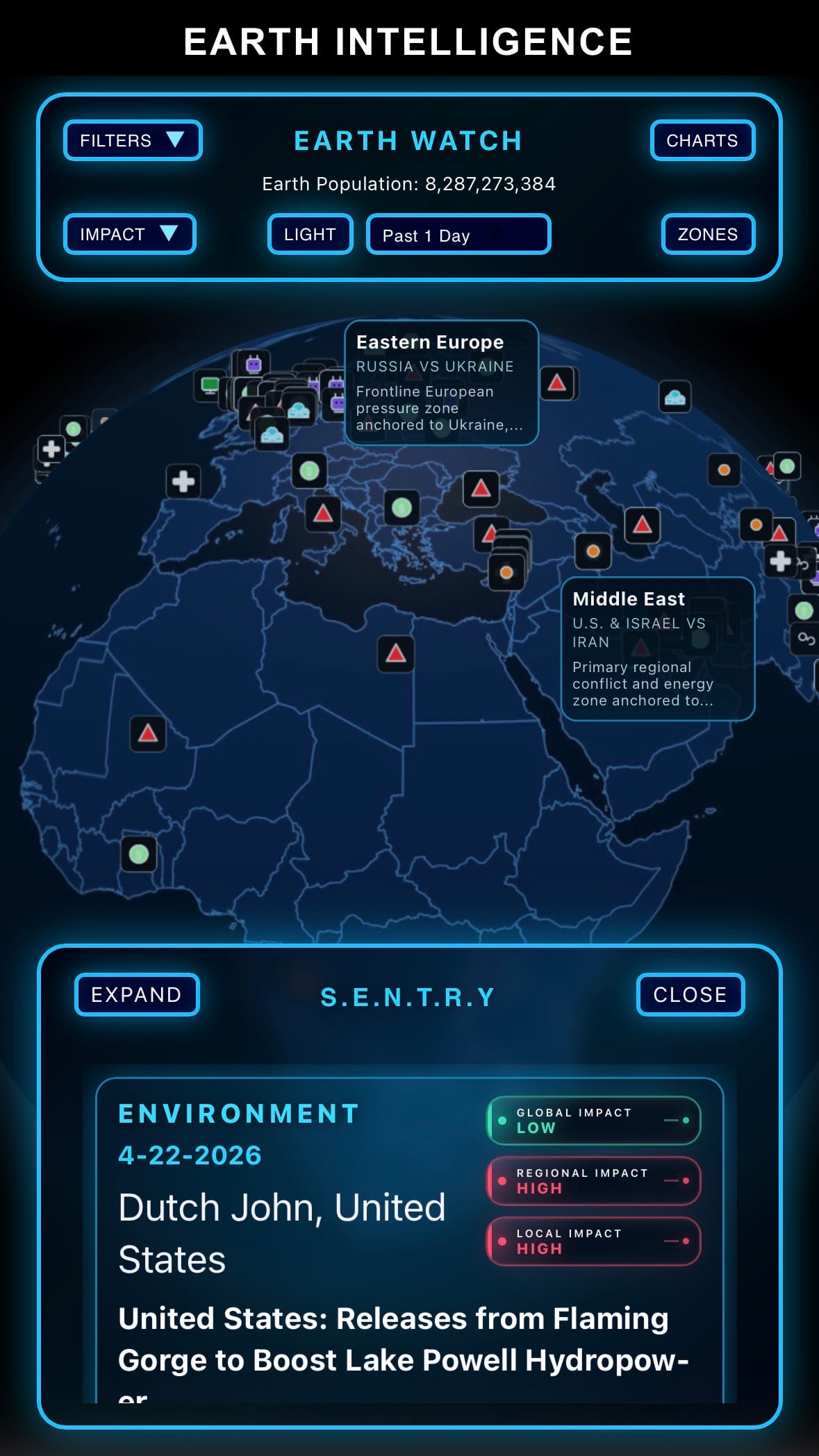
- Click below if you’d like to view our free EARTH WATCH globe:
Click below to view our previous newsletters:

Support/Suggestions Email:
support@earthintel.io